Your shelves are basically a free gallery wall — so why do they look like a junk drawer with ambitions? If every attempt at decorating ends up feeling chaotic or weirdly sparse, you’re not alone. The secret most interior designers quietly rely on? The Rule of Three. It’s the simplest shift you can make to go from cluttered chaos to curated cool, and once you see it, you’ll never unsee it.
What Is the Rule of Three?
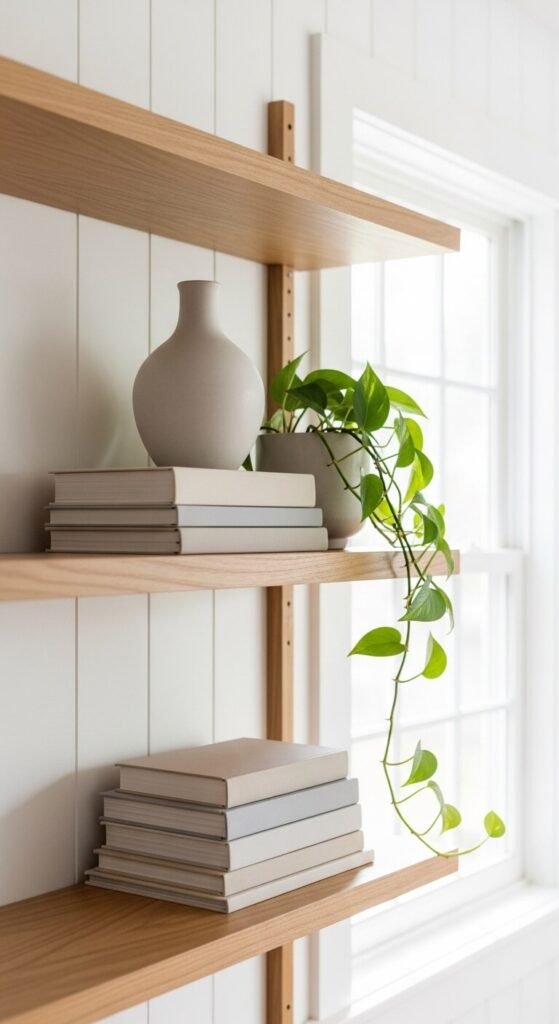
The Rule of Three is a classic design principle rooted in the idea that objects arranged in odd numbers — especially groups of three — are more visually appealing and feel intentional rather than random.
Think of it like a visual rhythm. One object alone looks lonely. Two objects feel like a standoff. But three? Three creates a triangle of interest that draws the eye naturally from piece to piece.
It works because our brains are wired to seek patterns, and a trio creates just enough complexity to be interesting without overwhelming the senses.
Step 1: Edit Ruthlessly Before You Style
Before you arrange a single thing, take everything off the shelf. Yes, everything.
Now hold up each item and ask: Does this bring me joy, or am I keeping it out of guilt? Shelf styling only works when you’re working with pieces you actually love.
A good rule of thumb for a standard 36-inch shelf:
- Keep 5–7 objects max per shelf
- Aim for variety in height — tall, medium, and short items
- Mix textures: matte ceramics, glossy books, natural wood, soft greenery
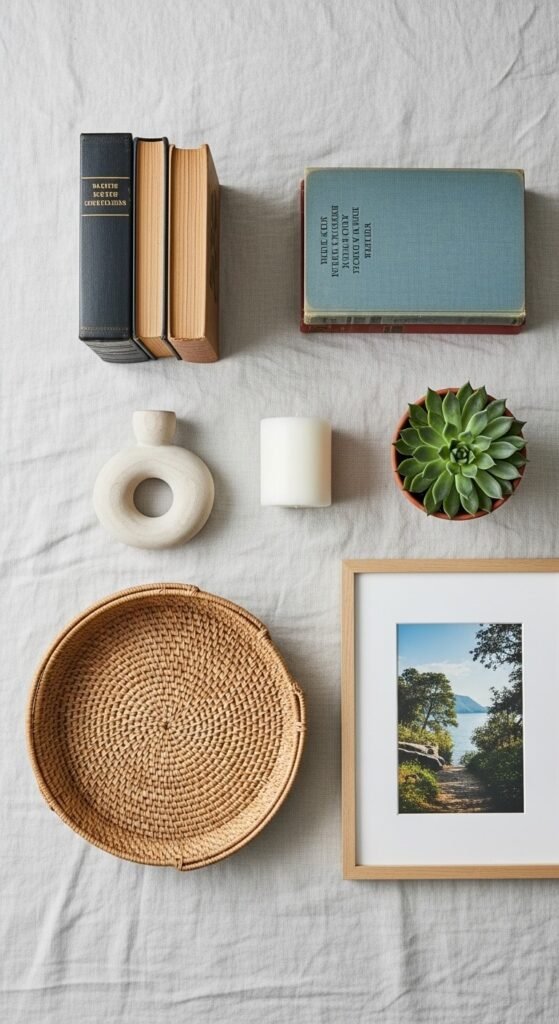
Less truly is more here. When in doubt, leave it out.
Step 2: Build Your Groups of Three
Now comes the fun part. Start grouping your items into trios. Each group should have:
- A tall anchor — a vase, a tall candle, a framed print leaning against the back
- A medium filler — a stack of books, a small bowl, a sculptural object
- A low accent — a small plant, a figurine, a crystal, a single candle
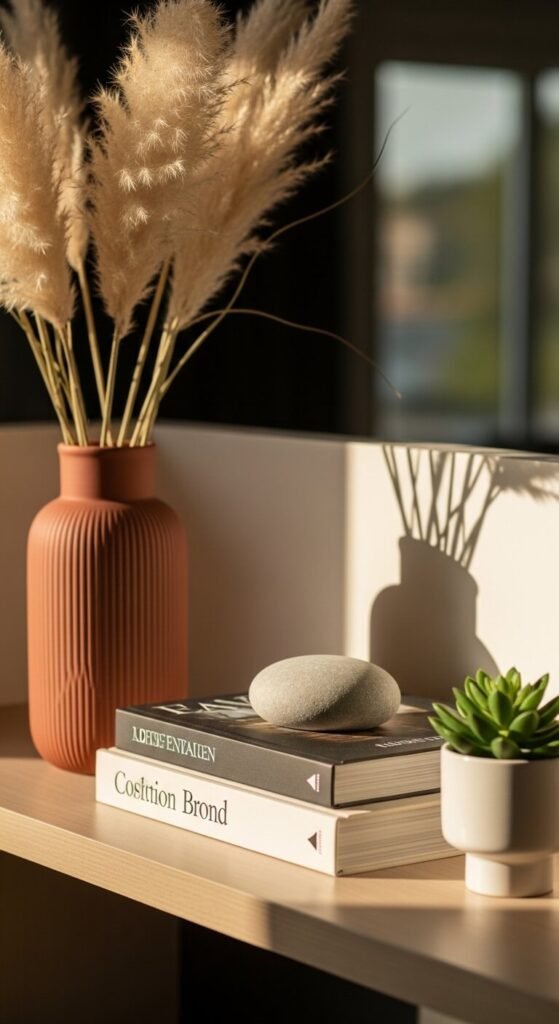
Think of each trio as a little scene rather than a collection of stuff. The items don’t have to match, but they should feel like they belong in the same story.
Pro tip: Vary the visual weight, not just the height. A heavy ceramic pot pairs beautifully with a lightweight trailing vine and a slim hardcover book.
Step 3: Use Negative Space Like a Design Tool
Here’s what separates a styled shelf from a packed shelf: breathing room.
Negative space — the empty areas between your groupings — is not wasted space. It’s what makes each trio pop. Think of it as the pause between musical notes. Without it, everything blurs into noise.
Aim to leave at least a hand’s width of empty shelf between each grouping. This white space signals intentionality and gives the eye somewhere to rest.
If your shelf has five sections, consider styling only three or four. Leave one section deliberately bare, or use a simple object like a single candle or a folded linen for subtle texture.
Step 4: Create Visual Flow with Color and Texture
Once your trios are placed, step back and squint. Literally. If your eyes bounce all over the place without landing anywhere, your colors or textures might be competing.
A few easy fixes:
- Repeat one color across the shelf — a dusty green plant here, a sage book there
- Vary textures within each trio (matte + smooth + organic)
- Keep a loose color story — warm neutrals, monochromatic whites, earthy terracottas
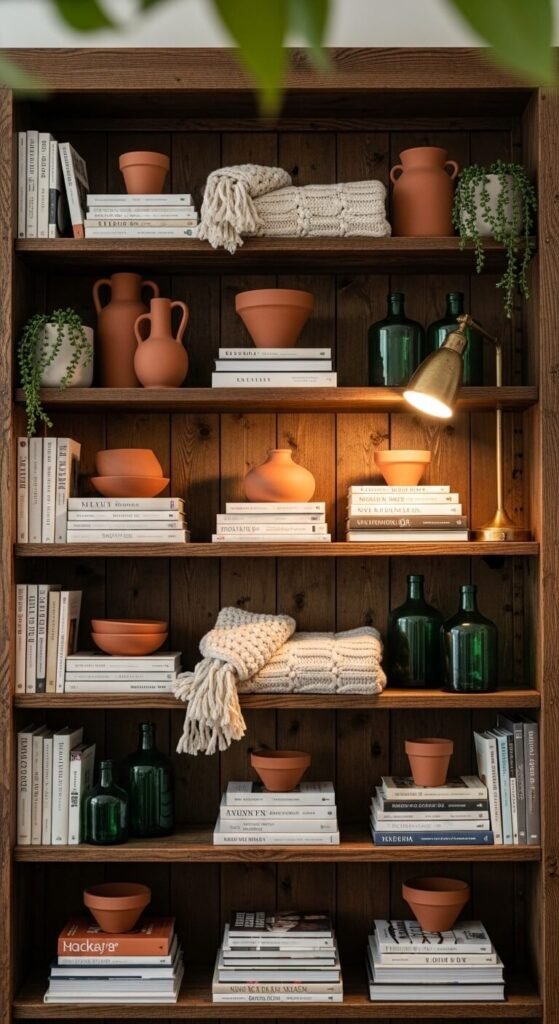
You don’t need a color degree to nail this. Just pick two or three tones and let them echo across the shelves organically.
Step 5: Live With It, Then Tweak
Style your shelf, take a photo, and walk away. Come back in a day and look at it with fresh eyes.
Does anything feel too heavy in one spot? Does a corner feel neglected? Swap one item at a time rather than overhauling everything. Small adjustments — rotating an object, swapping a tall item to the other side of a trio, pulling a book forward — make a surprisingly big difference.
Shelf styling isn’t a one-and-done task. It’s a living, evolving display that should grow with you.
The Takeaway
Styling shelves without clutter isn’t about buying more beautiful things — it’s about arranging what you have with intention. The Rule of Three gives you a simple, foolproof framework: group in trios, vary your heights, embrace negative space, and let your color story do the heavy lifting.
✨ Save this article for your next shelf refresh — and tag your before-and-after! You’ll be amazed what three little groupings can do.