Open shelving is one of those design choices that looks absolutely dreamy in magazine photos — and like a total disaster in real life. If you’ve ever swapped out your cabinet doors only to end up with a chaotic jumble of mismatched mugs and rogue spice jars, you’re not alone. The good news? Styling open shelves is a learnable skill, and once you understand a few simple rules, your kitchen can look effortlessly curated every single day.
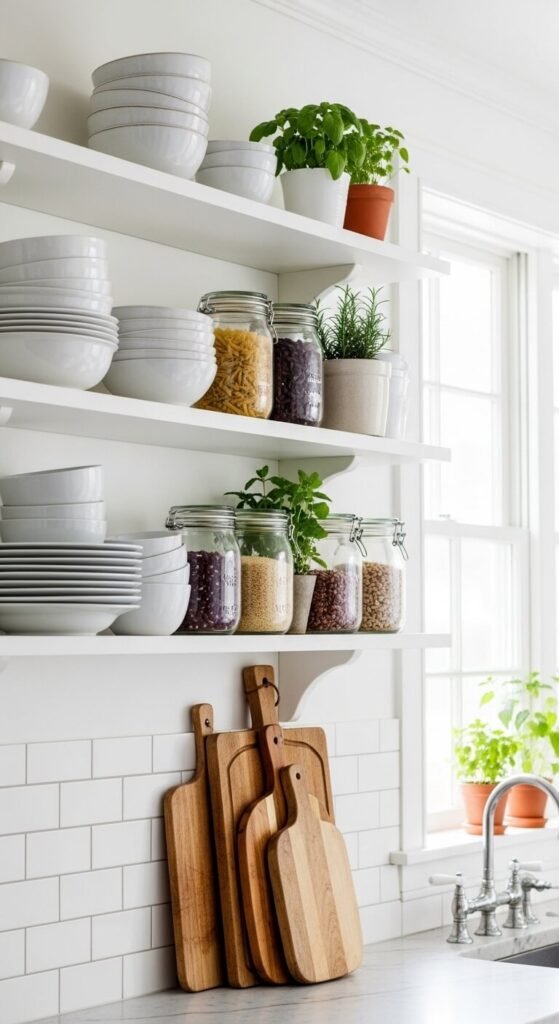
Start With a Ruthless Edit
Before you style a single thing, take everything off your shelves. Yes, everything.
Open shelving punishes clutter in a way that closed cabinets never do. The first step isn’t decorating — it’s editing. Ask yourself:
- Do I use this regularly?
- Is it visually appealing or can it be hidden elsewhere?
- Does it match the overall color palette I want?
Relocate anything that doesn’t pass the test. Plastic containers, rarely-used appliances, and mismatched lids belong in a pantry or lower cabinet — not on display. Your shelves should hold only what’s both functional and beautiful.
Build Around a Color Story
The secret weapon of every gorgeous open shelf? A cohesive color palette.
Pick two to three colors and stick to them. Neutral kitchens often work with whites, creams, warm woods, and touches of black or brass. If your kitchen has more personality, you might lean into earthy terracotta tones or muted sage greens.
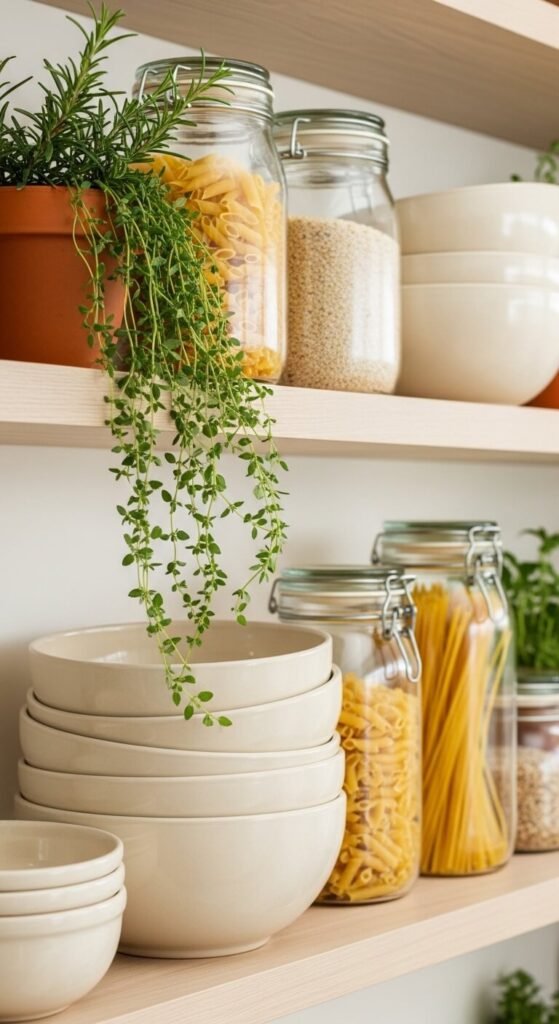
Once you have a palette, shop your own home. Swap out that bright orange Dutch oven for something that fits the story, or tuck the colorful items behind closed doors. Consistency is what makes shelves look styled rather than stored.
Use the “Rule of Three” for Visual Interest
Designers swear by grouping objects in odd numbers — especially threes. Our eyes find odd-numbered groupings more natural and dynamic than even ones.
Here’s how to apply it on your shelves:
- Stack three similar items (bowls, plates, books) to create height variation
- Group a tall item, a medium item, and a small item together for layered depth
- Repeat a material or color across the shelf to create visual rhythm
Don’t be afraid of negative space either. A shelf that’s 70–80% full often looks more intentional than one packed to the edges.
Layer Textures and Materials
Flat, uniform shelves feel sterile. What makes a shelf feel warm and lived-in is the mix of textures.
Try combining:
- Matte ceramics alongside glass jars for contrast
- Natural wood elements (a small board, a bowl, a utensil holder) to add warmth
- Metal accents like brass hooks or a small copper measuring cup set
- Living elements — a small potted herb or a trailing plant adds life that no object can replicate
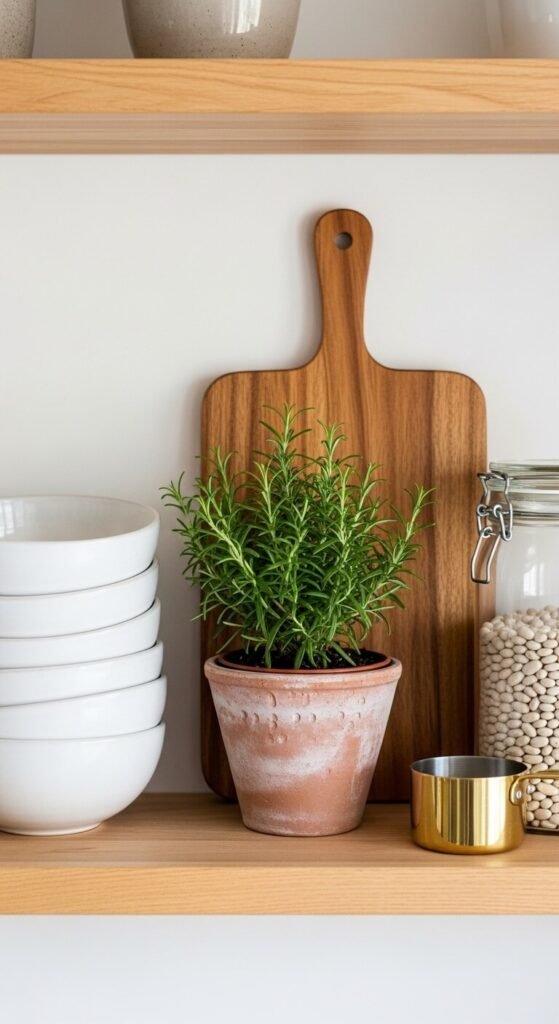
The goal is collected, not curated-to-death. A little imperfection — a slightly leaning board, a plant doing its own thing — actually makes it look more natural.
Keep Everyday Items Looking Intentional
One of the biggest challenges with open shelving is that you actually use your kitchen. Things get moved, stacked differently, and grabbed in a hurry.
The trick is to make your everyday items inherently stylish:
- Decant dry goods (flour, pasta, coffee) into matching glass or ceramic canisters
- Invest in one cohesive set of dishes instead of mixing random patterns
- Use a small tray or riser to corral small items like oils and spices so they always look grouped
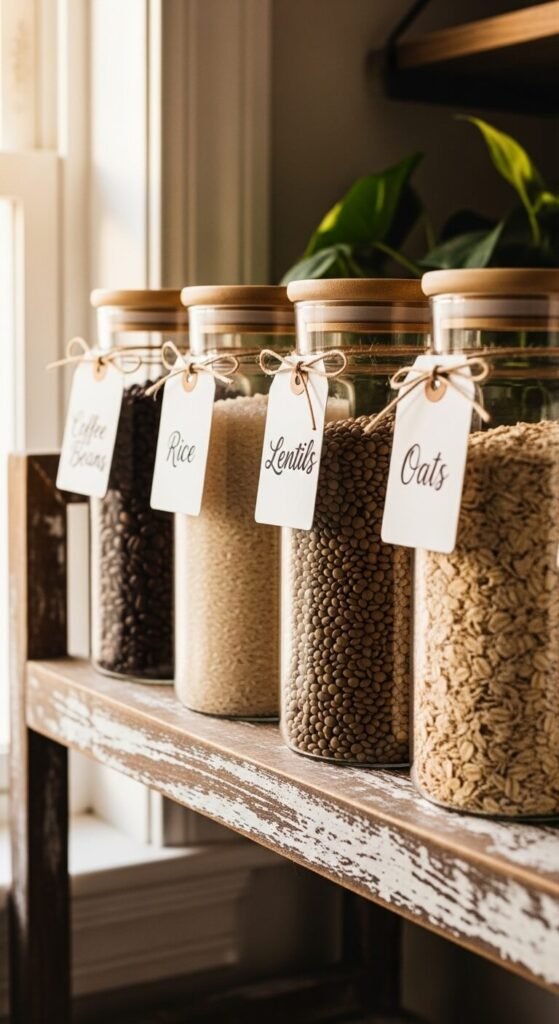
Resetting your shelves takes about two minutes when everything has a designated home. The system does the heavy lifting for you.
Do a Weekly “Reset”
Even the most beautifully styled shelves get disrupted by daily life. Build a quick weekly reset into your routine — just five minutes to return things to their spots, wipe down the shelf surface, and adjust anything that’s shifted.
Think of it less like cleaning and more like maintaining a little piece of art in your home.
Final Thoughts
Open shelving isn’t about perfection — it’s about intention. When every item earns its place and fits within a thoughtful system, your kitchen shelves stop looking like storage and start looking like design.
Save this article for your next kitchen refresh, and remember: edit first, style second, and never underestimate the power of a matching set of jars. ✨