Floating shelves are one of those design elements that look effortless in every Pinterest photo and absolutely maddening in real life. You hang them, you pile on your favorite things, and somehow it ends up looking like a yard sale display rather than a curated interior. Sound familiar? The problem almost never comes down to what you own — it comes down to how you’re arranging it. A few simple principles completely change the outcome.
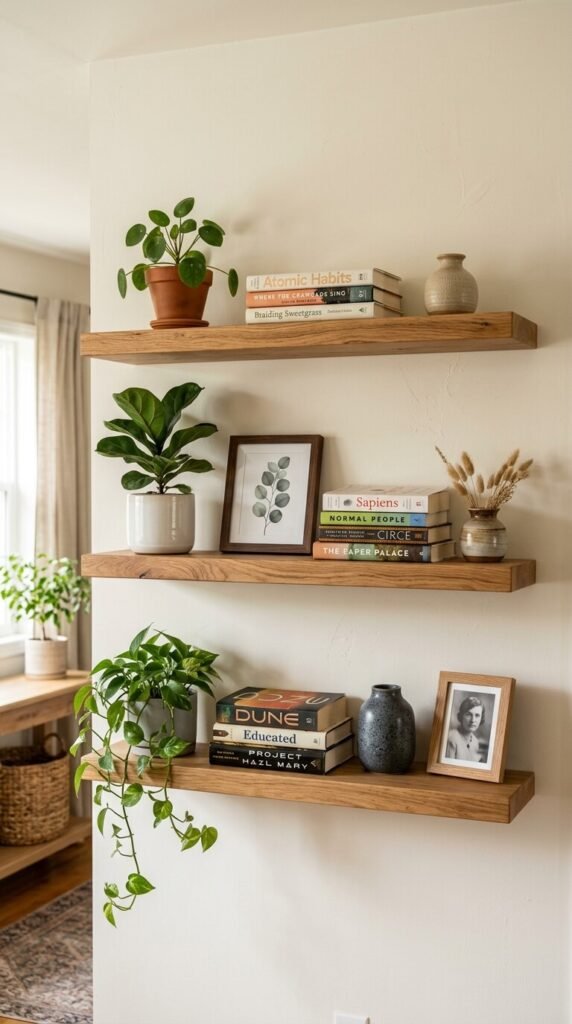
Here’s the complete guide to styling floating shelves that actually look the way you want them to.
Start by Clearing Everything Off
This sounds obvious, but it’s the step most people skip — and it’s the most important one. Before you can style your shelves well, you need to see them as a blank canvas.
Pull everything off. Every book, every trinket, every random item that migrated there over time. Then look at what you have spread out on the floor or table in front of you.
Now edit ruthlessly:
- Remove anything broken, faded, or that you don’t genuinely love
- Group similar items — all books together, all plants together, all ceramics together
- Identify your “hero” pieces — the ones with the most visual impact, interesting shape, or sentimental weight
You’re going to put back far less than you took off. That’s the point. The shelves that look best in design photos are never as full as they seem — negative space is doing enormous work.
Learn the Rule of Three (and Odd Numbers)
Interior designers use odd numbers constantly, and floating shelves are exactly where this rule earns its reputation. Groups of three, five, or seven items almost always look more natural and dynamic than even-numbered groupings.
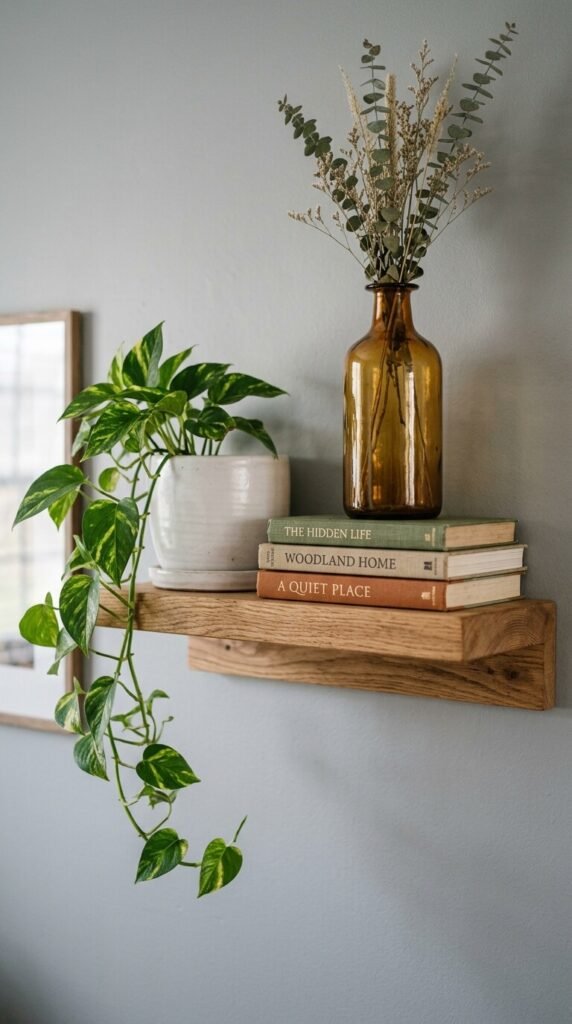
Within each grouping of three, aim for variation across three dimensions:
- Height — one tall item, one medium, one low
- Texture — mix something smooth (ceramic, glass) with something organic (wood, woven, dried botanicals)
- Visual weight — balance something solid and dense with something light and open
That trio formula works on a single shelf or across multiple shelves. Once you see it, you’ll notice it everywhere.
Think About the Whole Wall, Not Just Each Shelf
This is the shift that takes shelf styling from amateur to intentional. Each shelf isn’t its own isolated project — together they form a composition on the wall, and that composition needs balance across the entire space.
Stand back and squint at the shelves as a whole. Ask yourself:
- Is all the visual weight on one side or one shelf?
- Are all the tall items clustered together?
- Is every shelf equally full, making the whole thing feel uniform and flat?
The goal is diagonal balance — if you have a tall vase on the top left shelf, echo that height with something tall on the bottom right. If the middle shelf is dense and full, let the top shelf breathe with just two or three pieces.
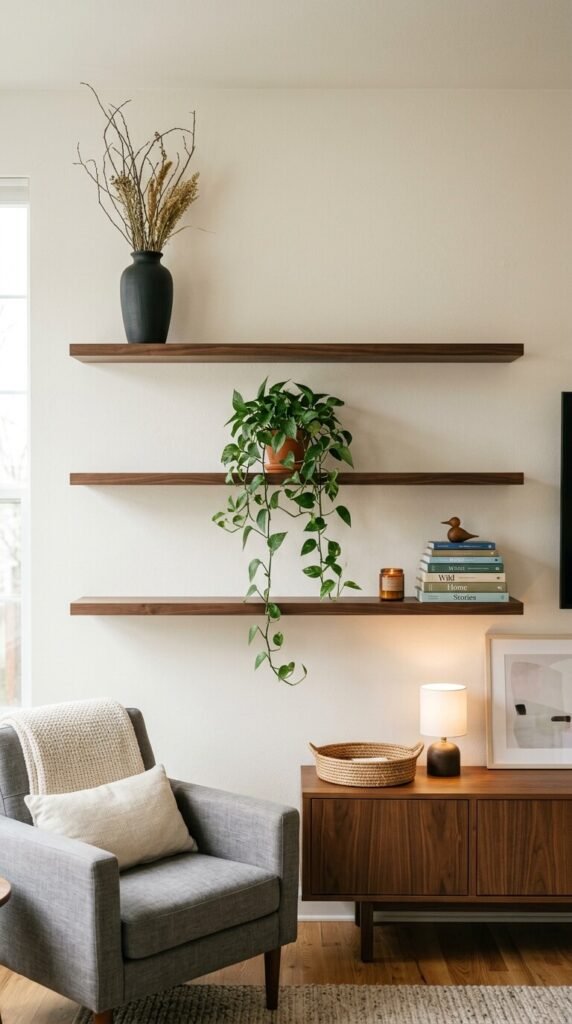
Moving things around with this wide-angle view in mind makes an enormous difference in the final result.
Mix Books Horizontally and Vertically
Books are one of the most versatile shelf styling tools you have — but only if you stop lining them all up spine-out in a single row.
Try these approaches instead:
- Stack 3–5 books horizontally and use the pile as a platform for a small object on top (a candle, a small sculpture, a plant)
- Stand a few books vertically beside the horizontal stack with a bookend or decorative object holding them
- Face one or two books outward — cover facing out — if the cover design is beautiful
- Remove the dust jackets for a cleaner, more cohesive look when spines are mismatched colors
Books add color, texture, and height variation all at once. Use them as building blocks, not just as books.
Bring in Plants, but Place Them Strategically
A plant on a shelf is almost always the right call — but where you put it matters as much as having one at all.
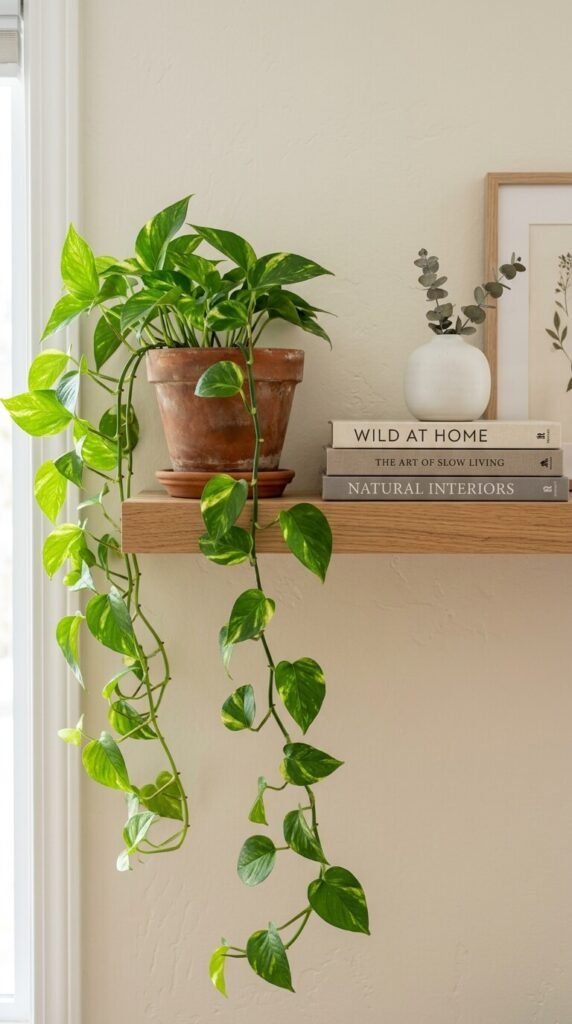
- Trailing plants (pothos, string of pearls, ivy) work best at the end of a shelf so the vines can hang freely without obscuring other items
- Upright plants (succulents, small snake plants, air plants) work well in the middle of a grouping as a natural focal point
- Vary pot materials — a terracotta pot next to a white ceramic next to a woven basket planter adds texture without visual chaos
Don’t put a plant on every shelf. One or two well-placed plants across the whole arrangement is always more elegant than greenery on every level.
The Takeaway
Styling floating shelves well comes down to editing generously, grouping in odd numbers, balancing across the whole wall, and mixing books and plants with intention. The goal is never to fill every inch — it’s to make every inch count.
Save this guide the next time you’re ready to restyle your shelves — come back to it, clear everything off, and start fresh with these principles. The difference will genuinely surprise you!