That oversized sectional is basically the heart of your living room — but let’s be honest, a sea of cushions tossed on randomly just looks like laundry day gone wrong. The secret to a sectional that looks curated (not chaotic) isn’t buying more pillows. It’s knowing exactly where to put them.
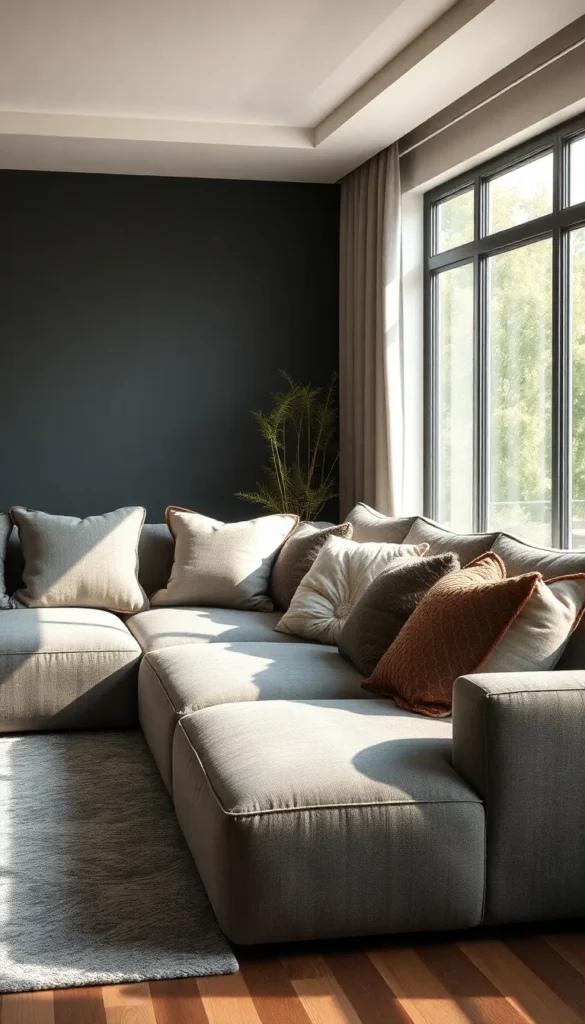
Ready to turn your sofa into the most stylish — and functional — zone in the house? Let’s break it down corner by corner.
Why “Zoning” Your Sectional Actually Matters
A sectional is basically several seating areas stitched into one giant shape. Without intentional styling, it reads as one flat, blobby mass.
By using pillows and throws to define zones, you create:
- A clear conversation corner for guests
- A solo reading nook for quiet evenings
- A lounge zone for movie marathons
- Visual rhythm so the eye doesn’t get lost
Think of it like decorating three mini sofas instead of one giant one.
Step 1: Anchor Each Corner With a Statement Pillow
Every “zone” needs a focal point. Start with your largest pillows (think 22–24 inch) in the corners and ends of the sectional — these are your anchors.
- Choose one bold pattern or color per zone
- Keep anchors slightly oversized so they feel intentional, not accidental
- Use the same anchor style on both ends for symmetry, or mix it up for an eclectic look

Step 2: Layer in Mid-Size Pillows for Texture
Once your anchors are placed, it’s time to build texture. This is where the magic actually happens.
- Add 18-inch pillows in solid, neutral tones to balance your patterned anchors
- Mix textures — try velvet next to linen, or boucle next to a flat-weave cotton
- Stick to odd numbers (3 or 5) per zone for a more natural, designer-approved look
A simple formula that always works:
- One pattern
- One texture
- One solid color
Repeat this trio in each seating zone for cohesion without monotony.
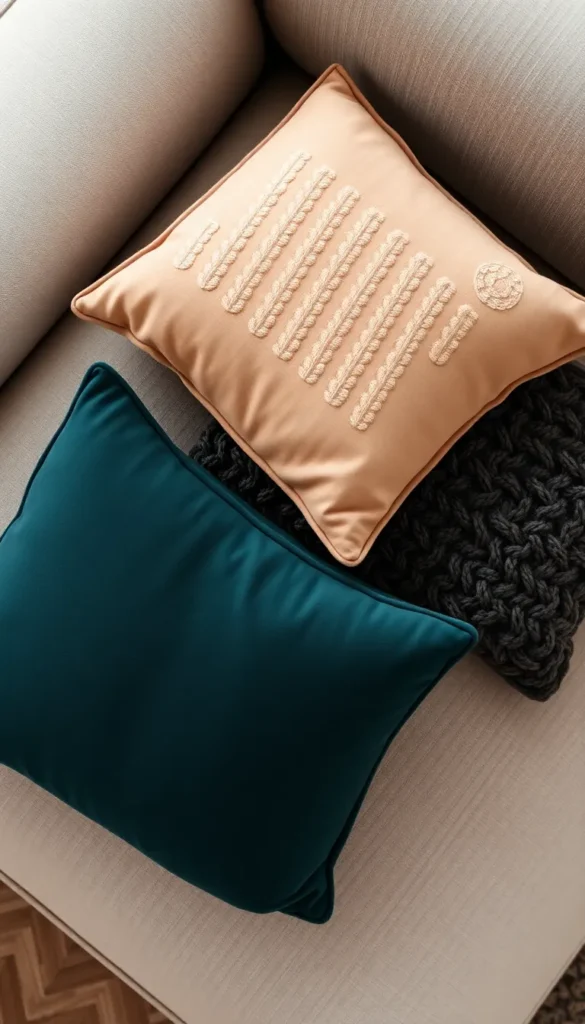
Step 3: Use Throws to Separate — Not Just Decorate
Throws aren’t just for warmth. Draped strategically, they act like a visual “wall” between zones.
Try this:
- Drape diagonally over the arm of one section to mark the end of a zone
- Fold and stack at the corner where the sectional bends — this is a natural dividing point
- Layer two throws in complementary colors for a boutique-hotel feel
Pro tip: Chunky knit throws read as “cozy lounge zone,” while a thin woven throw feels more “tailored conversation area.” Use that contrast to your advantage.
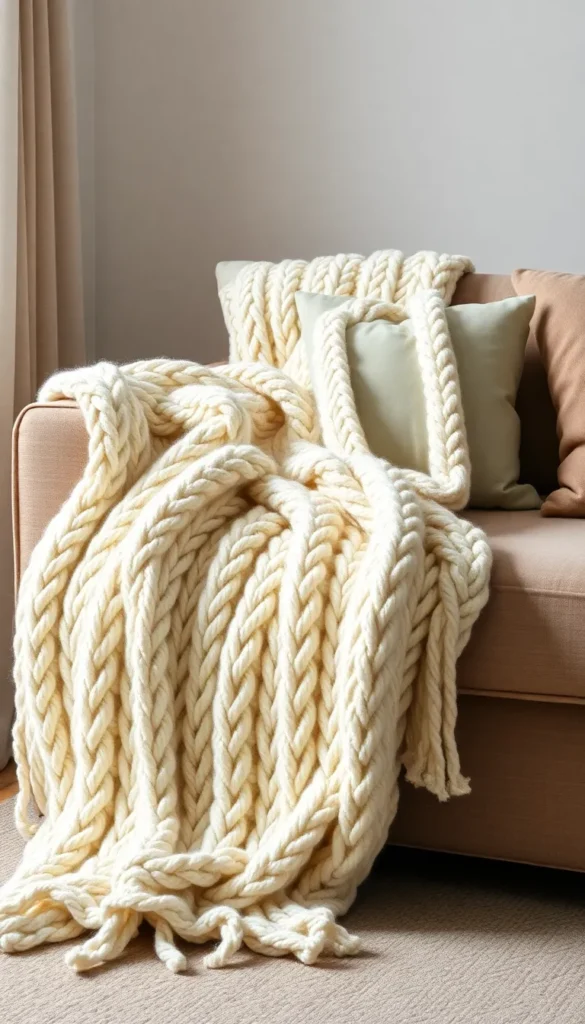
Step 4: Create Visual Flow With Color Repetition
Your zones should feel distinct but still part of the same family. The trick? Repeat at least one color across all sections.
- Pick one “thread” color (like a dusty blue or mustard) and tuck it into each zone
- Vary the shade intensity — a deep navy pillow in one corner, a pale chambray throw in another
- Avoid using the same exact pillow in every spot; repetition should feel like an echo, not a copy-paste
This is what makes a sectional look professionally styled instead of like it was decorated three different times by three different people (even if it was).
Step 5: Don’t Forget the Middle
The center of a sectional often gets ignored, but it’s prime real estate for tying everything together.
- Add one smaller lumbar pillow (12×20) in themiddle seat
- Use it as a “bridge” pillow — pull one color from the left zone and one from the right
- Keep it lower profile than your corner anchors so it doesn’t compete

Quick Styling Cheat Sheet
Save this for your next pillow-shopping trip:
- ✅ 2 large anchor pillows (one per end)
- ✅ 4–6 mid-size pillows (mixed textures)
- ✅ 1–2 lumbar pillows for the center
- ✅ 1–2 throws draped or folded at zone breaks
- ✅ One repeated color thread throughout
Make Your Sectional Work as Hard as You Do
Your sectional has the potential to be three rooms in one — a reading corner, a hangout zone, and a cozy movie nook — all without moving a single piece of furniture. All it takes is a little intention with your pillows and throws.
Try one zone this weekend and see how much more finished your living room feels.
Loved this guide? Save it now so you don’t lose it on laundry day! 🧺✨