Let’s be honest: the space under your sink is probably where good intentions go to die. You shove a cleaning spray in there, lose a sponge for three weeks, and somehow end up with seventeen half-empty bottles you forgot you owned. It’s the junk drawer of cabinets, and it’s time to fix that.
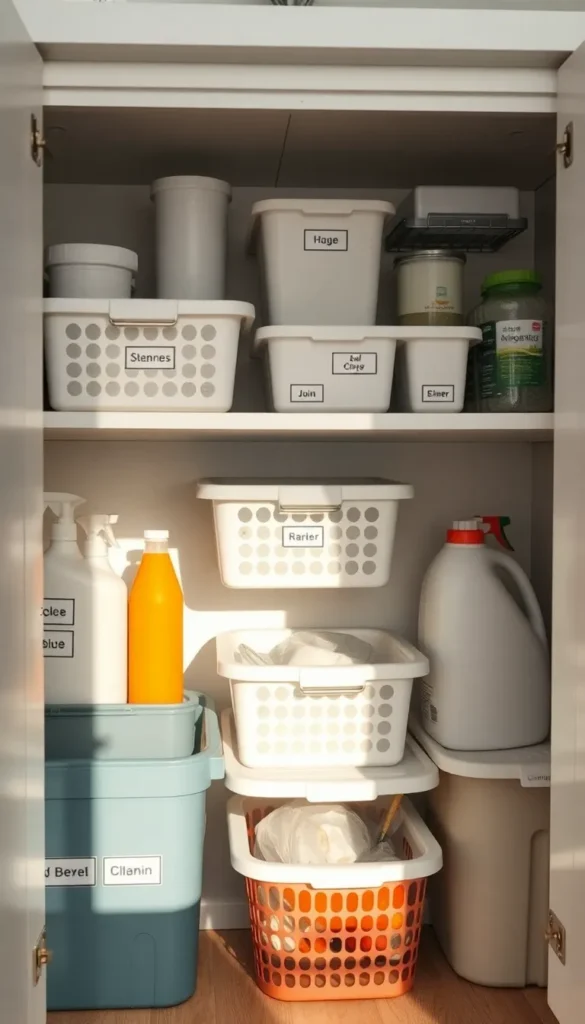
The good news? This is one of the easiest spaces in your entire home to transform, and you don’t need a big budget or a weekend to do it. Just a little patience and the right system. Let’s dig in.
Why Under-Sink Storage Gets So Messy
Before we organize, it helps to understand why this space turns into chaos so fast:
- Awkward shape. Pipes cut through the middle, making it hard to use vertical space.
- Out of sight, out of mind. You toss things in and rarely take them all out at once.
- No defined “zones.” Without bins or sections, everything just floats around loose.
- Constant restocking. New cleaning products get added before old ones are used up or tossed.
Once you know the problem, the fix becomes a lot more obvious.
Step 1: Empty Everything Out First
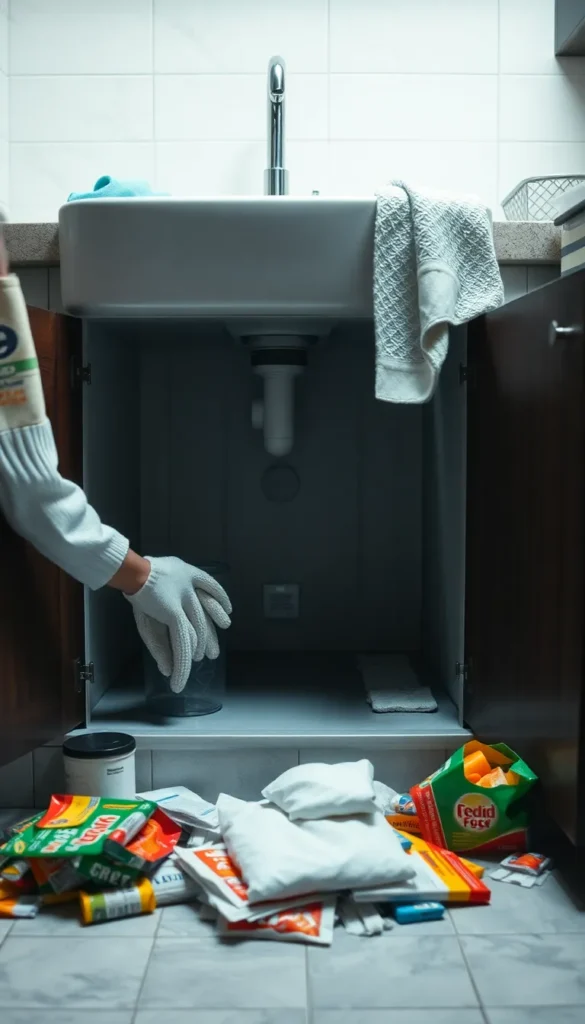
This step feels tedious, but skipping it means you’re just rearranging clutter instead of solving it.
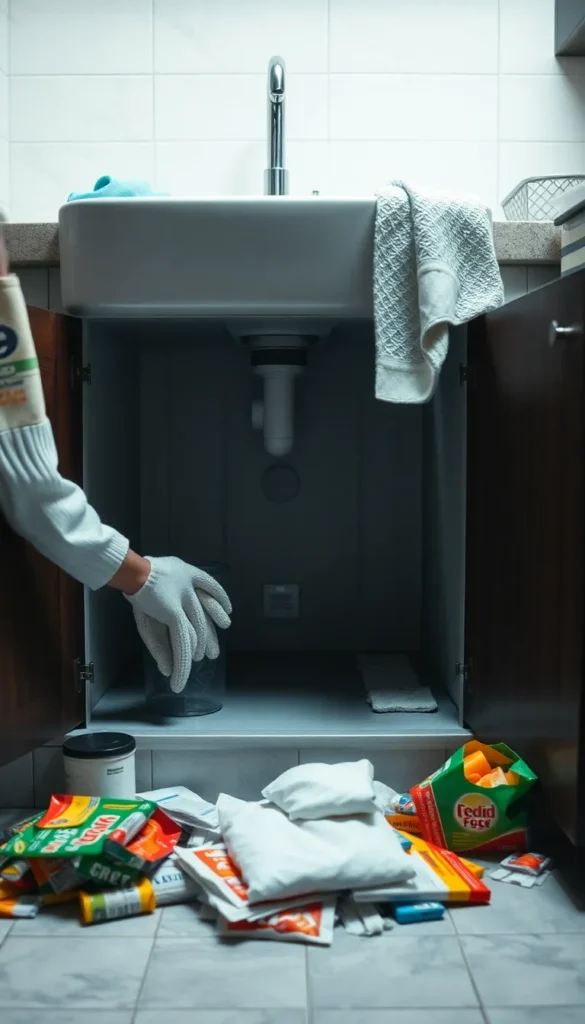
- Pull every single item out and place it on your counter or floor.
- Wipe down the cabinet interior, since spills and dust love to hide here.
- Check for any leaks or water damage while it’s empty.
- Sort items into three piles: keep, toss, and “doesn’t belong here.”
You’ll be shocked how many expired sprays or duplicate sponges show up in that toss pile.
Step 2: Work Around the Pipes, Not Against Them
The pipe situation is the number one reason this space feels impossible. The trick is choosing storage that adapts to the shape instead of fighting it.
- Two-tier sliding organizers fit around pipes and double your usable surface.
- Small bins on either side of the pipe create symmetry and order.
- Tension rods mounted low can hang spray bottles by their trigger handles, freeing up floor space entirely.
- Lazy Susans work great in the front corners for bottles you reach for often.
Measure your space before buying anything — under-sink cabinets vary wildly in width and depth.
Step 3: Create Zones for Everything
Random placement is what got you into this mess. Zones keep it from happening again.
- Daily cleaners (dish soap refills, all-purpose spray) up front, easy to grab.
- Trash bags and liners rolled and stored in a bin or hanging caddy.
- Sponges and gloves in a small basket near the front edge.
- Specialty or rare-use items (drain cleaner, oven cleaner) pushed toward the back.
This kind of zoning means you’ll always know exactly where something lives, no digging required.
Step 4: Use Vertical Space Like a Pro
Most people only use the floor of the cabinet, completely ignoring the door and the empty air above.
- Attach an over-the-door organizer for gloves, brushes, or small spray bottles.
- Add a stacking shelf riser to create a second level for taller items.
- Use adhesive hooks on the cabinet’s side wall for hanging dust pans or scrub brushes.
- Stand spray bottles upright in a bin instead of letting them tip over loose.
Vertical storage alone can almost double your usable space without buying a single big organizer.
Step 5: Label Everything (Yes, Even at Home)
Labels aren’t just for pantry jars. They’re a game-changer here too.
- Use a label maker, washi tape, or simple sticky labels on bins.
- Label by category, not brand, so the system stays flexible as products change.
- Add labels to the inside of the cabinet door if you store backup bins on top of each other.
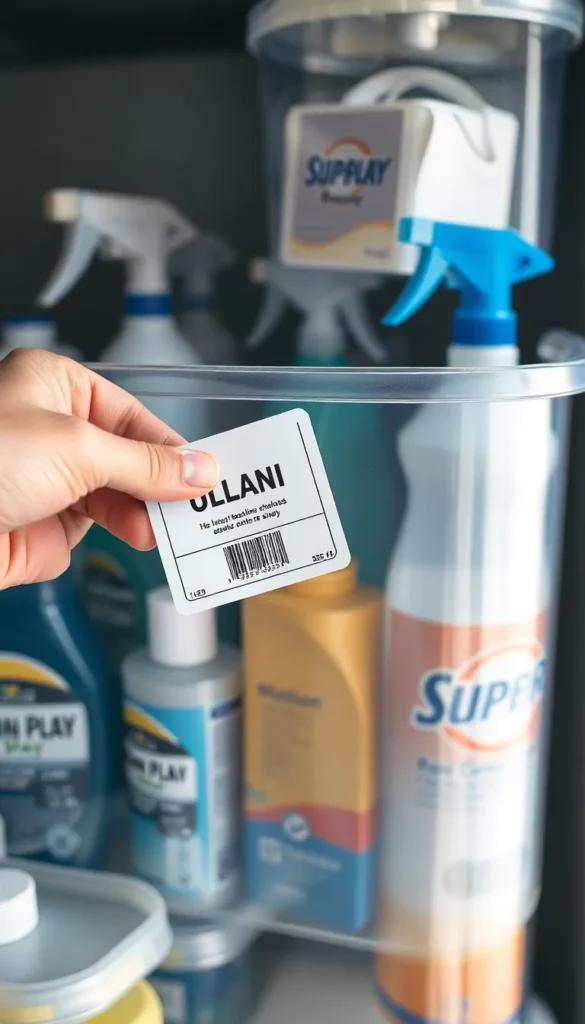
This tiny step is what keeps the space organized long after the initial cleanup high wears off.
Step 6: Maintain It With a Quick Monthly Reset
Organizing isn’t a one-time event, it’s a habit. Set a recurring reminder to:
- Toss anything expired or nearly empty.
- Wipe down bins and the cabinet floor.
- Make sure nothing has shifted out of its zone.
A five-minute check once a month keeps this space from sliding back into chaos.

Final Thoughts
Under-sink chaos isn’t a personality flaw, it’s just a system problem, and now you’ve got the system. With a little sorting, some smart bins, and labels that actually make sense, this space can go from dreaded to delightful in an afternoon.
Save this guide for later so you always have it on hand the next time you’re ready to tackle that cabinet for good!