Gold, silver, bronze — oh my. If you’ve ever stood in a home decor aisle paralyzed by the fear of clashing finishes, you’re not alone. Mixing metals is one of those design moves that looks effortlessly chic in magazine spreads but feels terrifyingly risky in real life. The good news? There are no rigid rules — just smart guidelines that make it look intentional rather than accidental.
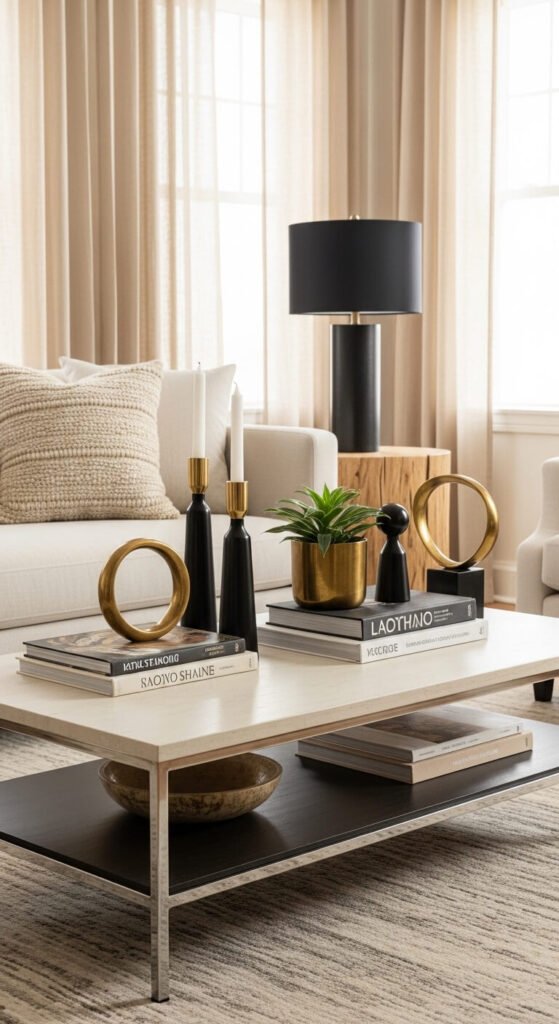
Choose One Dominant Metal First
Think of metals the way you think of a color palette. You need a hero, a secondary, and an accent.
- Your dominant metal should appear in the largest or most repeated pieces — think light fixtures, cabinet hardware, or a statement mirror frame.
- Your secondary metal supports it in medium-sized pieces like side table legs or curtain rods.
- Your accent metal shows up sparingly — a single candle holder, a picture frame, a decorative tray.
A good rule of thumb: aim for a 60/30/10 split across your three metals. This prevents any one finish from overwhelming the space.
Pair Warm Tones with Warm, Cool with Cool
Metals have undertones just like paint colors, and mixing warm with cool carelessly is where things go sideways.
- Warm metals: Gold, brass, copper, bronze
- Cool metals: Silver, chrome, nickel, pewter
- Neutral metals: Matte black, gunmetal, antique iron
The easiest starting point? Pick metals from the same temperature family. Brass and copper are a natural pair. Chrome and silver feel seamless together.
That said, mixing warm and cool can work — you just need a unifying element. A matte black finish acts as a perfect bridge between the two worlds.
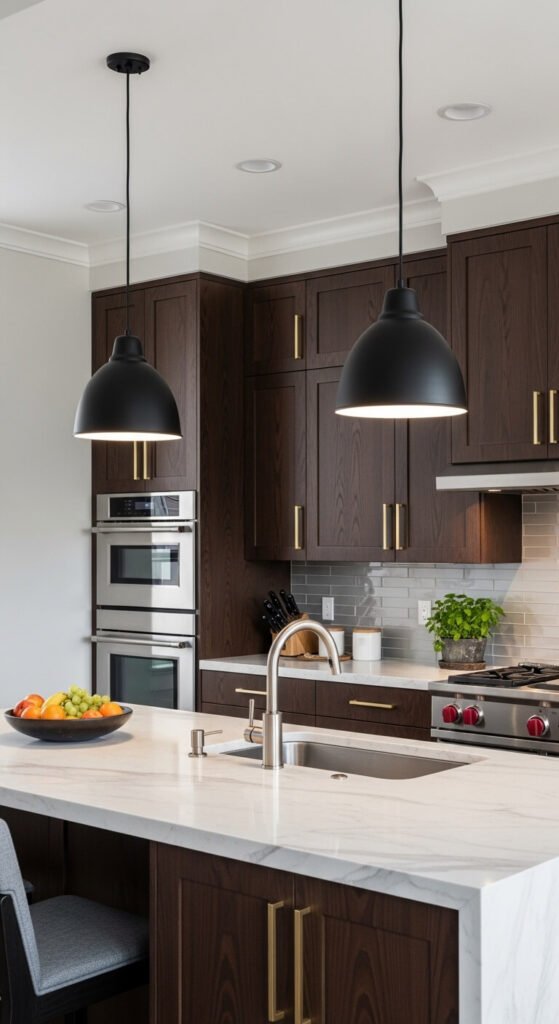
Vary the Finish, Not Just the Metal
Here’s a trick the pros swear by: vary the texture of your finishes to add depth without chaos.
- Polished finishes reflect light and feel formal
- Brushed or matte finishes are softer and more casual
- Hammered or patinated finishes add an artisan, organic quality
Pairing a polished brass vase with a brushed brass lamp creates visual interest while still feeling cohesive. Same metal family, different personalities — it works beautifully.
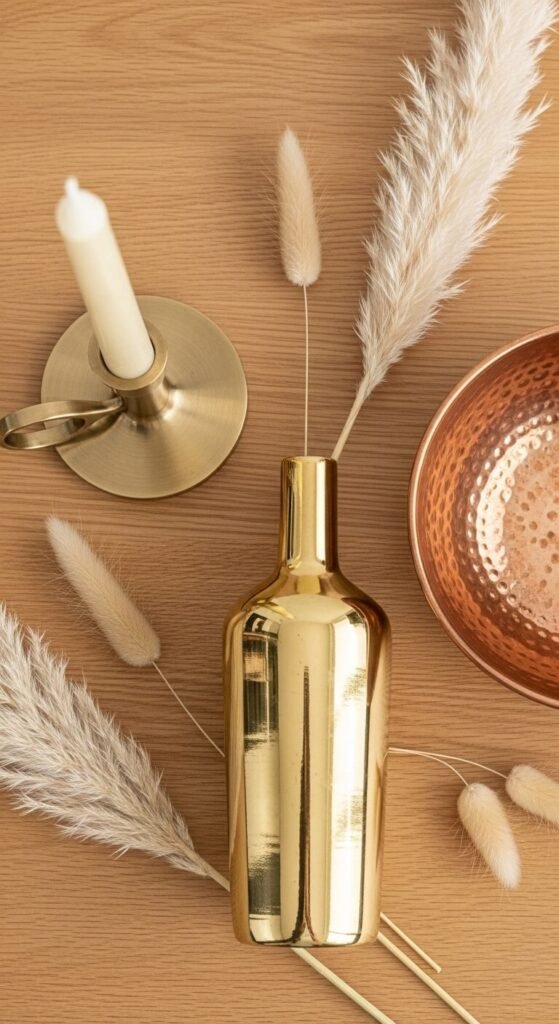
Use a Unifying Element to Tie It Together
When in doubt, anchor your metals with a common design thread:
- A consistent color palette (warm beiges and creams make gold and bronze play nicely together)
- A repeating material like wood, marble, or linen that grounds all the metallic tones
- Style consistency — rustic, industrial, or glam finishes tend to attract their own metal families naturally
If your space has warm wood tones, lean into gold and bronze. If you have white walls and concrete floors, chrome and matte black will feel right at home.
Don’t Be Afraid of an Odd Number
Designers often work in threes — and this applies to metals too. Three different metals in a room feel balanced and deliberate. Two can sometimes feel like an accident; four can feel cluttered.
A go-to trio that almost always works:
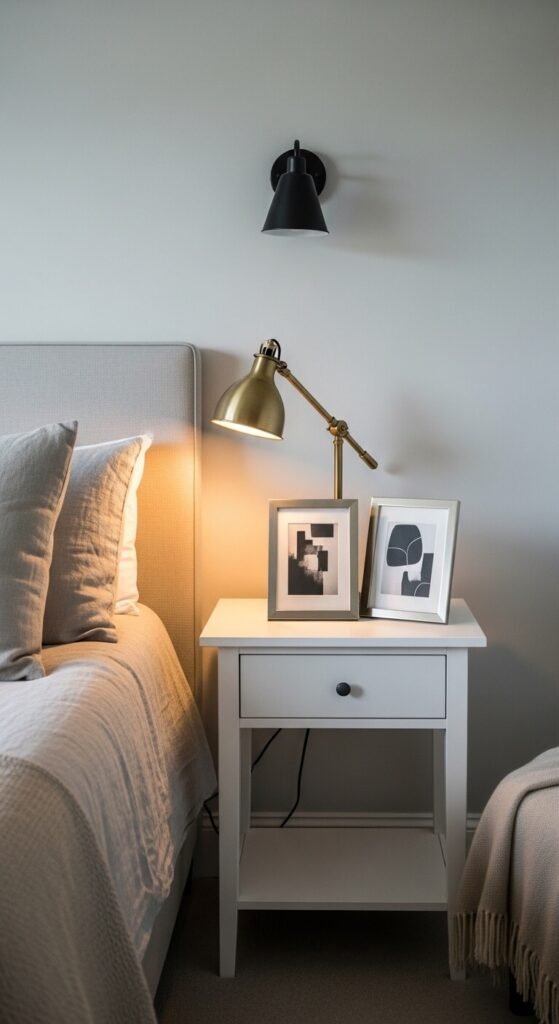
Brass + Matte Black + Brushed Nickel
It covers warm, neutral, and cool — and creates just enough tension to feel dynamic without looking mismatched.
The Bottom Line
Mixing metals is less about following strict rules and more about making intentional choices. Lead with one dominant finish, respect the warm/cool balance, vary your textures, and let a unifying material do the heavy lifting.
When it’s done right, mixed metals add layers of personality and sophistication that a single-finish room simply can’t achieve. And when it’s done really right? Nobody even notices you broke the rules — they just notice how good the space looks.
Save this guide and pin it for your next room refresh — your perfectly curated, rule-bending space is closer than you think. ✨