Think your tiny room is a lost cause? Think again. With the right design moves, even the most cramped space can feel open, airy, and surprisingly spacious — no knock-down walls required. Whether you’re working with a studio apartment, a narrow bedroom, or a compact living room, these 10 visual tricks will completely transform how your space feels.
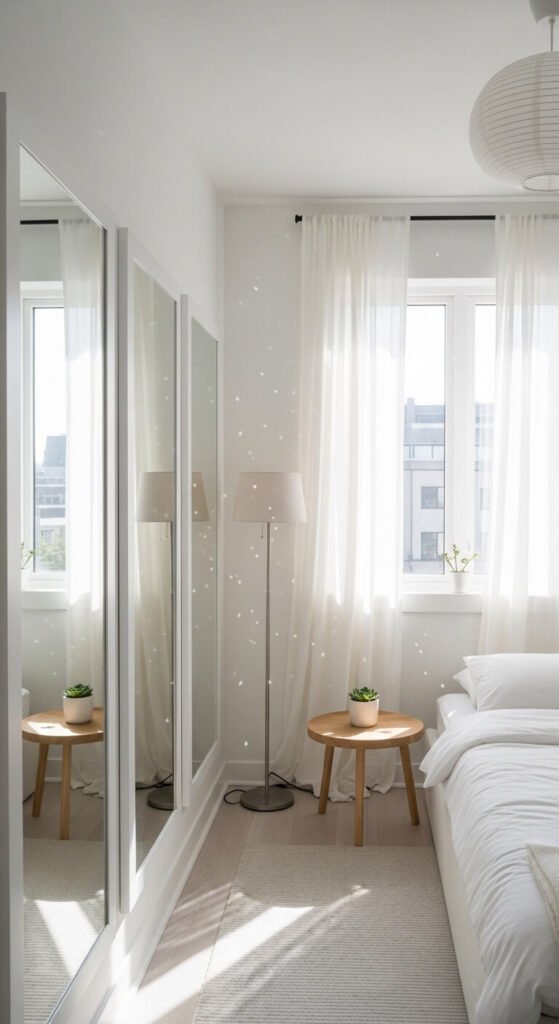
1. Go Light with Your Color Palette
Color is one of the most powerful tools in your design arsenal. Light, neutral tones — think soft whites, warm creams, pale grays, and blush pinks — reflect natural light and make walls feel like they’re pushing outward.
- Stick to a monochromatic palette to blur the lines between walls, furniture, and floors
- Avoid dark accent walls, which visually shrink a room
- Try painting your ceiling the same color as your walls for a seamless, expansive feel
2. Hang Mirrors Strategically
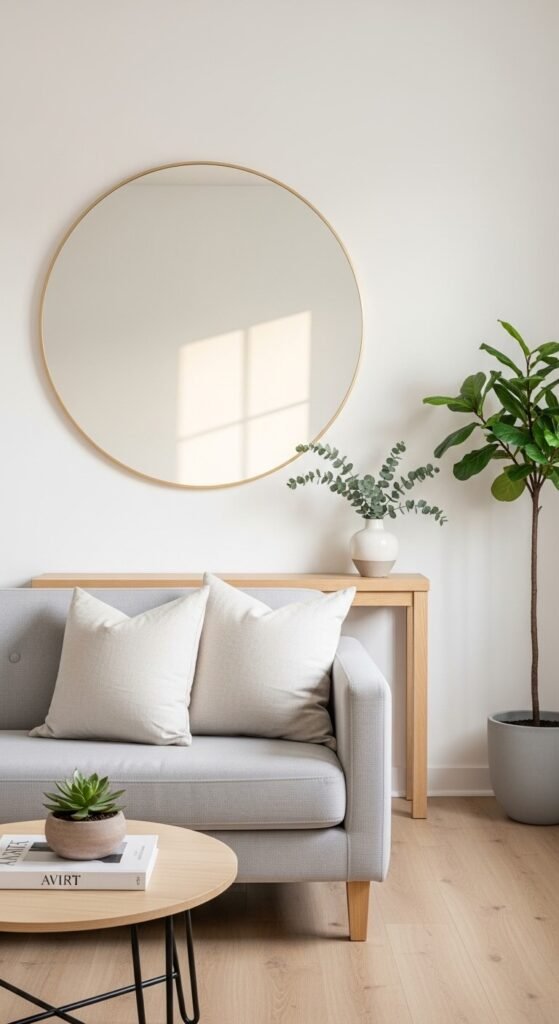
Mirrors are basically magic in small spaces. They bounce light around the room and create the illusion of depth where there is none.
- Place a large mirror directly across from a window to double the natural light
- Use a full-length mirror leaning against a wall for a casual, designer look
- A gallery wall of small mirrors can add style and the perception of more space
3. Let the Light In
Speaking of light — maximize every bit of it. Dark rooms feel smaller, and natural light is your best friend when square footage is limited.
- Swap heavy drapes for sheer, light-filtering curtains
- Hang curtains close to the ceiling and extend the rod past the window frame to make windows look taller and wider
- Keep windowsills clear to let sunlight flood in unobstructed
4. Choose Furniture with Legs
Bulky furniture sitting flat on the floor visually weighs a room down. Pieces with exposed legs — sofas, chairs, side tables — allow the eye to travel across the floor, making the room feel more open.
- Look for sofas and chairs with slim, tapered wooden or metal legs
- Raised bed frames give the same effect in bedrooms
- Glass or acrylic furniture works especially well since you can see right through it
5. Use Vertical Space
When floor space is limited, go up. Drawing the eye upward creates the impression of higher ceilings and more room overall.
- Install floor-to-ceiling shelving to maximize storage without eating up floor space
- Hang artwork slightly higher than you normally would
- Use tall, narrow furniture pieces like a slim bookcase or a vertical wardrobe
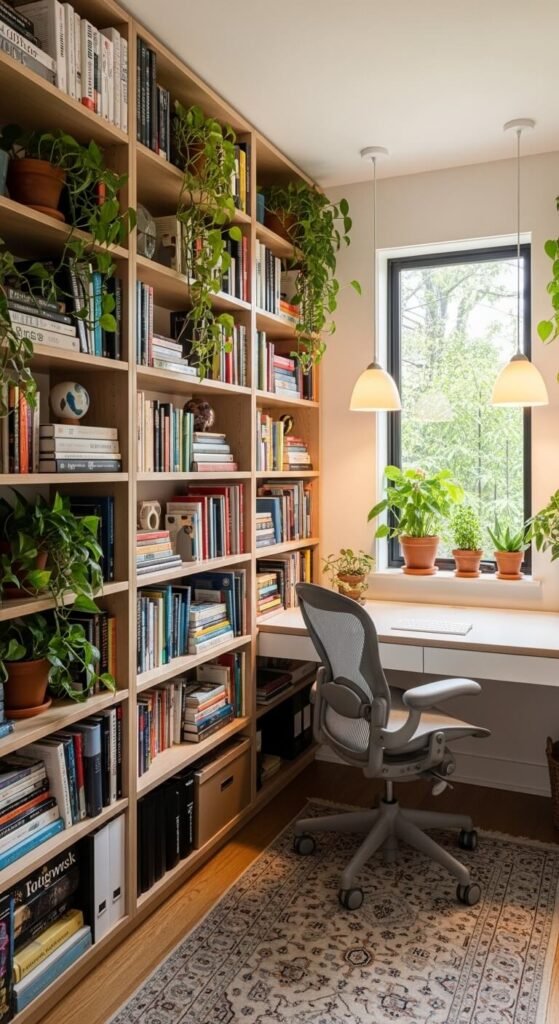
6. Declutter Ruthlessly
This one isn’t glamorous, but it works every time. Clutter is the enemy of a spacious-feeling room.
- Follow the rule: if it doesn’t serve a purpose or bring you joy, it goes
- Use hidden storage — ottomans, under-bed drawers, and storage benches are your best friends
- Keep surfaces like coffee tables and dressers mostly clear with just one or two intentional objects
7. Choose a Statement Rug (the Right Size)
A rug that’s too small is one of the most common small-room mistakes. A properly sized rug actually anchors the space and makes it feel larger and more cohesive.
- In a living room, the front legs of all major furniture should sit on the rug
- In a bedroom, choose a rug large enough to extend at least 18 inches beyond the bed on each side
- Light-colored rugs with subtle patterns keep things feeling open
8. Embrace Multi-Functional Furniture
Every piece of furniture in a small room should earn its place — ideally by doing two jobs at once.
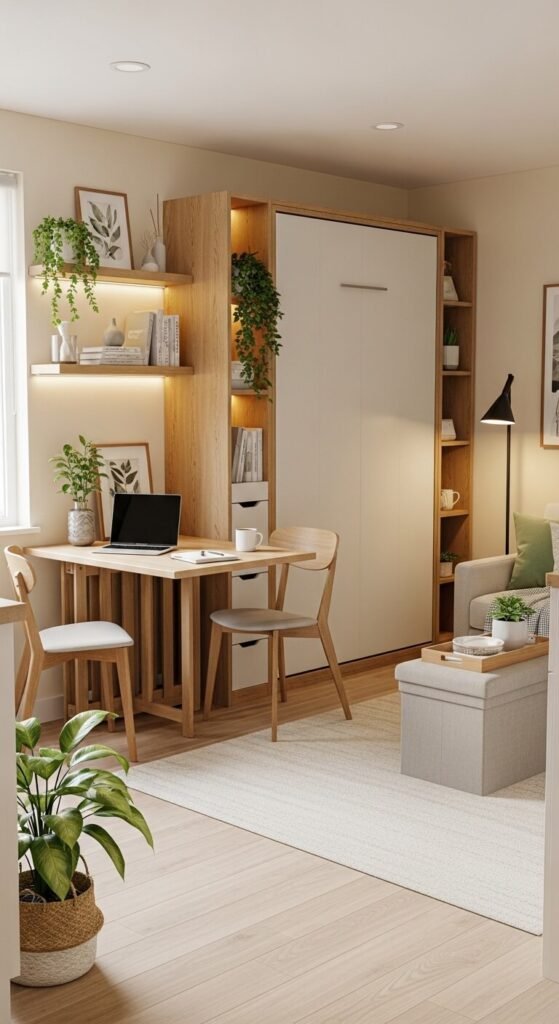
- A storage ottoman replaces a coffee table and provides hidden storage
- A murphy bed or daybed transforms a bedroom into a usable daytime space
- Nesting tables tuck away when not needed
9. Keep Patterns Small and Simple
Large, bold patterns can overwhelm a small room. Smaller, more subtle prints keep things interesting without closing in the walls.
- Opt for thin stripes, small geometric shapes, or delicate florals
- Vertical stripes on curtains or wallpaper draw the eye up, adding height
- Use patterns sparingly — one or two patterned elements per room is plenty
10. Create Continuity with Flooring
Visual breaks in flooring — like switching from hardwood to tile — create barriers that chop up a space. Consistent flooring throughout makes a room feel like one cohesive, flowing area.
- Use the same flooring material in connected spaces when possible
- Lay flooring diagonally to make a room appear wider
- Light wood tones and large-format tiles both work beautifully to open up a space
Your Small Room Has Big Potential
You don’t need a bigger home — you just need smarter design choices. From the paint on your walls to the rug under your feet, every decision is an opportunity to trick the eye and create a space that feels twice its size.
Save this article and pin your favorites — then pick just two or three tricks to start. Small changes add up fast, and before you know it, your “tiny” room will feel like the most thoughtfully designed space in the house.