You’ve seen it a thousand times on Pinterest and Instagram — that effortlessly cool living room where rugs are stacked on top of each other like a perfectly curated textile dream. It looks intentional, cozy, and somehow both collected and put-together. The good news? Layering rugs is one of the easiest styling tricks you can steal from interior designers, and it doesn’t require a big budget or a design degree. Just a few simple rules and a willingness to mix things up.

Start with a Base Rug That Does the Heavy Lifting
Think of your base rug as the foundation of your layered look. It should be large enough to anchor the entire seating area — ideally extending at least 18 inches beyond your sofa on each side. The best base rugs are:
- Neutral in color — think natural jute, sisal, cream wool, or a simple flatweave
- Textural but not too busy — you want pattern room for the top rug
- Durable and affordable — since most of it will be covered anyway
Jute and sisal rugs are practically made for this trick. They’re inexpensive, widely available, and their natural, earthy texture gives that grounded boho base every layered look needs.
Choose a Statement Rug to Layer on Top
This is where the fun begins. Your top rug is the personality piece — the one that brings color, pattern, and character to the room. A few winning options:
- Vintage or distressed Persian rugs — nothing says “designer boho” quite like a faded, worn-in medallion rug
- Moroccan-style rugs — bold geometric patterns in black and white or terracotta tones
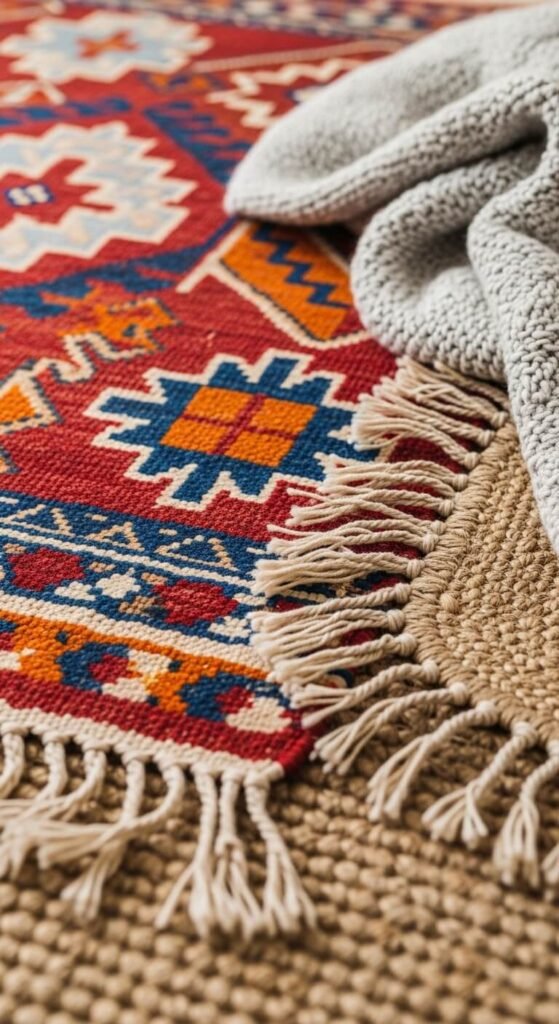
- Kilim rugs — flat-woven with rich tribal patterns that layer beautifully
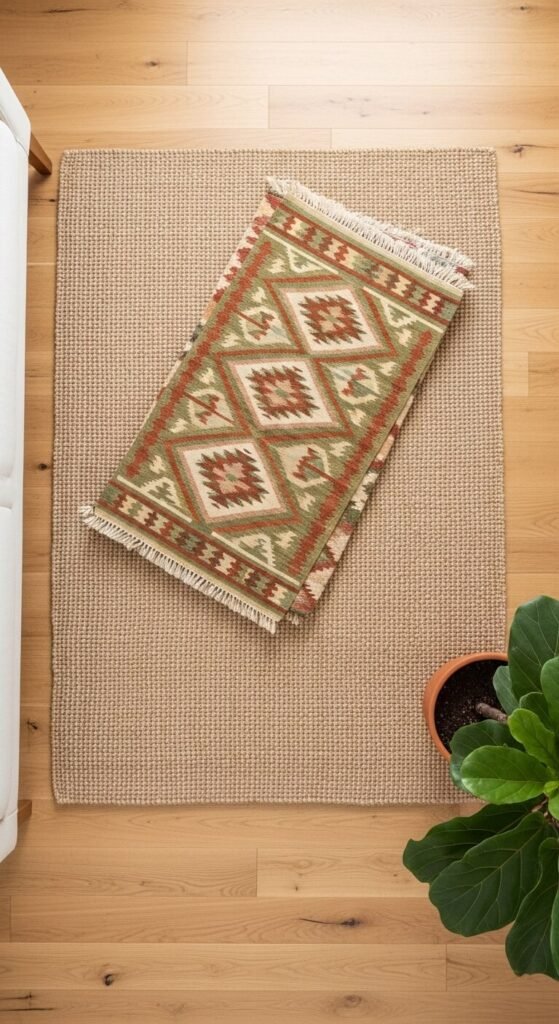
Your top rug should be noticeably smaller than the base — leaving at least 6–12 inches of the bottom rug visible on all sides. This contrast in scale is what makes the layered look work.
Play with Angles for an Effortless Vibe
Here’s the secret move that separates a flat, forgettable rug arrangement from one that looks like it belongs in an editorial spread: angle your top rug slightly. Instead of aligning it perfectly parallel to the walls, rotate it 15–45 degrees. This simple shift:
- Creates visual interest and movement
- Feels more organic and less rigid
- Gives the whole room a relaxed, lived-in energy
It sounds almost too simple, but that slight diagonal placement is what makes a layered rug setup look intentionally styled rather than just thrown together.
Get the Colors and Textures Right
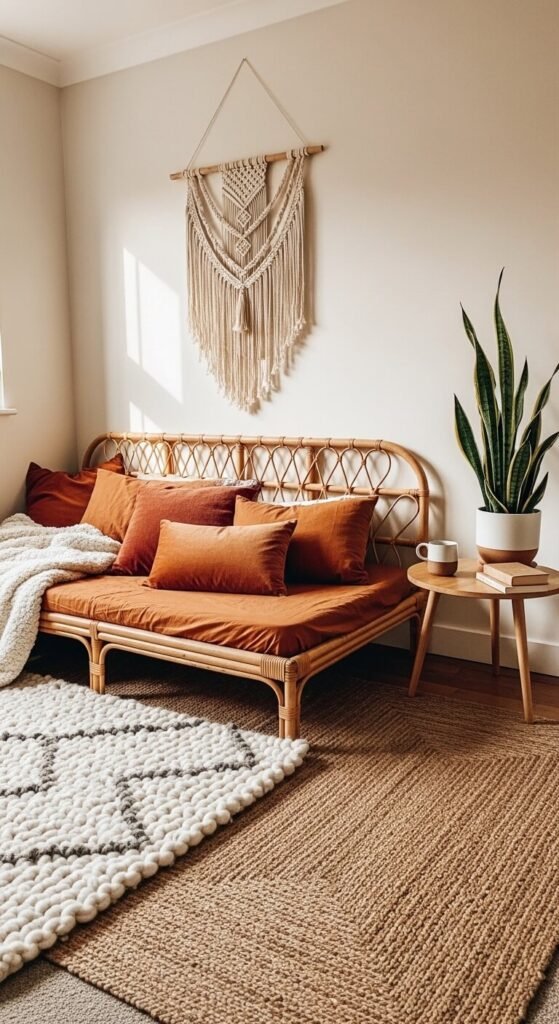
Layering rugs is as much about texture contrast as it is about pattern. Pair opposites for the best results:
- Smooth + chunky — a flatweave kilim over a high-pile shag
- Neutral + bold — a cream wool base under a jewel-toned vintage rug
- Natural fiber + soft fabric — rough jute under a plush, faded Persian
For color, pull one or two tones from your existing décor and make sure at least one rug echoes them. You want the rugs to feel connected to the room, not like they accidentally wandered in from somewhere else.
Don’t Forget the Practical Stuff
Styling aside, a few practical tips will keep your layered rugs looking good and staying put:
- Use a rug pad under both rugs — this prevents slipping and protects your floors
- Tape or pad between layers — a small non-slip mat between the two rugs keeps the top one from shifting
- Vacuum regularly — layered rugs trap more dust, so a weekly pass with the vacuum keeps things fresh
The Boho Layered Look Is Easier Than You Think
Rug layering is one of those design tricks that delivers massive visual impact for minimal effort and cost. Start with a large neutral base, add a character-driven statement rug on top, angle it slightly, and let the textures and colors do the rest.
Save this article for your next room refresh — and remember, the “rules” of boho style are really just suggestions. Trust your eye, mix freely, and make it yours.