Ever walked into a room that felt twice as big as it actually was, and couldn’t quite figure out why? Chances are, a mirror was doing all the heavy lifting. The right mirror, hung in the right spot, can bounce natural light across an entire room and trick the eye into seeing square footage that simply isn’t there. The wrong placement, though, and you’ve just got a fancy piece of glass doing absolutely nothing for you.
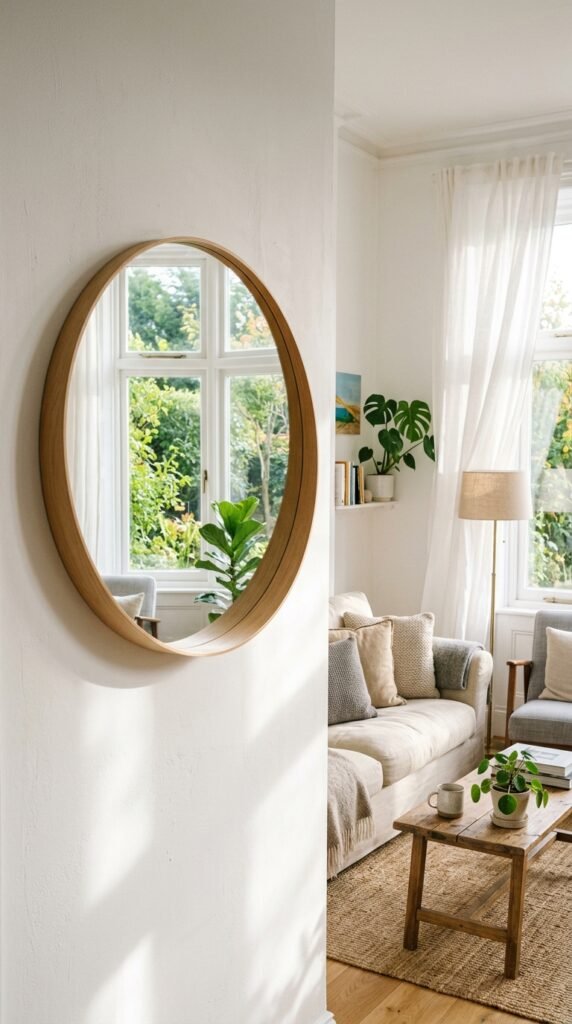
If you’ve got a small apartment, a dim hallway, or a room that just feels “off,” this guide will walk you through exactly where and how to hang your mirrors so they work for you, not just sit there looking pretty.
Why Mirror Placement Matters So Much
Mirrors aren’t just decor, they’re light manipulators. Hang one wrong and it reflects a blank wall or a cluttered closet. Hang one right and it pulls daylight from a window across the entire room, making everything feel brighter and more open.
A few quick truths about mirrors and light:
- Mirrors don’t create light, they redirect existing light.
- The angle of the mirror determines where that light lands.
- Reflecting something pleasant (a window, a plant, an open doorway) always beats reflecting clutter.
Before you grab a hammer, it helps to actually study your room’s light source for a day. Notice where the sun comes in during the morning versus the evening, because that’ll tell you exactly where your mirror needs to go.
Rule #1: Always Face the Mirror Toward a Light Source
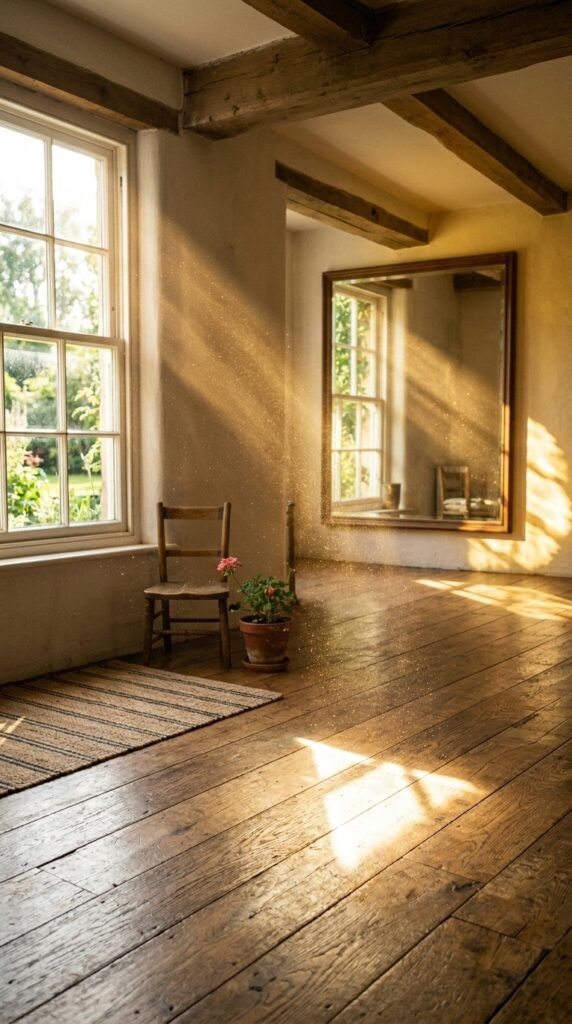
This is the golden rule of mirror placement. A mirror hung directly across from a window will catch sunlight throughout the day and throw it deeper into the room.
- Position the mirror on the wall opposite or adjacent to a window.
- Avoid hanging it behind the main light source. A mirror behind a window does nothing useful.
- In rooms with no windows (like an interior hallway), reflect a lamp or overhead fixture instead.
Rule #2: Use Mirror Size and Shape to Your Advantage
Bigger generally wins when your goal is to maximize space and light. A tiny mirror in a large room barely makes a dent, but an oversized mirror can become a dramatic focal point that doubles the perceived size of the wall it’s on.
Some shape tips depending on your goal:
- Round or oval mirrors soften a room and work beautifully above consoles or fireplaces.
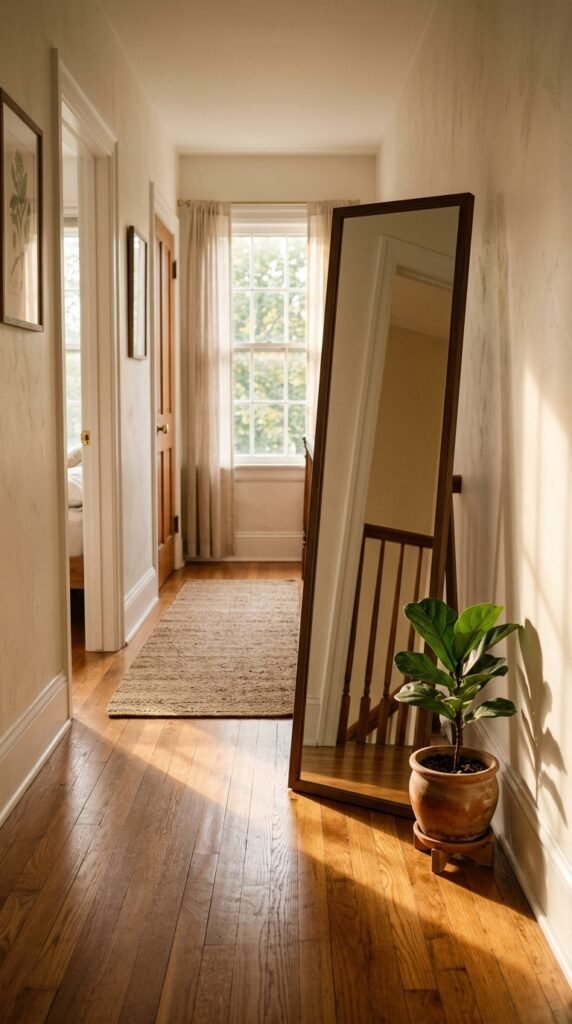
- Full-length rectangular mirrors leaning against a wall instantly elongate a narrow room.
- Mirror clusters (a gallery wall of smaller mirrors) create visual interest while still bouncing light in multiple directions.
If you’re torn between two sizes, size up. An undersized mirror is one of the most common decorating mistakes people make.
Rule #3: Hang It at the Right Height
Even a gorgeous mirror loses its magic if it’s hung too high or too low. The general sweet spot is positioning the center of the mirror at eye level, roughly 57 to 60 inches from the floor for most adults.
A few placement scenarios:
- Above a console or sofa: Leave about 4–8 inches of space between the furniture and the bottom edge of the mirror.
- In an entryway: Hang it where people naturally pause to check their reflection.
- Leaning mirrors: No measuring needed, just prop it against the wall at a slight backward tilt.
Pro tip: if you’re hanging multiple frames or mirrors together, lay them out on the floor first to map your spacing before any nails go into the wall.
Rule #4: Use Mirrors to “Extend” Small Rooms
This is where the illusion of space really comes alive. Placing a mirror at the end of a short hallway or on the narrow wall of a small room visually pushes the boundary back, making the space read as longer or wider than it is.
Try these tricks:
- Hang a mirror at the far end of a galley kitchen or narrow hallway.
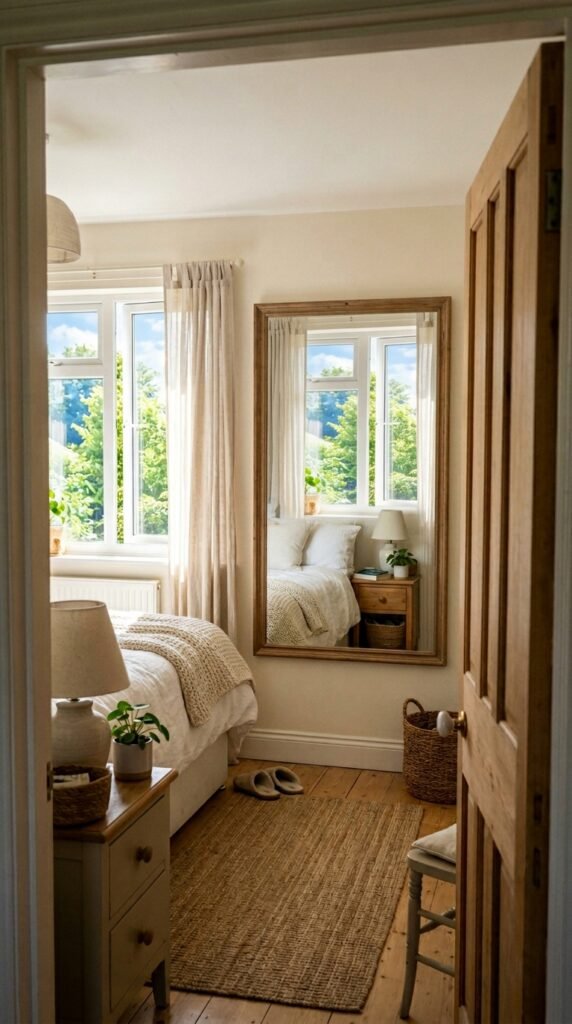
- In a small bedroom, place a mirror opposite the door so it reflects the room as you walk in.
- Avoid mirrors directly facing your bed if you’re sensitive to feng shui guidelines, side placement works just as well.
Rule #5: Layer Mirrors With Other Reflective Elements
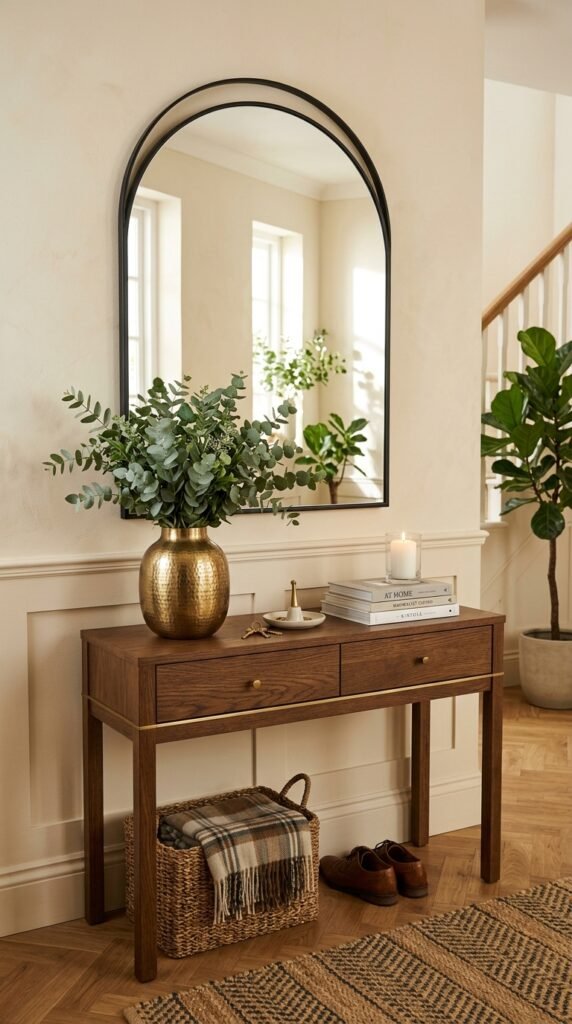
Once your main mirror is placed, you can amplify the effect with other reflective surfaces nearby; think glossy furniture, metallic frames, or glass decor. This creates a cohesive bounce of light throughout the room rather than just one isolated bright spot.
- Pair a mirror with a glass-top side table.
- Add metallic vases or frames nearby to echo the reflective quality.
- Keep the wall around the mirror relatively uncluttered so the eye isn’t distracted.
Final Thoughts
Hanging a mirror well is part science, part instinct. Once you understand how light travels through your space and where your eye naturally rests, finding the perfect spot becomes almost second nature. A well-placed mirror doesn’t just decorate a room, it transforms how that room feels to live in.
Ready to brighten up your space? Save this guide for later so you’ve got it on hand the next time you’re rearranging a room!