There’s a reason that perfectly matched, brand-new furniture set never quite feels like home. It looks nice in a showroom, but it lacks soul. Now picture a sun-faded brass lamp passed down from a grandmother, sitting next to a chipped ceramic vase found at a flea market for two dollars. That’s character. That’s charm. And it’s something you simply cannot buy off a shelf.
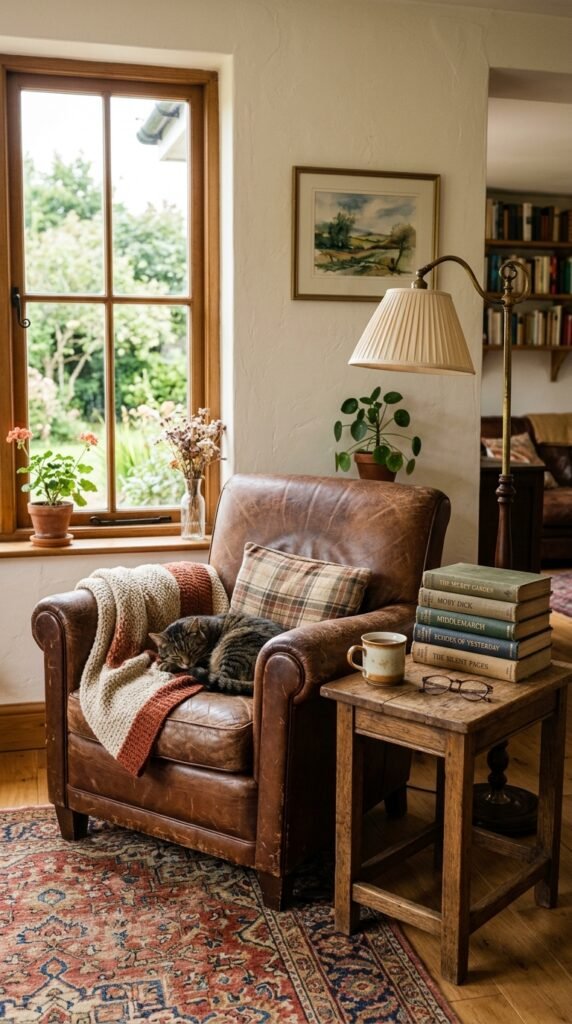
Decorating with vintage finds isn’t about making your home look “old” — it’s about making it look lived in, layered, and uniquely yours. Here’s how to do it well.
Start with One Statement Piece
Don’t try to overhaul your whole room at once. Vintage decorating works best when you build around a single anchor piece that catches the eye.
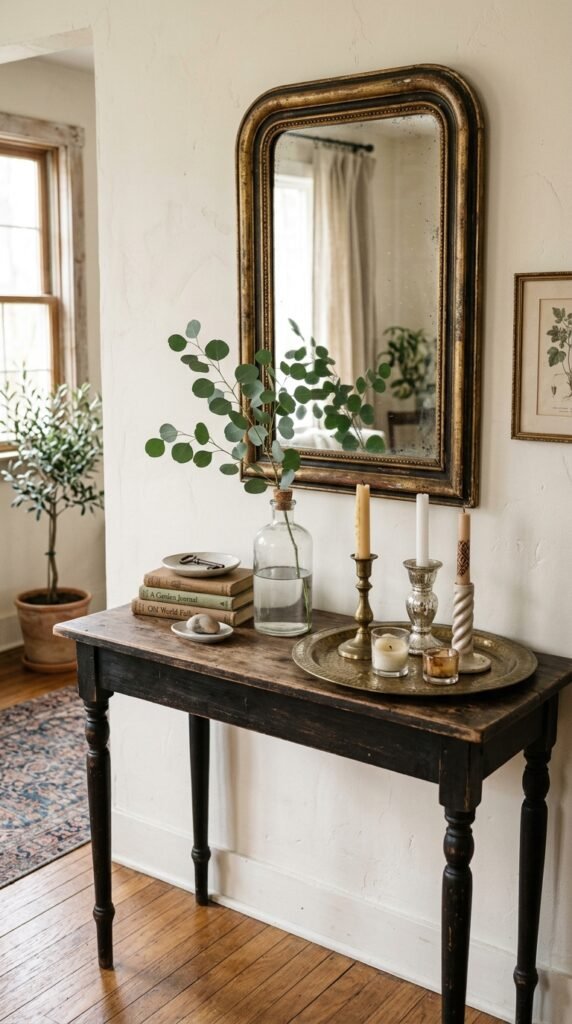
- A carved wooden mirror
- An antique trunk used as a coffee table
- A retro velvet sofa in a bold color
Pick something with presence, then let everything else support it rather than compete with it.
- Tip: If you’re new to thrifting, furniture is actually easier to start with than small decor — there’s usually less competition, and the pieces are sturdier than you’d expect.
Mix Eras Instead of Matching Them
A common mistake is trying to make everything “look vintage” from the same decade. That ends up feeling more like a costume set than a home.
Instead, blend:
- A mid-century modern chair
- A Victorian-style frame
- A 1970s rattan basket
- Modern, clean-lined lighting
The contrast is what creates that effortless, collected-over-time look — like the room has a story, not a theme.
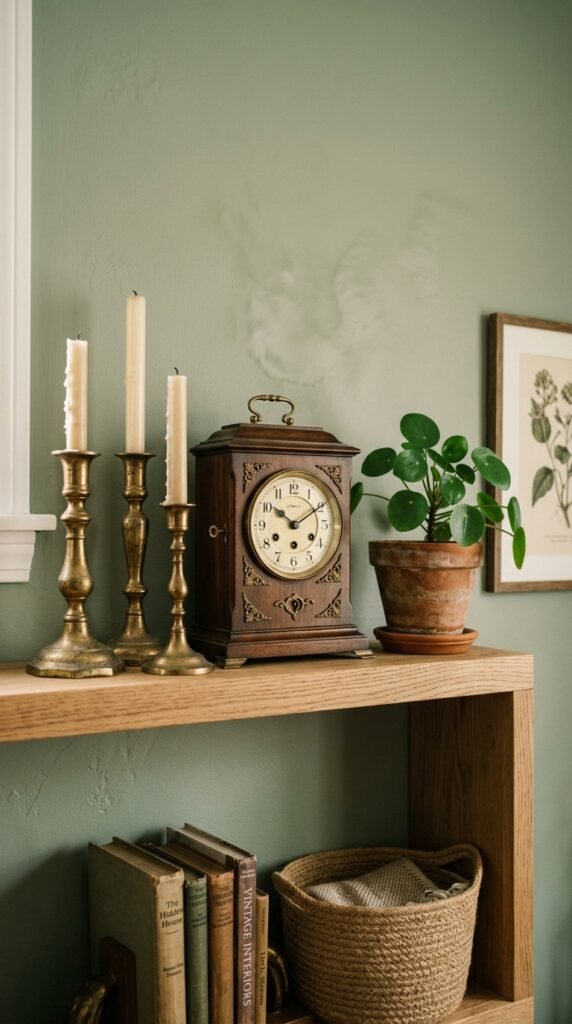
Hunt in the Right Places
You don’t need a giant budget to find beautiful vintage pieces — you just need to know where to look.
- Estate sales – often the best source for quality furniture and unique decor
- Flea markets – great for smaller accents: frames, glassware, trinkets
- Thrift stores – hit-or-miss, but worth a regular rotation visit
- Facebook Marketplace & local swap groups – ideal for furniture you can inspect before buying
- Family attics – free, sentimental, and often overlooked
- Tip: Go in with a flexible wish list, not a rigid one. The magic of vintage shopping is finding things you didn’t know you needed.
Layer Textures for Warmth
Vintage pieces almost always carry texture — worn wood grain, tarnished metal, soft aged linen. Lean into that.
Try layering:
- A weathered wood table
- A woven jute rug
- Linen or velvet cushions
- Aged brass or copper accents
This textural mix is what makes a vintage-inspired space feel warm and inviting instead of cold or sparse.
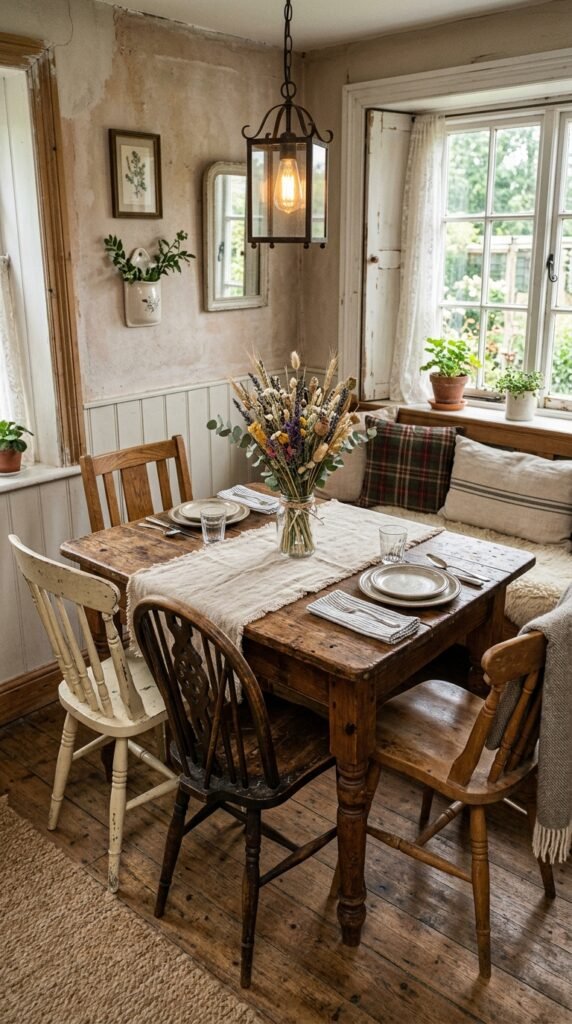
Don’t Be Afraid of “Imperfect”
A small chip, a faded patina, a slightly uneven leg — these aren’t flaws to hide. They’re the entire point.
- Embrace patina on metal accents instead of polishing it away
- Let wood show its natural wear instead of refinishing everything
- Choose character over “like-new” condition
Perfectly preserved vintage pieces are wonderful, but a little wear tells a story — and that story is exactly what makes a space feel charming rather than staged.
Use Vintage as the Accent, Not the Whole Room
You don’t need every item in a room to be antique. In fact, the easiest way to keep a vintage-inspired space from feeling cluttered or themed is to treat vintage pieces as accents within a more neutral, modern base.
A simple formula:
- 70% neutral, modern foundation (walls, sofa, flooring)
- 30% vintage accents (lighting, frames, small furniture, textiles)
This keeps the space feeling fresh and livable, while the vintage pieces still get to shine.
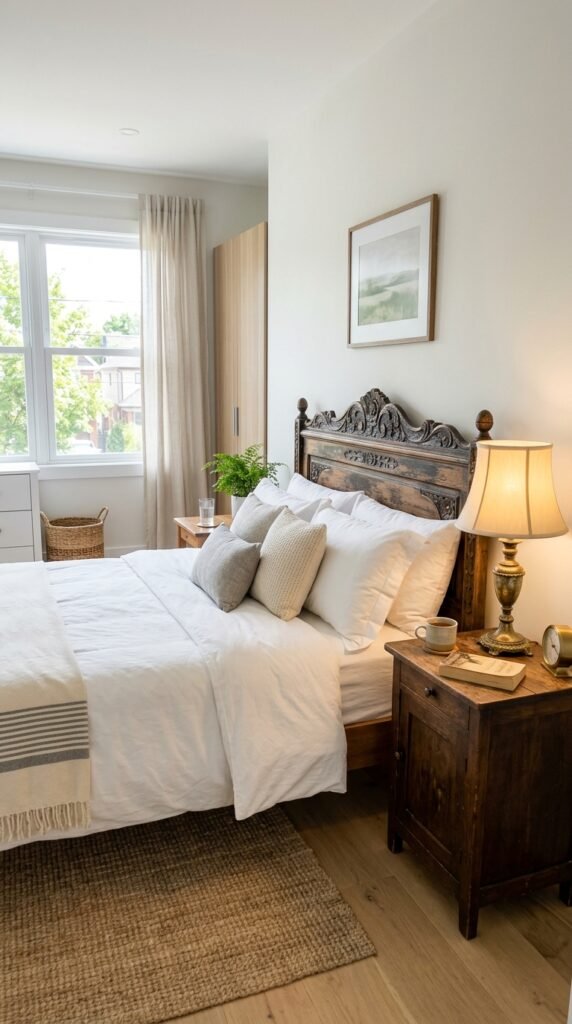
Display with Intention
Vintage decor shines when it’s displayed thoughtfully — not just placed wherever there’s empty space.
- Group similar items (like glass bottles or framed art) for visual impact
- Leave breathing room between pieces so each one stands out
- Use trays or shelves to “anchor” small collections instead of scattering them
A curated cluster of three vintage items will always look more intentional than ten scattered around a room.
Final Thoughts
Decorating with vintage finds isn’t about following a strict rulebook — it’s about collecting pieces that genuinely speak to you, one at a time. The chipped vase, the creaky drawer, the slightly uneven mirror frame — these are the details that turn a house into a home with real character.
Start small, shop slow, and let your space tell a story that no big-box store ever could.
Save this post for your next thrift store trip — you’ll know exactly what to look for!