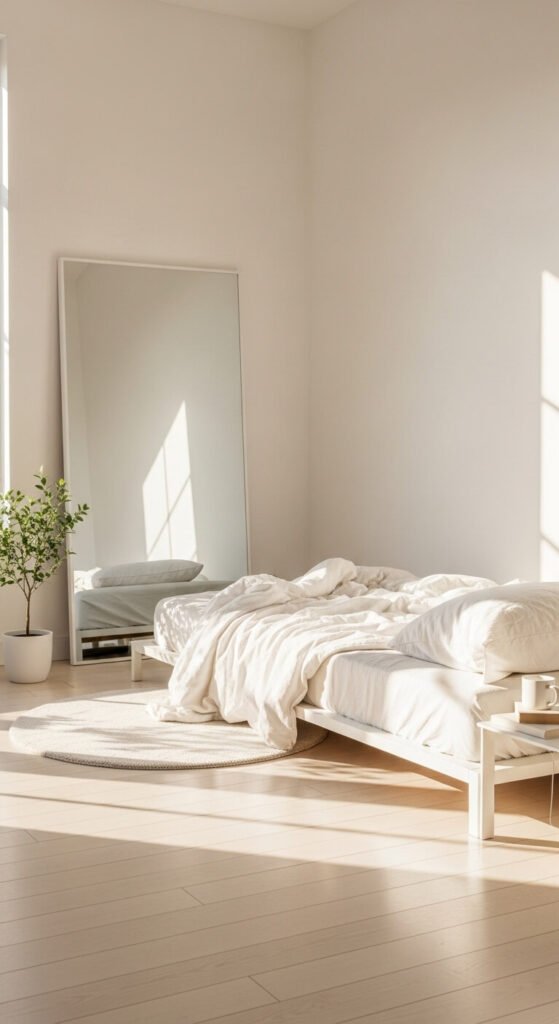
You don’t need to knock down walls or move to a bigger apartment to get the airy, dreamy bedroom you’ve been scrolling past on Pinterest. With the right design tricks, even the tiniest room can feel open, calm, and surprisingly generous with space. The secret? It’s all about light, scale, and a little visual magic.
Let’s break down exactly how to do it — no renovation required.
Choose a Light, Cohesive Color Palette
Color is your most powerful (and affordable) tool. Dark or busy walls can make a small room feel like a box. Light, neutral tones do the opposite — they bounce light around and blur the boundaries of the room.
- Best wall colors: Soft white, warm cream, pale sage, blush, or light greige
- Pro tip: Paint your ceiling the same color as your walls — it makes the room feel taller by removing the visual “lid”
- Keep your bedding, curtains, and rugs in the same tonal family so the eye flows smoothly without stopping
Contrast is fine in small doses — a dark accent pillow, a wooden nightstand — but avoid clashing patterns that compete for attention.
Use Mirrors Strategically
If there’s one decorating hack that truly works, it’s mirrors. A well-placed mirror doubles your perceived space instantly by reflecting light and creating the illusion of depth.
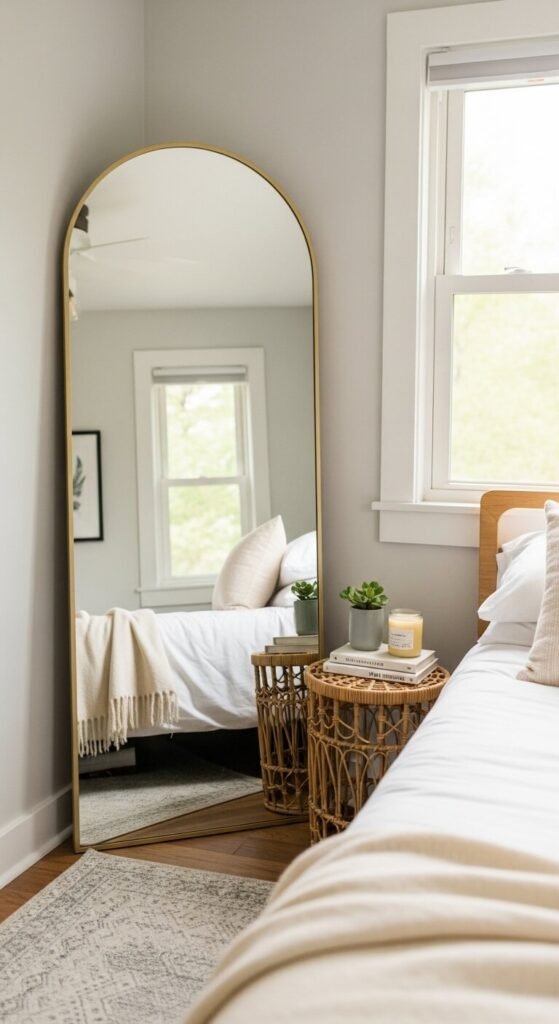
- Lean a large mirror against the wall opposite a window to reflect natural light
- A mirrored wardrobe door does double duty — storage and space illusion
- Avoid placing mirrors where they reflect clutter — it only amplifies the mess
Choose Furniture That’s the Right Scale
Bulky furniture is the number one space-killer in small bedrooms. Every piece should earn its spot.
- Go low: A low-profile bed frame keeps the ceiling feeling high
- Opt for legs: Furniture raised on legs (nightstands, chairs, bed frames) lets you see the floor underneath, which visually expands the room
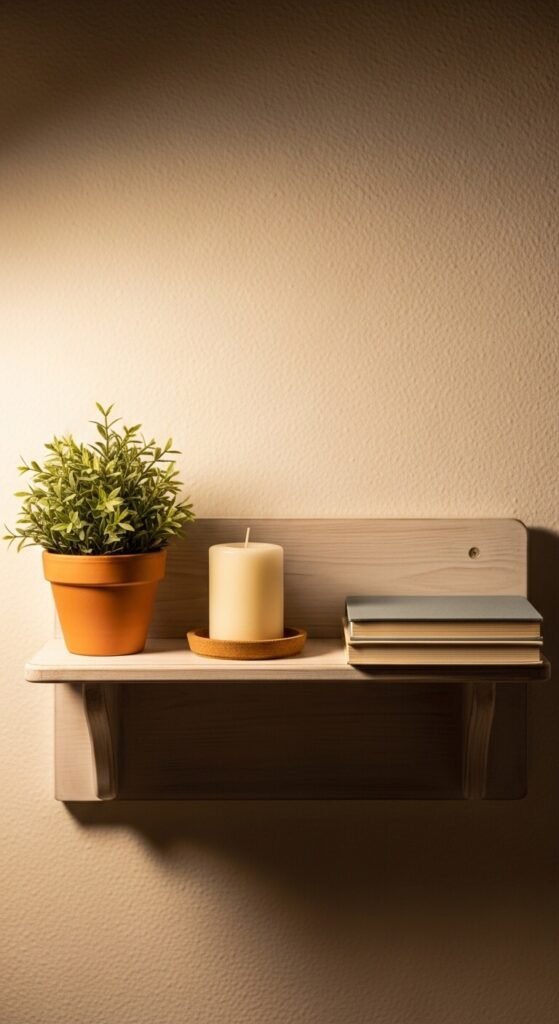
- Think multifunctional: A storage ottoman, a bed with built-in drawers, or a floating shelf instead of a bulky nightstand saves precious square footage
Resist the urge to fill every corner. Empty space isn’t wasted space — it’s breathing room.

Maximize Natural Light (and Fake It When You Can’t)
Light is the single biggest factor in how spacious a room feels. The more of it, the better.
- Swap heavy drapes for sheer linen curtains that let sunlight filter through
- Hang curtain rods as close to the ceiling as possible — it draws the eye upward and makes windows look bigger
- If natural light is limited, layer your artificial lighting: a warm overhead fixture plus a soft bedside lamp creates depth without harshness
- Avoid a single harsh overhead light — it flattens everything and makes the room feel smaller
Declutter and Style With Intention
A cluttered small room will never feel spacious, no matter how many design tricks you apply. Editing is everything.
- Use closed storage whenever possible to keep surfaces clean
- Limit your “display” items to a small curated collection — three meaningful pieces beat fifteen random ones
- Keep the floor as clear as possible; floor clutter is the fastest way to shrink a space visually
Add Vertical Elements to Draw the Eye Up
When you can’t go wide, go tall. Vertical lines trick the brain into registering more height.
- Hang artwork higher than feels natural — it pulls the eye upward
- Use tall, slim plants like a snake plant or fiddle leaf fig
- Vertical-stripe wallpaper or a tall bookshelf anchors the room while adding perceived height
The Takeaway
A small bedroom doesn’t have to feel small. With a light color palette, strategic mirrors, right-scaled furniture, and intentional styling, you can completely transform how your space feels — without spending a fortune or moving a single wall.
Save this article for your next bedroom refresh — and remember: in small space design, less truly is more.