Every new parent wants to create the most beautiful nursery imaginable — and then reality hits around year two when your carefully curated baby haven suddenly needs to become a toddler room, and a few years after that, a big-kid bedroom. Redecorate from scratch every few years? No thank you.
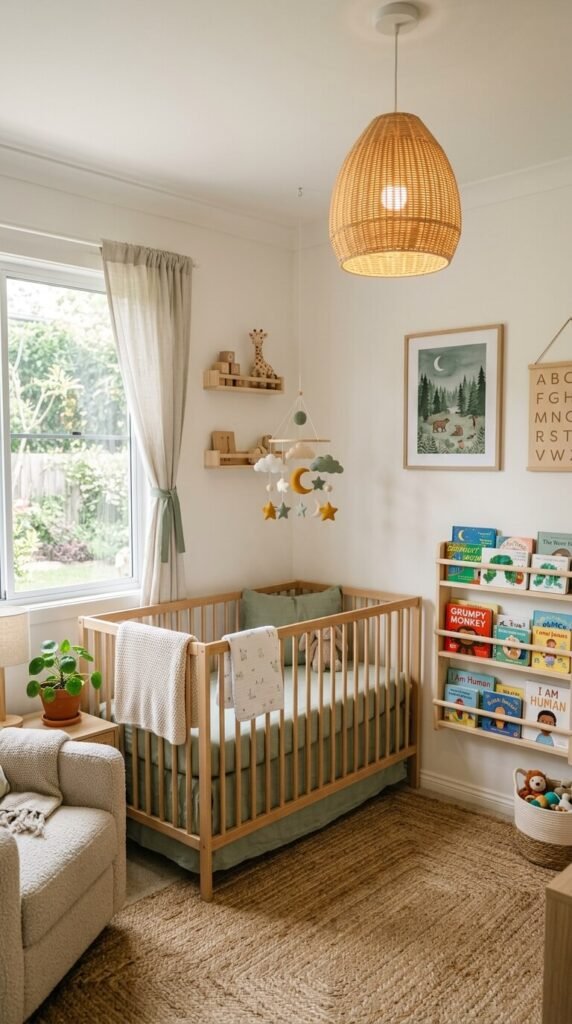
The smartest nursery design strategy isn’t about what looks most adorable right now — it’s about building a room that evolves with your child without requiring a complete overhaul every time they hit a new milestone. Here’s how to do it beautifully.
Start with a Timeless, Neutral Foundation
The biggest nursery decorating mistake new parents make is going all-in on a theme. Jungle animals, celestial moons, pink rainbows — they’re all adorable, and they all have an expiration date of roughly 18 months.
Instead, build your foundation on neutrals that can flex across every childhood stage:
- Wall colors — warm white, soft sage, muted clay, or dusty blue work from infancy through the teenage years
- Flooring — natural wood tones or neutral carpet provide a base that pairs with any evolving style
- Large furniture — keep cribs, dressers, and bookshelves in natural wood, white, or soft gray so they never clash with changing decor
- Window treatments — simple linen or cotton curtains in a neutral tone will outlast every theme phase your child goes through
Think of your walls, floors, and large furniture as the permanent backdrop. Everything fun and personalized — the themed elements your heart wants — goes into easily swappable accents instead.
Invest in Furniture That Converts and Adapts
Nursery furniture is one of the best places to spend a little more upfront because the right pieces will serve your child for a decade or longer.
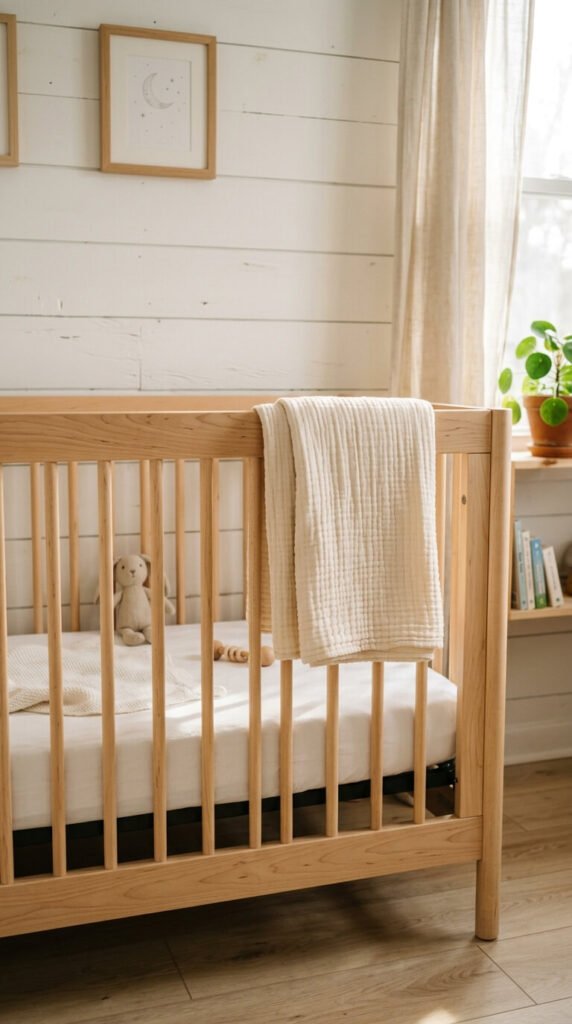
These are the pieces worth investing in:
- Convertible cribs — the best ones transition from crib to toddler bed to full-size bed with simple hardware changes; one purchase that serves your child from birth through high school
- Dresser with changing topper — a solid wood dresser with a removable changing tray becomes a regular dresser the moment potty training is complete; buy the dresser for life, not just the baby stage
- Bookshelf with adjustable shelves — board books today, chapter books tomorrow, trophies and collectibles after that; adjustable shelving grows with every stage
- Upholstered glider or armchair — choose a classic silhouette in a durable, cleanable fabric; it moves from nursing chair to reading corner chair without skipping a beat
Avoid furniture that only works for one stage. A dedicated changing table with no other function will be out of the room by age two.
Use Accents and Textiles to Carry the Theme
Here’s the trick that makes a grow-with-me nursery work beautifully: put all your personality into the things that are easy to change.
Textiles, wall art, and small decor objects are your theme delivery system — and they cost a fraction of what furniture does to swap out.
- Crib bedding and blankets — rotate these as your child’s interests evolve; woodland creatures become dinosaurs become sports themes without touching a single wall
- Removable wall decals or peel-and-stick wallpaper — create an accent wall or a whimsical mural that comes down cleanly when your child is ready for something new
- Throw rugs — a soft play rug in a fun pattern adds theme and color to the floor without any commitment
- Curtain panels — swap these out seasonally or as themes change; they make a bigger visual impact than most people realize
- Stuffed animals and toy displays — these naturally evolve as your child’s preferences shift; let them become part of the decor rather than hiding them away
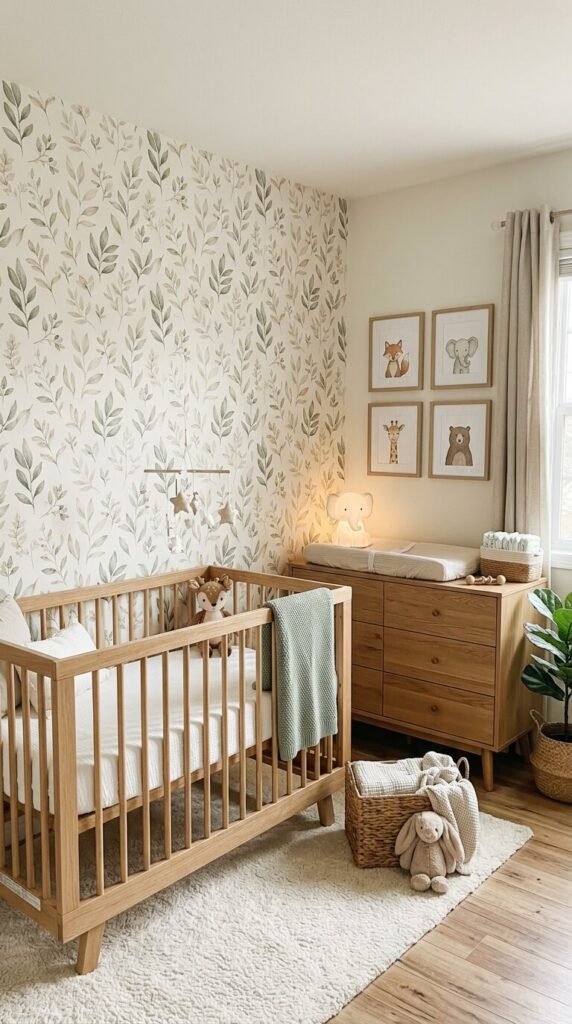
Plan Your Lighting for Every Stage
Lighting in a nursery needs to do a lot of work — and the needs change dramatically as your child grows.
Plan for three layers from the very beginning:
- Ambient lighting — a main overhead fixture that illuminates the whole room; choose something classic and timeless rather than a themed baby fixture you’ll want to replace quickly
- Nightlight or dim option — essential for late-night feeds and diaper changes; a smart bulb in your main fixture that dims is often the simplest solution
- Task lighting — a small lamp on the dresser or bookshelf for reading sessions as your child gets older
A rattan or linen pendant light, a simple drum shade, or a classic globe fixture will look just as right in a ten-year-old’s room as it does in a nursery. Skip the character-themed ceiling fixture unless you’re prepared to replace it in two years.
Create Zones That Evolve Naturally
Even in a small nursery, think in zones — because those zones simply shift their purpose as your child grows.
- Sleep zone — crib now, bed later; keep this corner calm, simple, and free of visual clutter
- Care zone — changing station now, craft table or homework desk later; plan for the furniture transition from day one
- Play and reading zone — floor mat and board books now, reading nook and toy storage later; a low bookshelf and a soft rug anchor this area at every age
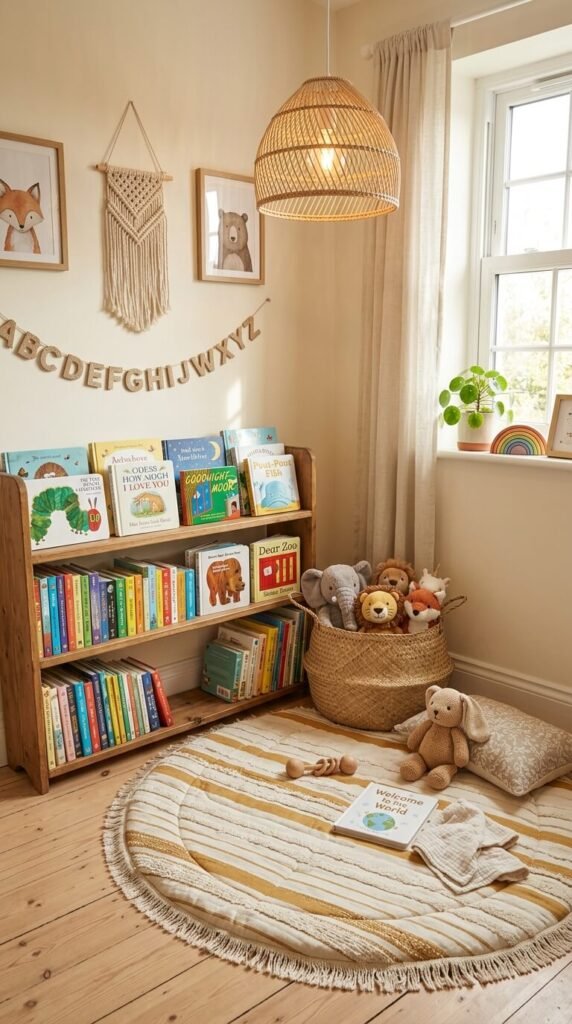
Thinking in zones from the beginning means you’re not redesigning the room’s layout as your child grows — you’re simply updating what lives within each zone.
The most beautiful nursery is one that doesn’t need to be completely redone every time your child takes a developmental leap forward. Build smart, invest in the right pieces, and let the easy-to-swap accents do the heavy decorating work. Save this guide before you start shopping — your future self, and your future budget, will be so glad you did.