Your workspace is quietly shaping how you think, how you feel, and how much you actually get done every day. A cluttered, uninspiring desk doesn’t just look bad — it drains your energy before you’ve even opened your laptop. The good news? You don’t need a full renovation or a designer budget to fix it. A few intentional changes to your home office can completely shift your focus, motivation, and mood.
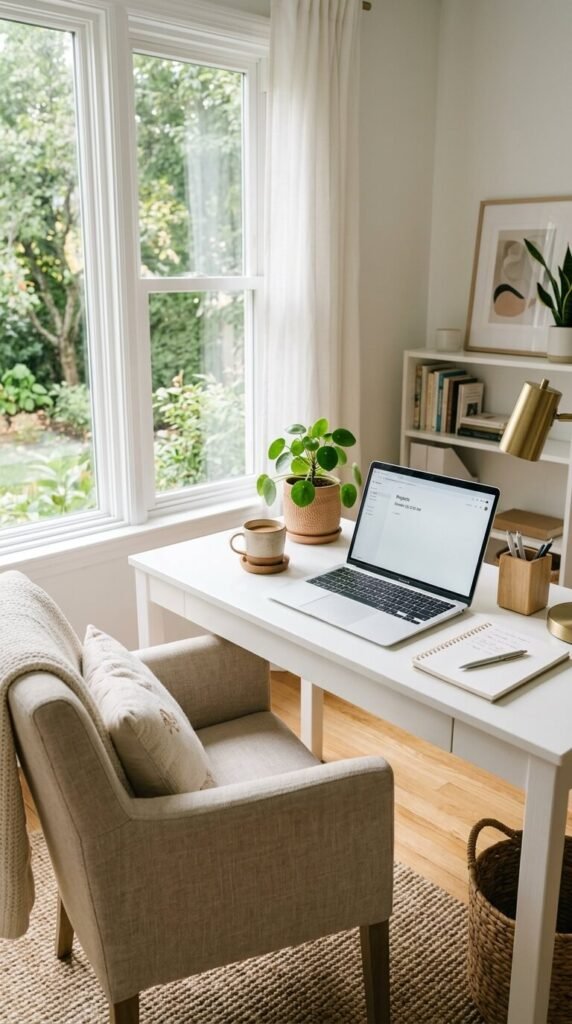
Here’s how to build a workspace that actually works for you.
Get the Lighting Right First
Lighting is the single most underrated element of a productive workspace — and the most impactful one to fix. Bad lighting causes eye strain, headaches, and that mid-afternoon sluggishness that makes you want to close every tab and nap.
The goal is layered light:
- Natural light is always the priority. Position your desk facing or beside a window if at all possible. Natural light regulates your circadian rhythm, improves focus, and makes the whole space feel more alive.
- A task lamp with adjustable brightness handles cloudy days and evening work sessions. Look for bulbs in the 4000K–5000K range — cool white light keeps your brain alert.
- Ambient light from a floor lamp or warm overhead light makes the room feel less clinical and more comfortable to spend long hours in.
Avoid sitting with a bright window directly behind your screen — the glare and contrast cause serious eye fatigue. Side lighting is ideal.
Choose a Color Palette That Works With Your Brain
Color psychology is real, and your wall color (or the colors surrounding you) genuinely affects your mental state throughout the day.
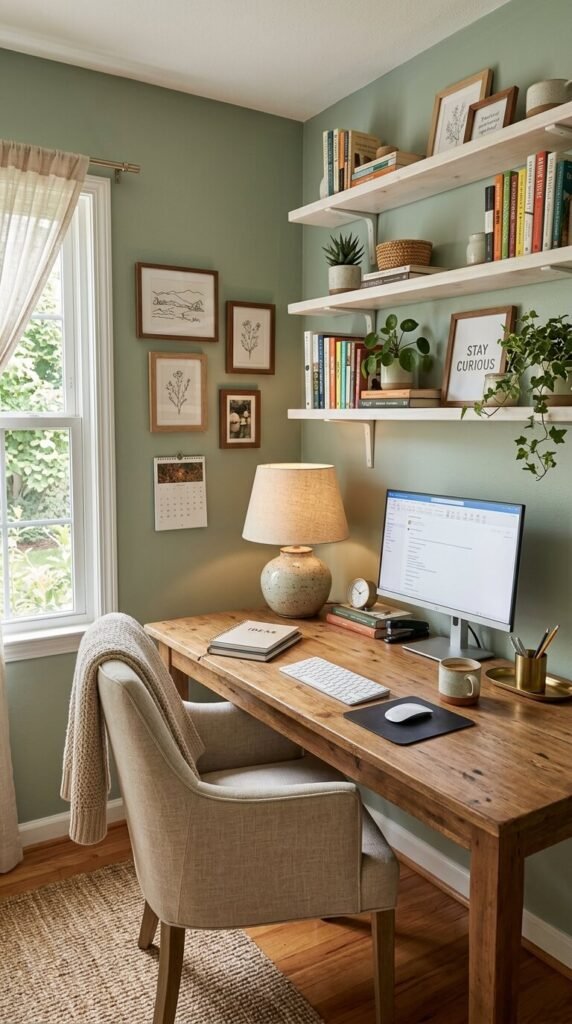
- Soft greens and sage reduce stress and feel grounding — perfect if your work is high-pressure or creative.
- Warm whites and off-whites keep things clean and calm without feeling cold or sterile.
- Muted blues promote focus and mental clarity — great for analytical, deep-work environments.
- Terracotta and warm neutrals add energy and warmth without overwhelming the senses.
You don’t have to repaint the entire room. Even painting a single accent wall, adding a large piece of art in your chosen color, or layering in accessories in a consistent palette does the job beautifully.
Organize the Desktop — Visually and Literally
A messy desk is a distracted mind. But “organized” doesn’t have to mean sterile and joyless. The trick is designing a surface that’s both functional and genuinely pleasant to look at.
Start by clearing everything off the desk completely, then only add back what you actually use daily. Everything else finds a home in a drawer, shelf, or basket.
Then style what remains:
- A small tray or catch-all corrals pens, sticky notes, and chargers so they feel intentional rather than scattered.
- One or two small plants add life and have been proven to reduce stress and increase focus. A pothos, succulent, or small snake plant are all low-maintenance options.
- Personal touches with purpose — one framed photo, a meaningful object, or a candle. Just one or two, not a collection.
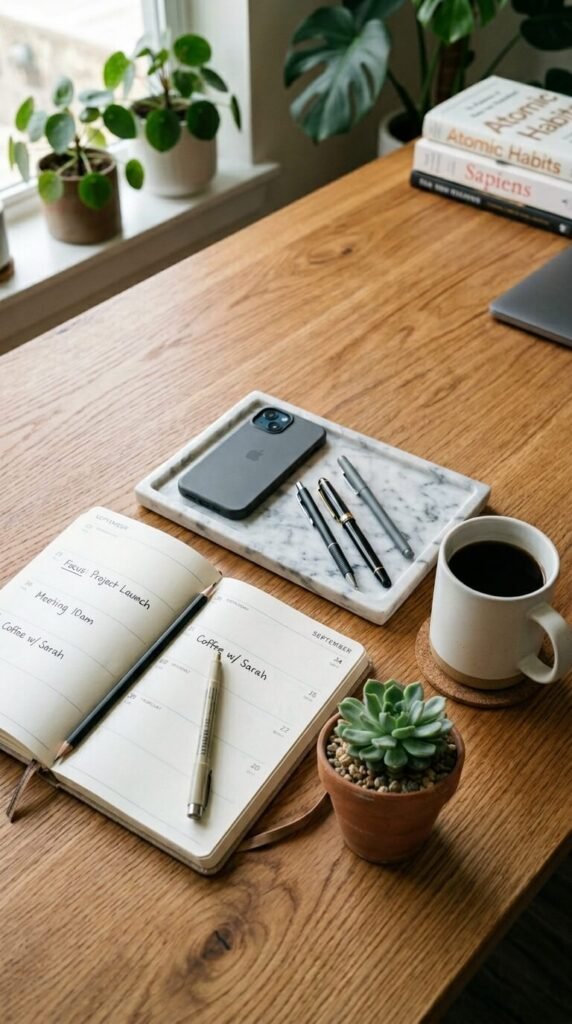
The concept of “negative space” applies to desks too. Empty surface area isn’t wasted — it’s what makes the whole thing feel clean and calm.
Add Texture and Warmth So It Feels Human
Here’s where a lot of home offices fall flat: they’re functional but cold. You spend 6–8 hours a day in this room — it should feel like a place you want to be.
A few easy ways to add warmth:
- A rug under your desk chair instantly makes the space feel designed and anchors the whole room.
- Curtains or linen drapes soften hard walls and add texture without taking up any floor space.
- A gallery wall or single large print gives your eyes somewhere pleasant to land when you look up from the screen.
- A cozy throw on the back of your chair — practical for cold mornings and visually inviting.
These aren’t luxuries. They’re signals to your brain that this is a good, comfortable place to focus — and that signal matters more than most people realize.
Manage Cords and Clutter Ruthlessly
Nothing kills the vibe of a beautifully styled office faster than a tangle of cords snaking across the floor or a stack of random papers threatening to avalanche off the desk.
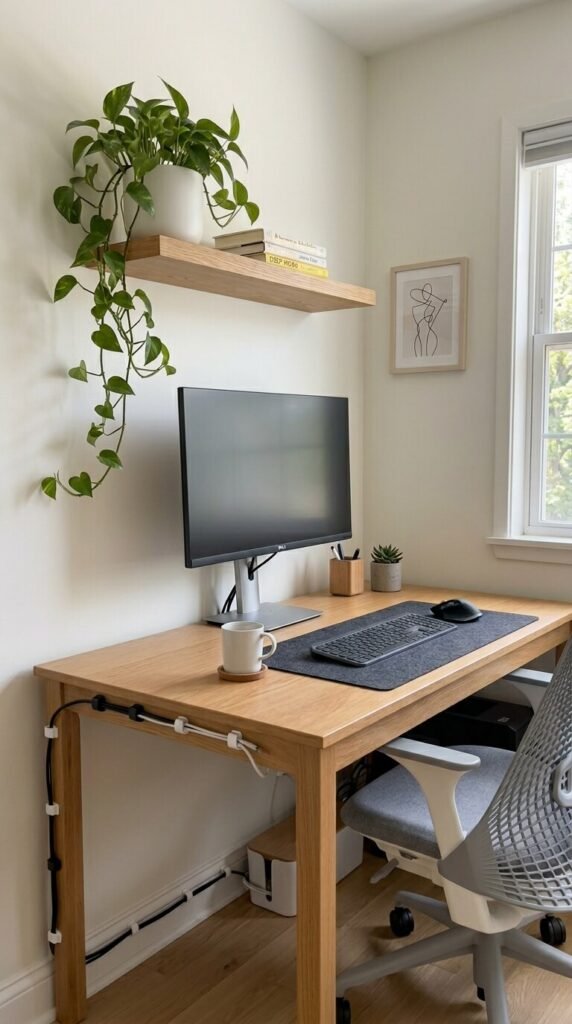
Simple fixes that make a big visual difference:
- Cable clips or velcro ties keep cords along the back of the desk and out of sight.
- A wireless keyboard and mouse eliminate the biggest source of desk cord chaos.
- A small filing system — even just a two-slot desktop organizer — keeps papers from piling up.
- A “landing zone” rule: nothing sits on the desk for more than 24 hours without being filed, actioned, or put away.
The Takeaway
Your home office should feel like the most productive, peaceful place in your home — because when it does, your work naturally reflects that. Start with lighting, build in color, clear the clutter, and add warmth where it’s missing.
Save this article and use it as your checklist the next time you’re ready to give your workspace a refresh — your focus (and your mood) will thank you!