Every home has one — that awkward, neglected corner that collects dust bunnies and broken promises. You walk past it daily, telling yourself you’ll do something with it eventually. Good news: eventually is today. With a few smart styling moves, that forgotten nook can become the most talked-about spot in your home.
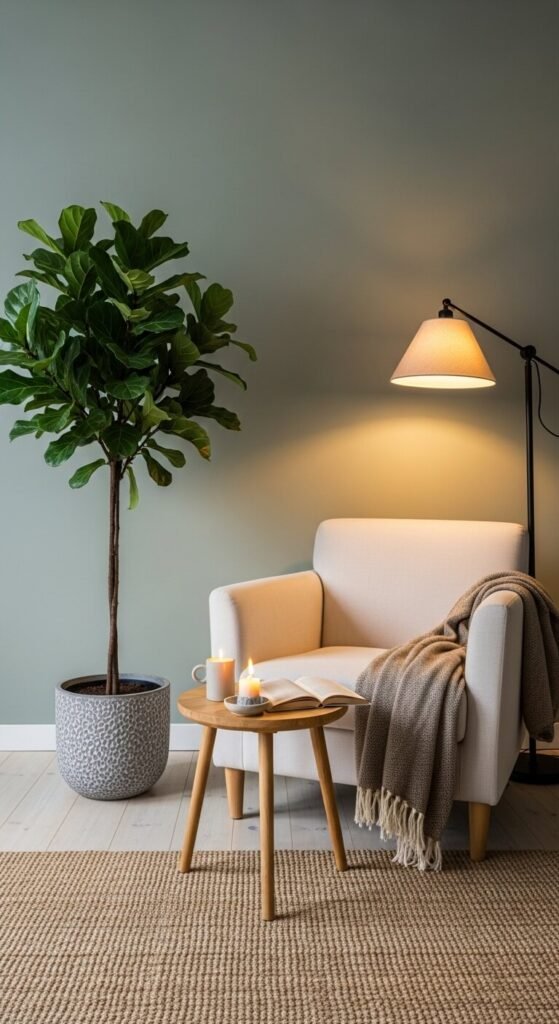
Start with a Purpose (Yes, Every Corner Needs One)
Before you buy a single throw pillow, ask yourself: What do I want this corner to do?
Corners work best when they serve a clear intention. Here are a few directions to consider:
- Reading nook — a chair, lamp, and small bookshelf
- Plant corner — layered greenery at varying heights
- Gallery vignette — art, shelving, and decorative objects
- Functional workspace — a slim desk and stylish organizers
- Ambient mood corner — candles, lanterns, and texture
Picking a purpose keeps you from overloading the space or, worse, leaving it empty because nothing quite fit.
Use Vertical Space Like You Mean It
Corners are taller than they are wide — so think up. Most people decorate at eye level and forget the dramatic real estate above it.
Try these vertical tricks:
- Mount a tall arc floor lamp to draw the eye upward
- Stack books or baskets on a slim ladder shelf
- Hang a gallery wall that climbs toward the ceiling
- Place a tall fiddle-leaf fig or snake plant for effortless height
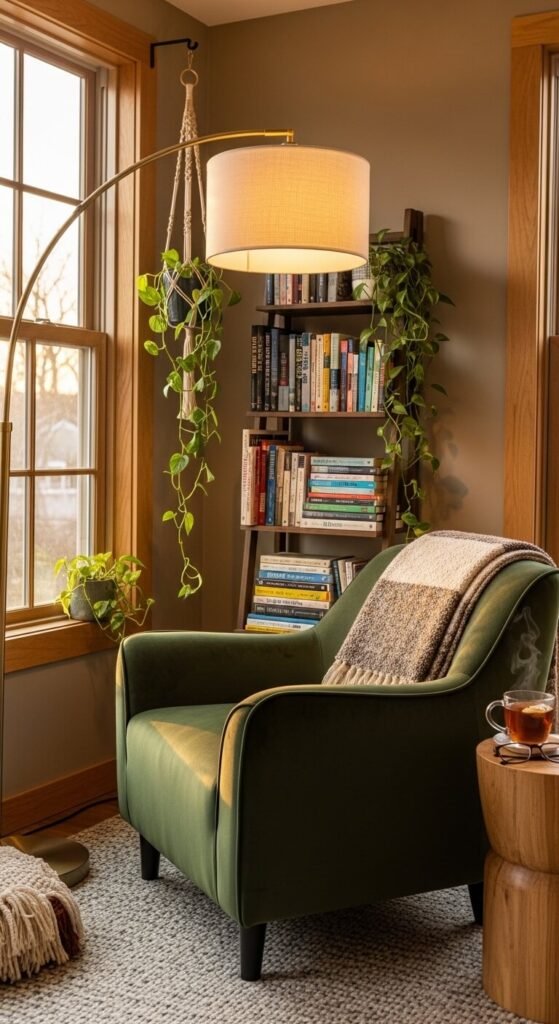
The golden rule: always have at least one element that reaches above 5 feet. It anchors the corner and makes the whole room feel taller.
Layer Textures and Materials
A corner that looks “done” usually has one secret ingredient — texture contrast. Mixing materials prevents a space from feeling flat or showroom-stiff.
Think in threes:
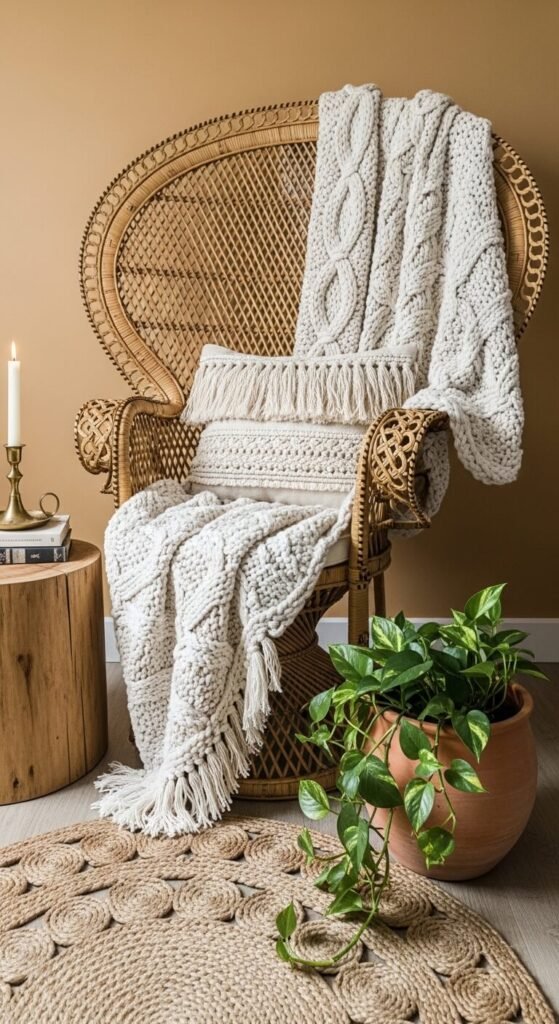
- Soft — a chunky knit throw, linen cushion, or jute rug
- Natural — wood, rattan, stone, or live plants
- Reflective — a mirror, metallic tray, or glass vase
Even the simplest corner — just a chair and a plant — feels elevated the moment you add a woven basket or a textured ceramic pot at the base.
Make Lighting Do the Heavy Lifting
Corners are naturally shadowy — and that’s actually your advantage. Warm, layered lighting transforms a dark corner into an intimate, inviting glow zone.
Your lighting toolkit:
- Floor lamps — the go-to for corners; choose warm bulb tones (2700K–3000K)
- Table lamps on low stools or side tables for added warmth
- String lights wound around a shelf or plant for soft ambiance
- Pillar candles grouped at different heights for a moody, editorial look
Avoid overhead-only lighting in corners. It flattens the space and kills the cozy factor entirely.
Anchor It with a Rug or a Grounding Element
One mistake people make with corners? Letting everything float. Without a grounding element, even beautiful pieces look unfinished.
Try these anchoring moves:
- A small area rug (even a 4×6 works in a corner nook)
- A large floor basket that ties objects together visually
- A pouf or ottoman that defines where the “zone” begins and ends
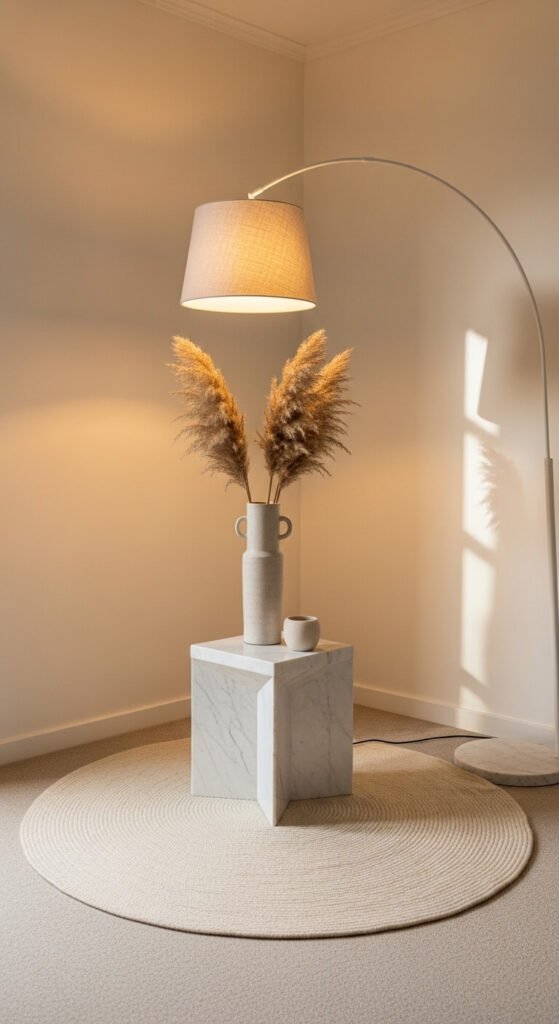
Anchoring signals to the eye that this corner is intentional — and intentional always looks designed.
The Takeaway
Dead corners are just undiscovered design opportunities waiting for a little direction. Start with a purpose, build vertically, layer your textures, and let lighting work its magic. You don’t need a big budget or a complete overhaul — just a few intentional choices stacked in the right order.
Save this article and come back to it the next time you walk past that sad, empty corner. Your future cozy reading nook is one floor lamp away. 🌿