Lighting can make or break a space — and most people don’t realize it until something feels off. You’ve painted the walls a beautiful color, arranged the furniture just right, and yet the room still feels cold, flat, or weirdly uninviting. Nine times out of ten, the culprit is the lighting. The good news? With a few simple strategies, you can transform every room in your home into a space that feels exactly the way you want it to.
Understand the Three Layers of Lighting
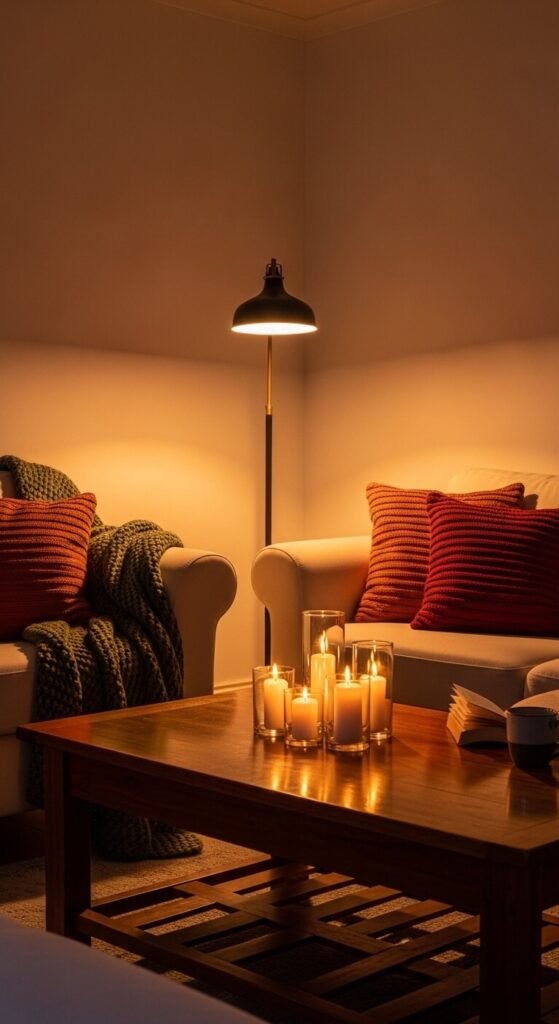
Before you start shopping for bulbs or fixtures, it helps to know that great room lighting is almost never one-dimensional. Designers work with three layers:
- Ambient lighting — the general, overall light in a room (think ceiling fixtures or recessed lights)
- Task lighting — focused light for specific activities like reading, cooking, or working
- Accent lighting — decorative light that highlights artwork, shelving, or architectural features
The secret to a room that feels intentional rather than just “lit” is layering all three. Start with your ambient base, then build from there.
Match the Mood to the Room’s Purpose
Every room has a job to do — and your lighting should support it.
Living Room: This space needs flexibility. You want bright light for family game nights and soft, warm light for movie evenings or entertaining. Dimmer switches are your best friend here. Aim for warm white bulbs (2700K–3000K) and layer a floor lamp with overhead lighting.
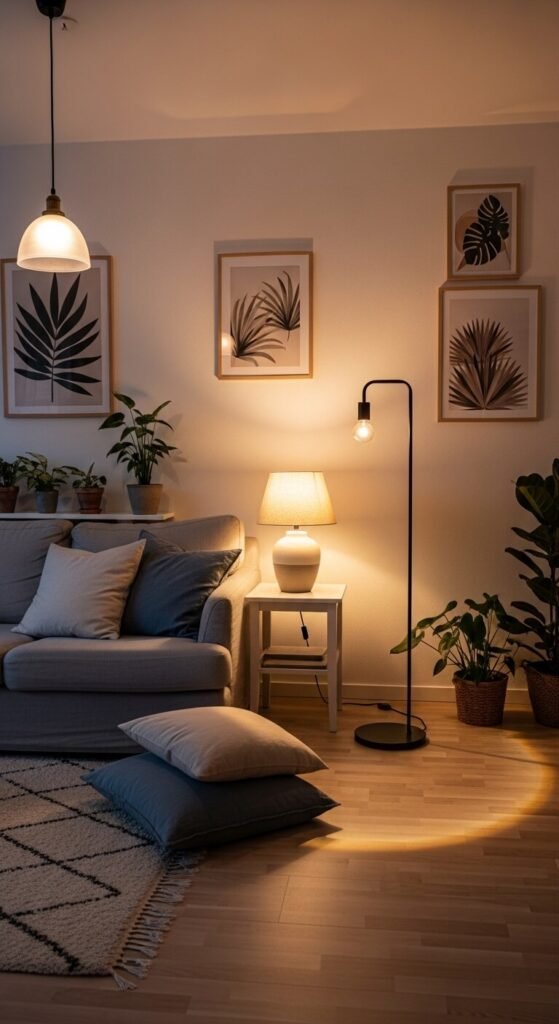
Bedroom: Think relaxation. Harsh overhead lighting is the enemy of a good night’s sleep. Swap out bright ceiling fixtures for bedside lamps with warm-toned bulbs, and consider adding dimmer controls. Soft lighting signals to your brain that it’s time to wind down.
Kitchen: This is a workspace, so task lighting is critical — especially under cabinets where shadows tend to collect. But don’t make it feel clinical. Combine bright task lighting over counters with a warmer pendant light above the island or dining nook.
Bathroom: A common mistake is relying on a single overhead light, which casts unflattering shadows. Instead, place lighting at eye level on either side of the mirror to eliminate shadows and create even, flattering light for getting ready.
Choose the Right Bulb Temperature
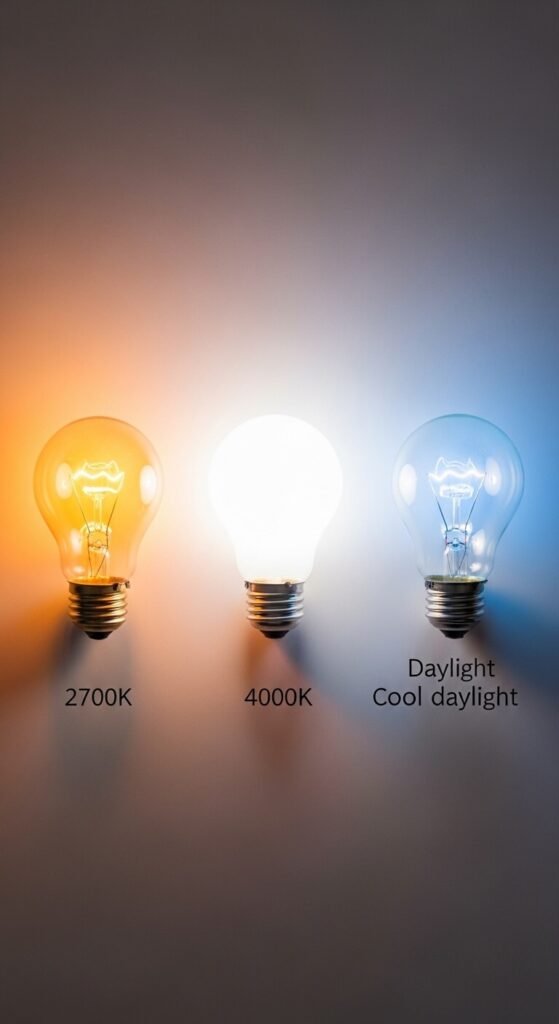
Bulb color temperature — measured in Kelvins (K) — has a massive impact on how a room feels.
- 2700K–3000K (Warm White): Cozy, golden, relaxing. Perfect for bedrooms, living rooms, and dining areas.
- 3500K–4100K (Cool White): Crisp and neutral. Great for kitchens and home offices.
- 5000K–6500K (Daylight): Bright and energizing. Best for task-heavy spaces like studios or garages.
A simple rule of thumb: the warmer the space should feel, the lower the Kelvin number.
Don’t Underestimate Dimmers and Smart Bulbs
Installing a dimmer switch is one of the highest-ROI upgrades you can make in any room. For under $30, you can take a room from “harsh and flat” to “warm and atmospheric” with a single slide of your finger.
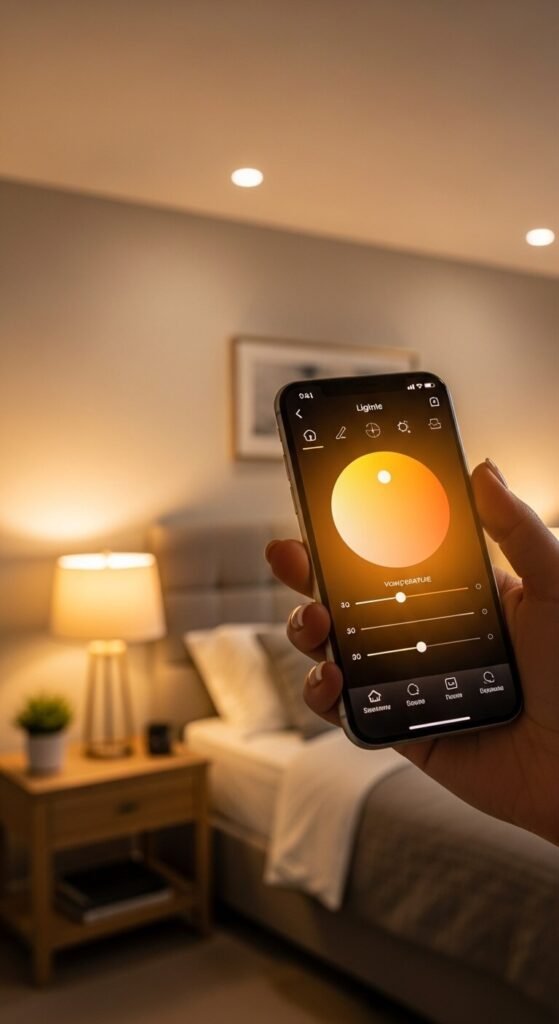
Smart bulbs take it even further — letting you:
- Adjust brightness and color temperature from your phone
- Set schedules so lights automatically soften in the evening
- Create “scenes” for different moods with one tap
Use Lighting to Highlight What You Love
Accent lighting is where personality enters the picture. Use small spotlights or LED strip lights to draw attention to a gallery wall, a bookshelf, or an architectural detail like an arched doorway. Even a simple plug-in picture light above a piece of art can make a room feel curated and intentional.
The Takeaway
Great lighting isn’t about spending a fortune — it’s about being thoughtful. Layer your light sources, match the warmth to the mood, and never skip a dimmer switch. Start with just one room, make a few small changes, and watch how dramatically the whole atmosphere shifts.
Save this guide and share it with someone who’s been living under sad, single-bulb lighting for far too long.