There’s a reason interior designers call windows the “eyes” of a room — and curtains are their lashes. The right set of curtains can make a ceiling feel taller, a room feel cozier, or a plain wall feel like a curated gallery. Choose the wrong ones, and even the most beautifully furnished space falls flat. The good news? Picking the perfect curtains isn’t as intimidating as it sounds once you know what to look for.
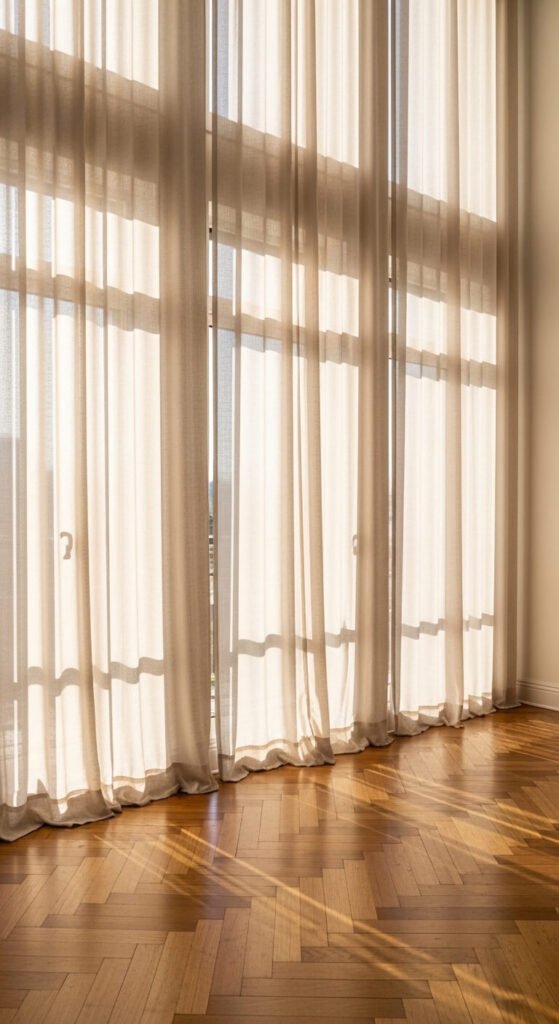
Start With the Mood You Want to Create
Before you touch a fabric swatch or measure a single inch, ask yourself: How do I want this room to feel?
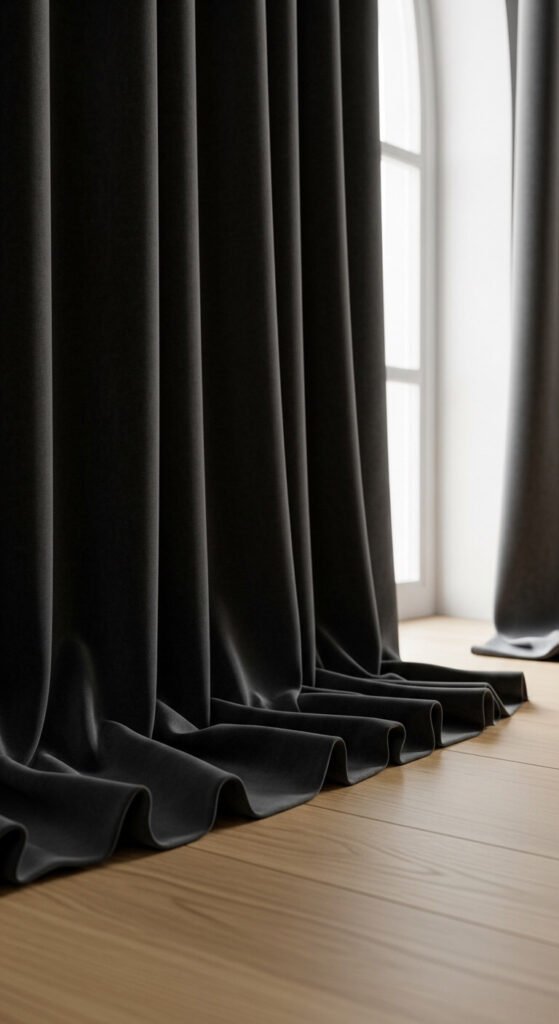
- Cozy and warm? Think heavy velvet, deep jewel tones, or layered panels.
- Light and breezy? Reach for sheer linen, cotton voile, or soft white muslin.
- Dramatic and luxurious? Floor-length silk or faux-silk in charcoal, emerald, or navy will do the heavy lifting.
Your curtain choice sets the emotional tone of the entire room — so let the feeling lead, and the fabric will follow.
Get the Length Right (It Changes Everything)
This is where most people go wrong. Curtain length isn’t just a practical decision — it’s a style statement.
- Just above the floor (½ inch clearance): Clean, tailored, and modern. Great for high-traffic areas.
- Pooling on the floor (3–6 extra inches): Romantic, relaxed, and editorial. Think bedroom retreats and formal dining rooms.
- Floating above the sill: Best reserved for kitchens and bathrooms only — everywhere else, it tends to look unfinished.
Pro tip: Always hang your curtain rod 4–6 inches above the window frame, and extend it 6–12 inches on each side. This visual trick makes windows appear wider and taller instantly.
Choose Fabric Based on Function
The most beautiful curtain in the world is a bad choice if it doesn’t suit the room’s purpose.
| Room | Best Fabric Choice |
|---|---|
| Living room | Linen blend, velvet, or faux silk |
| Bedroom | Blackout-lined cotton or layered sheers |
| Kitchen | Lightweight cotton or café-style panels |
| Home office | Sheer linen for diffused, glare-free light |
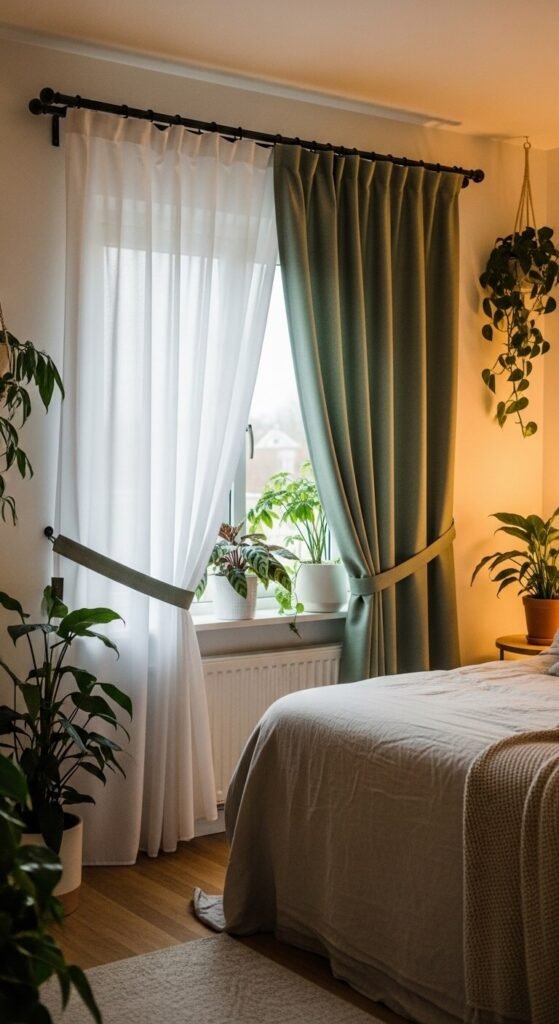
Layering is your best friend here. A sheer panel underneath a heavier drape gives you the best of both worlds — privacy at night, soft light during the day.
Match (or Intentionally Contrast) Your Color Palette
Curtains don’t have to match your walls — but they do need to have a conversation with the rest of the room.
- Tone-on-tone: Choosing a curtain color one or two shades deeper than your wall creates a sophisticated, pulled-together look.
- Contrast pop: A bold, patterned curtain against a neutral wall adds personality without overwhelming the space.
- Warm vs. cool: Warm-toned curtains (terracotta, ochre, rust) make a room feel intimate; cool tones (slate, sage, navy) feel calm and expansive.
Avoid matching curtains exactly to your sofa or rug — it tends to look accidental rather than intentional.
Don’t Ignore the Hardware
The rod, rings, and finials are the jewelry of your window treatment — and they deserve just as much thought.
- Matte black rods feel modern and editorial.
- Brass or gold hardware leans warm and maximalist.
- Brushed nickel suits contemporary and Scandinavian interiors.
- Wooden rods bring organic texture to boho or rustic spaces.
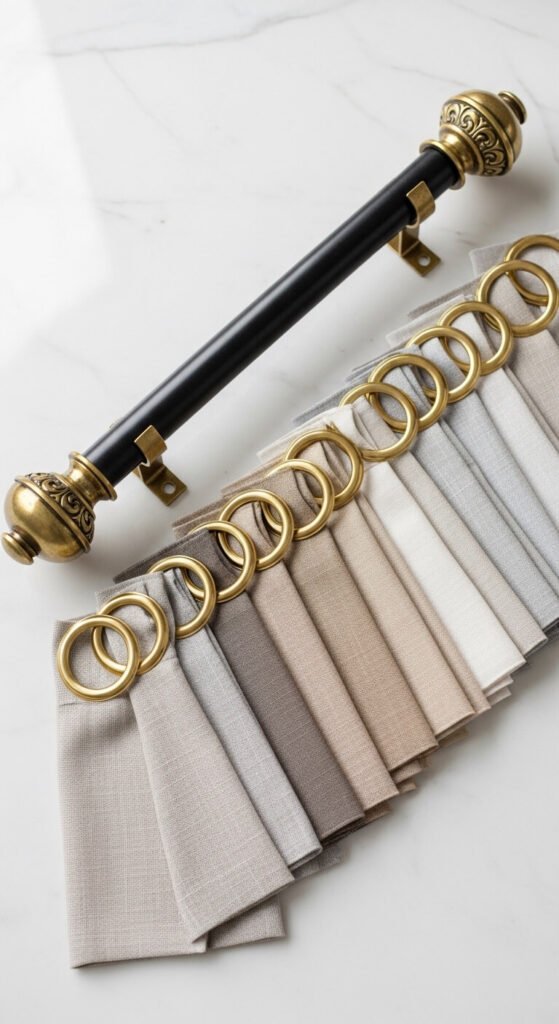
Match your hardware to other metals in the room (light fixtures, cabinet pulls, faucets) for a cohesive, designer-level finish.
The Final Takeaway
Curtains are one of the most powerful — and most underestimated — design tools in any room. They anchor the space, frame the view, and set the entire mood from ceiling to floor. With the right length, fabric, color, and hardware, your windows stop being just windows and start becoming the focal point your room deserves.
Save this guide, pin it for your next room refresh, and remember: great curtains aren’t an afterthought — they’re the finishing stroke of a beautifully designed space. 🪟✨