The sofa is the single most important purchase in your living room — and also the one most people get wrong. Not because they have bad taste, but because they shop with their eyes instead of their heads. That gorgeous trendy sectional looks incredible in the showroom and exhausting in your actual home six months later.
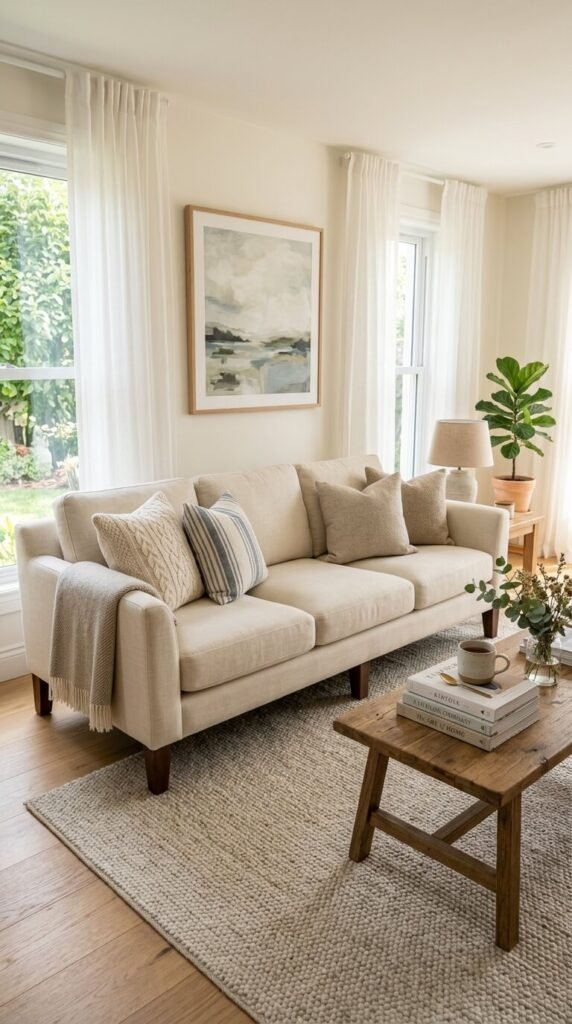
A sofa that lasts decades isn’t just about durability — it’s about making the right choice from the very beginning. The right size, the right frame, the right fabric, and the right style for your life. Here’s how to get it right the first time.
Measure Before You Fall in Love
This sounds obvious, but it’s the step most people either skip or underestimate. Buying a sofa that doesn’t fit your space correctly is one of the most common and most expensive decorating mistakes you can make.
Before you look at a single sofa, measure these things:
- Your room dimensions — length and width of the entire space
- The wall where the sofa will sit — this determines your maximum sofa width
- The depth of the space in front of the sofa — you need at least 18 inches between the sofa and a coffee table, and a comfortable walkway beyond that
- Your doorways, hallways, and stairwells — measure every passage the sofa must travel through to reach the room
A general rule of thumb: your sofa should take up roughly two-thirds of the wall it sits against. Too small and it looks lost; too large and it overwhelms the room.
Also consider sofa depth. Deep, sink-in sofas feel luxurious but can make a small room feel cramped and are difficult to sit upright in. A standard depth of 34 to 38 inches works well for most people and most spaces.
Understand What’s Inside the Frame
Here’s the truth the showroom doesn’t tell you — two sofas can look identical on the outside and have completely different lifespans based entirely on what’s inside them.
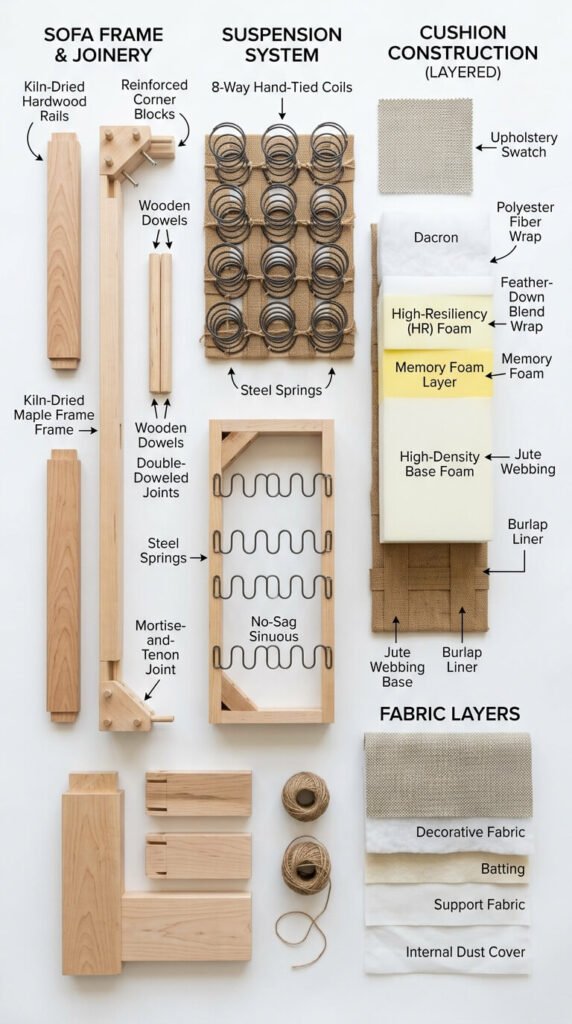
What to look for in a frame that lasts:
- Kiln-dried hardwood — specifically oak, ash, or beech; this is the gold standard for sofa frames that won’t warp, crack, or loosen over time
- Avoid particleboard or plastic frames — they’re common in budget sofas and begin failing within a few years
- Eight-way hand-tied springs — the best suspension system available; sofas with this construction maintain their shape and comfort for decades
- Sinuous springs or webbing — a more affordable but still acceptable option; look for closely spaced coils for better support
- High-density foam cushions — look for a density of at least 1.8 pounds per cubic foot; anything lower will sag noticeably within a year or two
If a sofa sales associate can’t tell you what the frame is made of, that’s your answer right there.
Choose a Fabric That Fits Your Real Life
This is where the gap between aspiration and reality matters most. The fabric you choose needs to work for the life you actually live — not the life you wish you lived.
Ask yourself honestly:
- Do you have kids or pets?
- Do you eat on the sofa regularly?
- Does anyone in your home have allergies?
- How much direct sunlight hits that spot?
Then match your fabric accordingly:
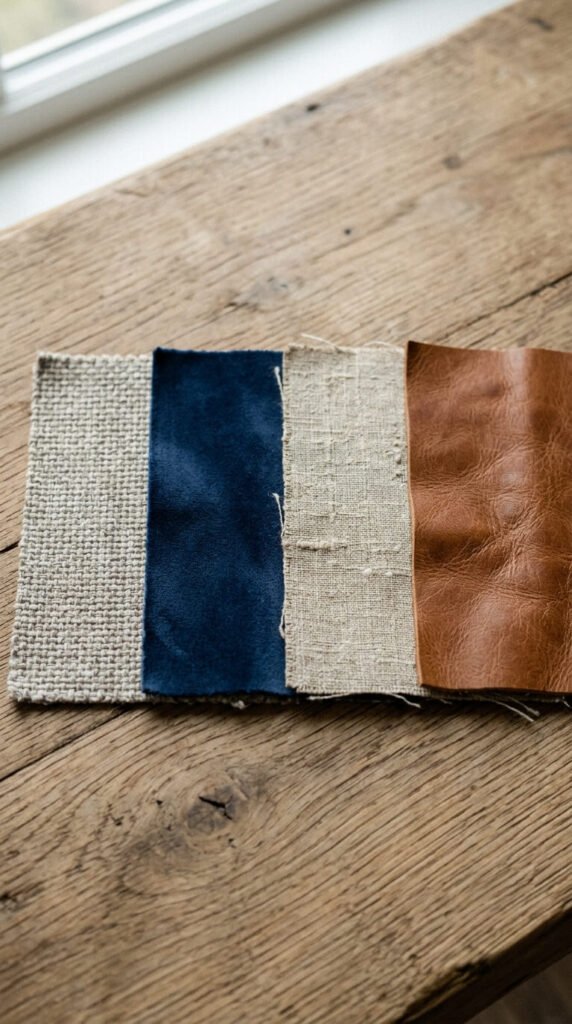
- Performance fabrics (Crypton, Sunbrella, or similar) — the best choice for families, pet owners, and anyone who wants to stop worrying; highly stain-resistant and easy to clean
- Tight-weave linen or cotton blends — beautiful and breathable but less forgiving with spills; better for low-traffic spaces
- Velvet — stunning and surprisingly durable if it’s a quality cut velvet; avoid cheap velvet that crushes and marks easily
- Leather or faux leather — wipes clean instantly, ages beautifully in genuine leather, and works well in almost every lifestyle
Avoid light-colored fabrics in heavy-use spaces unless you genuinely commit to professional cleaning. Light gray and white sofas are beautiful in photographs and relentless in real life.
Pick a Style That Ages Well
Trends come and go faster than sofa lifespans. A sofa you buy today needs to still feel right in 2035, which means avoiding anything too aggressively tied to a specific moment in design history.
Silhouettes that have proven their staying power:
- Classic track arm — clean, straight arms that work in both modern and traditional spaces
- English roll arm — slightly curved, relaxed, and timeless; pairs beautifully with almost any interior style
- Mid-century modern — tapered legs and clean lines that have been relevant for 70 years and show no sign of stopping
- Slope arm — a gentle diagonal arm that sits between casual and formal; incredibly versatile
What to approach with caution:
- Ultra-low profiles that feel very of-the-moment
- Oversized cloud sofas — currently everywhere, which means they’ll date quickly
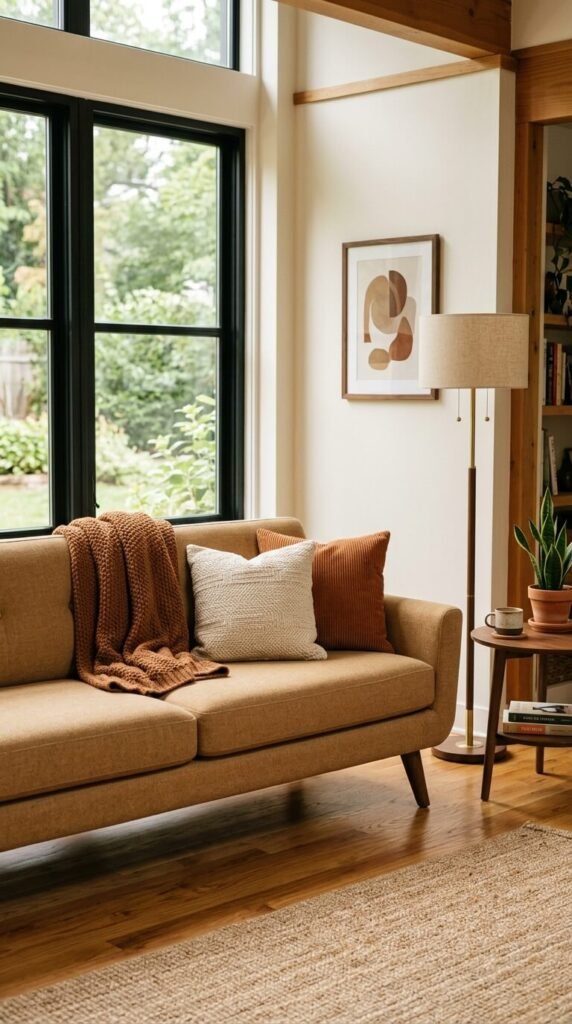
- Very bold colors as your main sofa; opt for neutrals and bring color in with pillows and throws instead
Test It Before You Commit
Never buy a sofa you haven’t physically sat on — or at minimum, found an identical showroom version to test. Online reviews help, but your body is the final judge.
When you sit down to test:
- Sit for at least five minutes — initial impressions lie; comfort reveals itself over time
- Check the seat height — your feet should rest flat on the floor with knees at roughly 90 degrees
- Test the back support — does your lower back feel supported or are you already reaching for a pillow?
- Stand up easily — very deep or very low sofas are beautiful until you’re trying to get up gracefully in front of guests
A sofa that feels perfect in the first 30 seconds but leaves you shifting and adjusting after five minutes is telling you something important. Listen to it.
Your sofa is a decade-long relationship, not a short-term fling. Take your time, do your research, and choose something that fits your space, your life, and your style in equal measure. Save this guide before your next sofa shopping trip — your future self will genuinely thank you.