You finally found the perfect rug — the color is right, the texture is dreamy, and the price didn’t make you cry. But you bring it home, roll it out, and something feels… off. The room looks smaller, the furniture seems to float, and the whole space feels awkward instead of anchored. Sound familiar? Choosing the wrong rug size is one of the most common (and costly) decorating mistakes — but it’s completely avoidable once you know the rules.
Why Rug Size Matters More Than You Think
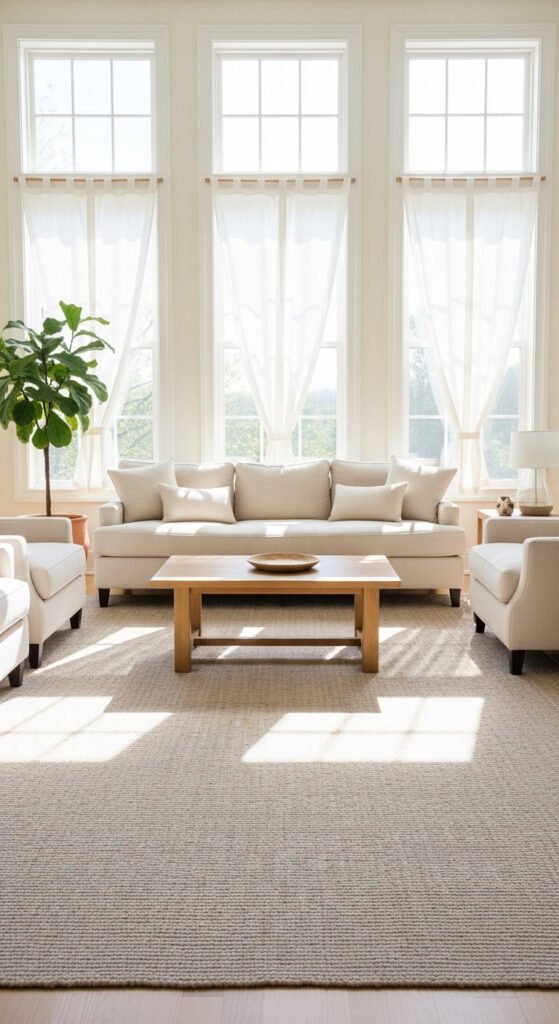
A rug isn’t just a pretty accent piece — it’s an architectural tool. The right size visually defines a zone, pulls furniture together, and makes a room feel intentional and complete. Too small, and your furniture looks like it’s floating on a postage stamp. Too large, and the rug swallows the room whole.
Think of your rug as the foundation of your furniture arrangement, not an afterthought.
Start With the Room — Not the Rug
Before you even open a browser or walk into a store, grab a tape measure and some painter’s tape. This single step will save you from expensive returns.
- Measure your room and note the total square footage.
- Mark the ideal rug area on your floor using painter’s tape to simulate different rug sizes.
- Leave 18–24 inches of bare floor between the rug’s edge and the wall — this creates a balanced border that makes rooms feel larger.
Walking around the taped outline will immediately tell you if a size feels right before you spend a dime.
The Golden Rules by Room
Living Room
This is where sizing mistakes happen most often. The two most popular approaches are:
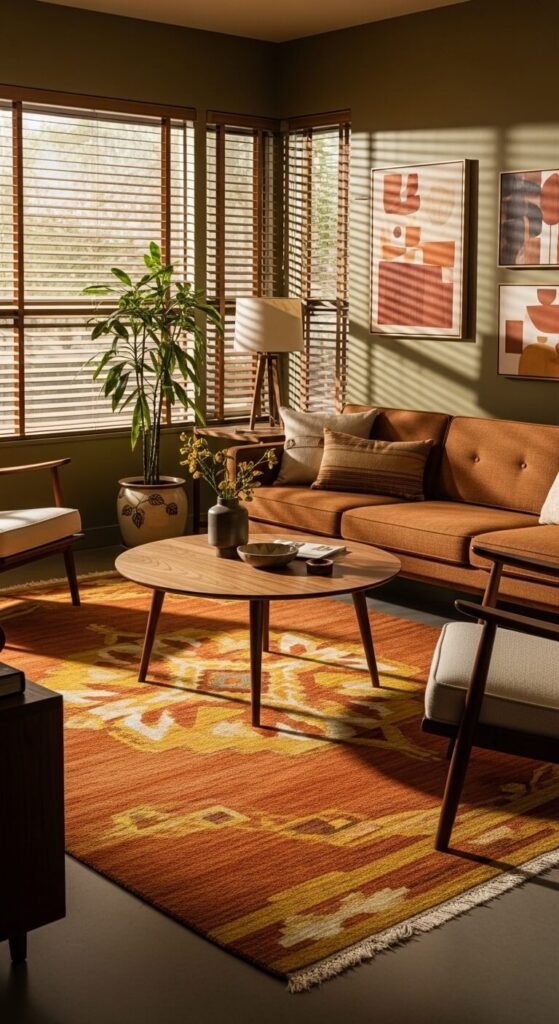
- All legs on: Every piece of furniture sits fully on the rug. This works best in large, open-plan spaces and creates a very cohesive, grounded look.
- Front legs on: The front two legs of the sofa and chairs sit on the rug, back legs off. This is the most common and flexible approach — it visually connects the furniture while making the rug (and budget) go further.
Never place a rug where no furniture legs touch it. That’s the floating island mistake everyone regrets.
Dining Room
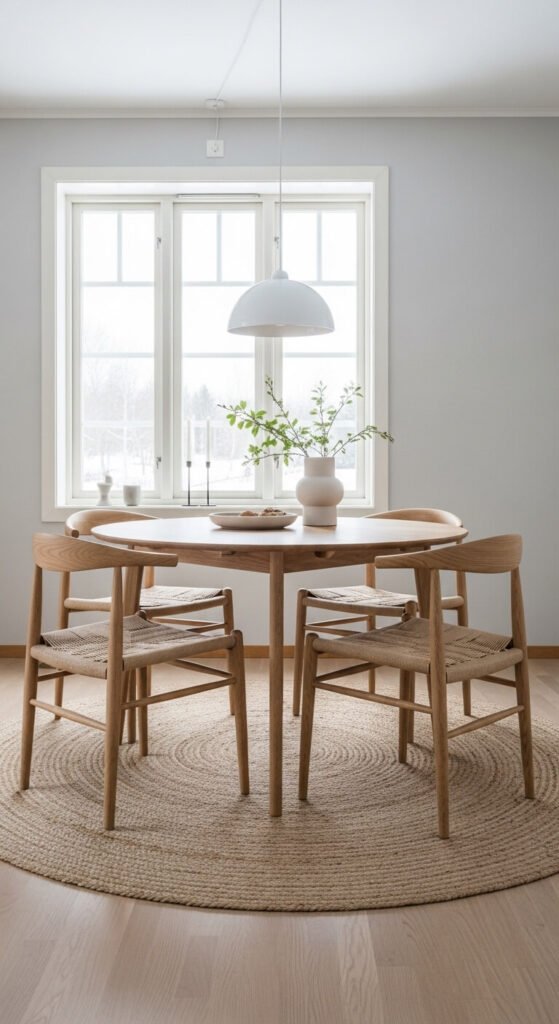
The rule here is simple: the rug should be large enough that all dining chairs remain on the rug — even when pulled out from the table.
A good formula: add 24 inches to each side of your dining table’s dimensions. So a 36″ x 72″ table needs at least an 8′ x 10′ rug.
Bedroom
The most popular approach is to place a rug that extends at least 18–24 inches beyond the sides and foot of the bed, so your feet land on something soft every morning.
- King or Queen bed: 8′ x 10′ or 9′ x 12′ works beautifully.
- Twin or Full: A 5′ x 8′ placed two-thirds under the bed is a great option.
You can also use two matching runners on either side of the bed for a chic, budget-friendly alternative.
Common Sizing Mistakes to Avoid
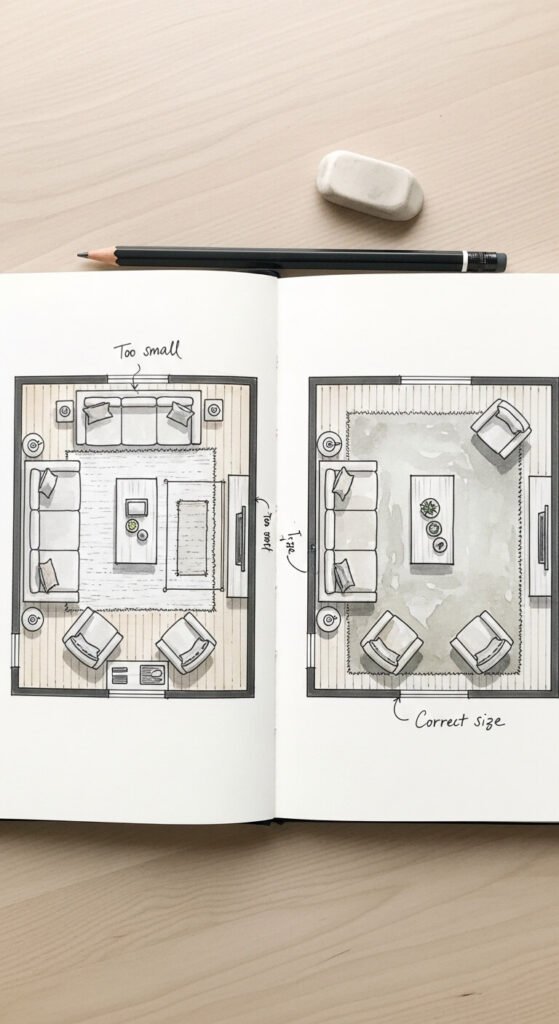
- Choosing an 5′ x 8′ for a full-size living room (it’s almost always too small)
- Centering a tiny rug in the middle of the room with no furniture touching it
- Ignoring the shape — a round rug in a rectangular room can work, but needs to be large enough to make a statement
Your Room Deserves to Feel Grounded
Choosing the right rug size isn’t complicated — it just takes a little planning before you buy. Measure your space, use painter’s tape to test sizes, follow the room-specific guidelines, and always err on the side of going larger when you’re unsure. A bigger rug almost always looks more intentional and elevated than one that’s too small.
Save this guide before your next furniture refresh — and share it with anyone who’s ever wondered why their room just doesn’t feel quite right. The answer might be right under their feet.