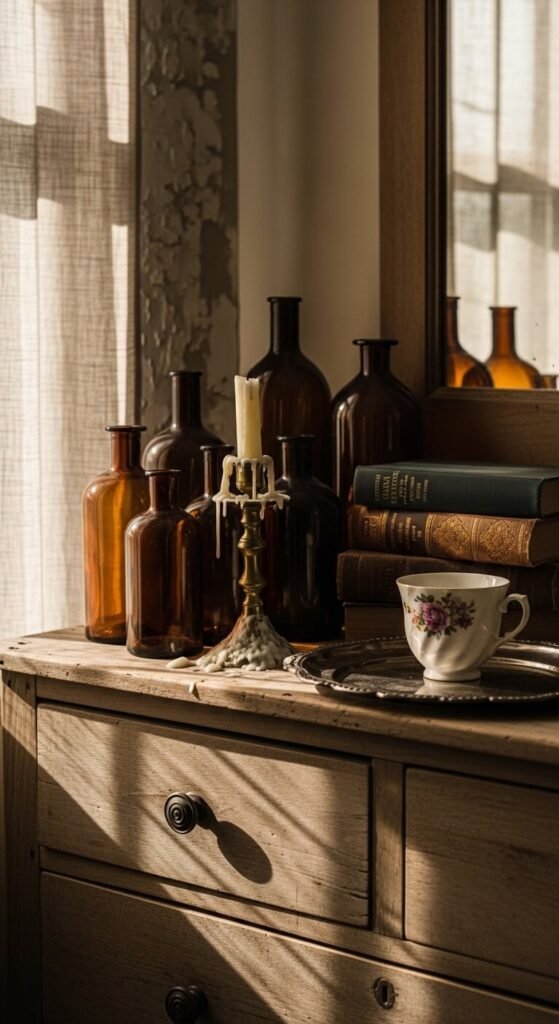
There’s something deeply satisfying about a home that feels lived in. Not staged. Not catalog-perfect. But layered, warm, and full of stories. Vintage decor gives you exactly that. It adds personality that flat-pack furniture simply can’t. Whether you’re hunting through estate sales, thrift stores, or your grandmother’s attic, the right vintage find can completely change how a room feels. The best part? You don’t need a big budget or a designer’s eye. You just need to know what to look for — and how to use it.
1. Mismatched Vintage Frames Gallery Wall
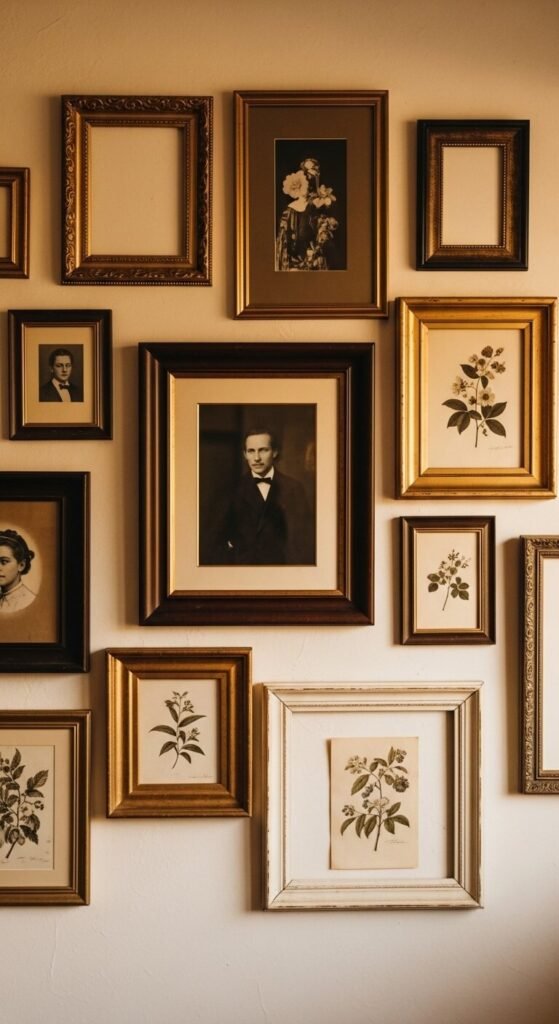
Old frames are everywhere at thrift stores — and usually dirt cheap. Mix metals, woods, and sizes for an intentional collected look. You don’t need matching artwork either. Use family photos printed in black-and-white, torn book illustrations, or even plain linen fabric stretched inside. Lean a few frames instead of hanging them all. Start with a large anchor frame and build outward. This is one of the easiest ways to make a blank wall feel like it has decades of history behind it.
2. Amber and Green Glass Bottle Collection
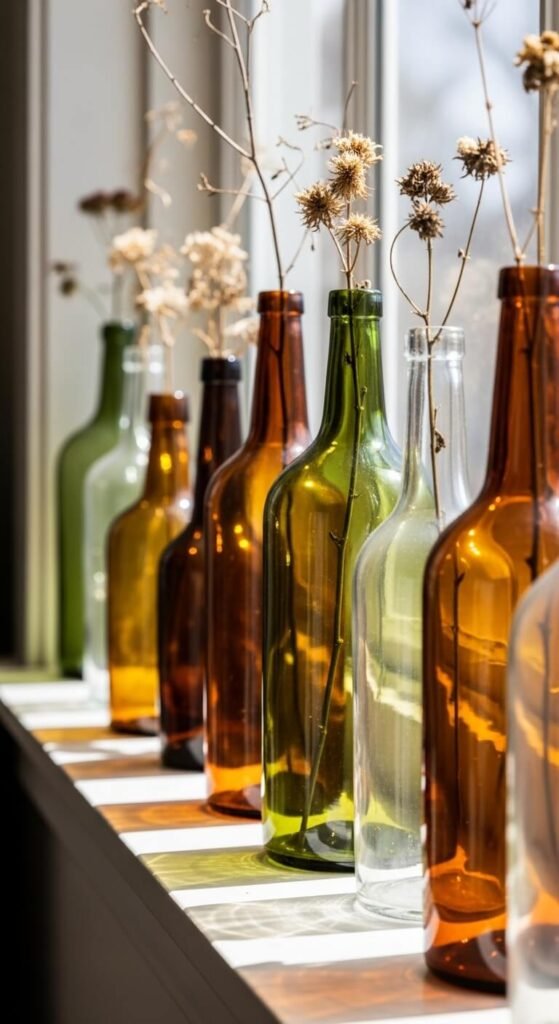
Old apothecary bottles, milk glass, and medicine vials from flea markets cost almost nothing. Line them along a windowsill so light passes through and casts warm color onto the wall or floor. Group them by color for a cleaner look, or mix them freely for a more casual feel. Drop a single dried stem or tiny sprig of eucalyptus into a few. This works especially well in kitchens and bathrooms where shelf space is tight but you still want charm.
3. Worn Leather Trunk as a Coffee Table
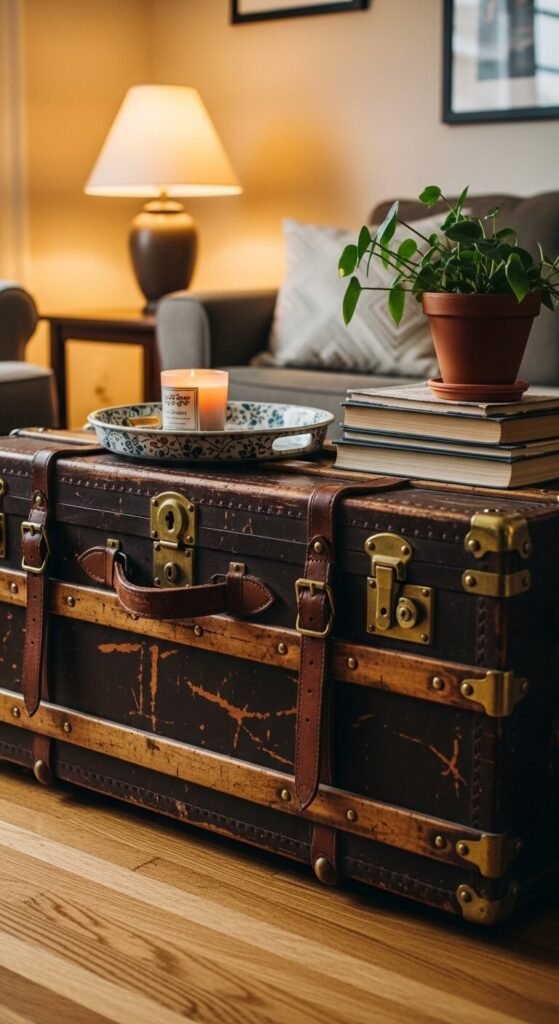
A vintage trunk does double duty — storage and style in one piece. Stack a few books and a tray on top to make it feel intentional. Use the inside to hide throw blankets, board games, or seasonal decor. Look for these at estate sales, antique malls, or even online marketplaces. Scuffed leather and worn corners are features, not flaws. They tell you the piece has actually been somewhere. Prices range widely, but patient shoppers can find solid ones for under $60.
4. Cast Iron Skillets as Wall Decor
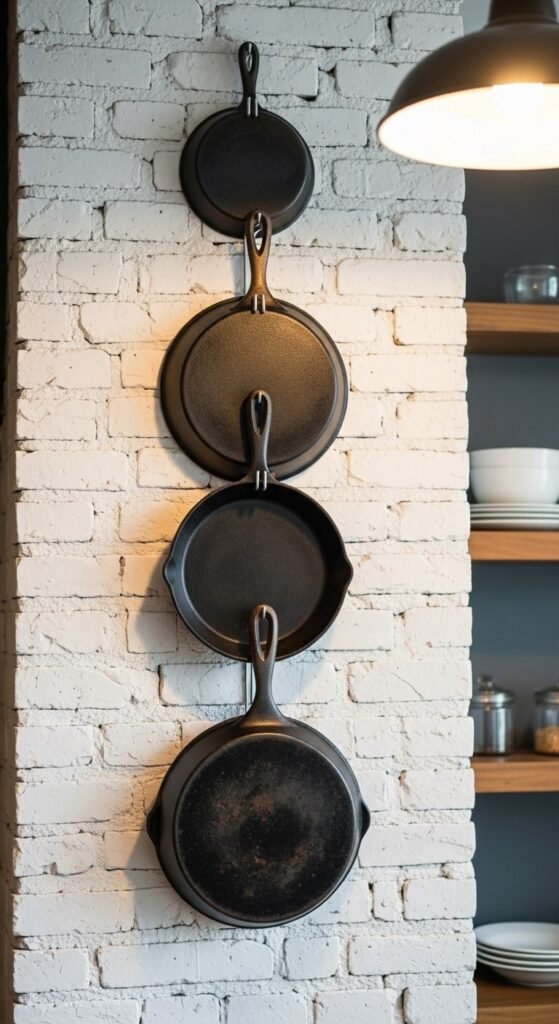
In old farmhouse kitchens, pans hung on the wall because it was practical. Now it just looks great. Mount cast iron skillets on simple hooks in your kitchen for instant character. Thrift stores and garage sales almost always have them. Even rusty ones can be restored with a quick seasoning process. Arrange them by size — smallest at top, largest at bottom — or cluster them in a loose group. This works beautifully on exposed brick, shiplap, or a plain painted wall.
5. Vintage Crate Shelving
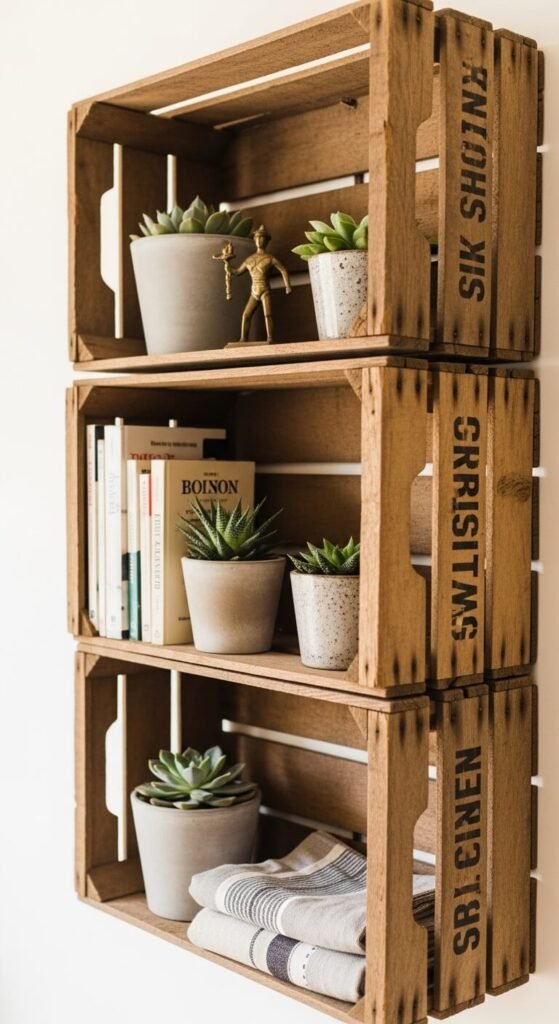
Old wooden crates — apple boxes, wine crates, milk crates — make surprisingly practical shelves. Mount them directly on the wall with basic hardware, or simply stack them on the floor. Fill with books, plants, candles, or baskets. The natural wood grain and any old stenciling on the side adds instant vintage texture. You can find them at farm supply stores, antique shops, or salvage yards. Sand lightly if needed, but don’t refinish — the weathered look is the whole point.
6. Antique Mirror with Aged Patina
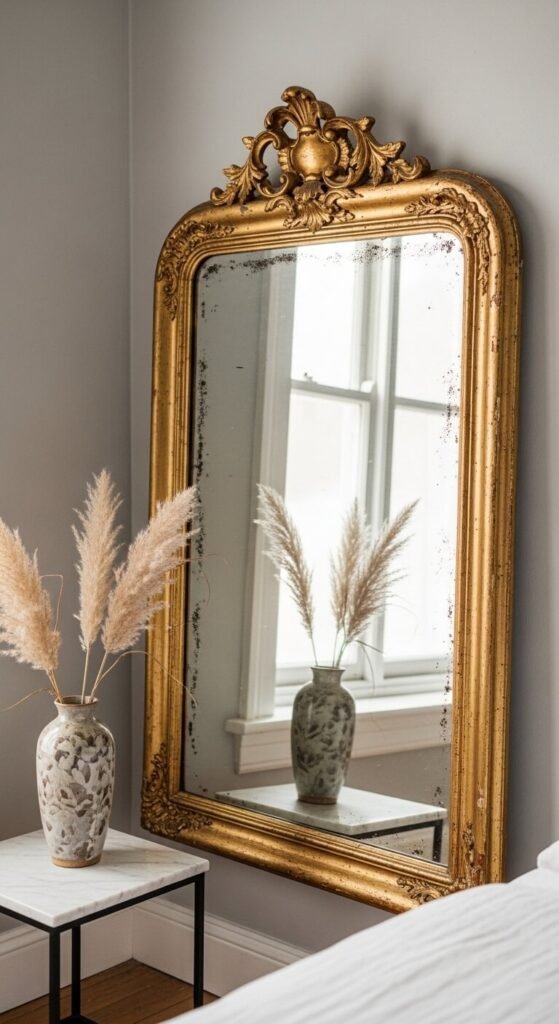
Old mirrors do something modern ones can’t — they add depth and history to a room simultaneously. The foxed, slightly spotted glass that comes with age is actually a design feature now. Lean a large one against a wall instead of hanging it for an effortless look. Use it in an entryway, bedroom corner, or behind a sofa. An ornate gold frame feels maximalist. A simple wood frame keeps things grounded. Either way, it makes any space feel larger and more layered.
7. Enamelware in the Kitchen
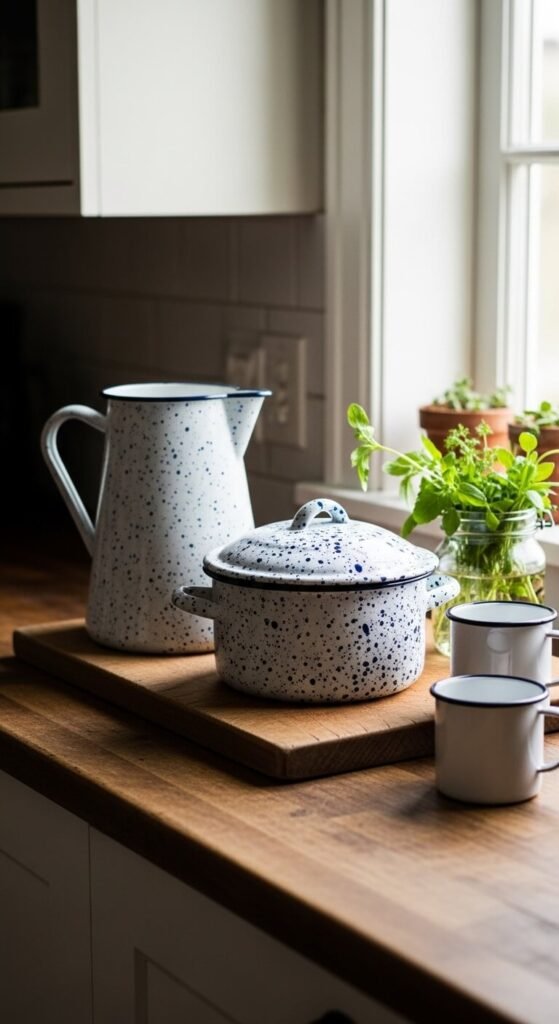
Enamelware has that distinctly old-fashioned charm that fits perfectly in farmhouse or cottage kitchens. Look for classic white with blue or red speckle patterns at flea markets and thrift stores. Use the pieces functionally — store utensils in a pitcher, use a pot as a fruit bowl, or display mugs on open shelving. Chips in the enamel are normal and expected. They add to the character. A full set usually costs under $20 at a good thrift store.
8. Old Maps as Framed Wall Art
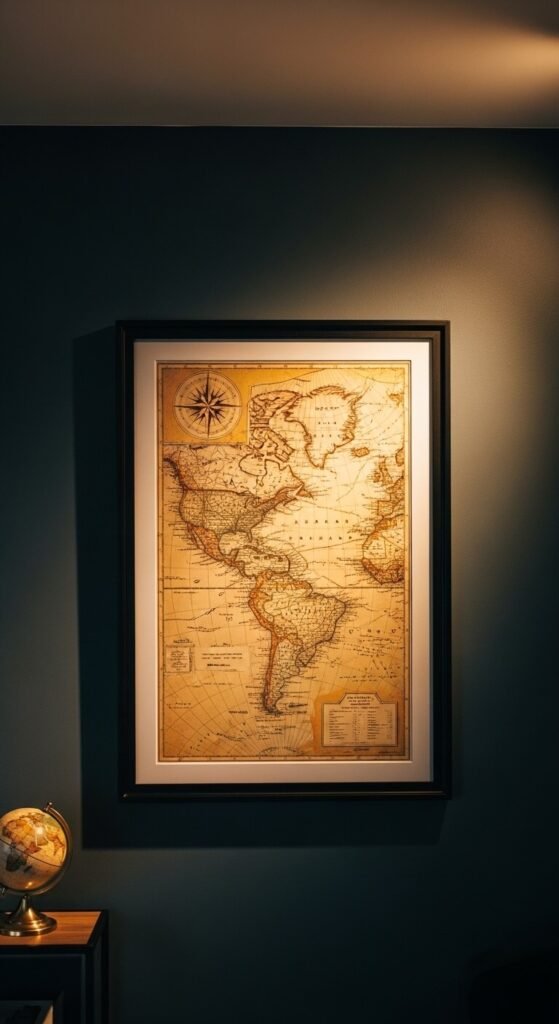
Vintage maps are beautiful, affordable, and conversation-starting. You can find genuine old maps at estate sales for just a few dollars. Or print high-resolution reproductions of historical maps for free from library archives online. Frame them simply — the map itself is detailed enough. Great for a home office, library corner, or hallway. Choose a map that means something to you: a hometown, a place you’ve traveled, or a historical region you love.
9. Brass Candlestick Holders in Mixed Heights
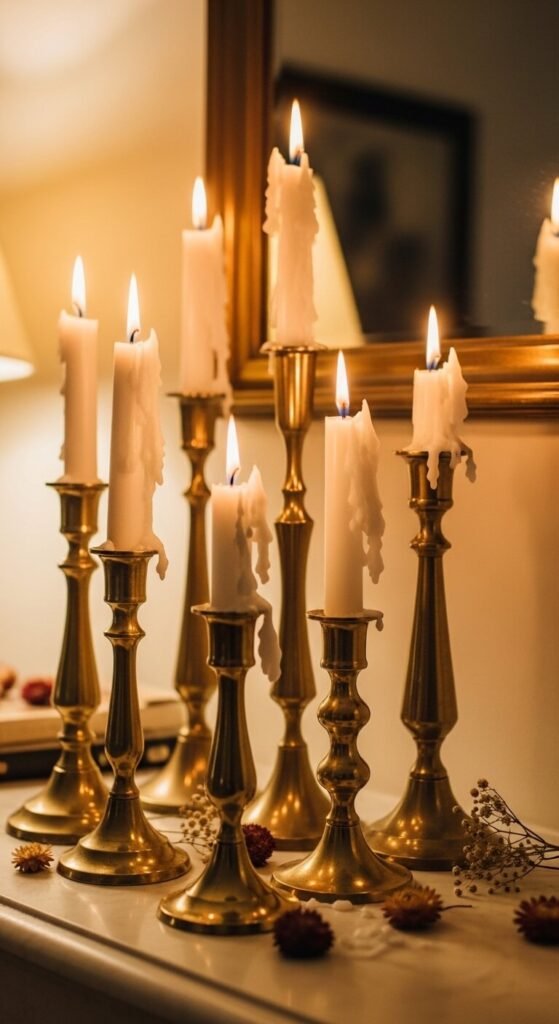
Brass is having a major moment, and vintage brass is better than the new stuff. The patina on old brass — slightly dark, a little uneven — has a warmth that polished modern brass can’t replicate. Candlestick holders are easy to find at thrift stores, usually for $1–$5 each. Collect them in different heights and group them together on a mantel, shelf, or dining table. You don’t even need to light the candles. They look great just sitting there.
10. Linen and Lace Table Runners
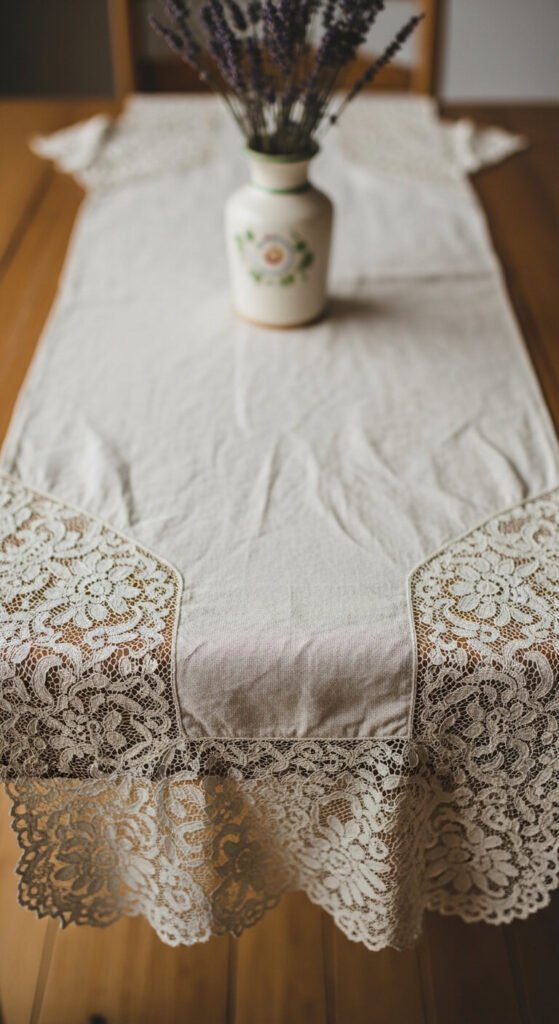
Old linen and lace pieces are easy to find and instantly soften a space. Use a vintage lace runner over a plain linen cloth for layered texture on a dining table. Or drape linen across a console table and let it hang asymmetrically. Look for these at estate sales, vintage fabric shops, or even charity bins. Some slight yellowing or faded embroidery only adds to the look. These pieces layer beautifully and can transform a table in sixty seconds.
11. Vintage Typewriter as a Desk Accent
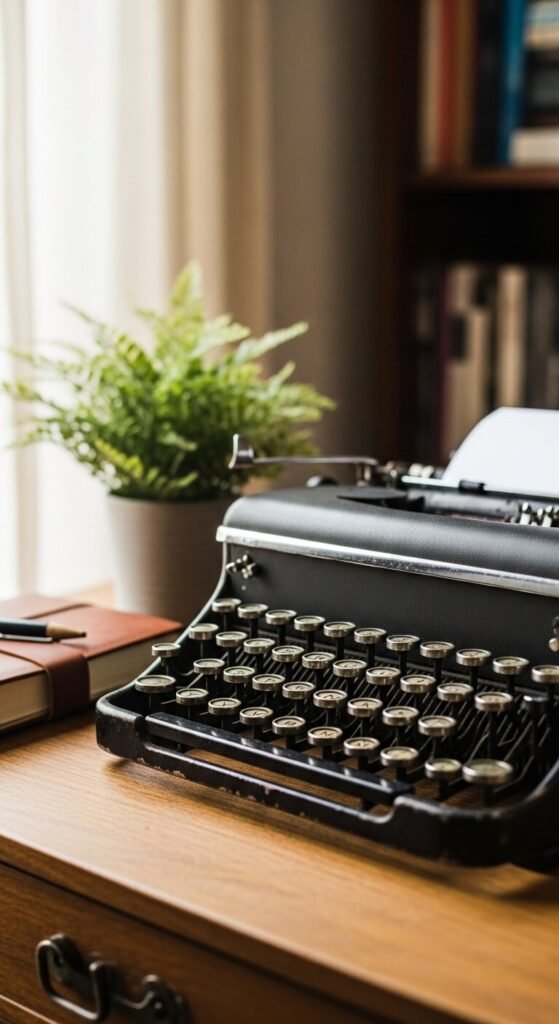
A vintage typewriter on a desk does something magical to the atmosphere of a room. It signals creativity, craft, and slowness in the best way. You don’t need it to work — though many old models do. Find them at antique stores, estate sales, or online. Prices vary from $20 to $150 depending on condition and brand. Set it on a desk with a journal and a small plant beside it. It becomes an instant focal point that people always comment on.
12. Ceramic Crocks and Stoneware Jugs
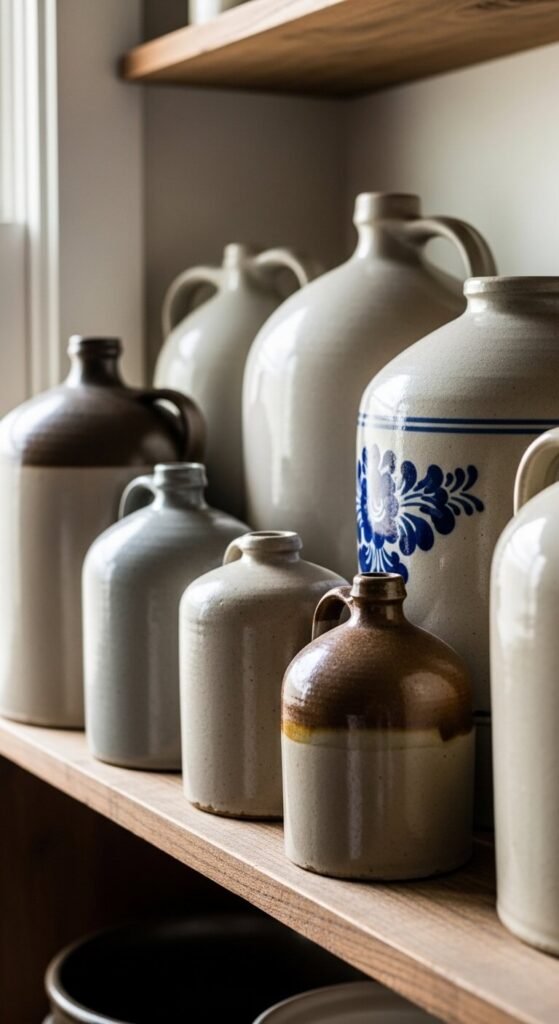
Old pottery crocks have a heaviness and simplicity that modern ceramics rarely achieve. Use them in the kitchen as utensil holders, bread storage, or purely as display pieces. Antique stoneware with hand-painted cobalt designs is especially striking. Thrift stores and antique malls often stock these for $5–$25. They work beautifully on open shelving, kitchen counters, or farmhouse sideboards. A single large crock can anchor an entire shelf arrangement on its own.
13. Botanical Print Collections
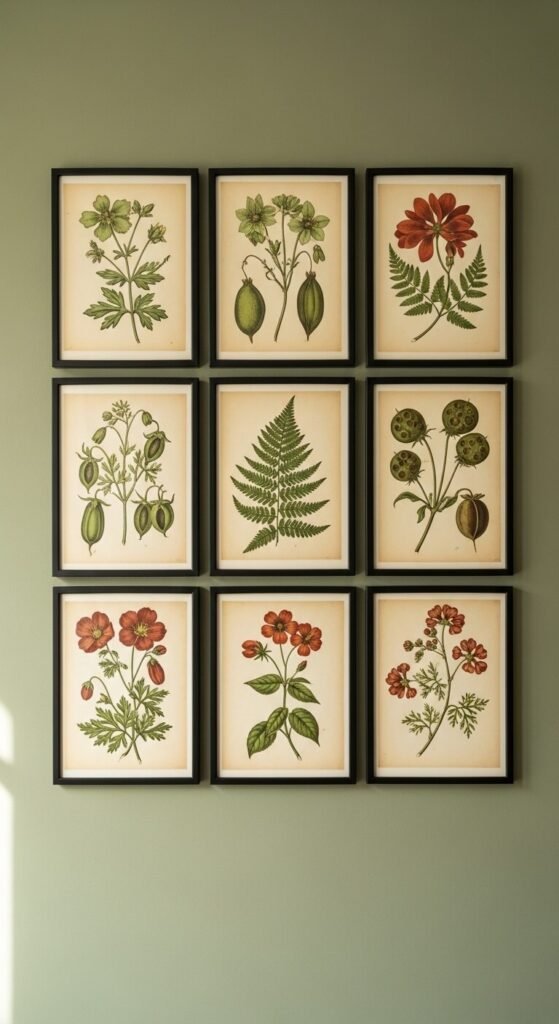
Antique botanical illustrations have a timeless quality. Find originals in old encyclopedias or science books at used bookstores — you can carefully remove pages and frame them affordably. Or download free public domain botanical prints from sites like Biodiversity Heritage Library. Print at home and frame with simple black or wooden frames. Hang in a uniform grid for a clean gallery look. Works in living rooms, bathrooms, hallways, and home offices without feeling out of place.
14. Vintage Clocks with Character
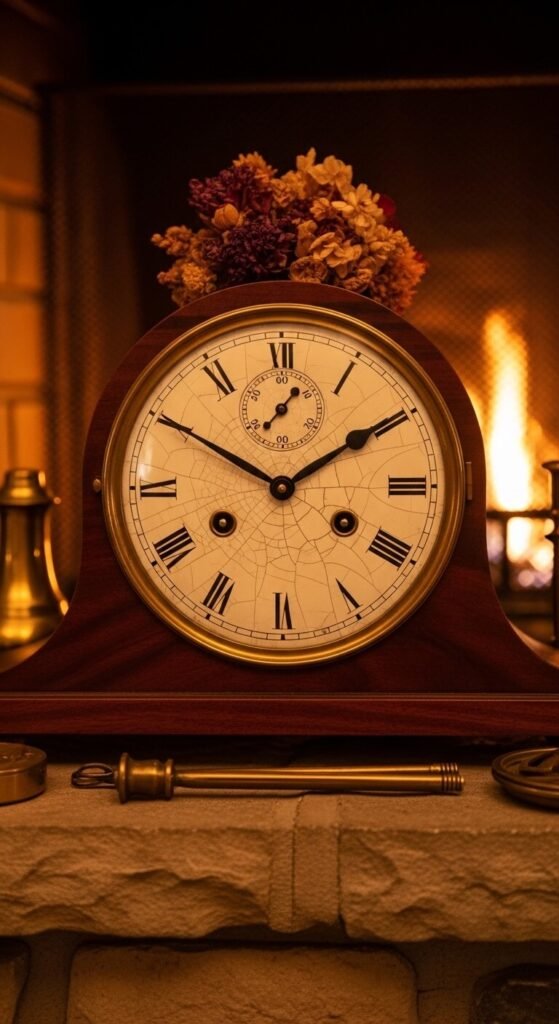
An old clock — even one that no longer works — adds incredible presence to a mantel or shelf. The face itself is the art. Cracked enamel, Roman numerals, brass hands, aged wood cases — these details have far more character than anything modern. Look for wall clocks, mantel clocks, or small travel alarm clocks at antique stores. Pair a stopped clock with fresh or dried flowers for an unexpectedly romantic display. Nobody needs to know it doesn’t tick.
15. Wicker and Rattan Baskets
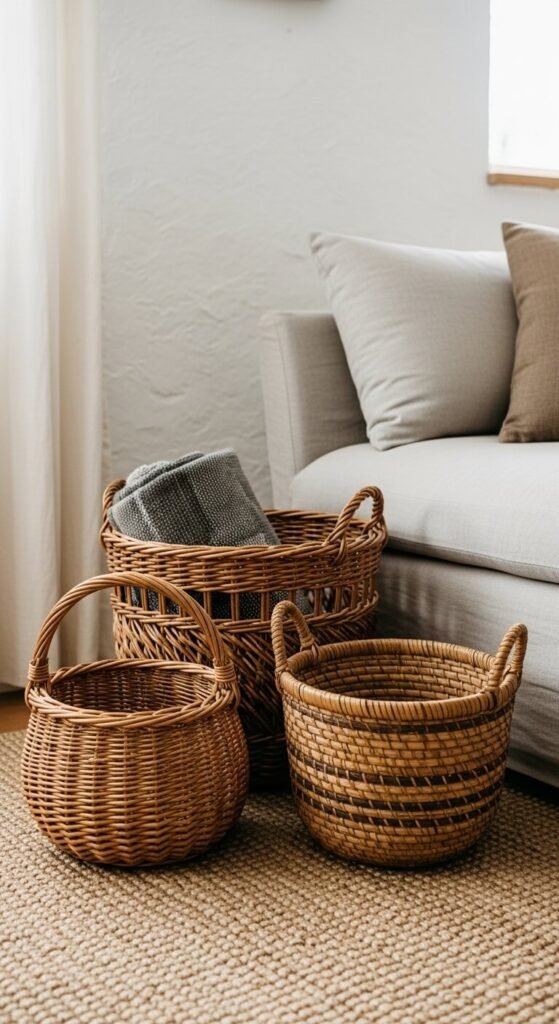
Old wicker and rattan baskets are among the most practical vintage finds you can make. Use them for storage, planting, or purely as decor. Fill a large one with throw blankets. Stack a few smaller ones as a display cluster. Line one with fabric and use it as a fruit bowl. Baskets from the 1960s and 70s often have a beautiful tight weave that newer ones rarely match. Estate sales are the best place to find them in good condition for just a few dollars each.
16. Antique Books as Decor Props
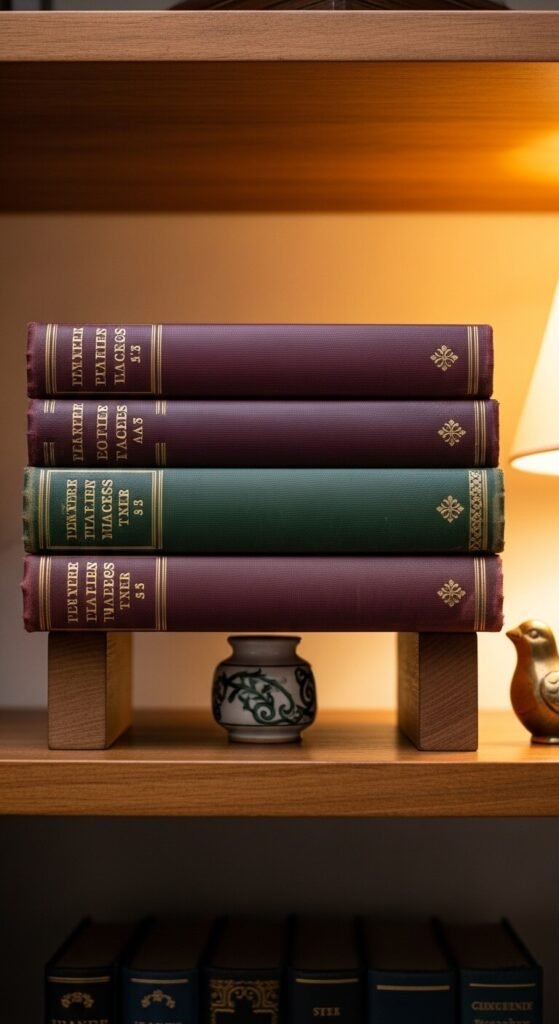
Old books are everywhere and usually free or nearly free. Stack them horizontally as risers under plants, candles, or small sculptures. Line them on a shelf by color — all dark green spines together, or a mix of burgundy and gold — for a curated look. The aged fabric covers, worn gilding, and foxed pages all add visual texture. Used bookstores, library sales, and thrift stores are your best sources. Don’t worry about the titles. Treat them as objects.
17. Pressed Flower Frames
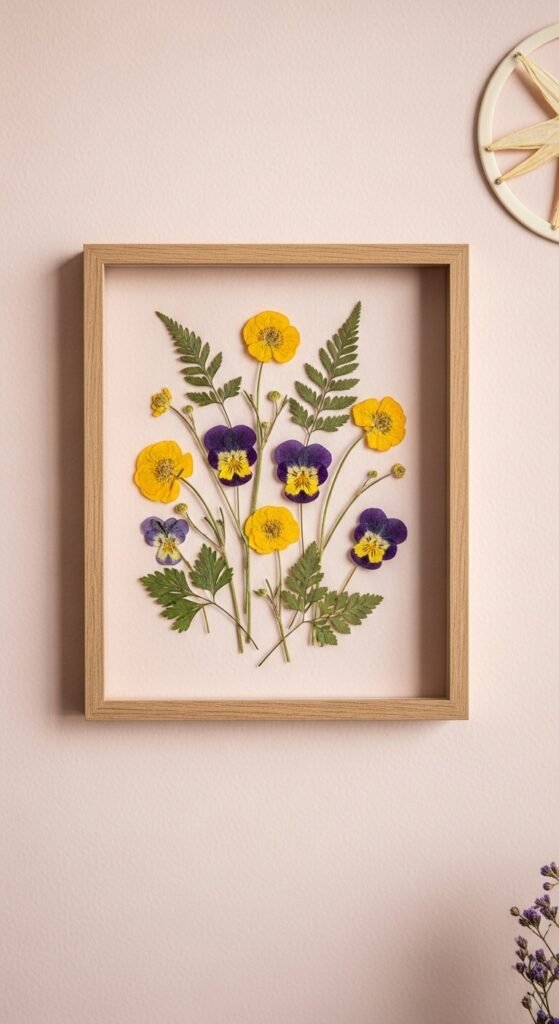
Pressed flowers are a traditional craft that looks stunning in a modern home. Press wildflowers yourself between heavy books for two to three weeks, then arrange them in a simple frame. Use glass-front frames to show off the delicate details. This costs almost nothing and results in one-of-a-kind art. Pair a few small frames together for a wall cluster. Old botanical-style frames you find at thrift stores pair especially well with this project. A great weekend activity with beautiful results.
18. Vintage Textile Wall Hangings
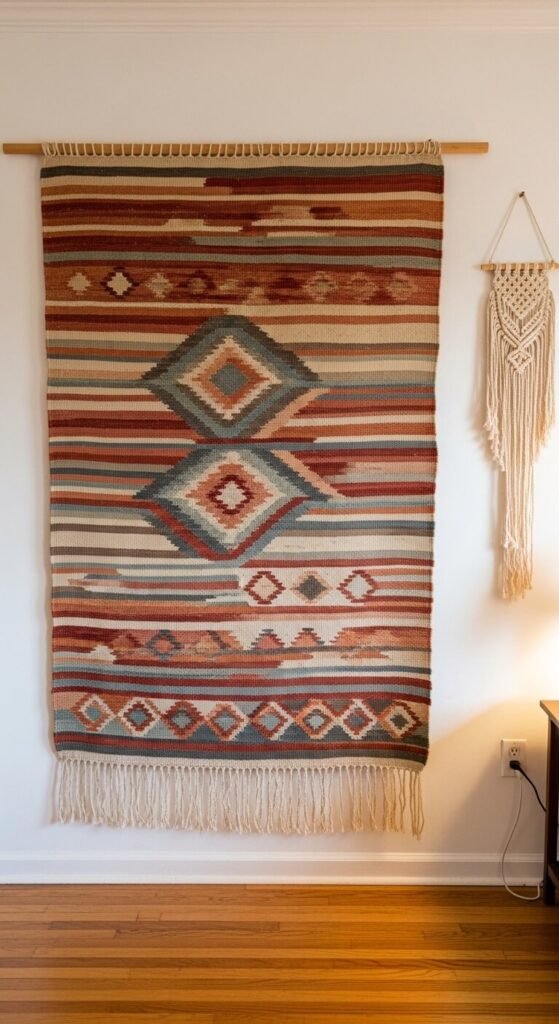
Old woven textiles — kilim rugs, tapestries, embroidered panels — work beautifully as wall art. Hang them on a simple wooden dowel using fabric loops or binder clips. Look for these at import shops, estate sales, or antique textile dealers. Even a small piece over a bed or sofa creates enormous warmth. The hand-woven texture and natural dye colors of old textiles give walls something that paint and prints simply can’t. No frame needed.
19. Repurposed Vintage Tins
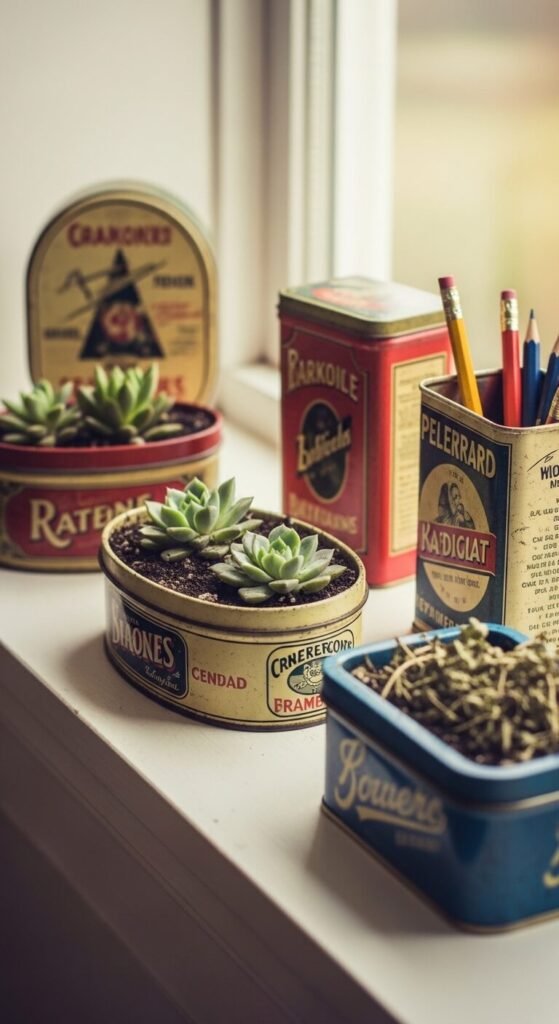
Old biscuit tins, tobacco tins, and tea canisters have the most beautiful faded graphics. Plant small succulents or herbs directly inside them by punching a few drainage holes in the bottom. Or use them on a desk to hold pens, scissors, or loose change. Line a few on a windowsill for a charming, mismatched collection. Thrift stores and antique shops often have these for $1–$5 each. The worn litho printing on old tins is genuinely irreplaceable — it was made by hand.
20. Old Wooden Step Stool
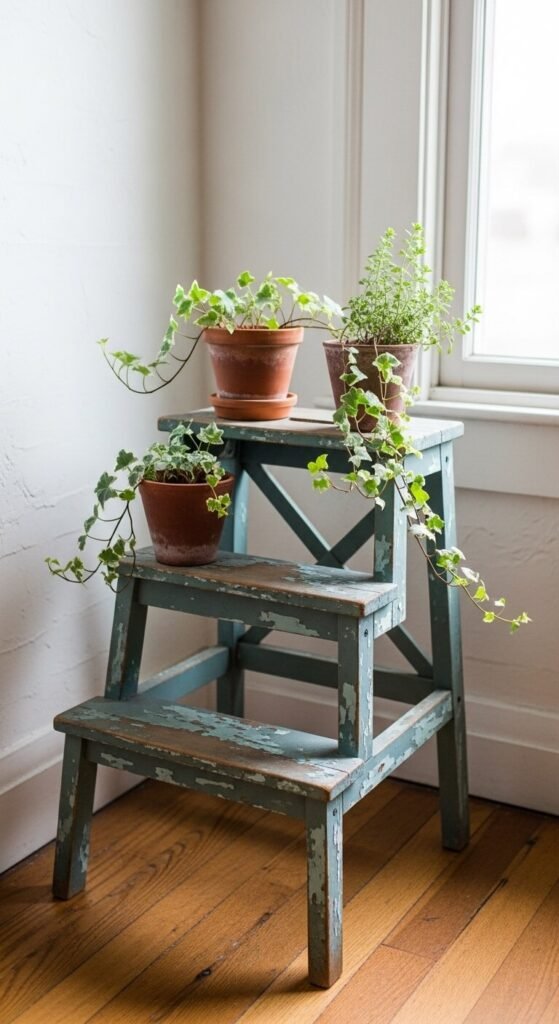
A vintage step stool is one of those finds that works in literally every room. Use it as a plant stand, a side table, a display riser, or extra seating. The worn paint and scuffed wood only make it better. Look for these at farm auctions, estate sales, and thrift stores. Paint is optional — the original patina usually looks better. A three-step stool in a corner of a kitchen or bathroom instantly adds both function and vintage charm at the same time.
21. Hurricane Lanterns and Oil Lamps
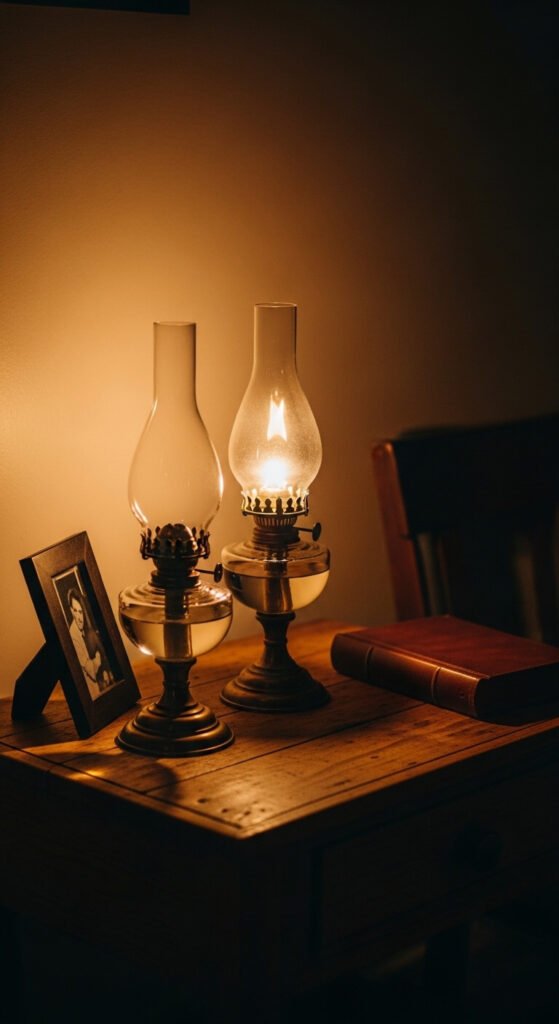
Old hurricane lamps and oil lamps bring a warmth that electric lighting simply can’t replicate. Even unlit, they look beautiful on a shelf or side table. Fill the base with colored sand or tiny stones if you don’t want to use actual oil. Lit with a real flame, they create an atmosphere that transforms a room entirely. Find them at antique stores and estate sales. Brass bases, clear glass chimneys, and aged patina are what to look for.
22. Vintage Cutting Boards and Kitchen Tools
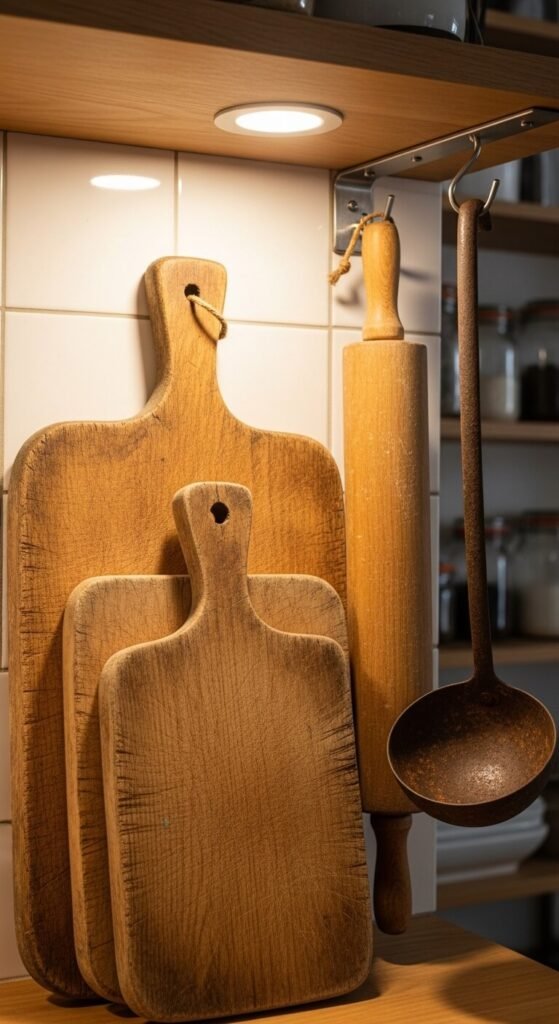
Old kitchen tools have a handmade quality that modern ones mass-produced in factories can’t match. Lean a few wooden cutting boards against your backsplash as a display. Hang old iron ladles or wooden-handled utensils from simple hooks. Look for these at farm sales and antique markets. The worn grain of an old breadboard, the patina on an iron ladle — these textures tell you the object was actually used. Display them proudly in the kitchen where they belong.
23. Chippy Paint Furniture Pieces
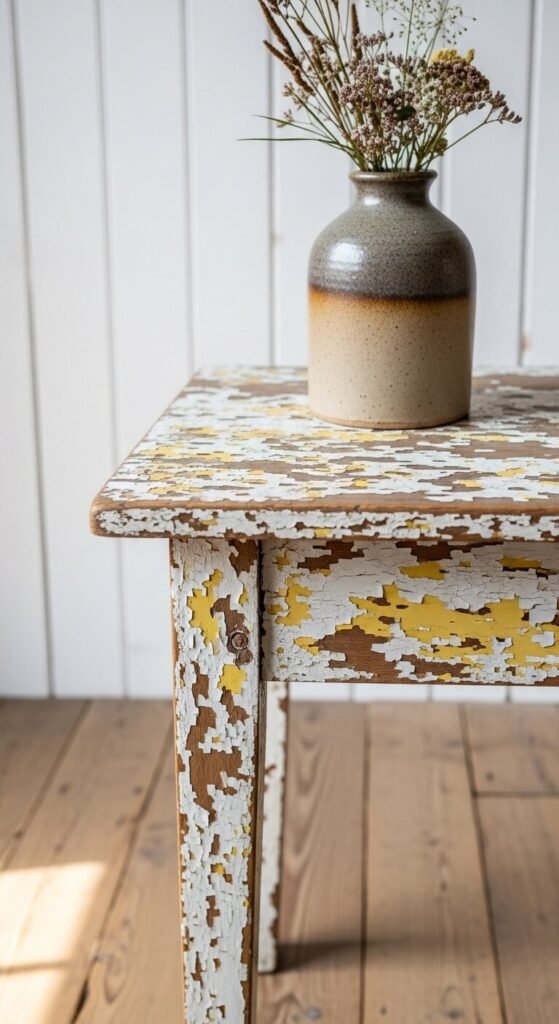
Furniture with naturally chipped, peeling paint is extremely sought-after in vintage decor right now — and for good reason. The layers of old paint tell a story of age and use. Don’t be put off by pieces that look “rough.” A chippy-paint side table or chair in white, blue, or green is a character piece that anchors a room. Find these at estate auctions and thrift stores. Resist the urge to repaint. The imperfection is precisely the point.
24. Grain Sack Pillows and Fabrics
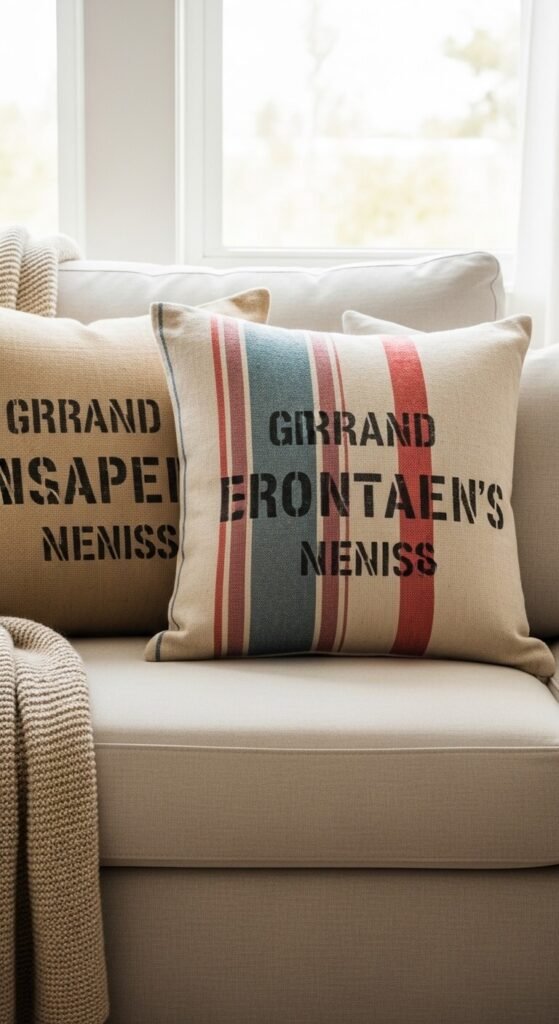
Antique European grain sacks — linen bags once used to store grain — have the most stunning natural fabric. The stripes, the texture, the weight of old grain sack linen is unlike anything sold in stores. Find actual old grain sacks and make them into pillow covers, table runners, or framed textile art. Some have stenciled markings or letters that add graphic interest. Look on specialty vintage fabric sites or European antique dealers. Even reproduction grain sack fabric looks beautiful if originals are out of budget.
25. Apothecary Jars and Glass Canisters
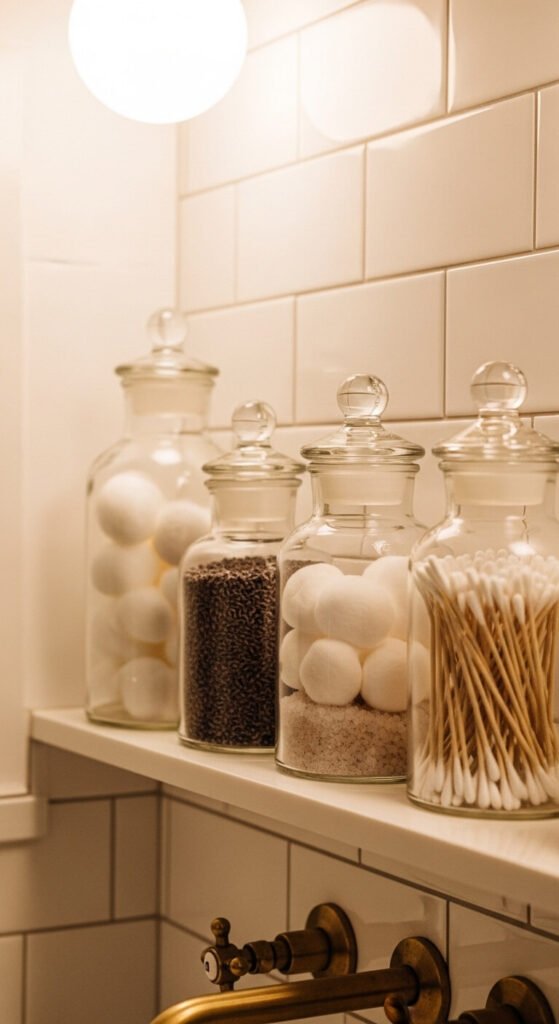
Old apothecary jars with glass stoppers look elegant anywhere — bathrooms, kitchens, home offices. Fill them with cotton balls, bath salts, dried herbs, or small stones. The heavy glass and ground-glass stoppers of vintage apothecary pieces have a quality that modern versions rarely replicate. Find them at antique stores, pharmacies going out of business, or online vintage shops. A row of three or four in different heights on a bathroom shelf immediately elevates the entire space with almost no effort or cost.
26. Vintage Suitcases as Storage
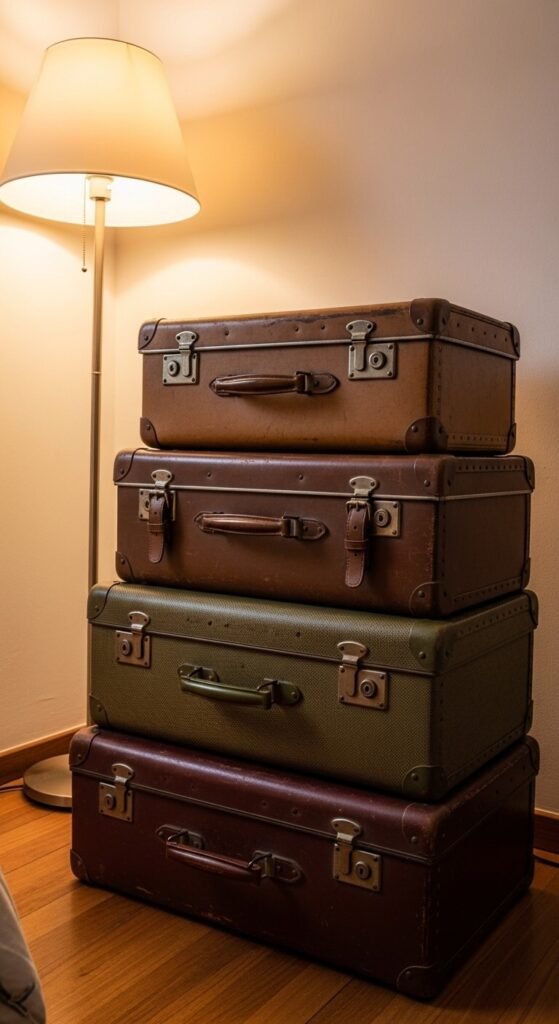
Old suitcases are incredibly functional and look great stacked in a corner or used as a side table. The top one can serve as a surface for a lamp, plant, or tray. Use the insides for extra storage — seasonal clothes, keepsakes, or documents. The variety of textures — tweed, leather, cardboard — and the worn hardware, corner reinforcements, and old labels all add to the visual interest. Find these at estate sales, flea markets, and vintage shops. Stackable and beautiful.
27. Vintage Window Frames as Wall Decor
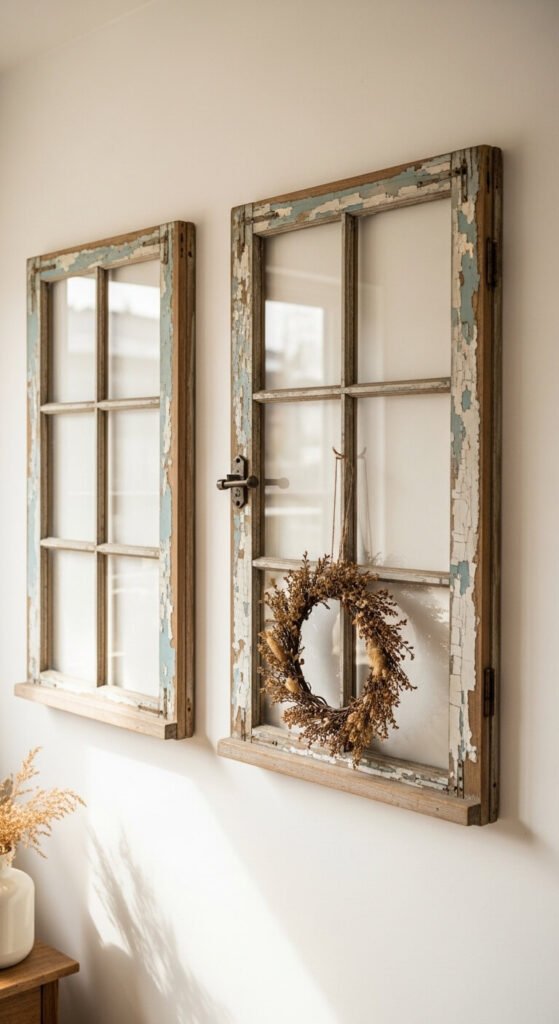
Old window frames — especially ones with divided panes — make striking wall art. Hang them flat on a wall as you would a picture frame. The original glass, peeling paint, and worn wood tell the story of the building they came from. Hang a small wreath or ribbon from the latch. Use them in a bedroom, living room, or hallway. Architectural salvage yards are the best source. Prices vary, but weathered frames without glass are usually just a few dollars and look equally beautiful.
28. Graniteware and Speckled Cookware
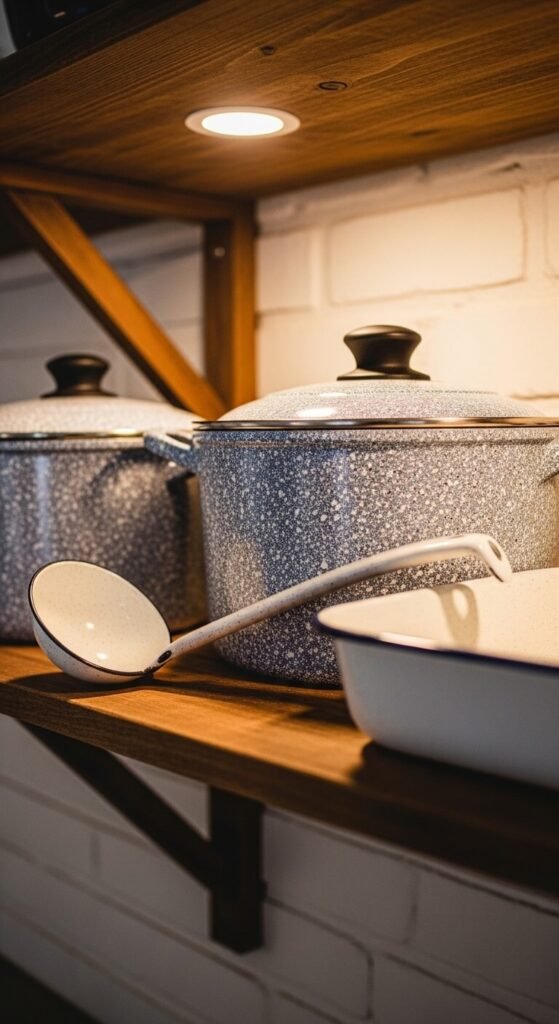
Old graniteware — that distinctive speckled enamel over iron — is one of the most recognizable vintage kitchen materials. Blue and white speckle is the classic, but you’ll also find red, green, and grey versions. Use them functionally or display them on open shelving as visual texture. The speckled surface and black rim detailing are timeless. Look at farm sales, antique malls, and thrift stores. These pieces are durable enough to still cook with — or beautiful enough to just look at.
29. Handmade Pottery and Studio Ceramics
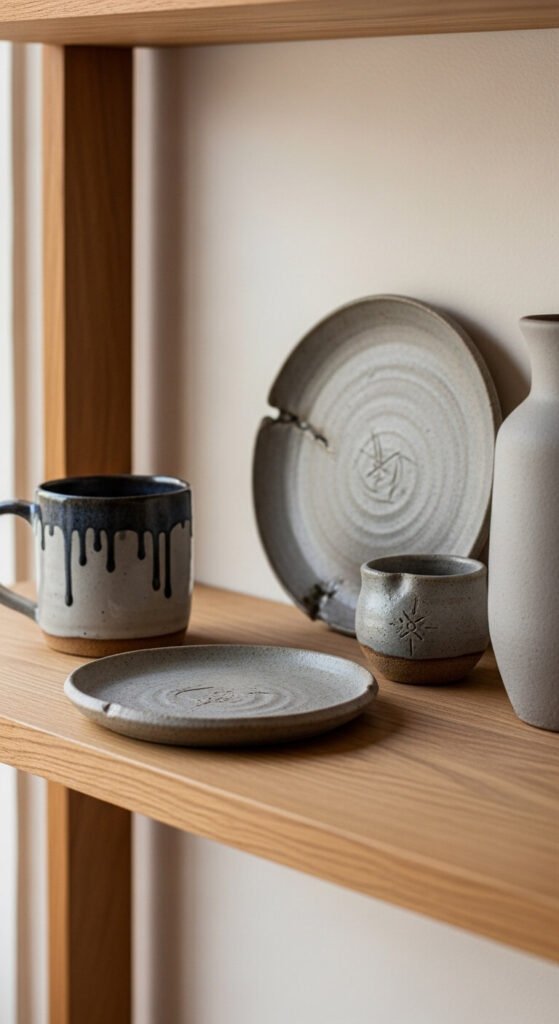
Old handmade pottery has a character that factory pieces never achieve. Look for pieces with visible hand-building marks — uneven rims, thumb impressions, dripped glaze. Estate sales sometimes yield beautiful studio ceramics from local artists who were active decades ago. Mix them freely on a shelf — a matte black mug beside a honey-glazed bowl, a rough-textured vase next to a smooth stoneware plate. The variety creates exactly the kind of rich, layered display that makes a space feel personal and real.
Conclusion
Vintage decor isn’t about recreating a specific era or following a strict style guide. It’s about choosing objects with real history, honest imperfection, and genuine character. Each piece you bring in tells a small story. And together, those stories make a home feel deeply personal — not assembled from a catalog, but actually built over time. Start small. One brass candlestick. A stack of old books. A chippy-paint stool in the corner. Add slowly, and let the layers build naturally. That’s how the best vintage spaces are made — one find at a time.