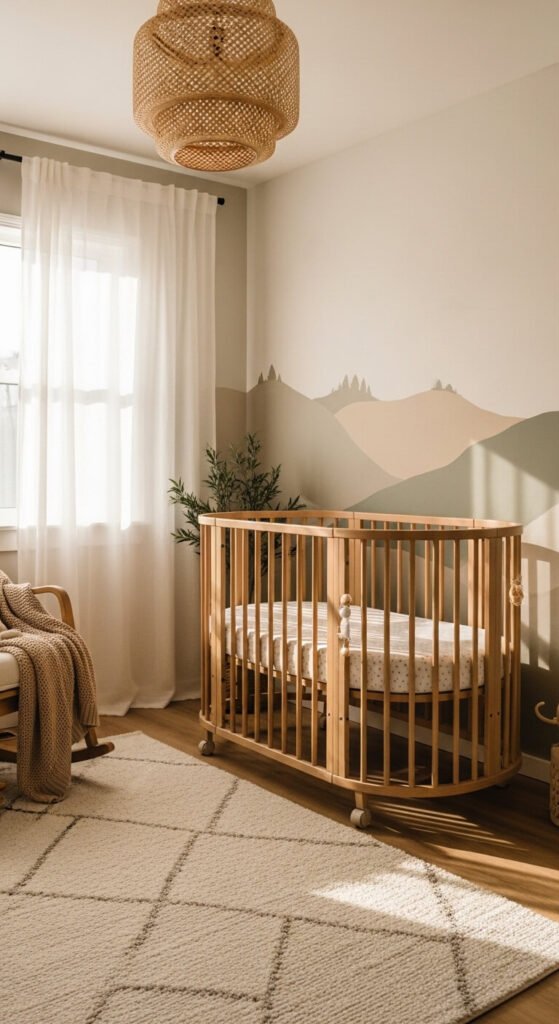
Designing a nursery is one of the most personal and heartfelt projects a parent can take on. Every color choice, every fabric texture, every soft corner matters — because this tiny room is where your baby will sleep, dream, and grow. You don’t need a big budget or a professional designer to pull it off. What you need are ideas that are simple, warm, and actually workable. Whether you’re starting from scratch or refreshing an existing space, these 28 nursery design concepts will help you create a room that feels like a hug.
1. Go Soft With a Neutral Color Palette
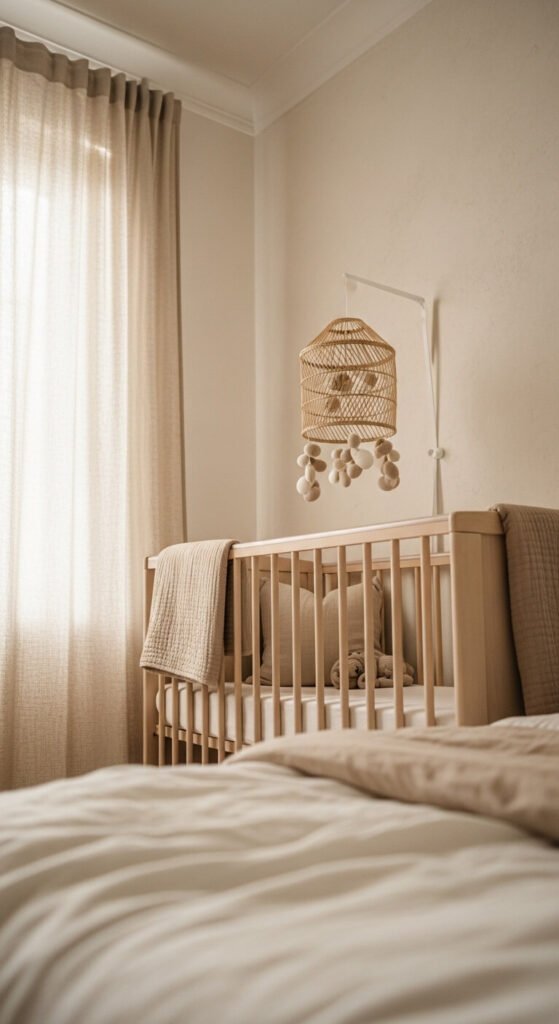
Neutral doesn’t mean boring. Warm whites, soft beiges, and creamy taupes create a calm foundation that grows with your child. Paint is the most affordable transformation tool in any nursery. Stick to matte or eggshell finishes to hide scuffs. Try a single accent wall in a slightly deeper tone — like warm linen or mushroom — for depth without overwhelming the space. These colors also photograph beautifully, which you’ll appreciate during every milestone moment.
2. Add a Dreamy Canopy Over the Crib
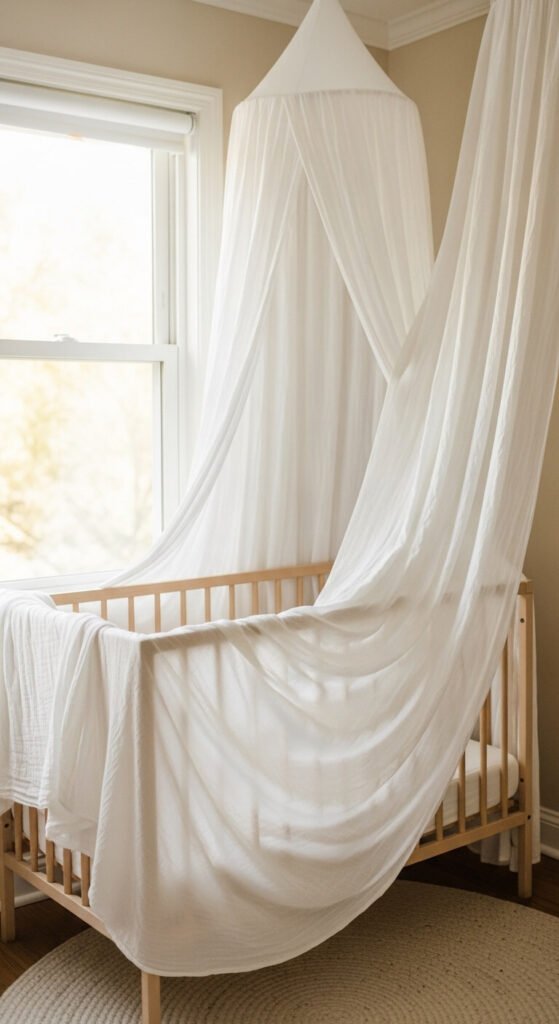
A canopy instantly makes a crib feel magical. You don’t need a fancy installation. A simple ceiling hook and a circular embroidery hoop can hold yards of sheer muslin fabric. Buy lightweight white or blush fabric from a fabric store — it’s far cheaper than a branded canopy set. Drape the fabric loosely for a romantic, organic look. This trick works in any room size and adds a cozy, sheltered feeling that babies seem to love.
3. Use Peel-and-Stick Wallpaper for an Accent Wall
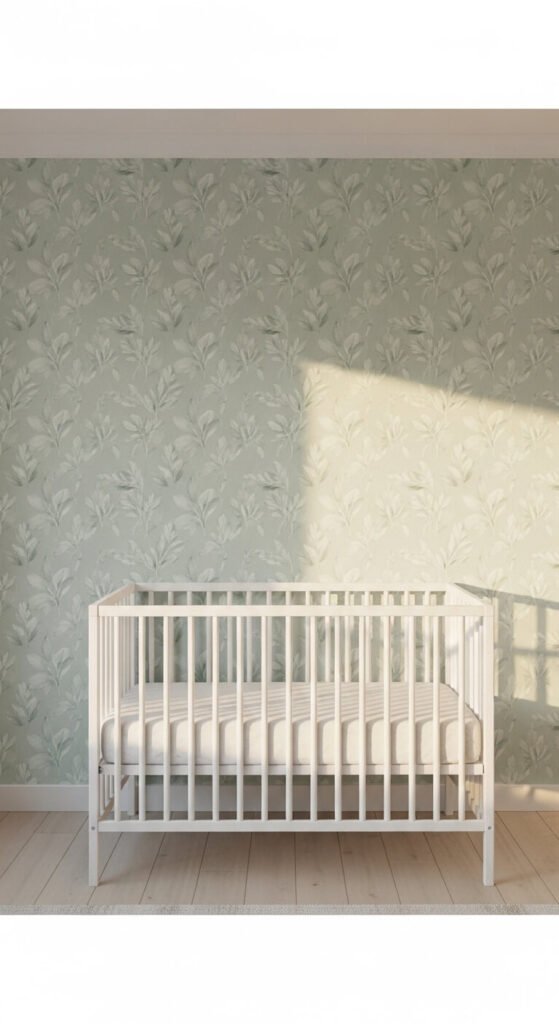
Peel-and-stick wallpaper is a game-changer for renters and commitment-phobes alike. You can find gorgeous patterns — soft botanicals, muted geometric prints, hand-painted cloud designs — for very reasonable prices online. Pick one wall, usually behind the crib, and make it the focal point. No glue, no professional installer needed. It goes up in under an hour and comes off cleanly when you’re ready for a change. This is one of the highest-impact, lowest-cost updates you can make.
4. Hang a Gallery Wall of Soft Illustrations
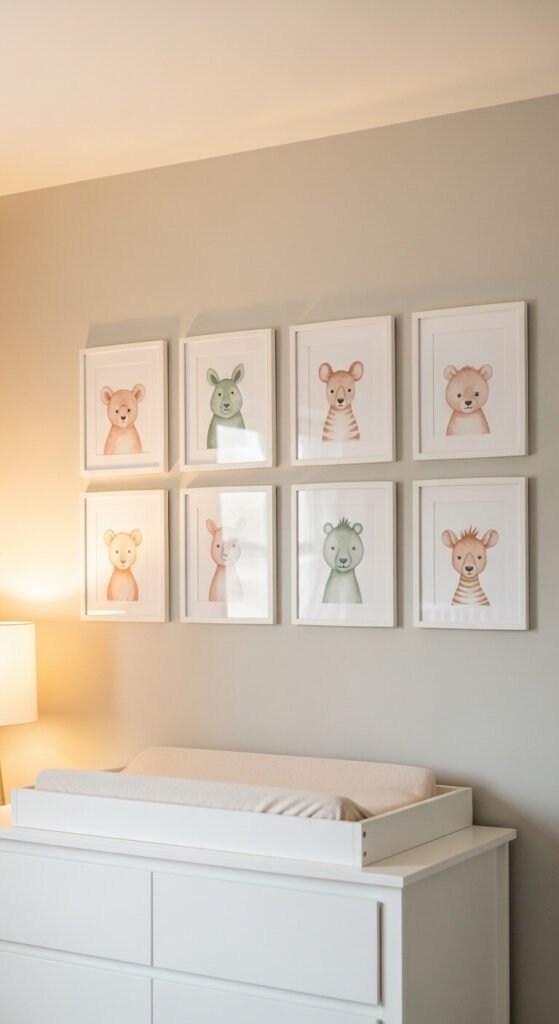
You don’t need expensive art. Print free or low-cost watercolor illustrations from sites like Etsy or even design them yourself using Canva. Matching frames from a dollar store or thrift shop unify the look. Go with a cohesive color palette — all blush, or all sage and cream — for a polished appearance. Arrange frames on the floor first before hammering any nails. A gallery wall adds warmth, personality, and a handmade feel without spending much at all.
5. Layer Rugs for Texture and Warmth
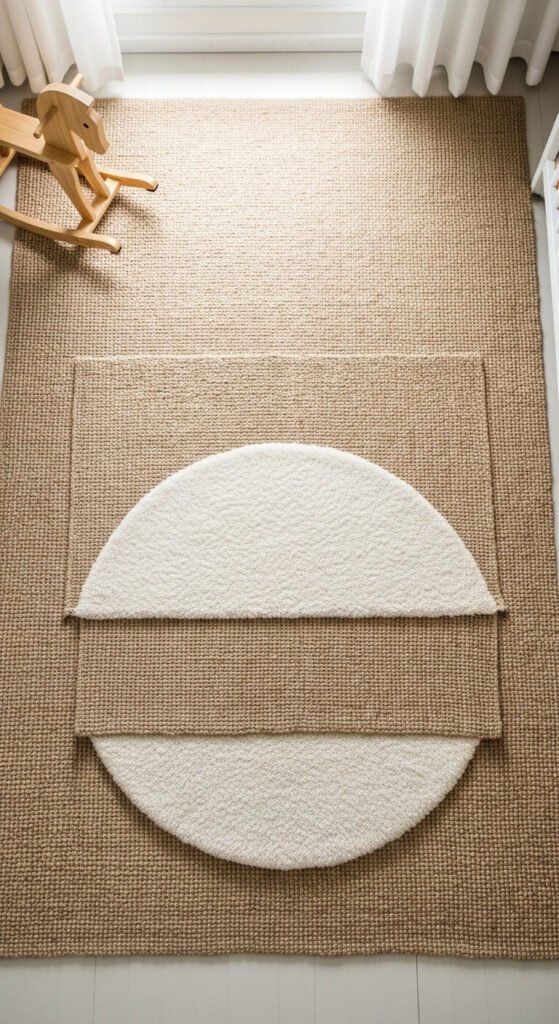
Layering two rugs adds dimension and coziness to any nursery. Start with a flat, durable base rug — jute or a simple cotton weave works well — and place a softer, plush rug on top for the play area. This approach is practical too: the top rug can be washed easily while the base stays put. Look for rugs at discount home stores, thrift shops, or end-of-season sales. A round plush rug placed under or near the crib feels especially intentional and warm.
6. Choose a Glider or Rocking Chair That Actually Looks Good
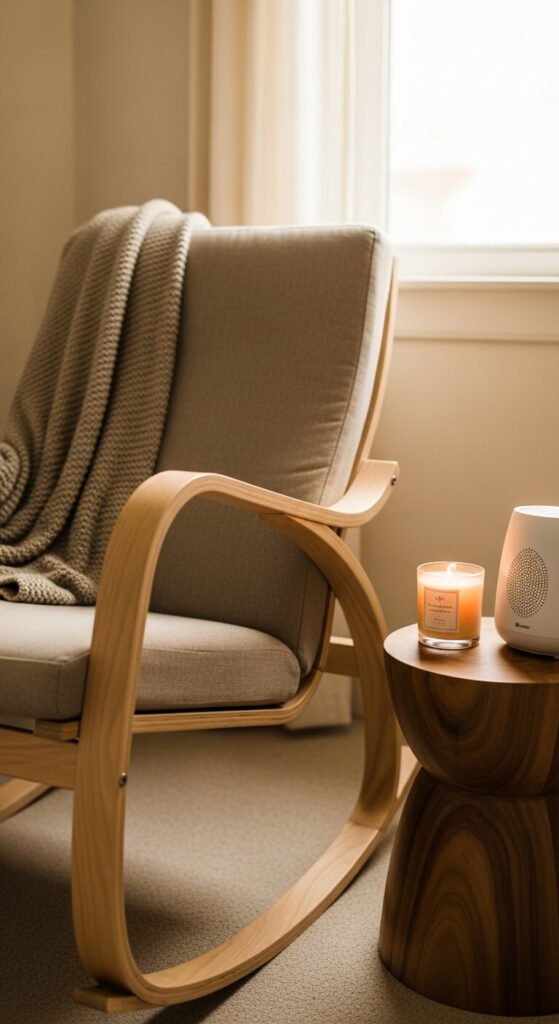
The feeding chair is where you’ll spend countless night hours. It should be both functional and beautiful. You don’t need a $600 designer glider. Look for secondhand rocking chairs at estate sales or Facebook Marketplace, then recover the cushion yourself using inexpensive upholstery fabric. A simple reupholster job costs under $30 and completely transforms a tired chair. Choose fabric that’s wipeable or machine washable — because spills are inevitable. Position the chair near a window for daytime feedings in good light.
7. Paint a Simple Cloud Mural Yourself
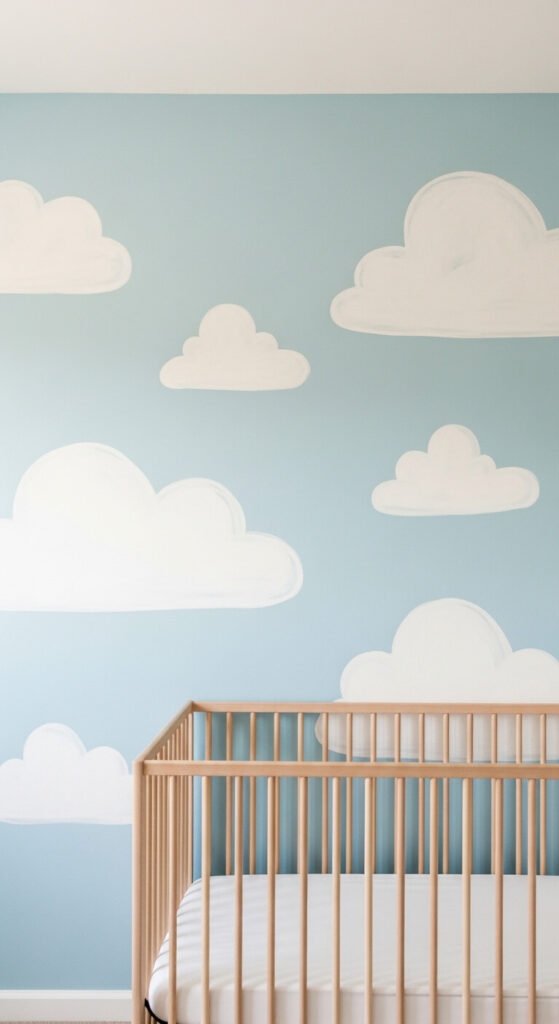
You don’t have to be an artist to paint clouds. Use a sponge, a round brush, or even a balled-up plastic bag dipped in white or soft grey paint. Dab it onto your wall in loose, rounded shapes. Step back frequently to check proportions. Practice on a piece of cardboard first. The imperfect, handmade quality actually looks charming in a nursery. Choose a pale blue, blush, or lavender background for contrast. This DIY mural can cost as little as the price of one small sample pot of paint.
8. Install Floating Shelves for Display and Storage
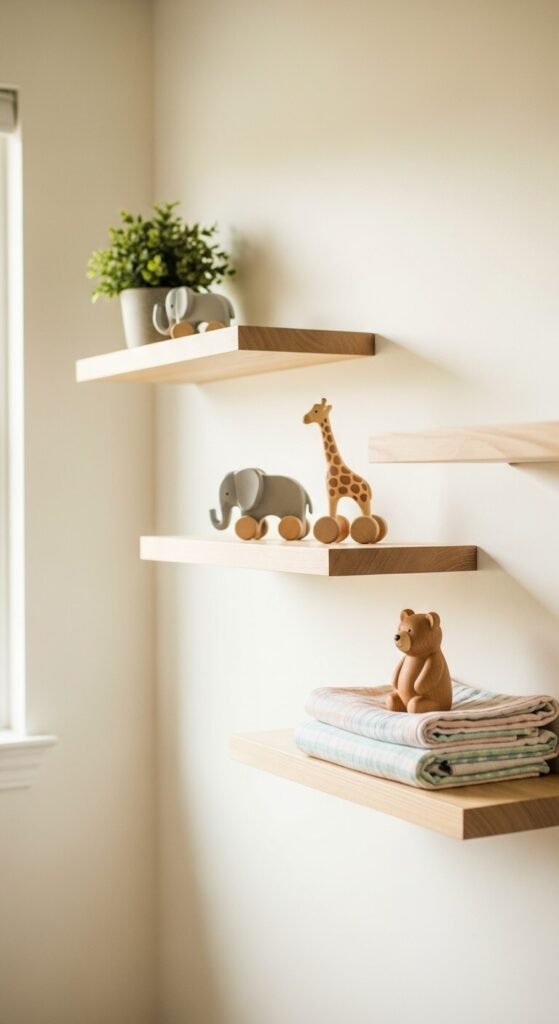
Floating shelves do double duty — they store things and display beautiful objects. Simple white shelves from hardware stores cost very little and can be installed in under 30 minutes with basic tools. Style them with small plants (choose non-toxic varieties), soft stuffed animals, board books, and a few candles or diffusers for ambiance. Keep it simple — three to five items per shelf looks intentional. Shelves also draw the eye upward, making small rooms feel taller and more open.
9. Create a Soft Reading Nook in a Corner
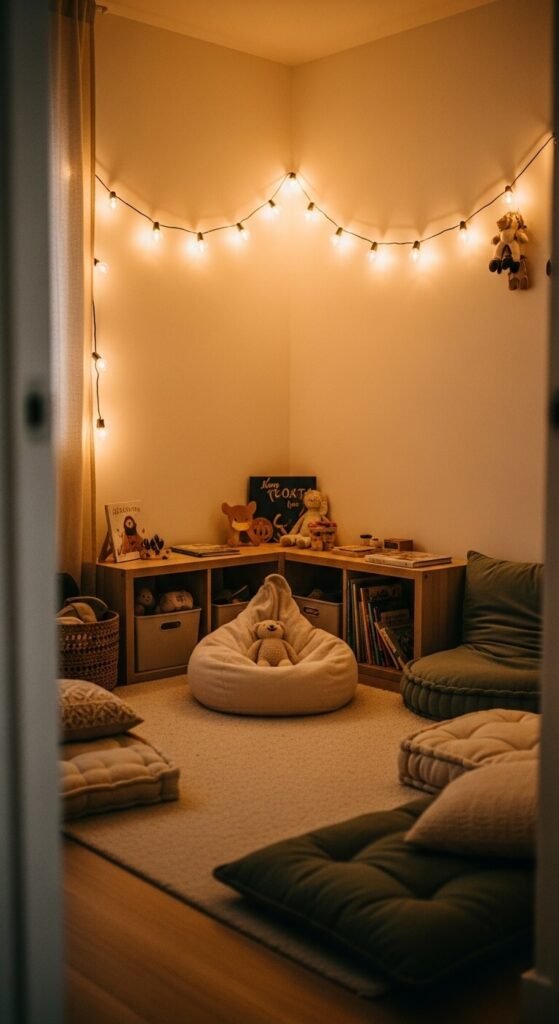
Every nursery benefits from a small, calm reading corner. It doesn’t need much space — even a 3-foot corner works. Add a soft floor cushion or small bean bag, a low bookshelf at reachable height, and a string of warm fairy lights for ambiance. Use a simple tension rod and some sheer curtain panels to create a soft canopy overhead if you want extra coziness. This space becomes a daily ritual — books before naps, stories before bed — which babies and toddlers respond to powerfully.
10. Pick Furniture With Rounded Edges
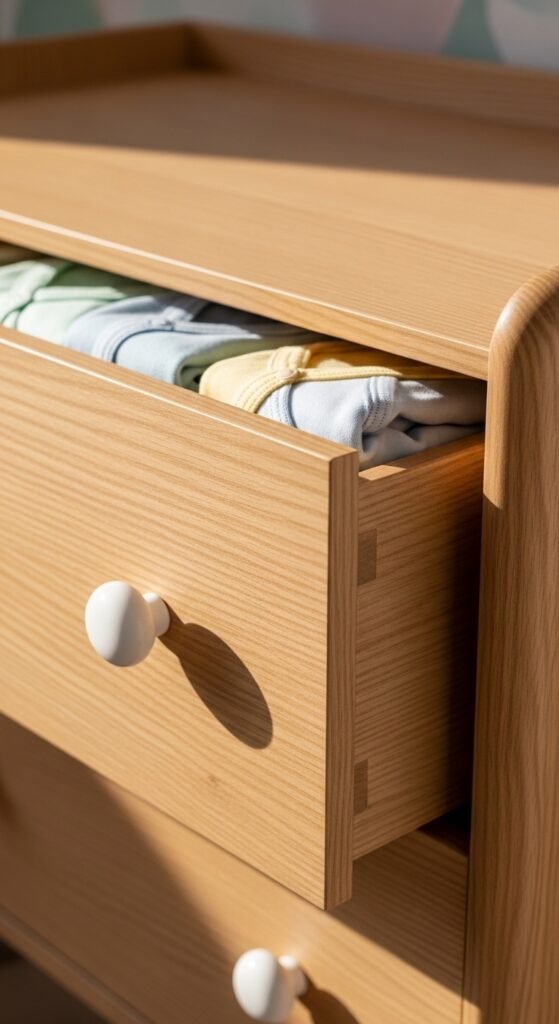
Sharp furniture corners are a real safety concern as babies start pulling themselves up and toddling around. Rounded-edge furniture solves this before it becomes a problem. Many affordable nursery furniture lines now feature soft, curved silhouettes. If you already own furniture with sharp corners, corner guards are an easy and inexpensive fix. Beyond safety, rounded shapes are aesthetically softer and more soothing — which is perfect energy for a sleep space. Look for rounded cribs, dressers, and side tables when shopping secondhand.
11. Use a Crib Mobile as Decor — Not Just a Toy
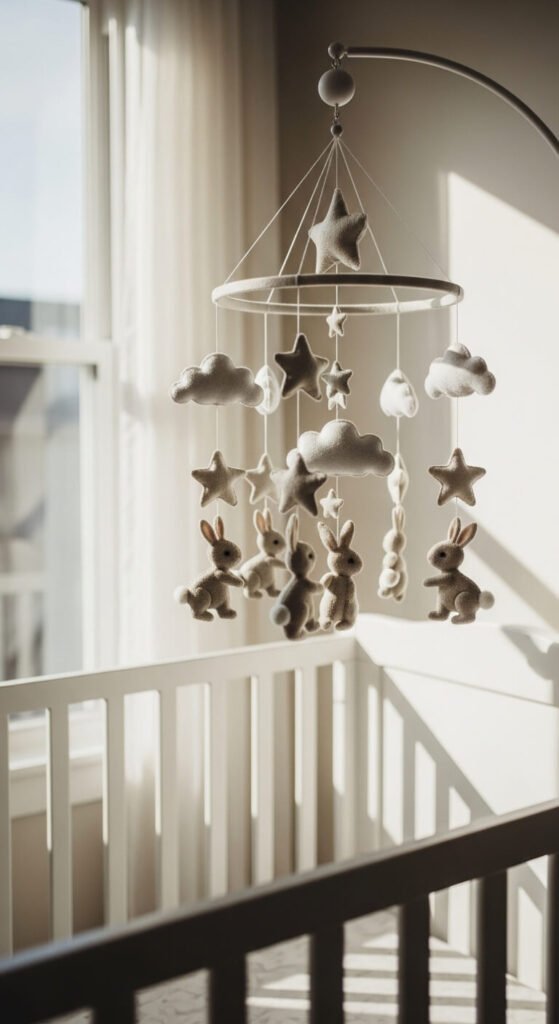
A well-designed mobile is one of the first things a baby truly sees and focuses on. Choose one with high contrast or soft, nature-inspired shapes. DIY mobiles are surprisingly easy to make — use a wooden dowel or embroidery hoop, some twine, and cut-out felt shapes. Woodland animals, moons and stars, or simple geometric shapes all work beautifully. Hang it at the right height — about 12 inches above the crib mattress when lowered. The visual movement helps babies develop focus and provides genuine soothing.
12. Try a “Nature Table” for a Grounded, Earthy Feel
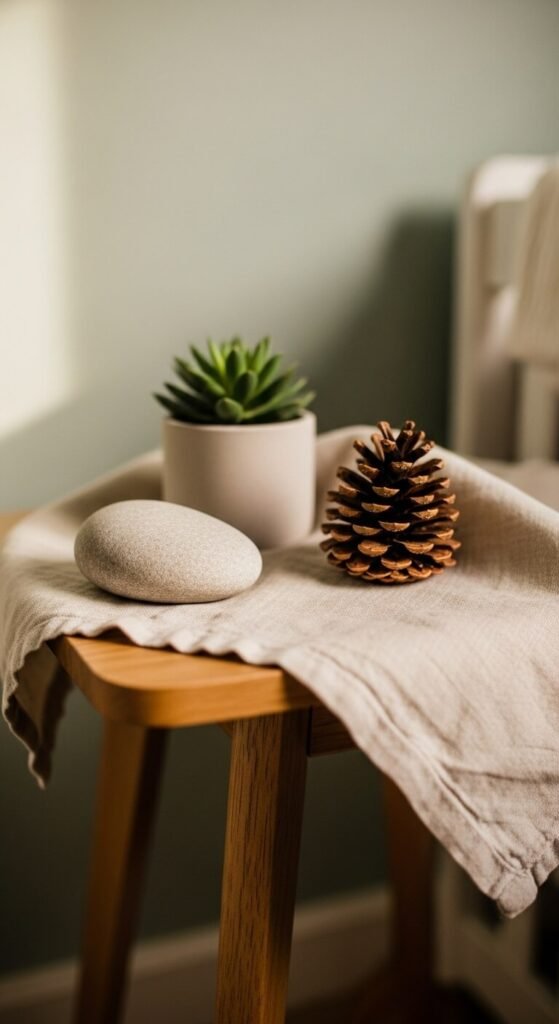
A nature table is a small, curated surface with objects from the natural world. A pinecone, a smooth stone, a dried flower, a tiny plant. It grounds the room in something real and organic. Change out the objects seasonally to keep the display fresh. This concept comes from Waldorf-inspired design, which emphasizes connection to the natural world from infancy. The table itself can be any small wooden side table or even a wooden crate. It costs almost nothing and adds soul to the room.
13. Layer Different Light Sources
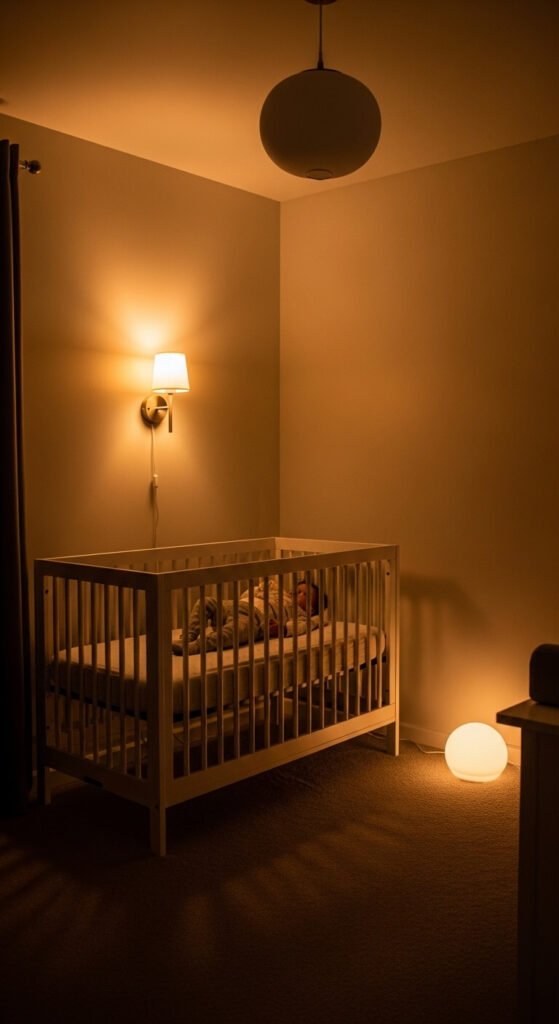
Harsh overhead lighting is the enemy of a calm nursery. Layer at least three light sources at different heights. Use a warm-toned pendant or flush mount for general light. Add a dimmable wall sconce near the feeding chair for nighttime feeds without full brightness. Place a soft amber nightlight near the floor for middle-of-the-night checks. All of these can be found affordably at discount stores. Install dimmer switches — they cost under $15 at hardware stores and are worth every penny for night duty.
14. Incorporate a Soft Arch Shape
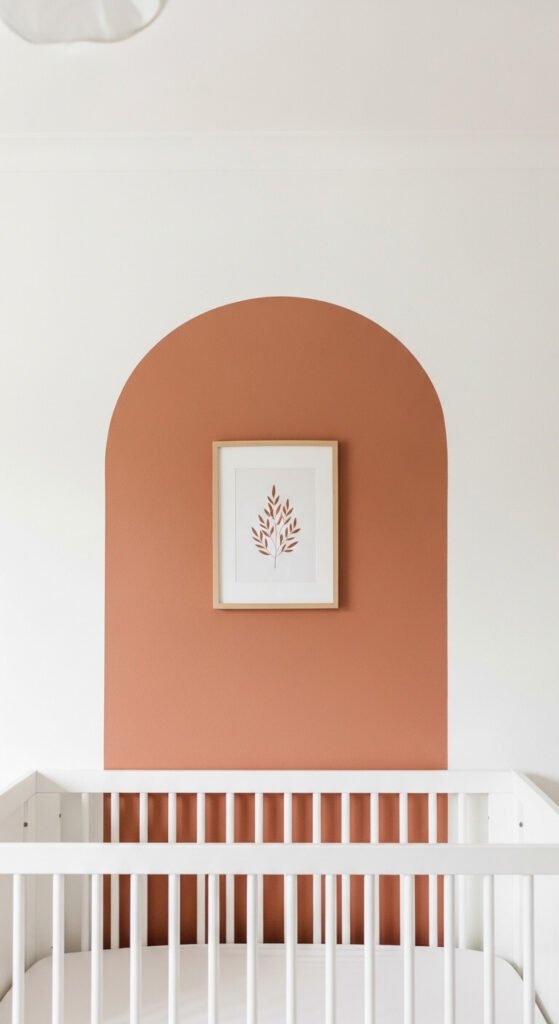
The arch shape has become a beloved nursery design element — and for good reason. It’s soft, organic, and frames space beautifully. Paint a simple arch directly on the wall behind the crib using painter’s tape and a small roller. Use a chalk line or large piece of string to trace a perfect curve before taping. Choose a tone slightly deeper than the wall color — warm terracotta, dusty blush, sage green. You can also find arch-shaped shelves, mirrors, and frames to reinforce the motif throughout the room.
15. Use Baskets as Open Storage
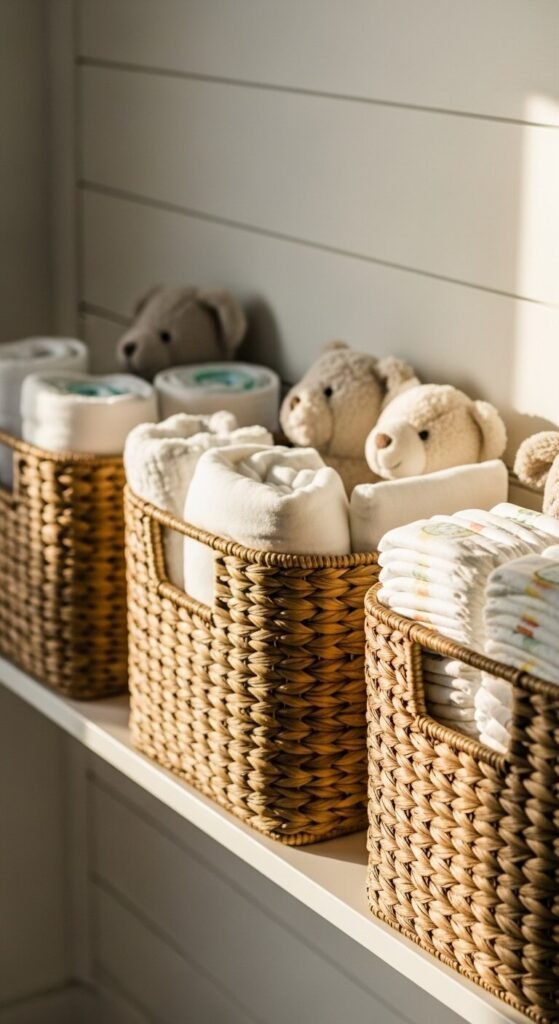
Baskets are the most functional decorative item in a nursery. They corral clutter, look beautiful, and are easy to grab with one hand when you’re holding a baby in the other. Woven seagrass, rattan, or cotton rope baskets all work. Look for them at discount home stores, thrift shops, or dollar stores. Use one for blankets, one for toys, one for diapers and wipes. Label them with simple tags if you like. Open storage like this keeps things accessible and keeps the room feeling organized and calm.
16. Opt for a Woodland Animal Theme Done Subtly
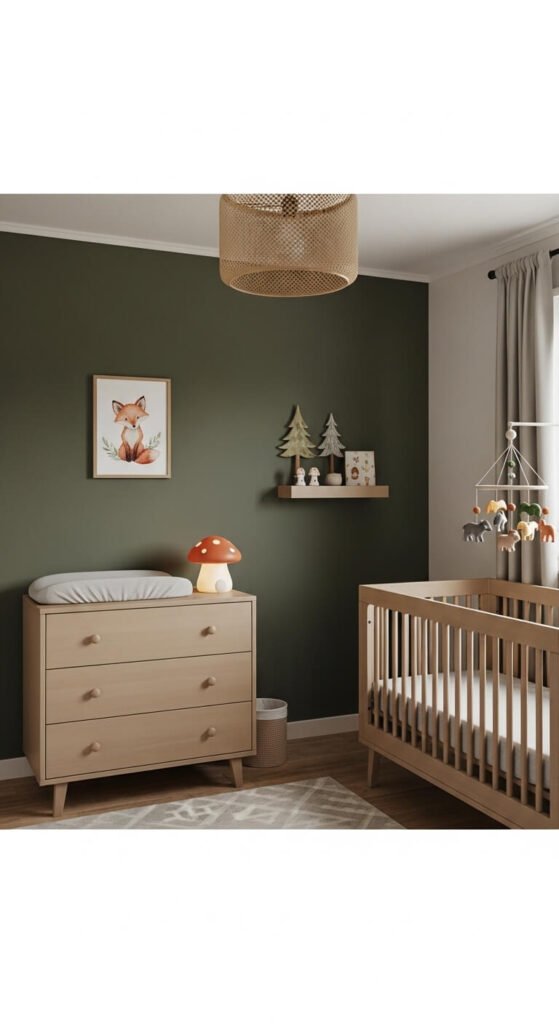
Woodland themes can look overdone and cartoonish — or they can look warm and refined. The key is subtlety. Stick to muted, earthy tones: forest green, warm ochre, clay, cream. Choose one or two small animal prints in a soft watercolor style rather than loud graphics. A mushroom-shaped nightlight, a fox mobile, a linen woodland print above the dresser — that’s enough. Avoid matching bedding sets that spell out “WOODLAND” in big block letters. Less is always more with themed rooms.
17. Install a Pegboard for Flexible Wall Storage
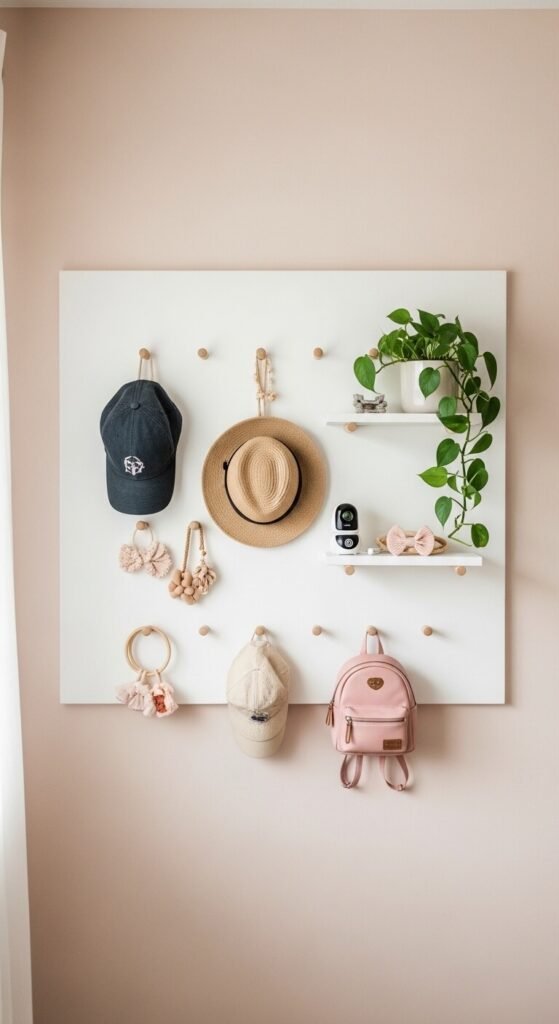
Pegboards are one of the most flexible, affordable storage solutions you can add to a nursery. A $20 pegboard from a hardware store can hold hooks, small shelves, and bins that you rearrange as your baby’s needs change. Paint it to match the room for a polished look. Use it to hang tiny hats, accessories, and small bags, or add a few small shelves for a baby monitor, burp cloths, and a little plant. It looks intentional, keeps things off the dresser, and grows with you.
18. Choose Blackout Curtains That Still Look Beautiful
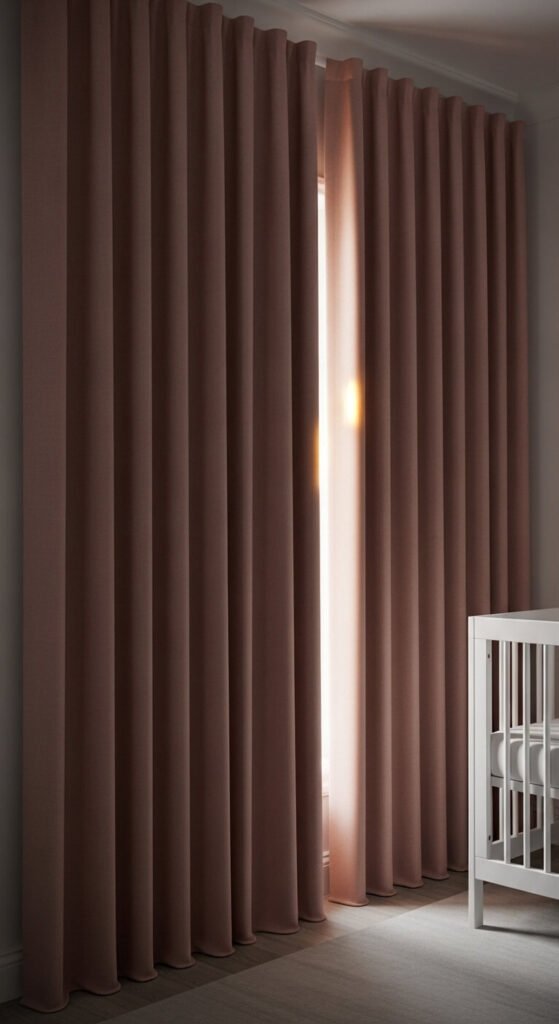
Good sleep depends on darkness. But blackout curtains don’t have to look clinical or heavy. Linen-look blackout curtains now come in every soft nursery color — blush, sage, ivory, dusty blue. They hang beautifully and block light effectively. Install the curtain rod as high as possible and let the panels reach the floor — this makes the ceiling look higher and the windows look larger. Use curtain holdbacks with a decorative detail for a polished look when they’re open during the day.
19. Add a Full-Length Mirror to Open Up the Space
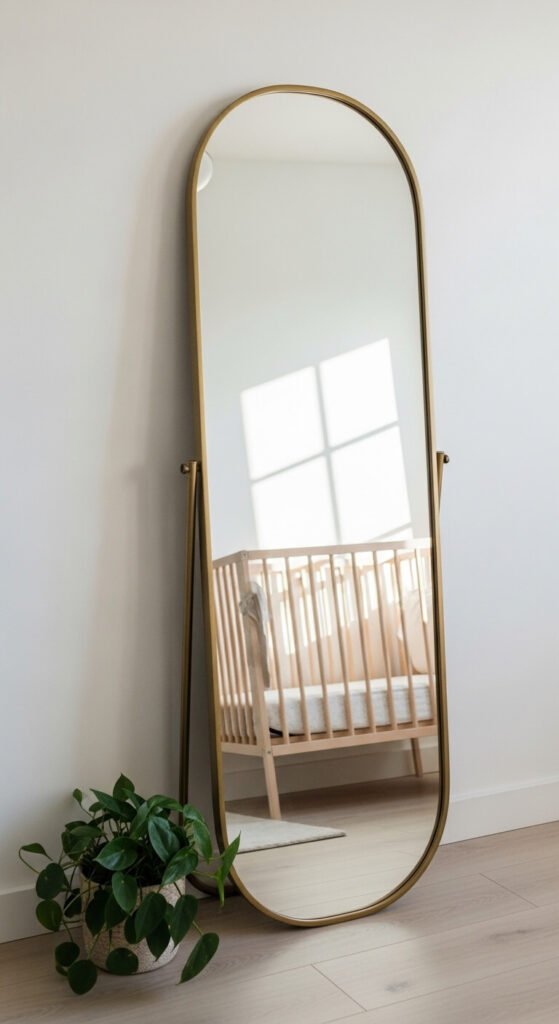
Mirrors are one of the oldest tricks for making small rooms feel larger. A leaning full-length mirror in a simple wooden or brass frame adds light, depth, and elegance to a nursery without much cost. Babies are also fascinated by their own reflection — it provides genuine developmental stimulation. Keep the mirror securely leaned against a wall and anchored with furniture straps for safety as soon as your baby starts moving. Look for secondhand options at thrift stores or Facebook Marketplace for a fraction of retail price.
20. Use a Dresser as a Changing Table
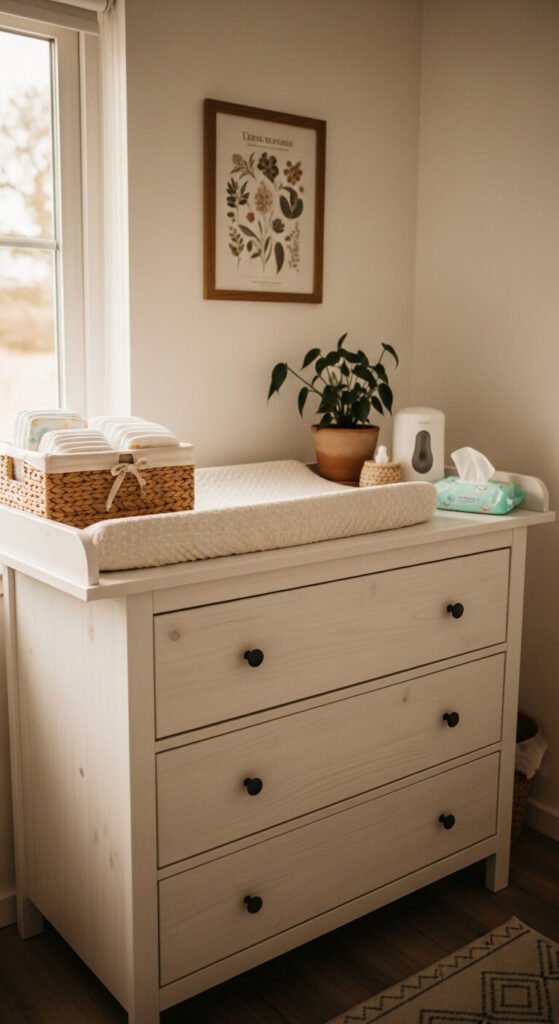
Dedicated changing tables are often expensive and become useless after potty training. A standard dresser with a changing topper serves both purposes. Changing toppers are inexpensive and attach to the back edge of most dressers. Style the top with a wicker basket for diapers, a small plant, and a simple print above. When the changing days are over, simply remove the topper and use it as a regular dresser. This is one of the most practical budget decisions you can make in nursery planning.
21. Create a Moon and Stars Ceiling Moment
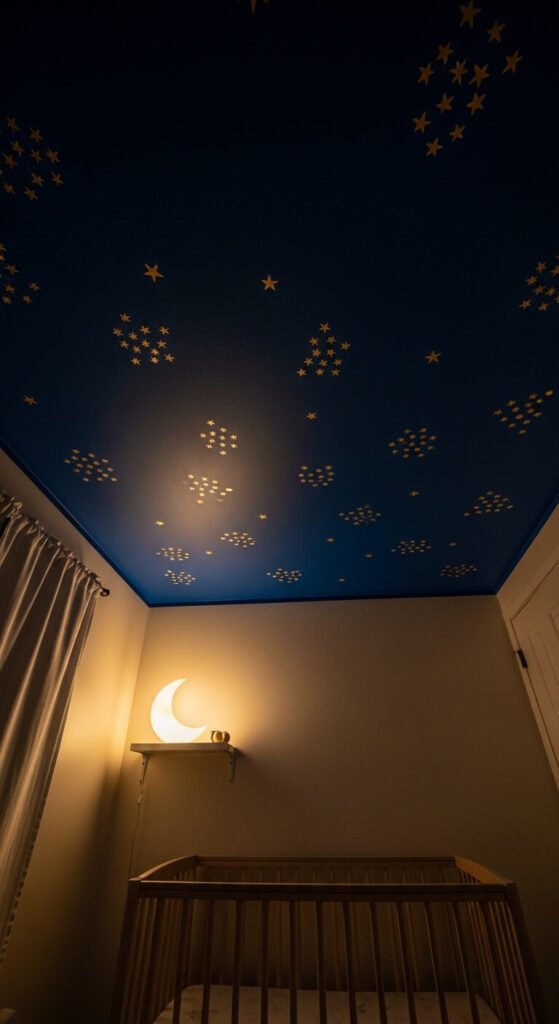
Ceilings are the one surface a baby stares at most from their crib. Make it worth looking at. A deep navy or midnight blue ceiling with hand-painted or stenciled gold stars costs very little but creates a genuinely magical atmosphere. Use a star stencil and gold craft paint for precision, or paint freehand dots in clusters for a more organic sky. You can also use glow-in-the-dark paint for stars that appear after lights go out — a wonderful, simple nighttime surprise.
22. Build a Simple DIY Wooden Shelf Cloud
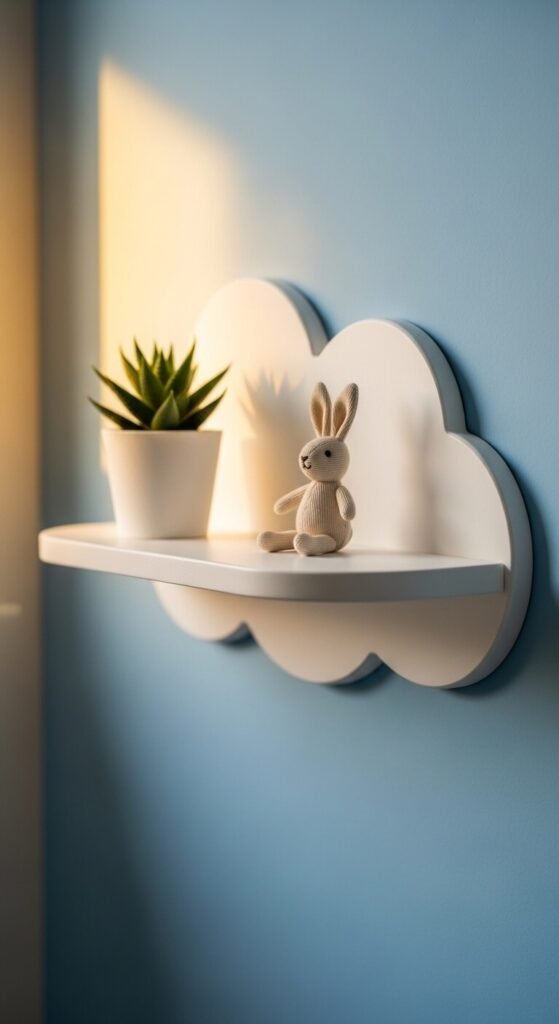
Cloud-shaped shelves are charming, functional, and surprisingly easy to make. Cut a cloud shape from a sheet of plywood using a jigsaw — or ask a hardware store to cut it for you. Sand the edges smooth, paint it white, and add simple L-bracket wall mounts. Place one or two on the wall above the dresser or in a reading corner. Style with a small plant, a figurine, or a tiny stack of board books. This DIY project costs under $15 in materials and looks like something from a boutique nursery shop.
23. Choose a Crib in a Natural Wood Finish
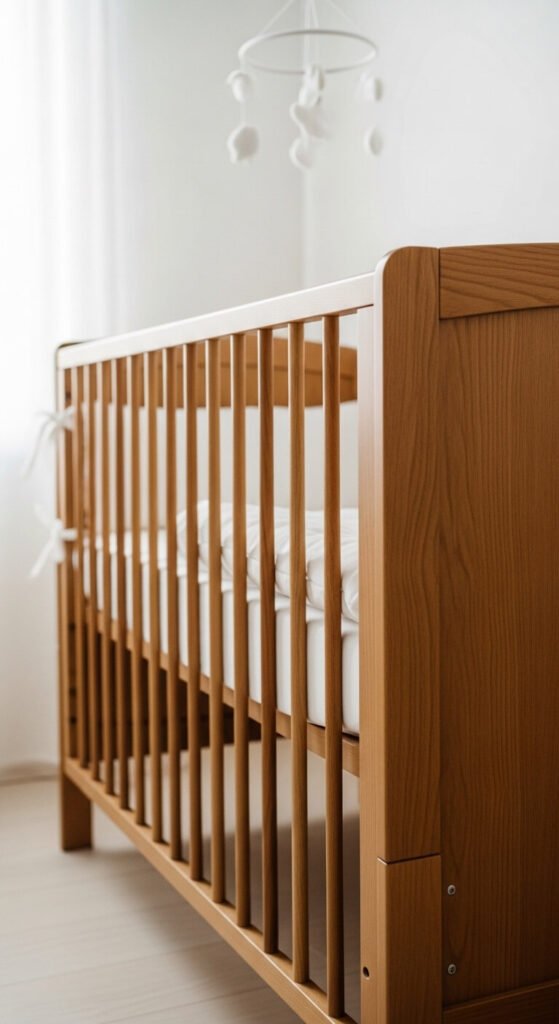
Natural wood cribs feel warm, organic, and timeless in a way that white-painted cribs sometimes don’t. The visible wood grain adds texture and soul to the room. Natural wood also photographs beautifully in any light. Look for convertible cribs that grow from a crib to a toddler bed to a full bed — these save money over time even if they cost slightly more upfront. Secondhand natural wood cribs in good condition are widely available and can be refreshed with a light sand and a coat of food-safe wood oil.
24. Incorporate Soft Macramé Accents
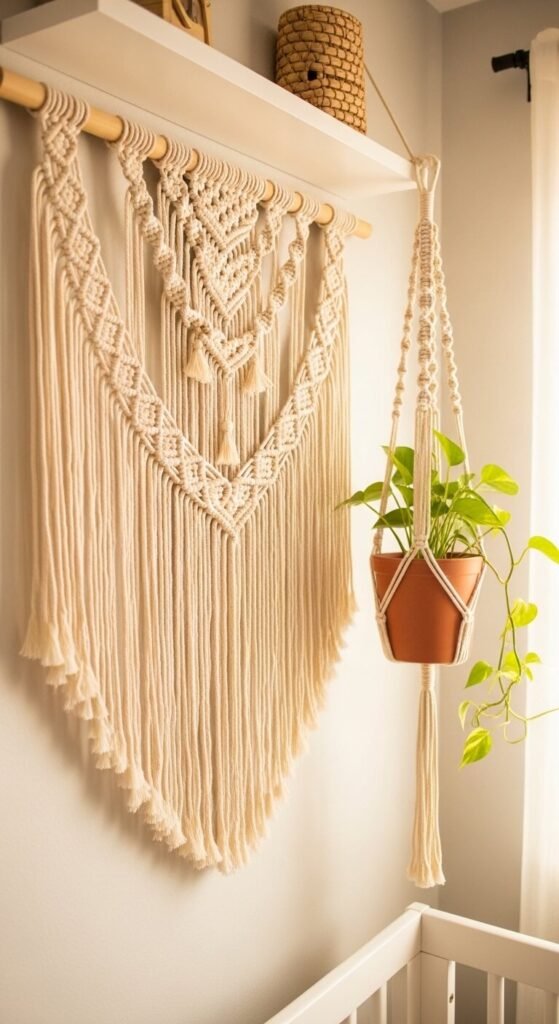
Macramé adds warmth, handmade texture, and a soft bohemian feeling to a nursery without being fussy. Wall hangings, plant hangers, and mobile accents are all available in natural cotton or jute at very low cost. Or learn a few basic macramé knots and make your own — beginner macramé projects take a couple of hours and cost only the price of cord. A simple wall hanging above the dresser or a plant hanger in the window corner adds exactly the kind of organic, crafted feeling that makes a nursery feel personal.
25. Use Soft, Organic Bedding in Simple Patterns
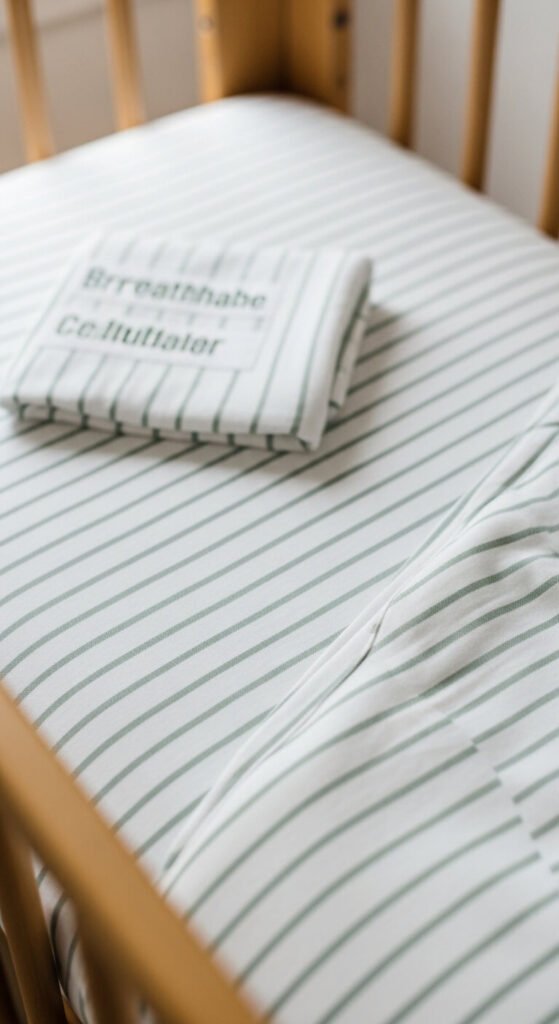
Crib bedding is often over-complicated. The safest and most beautiful choice is a simple fitted sheet and a breathable blanket. Choose organic cotton in soft patterns — thin stripes, tiny dots, simple geometric prints. Stick to your room’s color palette. Avoid busy prints that dominate the space. You only need two or three sheets to rotate through washing. Simple linen-look cotton looks especially beautiful and gets softer with every wash. Avoid thick bumper sets, large pillows, and overstuffed comforters — they complicate both safety and aesthetics.
26. Add a Small Indoor Plant for Life and Air Quality
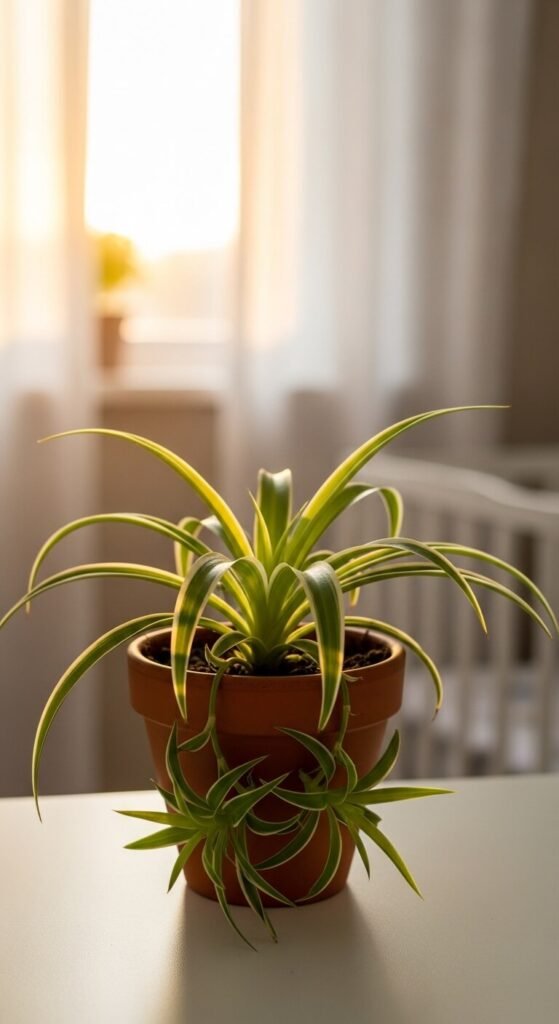
Plants bring life into a nursery in a way nothing else does. Choose non-toxic, low-maintenance varieties — spider plants, pothos, or Boston ferns are all safe and nearly impossible to kill. A small plant on a floating shelf or windowsill adds color, organic texture, and genuinely improves air quality. Use a simple terracotta pot for a warm, earthy look, or a white ceramic pot for something cleaner and more minimal. Plants are also an inexpensive decor element — a small one from a garden center costs just a few dollars.
27. Create a Simple DIY Name Sign
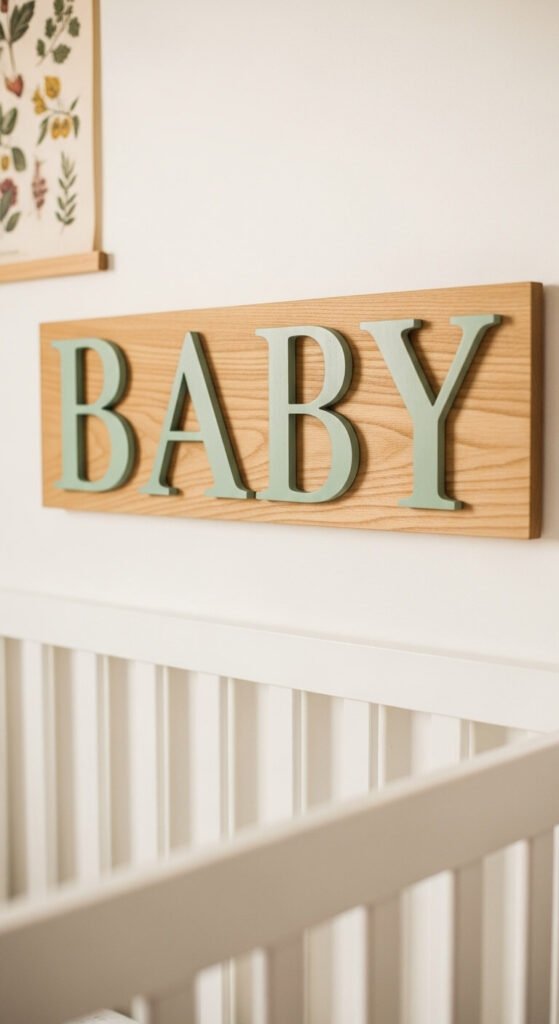
A name sign personalizes the nursery in a way no other decor element can. Individual wooden letters from craft stores are very affordable and can be painted in any color to match your room palette. Choose a simple serif or hand-lettered font for a timeless look. Mount them above the crib or dresser. You can also order custom name signs from Etsy if DIY isn’t your thing — look for options in natural wood, felt, or laser-cut acrylic. A name sign is one of the most sentimental details in the room and costs very little to do well.
28. Keep One Wall Completely Bare
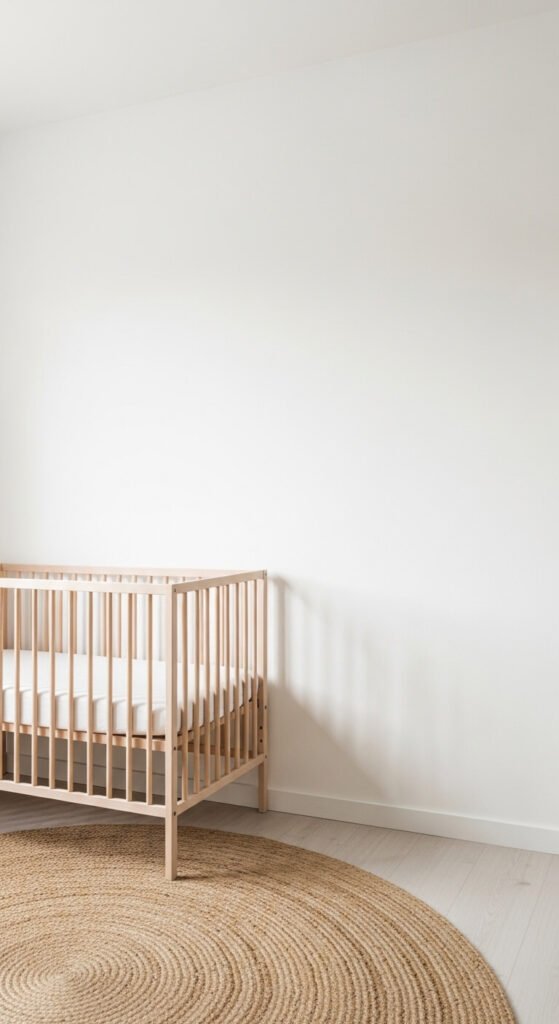
In a room full of thoughtful details, one bare wall is a gift. It gives the eye somewhere to rest. It makes the other walls feel more intentional. It prevents the room from feeling cluttered or overwhelming — which matters as much for you as for your baby. White or off-white walls with a smooth finish are naturally calming. Resist the urge to fill every surface. Leave one wall clean and light. The room will feel more spacious, more peaceful, and more like a real sanctuary. Sometimes the best design decision is knowing when to stop.
Conclusion
A great nursery doesn’t come from a big budget or a professional decorator. It comes from small, thoughtful choices made with love. The right light at 3am matters. A soft rug underfoot during nighttime feeds matters. A favorite print on the wall that makes you smile during a hard day matters. Start with one or two of these ideas, work within what you have, and add slowly over time. The most beautiful nurseries are the ones that feel genuinely lived in — warm, personal, and built around the real rhythms of your family’s life. Your baby won’t remember the wallpaper. But they will grow up in the feeling you create.