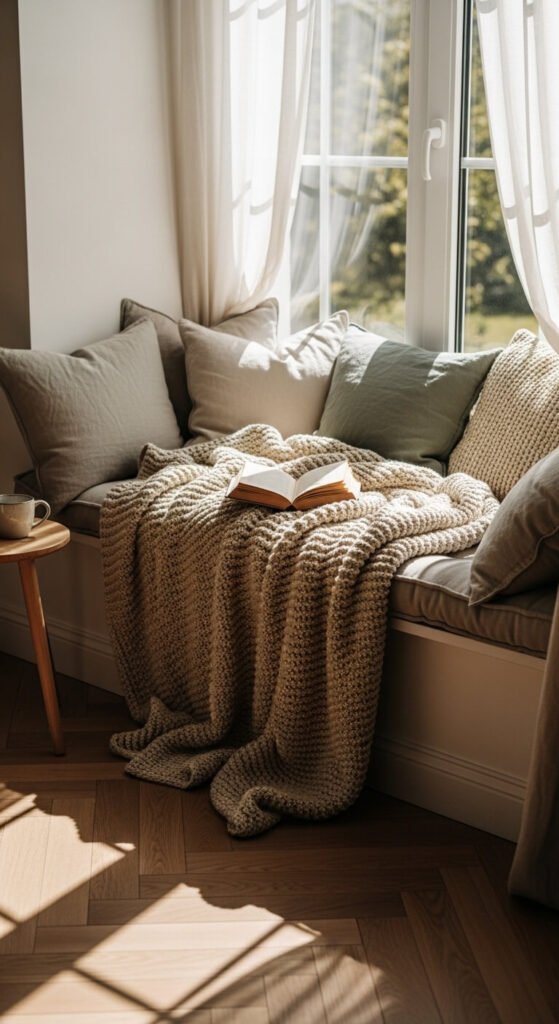
There is something deeply satisfying about having one small corner of your home that belongs entirely to you and your books. A reading nook does not have to be a grand architectural feature or an expensive renovation. It can be as simple as a forgotten window ledge, a bare closet, or a chair tucked behind a bookshelf. What makes it work is the feeling — warm, quiet, and away from the noise of everyday life. Whether you have a spare room or just a few square feet, these 28 reading nook ideas will help you create a space that pulls you in every single time.
1. The Window Seat Classic
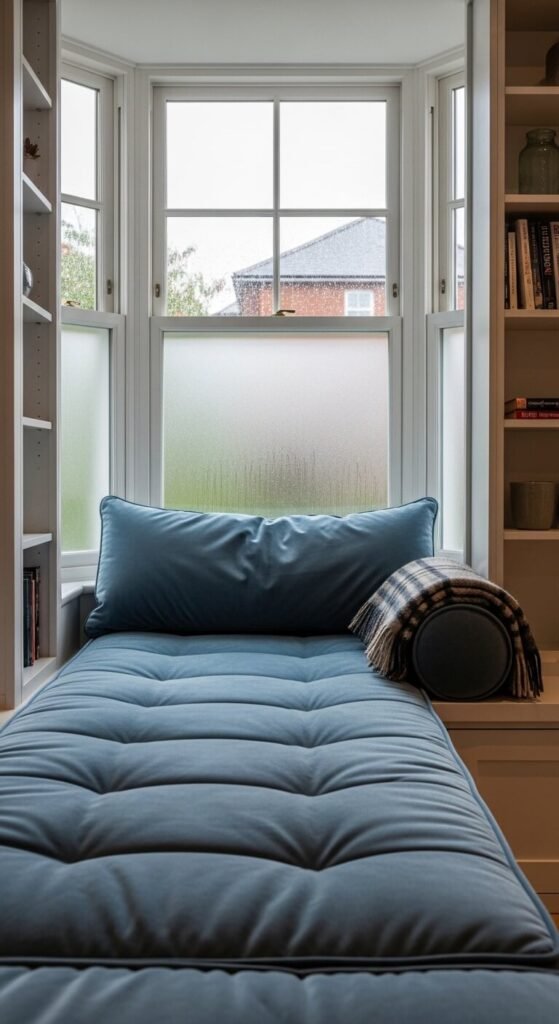
A window seat is one of the most timeless reading nook setups you can create. All you need is an underused windowsill with a ledge at least 18 inches deep. Add a foam cushion cut to size, covered in a washable fabric. Stack a few pillows against the wall for back support. Build simple painted shelves on either side for your books. The natural light does the rest. This setup costs very little if you DIY the cushion. Fabric stores often sell foam offcuts at a discount.
2. The Repurposed Closet Nook
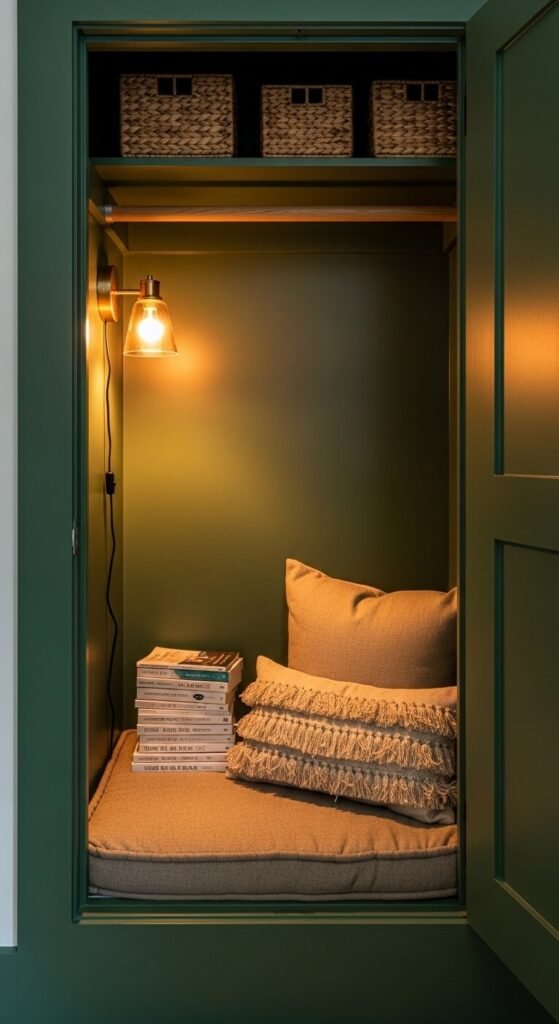
An unused closet is basically a reading nook waiting to happen. Remove the doors, paint the interior a dark, cocooning color, and add a cushioned bench across the base. Mount a plug-in wall sconce inside for warm light without rewiring. Add a shelf above for books and a small basket for blankets. The enclosed walls make it feel like your own private hideout. A basic closet conversion like this can cost under $100 if you source cushion foam and fabric separately.
3. The Floor Cushion Corner
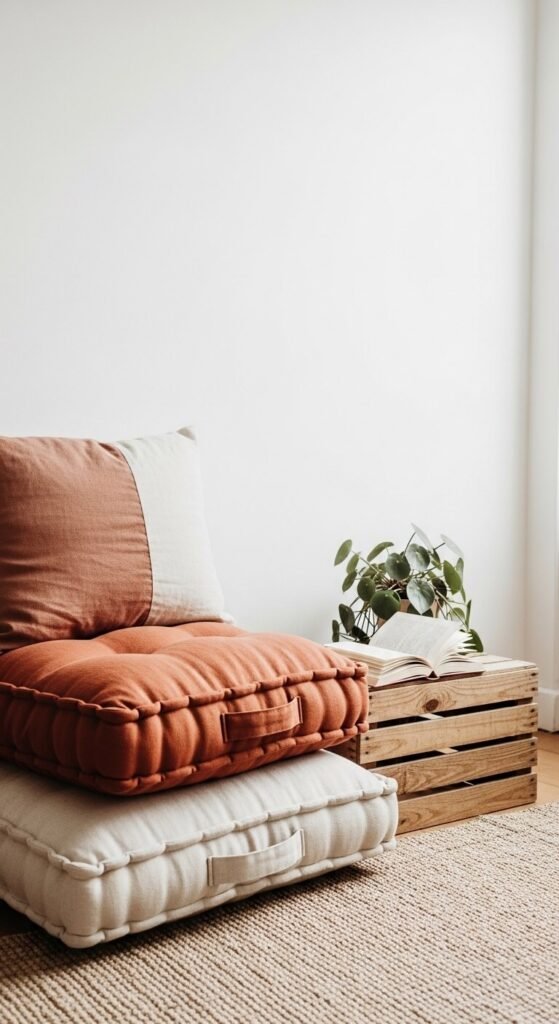
Not every reading nook needs furniture. A floor cushion setup is one of the most affordable and flexible options you can create. Pick up two or three large floor cushions or poufs and layer them in a corner. Add a low wooden crate or a stack of books as a makeshift side table. Throw a jute rug underneath to define the space. This works especially well in apartments where you cannot make permanent changes. Swap the cushions seasonally to keep things feeling different.
4. The Canopy Bed Nook
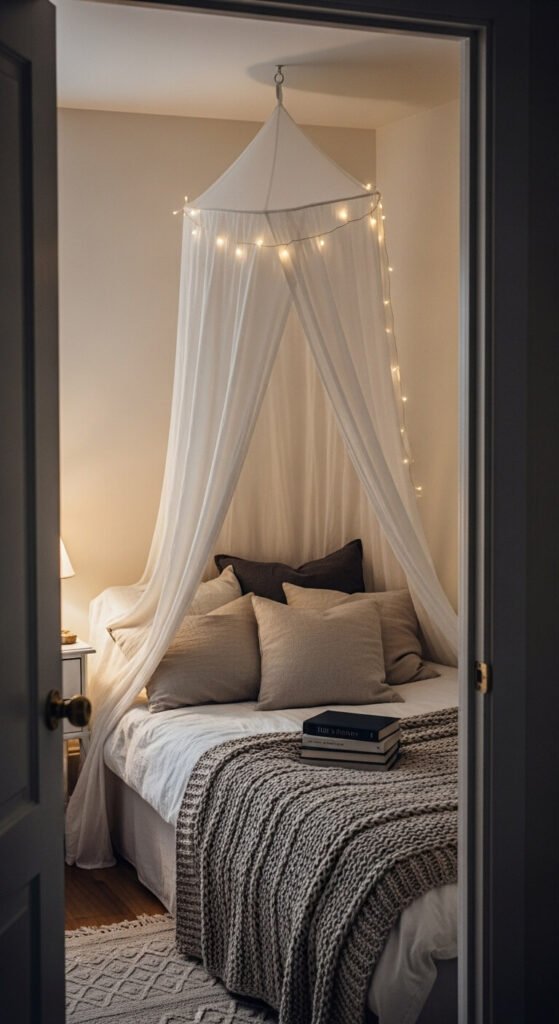
A canopy turns an ordinary bed corner into a dedicated reading sanctuary. Hang a lightweight canopy from a single ceiling hook using sheer curtain fabric. Drape it loosely over the headboard area and let it puddle slightly on the floor for a relaxed look. Add battery-powered fairy lights along the canopy edges for warm reading light at night. This works in bedrooms where space is tight. A sheer fabric panel from a discount home store costs very little and completely transforms the atmosphere.
5. The Staircase Alcove Spot
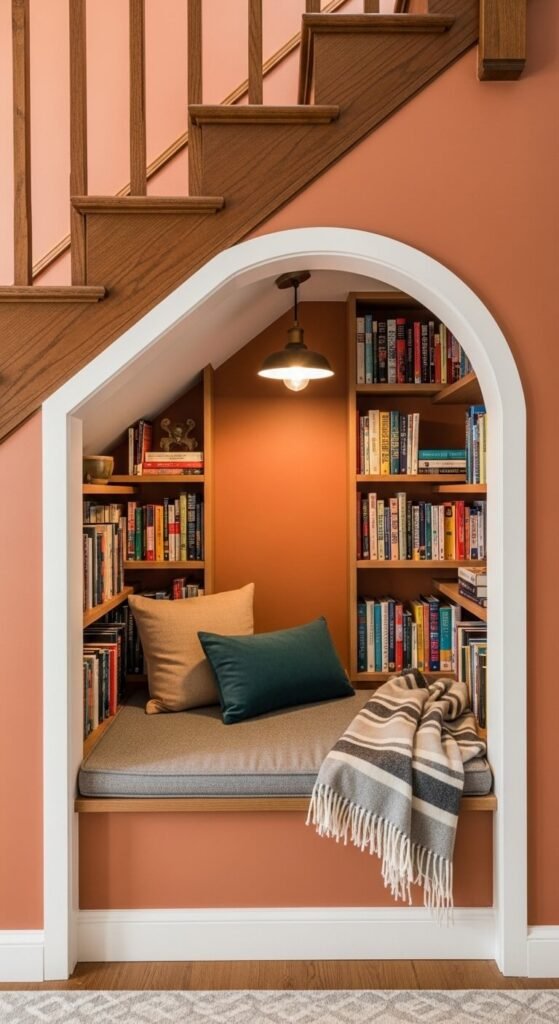
The space under a staircase is often completely wasted. With a fitted bench cushion, some open shelving, and a pendant light, it becomes the coziest reading spot in the house. Frame the opening with trim or an arched detail to make it feel intentional. Paint the interior a contrasting color so it reads as a separate room within a room. This works in entryways, living rooms, and hallways. Storage drawers under the bench seat make it functional too.
6. The Bay Window Transformation
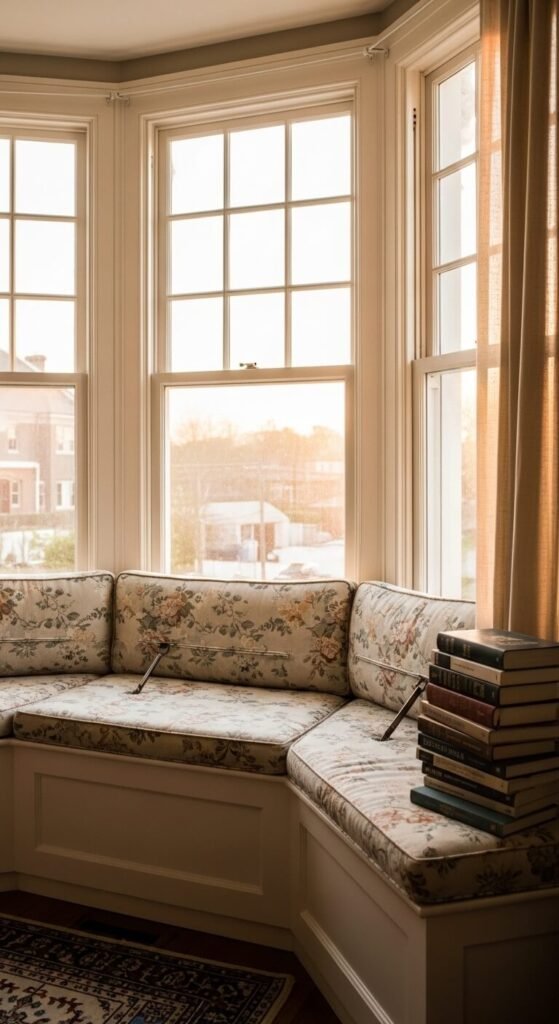
Bay windows have a built-in nook shape already. Add a continuous upholstered bench along the entire bay, and you have a reading space with panoramic views and natural light from three sides. Build in hinged seat lids for storage underneath — great for extra blankets or out-of-season items. Hang curtains at the outer edges so you can pull them closed for a more enclosed feeling. This is a weekend DIY project with plywood, foam, and batting.
7. The Bookshelf Hideaway
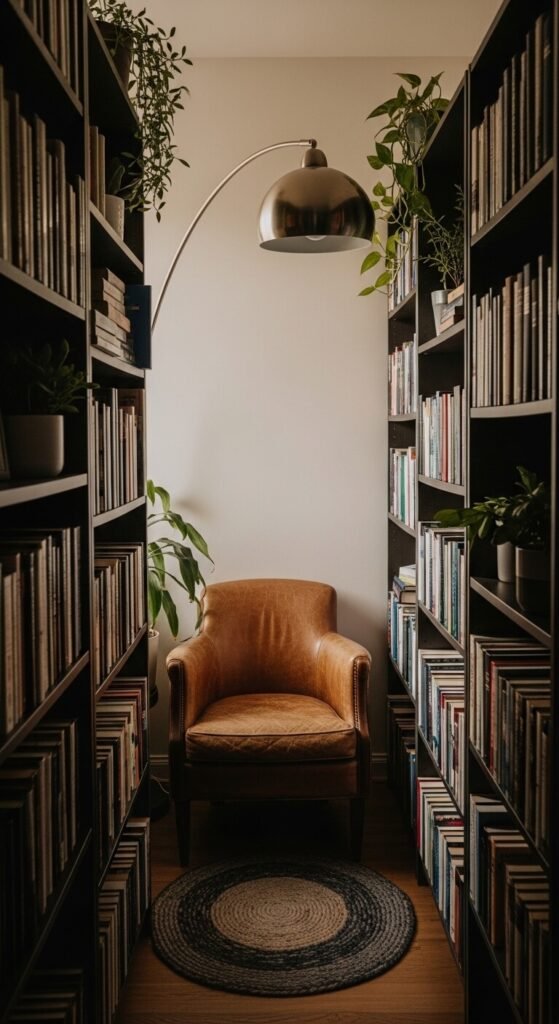
Place two tall bookshelves parallel to each other with just enough space for an armchair between them. The shelves on either side create instant walls, making the chair feel like its own private room. Add a floor lamp that arcs over one shoulder for directed reading light. Tuck a small round rug underneath the chair to anchor the space. Fill the shelves with your actual library. This is a zero-renovation setup that works in any living room or bedroom with enough floor space.
8. The Hammock Nook
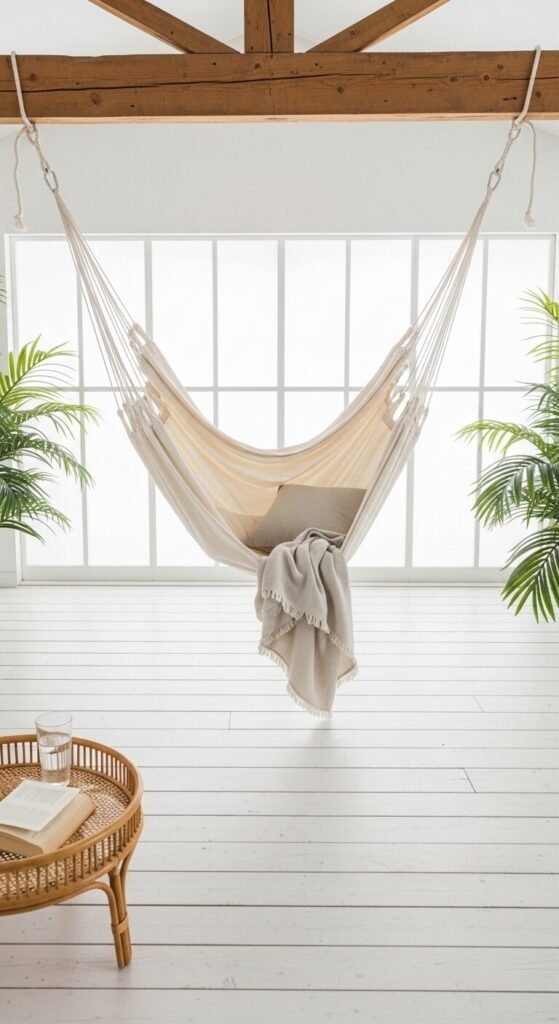
A hammock reading nook is for people who want to read horizontally without committing to a full daybed. Indoor cotton hammocks attach to wall studs or exposed beams and hold adult weight easily. Pick a hammock with a woven cotton body that holds its shape when you settle in with a book. Add a lightweight blanket for warmth. This works beautifully in sunrooms, covered porches, and any room with exposed ceiling beams. Most hammocks come with all the hanging hardware included.
9. The Alcove Armchair Setup
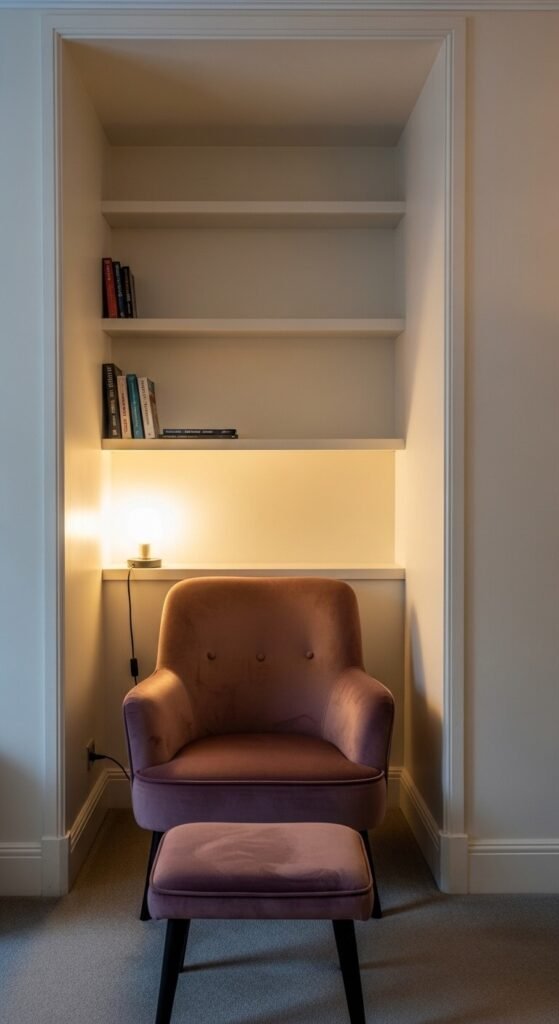
Many older homes have shallow wall alcoves that go completely unused. An armchair that fits snugly into an alcove turns dead architectural space into the most sought-after seat in the house. Measure the alcove carefully before buying the chair. Add shelves above for books and a small lamp on one of those shelves for task lighting. Paint the inside of the alcove a slightly different shade than the surrounding wall to make the nook pop. No tools required beyond a measuring tape and a comfortable chair.
10. The Garden-Facing Reading Bench
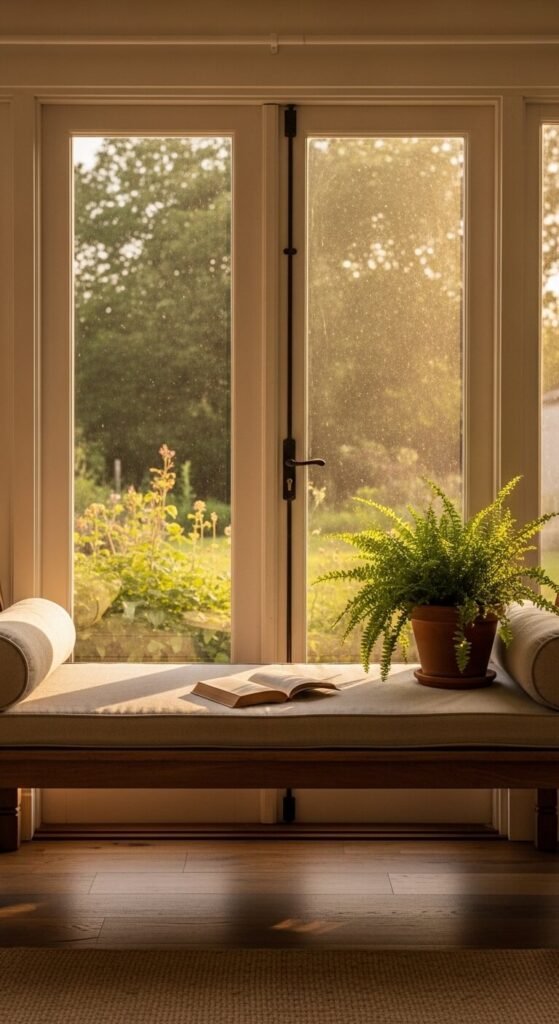
Reading while looking out at something green and growing is restorative in a way hard to explain. Position a bench with a cushioned seat directly in front of a glass door or large window that faces a garden, yard, or even a single large plant. Keep the bench surface soft but firm enough for long reading sessions. Use outdoor-grade cushion fabric if the window gets strong sun — it resists fading. Add a small tray table beside it for drinks and bookmarks.
11. The Floating Shelf Seat
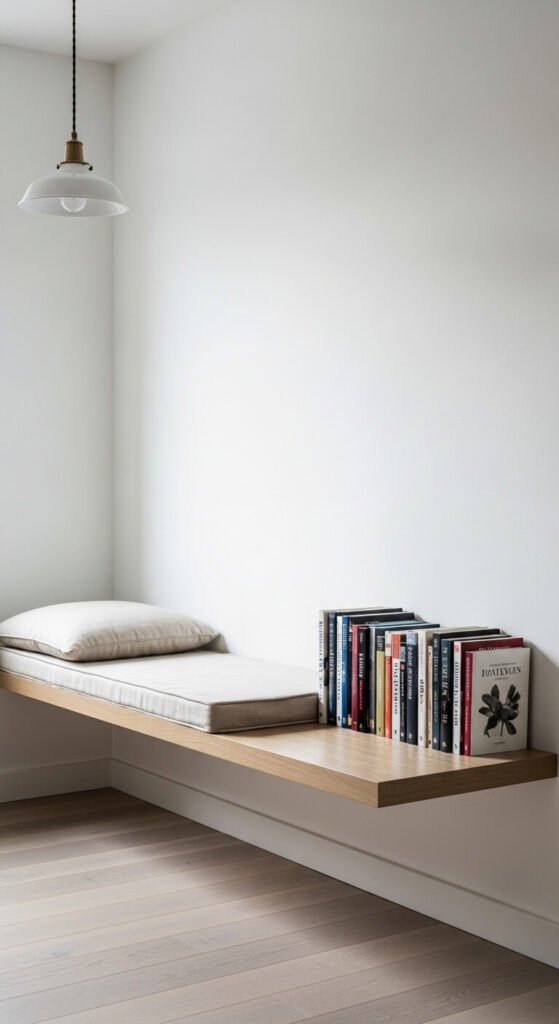
A wide, deep floating shelf mounted at seat height is a minimal and modern take on the reading bench. Use heavy-duty shelf brackets rated for body weight, and mount into wall studs. Top it with a thin foam pad covered in fabric. Store books upright directly behind the cushion pad, leaning them against the wall. This works in small bedrooms and hallways where floor space is precious. The whole setup takes up almost no visual room while still giving you a dedicated reading perch.
12. The Loft Bed Reading Den
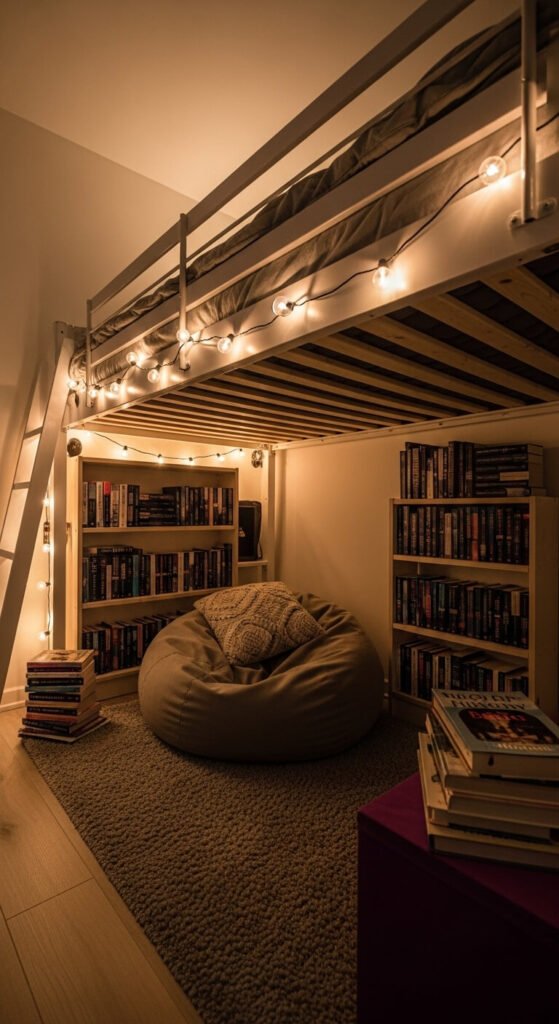
The space under a loft bed is often used for a desk, but a reading nook works even better. Hang string lights from the underside of the loft frame to create soft, cave-like lighting. Add a beanbag or a small floor cushion and a plush rug. Mount a few shelves on the wall beside it for your book stack. The low ceiling makes the space feel deliberately intimate and separate from the rest of the room. This works especially well in kids’ rooms and studio apartments.
13. The Curtained Corner Retreat
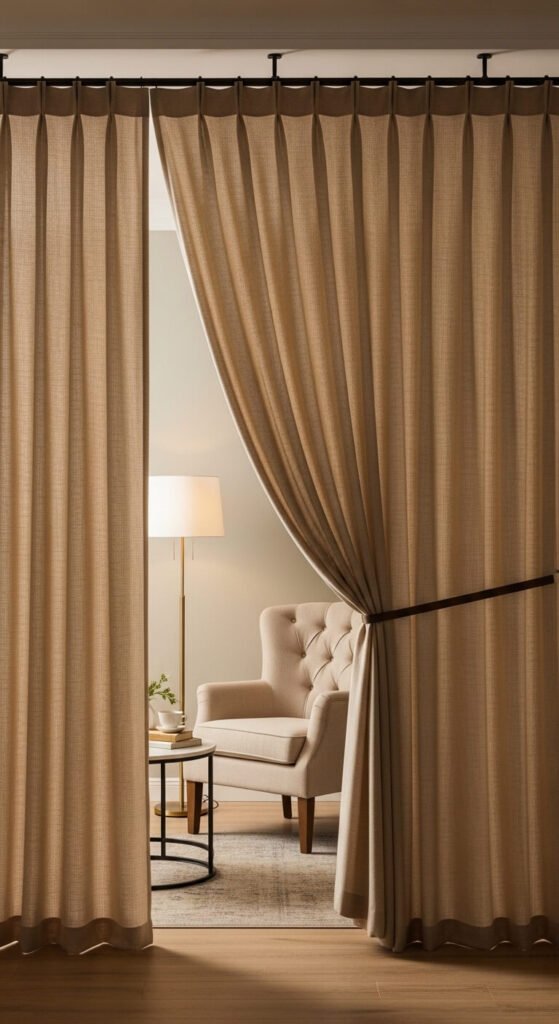
You can create a private reading nook in the middle of a shared space with nothing but a curtain rod and a fabric panel. Mount a curved or straight ceiling rod in a corner and hang a long, heavy curtain panel from it. Pull it closed while you read for a sense of separation without any construction. Use a blackout panel if you want to block light, or a sheer linen panel if you want to filter it softly. This approach costs very little and works in rental homes.
14. The Treehouse-Inspired Kids Nook
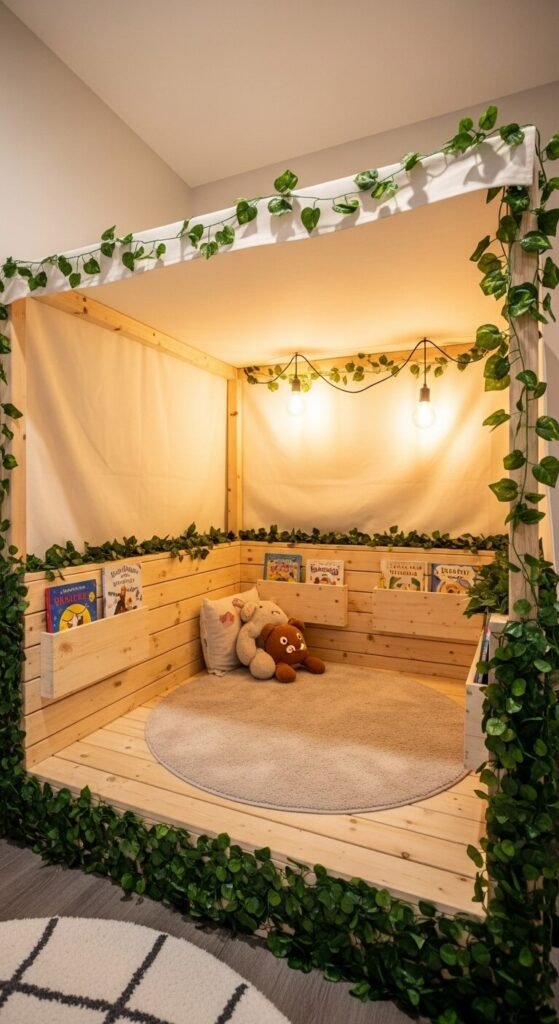
Kids read more when reading feels like an adventure. Build a low wooden platform with a simple canopy overhead and add faux leaf garlands around the edges to suggest a treehouse. Mount fabric wall pockets at child height for storing picture books. A soft rug on the platform makes it comfortable to sit cross-legged. Keep the lighting warm and low. This can be built with basic lumber and a canvas drop cloth for the canopy. Let your child help paint it.
15. The Daybed Window Nook
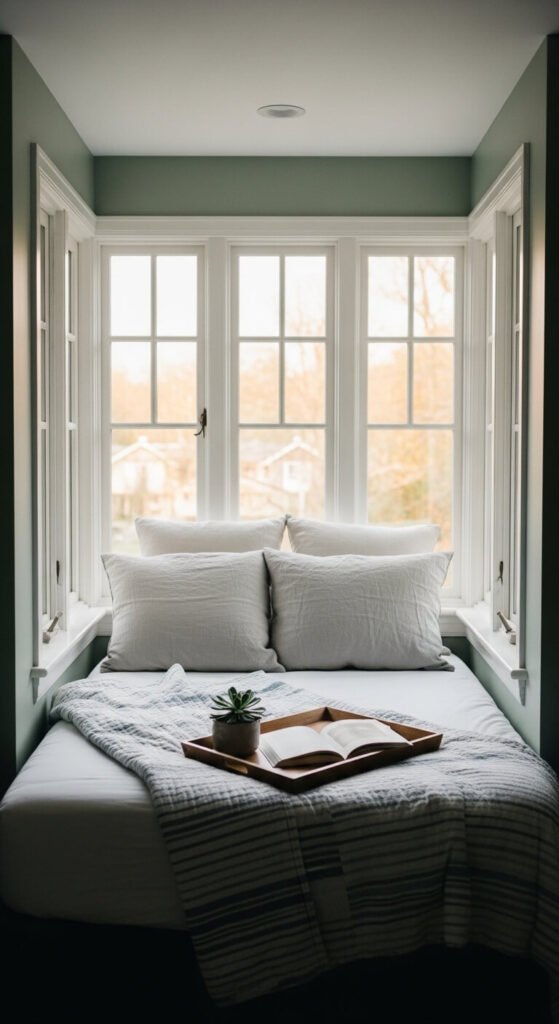
A daybed under a row of windows gives you a reading nook that doubles as a guest sleeping space. Position it lengthwise so the windows are above and beside you while you read. Dress it like a sofa during the day with bolster pillows propped along the wall side. Keep a wooden tray on the surface for your current reads and a plant or candle. This setup works in spare rooms, sunrooms, and large bedrooms. A daybed frame with a firm mattress is the only purchase required.
16. The Scandinavian Minimal Corner
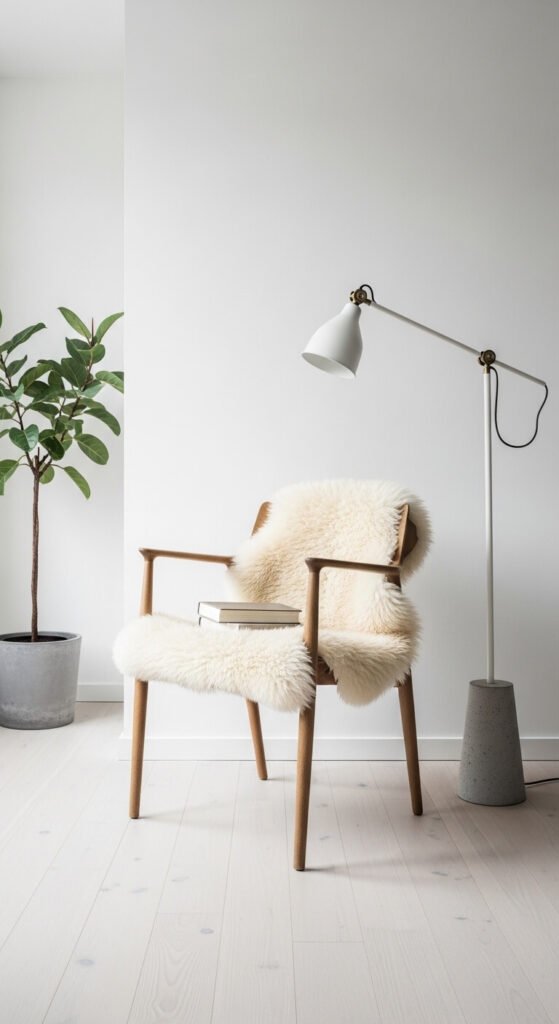
Scandinavian-style reading nooks prove that less is genuinely more. Pick one good chair — something with a clean silhouette and a seat you can sit in for an hour. Add a sheepskin throw for warmth. Choose one floor lamp with a directed shade. Keep one small side table for a drink and your current book. That is the entire setup. No shelving, no gallery wall, no decorative clutter. The restraint is the point. This style also makes the chair the focal point of the room, which it deserves to be.
17. The Greenhouse Reading Corner
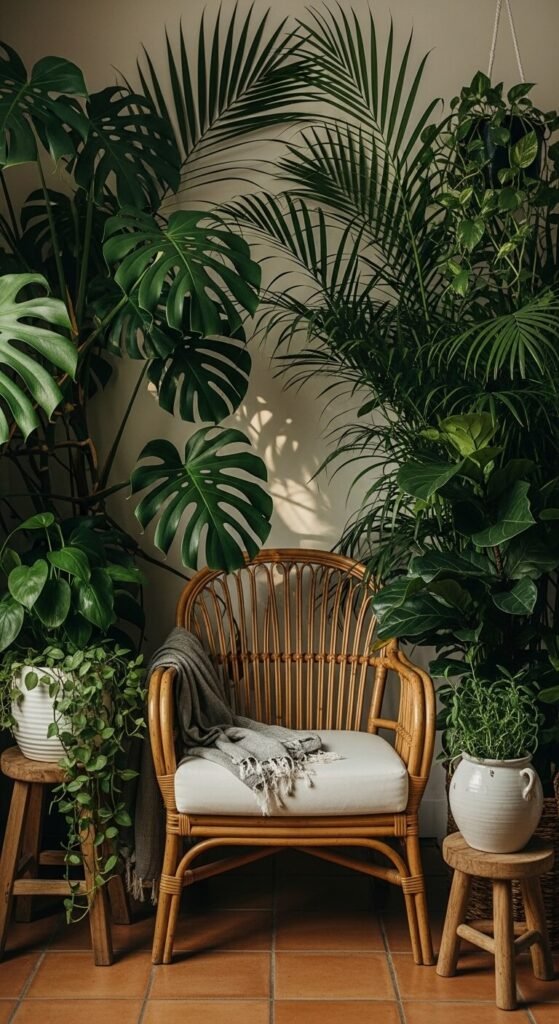
Surrounding your reading chair with living plants changes the entire feel of the space. Group large-leafed plants like monstera, fiddle-leaf figs, and palms around and behind a single armchair. Let trailing plants like pothos hang from nearby shelves. The plants absorb sound, improve air quality, and make the space feel like a private indoor garden. Use a rattan or natural wood chair to keep the botanical aesthetic cohesive. Water the plants on a regular schedule to keep the nook looking lush.
18. The Fireplace-Side Chair
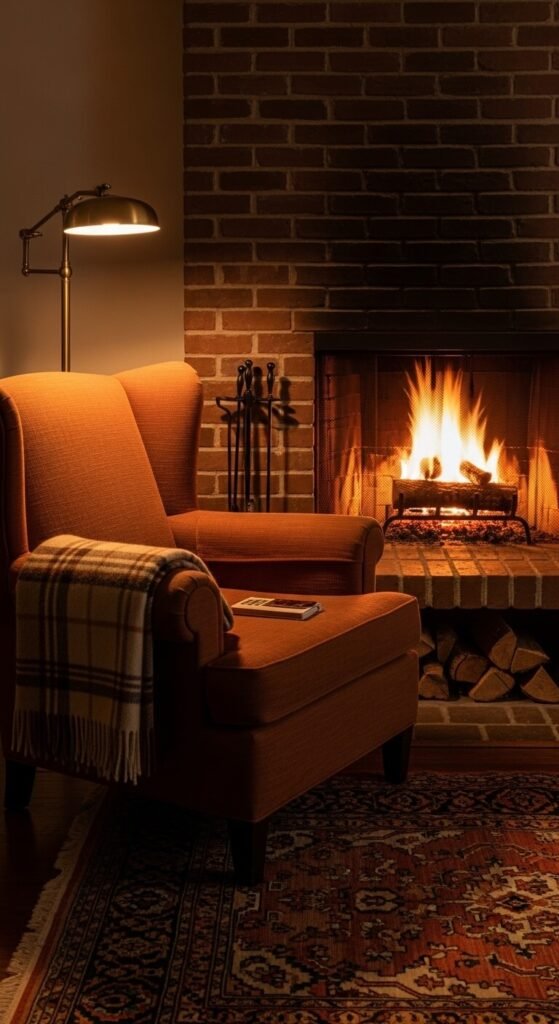
Reading beside a real fire is one of life’s great simple pleasures. Position a deep armchair at a 45-degree angle to the fireplace — close enough to feel the warmth, far enough to avoid glare on the page. Add a floor lamp on the opposite side of the chair so you have consistent light even when the fire dims. Keep a blanket on the arm for when the room cools. A small side table holds your tea. No renovation needed — just move an existing chair into a better position.
19. The Murphy Bed Nook Combo
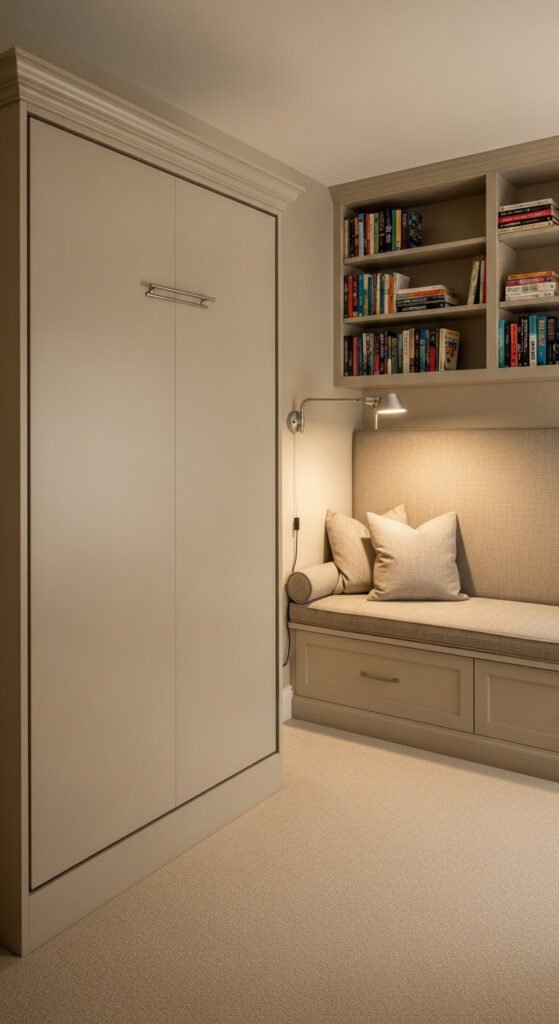
In a small guest room or studio, a Murphy bed and a reading nook can share the same space. During the day, fold up the Murphy bed and use the room as a library and reading retreat. Build the reading bench on the wall opposite the Murphy bed, with open shelves above. When guests arrive, the bed folds down and the nook becomes a bedside seating area. This is a smart dual-use design that makes a small room feel purposeful rather than cramped.
20. The Outdoor Porch Nook
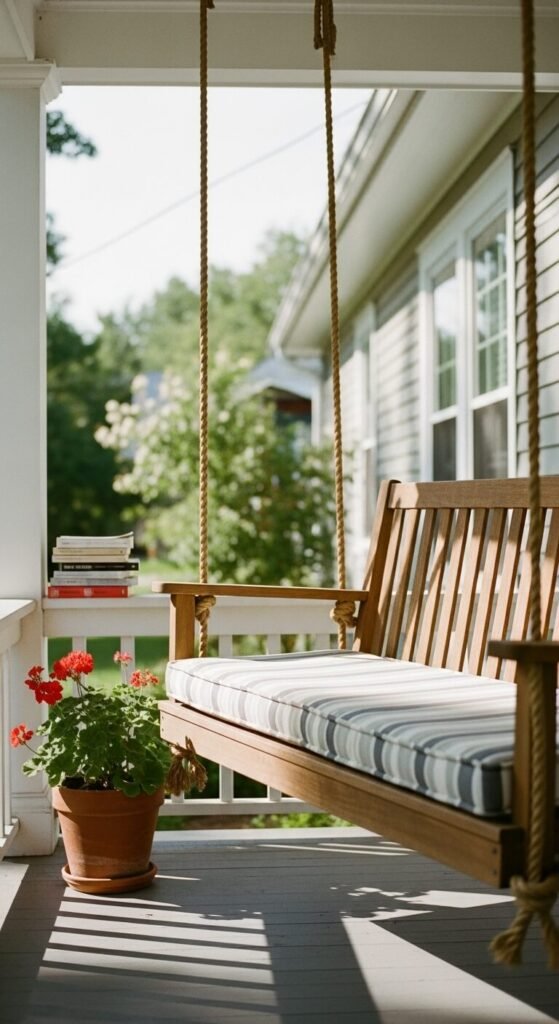
A covered porch is an underrated reading location. Hang a porch swing or install a weather-resistant outdoor chair with a thick cushion. Position it away from direct sun but where you still get good daylight for reading. Keep a small side table for drinks and a basket nearby for your current stack of books. Add outdoor string lights overhead for evening reading. A porch nook costs almost nothing if you already have the outdoor space — a swing kit and cushions are the only additions.
21. The Reading Ladder Perch

If you have a tall bookshelf with a rolling ladder, consider adding a platform seat near the top. A simple wooden board with a cushion, fixed securely to the ladder, creates an elevated reading perch unlike anything else. Being physically higher up makes the reading experience feel more removed from the room below — in the best possible way. This works in home libraries and living rooms with high ceilings. Make sure your ladder and shelf system can handle the weight safely before building anything.
22. The Attic Eave Nook
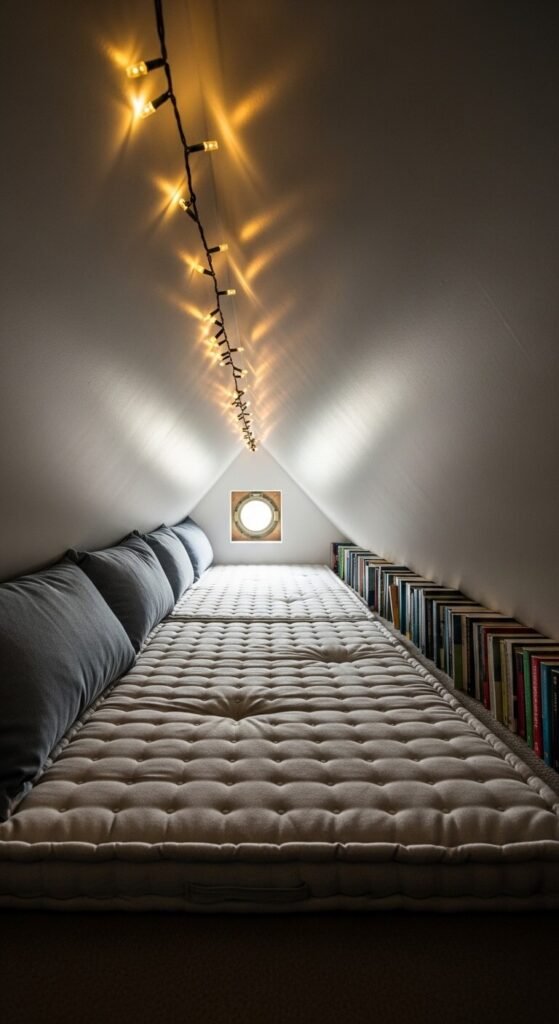
Attic eave spaces are awkward to furnish but perfect for reading. The low ceiling and sloped roofline make you feel sheltered, like you are inside a tent. Run a long fitted cushion along the floor under the lowest part of the eave. String fairy lights along the roofline. Keep books in low stacks along the back wall. A small porthole or dormer window provides natural light. This is truly a secret hideout for adults — a place nobody else in the house is likely to wander into.
23. The Bean Bag Library Corner
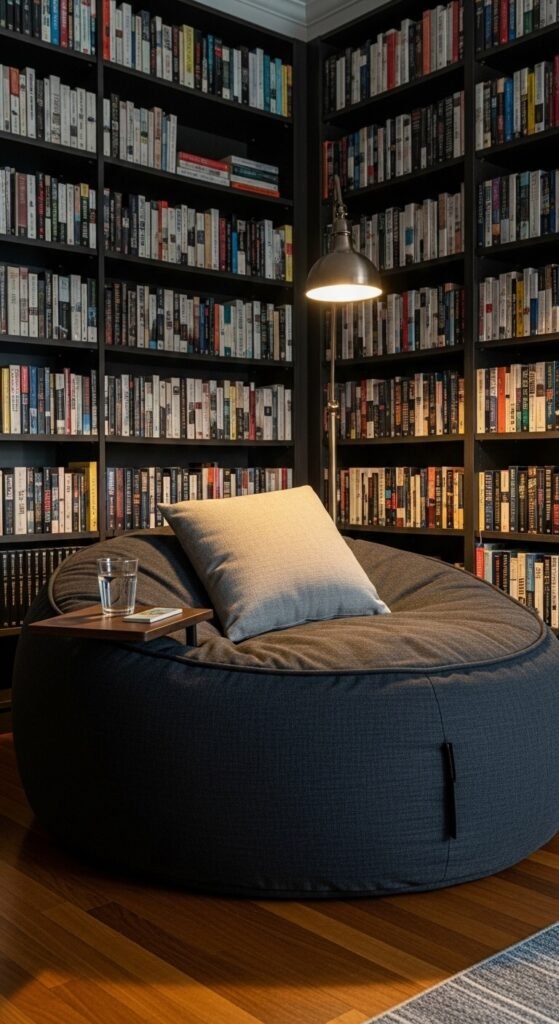
Bean bags are often dismissed as juvenile, but a high-quality large bean bag in the right context reads as deliberate and comfortable. Choose a bean bag with a structured shape and durable cover fabric — not the floppy, shapeless kind. Position it in a corner with a library or bookshelves surrounding it. Mount a small floating shelf at arm height for your drink and reading accessories. Arc a floor lamp over from behind for directed reading light. This is the most affordable complete reading nook setup on this list.
24. The Meditation-Style Low Platform
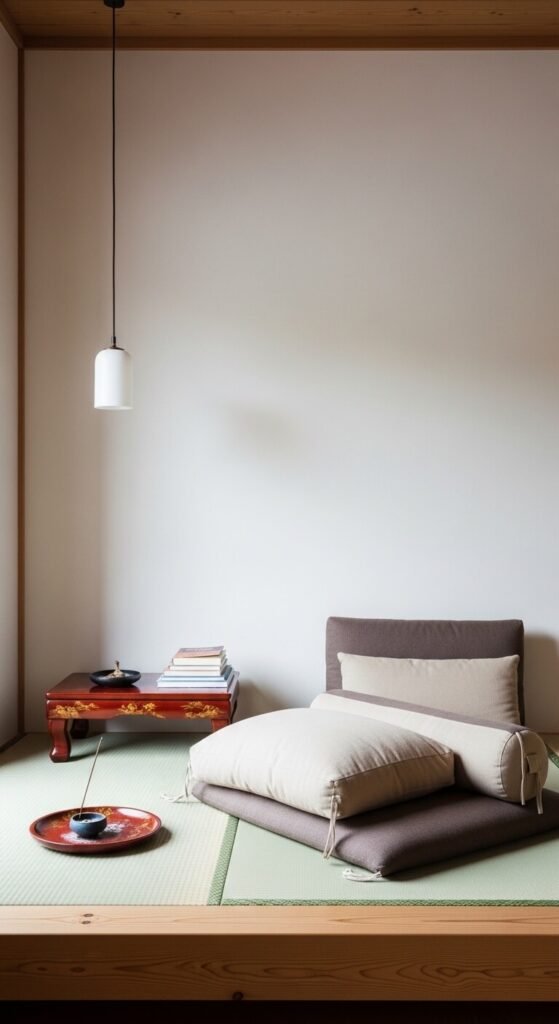
A meditation-inspired reading setup keeps everything very close to the floor. Build or buy a low wooden platform — a few inches off the ground is enough. Add a firm sitting cushion and a bolster or back support pillow. Keep the surrounding space intentionally empty. A low lacquered table beside you holds your book and a simple object you enjoy looking at. This style encourages focus and slows you down before you even open your book. It works particularly well in spare rooms that double as meditation or yoga spaces.
25. The Reading Nook in a Shed
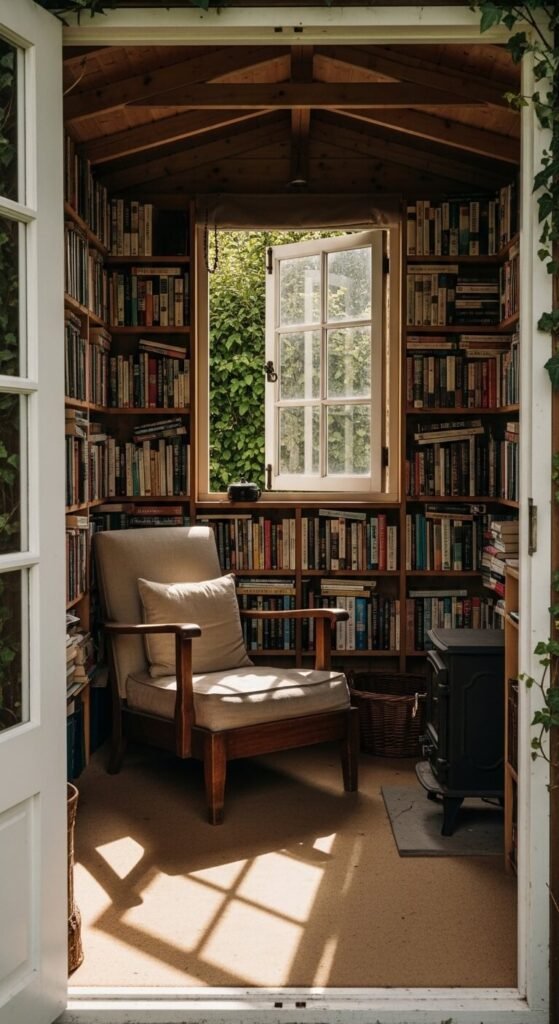
A garden shed turned reading room is one of the most appealing nook ideas for homeowners with outdoor space. Insulate the shed, add a small electric heater or wood stove, line the walls with bookshelves, and you have a dedicated reading room completely separate from your house. The psychological distance from daily life makes it easier to settle into a book. Add a comfortable chair, a simple rug, and one good lamp. This is a weekend project with a moderate budget and a very high return in terms of daily enjoyment.
26. The Velvet Accent Chair Corner
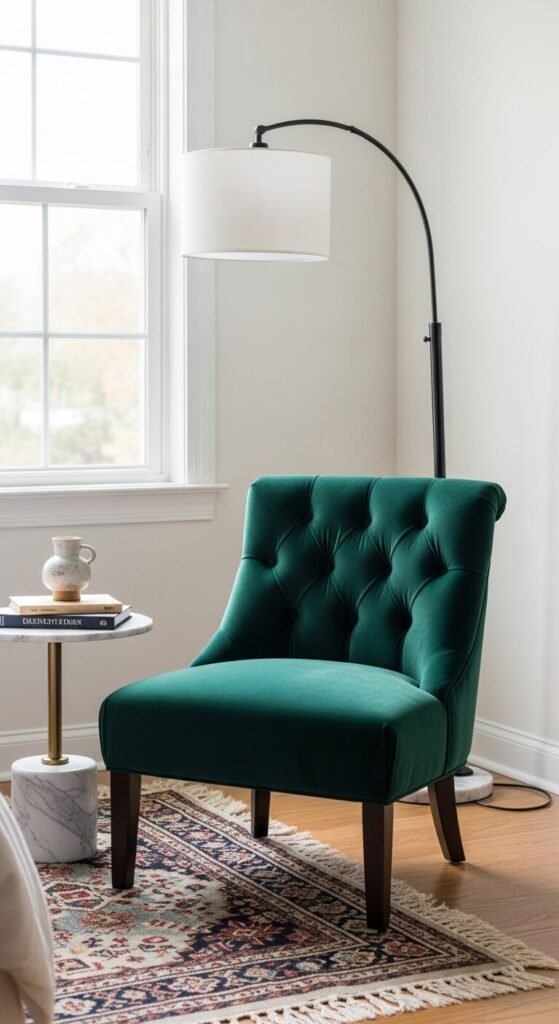
Sometimes a reading nook is just one very good chair in the right location. A velvet accent chair in a rich jewel tone — emerald, sapphire, or wine — becomes a visual anchor and an irresistible place to sit. Pair it with a tall floor lamp and a small side table. Place it in a bedroom corner or beside a window where it gets natural light. Add a small rug underneath to define the space. This is a one-afternoon setup that requires no construction and works in almost any room.
27. The Kids’ Teepee Reading Zone
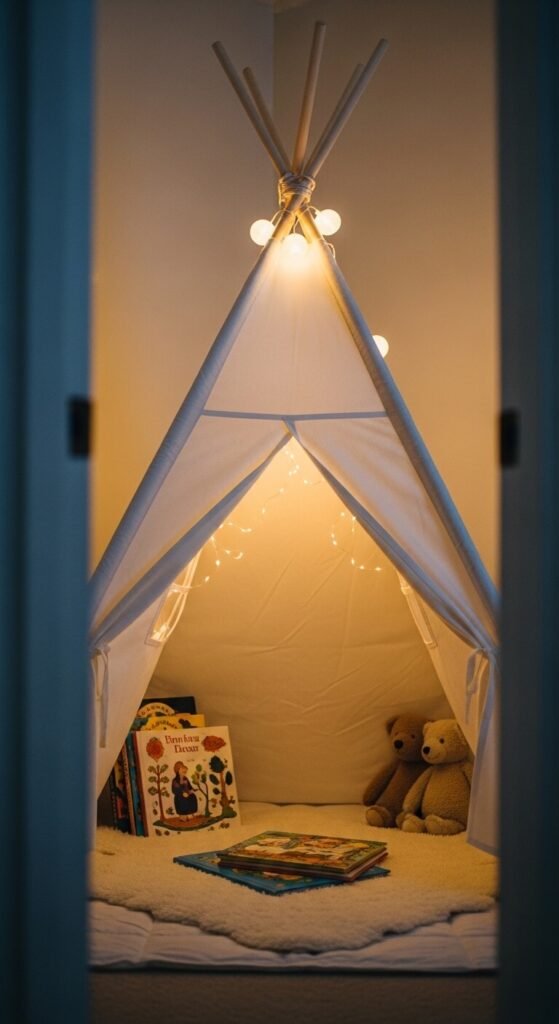
A teepee is one of the easiest and most effective reading nooks you can give a child. Most canvas teepees assemble without tools in under ten minutes. Place a small rug inside, a few floor pillows, and a battery-powered fairy light strand. Add a fabric storage bin nearby for books. The enclosed structure signals to kids that this is a special, intentional space. They are far more likely to choose reading over screens when reading has a physical place that feels like theirs. Teepees fold flat when not in use.
28. The Whole-Room Reading Sanctuary
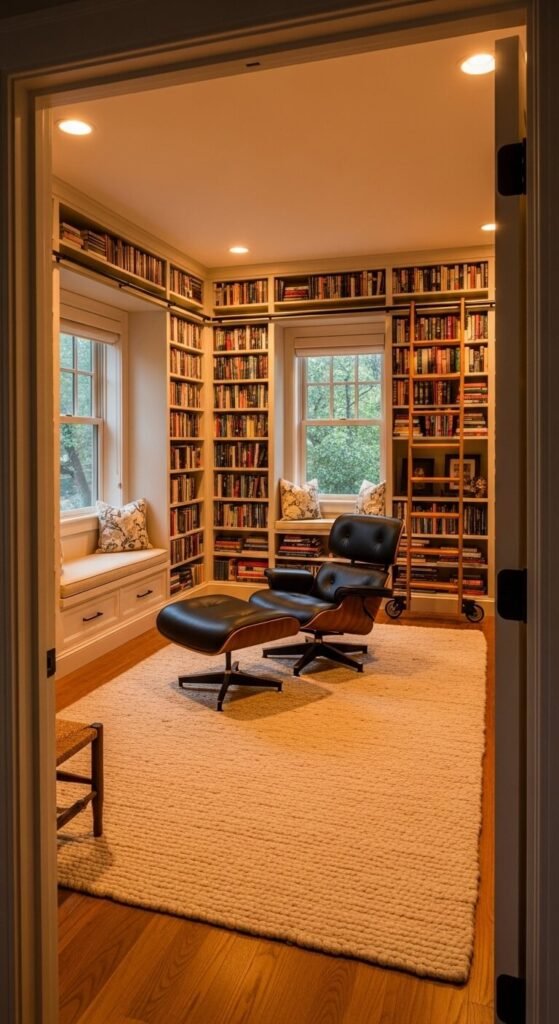
If you have a spare room and the freedom to dedicate it entirely to reading, do it. Line every wall with bookshelves from floor to ceiling. Add a rolling library ladder if the shelves go high. Place a deep lounge chair at the center. Build or buy a window seat along at least one wall. Use warm-temperature bulbs in every fixture — reading under cool white light is uncomfortable over time. This is the long game version of the reading nook — something you build over years, one bookshelf and one great chair at a time.
Conclusion
A reading nook does not require a large budget, a big house, or a single afternoon of construction. It requires a small decision: to claim a corner, a chair, a curtained-off section of a room, and call it yours. The designs above range from a simple floor cushion in a sunny corner to a full-room library conversion — and every option in between is genuinely achievable. Start with what you have. A comfortable chair near a window is already a reading nook. Add a lamp, a small table, and a blanket. Then stock the shelves. The act of creating the space is often what makes you want to use it. Pick one idea from this list that matches your space and budget, and start there. Your books are waiting.