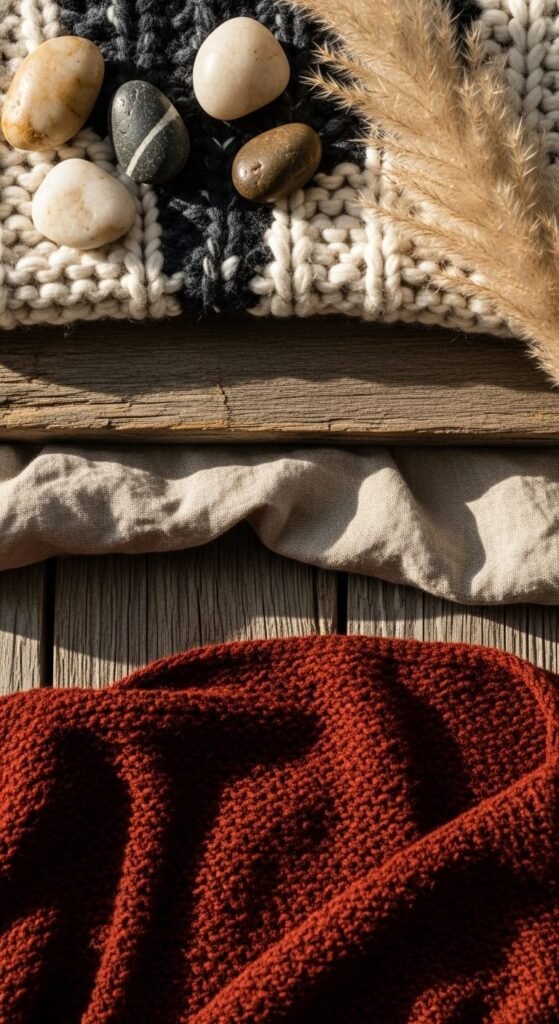
Texture layering is one of the most underrated decorating tricks out there. It doesn’t cost a fortune. It doesn’t require a designer. What it does require is a willingness to mix materials, play with contrast, and trust your instincts. When you stack rough against smooth, matte against sheen, or soft against hard — something clicks. A room stops looking flat and starts feeling lived-in, intentional, and warm. This guide walks you through 27 specific combinations that actually work, with simple ideas you can pull off on any budget.
1. Chunky Knit Throws Over Linen Sofas
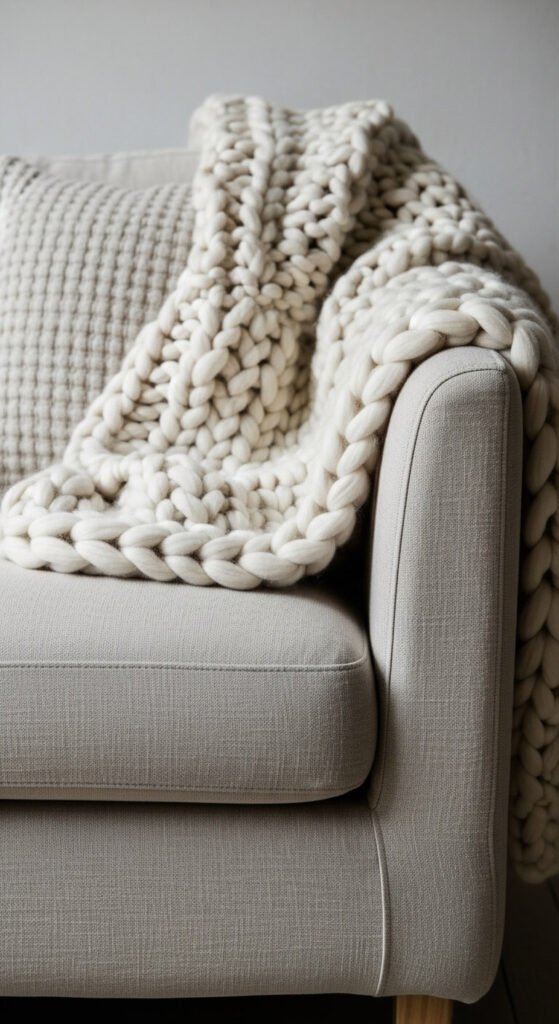
A chunky knit throw on a flat linen sofa is one of the easiest wins in texture layering. Linen is tight and structured. A thick knit is loose and sculptural. Together, they give your sofa visual weight without adding clutter. Look for throws at HomeGoods or IKEA for under $30. Drape it loosely — don’t fold it too neatly. The casual toss is part of the appeal. Stick to tones close to your sofa color so the texture reads louder than the contrast.
2. Jute Rugs Under Wool Area Rugs
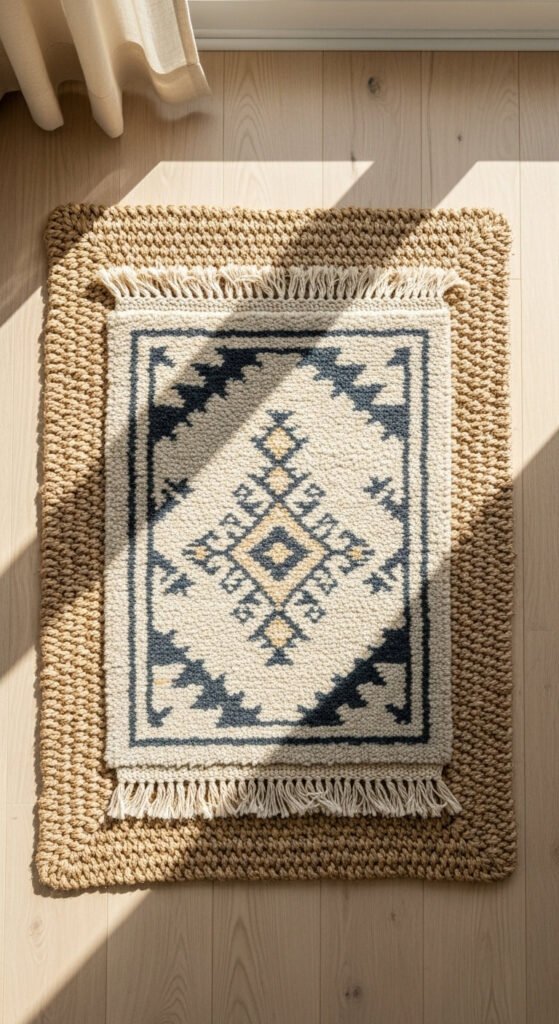
Rug layering is budget-friendly and surprisingly impactful. Start with a flat jute rug as your base — they’re inexpensive and widely available. Then layer a smaller, textured wool or shag rug on top. The jute adds raw, organic contrast while anchoring the softer rug above it. This works well in living rooms and bedrooms. Keep the top rug centered. Let the jute show at least six inches on all sides. The two materials together add dimension that a single rug simply can’t deliver.
3. Matte Plaster Walls Behind Glossy Ceramics
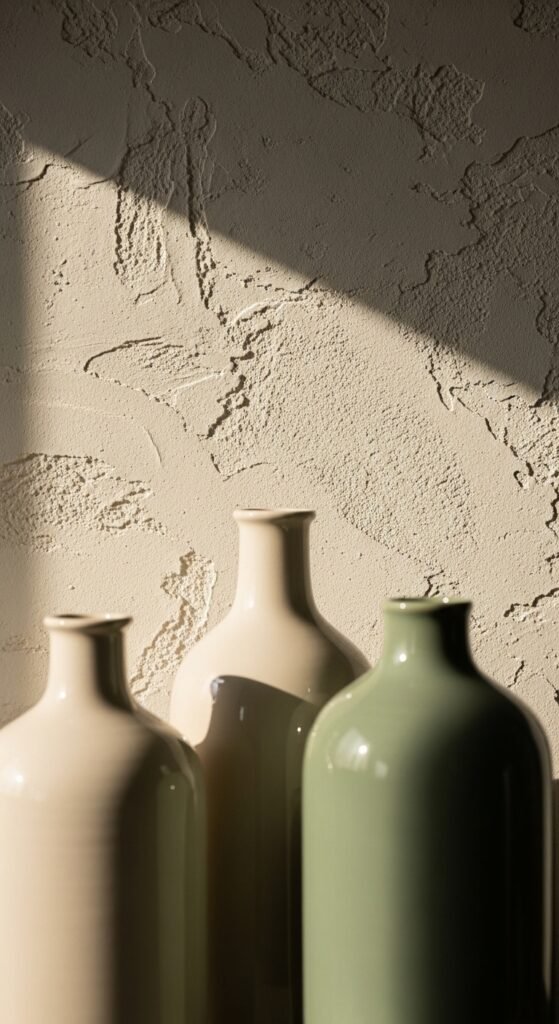
Matte walls make glossy objects pop. Limewash or plaster-finish paint gives walls a soft, imperfect texture that acts as a quiet stage. When you set glazed ceramics in front of it, the sheen on the glaze becomes the focal point. This combination works without spending much. A can of limewash paint runs $40–$70. Thrifted ceramics fill in the rest. The rough wall makes the smooth ceramic feel deliberate and refined — not random.
4. Velvet Cushions on a Rattan Chair
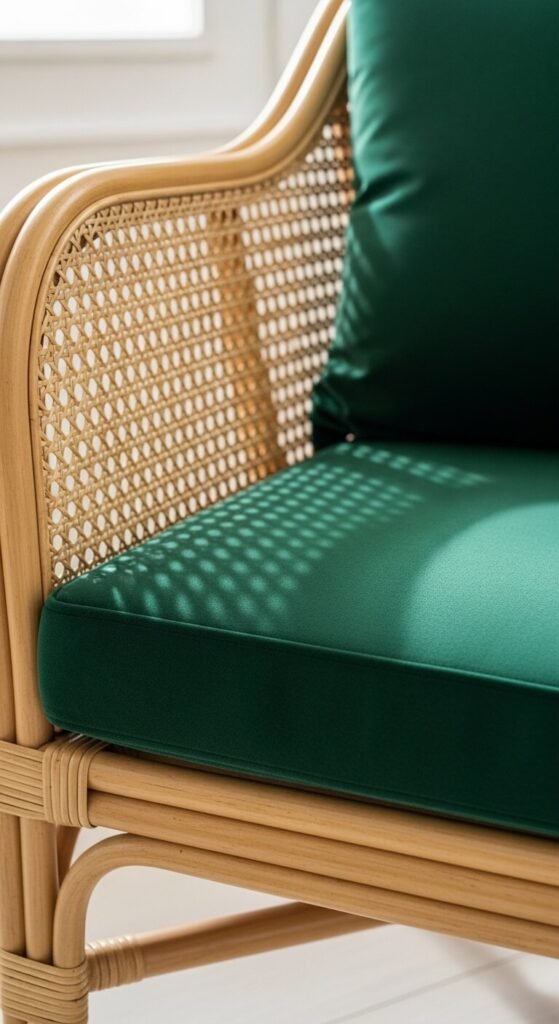
This pairing works because the contrast couldn’t be more complete. Rattan is open, woven, and earthy. Velvet is dense, rich, and tactile in a totally different way. A single velvet cushion on a rattan chair is all you need. Jewel tones — forest green, burnt orange, deep teal — look especially strong against natural rattan. You can find velvet cushion covers for under $15 on Amazon or at TJ Maxx. Swap them seasonally to keep things feeling current.
5. Raw Wood Shelves Styled With Smooth Stone Objects
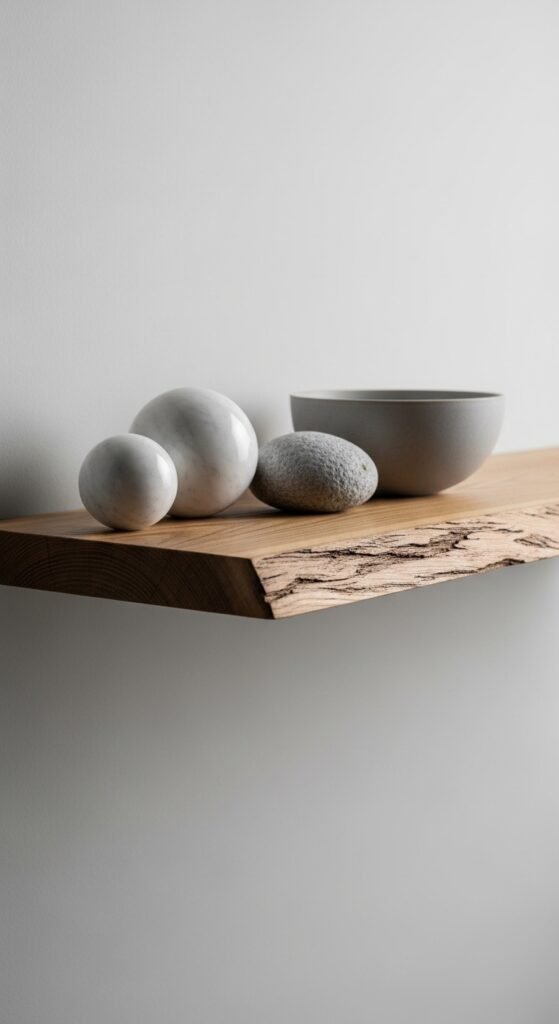
Raw wood grain is full of movement — knots, ridges, color variation. Smooth stone is still and silent. That’s exactly why they work together. Style a raw-edge wood shelf with polished stone objects — marble spheres, river rocks, or smooth concrete bookends. The stone doesn’t compete. It lets the wood breathe while adding grounded contrast. You can find raw wood floating shelves at lumber yards or IKEA. Smooth stones can come from a craft store or literally your backyard.
6. Linen Curtains Layered Over Sheer Panels
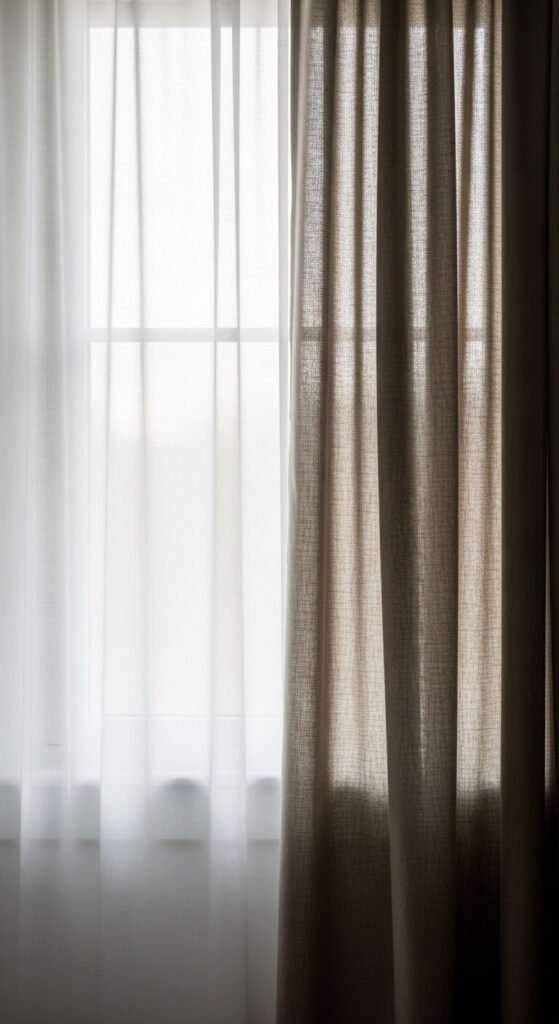
Two curtain layers on one window changes everything. Sheers filter light softly. Linen panels add weight and depth. Together, they give a window an intentional, layered look instead of a flat, single-panel finish. This setup also gives you light control — sheers during the day, linen pulled closed at night. IKEA sells affordable linen-look curtains and basic sheers separately. Use double curtain rods to hang both. The light play between the two fabrics is genuinely beautiful throughout the day.
7. Brick Walls Paired With Soft Mohair Blankets
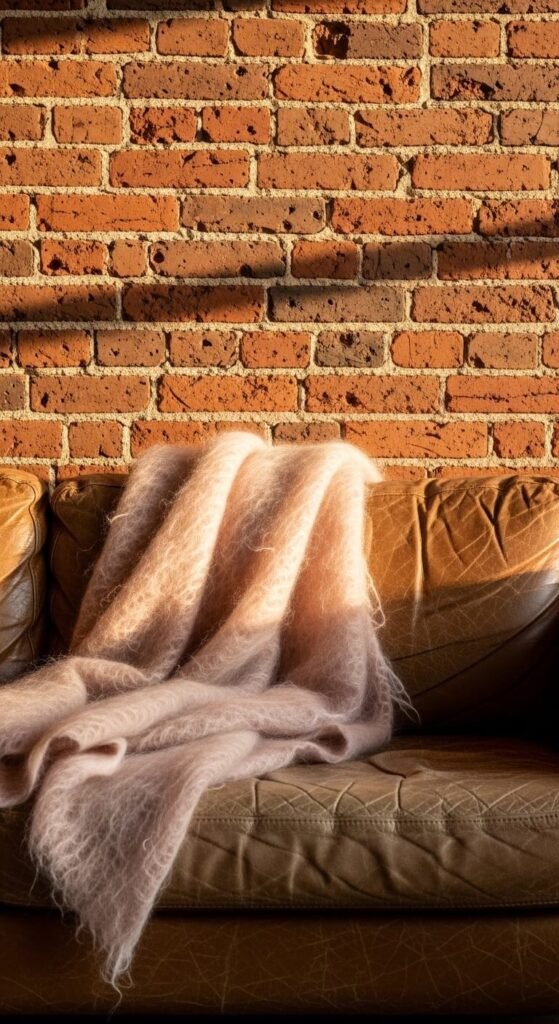
Exposed brick is hard, cold, and rough. Mohair is almost impossibly soft. That gap is exactly the point. Draping a mohair throw near a brick wall — over a sofa arm, a chair, or even a ladder blanket rack — creates a sensory conversation between the two surfaces. It softens the industrial edge of the brick without covering it. Mohair throws can be pricey, but lookalike soft-halo knits from H&M Home or Zara Home often run under $40.
8. Concrete Floors With Sheepskin Rugs
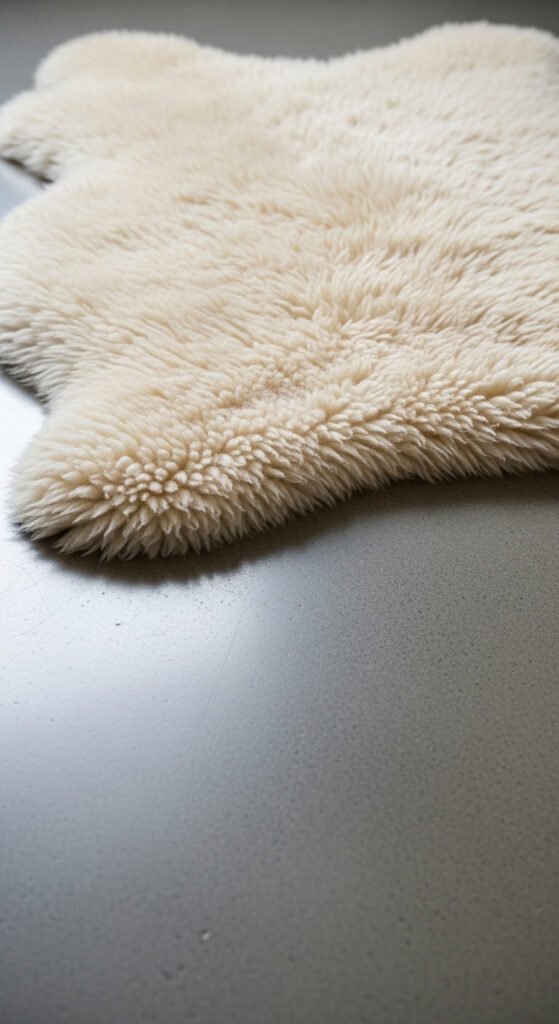
Polished concrete reads cold — industrial, flat, and unforgiving underfoot. A sheepskin rug flips that completely. The deep, curled pile against a hard floor is one of the strongest texture contrasts possible in a room. Even a small sheepskin beside a bed or chair makes a significant impact. IKEA’s Rens sheepskin is $30 and widely available. Faux sheepskins work just as well visually and come in at under $20 from most home stores.
9. Woven Baskets Grouped on Smooth Painted Shelves
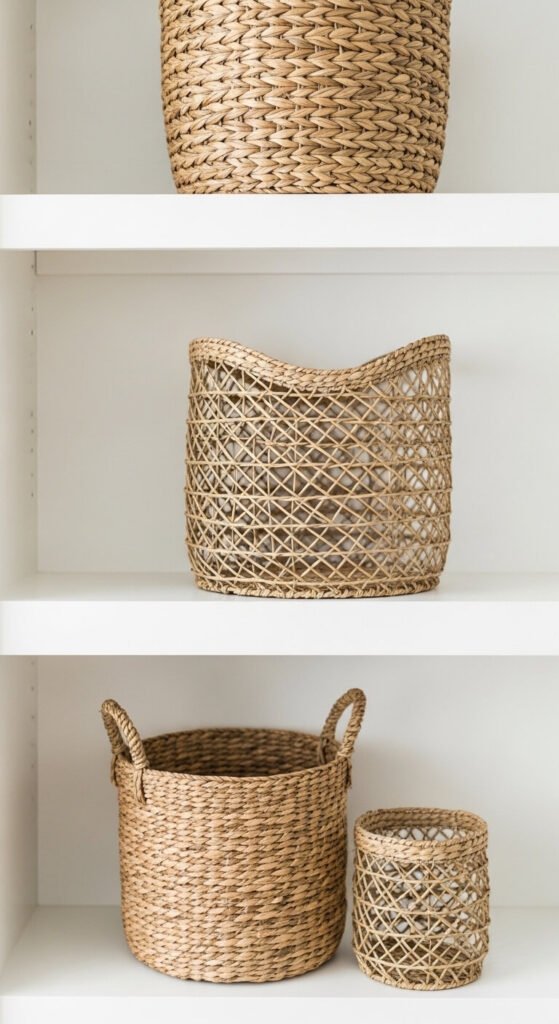
Smooth painted shelves are clean slates. Woven baskets bring the texture without disrupting the palette. The weave pattern creates shadow and depth against a flat, painted background. Group three baskets in varied sizes for maximum effect. Seagrass, rattan, and water hyacinth all work. You can find sets of three at Target or World Market for $25–$45. This combo is especially powerful on white or off-white shelving where the weave contrast is sharpest.
10. Cork Wall Tiles Behind Metal-Framed Art
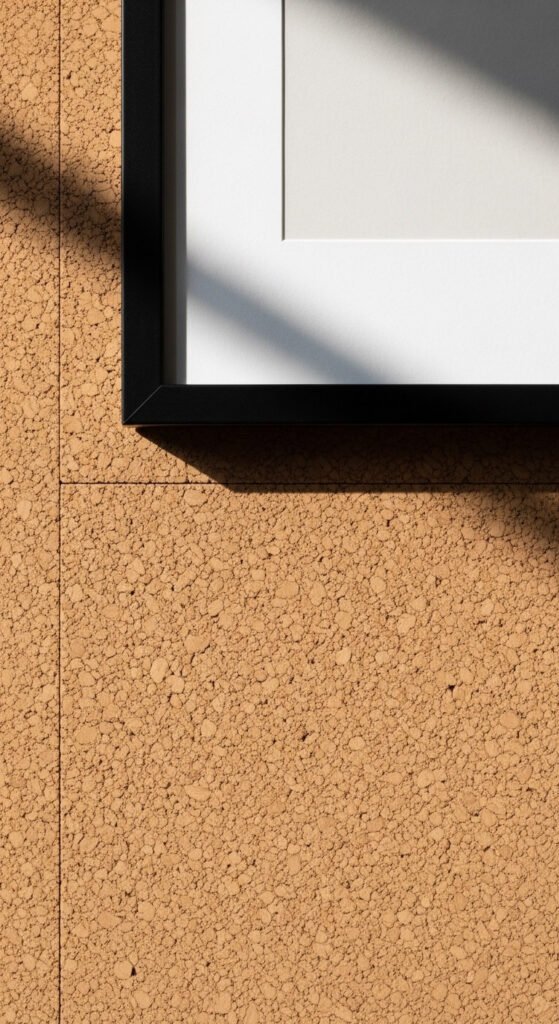
Cork tile has an underrated visual texture — organic, cellular, and warm. Hanging metal-framed artwork directly on cork creates a material contrast that feels intentional and gallery-worthy. The hard, flat frame sits against the soft, porous wall in a way that makes both materials more noticeable. Cork tiles are inexpensive — around $15–$25 per pack — and easy to install with adhesive. Pair with slim black or brass frames for the cleanest contrast effect.
11. Leather Journals Stacked on Handwoven Textile Trays
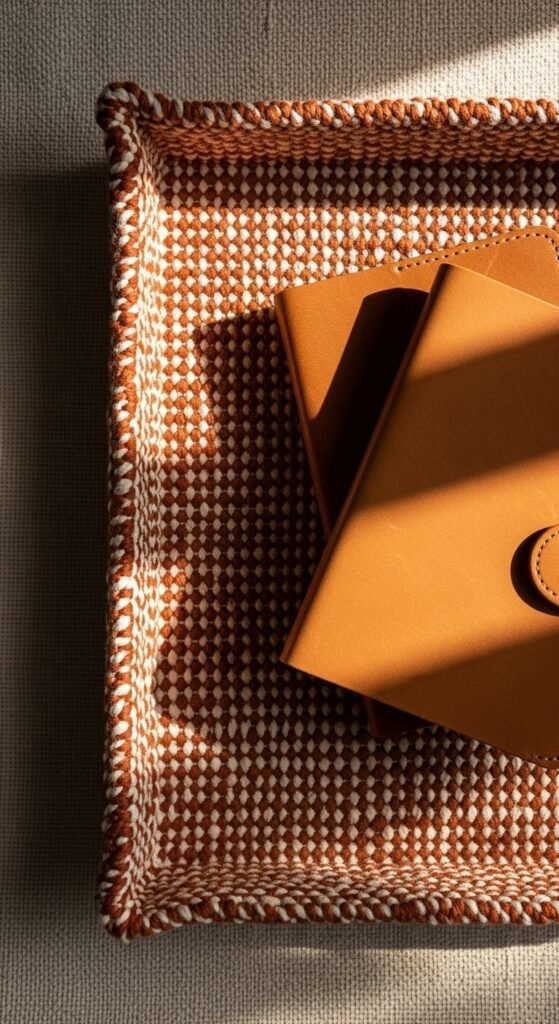
Styling trays are a simple way to practice texture layering at a small scale. A handwoven textile tray — the kind made from cotton rope or jute — holds objects beautifully while adding its own texture beneath them. Stacking leather-covered journals inside one creates a conversation between the woven base and the smooth cover material. Both are warm, earthy, and natural — so they don’t fight. Pick up woven trays from Etsy sellers or HomeGoods for $10–$20.
12. Terrazzo Surfaces Styled With Matte Black Accessories
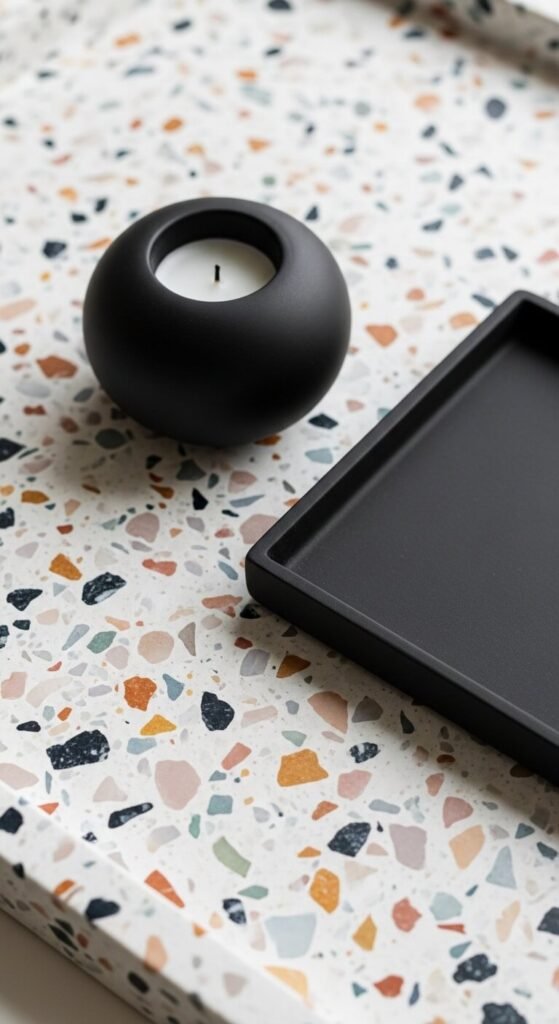
Terrazzo is busy — full of color chips and visual movement. Matte black objects quiet that down while adding their own textural note. The non-reflective finish of matte black works against the polished, speckled terrazzo in a way that feels modern and grounded. Use matte black candle holders, trays, or small planters. Terrazzo trays are widely available at Target and H&M Home for $15–$35. This pairing works on coffee tables, bathroom counters, and open kitchen shelving.
13. Grasscloth Wallpaper Behind Timber Furniture
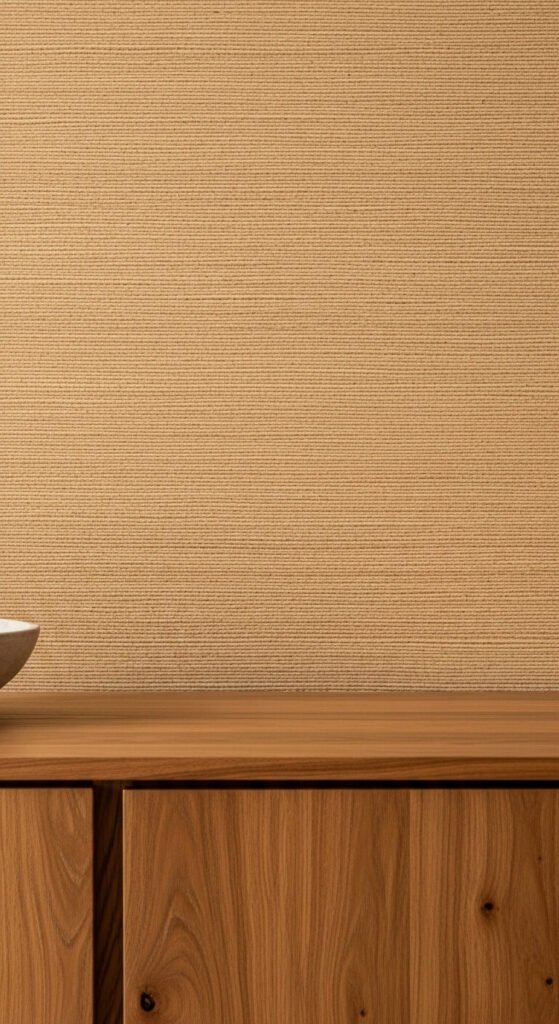
Grasscloth wallpaper brings a fine woven texture to a wall that paint simply can’t replicate. Behind timber furniture, it creates a layering of two natural materials — one vertical grain, one horizontal weave — that makes a room feel warm and considered. Grasscloth is a mid-range investment at $50–$100 per roll, but a single accent wall goes a long way. The fiber catches light differently throughout the day, making the wall feel alive rather than static.
14. Hammered Metal Bowls on Marble Surfaces
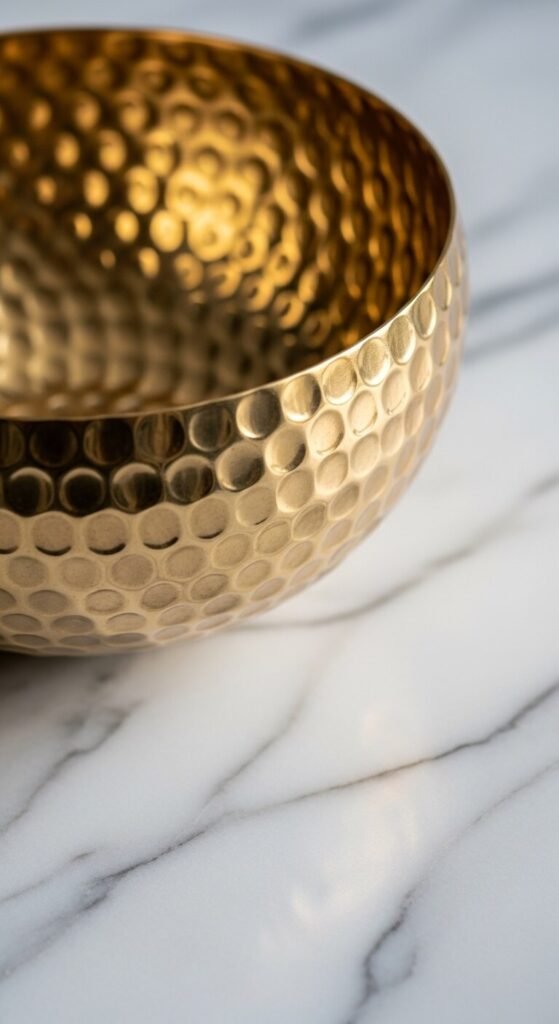
Hammered metal has a hand-worked, irregular surface full of small facets. Marble is smooth and geological. Setting a hammered brass or copper bowl on a marble surface creates a quiet but powerful textural argument. The faceted metal catches light in dozens of small angles. The marble reflects it in one long sweep. Hammered metal bowls are available at HomeGoods or on Amazon starting around $20. Even a small piece delivers the contrast clearly.
15. Macramé Wall Hangings Over Smooth Drywall
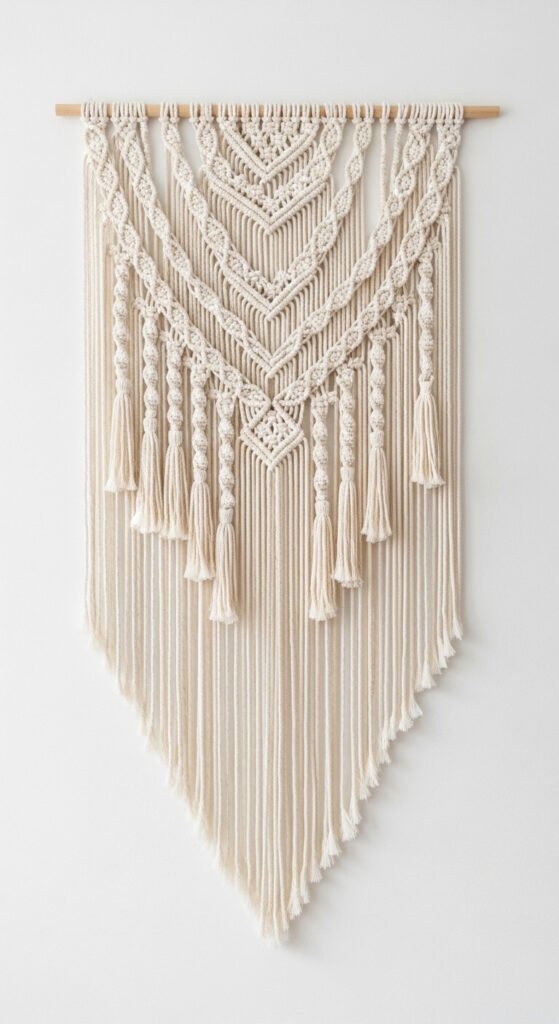
A flat white wall has no texture at all. That’s exactly what makes it the best backdrop for macramé. The knot work — every loop, twist, and fringe strand — becomes the entire visual story when the wall behind it offers no competition. Macramé wall hangings are widely sold on Etsy starting around $25 for smaller pieces. Hang directly on smooth drywall to maximize the contrast. The rope texture reads beautifully in both natural and warm artificial light.
16. Bouclé Fabric Chairs Against Polished Concrete
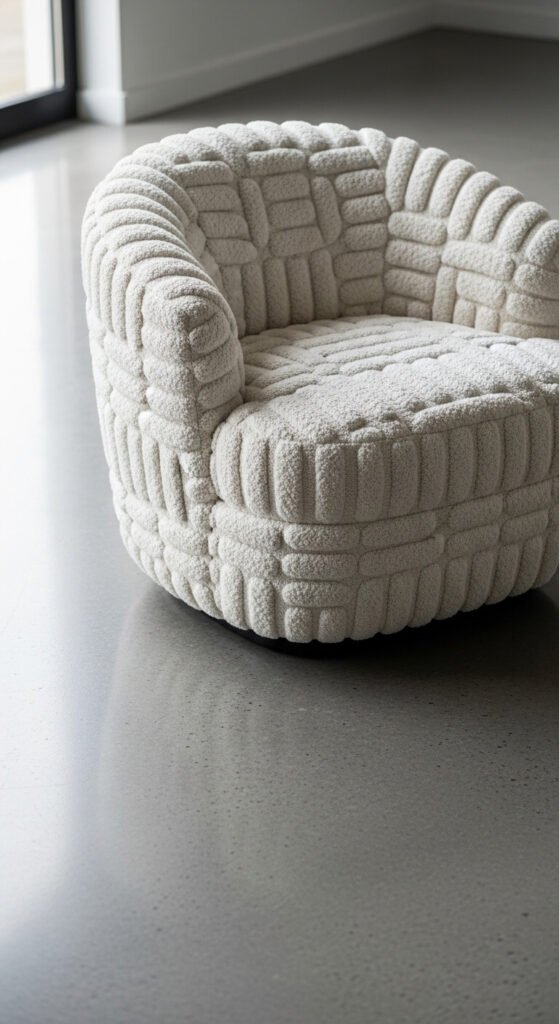
Bouclé is having a moment — and for good reason. The loopy, knotted surface of bouclé fabric is deeply tactile and visually rich. Against polished concrete, it creates one of the strongest soft-versus-hard contrasts possible in a room. The concrete is cold and flat. The bouclé is warm and lumpy in the best possible way. Bouclé chairs are a splurge — but bouclé fabric by the yard is available cheaply if you’re covering an existing chair yourself with basic upholstery work.
17. Sisal Runners in Hallways With Painted Paneling
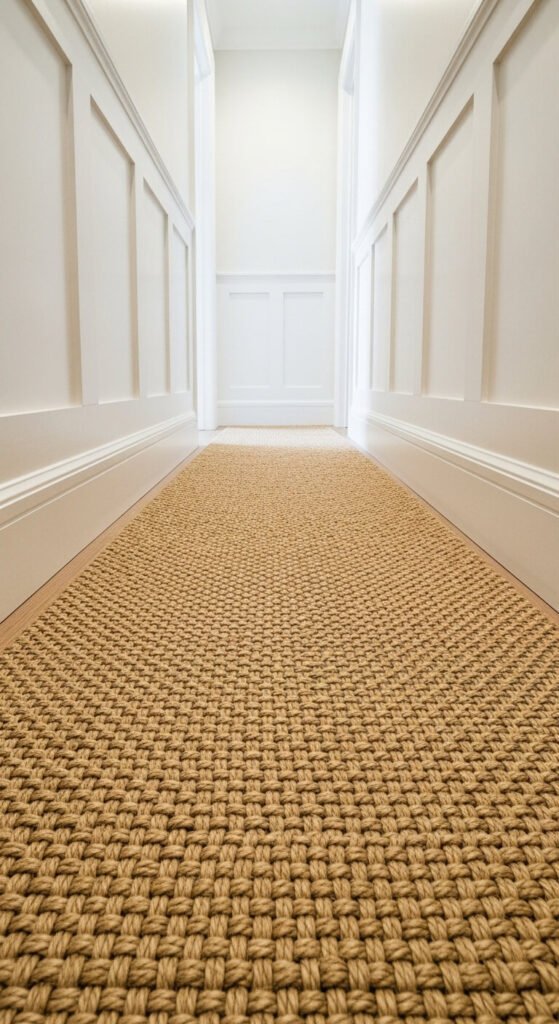
Painted wall paneling is smooth and uniform. A sisal runner on the floor is rough and woven. This vertical-to-horizontal texture shift makes a hallway feel designed rather than functional. The painted panels give you a clean backdrop while the sisal grounds the space with natural fiber. Sisal runners are available at IKEA and Amazon for $30–$60 in standard hallway lengths. Stick to natural or cream tones so the texture reads clearly against painted paneling in any color.
18. Aged Brass Hardware on Painted Cabinetry
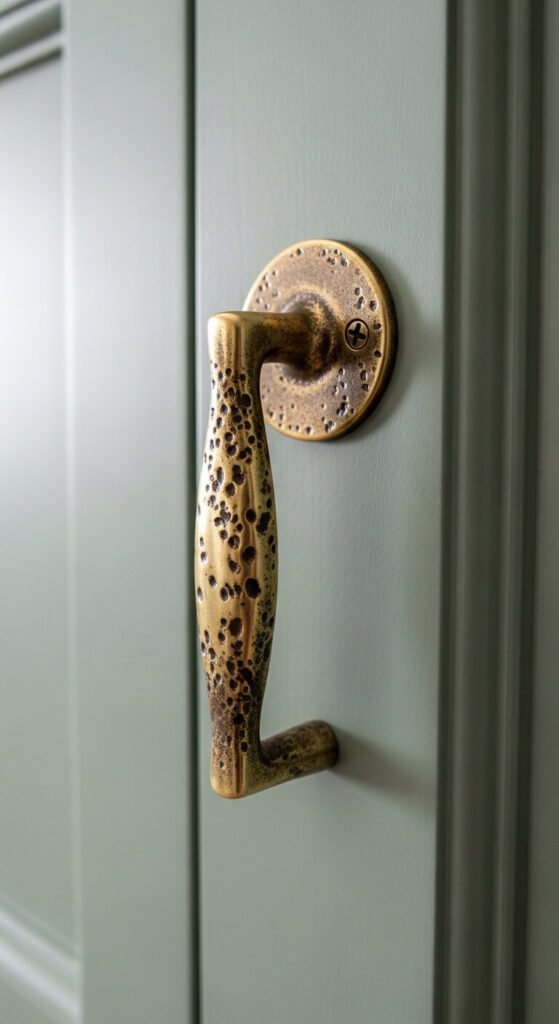
Hardware is the smallest texture change with the largest impact. Aged or antique brass has a patinated, imperfect surface — warm, pitted, and hand-finished looking. Against smooth painted cabinetry, it adds a material layer that feels considered without any construction. Swapping cabinet pulls is a $1–$5 per-knob project. Look for aged brass, unlacquered brass, or cast iron hardware on Etsy, Amazon, or Rejuvenation. This simple swap changes the entire feeling of a kitchen or bathroom.
19. Dried Botanicals in Textured Ceramic Vases
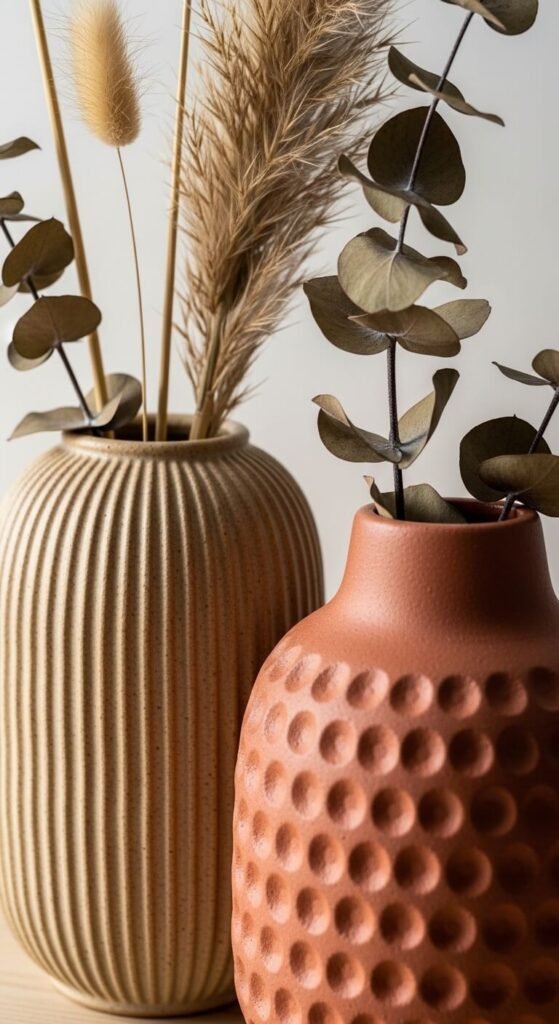
Dried botanicals have their own texture — papery, fibrous, delicate. When arranged in a ribbed or dimpled ceramic vase, the contrast between the fine dried material and the heavy ceramic form becomes a display in itself. Pampas grass, dried bunny tail grass, or preserved eucalyptus all work well. Look for textured ceramics at thrift stores or TJ Maxx. Dried botanicals are available at craft stores for $8–$20 per bunch. This combination requires no water, no maintenance, and no replacement.
20. Woven Pendant Lights Over Smooth Tables
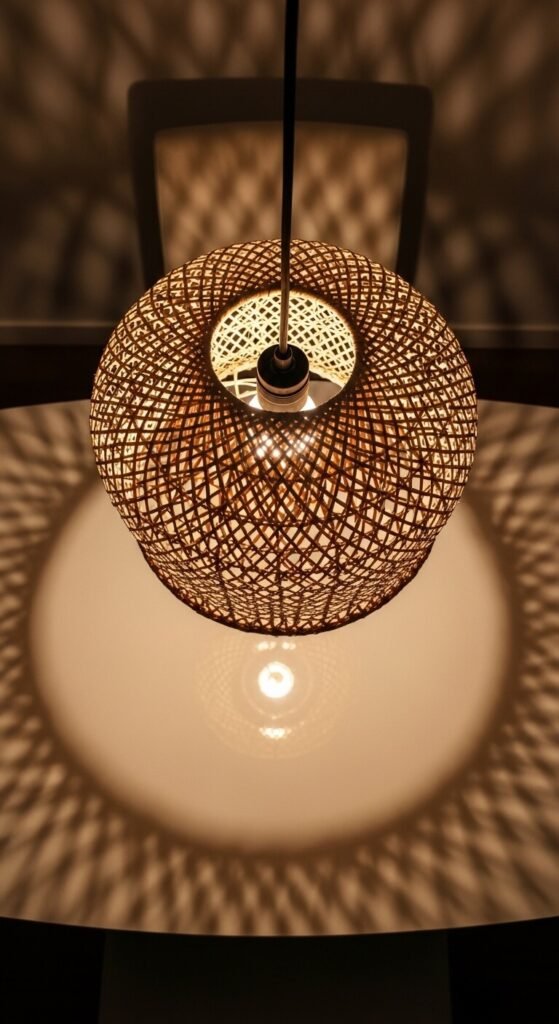
A woven rattan or seagrass pendant light over a smooth dining or coffee table creates texture at eye level and above. Light filtering through the weave casts patterned shadows — which means the texture performs even in how it distributes light around the room. Woven pendants are widely available on Amazon and at CB2 for $50–$150. The smooth table reflects the warm glow. The woven shade creates the pattern. Both are better because of the other.
21. Ribbed Glass Vases Next to Matte Pottery
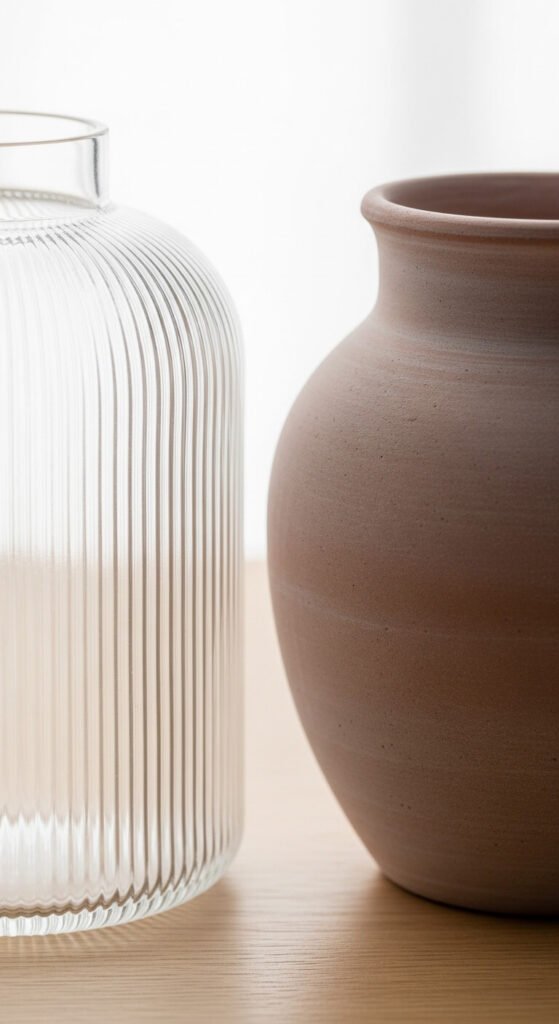
Ribbed glass catches and bends light. Matte pottery absorbs it. Placing them side by side turns a simple shelf display into a textural study. The ribbing in the glass creates vertical lines of refracted light. The matte pottery sits quietly beside it, giving the eye a place to rest. Both are inexpensive — ribbed glass vases run $8–$20 at IKEA or Anthropologie’s sale section. Matte pottery can be thrifted or found at HomeGoods. No special styling skill needed.
22. Wicker Ottomans With Upholstered Lids
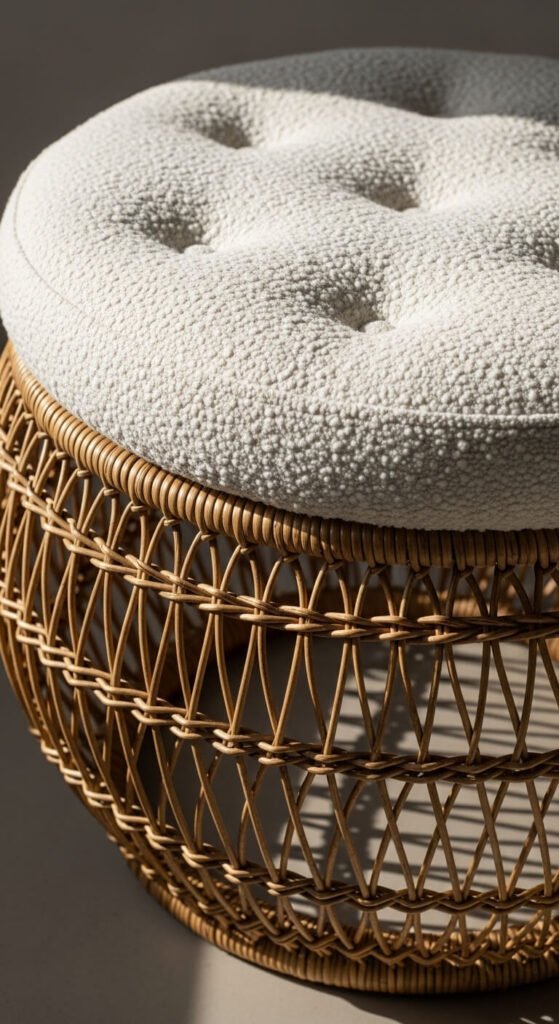
A wicker ottoman with an upholstered top is a single piece that layers two textures at once. The wicker base is open, woven, and structural. The upholstered lid — especially in a soft fabric like bouclé or velvet — adds a plush, closed texture on top. This is a practical buy because the ottoman does double duty as storage. Find them at Target, World Market, or IKEA for $60–$120. The built-in texture contrast makes them work harder visually than an all-fabric or all-wicker version alone.
23. Stone Tiles Paired With Warm Timber Accents
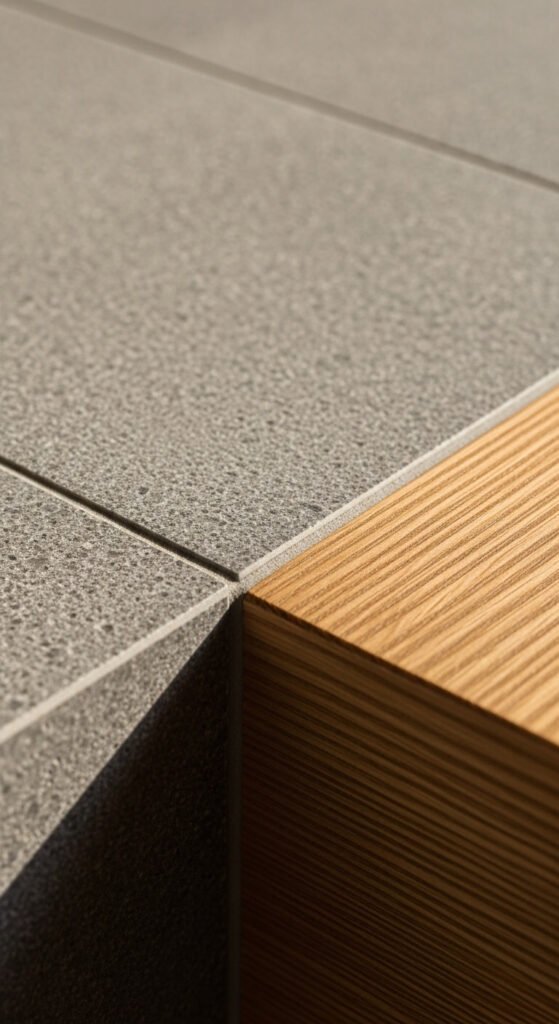
Where stone meets wood in a room — at a threshold, a step, or a shelf junction — that edge becomes a design detail. Stone is cold, mineral, and flat. Timber is warm, grained, and organic. Using both in the same space creates a textural temperature shift. In bathrooms, stone tiles paired with timber vanity tops or teak bath mats deliver this contrast easily. Teak bath mats run $25–$50. The stone-to-timber moment doesn’t need to be dramatic — just present.
24. Embroidered Throw Pillows on a Plain Sofa
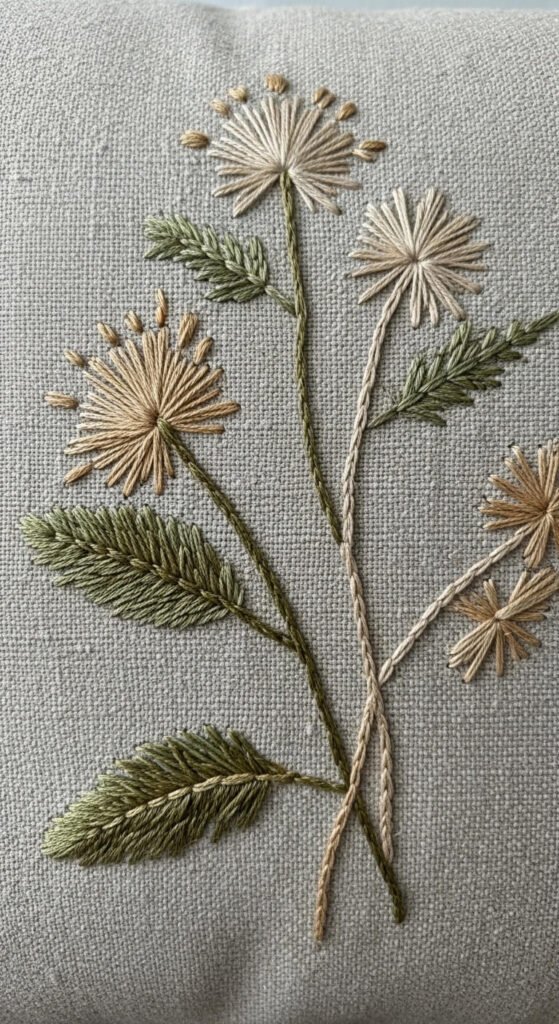
Embroidery raises the surface of a flat fabric. Even when the thread color matches the base fabric, the stitch work creates a shadow and a raised dimension that changes the whole pillow. On a plain, flat-fabric sofa, one or two embroidered pillows deliver layered texture without changing the color story. Look for embroidered pillow covers on Etsy, Amazon, or at World Market for $15–$35. The stitching catches light in a way that printed patterns never can.
25. Reclaimed Wood Tables With Glass Table Tops
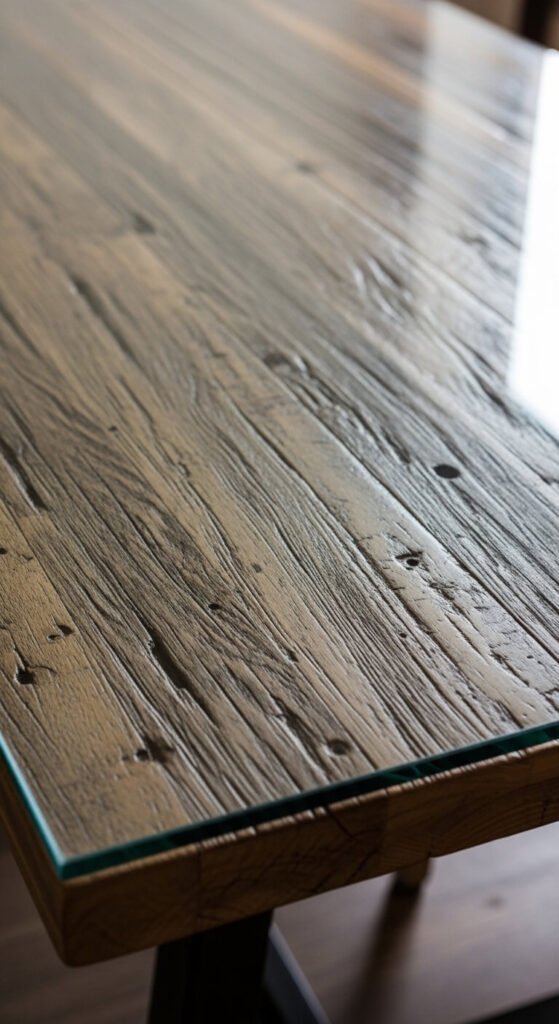
Glass on top of reclaimed wood creates a layered reading — you see both surfaces at once. The glass is invisible but present, adding its own reflective quality above the aged wood below. The wood grain, knots, and weathering stay fully visible. This combination protects the table while adding a textural depth you don’t get with a bare wood surface. Custom glass table tops can be cut to size inexpensively at local glass shops. It’s a practical and visually layered solution in one.
26. Canvas Art on Textured Plaster Walls
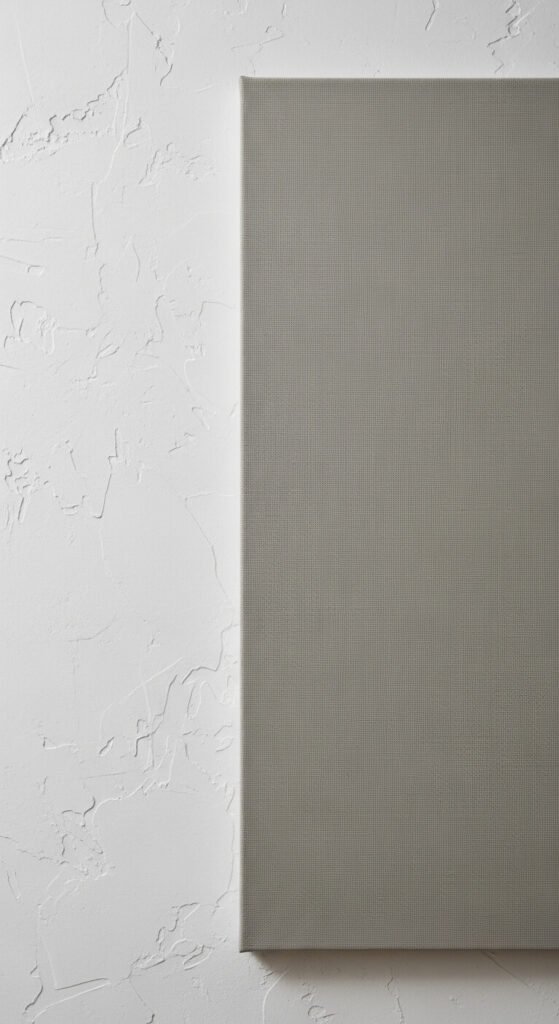
Unframed canvas has its own texture — the stretched weave of the fabric, the physical brushwork on the surface. On a smooth wall, that texture can disappear into the background. But on a plaster or limewash wall, the canvas surface sits against another textured surface, and both become more visible. The brushwork on the painting face reads against the trowel marks on the wall behind it. This is a free upgrade — just remove the frame and rehang the same piece.
27. Pebble Tile Floors With Smooth Freestanding Tubs
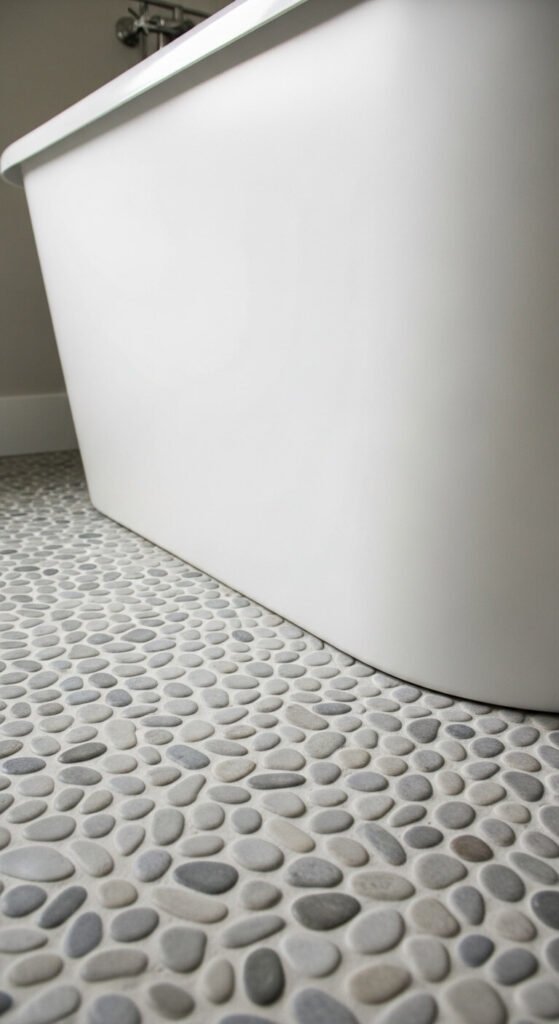
River pebble floor tiles are bumpy, irregular, and deeply natural underfoot. A smooth freestanding tub has no seams, no texture, and no variation in surface. That contrast — irregular organic floor meeting a perfectly smooth form — is quietly extraordinary in a bathroom. The pebble tiles run $5–$10 per square foot at tile suppliers. The smooth tub needs no added decoration when the floor does all the textural work around it. This combination reads as expensive because the material contrast does it all.
Conclusion
Texture layering isn’t about spending more — it’s about seeing more. Every room already has surfaces that can work together or against each other. When you start paying attention to what’s rough and what’s smooth, what catches light and what absorbs it, what’s open and what’s dense, you start making choices that actually change how a space feels. Pick one or two combinations from this list and try them today. A throw here, a basket there, a different hardware pull. Small changes in surface material add up fast. The depth you’re looking for doesn’t come from more stuff — it comes from more contrast.