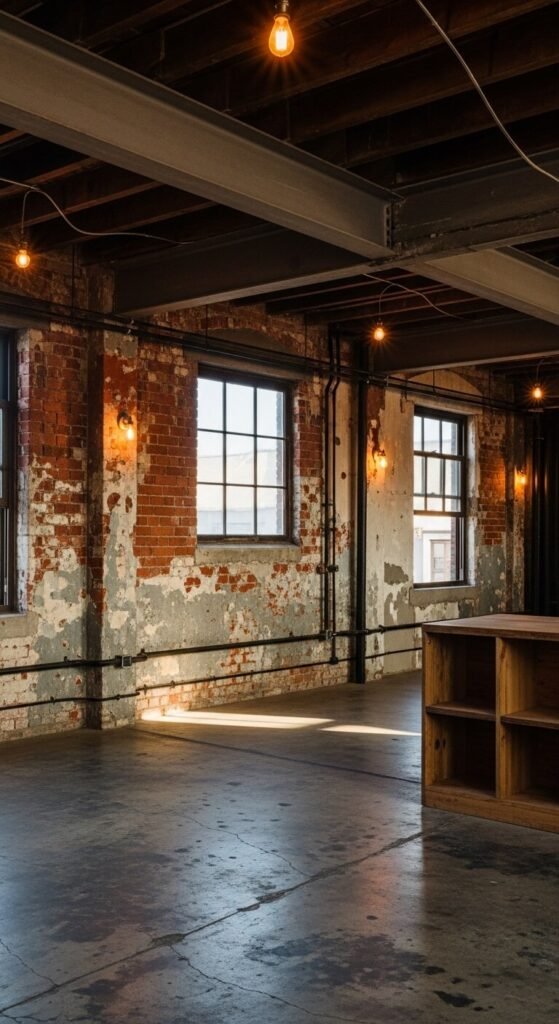
Industrial style is having a serious moment — and it’s not just for loft apartments in Brooklyn. This raw, stripped-back aesthetic pulls from factories, warehouses, and workshops to create spaces that feel lived-in, real, and effortlessly cool. Exposed materials. Dark metals. Worn textures. No pretense, no perfection. If you want a home that looks like it has a story, this is the style for you. Whether you’re starting from scratch or layering in a few key pieces, these 26 elements will help you build that gritty urban vibe without blowing your budget.
1. Exposed Brick Walls
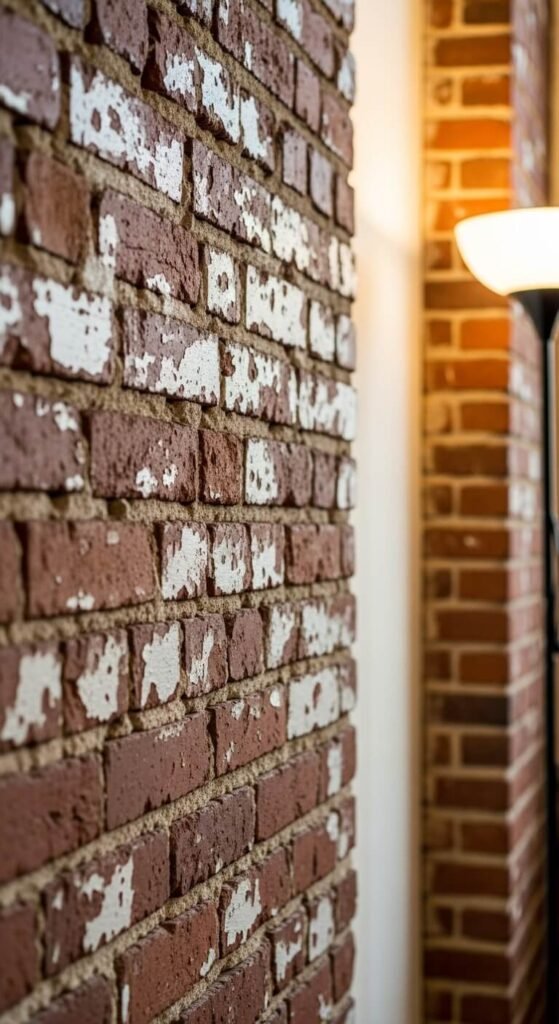
Nothing says industrial like raw brick. If you’re lucky enough to have it hidden under plaster, stripping it back is one of the best design moves you can make. Hire a professional to test for lead paint first. If you’re renting or don’t have real brick, high-quality brick-effect wallpaper or brick-look panels from home improvement stores work surprisingly well. Focus one wall — the one behind your sofa or bed. That’s your anchor. Keep the rest of the room neutral so the brick breathes.
2. Concrete Floors
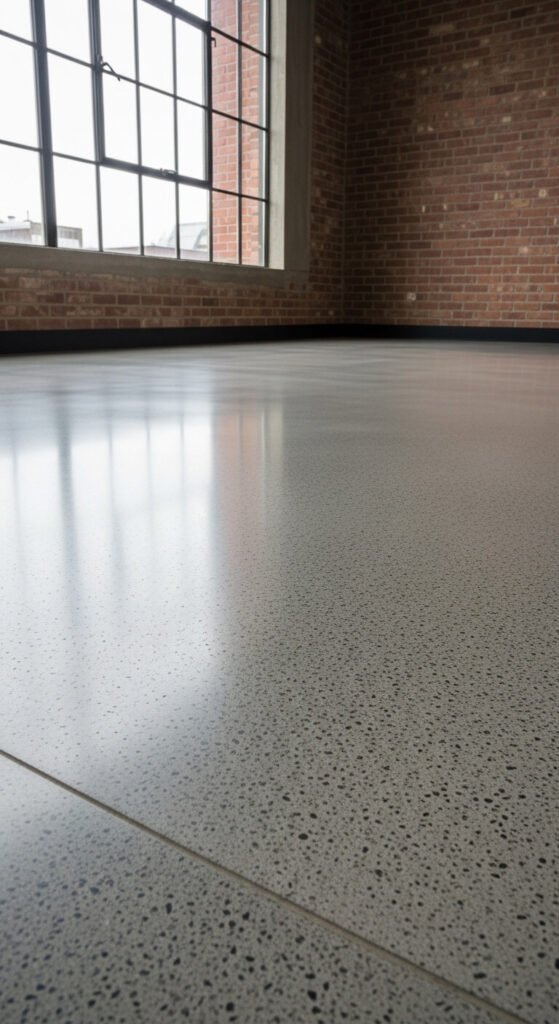
Concrete floors are the ultimate industrial base. They’re durable, low-maintenance, and look incredible with the right lighting. Polished concrete reflects light beautifully. If you already have concrete under carpet, renting a floor grinder and applying a concrete sealer yourself can cost under $200. Cold in winter? Layer in a large jute or vintage Persian rug. The contrast between rough concrete and soft textiles is part of the charm. Don’t overthink it — imperfections are the point.
3. Black Steel Window Frames
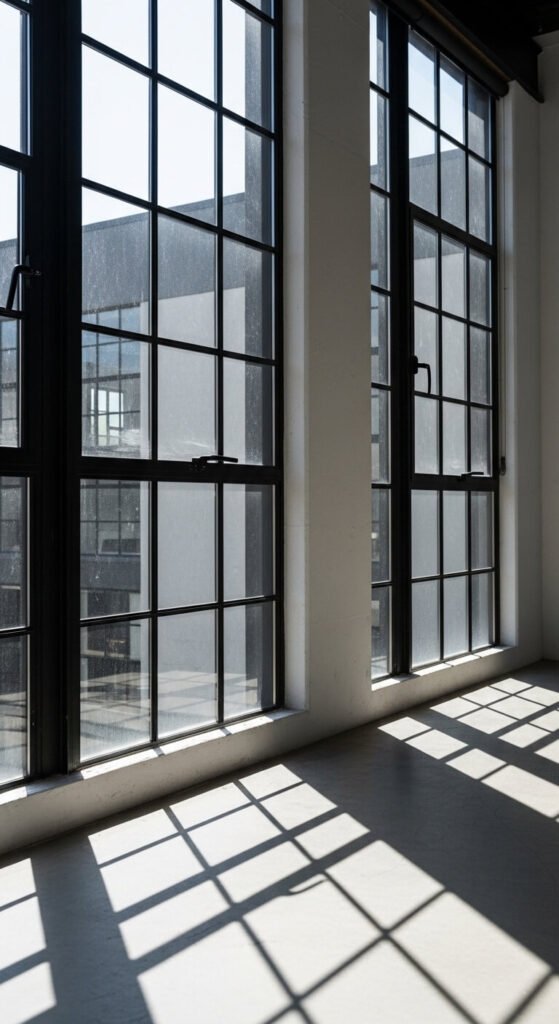
Black steel-framed windows are a signature industrial detail. They frame light like artwork. If you’re renovating, steel Crittal-style windows are the gold standard — but they’re expensive. A much cheaper alternative: apply black window film tape along the edges of existing white frames. It mimics the grid effect convincingly. Pair with simple black roller blinds. Avoid heavy curtains here — the windows are the feature. Let them do the work.
4. Edison Bulb Lighting
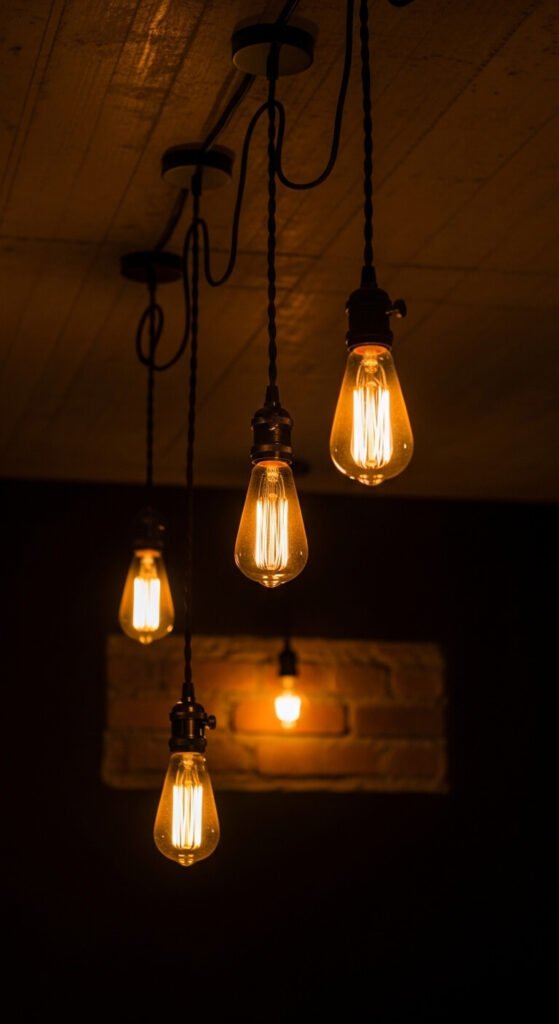
Edison bulbs are the easiest and cheapest entry point into industrial lighting. A single pendant with an exposed filament bulb changes the entire mood of a room. You can find cord pendant kits online for under $20. Mix bulb shapes — globe, tubular, and teardrop all work together. Hang them at different heights for visual interest. Dimmer switches are worth the small investment — they let you shift from bright working light to moody evening atmosphere instantly.
5. Pipe Shelving
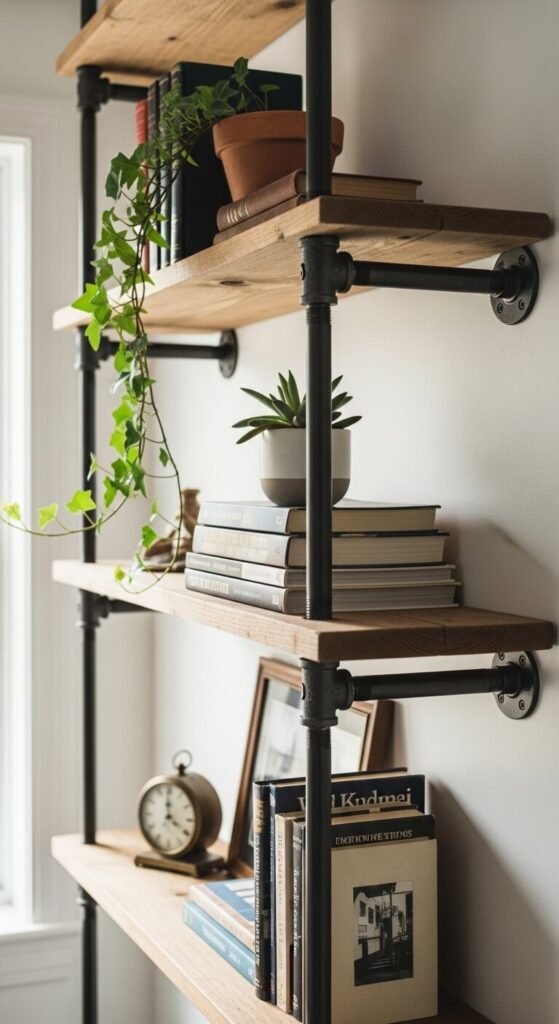
Pipe shelving is the most popular DIY industrial project — and for good reason. It looks expensive, costs very little, and you can build it in an afternoon. Buy black iron pipe fittings from any plumbing supply store. Pair with reclaimed timber planks or even pine boards stained dark. Flange fittings screw directly into wall studs. The key is spacing — leave enough room between shelves so the pipes are visible and become part of the visual. The hardware is the design.
6. Reclaimed Wood Surfaces
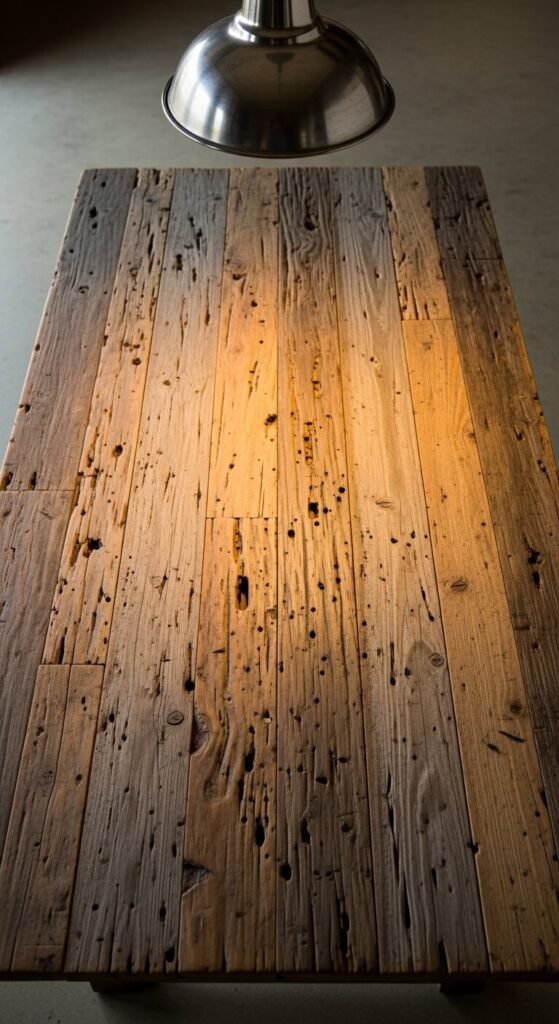
Old wood brings warmth into what can otherwise feel like a cold aesthetic. The imperfections — knots, nail holes, saw marks — are the whole point. You don’t need to spend a fortune. Check salvage yards, Facebook Marketplace, and demolition sales for old timber. A reclaimed wood coffee table, dining table, or floating shelf instantly grounds the space. Sand lightly and apply a raw linseed oil finish to protect without hiding the character. Don’t refinish it to perfection. Leave it rough.
7. Exposed Ductwork
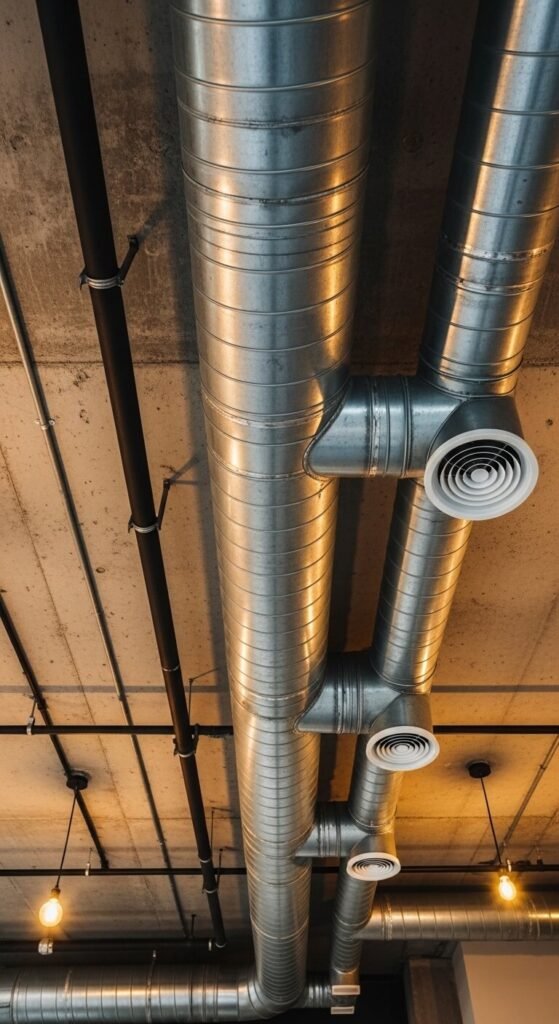
If you have a drop ceiling hiding ductwork above, removing it might be the single best industrial upgrade you can make. Exposed ducts add instant loft character. Before ripping anything out, consult a contractor — some ducting is best left covered. If yours is already exposed, lean into it. Paint the ducts and ceiling the same dark colour — charcoal or black — to make them recede and feel intentional. This trick makes even ugly ductwork look designed.
8. Metal Locker Storage
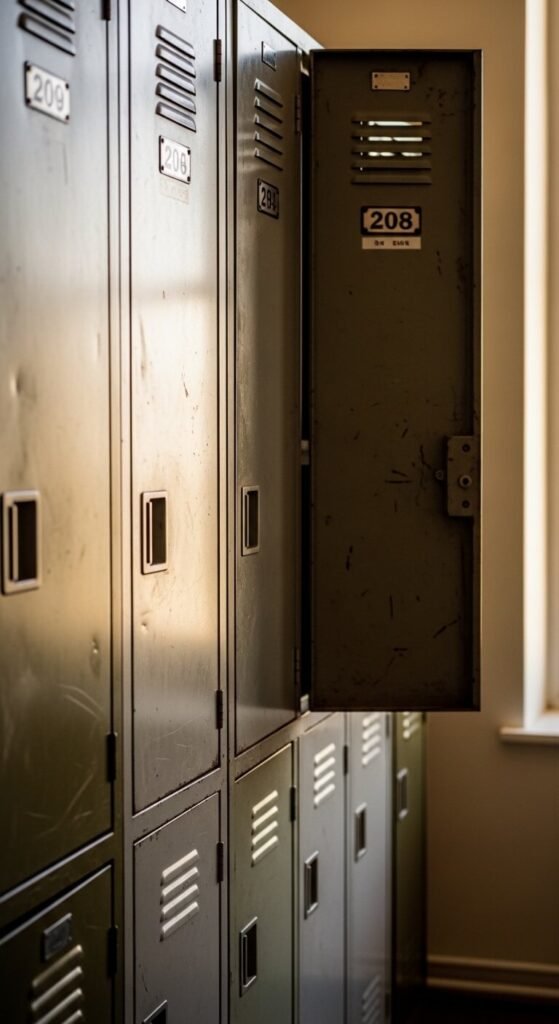
Old gym or school lockers are an industrial storage hack that actually works. They’re functional, character-rich, and usually cheap at salvage shops. A single locker in an entryway works as a coat and shoe cabinet. A row of them in a bedroom replaces a wardrobe. Paint them the same colour as your walls if you want them to blend, or leave the original chippy paint for maximum character. Add a hairpin leg under one to turn it into a side table. Practical and cool.
9. Raw Steel Furniture
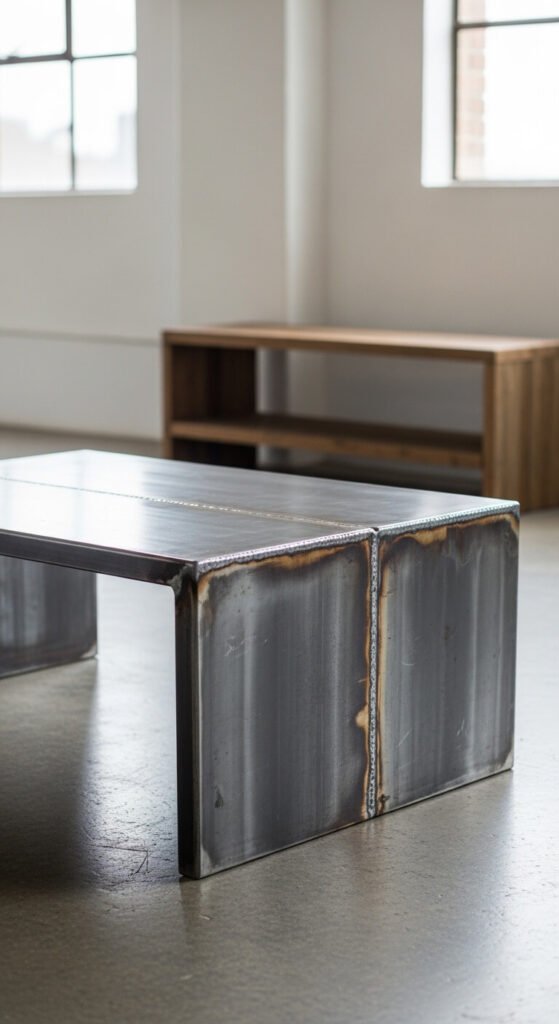
Steel furniture with visible welds, raw edges, or matte black finishes is a cornerstone of the look. You don’t need custom fabrication. Budget-friendly steel furniture is everywhere — look at flat-pack options from industrial-focused retailers, or search secondhand markets for old workshop tables and metal filing units. A steel-framed bed, a metal console table, or a welded bar cart all deliver the aesthetic. If budget allows, local welders often make custom pieces for surprisingly reasonable prices.
10. Concrete Countertops
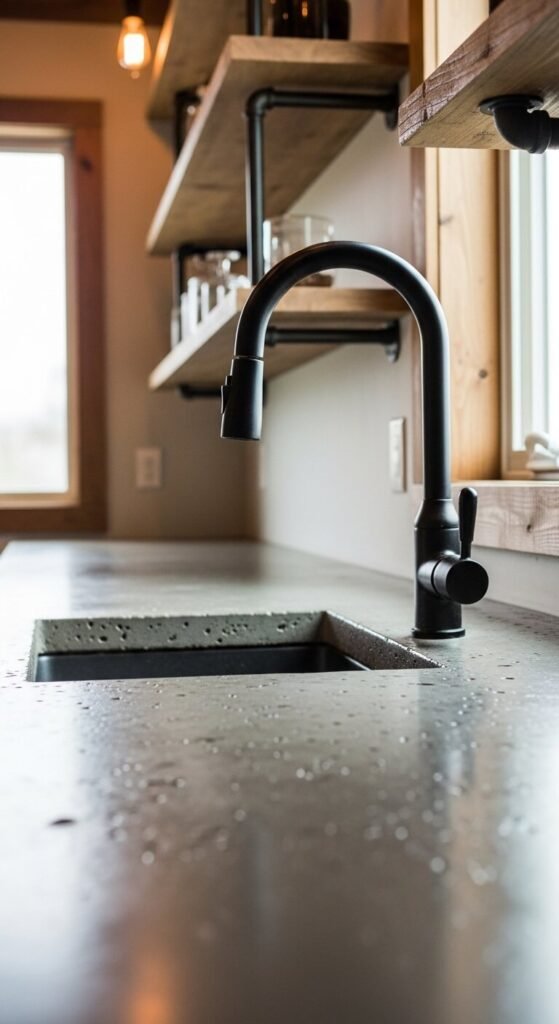
Concrete counters look expensive but can be done affordably. DIY concrete overlay kits let you apply the look directly over existing countertops for under $100. The result isn’t perfect — and that’s the point. Small variations, hairline cracks, and texture shifts are features, not flaws. Seal properly with a food-safe concrete sealer. Pair with black matte fixtures and open pipe shelving above. Avoid polishing to a high shine — a matte, raw finish is what makes it feel authentically industrial.
11. Vintage Factory Lighting
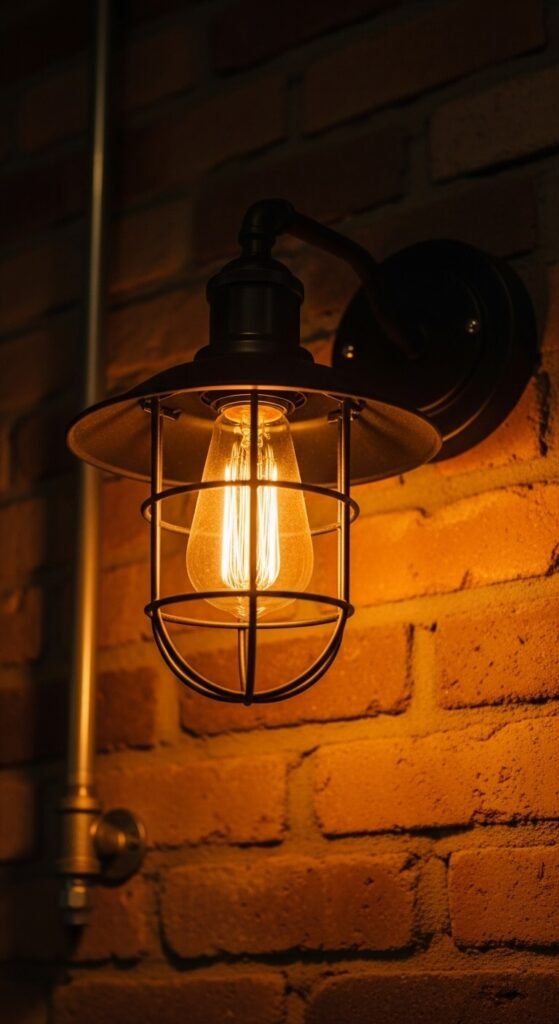
Cage lights, gooseneck barn lights, and factory-style sconces are the workhorses of industrial lighting. They’re everywhere online at every price point. A pair of cage wall sconces flanking a bed or mirror costs less than $40 for the set. Look for matte black or aged brass finishes. Avoid chrome — it reads too modern. The key is placement: group them, layer them, mix pendant heights. Industrial lighting always looks better in multiples than as a single statement piece.
12. Weathered Metal Accents

Rust, patina, and oxidation are not things to fix in an industrial space — they’re the decoration. Collect small metal objects: old gears, iron candle holders, aged copper vases, raw iron bookends. Thrift stores and salvage yards are full of this stuff for almost nothing. Group odd numbers together on a shelf or mantle. Mix metals — black iron, aged brass, oxidised copper. The imperfect, time-worn quality of these objects does more visual work than any bought-new decorative item.
13. Pegboard Tool Walls
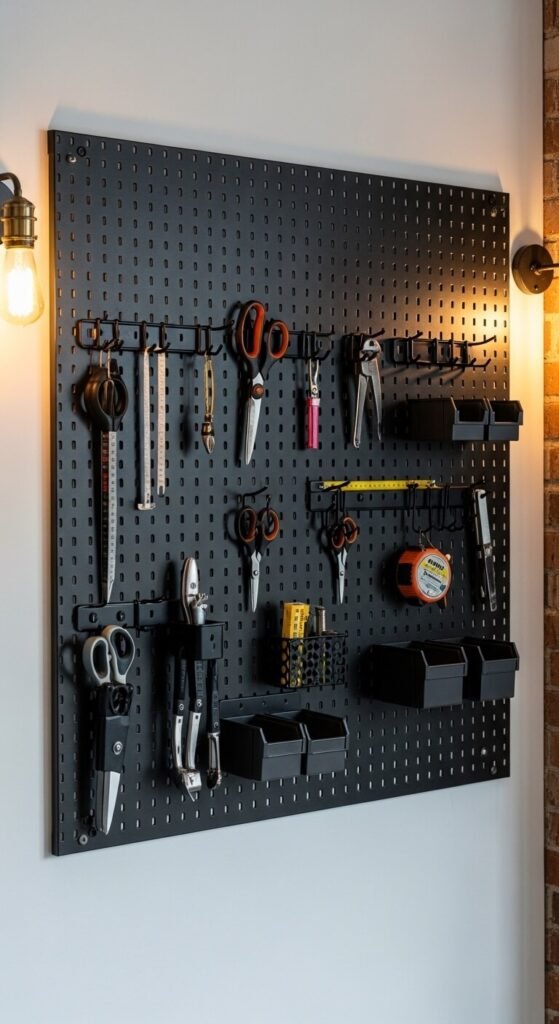
Pegboard isn’t just for garages anymore. A large metal or painted hardboard pegboard panel on a kitchen or studio wall is both industrial and deeply practical. Paint it black or charcoal. Use black steel hooks and small metal containers. It turns everyday objects — scissors, utensils, keys — into visual elements. Mount it with standoffs so it floats slightly from the wall — this small detail reads as intentional and designed. The whole setup costs under $50 and installs in an hour.
14. Industrial Ceiling Fans
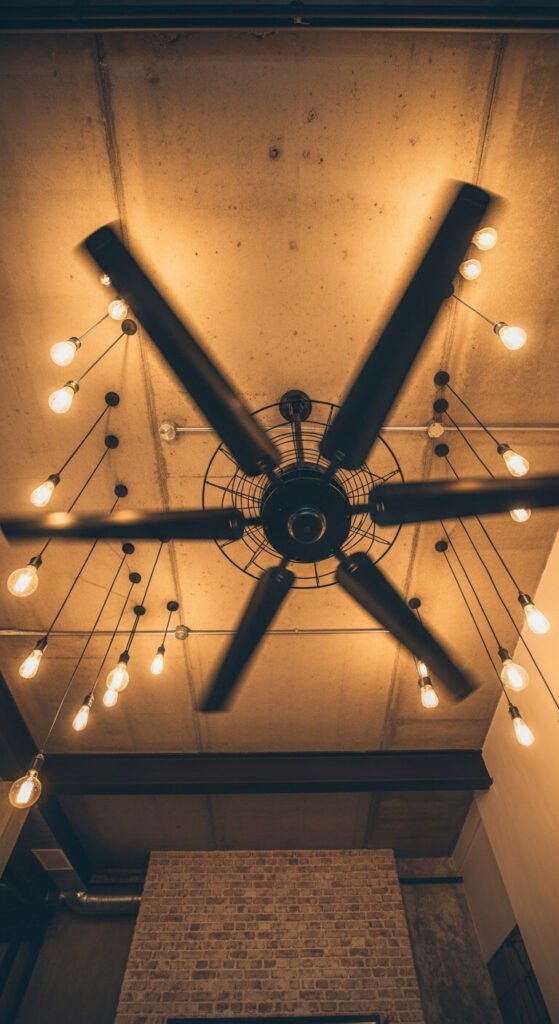
Ceiling fans in industrial spaces need to look like they belong in a factory. Big blades, matte black or dark bronze finish, no frosted glass shades. Many industrial-style fans now come with reversible wood and black blade options — the dark side always wins in this aesthetic. Look for brushless motor models that run quietly. A good industrial fan is functional art. It moves air, changes the scale of a room, and reinforces the whole aesthetic in one install.
15. Open Kitchen Shelving
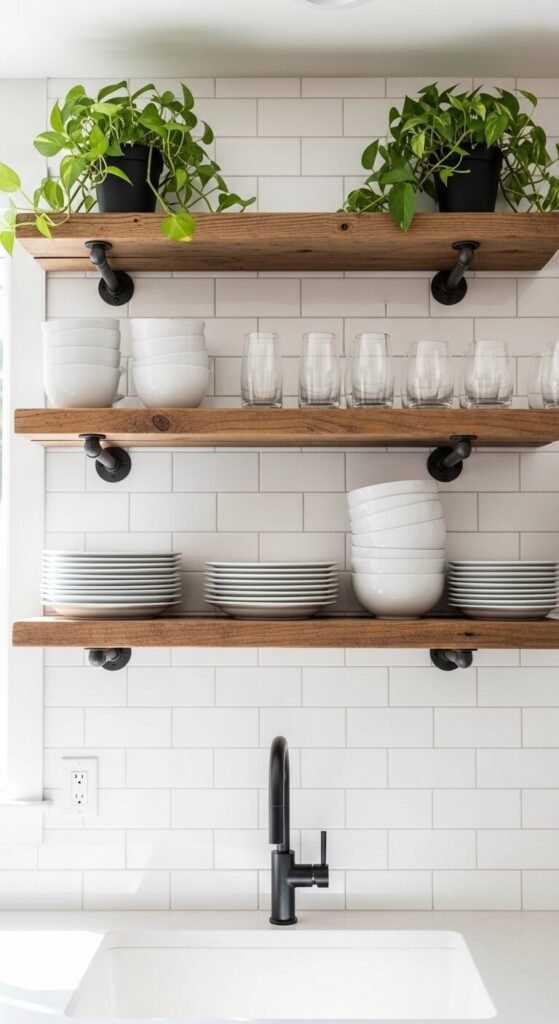
Replacing upper kitchen cabinets with open shelving is a commitment — but it pays off visually. Pipe bracket shelves with thick timber boards are the standard, and they work. The catch: everything on the shelf becomes a display. Edit ruthlessly. Keep only items you actually use and that look good. Stack plates, line up glasses, add a few plants. If removing cabinets feels too permanent, try removing just one set of doors to test how you feel about the open look first.
16. Factory-Style Doors
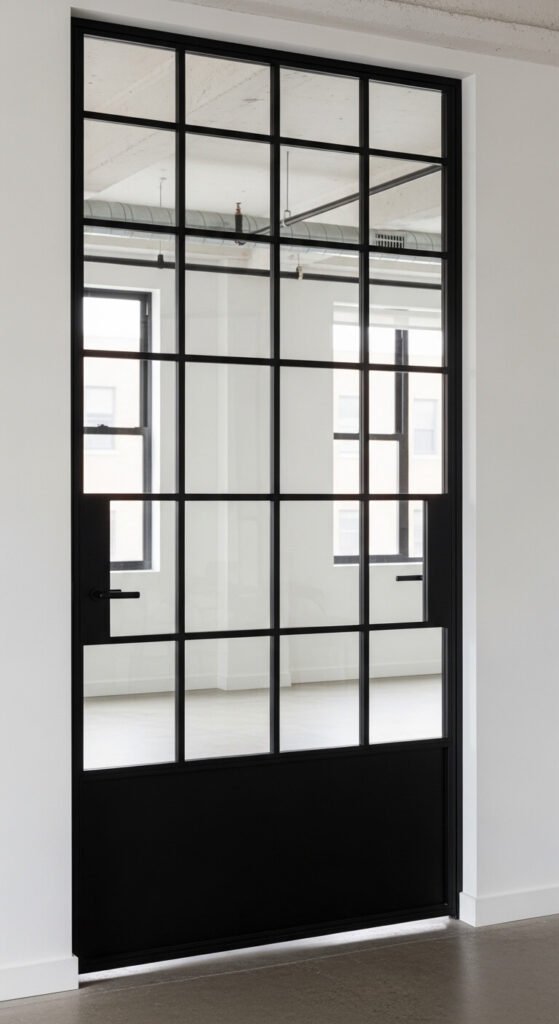
Steel-framed interior doors with glass panels are one of the most dramatic industrial upgrades. They divide spaces without blocking light, and the grid pattern is unmistakably industrial. Full steel doors are expensive — but there are very convincing alternatives. Hollow-core doors fitted with black iron hardware and overlaid with black stick-on grid tape create a similar effect for a fraction of the cost. Sliding barn-style versions also work and add a functional element that feels true to the aesthetic.
17. Bare Concrete Ceilings
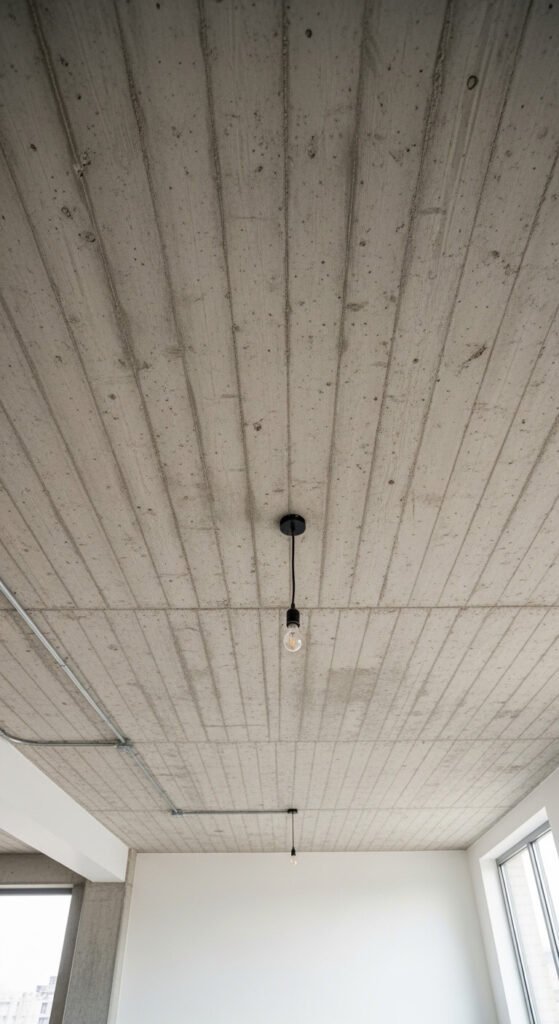
If you have concrete ceilings, leave them alone. Painting them white or covering them with drywall is almost always a mistake in an industrial space. The raw grey, the formwork marks, the imperfections — that’s character. If the surface is rough or dusty, apply a clear concrete sealer and nothing else. Let them be what they are. The trick is lighting: aim uplighters and pendant fixtures to graze the ceiling surface, and those imperfections become beautiful texture under warm light.
18. Black Iron Plumbing Fixtures
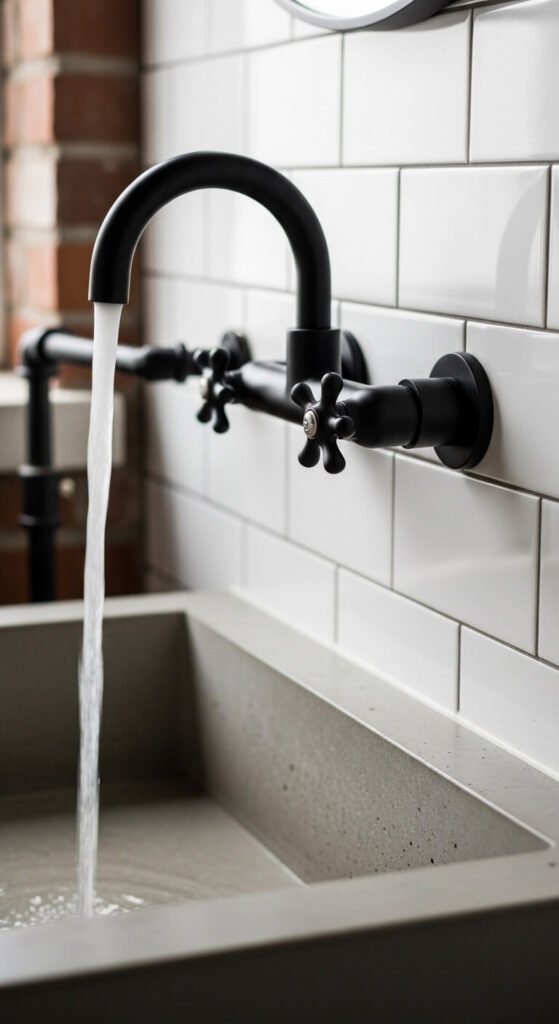
Swapping out chrome or brushed nickel fixtures for matte black is one of the highest-impact, lowest-effort industrial upgrades. Taps, showerheads, towel rails, cabinet handles — all of it. Many of these are direct replacements that require no plumbing work. Focus on the kitchen and bathroom first. Matte black reads as raw and industrial without feeling overdone. Pair with concrete, white subway tile, or timber for maximum contrast. Even in a very standard rental bathroom, black fixtures shift the whole energy.
19. Metal Mesh Panels
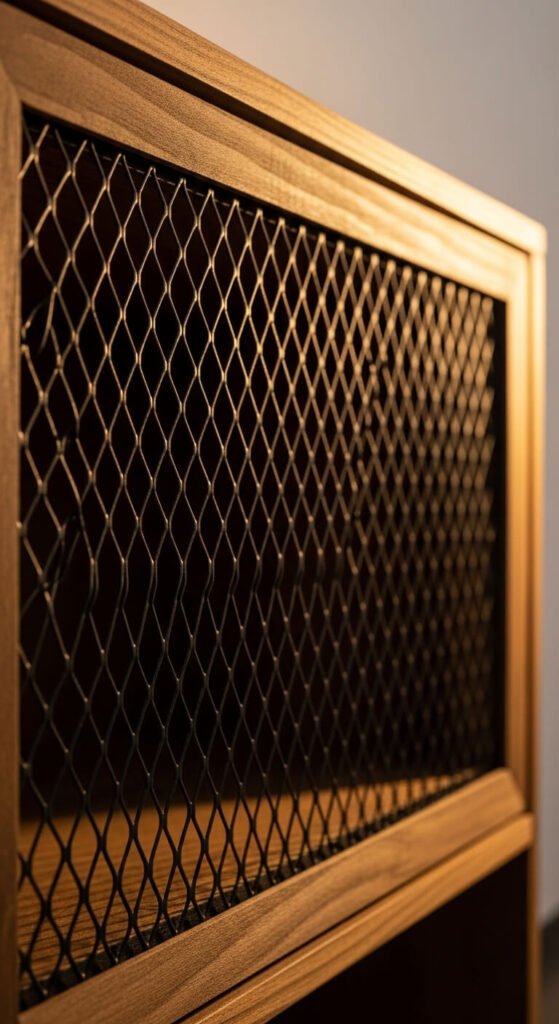
Metal mesh panels used as cabinet inserts, room dividers, or wall cladding add serious industrial texture. Expanded metal sheets are cheap and available at metal suppliers or online. Cut to size and frame with black angle iron. Use as cabinet door replacements — just remove the solid door and fit mesh instead. This works beautifully in kitchens and utility rooms where you want ventilation as well as aesthetics. A full metal mesh room divider in a studio apartment adds structure without closing off the space.
20. Salvaged Industrial Furniture
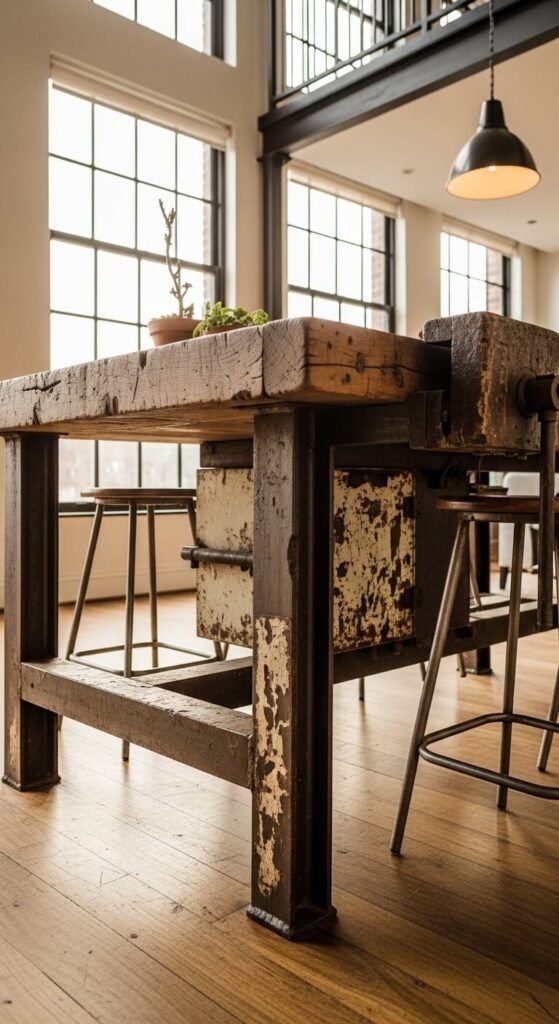
Old factory workbenches, school lab tables, and workshop trolleys are industrial furniture gold. Search estate sales, demolition auctions, and industrial salvage yards. A heavy steel-framed workbench becomes a kitchen island. A factory cart on casters becomes a bar trolley. A school science bench becomes a home office desk. These pieces have physical weight and real history — neither of which you can fake. Clean, oil any moving parts, and use as-is. The wear and marks are the whole story.
21. Subway Tile with Dark Grout
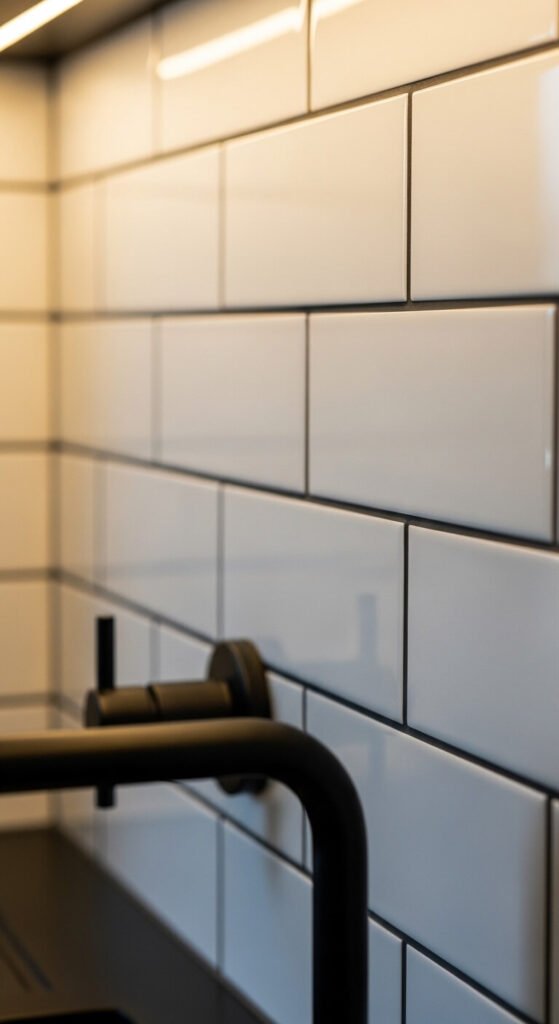
White subway tile is classic. White subway tile with dark charcoal or black grout is industrial. The contrast is graphic, bold, and surprisingly low-maintenance — dark grout doesn’t show staining the way white grout does. This is one of the most affordable bathroom or kitchen updates with the biggest visual payoff. If you’re retiling anyway, choose a slightly oversized subway format (3×6 or 4×8 inches) and lay in a standard brick pattern. Simple, unfussy, and perfectly suited to the aesthetic.
22. Wire Pendant Lights
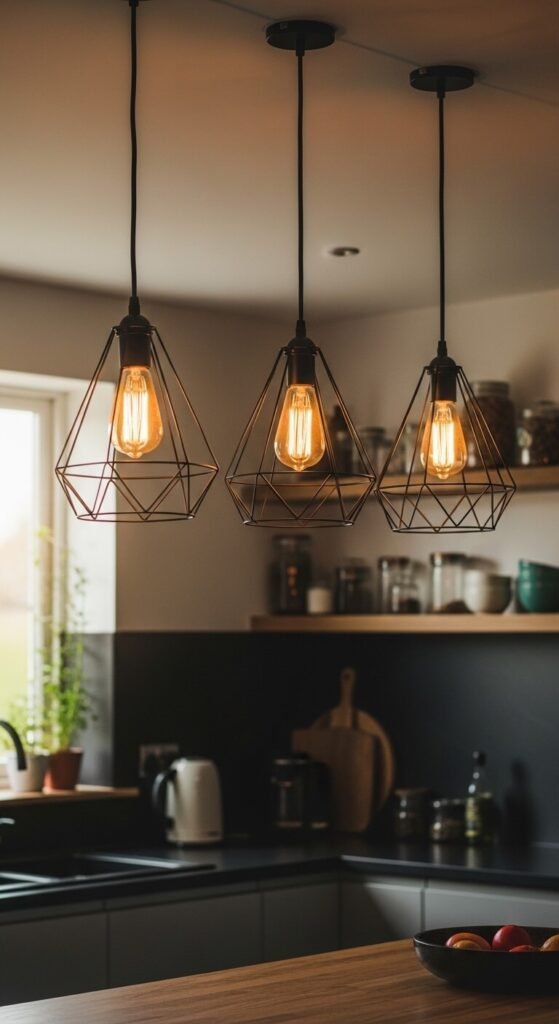
Geometric wire pendant shades are the industrial lighting piece that fits every budget. A basic wire cage pendant costs less than $15 online. A more refined geometric wire frame runs $40–80. Either works. Hang multiples over a kitchen island or dining table — three in a row at slightly varying heights is the formula. Match the cord colour to the ceiling or go black-on-black for a seamless look. Avoid any pendant with a fabric shade or ornate detail. Keep it stripped back and structural.
23. Dark Paint on Ceilings
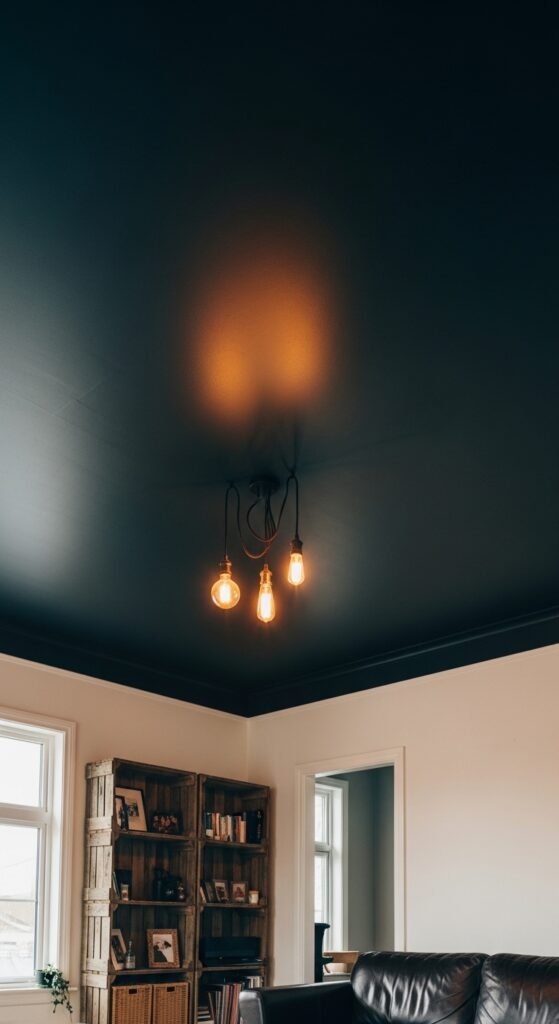
Painting a ceiling dark is a move that intimidates most people — and that’s exactly why it works so well. A charcoal, deep navy, or black ceiling instantly drops the room’s visual height and creates an enveloping, warehouse-like atmosphere. It makes exposed fixtures and pendant lights pop. Start with just one room. Use eggshell or matte finish — flat absorbs light and feels more raw. The walls can stay light; the contrast is what does the work. One tin of paint, completely different room.
24. Iron Stair Railings
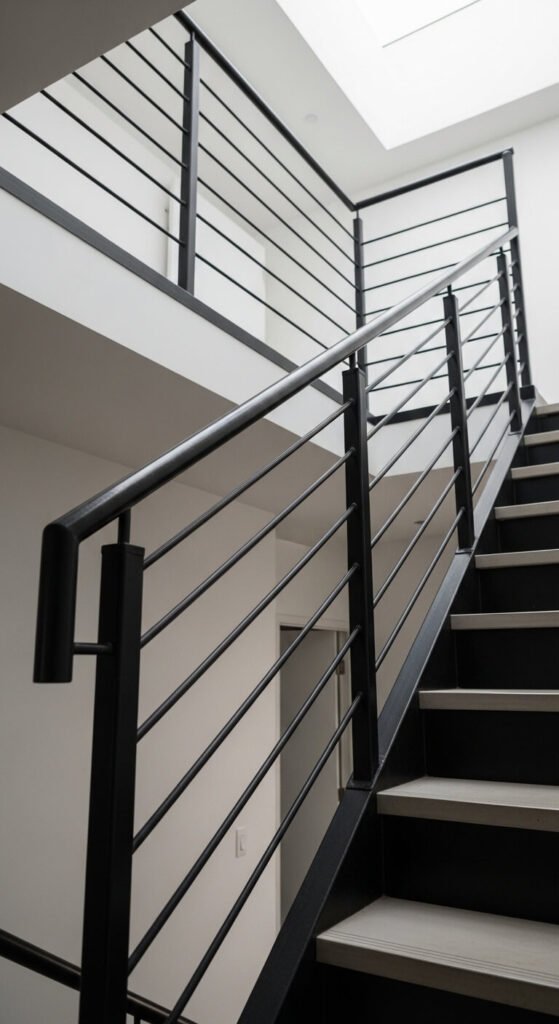
Replacing ornate or painted wood railings with flat-bar iron railings transforms a staircase completely. The look is minimal, structural, and unmistakably industrial. Flat bar steel and round rod are the most common options. If welding isn’t in your skill set, local metal fabricators can build and install a custom railing for less than you’d expect — especially if you keep the design simple. Matte black powder coat is the finish to ask for. Pair with raw timber treads for maximum contrast.
25. Distressed Leather Seating
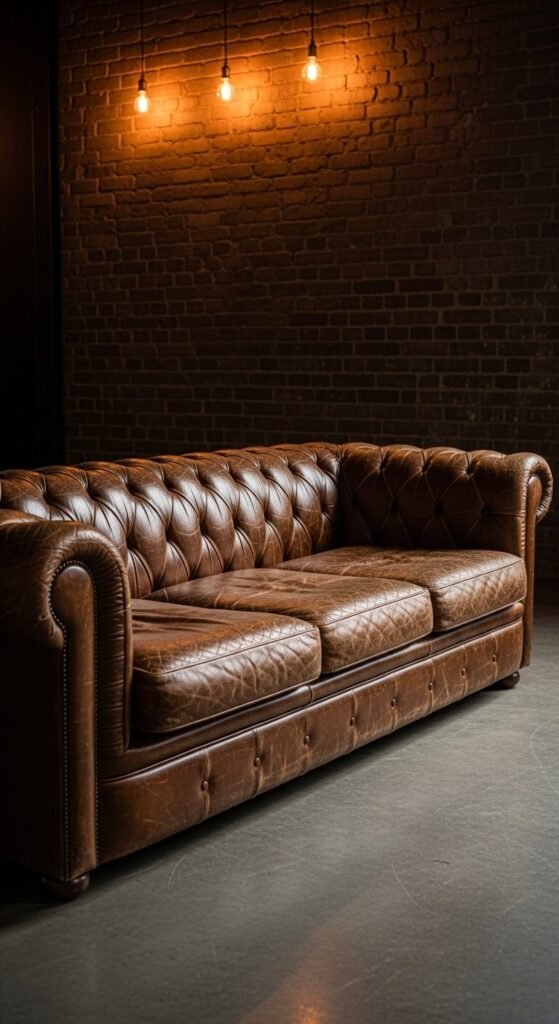
Leather and industrial interiors are a natural match. The older and more worn the leather, the better it fits. A distressed leather sofa or armchair brings warmth into what can otherwise feel like a cold space. Avoid new, pristine leather — it looks out of place. Hunt for vintage chesterfields or club chairs at estate sales and secondhand markets. A tatty old leather sofa that cost $80 from a flea market will look more at home in an industrial space than a brand-new one ever could. Age is the asset.
26. Vintage Industrial Signage
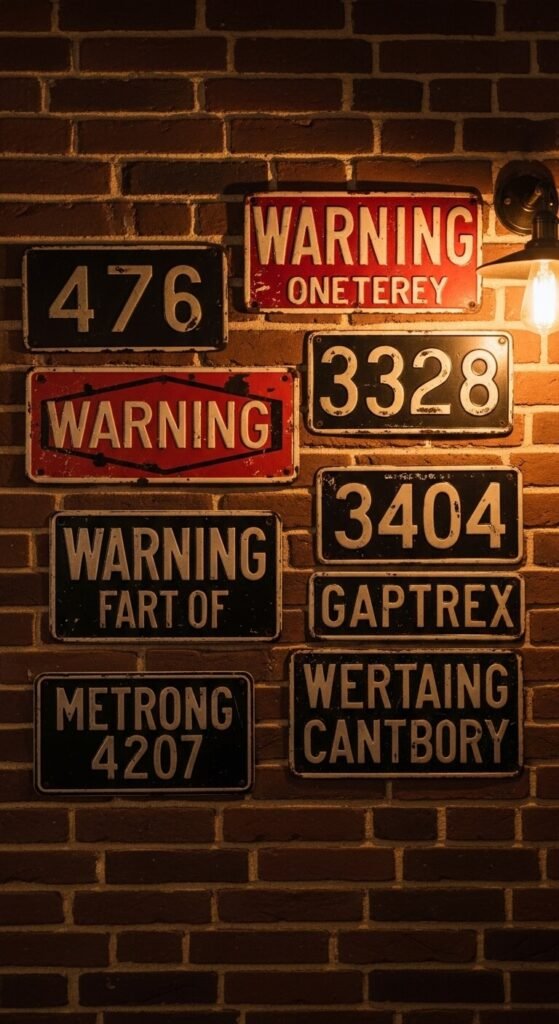
Old factory signage, number plates, enamel warning signs, and vintage typography prints are the finishing layer of an industrial space. They add history and personality without costing much. Search salvage shops, eBay, and antique markets. Genuine old signs are best — but good quality reproductions work too, especially aged metal prints and embossed steel plates. Avoid anything too cute or decorative. The best industrial signage looks like it was actually used somewhere, by someone, for a real purpose. Functional history beats manufactured charm every time.
Conclusion
Industrial style rewards the brave and the patient. It’s not about buying a matching set or following a formula — it’s about layering raw materials, honest textures, and functional objects until a space feels genuinely lived-in and real. Start with one element: strip a wall, swap your fixtures, hang a cage light. See how it feels. Then add the next layer. The best industrial spaces are built slowly, with salvaged finds, DIY projects, and a willingness to leave things imperfect. That’s not a shortcut. That’s the whole point. Raw is right.