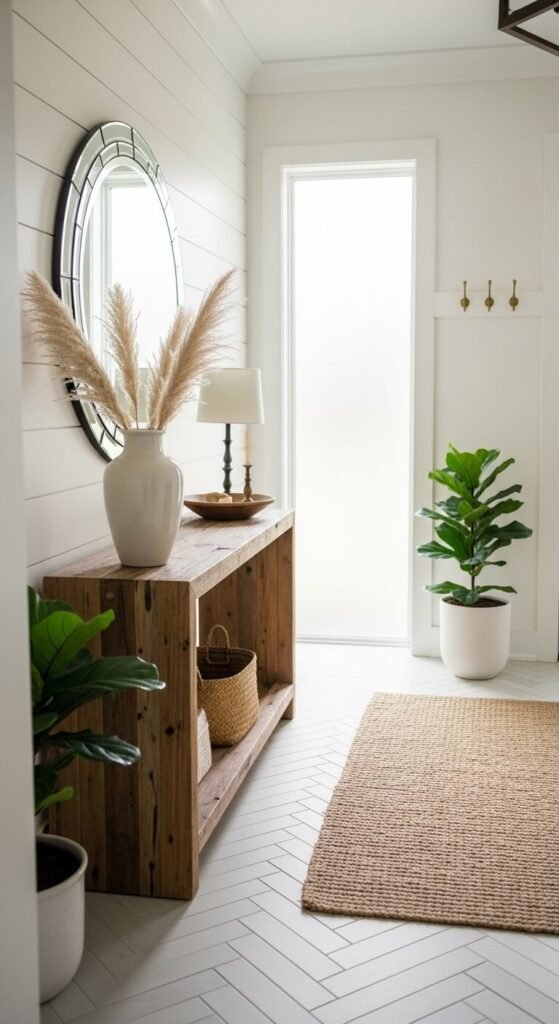
Your entryway is the first thing guests see — and the first thing you see every single day. It sets the mood for your whole home. A welcoming entry doesn’t require a designer budget or a massive space. It just needs a little intention. Whether you’re working with a tiny apartment foyer or a proper hallway, small changes make a real difference. The right lighting, a smart storage solution, or even a single well-placed plant can shift the entire feel of a space. These 24 design solutions are practical, affordable, and easy to act on today.
1. Hang a Large Statement Mirror
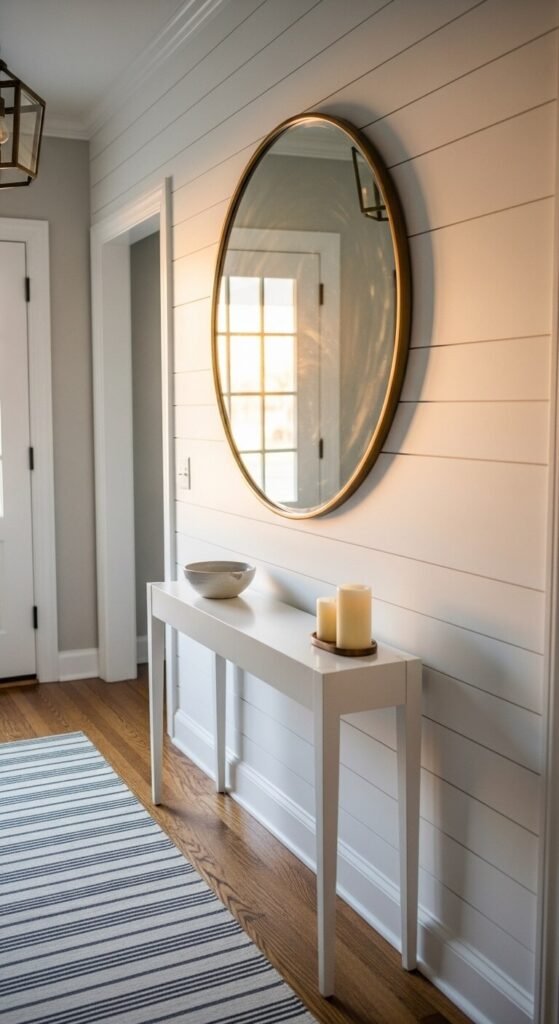
A big mirror does two things instantly. It makes a small entryway feel larger, and it adds light. You don’t need to spend a fortune. Thrift stores and Facebook Marketplace regularly have great mirrors for under $30. Lean it against the wall for a casual look, or mount it above a console table for something more polished. Go for a round or arched shape — they soften tight spaces better than sharp rectangular frames. Even a simple gold or black frame looks intentional and put-together without trying too hard.
2. Add a Slim Console Table
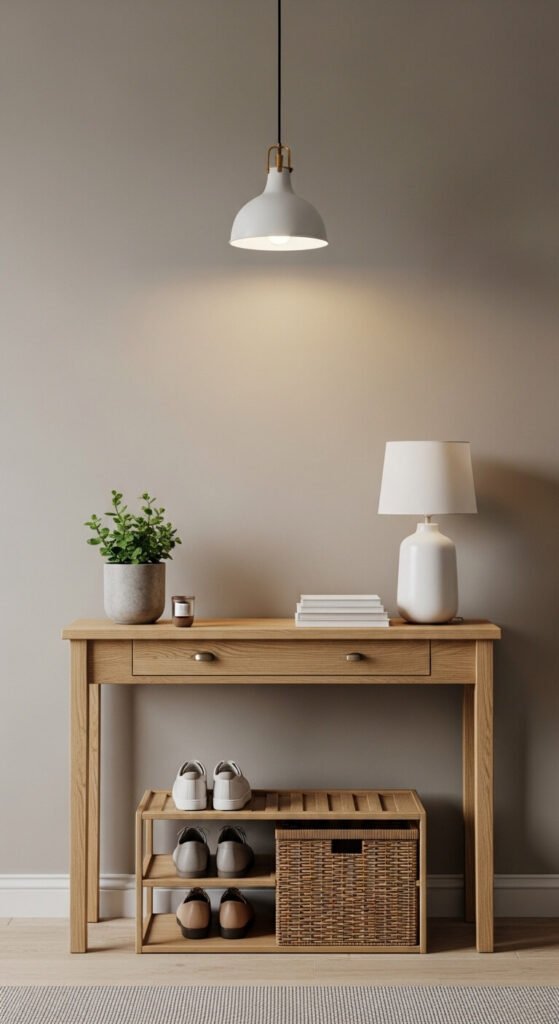
A console table gives your entry purpose. It holds your keys, mail, and everyday items without eating up floor space. Look for one 12 inches deep or less — perfect for tight hallways. IKEA’s HEMNES or a thrifted sofa table works well. Style the top simply: a small lamp, a tray for keys, and one small plant or candle. Use the shelf underneath for baskets or shoe storage. Keep it uncluttered. A clean surface instantly reads as calm and organized the moment you walk in.
3. Layer a Rug Over Your Existing Floor
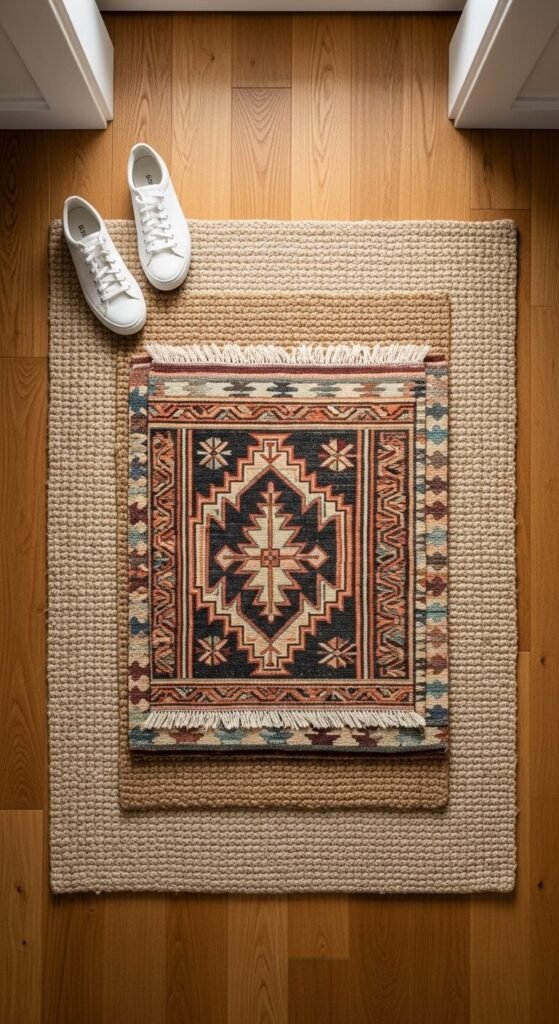
A rug anchors the space and adds warmth. In entryways, layering two rugs is a great trick — put a flat jute rug down first, then layer a smaller patterned rug on top. It looks designer but costs very little. A runner works for narrow hallways. A round rug works beautifully in a square foyer. Choose durable, washable materials since entryway rugs take a beating. IKEA, Amazon, and Ruggable all have solid options under $80. Even a single well-placed rug dramatically changes how the space feels underfoot.
4. Install Simple Wall Hooks
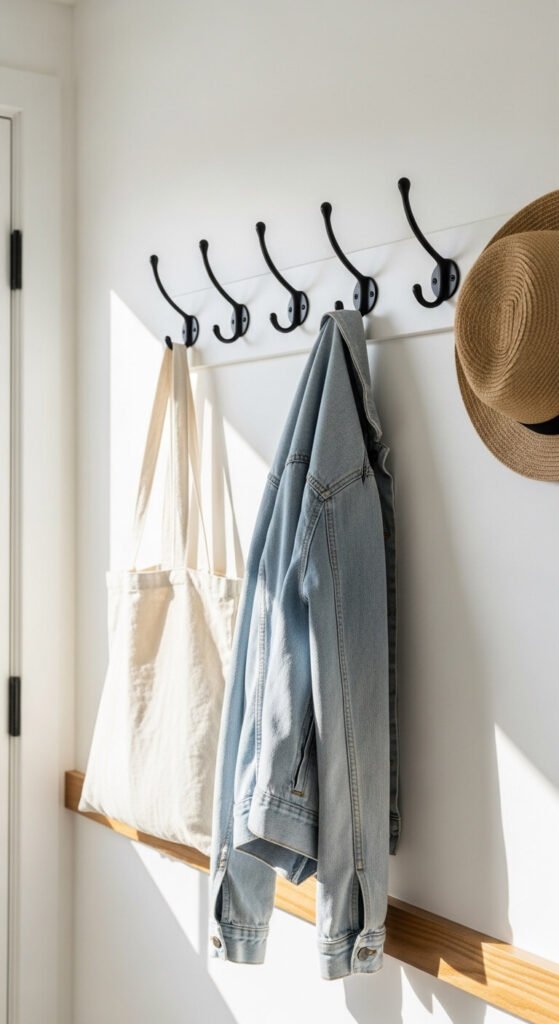
Wall hooks are one of the highest-return upgrades you can make. For around $20, you can mount a row of hooks that handles coats, bags, hats, and dog leashes. Shaker-style pegs give a clean, timeless look. Black iron hooks feel modern. Rattan or wood hooks add texture. Install them at different heights if you have kids — a low row for small coats, a higher row for adults. No console table? Hooks plus a small shelf below do the same job in half the space. Easy weekend project.
5. Bring In One Statement Plant
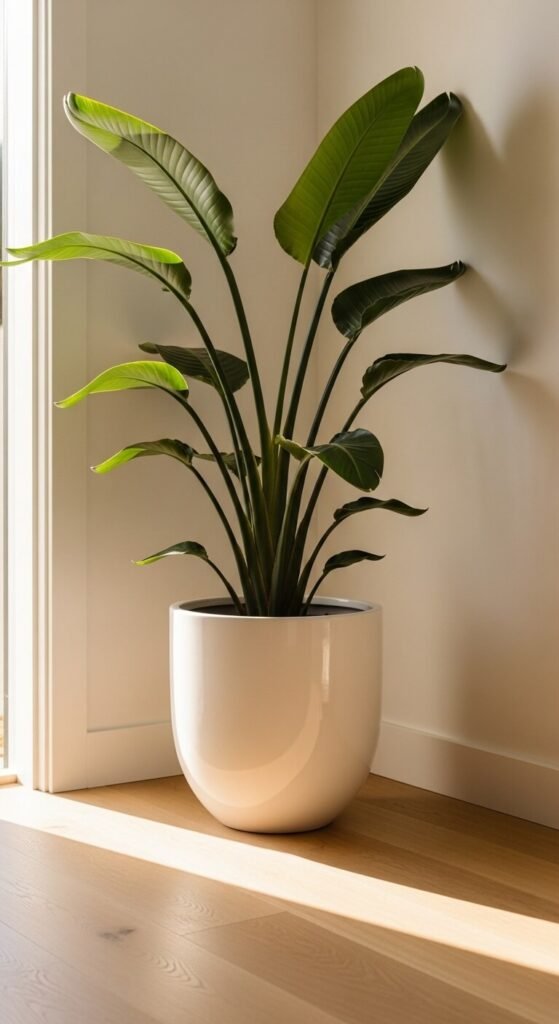
Plants make spaces feel alive. One large plant in the corner of an entryway has more impact than five small ones scattered around. Bird of paradise, fiddle leaf fig, or a tall snake plant all work beautifully. If you don’t have great natural light, snake plants are nearly indestructible. Choose a planter that matches your style — a matte white pot for modern spaces, a woven basket for something warmer. Even a faux plant from a quality brand like Nearly Natural can look convincing if you’re not a plant person.
6. Upgrade Your Lighting Fixture
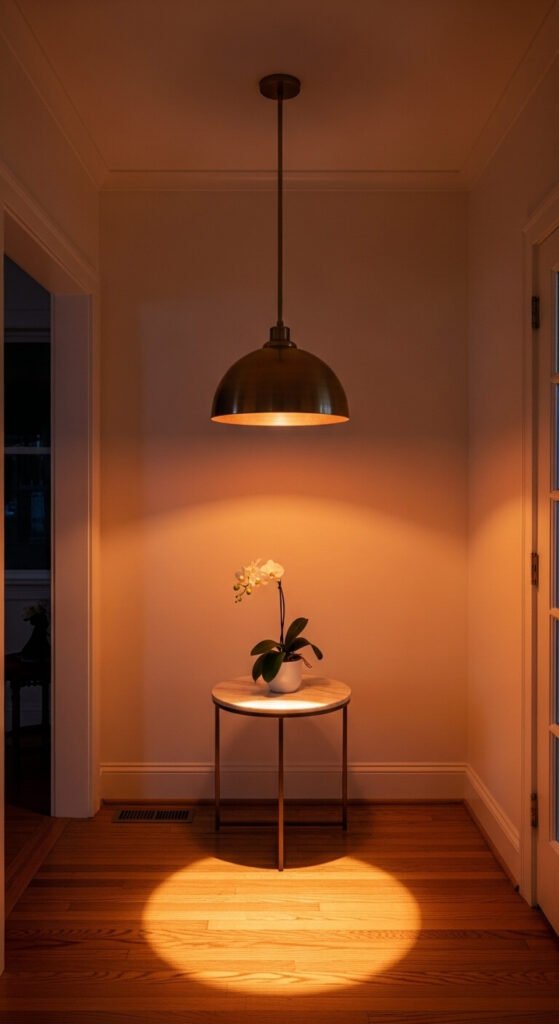
Your entryway light gets noticed. A dated flush-mount or bare bulb sets the wrong tone immediately. Swapping it for a pendant or semi-flush fixture is often a simple DIY swap — no electrician needed. Budget pick: the IKEA RANARP or a rattan pendant from Amazon in the $40–$80 range. Warm-toned bulbs (2700K) make any space feel instantly cozier. If you rent and can’t change fixtures, a plug-in pendant light with a cord cover gives almost the same effect for under $50.
7. Paint the Front Door a Bold Color
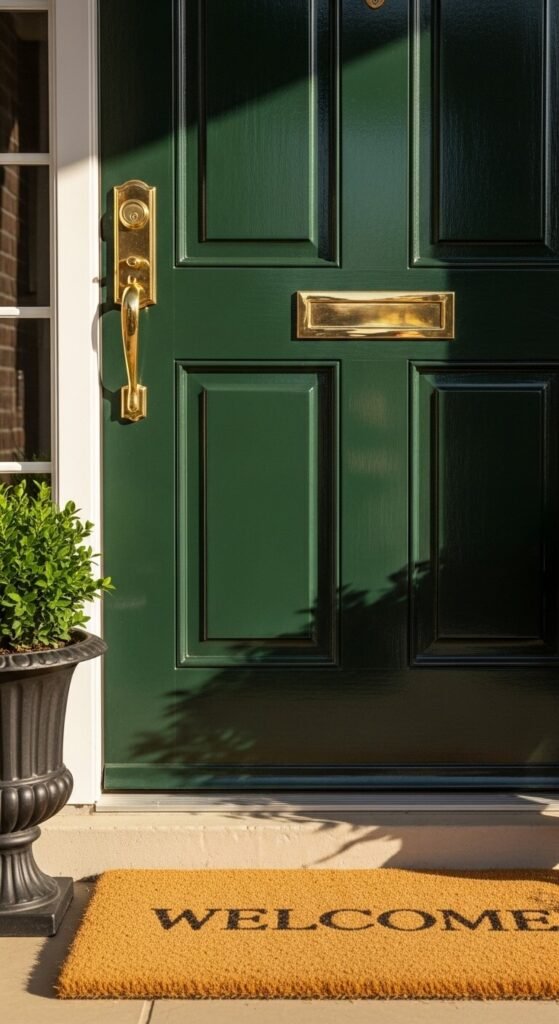
Your front door is a design opportunity most people ignore. A coat of paint is one of the cheapest ways to give your home a personality. Deep green, navy, black, rust, or burgundy all look incredible on a front door. A quart of exterior paint costs around $20–$30 and covers a standard door twice. Use a semi-gloss or gloss finish — it’s more durable and looks polished. Pair it with updated hardware in brass or matte black for a full refresh that costs under $100 total.
8. Create a Dedicated Drop Zone
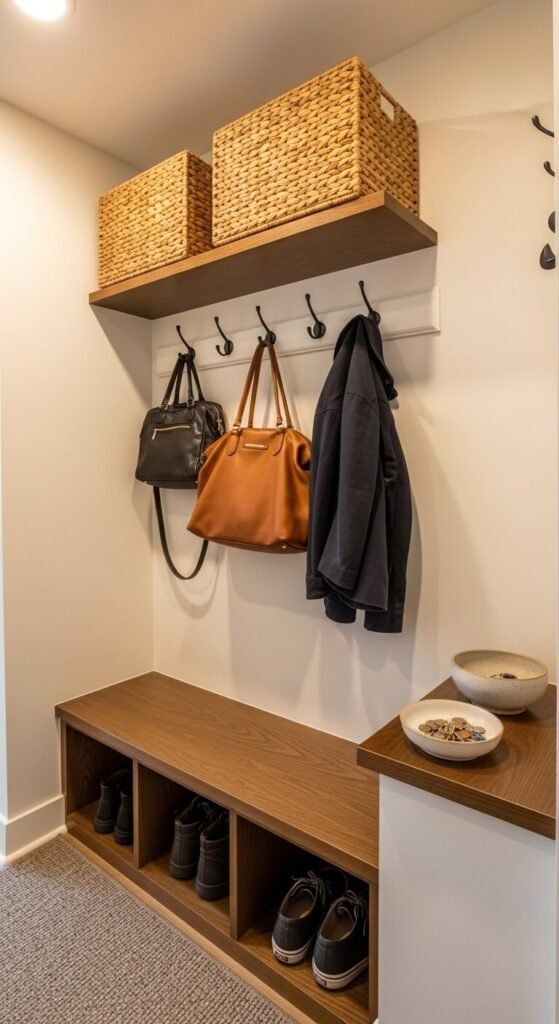
A drop zone stops clutter before it spreads. Pick one spot — a corner, a section of wall, or a small nook — and give it a clear purpose. Hooks + a bench + a basket is the classic combination. Everything goes there when you walk in the door: keys, bag, shoes, mail. IKEA’s HEMNES shoe cabinet doubles as a bench and storage unit. A simple wooden crate or basket under a bench does the same job for less. When everyone knows where things go, the whole entryway stays cleaner with zero effort.
9. Use a Tray to Contain Clutter
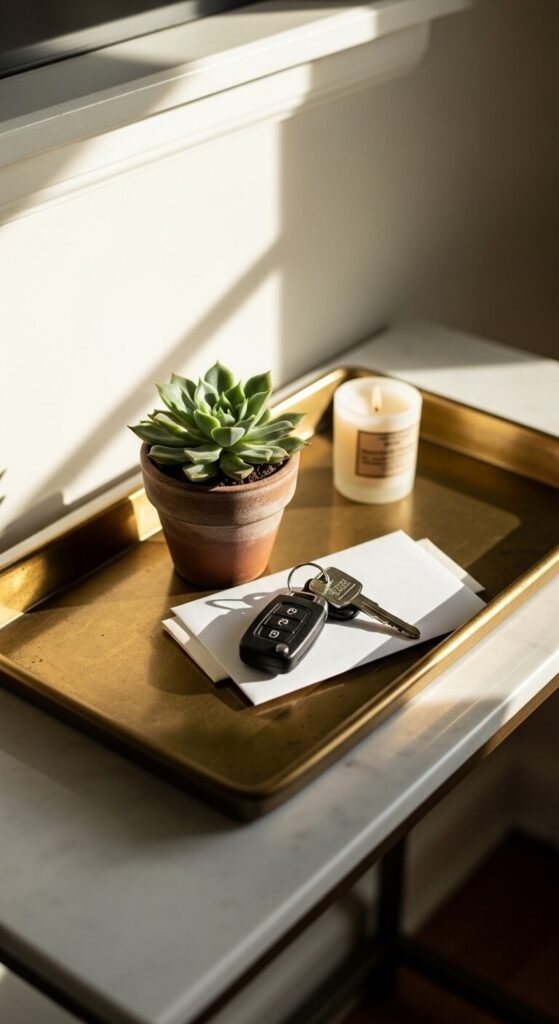
A tray is a designer trick that costs almost nothing. Place one on your console table or bench and suddenly scattered keys, sunglasses, and lip balm become a styled vignette. Anything inside the tray looks intentional. Use a vintage brass tray from a thrift store, a simple wooden box, or a ceramic dish. Round, rectangular, or square all work. Style it with just two or three small items — a candle, a plant, your keys. Swap the tray’s contents seasonally to keep the space feeling current and personal.
10. Mount Floating Shelves for Display
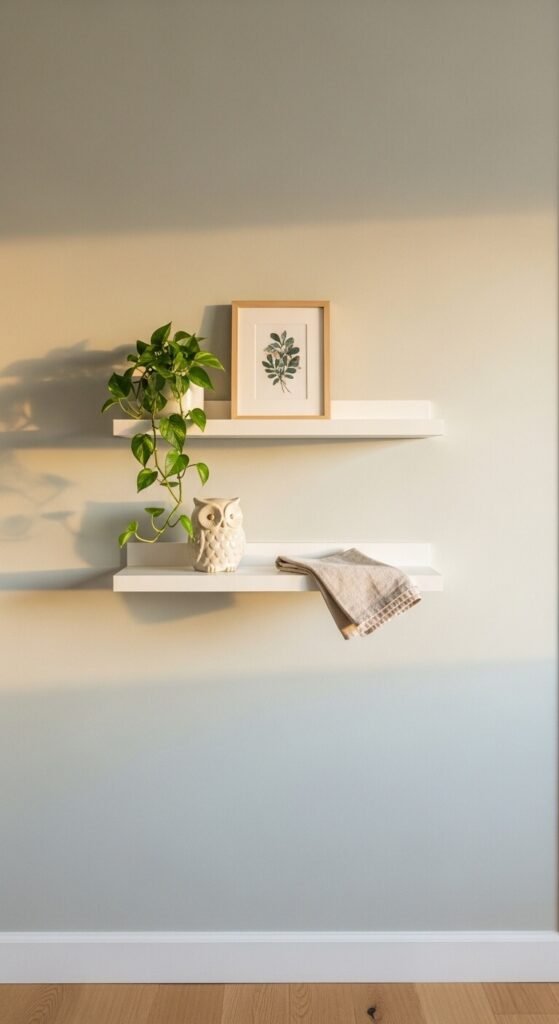
Floating shelves add storage and personality without taking up floor space. In an entryway, use them to display a small plant, a framed photo, or a decorative object. Two staggered shelves at different heights look more interesting than one long row. IKEA’s LACK shelf is under $15 and holds up well. For a more premium look, try solid wood brackets from Home Depot finished with a coat of stain. Keep the display simple — three items max per shelf. Crowded shelves make a small space feel messy rather than styled.
11. Add a Bench for Seating and Storage
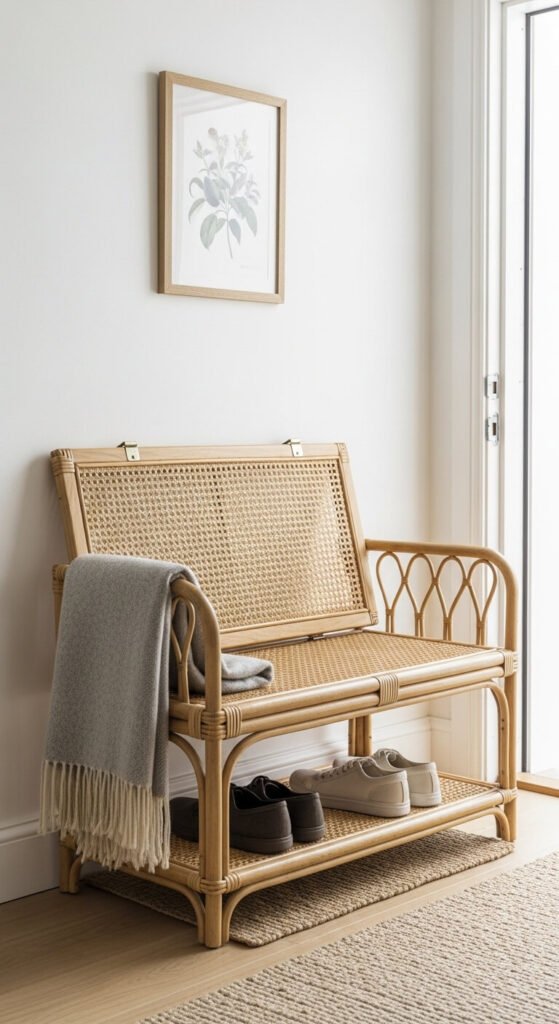
A bench makes your entryway functional and welcoming. Sitting down to put on shoes sounds small, but it changes how a space feels to use every day. Choose a bench with hidden storage inside — it hides shoes, scarves, and dog supplies. IKEA’s BRIMNES bench or a rattan storage ottoman both work well under $150. If space is tight, even a small two-person bench against the wall does the job. Pair it with a hook above and a basket beside it and you’ve built a full drop zone for under $200 total.
12. Frame Your Entry with Wallpaper or an Accent Wall
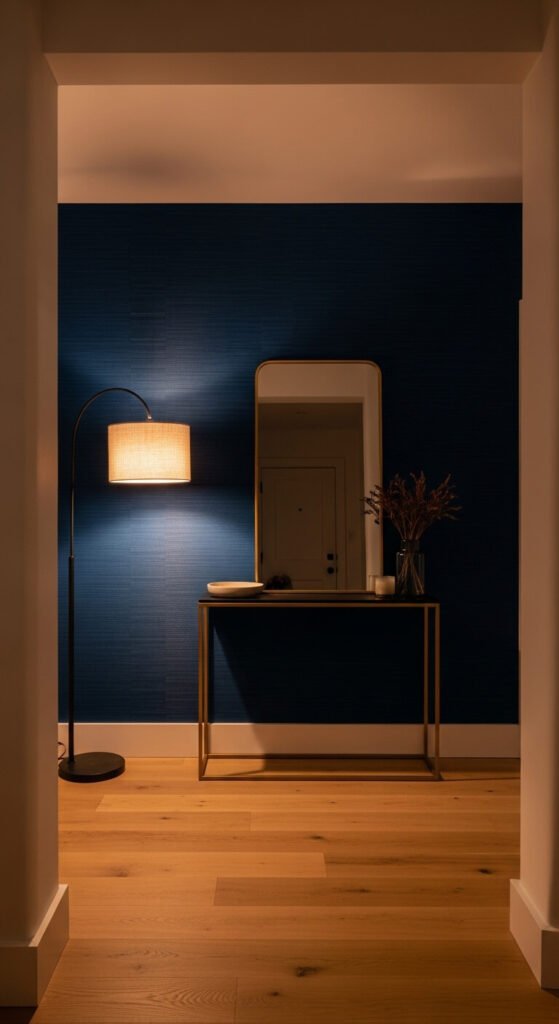
An accent wall in your entryway gives the whole space a focal point. You don’t have to wallpaper the whole room. One feature wall behind a console or bench is enough. Peel-and-stick wallpaper makes this totally renter-friendly and costs around $50–$100 for a small wall. Choose a pattern you love — bold florals, geometric prints, or textured grasscloth. Even a different paint color on one wall creates definition. A dark, moody tone like navy or forest green on a single wall makes a small entry feel layered and considered.
13. Display Art That Tells Your Story
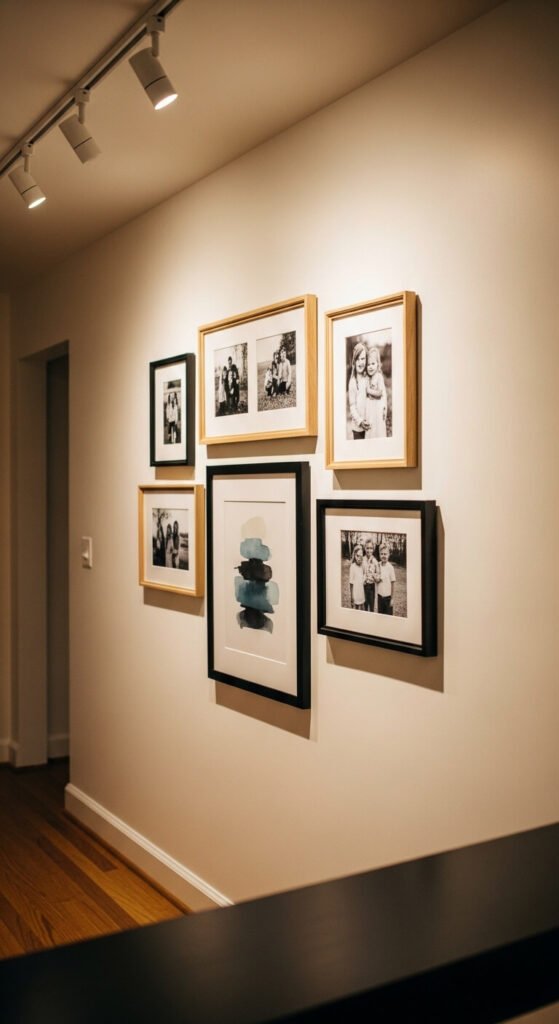
Art in an entryway instantly personalizes a space. You don’t need original paintings. A gallery wall of framed family photos works just as well as anything purchased. Print photos at CVS or Walmart for under $1 each. Mix frame sizes and finishes for a curated, lived-in look. A single oversized print in a simple frame works great above a console. Abstract prints, botanical illustrations, and black-and-white photography all suit entryways well. Arrange frames on the floor first to nail your layout before putting any nails in the wall.
14. Use Scent to Create a Sensory Welcome
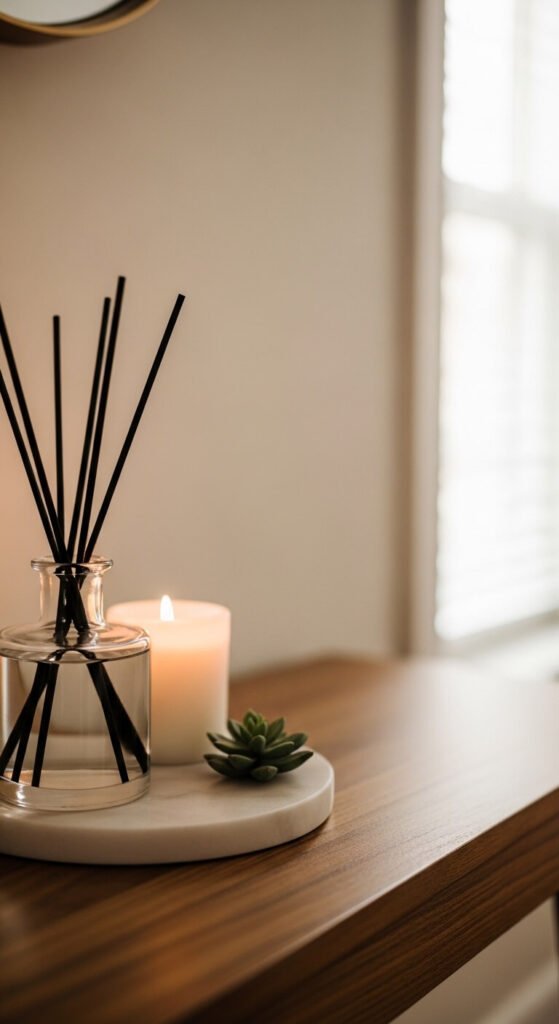
First impressions aren’t just visual. Scent hits the moment someone walks through your door. A reed diffuser or a candle placed near the entry creates an immediate sensory welcome. Warm, clean scents like cedar, sandalwood, linen, or eucalyptus work best in entryways. Avoid anything too sweet or overwhelming in small spaces. A quality reed diffuser from TJ Maxx or HomeGoods costs $10–$20 and lasts months. Place it on your console table or a floating shelf. It’s one of the most overlooked and most effective details you can add.
15. Incorporate a Shoe Rack or Cabinet
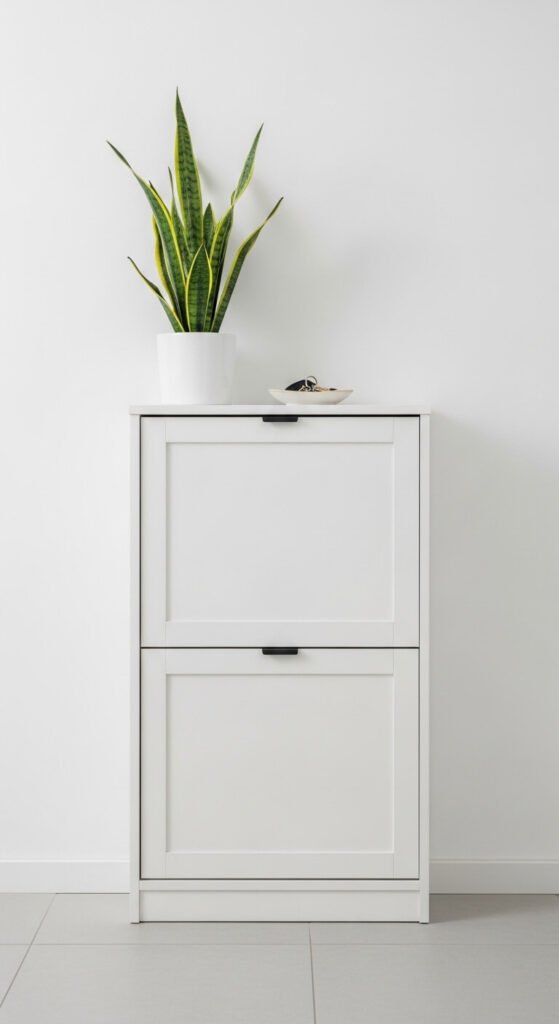
Shoes left by the door are the number one enemy of a tidy entryway. A closed shoe cabinet solves this completely. You get storage that doesn’t look like storage. IKEA’s HEMNES shoe cabinet holds up to 11 pairs and costs around $130. For a DIY option, repurpose a low sideboard and add interior shelving. An open tiered shoe rack works too if you keep it organized. Limit what’s kept there to current-season shoes. Everything else belongs in a closet. Fewer shoes visible means an instantly neater entry.
16. Install Wainscoting or Board and Batten
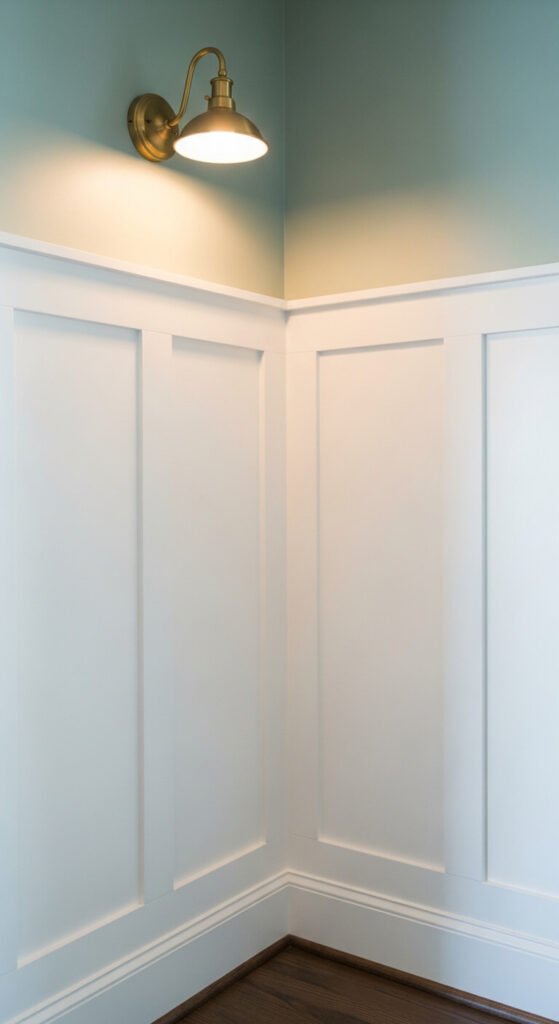
Board and batten adds architectural character to a plain entry. It’s a weekend DIY project that costs around $50–$150 in materials. You’re just gluing or nailing flat boards to the wall in a grid pattern and painting everything the same color. This creates the look of a much more expensive, custom home. Paint the paneling a crisp white and the upper wall a soft contrasting color for depth. It works in both traditional and modern homes depending on the finish. The result looks like something from a design magazine.
17. Choose Practical, Attractive Storage Baskets
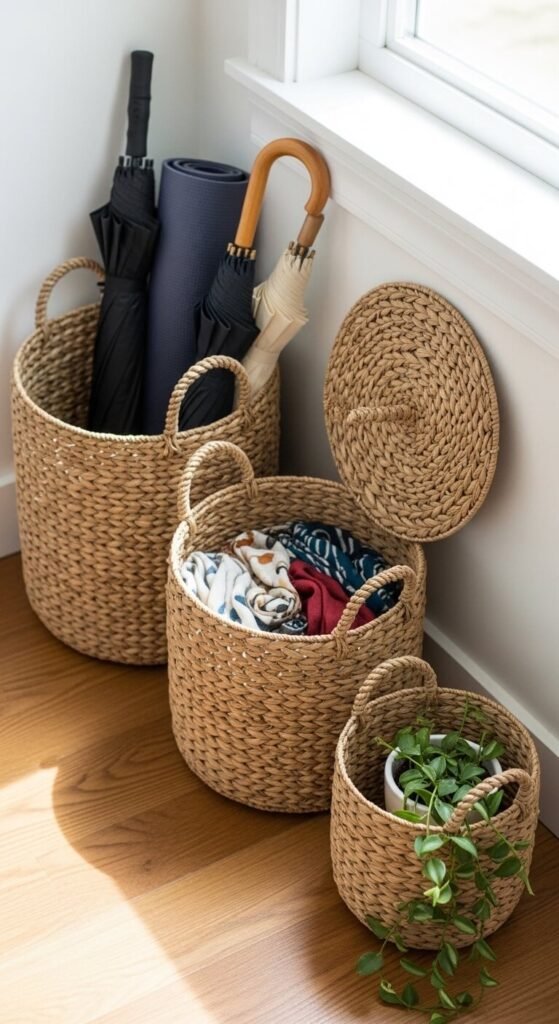
Baskets are your best friend in a small entryway. They hide clutter while adding texture and warmth. Woven seagrass, rattan, or fabric bins all work depending on your style. Use a large basket for umbrellas and reusable bags. A lidded basket on a shelf hides charging cables or pet supplies. Label baskets if your household is large — it keeps everyone accountable. Target, TJ Maxx, and IKEA all carry great options under $30. A few well-placed baskets turn a messy pile of stuff into something that actually looks styled and intentional.
18. Add a Clock as a Functional Accent
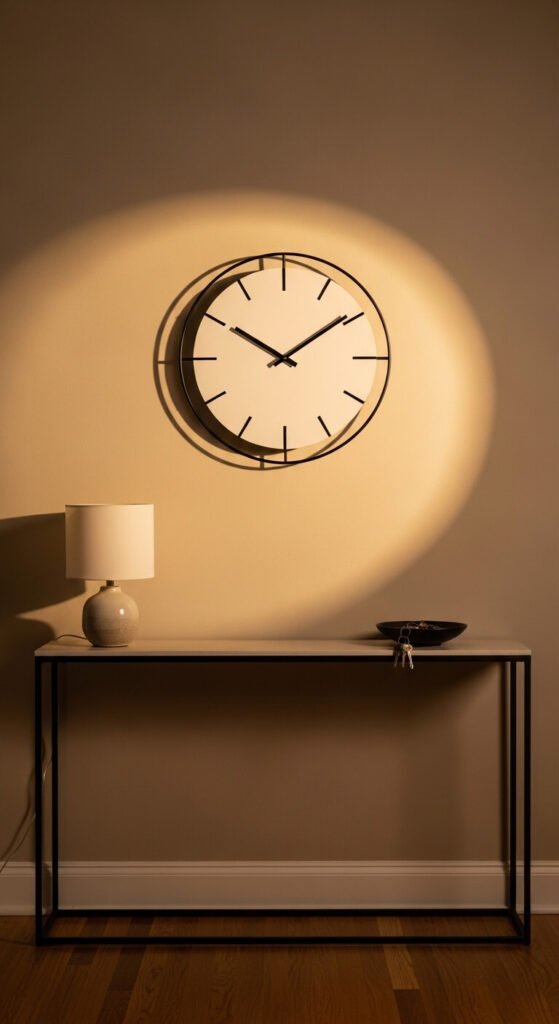
A wall clock is practical and decorative at the same time. In an entryway, it reminds you of the time as you’re heading out the door. Choose a simple, round face in a finish that complements your hardware and mirror. Black, brass, and natural wood all look clean. A large clock (18–24 inches) makes a statement without being cluttered. Amazon and Target have great options from $25–$60. It fills wall space beautifully without needing a frame or art collection. One clock, well-chosen, pulls a whole wall together effortlessly.
19. Install a Coat Closet Organizer System
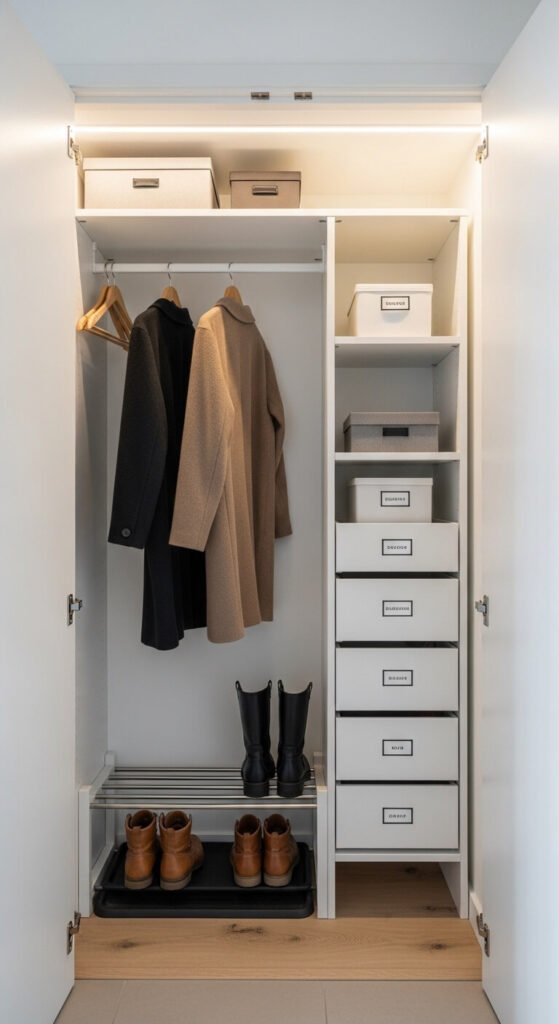
If you have a coat closet, maximize it. Most coat closets are underused because they have just one rod and one shelf. A modular closet system from IKEA (PAX) or The Container Store doubles the usable space for around $100–$200. Add a second rod, shoe shelves, and bins for hats and gloves. Label sections so each family member has a spot. An organized closet means your entryway stays cleaner because there’s actually a home for everything. Thirty minutes of reorganizing an existing closet is one of the highest-impact projects you can do.
20. Style with Seasonal Decor That Rotates
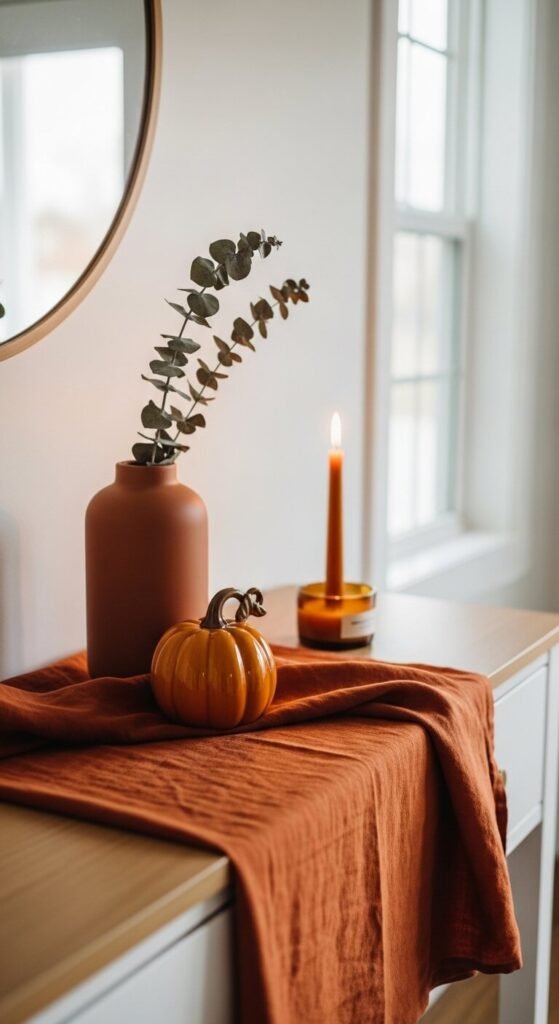
Seasonal styling keeps your entryway feeling current and personal all year long. You don’t need a lot. One or two swapped items — a vase of dried stems, a seasonal candle, a new print — makes the space feel refreshed without redecorating. Keep a small box in your closet with entry decor organized by season. Winter: pinecones and white candles. Spring: fresh stems and light linens. Summer: shells or citrus. Fall: dried leaves and warm-toned pottery. It takes five minutes and costs almost nothing if you collect pieces gradually over time.
21. Use a Pegboard for Organized Wall Storage
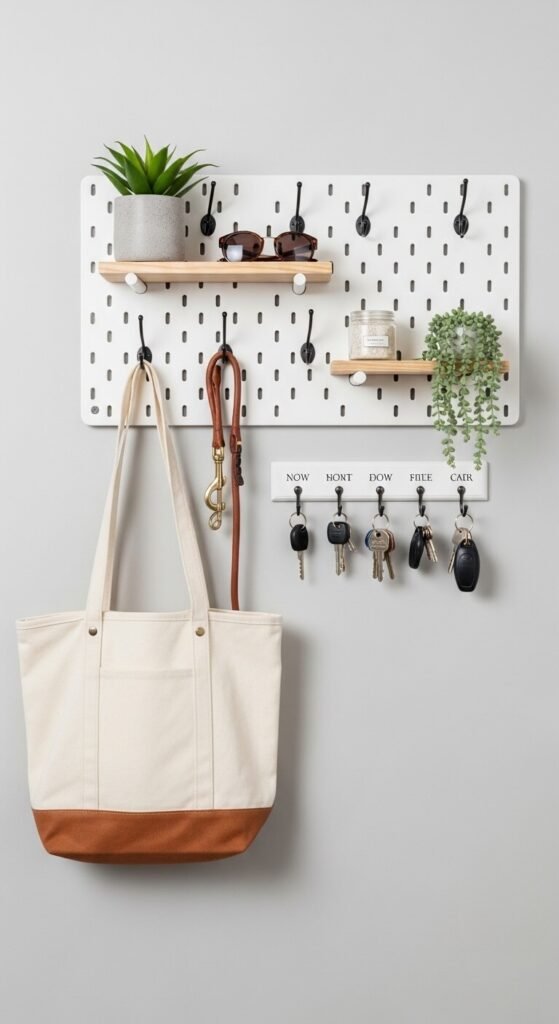
A pegboard gives you flexible, visual storage that changes as your life does. Mount one on an empty entryway wall and add hooks, shelves, and bins as needed. Everything is accessible and visible, so nothing gets lost. Paint the pegboard the same color as your wall if you want it to blend in, or make it a contrasting accent. A 2×4 foot pegboard costs around $20 at Home Depot. Add $15 worth of hooks and you have a fully functional storage wall for under $40. Great for renters too — patch two holes when you leave.
22. Add Under-Stair Storage If You Have It
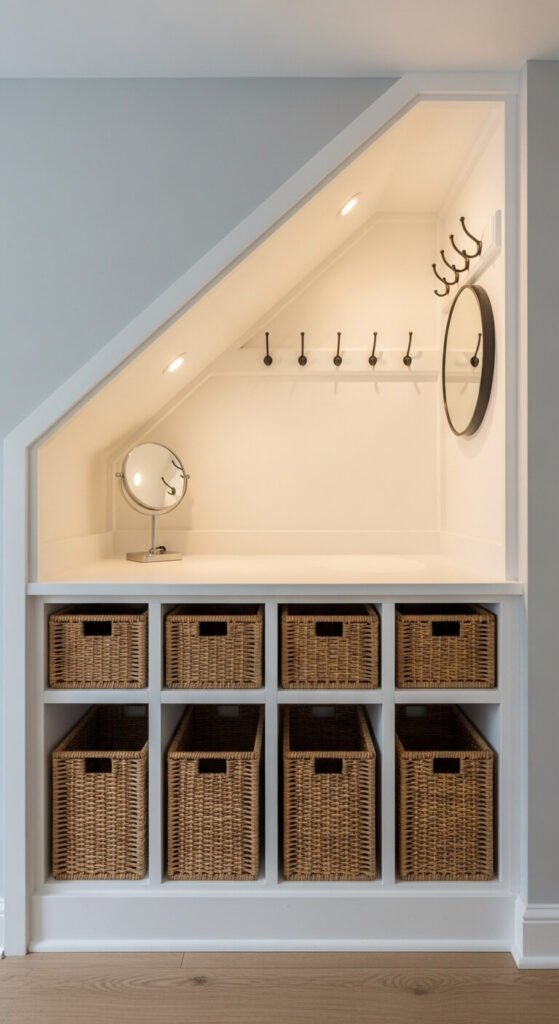
Under-stair space is almost always wasted. With some planning, it becomes one of the most useful spots in your home. Built-in cubbies, hooks, and pull-out drawers can all fit under a standard staircase. A carpenter can build this for $500–$1500, but a DIY version using IKEA KALLAX units costs far less. Even just adding a few hooks and a curtain rod with a curtain creates a hidden storage nook. If your entryway has stairs, this is worth exploring seriously — it can hold everything from luggage to holiday decorations.
23. Choose Hardware That Ties It All Together
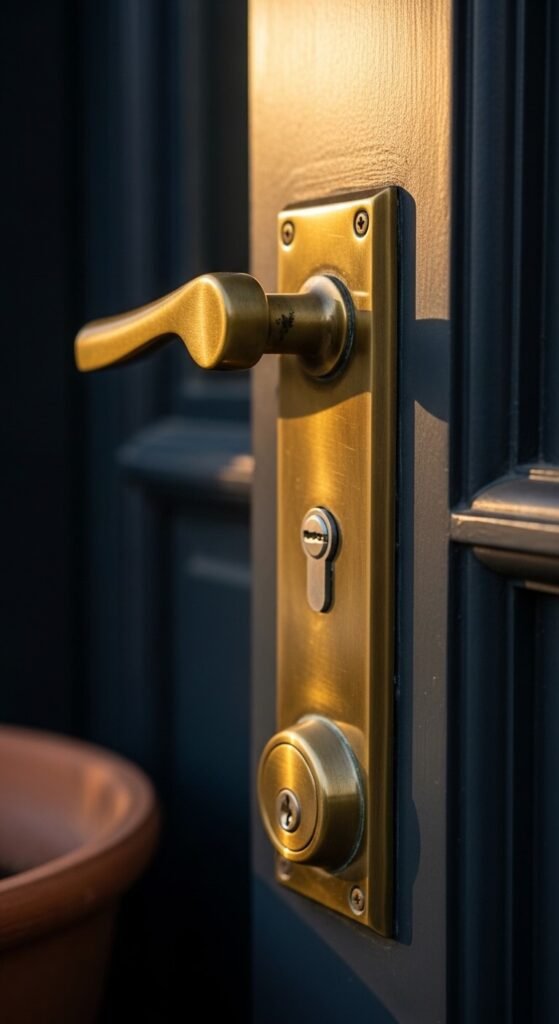
Hardware is the jewelry of your entryway. The finish on your door handle, hooks, light fixture, and mirror frame should all speak the same language. They don’t need to match exactly — mixing brushed and polished is fine — but they should coordinate. Brass and black is a current favorite. Matte black and chrome feel more modern. Brushed nickel is clean and neutral. Swapping out old door hardware is a 10-minute project that costs $30–$80 and immediately makes everything look more intentional. It’s the kind of detail guests notice without knowing why.
24. Keep It Edited — Less Is Always More
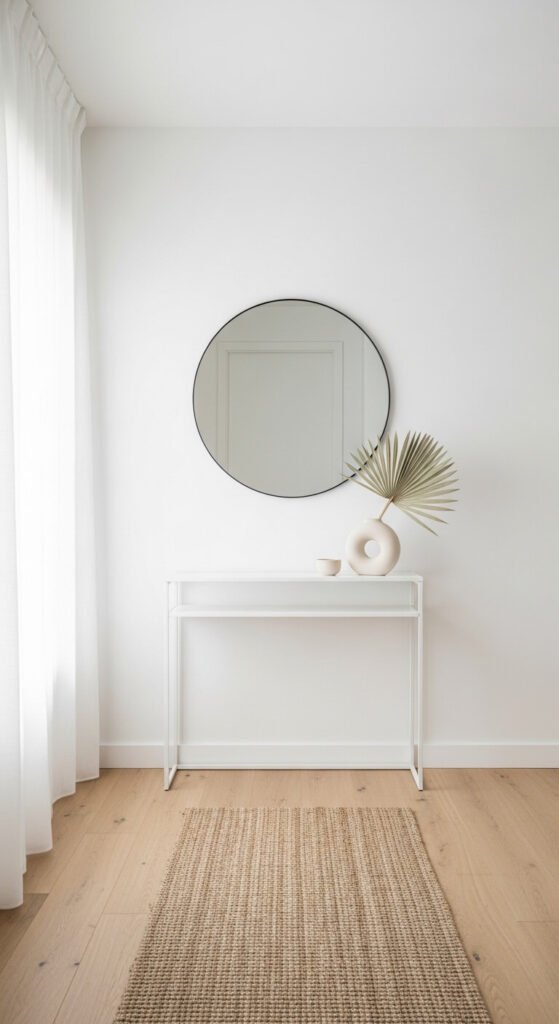
The most welcoming entryways aren’t the most decorated ones. They’re the most edited. Every item in the space should earn its place. If something doesn’t serve a function or bring you joy, remove it. Clutter in an entryway raises stress levels the moment you walk in. Pick a maximum number of items for each surface and stick to it. A console table with three items is more striking than one covered in ten. Take everything out, then only bring back what truly belongs. Restraint is a design skill — and anyone can practice it starting today.
Conclusion
Your entryway shapes how your whole home feels, and it doesn’t take a renovation to make it work better. Even two or three changes from this list — a mirror, a hook rail, a plant — can transform a forgettable hallway into a space that actually welcomes you home. Start with what bothers you most, tackle it on a budget, and build from there. You don’t need everything at once. Small, deliberate improvements add up quickly. Pick one idea today, act on it this week, and see how much a little intention can change the way your home feels from the very first step inside.