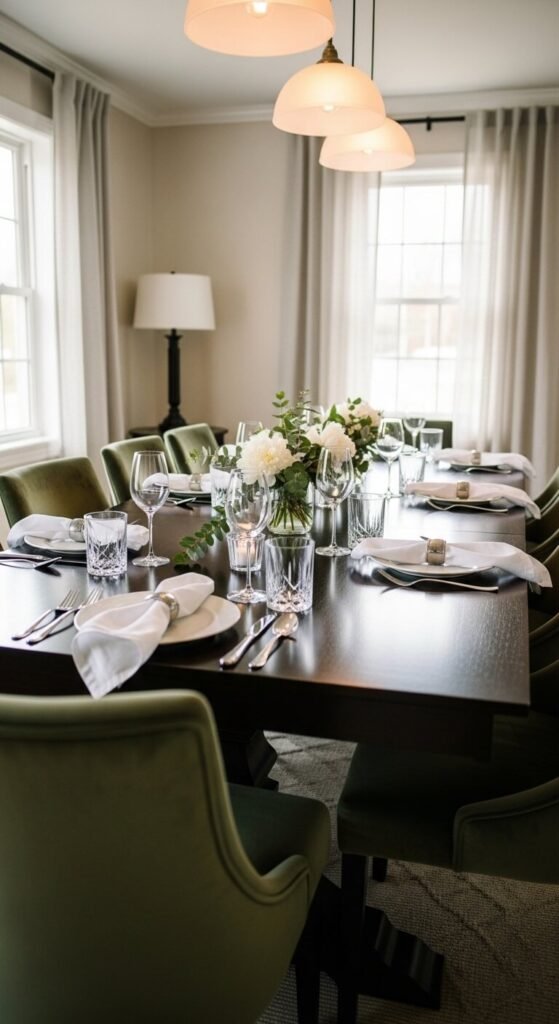
There is something special about a dining room that makes people want to linger. It is more than just a place to eat. It is where conversations stretch past dessert, where families reconnect, and where guests feel genuinely welcomed. You do not need a massive budget or a designer on speed dial to pull it off. With the right mix of lighting, texture, seating, and small personal details, any dining space can become the heart of a home. These 24 ideas will help you shape a room that is both beautiful and built for real life.
1. Anchor the Room with a Statement Table
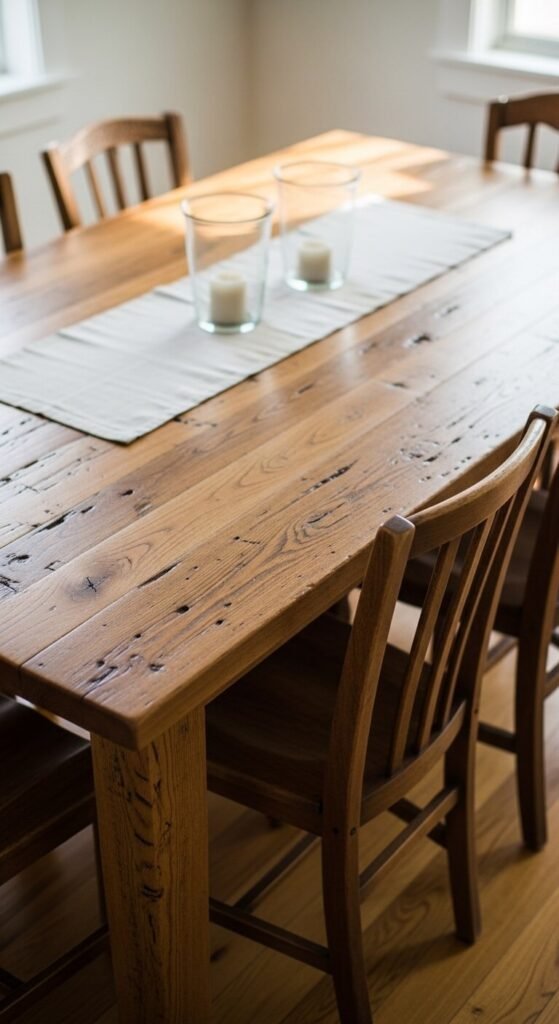
The table is the soul of the dining room. Choose one that fits your space without crowding it. A good rule: leave at least 36 inches between the table edge and the wall. Reclaimed wood tables add warmth and character without the luxury price tag. You can also sand and restain an old table yourself using a kit from any hardware store. A sturdy, well-sized table makes every meal feel like an occasion.
2. Layer Lighting for Warmth and Mood
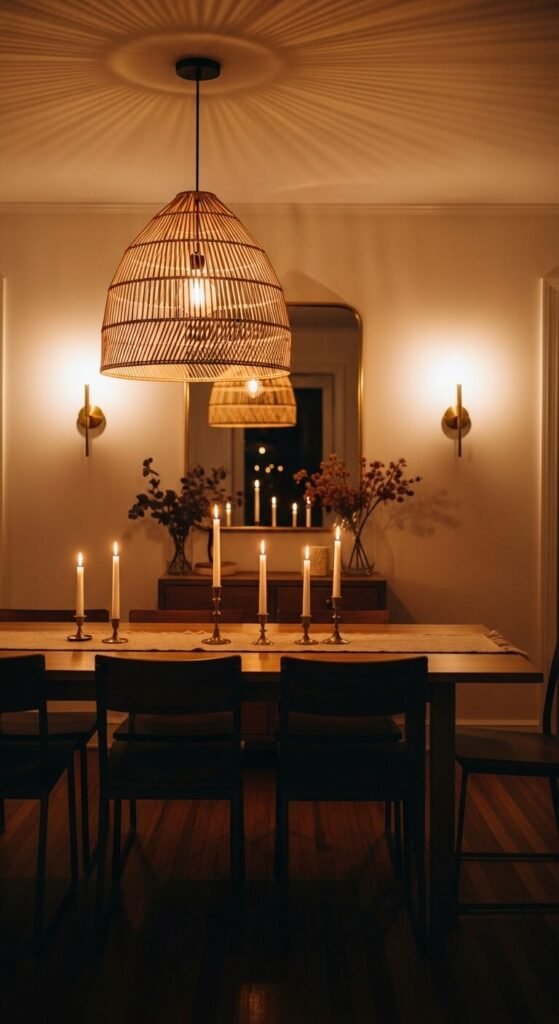
Overhead lighting alone makes a dining room feel flat. Layer at least three light sources. Start with a pendant or chandelier as the main fixture. Add wall sconces or a buffet lamp for ambient glow. Finish with candles on the table. Dimmer switches are a low-cost upgrade that completely changes the feel of a room at night. This simple shift makes dinners feel more intimate without any redecorating.
3. Choose Chairs That Mix, Not Match
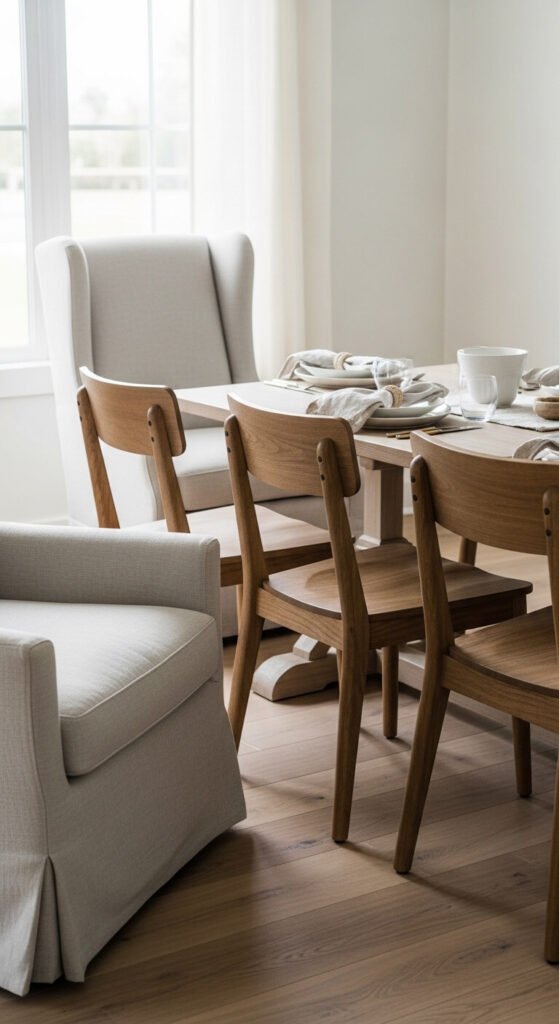
A matching dining set can feel stiff and showroom-like. Try using two upholstered armchairs at the heads of the table and simple wooden chairs along the sides. Stick to a single color family — warm neutrals, all black, or natural wood tones — so the mix feels intentional. Thrift stores and online marketplaces are great sources for affordable accent chairs. Reupholstering a seat cushion costs very little and makes a big difference.
4. Hang the Pendant Light at the Right Height
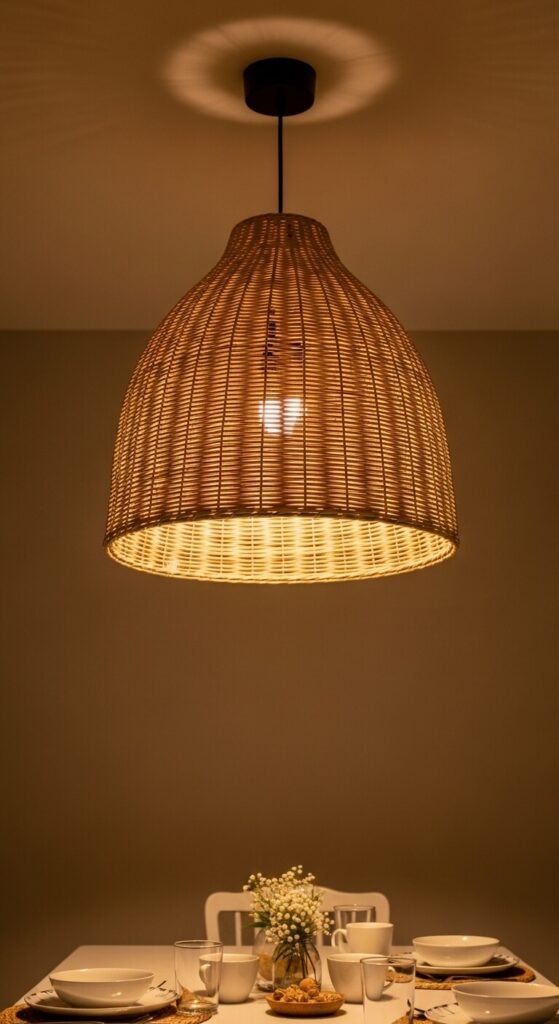
Most people hang their pendant lights too high. The bottom of your fixture should sit about 30 to 34 inches above the tabletop. Any higher and the light becomes useless. Any lower and it blocks sightlines. This one adjustment alone can transform how a dining room feels in the evening. If you rent, a simple hook and cord kit lets you reposition an existing light without calling an electrician. It takes under an hour.
5. Add a Sideboard or Buffet for Function and Style
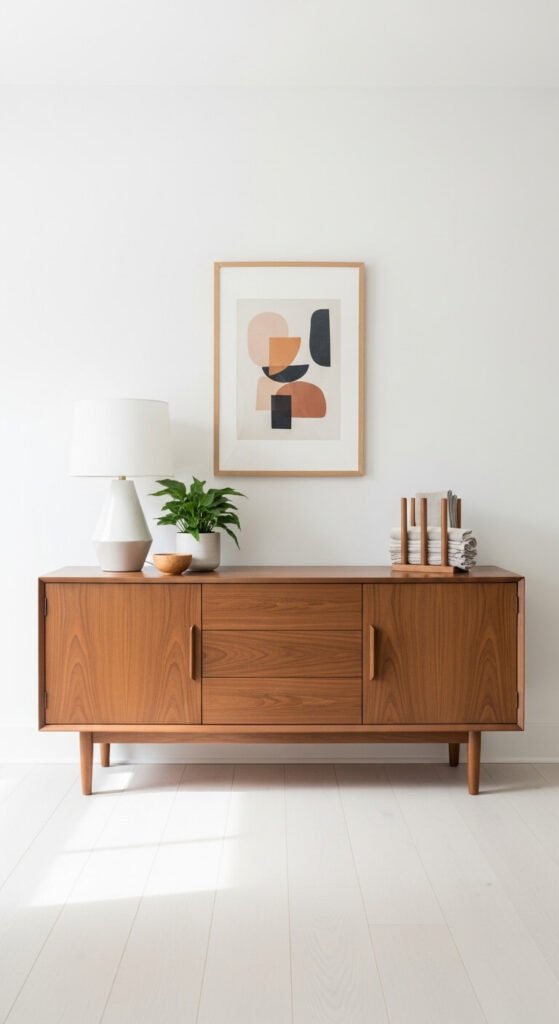
A sideboard does double duty. It gives you storage for table linens, serving pieces, and extra dishes while also creating a beautiful display surface. Top it with a lamp, a plant, and a few decorative objects for a layered look. Thrifted sideboards painted in a matte finish look just as good as expensive new ones. Place it on the wall opposite your window to bounce natural light around the room.
6. Use a Large Area Rug to Define the Space
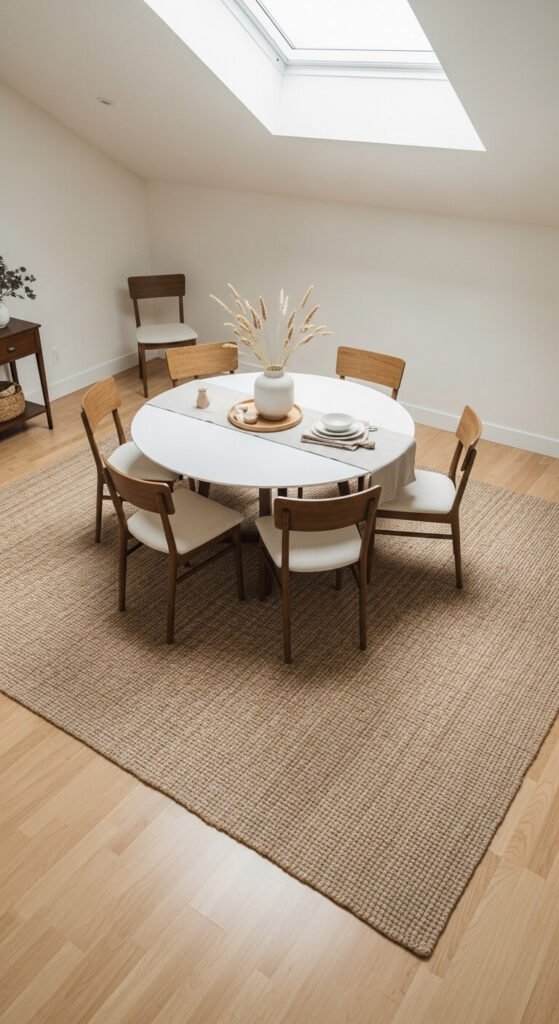
A rug pulls the dining room together and makes it feel finished. Make sure it is large enough — all chair legs should remain on the rug even when pushed out. For a standard six-seater table, an 8×10 rug is usually the minimum. Natural fiber rugs like jute or sisal are budget-friendly and durable. Layering a smaller printed rug on top of a plain one adds texture without a big spend.
7. Bring in Organic Textures Through Centerpieces
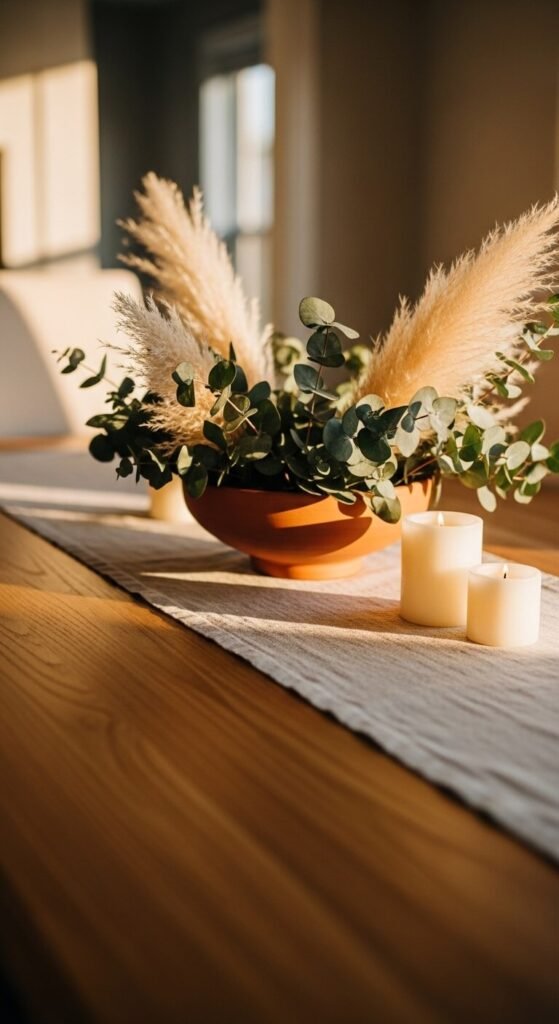
Centerpieces do not have to be expensive or formal. Organic textures like dried grasses, branches, terracotta, and linen feel warm and relaxed — exactly what a gathering space should feel like. A wide, low bowl of dried pampas grass and candles costs almost nothing and lasts for months. Skip the formal flower arrangement and go for something that lives on the table comfortably between meals without needing constant attention.
8. Paint the Walls a Deeper Tone
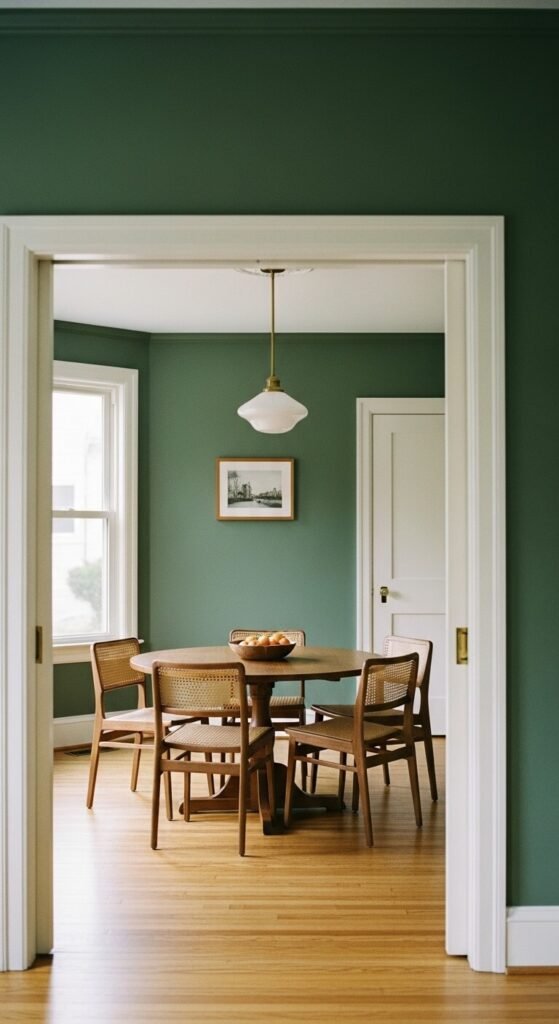
Light, neutral walls are safe — but deeper tones create real atmosphere. Dusty sage, warm terracotta, navy, or charcoal can make a dining room feel dramatically more sophisticated. Paint is one of the most affordable updates you can make. Sample pots cost just a few dollars. Paint two or three large swatches on the wall and live with them for a few days before committing. The difference in the evening, with candlelight, will surprise you.
9. Frame the Table with Curtains That Touch the Floor
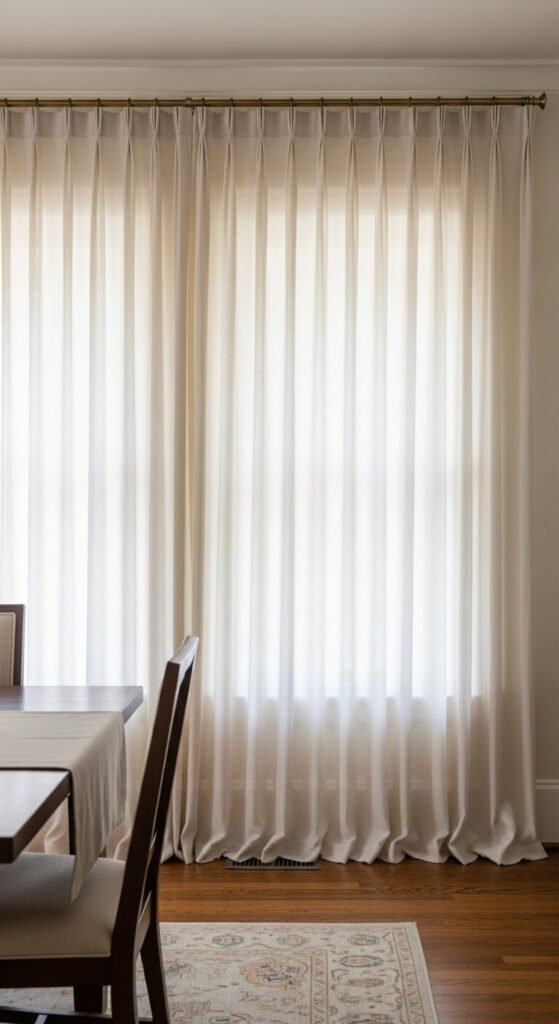
Curtains that stop short of the floor look unfinished. Always hang them high and let them reach the floor. Mount the rod 4 to 6 inches above the window frame and extend it several inches on each side. This makes windows look taller and rooms feel larger. Ikea and other budget stores sell affordable linen-look curtain panels that work beautifully in a dining space. A single pair can completely reframe the room.
10. Create a Gallery Wall for Personal Warmth
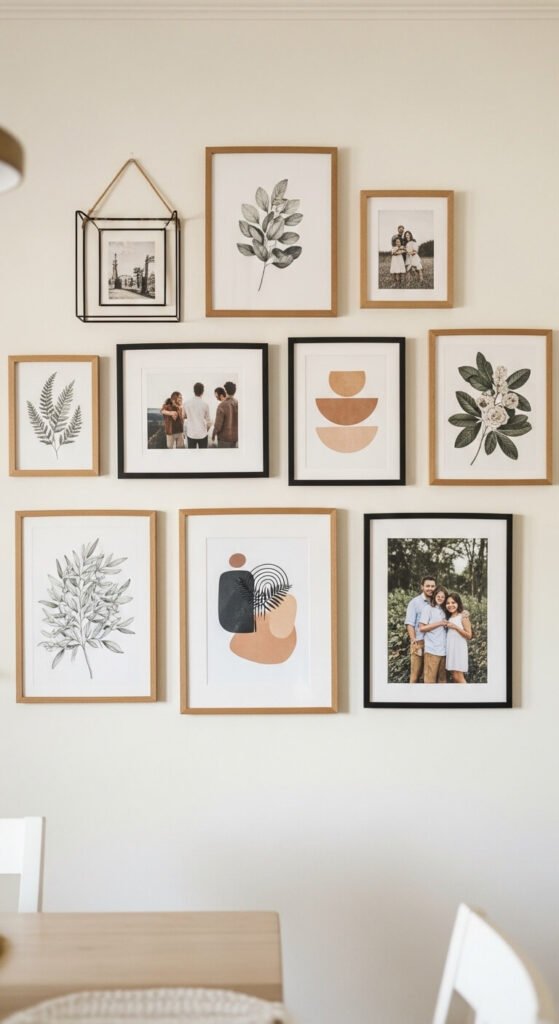
A gallery wall makes a dining room feel personal and collected rather than decorated. Use a mix of frame sizes and a consistent color palette — all black frames, or all natural wood — to keep it cohesive. Print your own art from free download sites to fill frames affordably. Lay the arrangement out on the floor first before putting any holes in the wall. Kraft paper templates taped to the wall also help you visualize spacing before committing.
11. Set the Table Even When You’re Not Eating
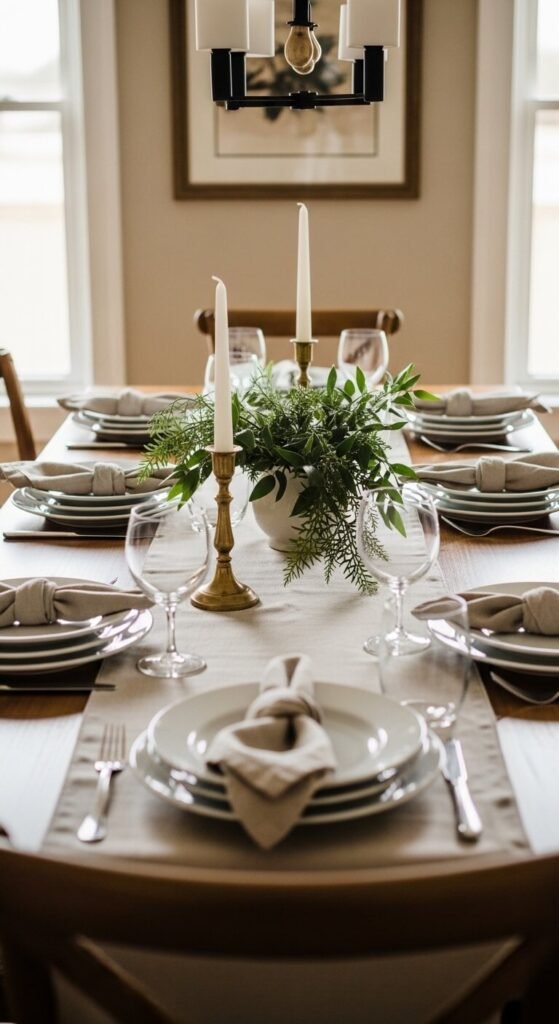
A styled table tells the room it matters. You do not need a special occasion to set out a runner, stack some simple plates, and place a few candles. Keeping the table partially set between meals makes the room feel intentional and ready for connection. It also makes you more likely to use the dining room regularly rather than defaulting to the couch. Simple, everyday beauty makes a real difference in how a home feels.
12. Add a Mirror to Open Up the Space
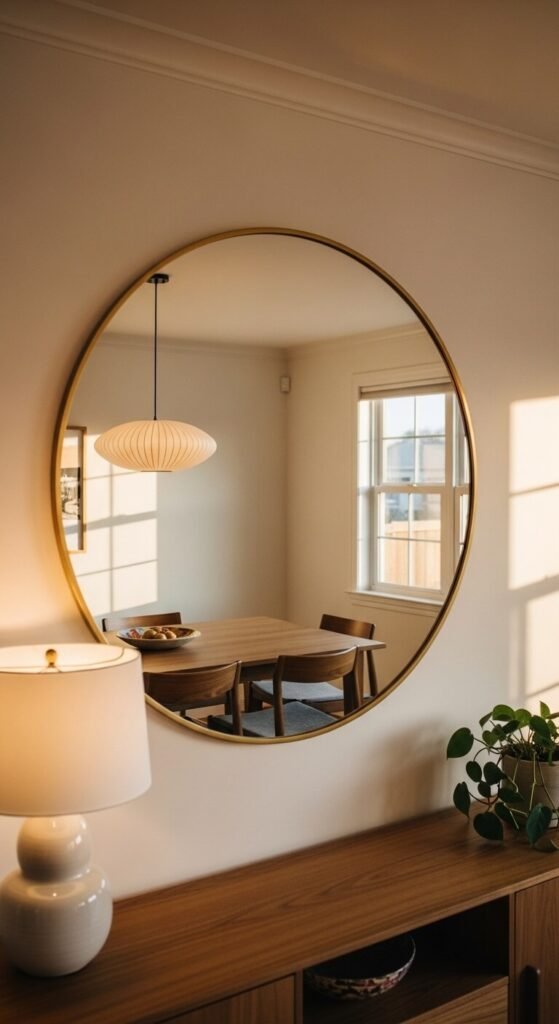
Mirrors are one of the best-kept secrets in small dining rooms. A large mirror on the wall opposite a window doubles the natural light and makes the room feel at least twice as spacious. Round mirrors with brass or natural wood frames are affordable and widely available. A mirror above a sideboard creates a layered, intentional look. Thrift stores frequently have large mirrors at a fraction of retail price — a fresh frame or spray paint transforms them completely.
13. Incorporate Natural Wood Elements Throughout
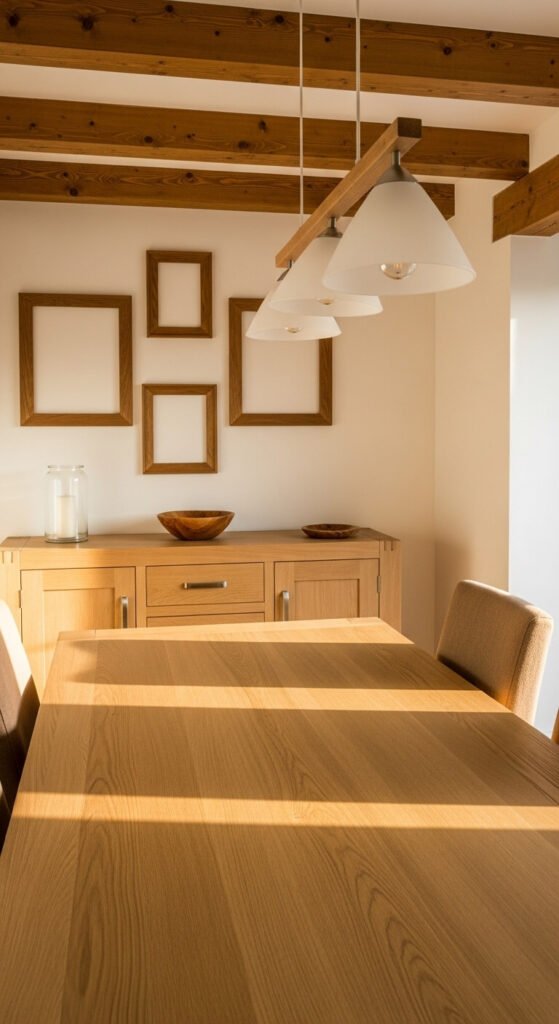
Wood brings life and warmth to any dining room. You do not have to replace your table or floor to get the effect. Add wood through smaller pieces — a wooden fruit bowl, cutting board on display, picture frames, or a simple wooden tray on your sideboard. These small additions create visual continuity and warmth across the room. Mixing light and dark wood tones is perfectly fine as long as they share a similar undertone — all warm, or all cool.
14. Use Candlelight Generously
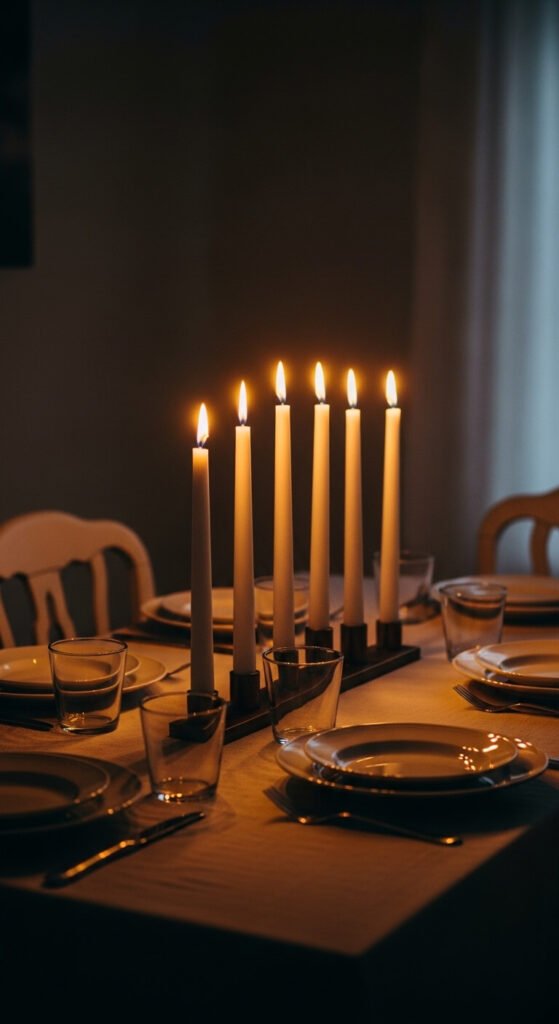
Nothing creates atmosphere the way candlelight does. Keep a stock of taper candles, pillar candles, and tea lights and use them freely — not just for dinner parties. Candles in thrifted brass holders or simple glass hurricanes look beautiful. Battery-powered candles work surprisingly well for everyday use and eliminate worry about open flames. Lighting three or four candles on a Tuesday night shifts the entire energy of a meal from ordinary to something worth savoring.
15. Invest in Good Linen or Cotton Napkins

Paper napkins belong at a picnic. Cloth napkins instantly make a dining room feel more intentional. A set of affordable linen or cotton napkins in a neutral tone will last for years. Washed linen wrinkles beautifully and does not need ironing — the relaxed texture is part of the charm. Mix and match different tones of the same color for a casual but considered look. Rolled in napkin rings or simply folded on the plate, they change everything.
16. Style a Bar Cart or Drinks Station Nearby
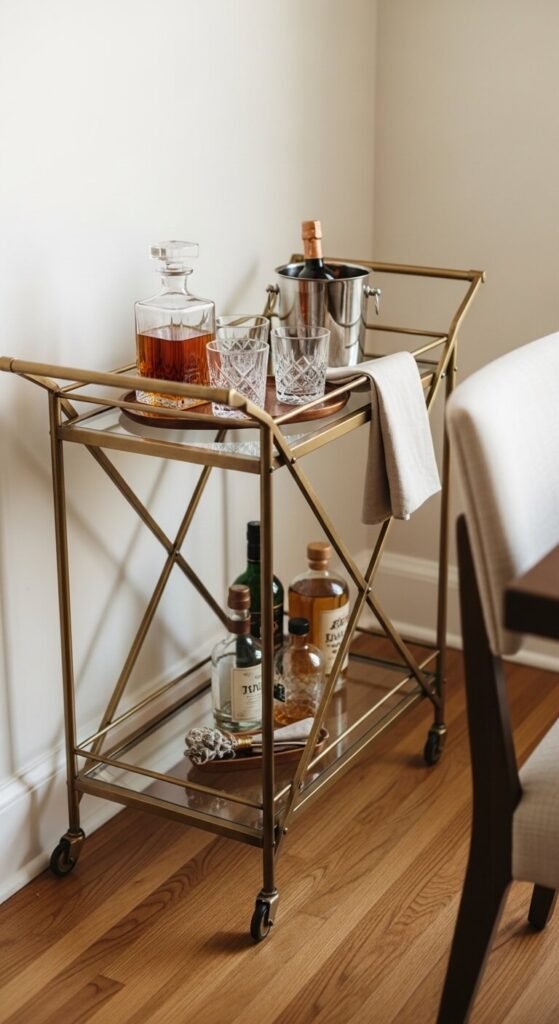
A bar cart or small drinks station near the dining room adds convenience and personality. It signals that guests are welcome to linger and self-serve. A basic rolling cart from a home store or thrift shop works perfectly. Stock it with a few decanters, glassware, and a small ice bucket. Even a dedicated corner of your sideboard works. This small addition makes hosting feel effortless and gives the room a life-of-the-party energy.
17. Bring in Plants for a Living, Breathing Element
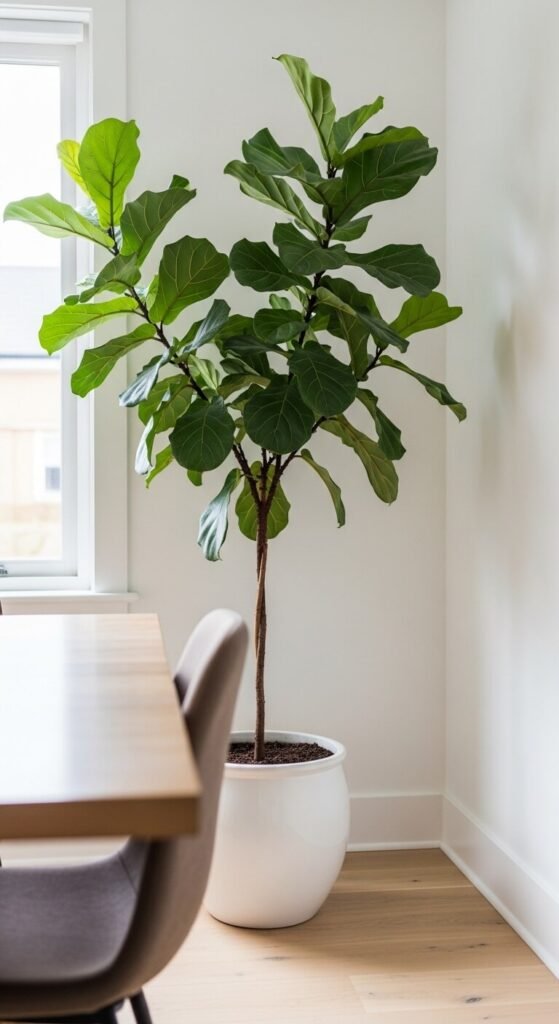
A living plant transforms the feeling of a dining room instantly. A large floor plant like a fiddle-leaf fig or olive tree in the corner adds height and organic life that no decor item can replicate. If you do not have a green thumb, pothos and snake plants thrive in low light and are nearly impossible to kill. A simple white or terracotta pot costs very little. Even a small herb plant on the sideboard adds freshness and a hint of the garden to every meal.
18. Add Texture with a Woven Pendant Light
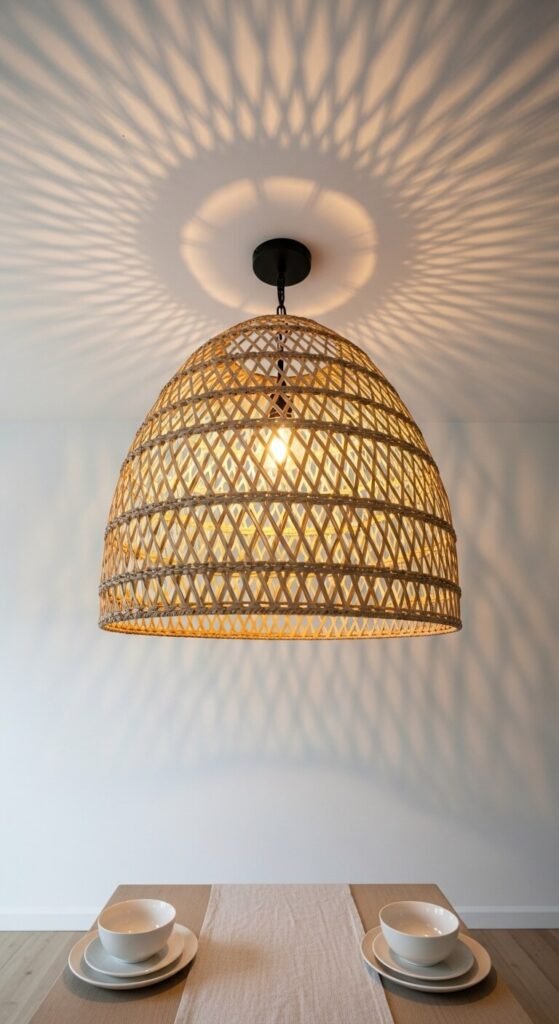
The pendant light is one of the first things people notice in a dining room. A woven rattan, seagrass, or bamboo fixture adds texture and warmth that a flat metal or glass shade simply cannot. These natural fiber pendants are widely available at many price points and suit everything from farmhouse to modern to coastal interiors. If you are renting, a plug-in pendant swapped over a standard light fixture is an affordable and removable alternative.
19. Use a Bench on One Side of the Table
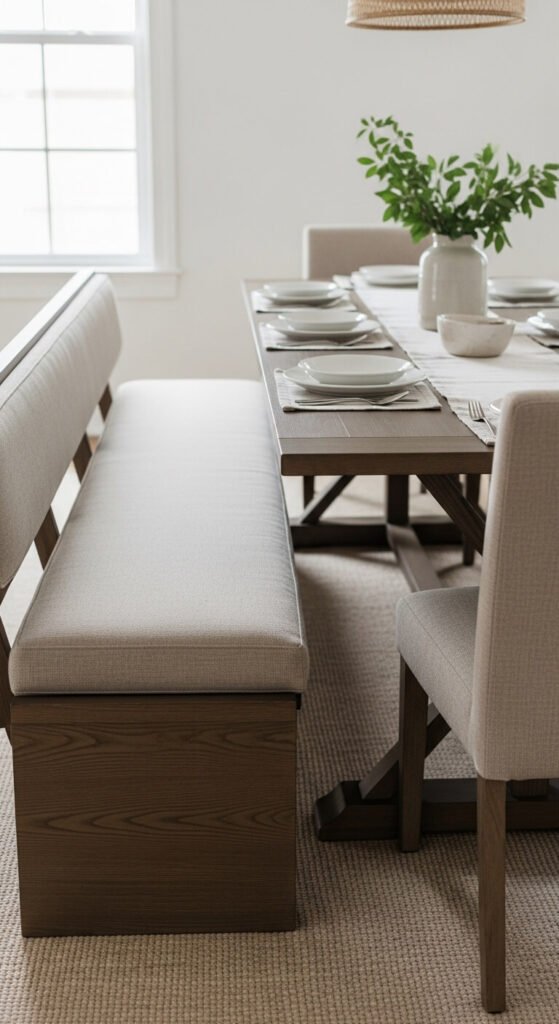
Benches add a relaxed, family-style feel to a dining room. They also seat more people when you need them to and take up less visual space than a row of chairs. A long upholstered bench on one side of the table with chairs on the other creates a lovely asymmetry. Bench cushions can be made inexpensively from foam and fabric. Children love benches. So do last-minute guests when you need to squeeze in one more person at the table.
20. Use Architectural Details to Add Character
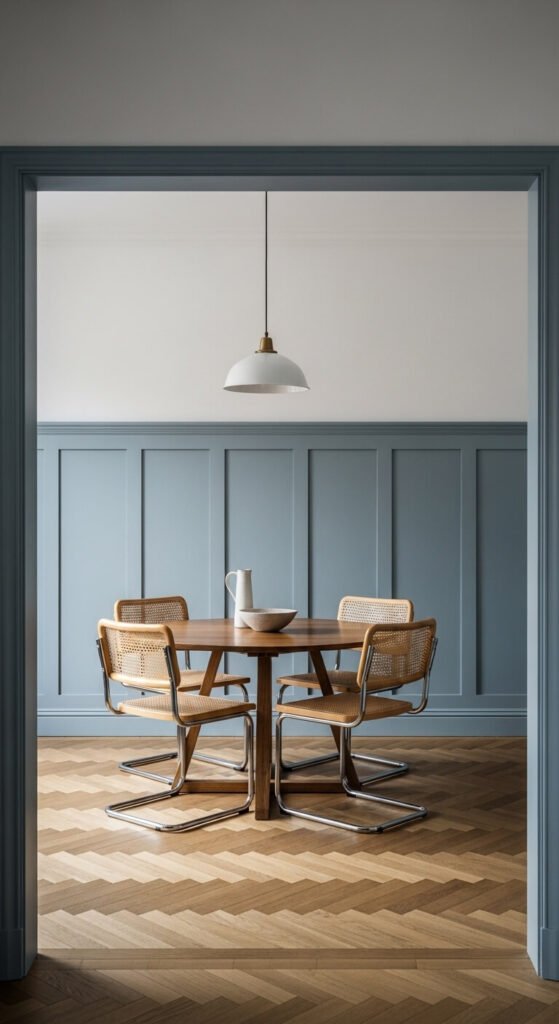
You do not need crown molding or original architecture to add character. A painted accent wall, DIY board-and-batten paneling, or a wallpapered wall behind the table creates a focal point that anchors the room. Board-and-batten is one of the most affordable DIY projects — thin wood strips, nail gun, and paint. It transforms a plain dining room wall into something that looks custom. Pick one wall and commit. The contrast will make the whole room feel more designed.
21. Keep the Table Setting Simple and Repeatable
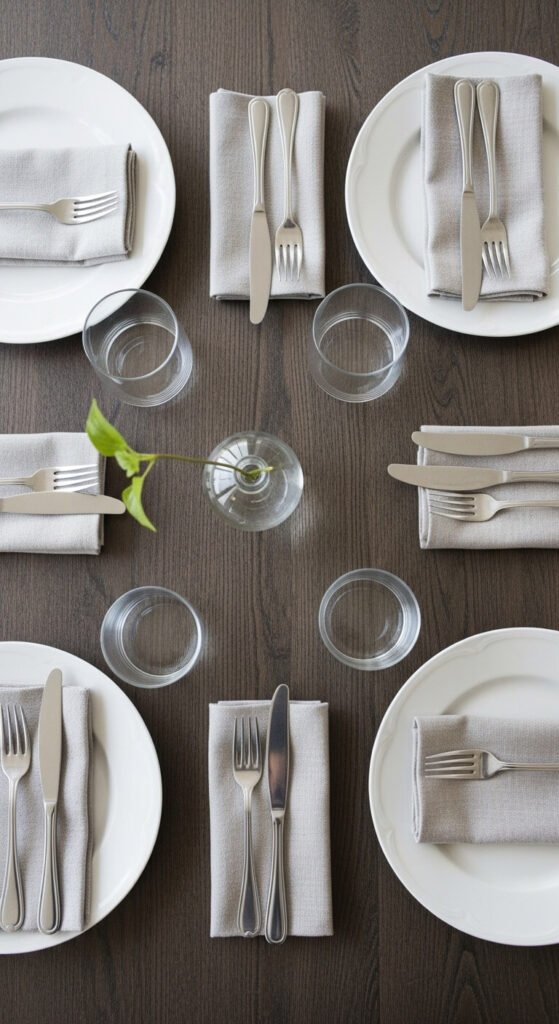
Overthinking table settings stops people from using their dining room regularly. A repeatable, simple setting — white plate, linen napkin, one glass, clean cutlery — looks polished every single time. Build a small collection of pieces you actually like and use them often. Matching is not required. What matters is consistency of tone — all white, all neutral, or all the same metal finish. The simpler the table, the easier it is to sit down and enjoy the meal.
22. Hang Curtains or a Fabric Panel to Soften Sound
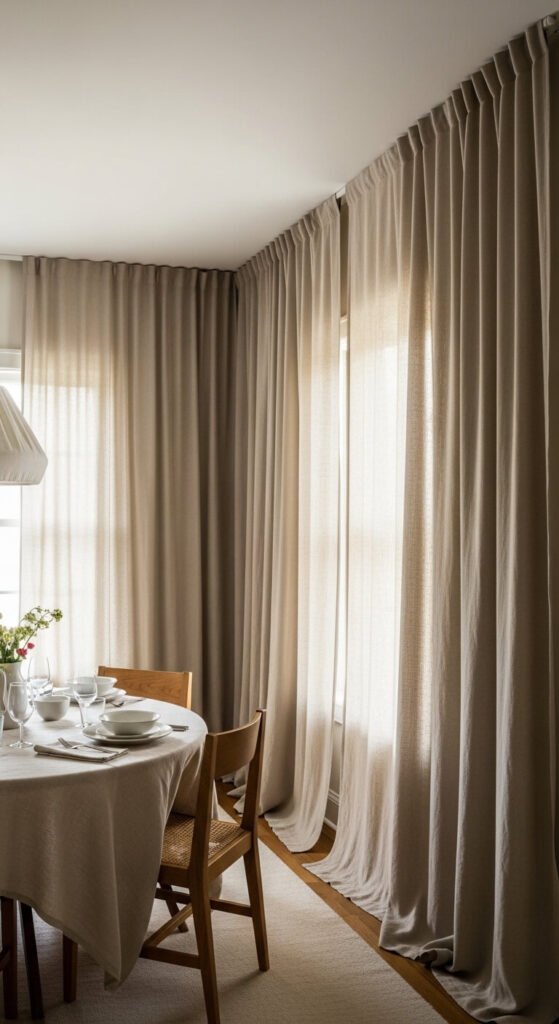
Hard surfaces — wood floors, painted walls, glass — make dining rooms echo and feel loud. Soft furnishings absorb sound and make conversation feel easier. A large rug, curtains, upholstered chairs, and even a textile wall hanging all help. This is not just aesthetic — it genuinely makes dinners more pleasant, especially with children or a large group. Thick linen curtains or velvet cushions on wooden chairs make a room feel quieter, calmer, and more intimate.
23. Rotate Seasonal Decorations to Keep It Fresh
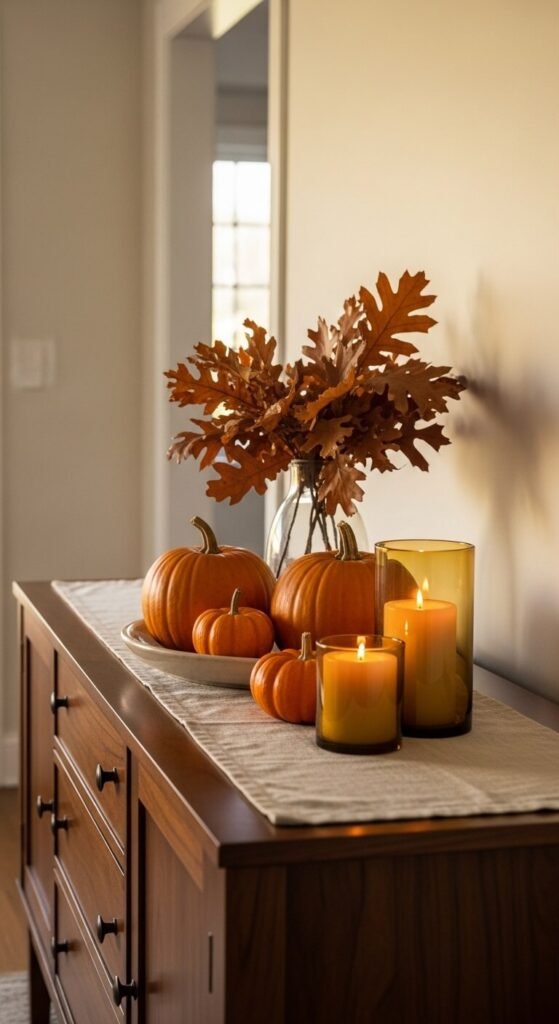
The dining room does not have to look the same year-round. Small seasonal touches keep the space feeling alive and relevant. Swap a centerpiece from dried pampas to spring branches. Change a tablecloth from white linen to a warm plaid. Add a small pumpkin or pinecone grouping on the sideboard in autumn. These small rotations cost almost nothing and make the room feel cared for. It also gives you a reason to notice and appreciate the space more often.
24. Make It Personal with Objects That Tell a Story
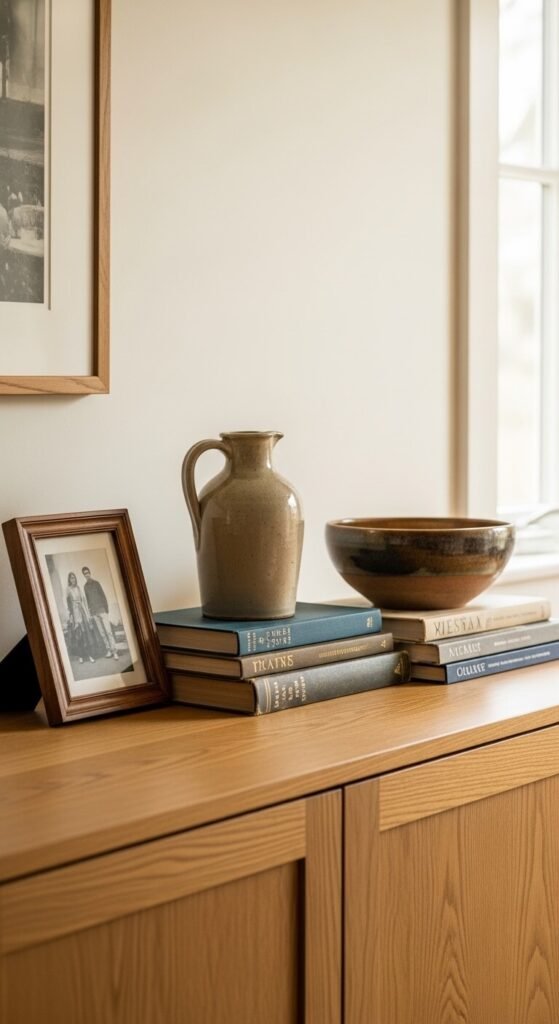
The most beautiful dining rooms are the ones that feel inhabited. Meaningful objects — a piece of pottery from a trip, a print you love, a collection of old cookbooks — make a room feel like yours. You are not decorating for a magazine. You are creating a space where people who matter to you want to sit, eat, and stay. Bring in the things that make you happy. Let the room reflect who you actually are. That is what makes a dining room worth gathering in.
Conclusion
A dining room that encourages gathering does not happen by accident — but it does not require a big budget or a complete renovation either. It comes from paying attention to the details that make people feel welcome: warm light, comfortable seating, a table worth sitting at, and personal touches that say something about the people who live there. Start with one or two changes from this list. Maybe it is hanging your pendant lower, adding a rug that finally fits, or simply setting the table on a Wednesday for no reason at all. Small, intentional choices stack up quickly. Before long, your dining room will be the place everyone wants to be.