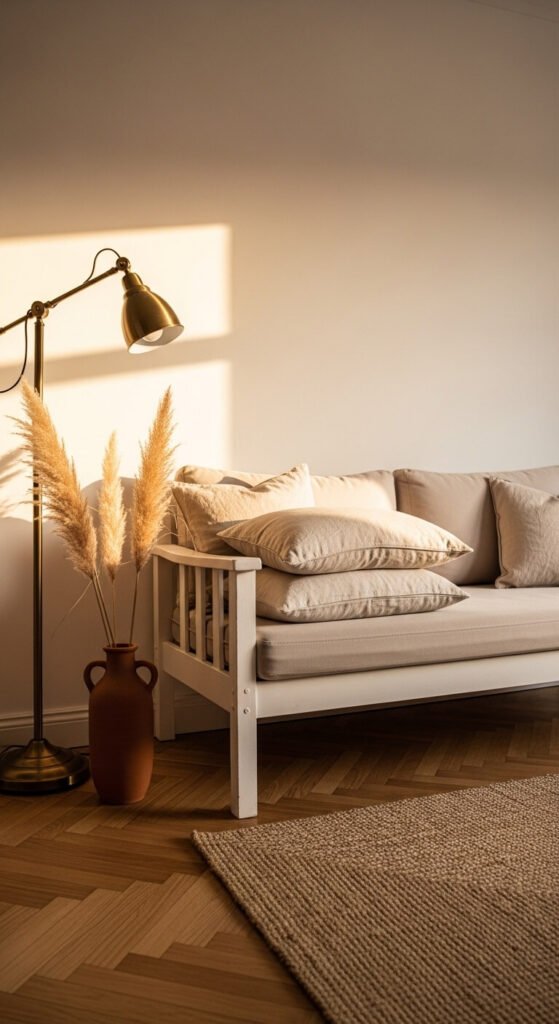
Decorating your home on a budget doesn’t mean settling for less. With the right approach, a small spend can go a surprisingly long way. The secret isn’t money — it’s intention. Knowing where to splurge, where to save, and how to make every piece look like it belongs together is a skill anyone can learn. Whether you’re renting, remodeling, or just refreshing a tired room, these 23 practical strategies will help you create a space that looks thoughtfully designed — without the designer price tag.
1. Paint One Dramatic Accent Wall
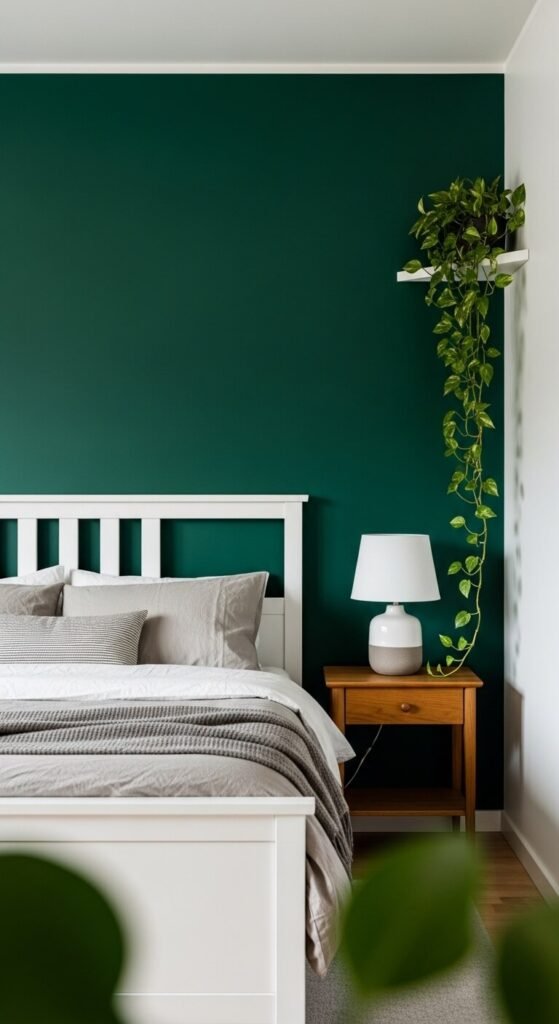
Paint is the single best value in decorating. One bold wall transforms a plain room instantly.
Pick a deep, moody color — charcoal, terracotta, forest green, navy. Use it behind your bed, sofa, or dining table.
You only need one quart of paint, which costs around $15–$25. That’s a dramatic change for almost nothing.
Don’t paint all four walls. One strong focal point looks more intentional than a fully colored room on a budget.
2. Swap Out Hardware on Old Furniture
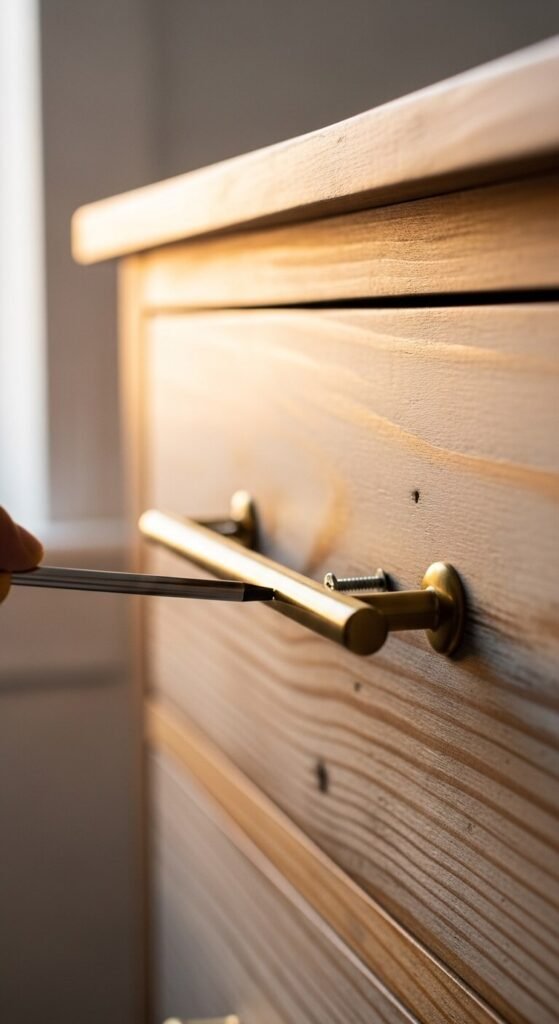
Old furniture can look brand new with one small change: new hardware.
Replace plastic or builder-grade knobs with brass, matte black, or ceramic pulls. A set of drawer pulls costs $10–$30 online.
This works on dressers, kitchen cabinets, bathroom vanities, and nightstands. The new hardware makes the whole piece feel like a deliberate design choice.
Buy a screwdriver and spend 20 minutes. That’s the entire project.
3. Layer Your Lighting Instead of Relying on Overhead Fixtures
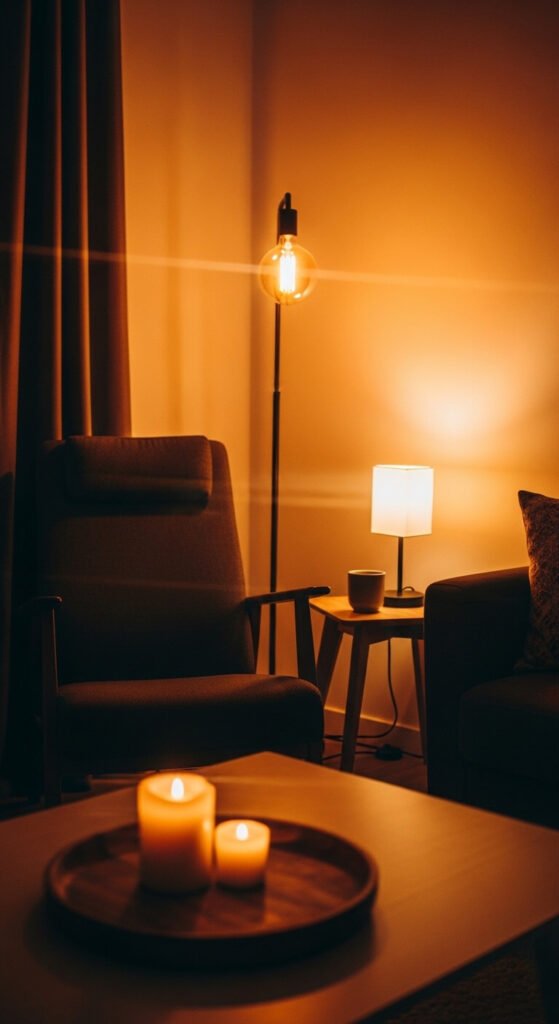
Overhead lighting flattens a room. Layered lighting makes it feel rich.
Add a floor lamp in a dark corner. Put a small lamp on a side table. Use candles or battery-operated fairy lights on shelves.
Three light sources at different heights create mood and dimension. This costs very little — a basic floor lamp runs $25–$50 at discount stores.
Dim, warm light always looks more luxurious than bright, cold overhead lighting.
4. Use Curtains to Add Height
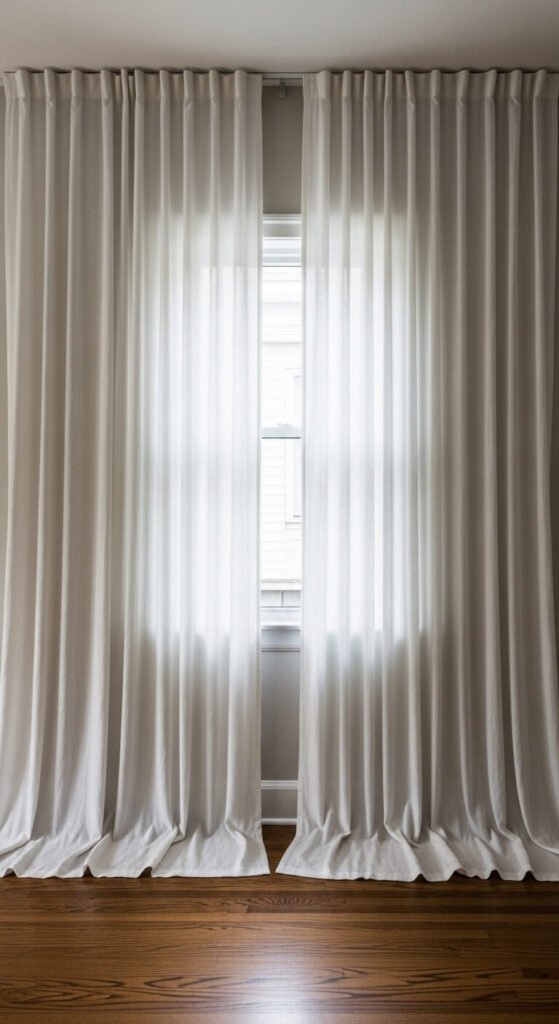
Curtains hung at ceiling height make any room feel taller and more expensive.
Most people hang curtain rods just above the window. Instead, mount them 2–4 inches from the ceiling. Use long panels that reach the floor.
Simple white or linen panels from a discount store cost $15–$30 per panel. The visual impact is enormous.
High curtains = high ceilings. It’s a visual trick that works every single time.
5. Declutter Before You Decorate
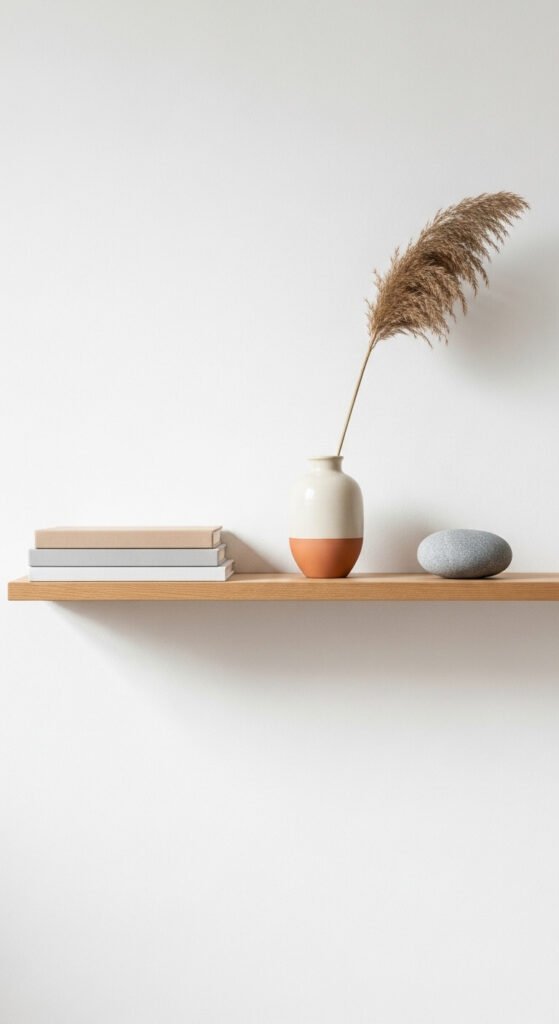
The fastest way to make a room look expensive is to remove things, not add them.
Clutter reads as chaos. Empty space reads as confidence.
Pull everything off your shelves. Put back only the pieces you genuinely love. Group items in threes — odd numbers feel more natural.
You don’t need to buy anything. Edit what you already have. A styled shelf with five objects always looks better than a crowded one with twenty.
6. Add a Large Area Rug
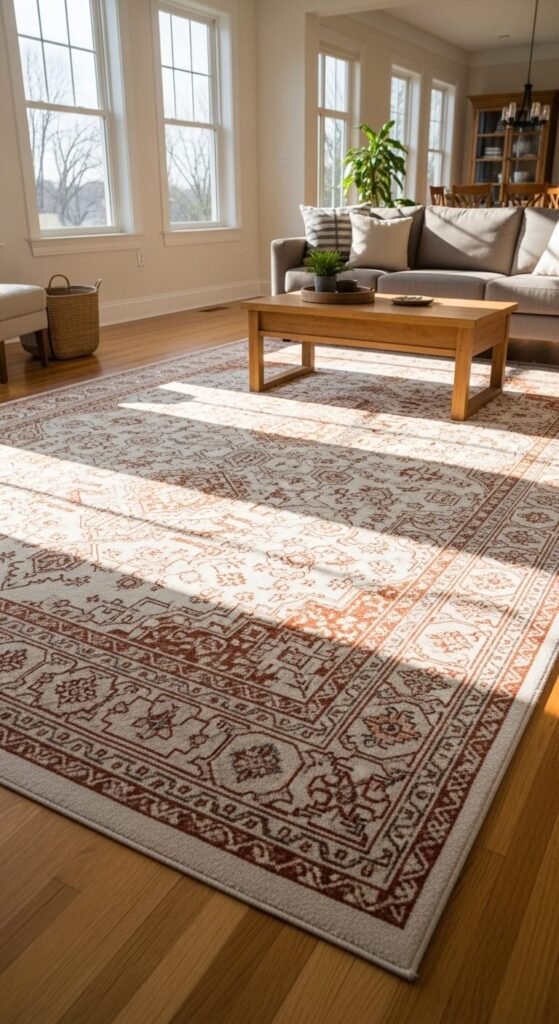
A rug ties a room together. It creates a visual anchor that makes furniture look arranged on purpose.
The most common mistake: buying a rug that’s too small. Go bigger than you think you need. At minimum, the front legs of your sofa and chairs should sit on it.
Check discount retailers, clearance sections, or rug resellers online. A large area rug doesn’t have to cost more than $80–$150 to look great.
7. Create a Gallery Wall With Thrifted Frames
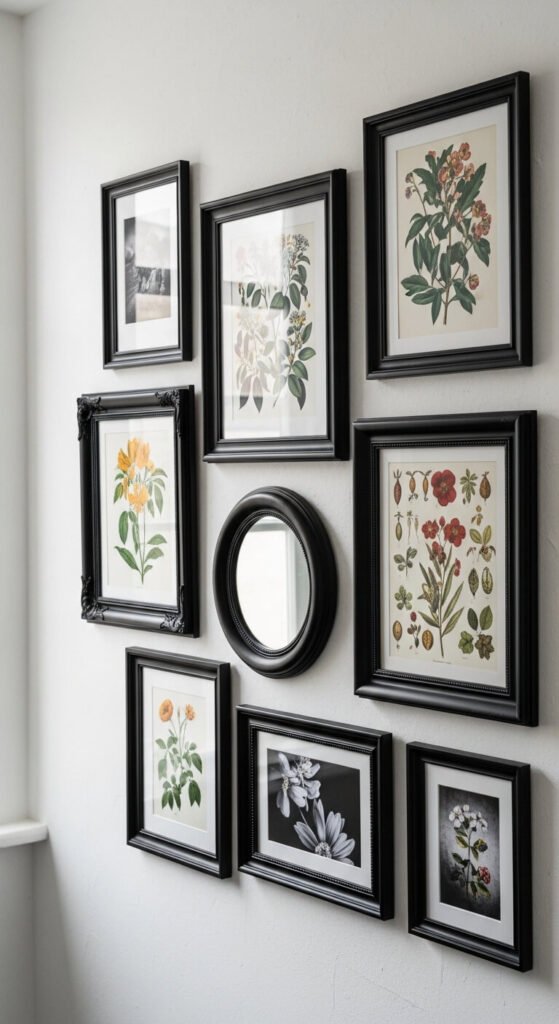
Gallery walls look expensive. They don’t have to be.
Buy mismatched frames from thrift stores for $1–$3 each. Spray paint them all the same color — matte black, gold, or white — to make them look cohesive.
Fill them with free printables, torn pages from old books, botanical illustrations, or black-and-white family photos.
The unified frame color is the secret. It makes random frames look like a curated collection.
8. Introduce Natural Textures
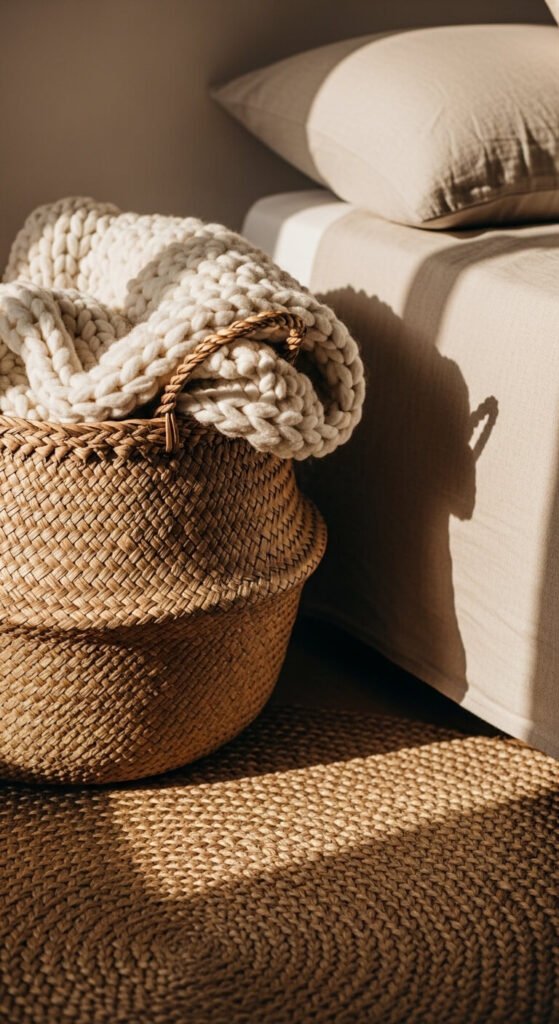
Texture adds depth to a room that color alone can’t achieve.
Mix materials: jute, linen, rattan, cotton, wood, stone. These don’t need to be expensive. A woven basket from a discount store, a linen pillowcase, a wooden tray — each adds a layer of warmth.
Budget-friendly texture sources: thrift stores, discount home goods shops, and craft stores.
The more natural textures you mix, the richer the room feels — even with plain white walls.
9. Use Plants as Decor
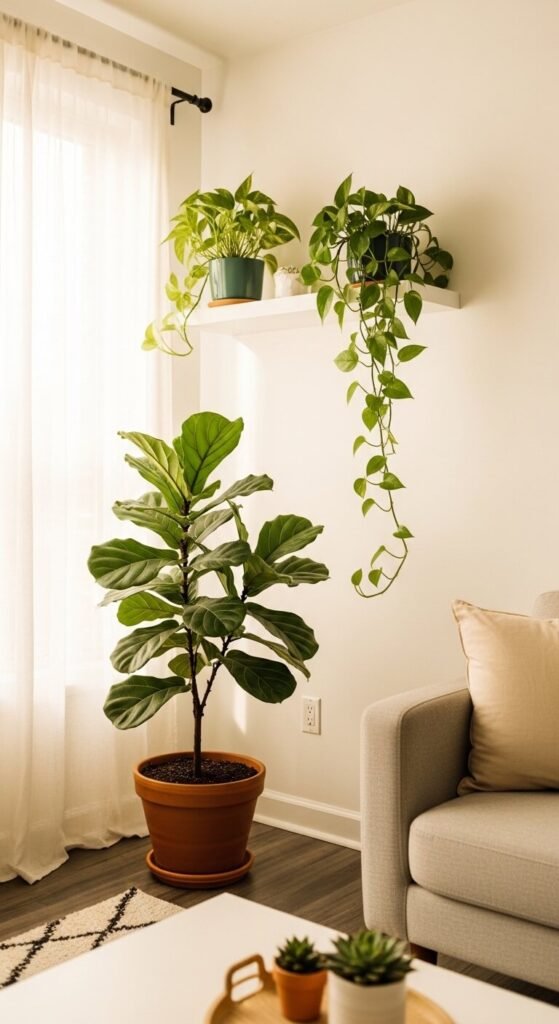
Plants bring life, color, and warmth to any room. They also make a space feel cared for.
You don’t need rare or expensive plants. Pothos, snake plants, and spider plants cost $5–$10 and are nearly impossible to kill.
Style them at different heights. One on the floor, one on a shelf, one on a table. The variety of levels creates visual interest.
A simple terracotta pot instantly looks more expensive than a plastic nursery container.
10. Rearrange Your Furniture
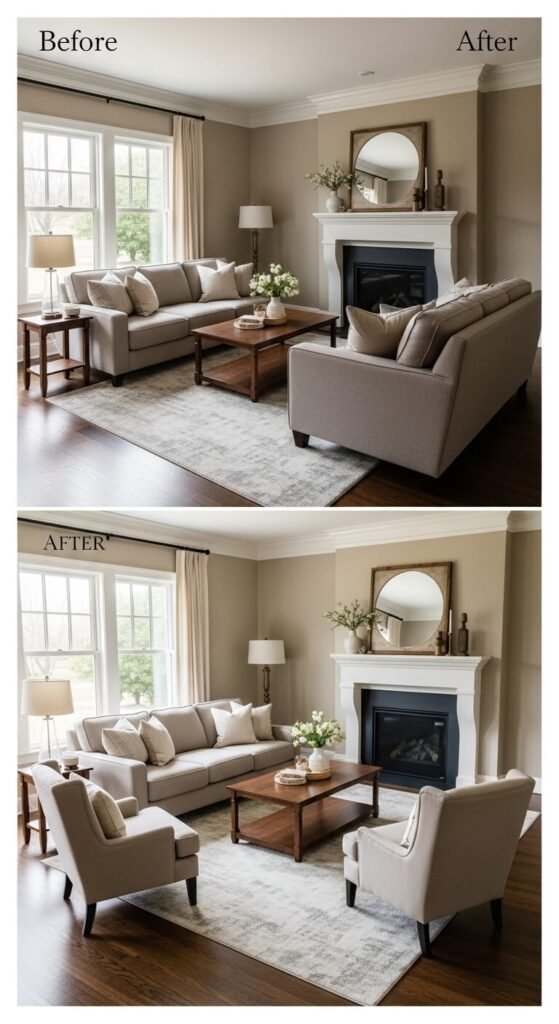
Before you spend a dollar, rearrange what you already have.
Most people push furniture against walls. Pull it away from the walls and group it into a conversation area instead. This makes a room feel designed rather than empty.
Float your sofa. Angle a chair. Move a lamp to a corner that needs warmth.
It costs nothing. It takes 30 minutes. And it often makes a bigger difference than any purchase would.
11. Style Your Shelves With Intention
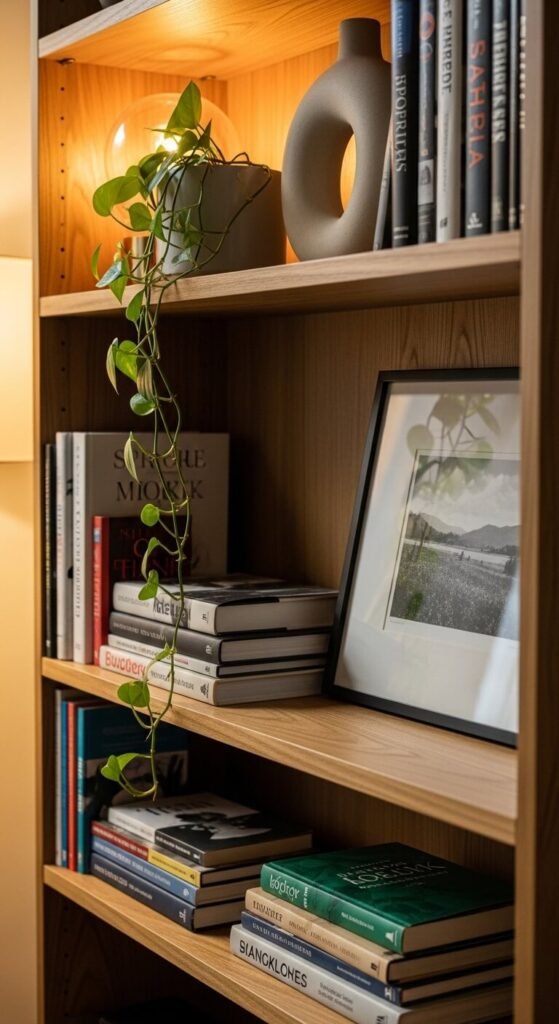
Bookshelves look expensive when styled with intention — not just filled with books.
Mix books horizontally and vertically. Remove some books entirely and replace them with objects: a small plant, a candle, a ceramic bowl, a framed print.
Leave breathing room. Empty space on a shelf isn’t wasted — it makes everything else look more considered.
Shop your own home first. Move objects from other rooms before buying anything new.
12. Invest in One Quality Throw Blanket
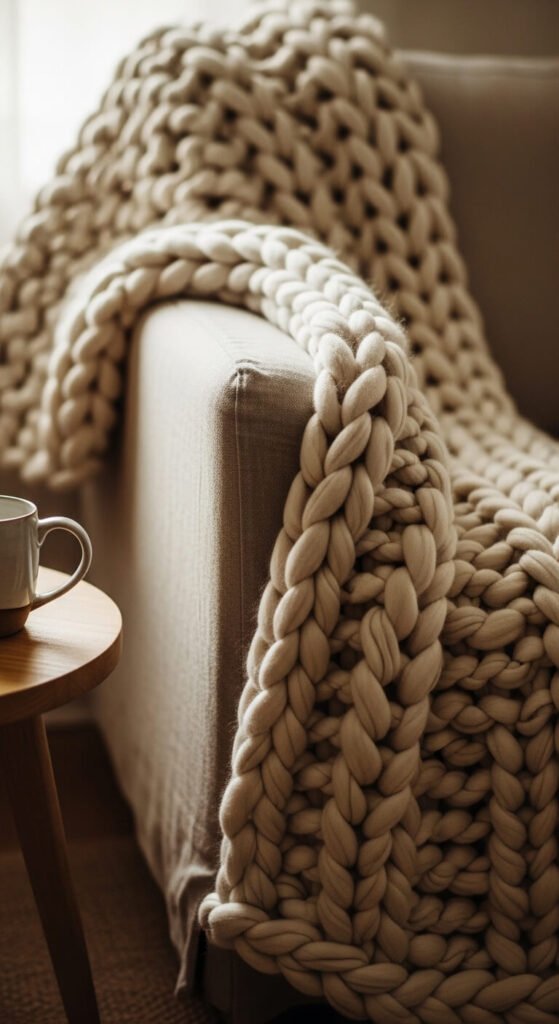
One beautiful throw blanket changes the energy of a sofa or armchair completely.
Look for chunky knit, waffle weave, or a soft linen-cotton blend. Drape it loosely — don’t fold it perfectly. A casual, relaxed drape always looks more natural.
Neutral tones work best: cream, oatmeal, warm gray, or camel. They photograph well and complement almost any color palette.
You can find excellent options for $20–$40. It’s one of the highest-impact, lowest-cost purchases in decorating.
13. Mirror a Small Space
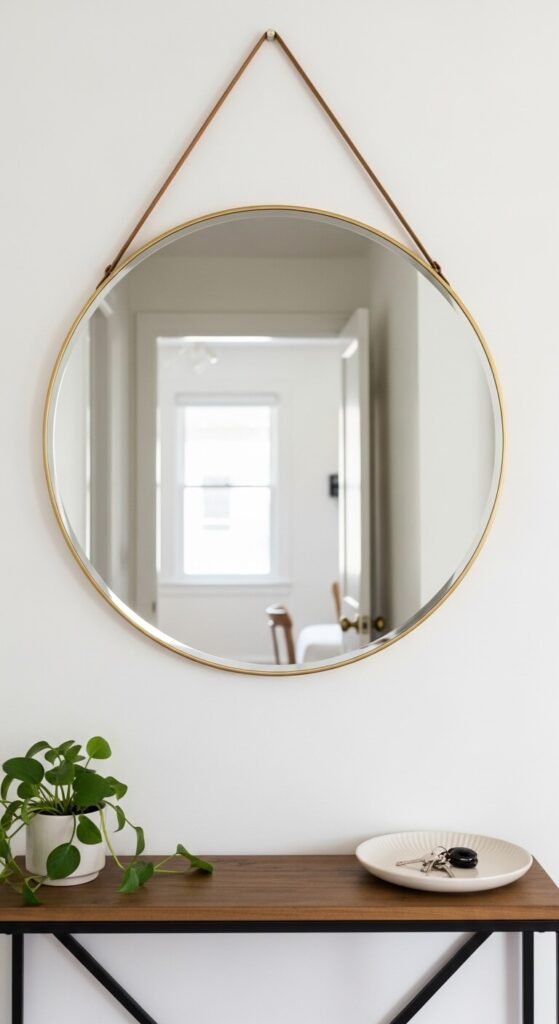
Mirrors make a room feel larger, brighter, and more polished.
A large round or arch-shaped mirror leaning against a wall looks far more expensive than a smaller, framed one hung flat.
Place a mirror across from a window to bounce natural light through the room. This trick works in dark hallways, small bedrooms, and compact living rooms.
Thrift stores often have large mirrors for $10–$25. A can of gold or black spray paint can update any frame.
14. Use Trays to Group Objects
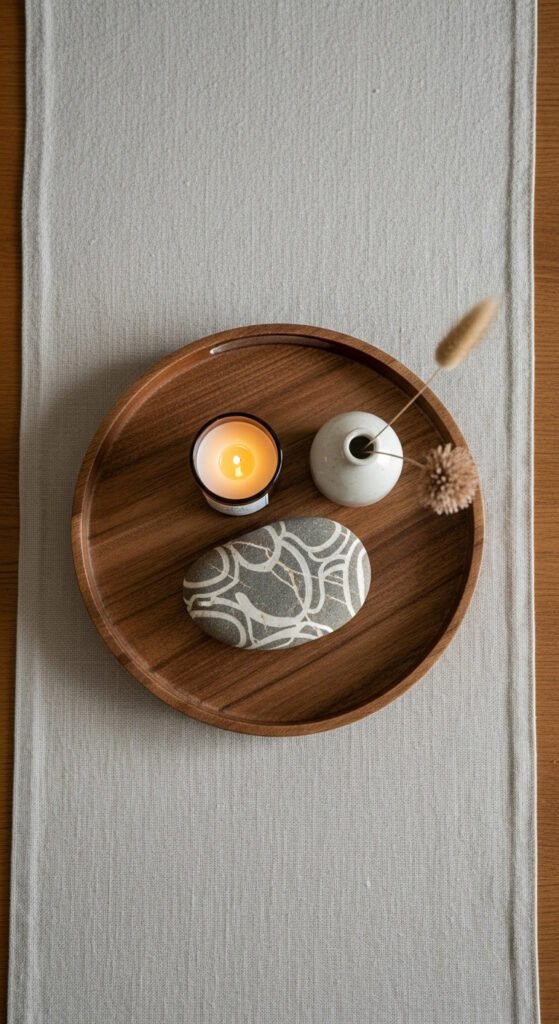
A tray turns a collection of random objects into a styled vignette.
Group your coffee table items — candle, small vase, book, stone — inside a tray. This creates order without looking rigid. The tray acts as a visual boundary that makes the grouping feel intentional.
Use wooden, rattan, marble, or lacquered trays. Thrift stores always have them.
This trick works on coffee tables, kitchen counters, bathroom vanities, and bedroom dressers. Anywhere objects collect.
15. Paint Old Furniture Instead of Replacing It
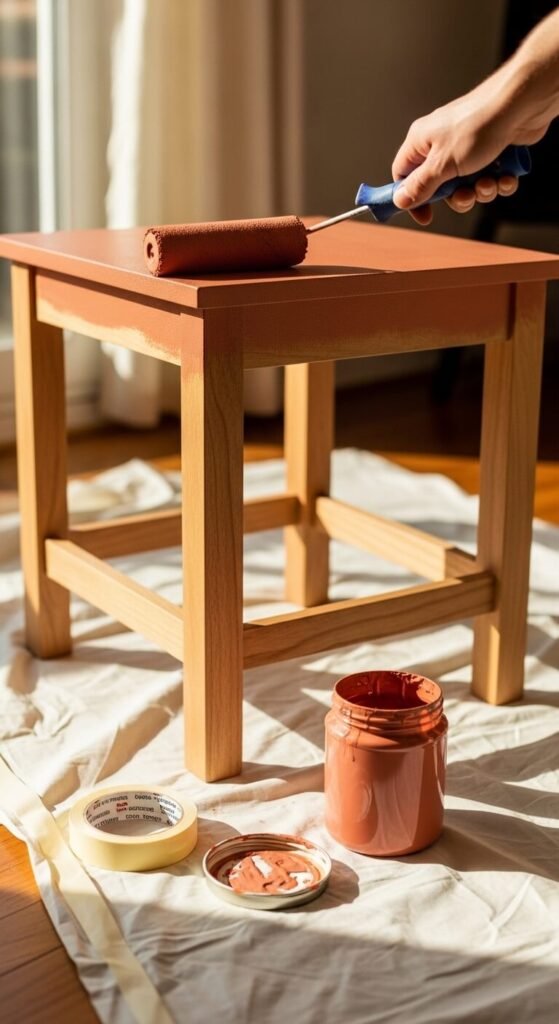
You don’t need new furniture. You need paint.
An outdated oak dresser, a scratched side table, or a tired bookshelf can become a statement piece with the right color.
Sand lightly, wipe clean, prime if needed, and apply two coats of chalk paint or furniture paint. No brush strokes, no glossy finish — matte is the look you want.
A quart of chalk paint costs $15–$20 and covers most small pieces. The result looks entirely custom.
16. Add Crown Molding With Peel-and-Stick Options
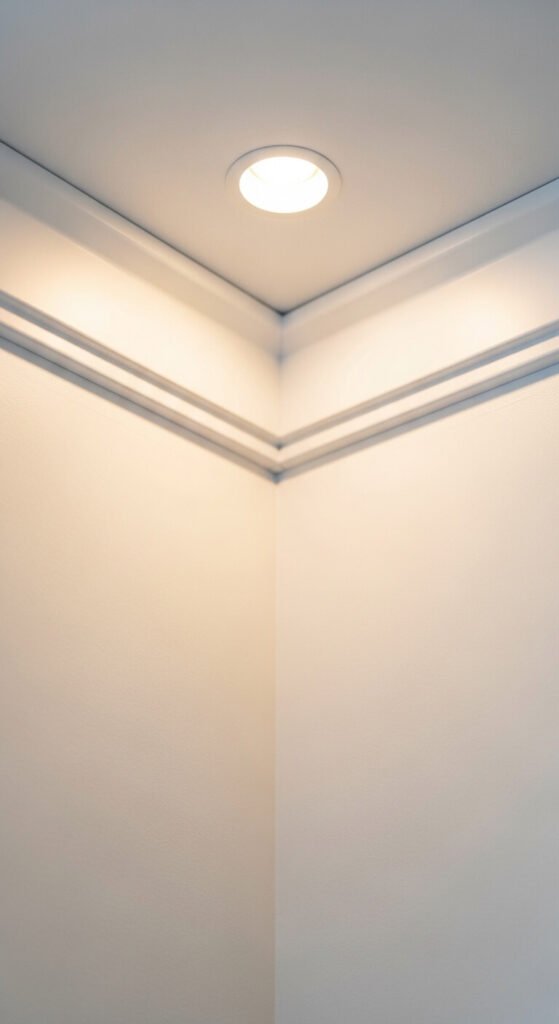
Crown molding reads as luxury. Real wood molding is expensive and requires a contractor.
Peel-and-stick foam molding is a legitimate alternative for renters and budget decorators. It comes in flat, stepped, and curved profiles. You press it along the ceiling line yourself.
A 12-foot strip costs around $10–$20. You can paint over it to match your walls perfectly.
It’s not the same as real molding — but at 10 feet up, no one can tell the difference.
17. Hang Art at the Right Height
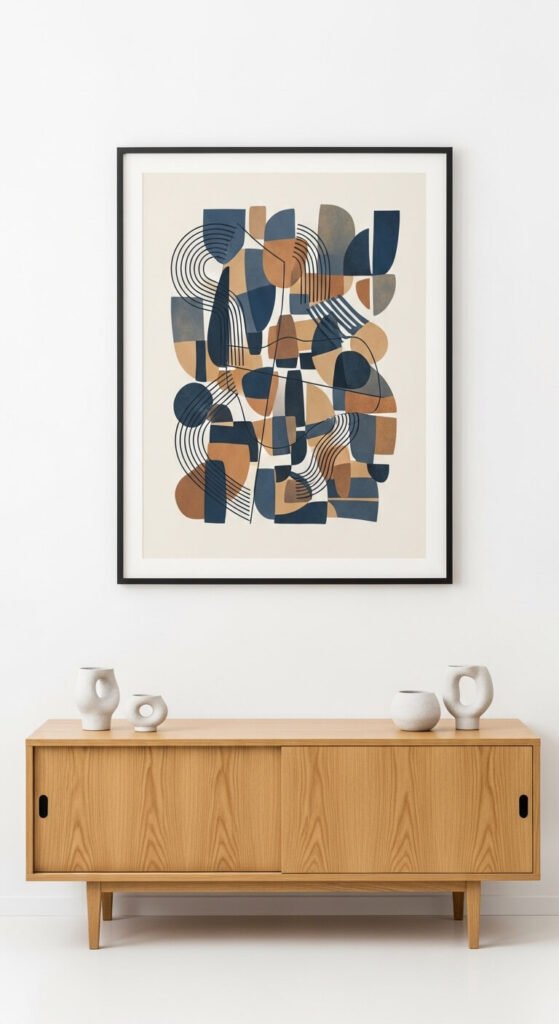
Even beautiful art looks cheap when hung wrong.
The standard rule: hang art so the center of the piece is at eye level — around 57–60 inches from the floor. Most people hang art too high.
When grouping pieces above a sofa or credenza, keep the bottom edge of the gallery 6–8 inches above the furniture.
This single adjustment makes every wall look more considered. It costs nothing and takes five minutes with a tape measure and a pencil.
18. Use Black as a Neutral
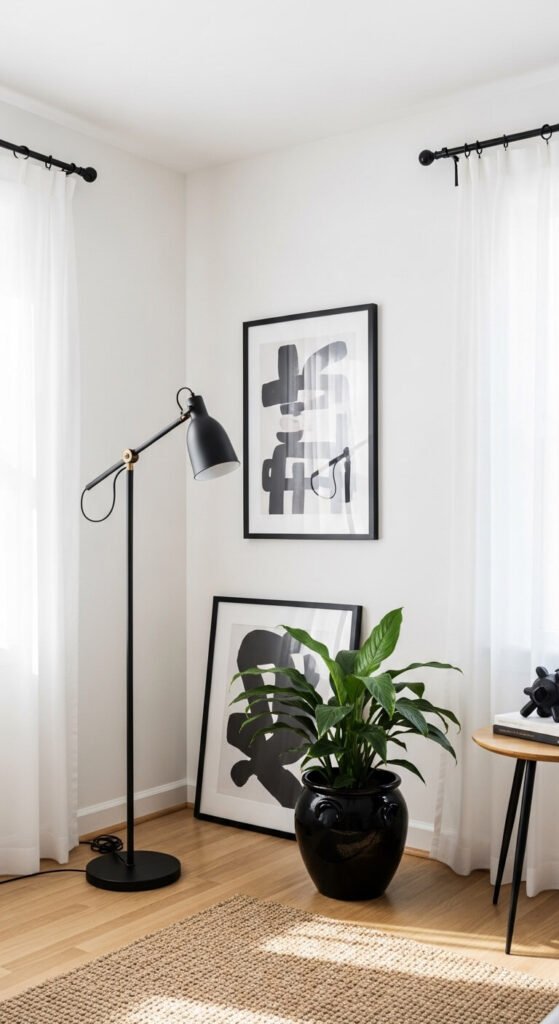
Black grounds a room and makes everything else look sharper.
You don’t need black walls or black furniture. Small doses of black — a lamp, a frame, a vase, curtain rods — create visual anchor points that pull a room together.
This is a classic interior design trick: scatter three or four black accents throughout a space and the room immediately feels more deliberate.
A matte black spray can from a hardware store costs $5 and can update almost any object.
19. Style a Bathroom Like a Boutique Hotel
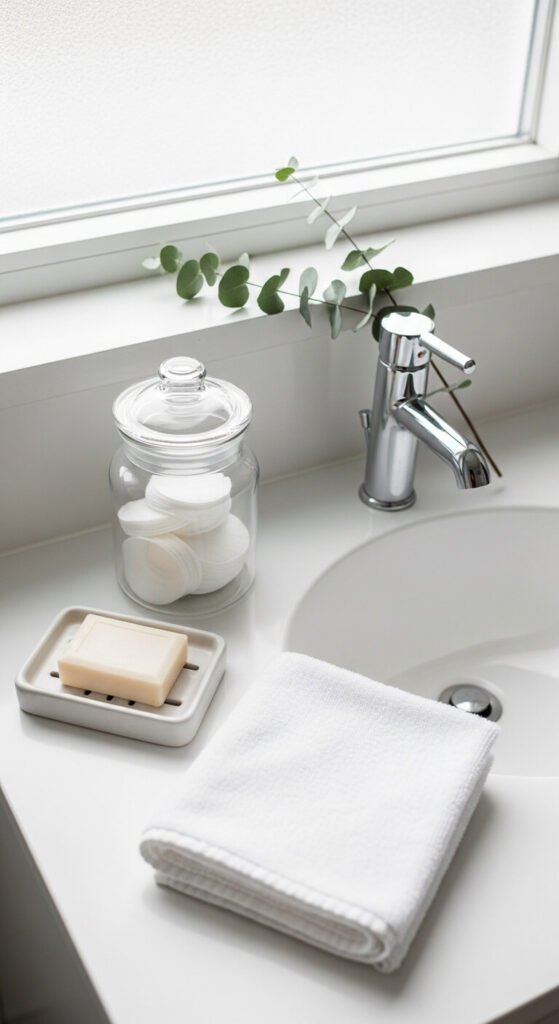
A plain bathroom can feel expensive with just a few styled objects.
Decant your soap and cotton rounds into simple ceramic or glass containers. Fold hand towels and stack them neatly. Add one small plant or a stem of eucalyptus near the sink.
This takes 15 minutes and costs almost nothing if you use what you already have.
Remove the clutter from the counter. Only keep objects that are both functional and beautiful. The negative space does the rest.
20. Make a Headboard Out of Fabric or Paint
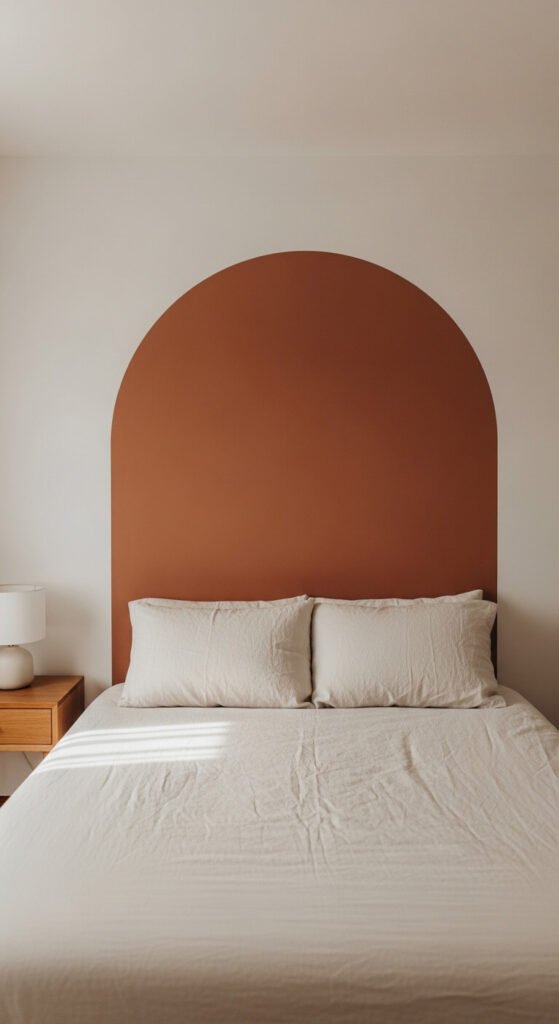
A real upholstered headboard can cost hundreds. You have better options.
Paint a headboard shape directly on the wall behind your bed. An arch, rectangle, or panel shape in a contrasting color creates the same visual effect for the price of a sample pot of paint.
Alternatively, hang a large piece of fabric, a tapestry, or even a folded quilt on the wall behind your bed using a dowel rod.
Both options cost under $25 and photograph beautifully.
21. Build a Simple Floating Shelf Display
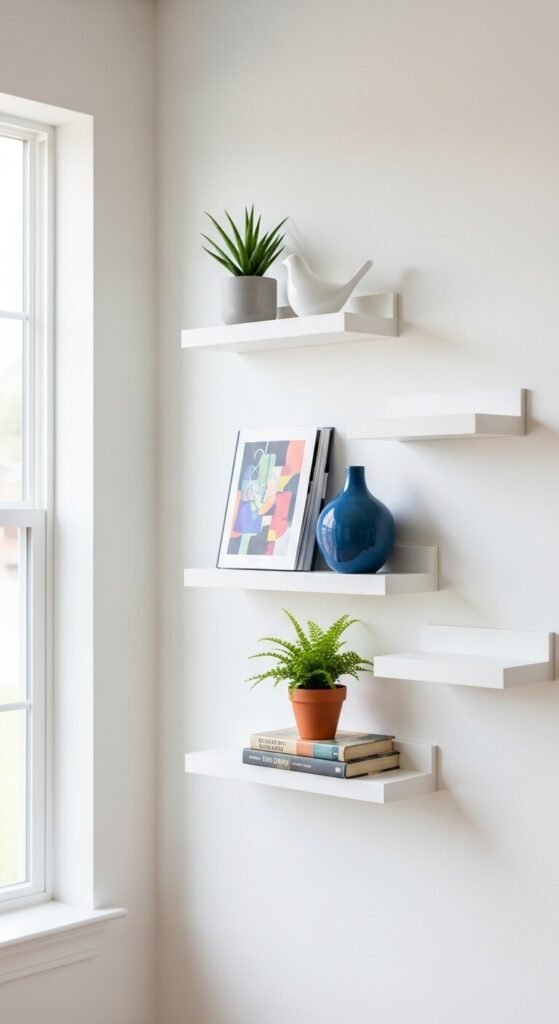
Floating shelves add vertical interest to blank walls without taking up floor space.
Simple wooden shelves from hardware stores run $10–$20 each. Install them in a staggered or asymmetric pattern for a more interesting look than three perfectly aligned rows.
Style each shelf with just two or three objects. Resist the urge to fill them. Empty space on a shelf is part of the design.
This works especially well in bedrooms, living rooms, and home offices.
22. Update Light Switch and Outlet Covers
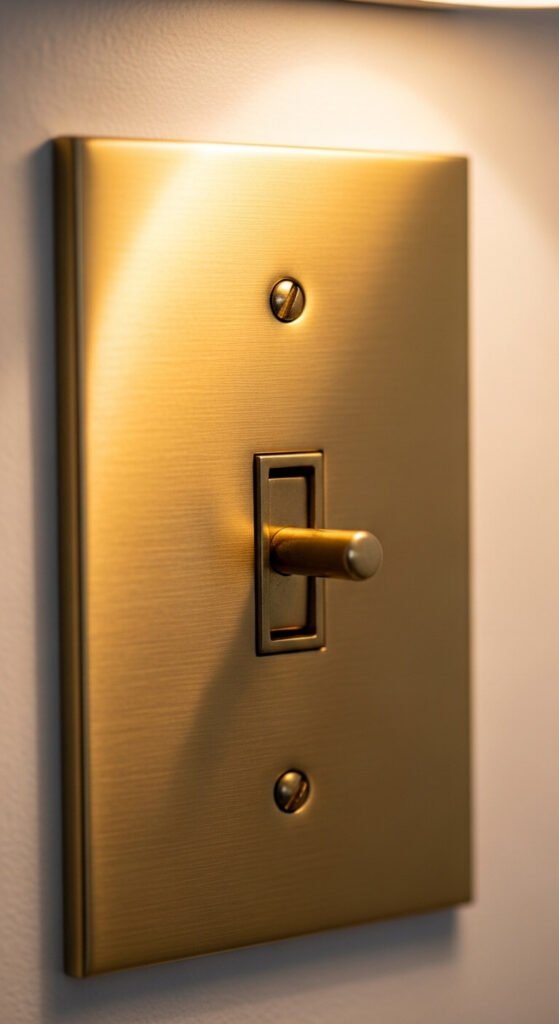
This is the most overlooked upgrade in budget decorating.
Builder-grade white plastic switch plates look cheap. Replacing them with brushed brass, matte black, or aged bronze covers costs $3–$8 per plate.
No tools needed beyond a screwdriver. Swap them in 10 minutes.
In a room with brass hardware, brass switch plates tie everything together. It’s the kind of small detail that makes a room feel finished — even if most people can’t quite explain why.
23. Create a Cohesive Color Story in Three Shades
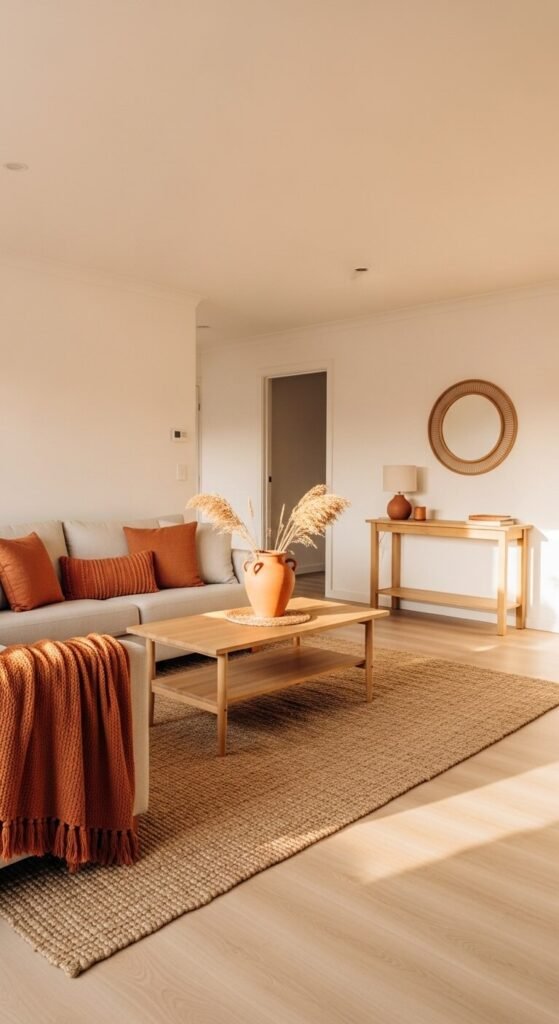
The fastest way a room looks put-together is a consistent color palette.
Pick three shades that feel connected: a neutral base, a warm mid-tone, and one accent. Stick to that palette across your textiles, accents, and decor objects.
You don’t need to repaint or buy new furniture. Simply edit the objects already in your room and keep only what fits your three chosen shades.
Remove anything that clashes. A restricted palette always reads as intentional — and intentional always reads as expensive.
Conclusion
Decorating well on a budget isn’t about finding cheap imitations of expensive things. It’s about making deliberate choices, editing ruthlessly, and understanding that less — done right — almost always looks like more. Most of the strategies here cost under $30 or nothing at all. The common thread in every single one: intention over spending. Start with one room. Pick two or three ideas from this list that feel achievable. Do them this weekend. Once you see how much difference small, considered changes make, the rest becomes easy — and surprisingly addictive.