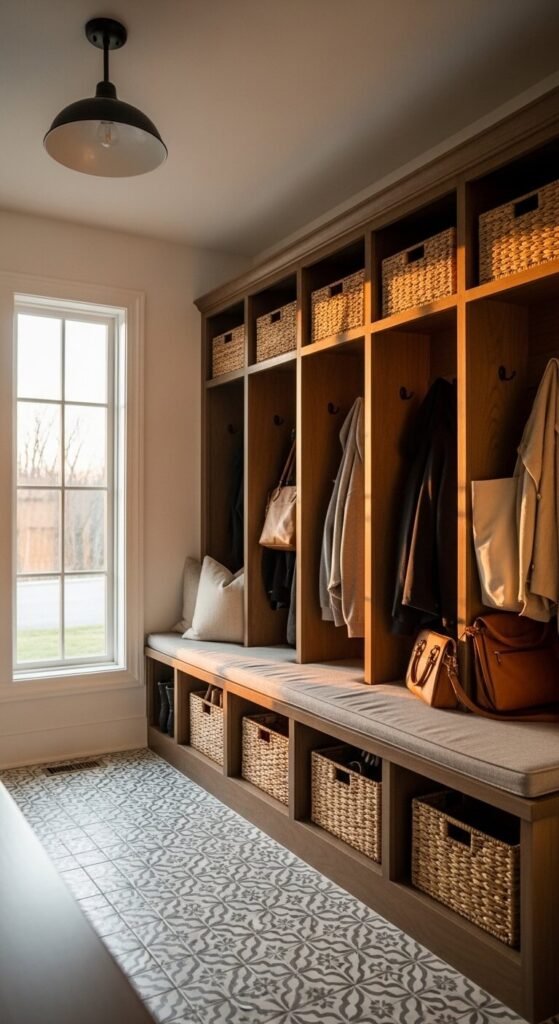
Your mudroom is the first room you enter and the last one you leave — and when it’s a mess, it sets the tone for everything else. Wet boots, tangled backpacks, and missing keys don’t have to be part of your daily routine. A few smart changes can turn even the smallest entryway into a room that actually works for your family. Whether you rent or own, have a dedicated mudroom or just a hallway corner, these 23 real-life ideas will help you build an entry space that stays organized without a big renovation budget.
1. Add a Row of Sturdy Wall Hooks
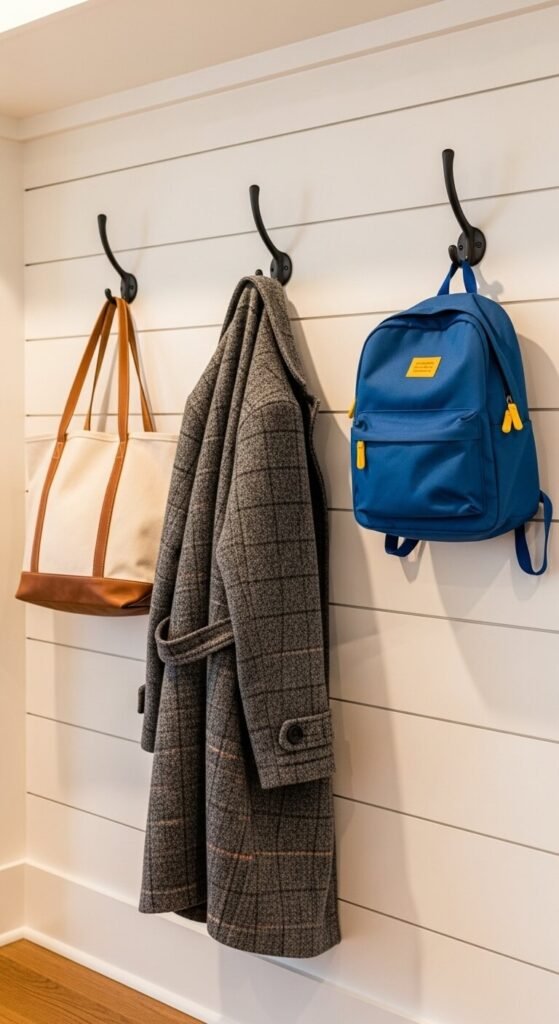
The most used tool in any mudroom is a simple hook.
Install them at two heights — one for adults, one for kids. This one change stops jackets from landing on the floor.
Command hooks work in rentals. Screwed-in hooks hold heavier coats. Space them 6–8 inches apart so things don’t get tangled.
A row of 6 hooks costs as little as $15 at a hardware store. Add a label below each hook so everyone knows their spot.
2. Use an Old Bench With Storage Underneath
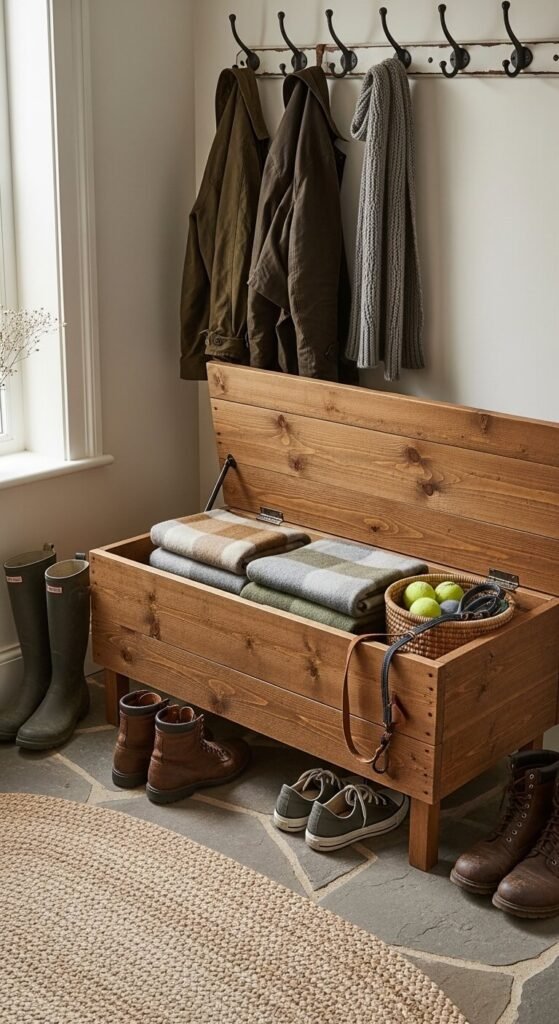
A bench does two jobs at once: it gives you a place to sit while putting on shoes, and it hides clutter underneath.
Look for benches with a lift-up seat or open shelves below. Thrift stores and Facebook Marketplace often have them for under $40.
Add a cushion on top with outdoor fabric so it’s easy to wipe clean. This is one of the best low-cost, high-impact upgrades for any entryway.
3. Label Everything With a Simple System
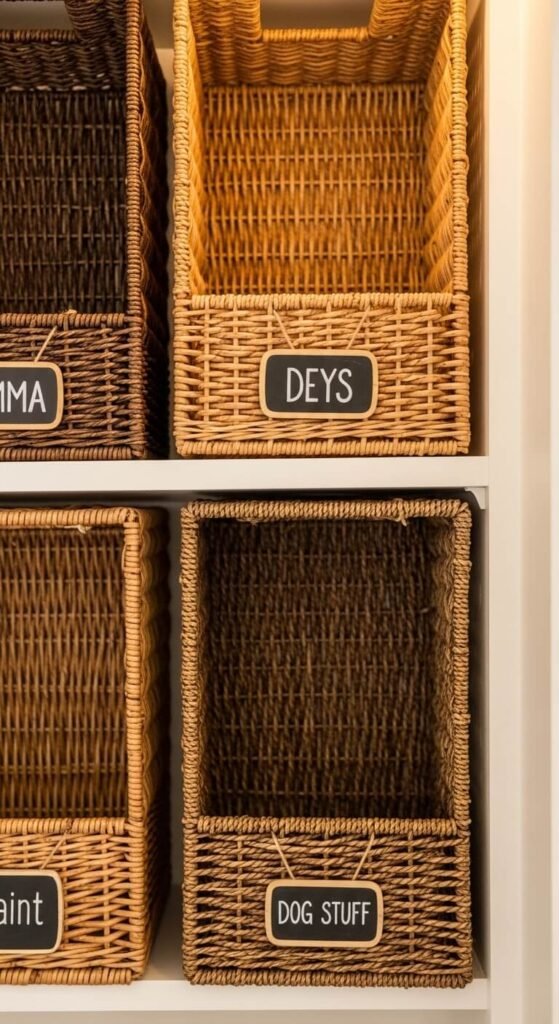
Labels sound boring. But they work.
When every basket, hook, and bin has a name on it, people actually put things back. Kids especially respond to seeing their name on their spot.
Use chalkboard labels for flexibility, or print simple tags and laminate them. A basic label maker runs about $20 and lasts for years.
Start with the most-used categories: shoes, bags, mail, dog leashes, keys. You can always expand later.
4. Mount a Slim Shoe Rack by the Door
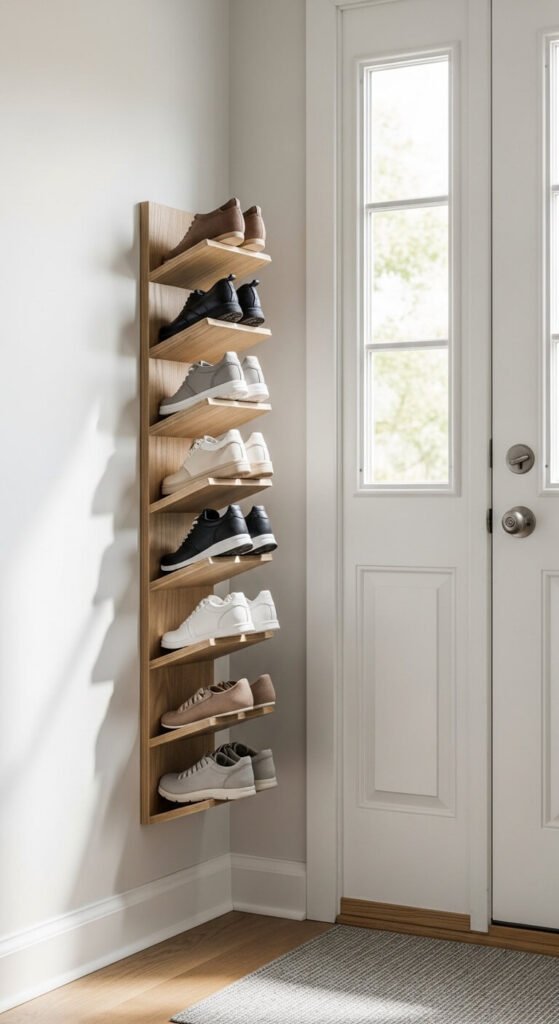
Shoes are the biggest source of mudroom chaos.
A slim wall-mounted shoe rack keeps them off the floor without eating up square footage. Tiered racks fit 6–12 pairs in about 10 inches of depth.
For wet or muddy boots, use a boot tray with gravel or pebbles on the bottom — it holds moisture and keeps the floor dry.
This setup costs under $30 and cuts the time you spend hunting for the right pair in half.
5. Hang a Mail and Key Station
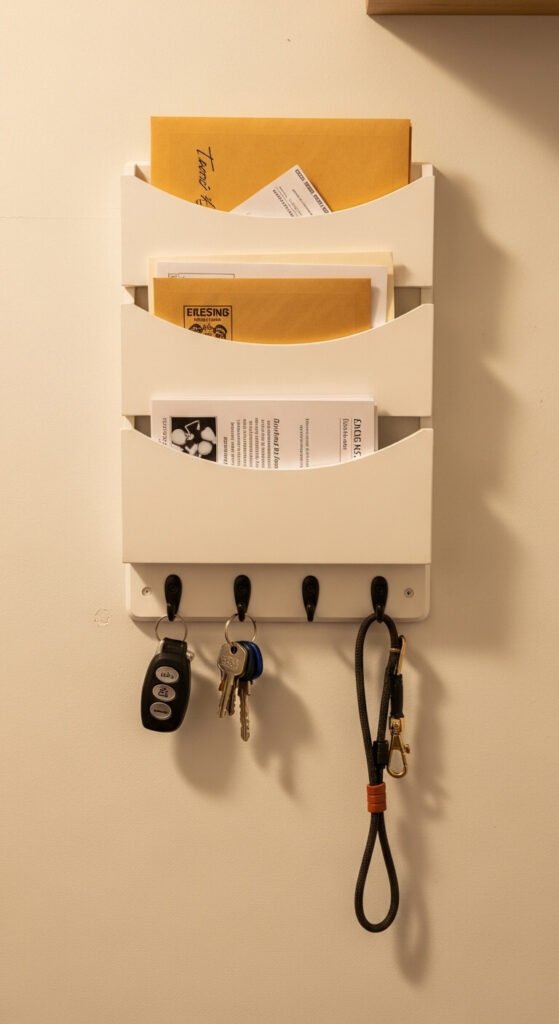
Keys and mail seem to vanish the moment you walk in the door.
A simple wall-mounted organizer gives both a dedicated home. Look for ones that combine mail slots with hooks below — you can find these at Target or IKEA for $20–$35.
Mount it at eye level right beside the door. Make a rule: keys go on the hook the moment you walk in. It takes two weeks to build the habit, but once it sticks, you’ll never lose your keys again.
6. Use Pegboard to Customize Your Storage
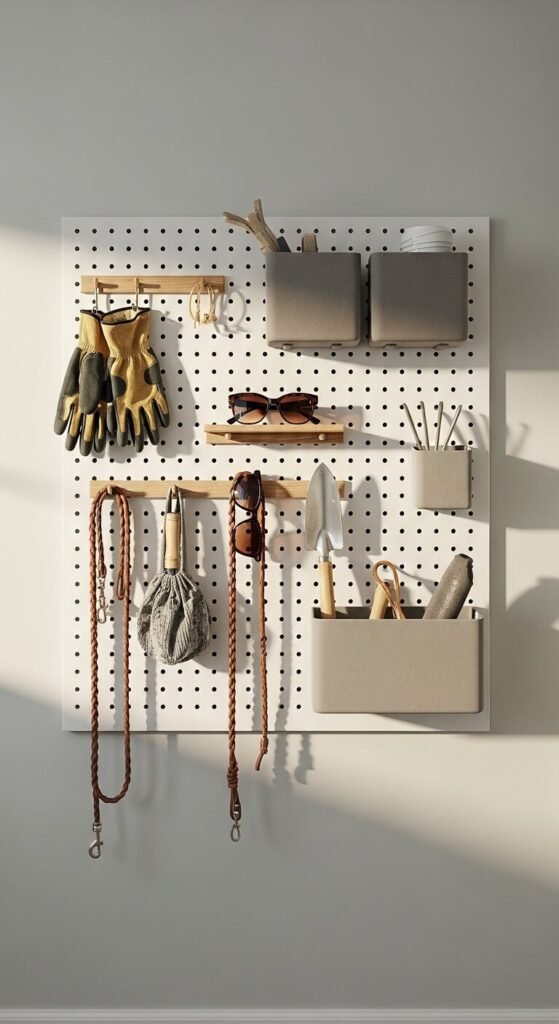
Pegboard is the most flexible mudroom wall you can build.
A 2×4-foot panel costs around $15 at a hardware store. Paint it any color and add hooks, shelves, and bins wherever you need them.
The best part: you can rearrange everything as your family’s habits change. Add a bin for dog supplies in summer, swap it for a sports gear hook in fall.
It’s a genuinely affordable DIY project anyone can do in an afternoon with basic tools.
7. Create Individual Cubbies for Each Family Member
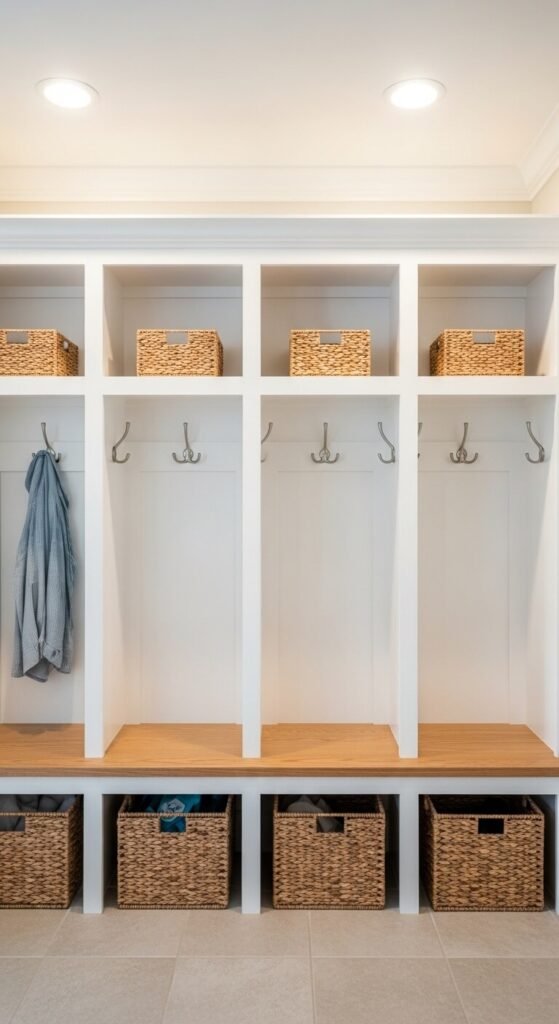
Everyone gets their own space. That’s the rule.
When each person has a dedicated cubby — hook, shelf, and bin — they’re responsible for keeping it tidy. No more blaming each other for the pile on the floor.
You can build a basic cubby unit with plywood for under $100, or buy a modular cube shelf from IKEA and add hooks above.
Assign cubbies by person, not by item type. It’s the single most effective way to keep a mudroom organized long-term.
8. Add a Chalkboard or Whiteboard for Daily Notes
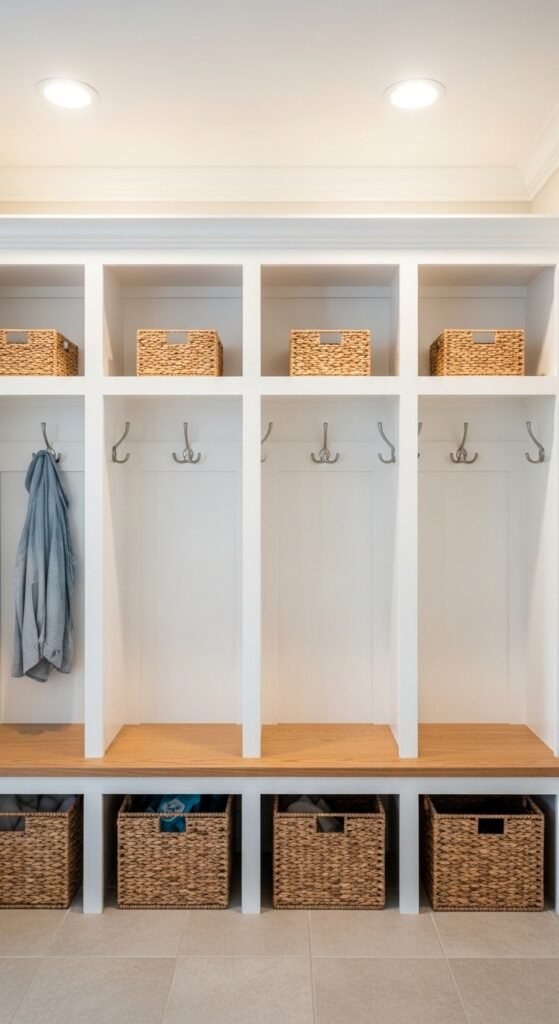
A mudroom is a communication hub, not just a storage space.
A chalkboard or whiteboard mounted near the door helps your family stay on the same page. Write reminders, permission slip deadlines, after-school schedules — whatever your household needs.
Chalkboard paint lets you turn any wall section into a writing surface for about $15 a can. Or hang a framed whiteboard for a cleaner look.
Keep a marker or chalk on a ledge nearby so the board actually gets used.
9. Use Clear Bins So You Can See What’s Inside
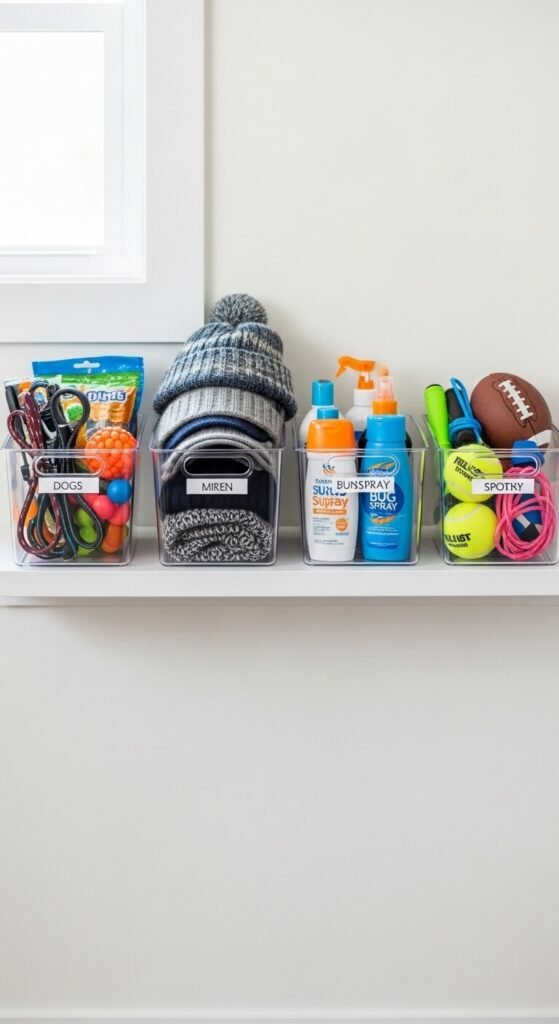
Mystery bins don’t get used.
When you can’t see what’s inside, you stop putting things away properly. Clear bins solve this instantly — everything is visible at a glance, so you know exactly where things are and when they’re running low.
Use them for seasonal items: hats and gloves in winter, sunscreen and bug spray in summer.
Clear bins from the dollar store or IKEA work perfectly. No need to spend more than $3–$5 per bin.
10. Build a DIY Boot Drying Station
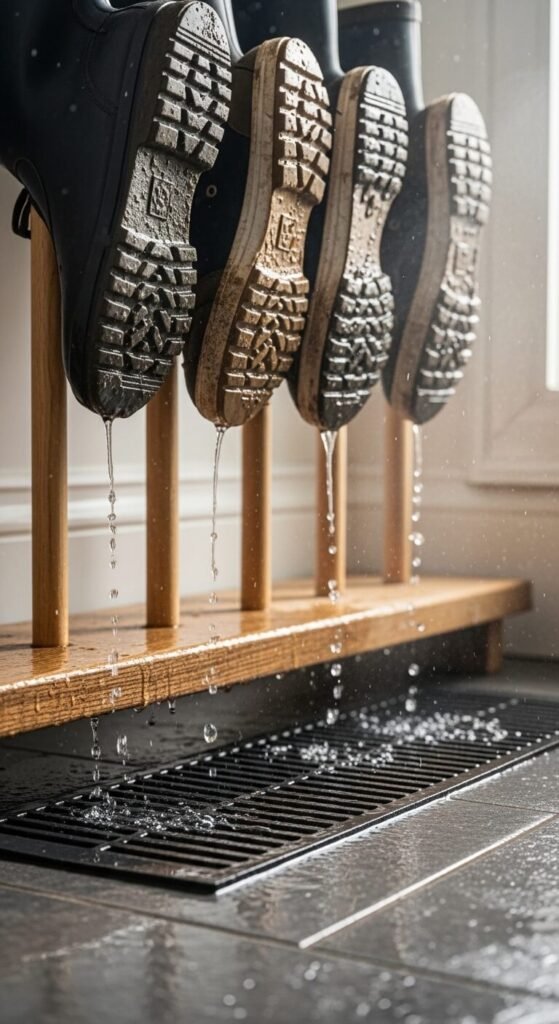
Wet boots left upright stay wet for days and start to smell.
A simple boot drying station flips that. Attach wooden dowels or PVC pipes to a base board so boots hang upside-down. Air circulates inside, and they dry overnight.
You can build one with a scrap 2×6 board and a few $1 dowels from the hardware store.
Mount it near a door or in a low cubby. It’s one of those ideas that sounds too simple to matter — until you try it.
11. Hang a Full-Length Mirror
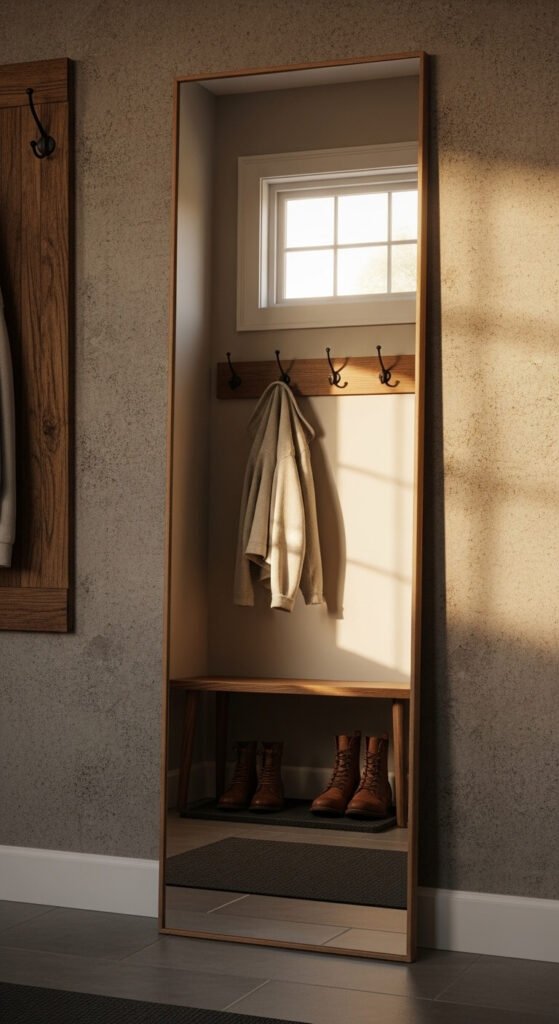
Everyone does a last-second check before leaving the house.
A full-length mirror in the mudroom makes that easy — and it also makes the space feel bigger and brighter.
Lean a mirror against the wall for a rental-friendly option. Or mount a frameless one directly to the wall for a cleaner look.
A basic full-length mirror runs $20–$50. Place it near the door where natural light hits it so you can actually see yourself without squinting.
12. Use Over-the-Door Organizers for Extra Storage
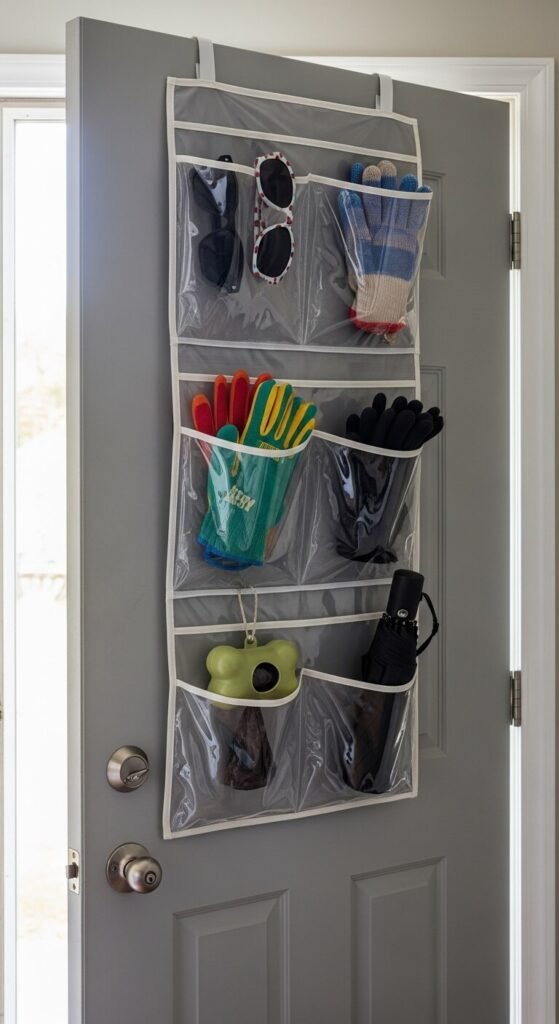
The back of the door is wasted space in most mudrooms.
An over-the-door organizer with pockets or hooks instantly doubles your storage without taking up any wall or floor space.
Use it for small, grab-and-go items: sunglasses, lip balm, a spare dog leash, folded reusable bags. Things that need to be close to the exit but always seem to disappear.
These organizers cost $10–$20 and take under two minutes to hang. No tools required.
13. Install Floating Shelves Above the Hooks
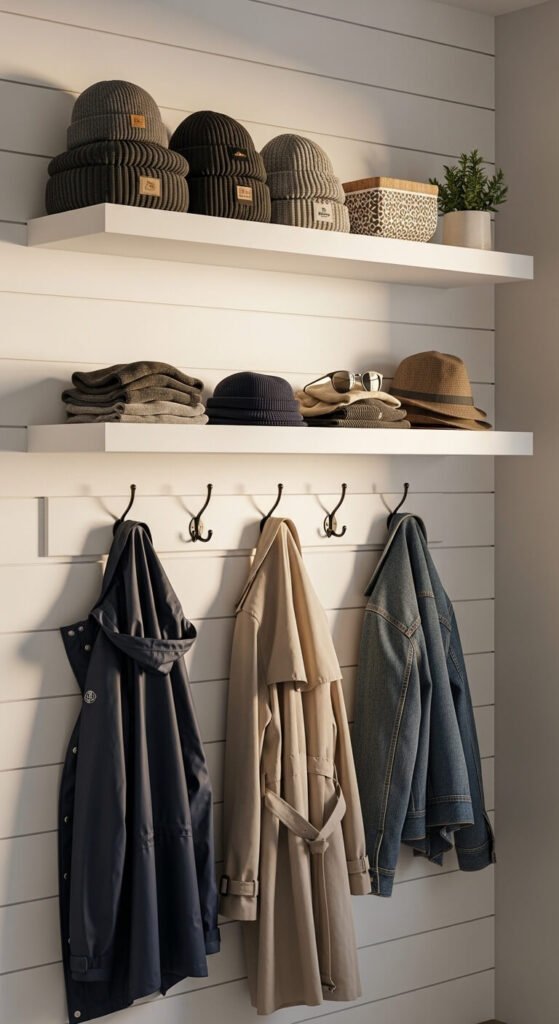
Most mudrooms waste the wall space above the hooks.
Two floating shelves up high give you room for seasonal items, backup supplies, or things you need occasionally but not every day: extra umbrellas, spare shoe inserts, a first aid kit.
IKEA LACK shelves are under $15 each and hold up to 22 lbs. Install them at least 12 inches above your hooks so they don’t interfere with hanging coats.
Use baskets to corral loose items so the shelves don’t look cluttered.
14. Designate a “Drop Zone” Tray
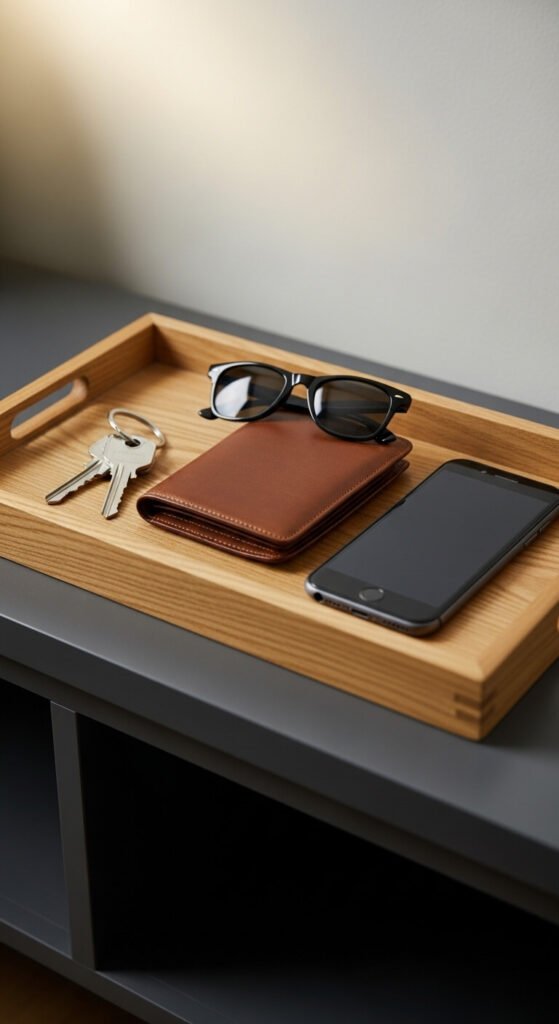
Everyone drops stuff the second they walk in. Work with it.
A dedicated drop zone tray gives wallets, phones, keys, and sunglasses a specific landing spot. It corrals the clutter into one contained area instead of spreading it across the whole bench.
Use any flat tray — a wooden serving tray, a small basket, or a shallow dish. It costs nothing if you already have one.
The rule is simple: anything that leaves the house with you goes in the tray when you come home.
15. Add a Small Rug or Mat That’s Easy to Clean
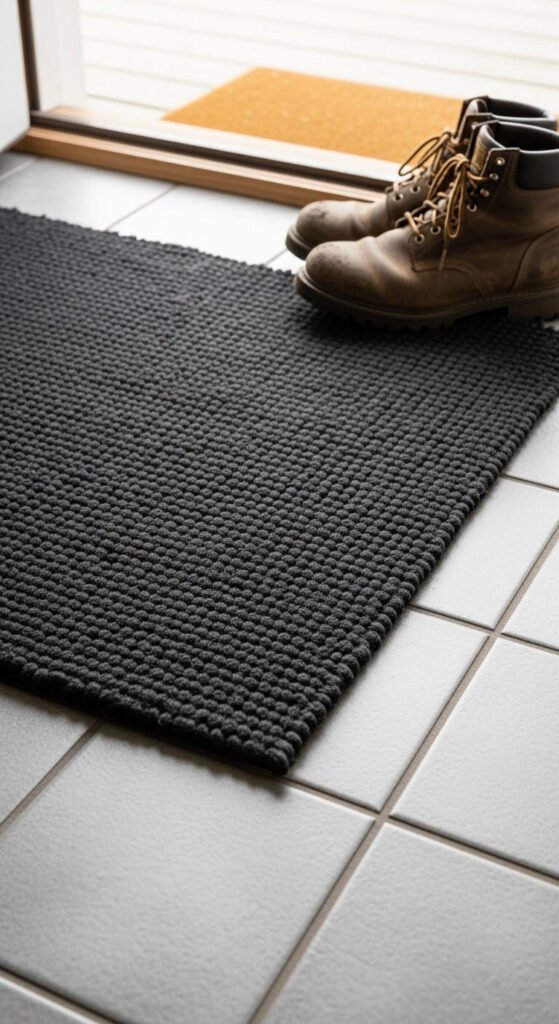
Dirt comes in on shoes. A rug right at the door catches most of it.
Choose one that’s machine washable or easy to hose off. Indoor-outdoor rugs work perfectly for this because they handle moisture and heavy foot traffic.
Avoid light-colored rugs in this spot — they show every speck of mud and require constant cleaning.
A good mudroom mat runs $20–$50. Look for non-slip backing so it stays in place when the door swings open.
16. Repurpose a Locker Unit From a Thrift Store or School Surplus
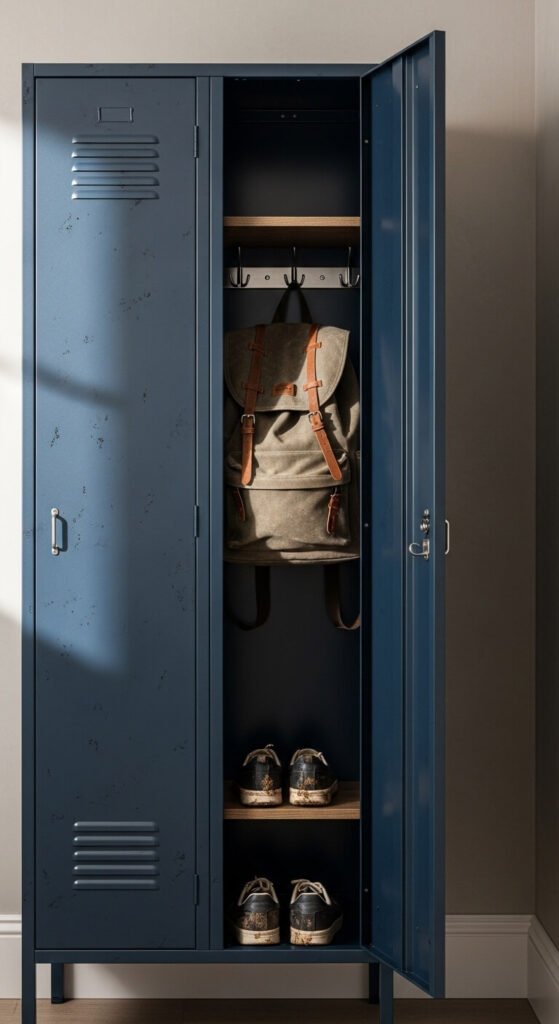
Old school lockers are one of the most underrated mudroom finds.
They’re built to withstand daily abuse, they’re already designed for hanging and storing gear, and you can often find them at school surplus sales or Habitat for Humanity ReStores for $20–$60.
Paint them any color to match your space. Add a hook inside the door for keys or an extra bag.
Each locker can hold an entire person’s daily gear — coat, backpack, shoes — in one contained column.
17. Use Wicker Baskets for a Warm, Organized Look
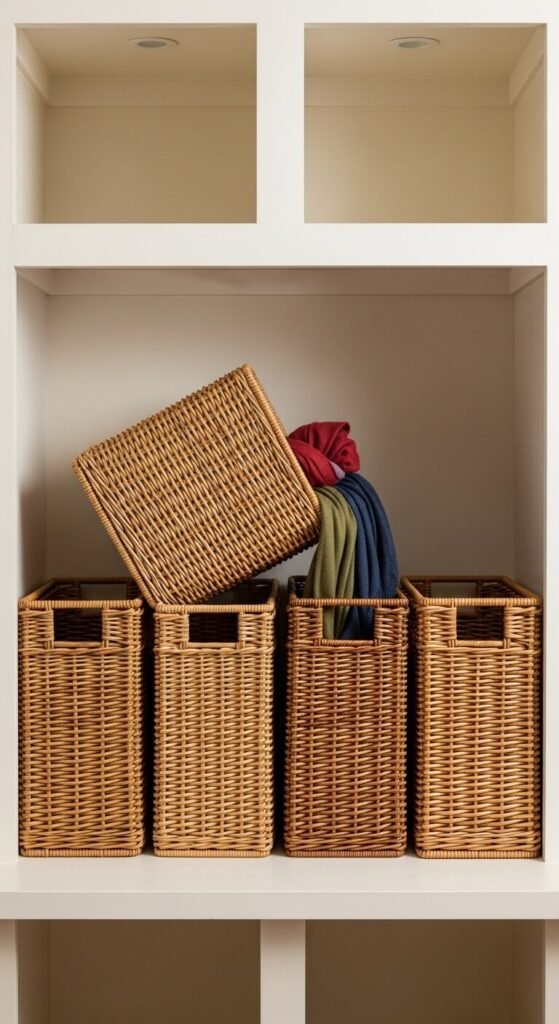
Wicker baskets make a mudroom look intentional instead of just organized.
They’re also practical: they hold their shape, fit most standard shelf sizes, and hide the random collection of things every family accumulates.
Use them for hats and gloves, sports gear, reusable bags, or anything that doesn’t have a better home.
Dollar stores, TJ Maxx, and thrift shops all carry them. A matching set of 4 baskets can cost as little as $20 total.
18. Add Hooks at Kid Height
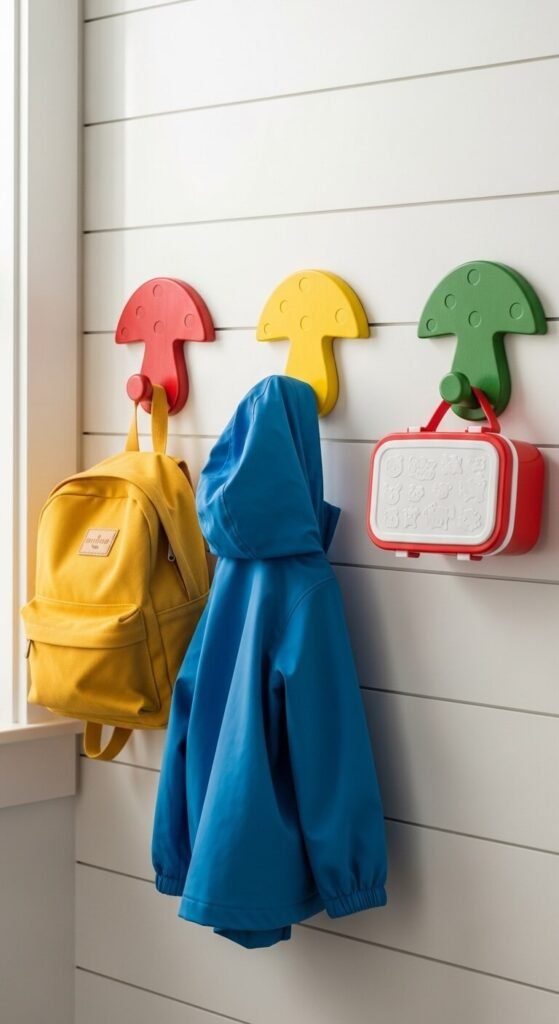
Kids can’t hang their things if the hooks are too high.
Install a second row of hooks at their height — about 42–48 inches from the floor for most school-age kids. When hanging their backpack and jacket is easy, they’ll actually do it.
Choose fun shapes or colors to make it feel like their space. Mushroom, animal, or geometric hooks are $10–$20 for a set of 4 on Amazon or at Target.
This small change cuts the “just drop it on the floor” habit in half.
19. Roll In a Utility Cart for Flexible Storage
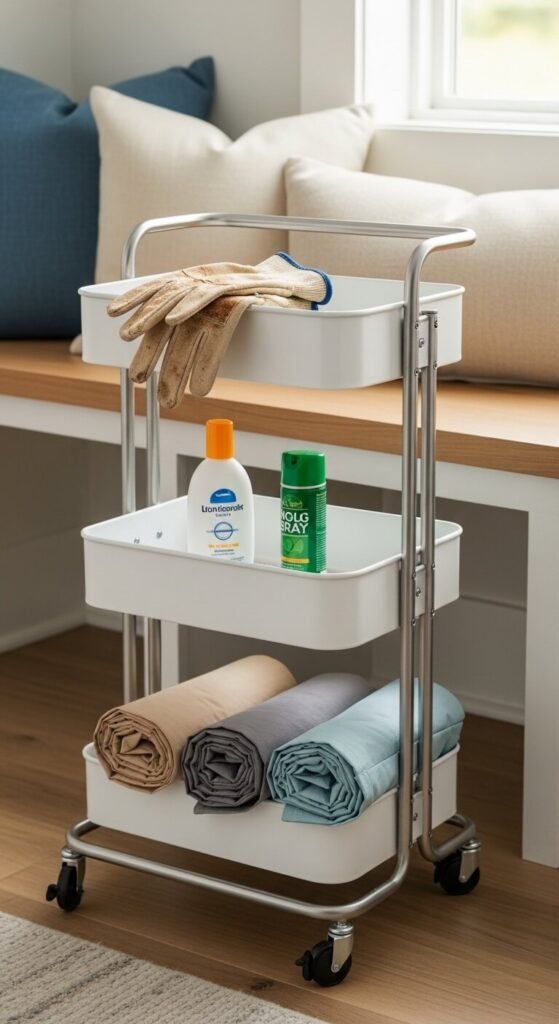
Not every mudroom has built-in storage — and that’s fine.
A rolling utility cart solves the problem without any installation. You can move it out of the way when you need space, roll it to another room for a different job, or tuck it in a closet entirely.
Use it for seasonal gear, gardening supplies, cleaning products, or whatever rotates in and out of your entryway.
IKEA’s RÅSKOG cart is under $40 and is one of the most popular home organization tools for good reason.
20. Create a Sports Gear Zone
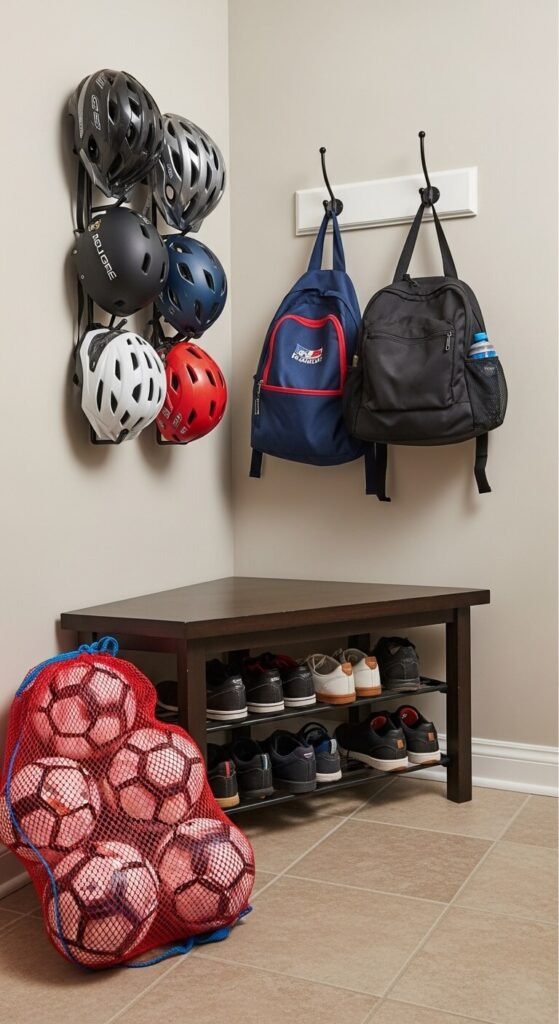
Sports gear takes up more mudroom space than almost anything else — and it multiplies fast with kids.
Contain it in one dedicated zone: a low shelf for cleats, wall-mounted hooks for bags and helmets, and a large bin or laundry bag for balls and padding.
Label everything by sport if your family plays multiple.
A mesh laundry bin for balls costs about $8. Double hooks for bags run about $3 each. A small investment for a lot less chaos before game day.
21. Use a Tension Rod for Drip-Drying Umbrellas
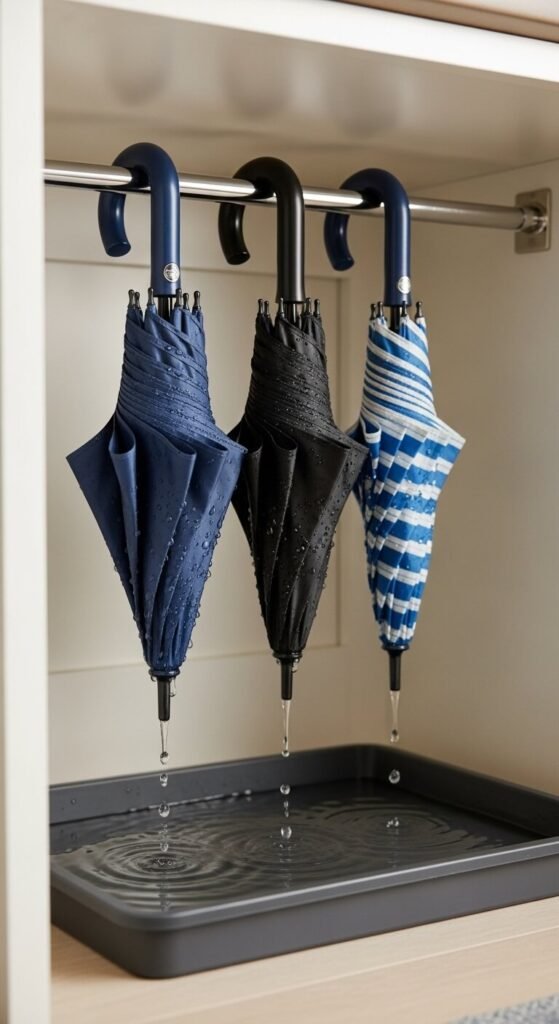
Wet umbrellas drip on everything they touch.
A simple tension rod mounted low — inside a cabinet, under a bench shelf, or in the corner of a closet — lets you hang umbrellas upside-down to drip dry without soaking anything around them.
Place a boot tray or small towel beneath to catch the water.
Tension rods cost $5–$10 and require zero tools. This is one of those tiny fixes that makes a surprising difference on rainy days.
22. Build a Charging Station Into the Space
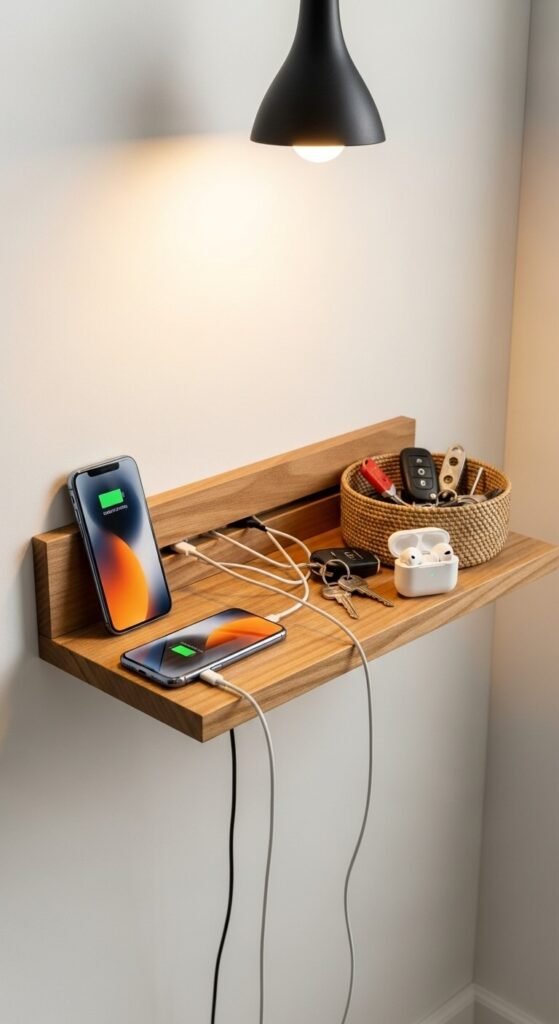
Phones and devices need to charge, and the mudroom is a natural stopping point.
Build a simple charging station into your existing setup: a shelf with a power strip hidden underneath and a small hole or channel for cables to pass through.
Keep it tidy with short cables and one cable per device. Label each spot if you have multiple family members.
A basic power strip costs $10. A small shelf is $15–$20. Together, they solve the “phone dying at school” problem before it starts.
23. Repaint the Space in a Light, Durable Color
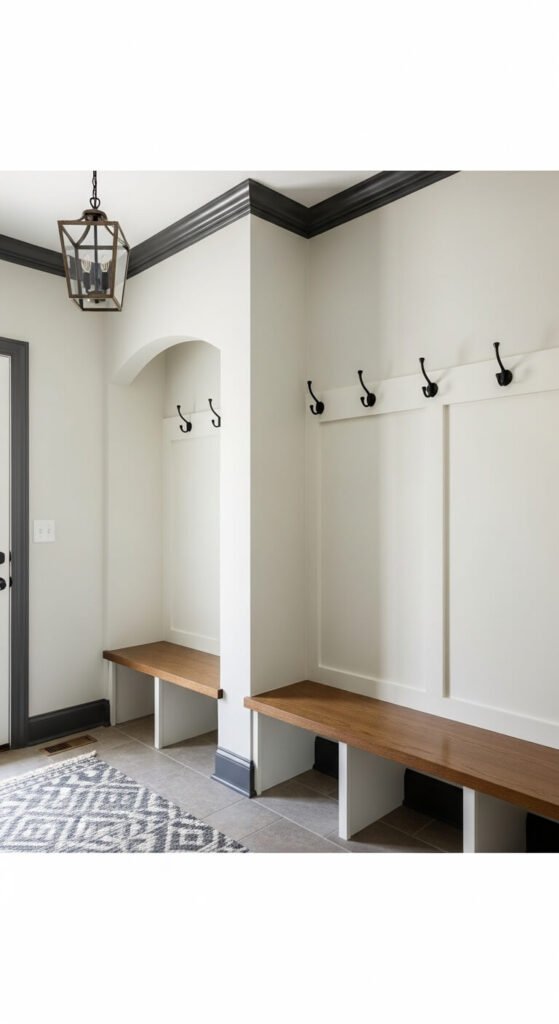
Color matters more than people think.
A dark or dingy mudroom feels chaotic no matter how organized it is. A light, warm white or soft greige in a satin finish makes the space feel clean and open — and wipes down easily when scuff marks appear.
Satin finish is non-negotiable in a mudroom. Flat paint traps dirt and can’t be cleaned without removing color.
One gallon of paint runs $30–$45 and covers most mudroom walls twice. It’s one of the highest-impact changes you can make on a small budget.
Conclusion
A functional mudroom doesn’t require a big renovation or a designer budget. What it takes is a clear system — hooks, bins, zones, and a spot for everything your family uses daily. Start with the areas that cause the most friction: shoes on the floor, missing keys, wet coats with nowhere to go. Fix those first. Once the basics are in place, you can layer in small upgrades over time. The goal isn’t a perfect showroom. It’s a space that makes your mornings faster and your evenings calmer — and that’s something any home can have.