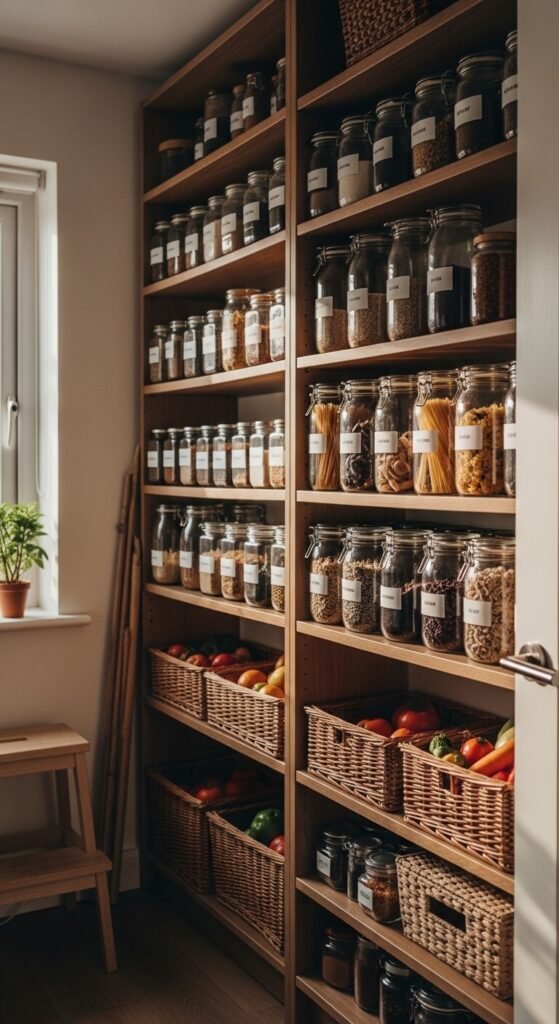
You open the pantry door. Something falls out. You grab a can from the back, check the date — expired two years ago. Sound familiar? A disorganized pantry doesn’t just cause stress. It quietly drains your grocery budget every single week. The average household throws away hundreds of dollars in food annually because items get lost, forgotten, or buried. The good news? You don’t need a kitchen renovation or a Pinterest-perfect budget to fix this. These 23 practical pantry organization methods will help you see what you have, use what you buy, and stop throwing money in the trash.
1. Use the “First In, First Out” Rotation Rule
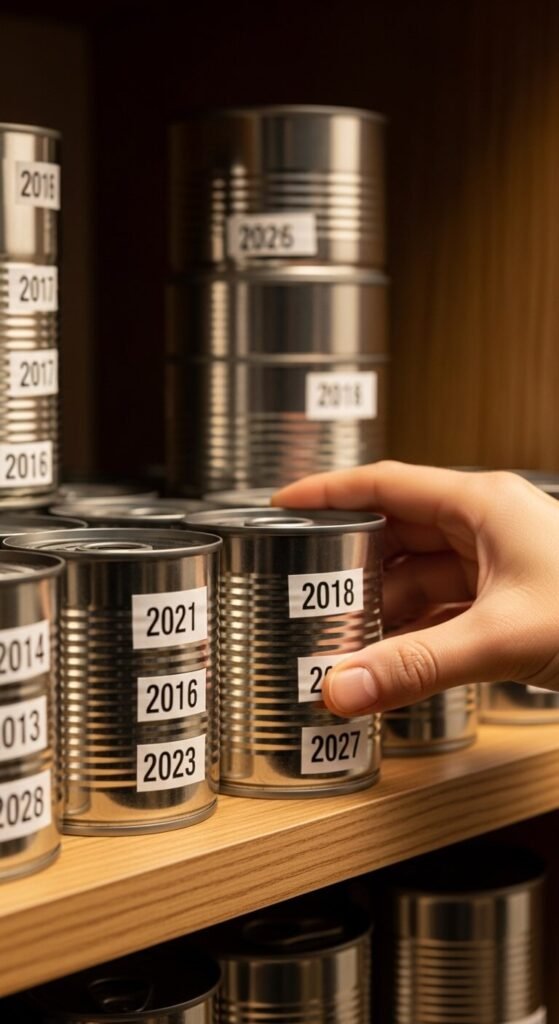
This is the rule grocery stores use — and it works at home too.
When you bring new groceries in, push older items to the front and stack new ones behind. It takes 30 extra seconds. But it means you always reach for what expires first. No more finding a forgotten can of chickpeas three years past its date. Use a simple label maker or masking tape to mark purchase dates if the expiration print is small.
2. Install a Door-Mounted Spice Rack
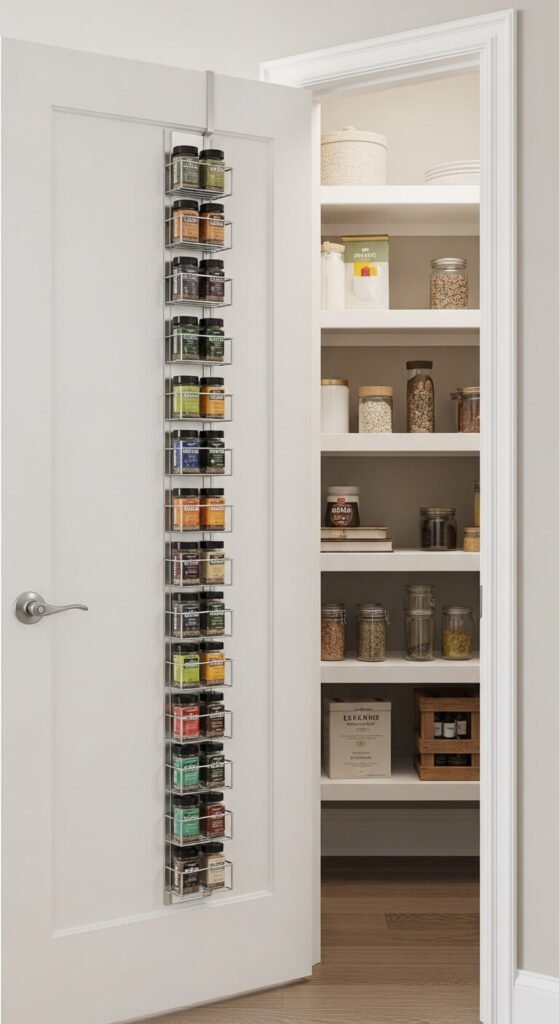
The back of your pantry door is wasted space. A simple over-the-door rack costs under $20 and holds 20–30 spice jars. This frees up an entire shelf. You can see every spice at a glance instead of digging through a crowded drawer. Look for models with adjustable wire pockets that fit both small and tall jars. It installs in minutes with no drilling required.
3. Label Everything with the Date You Opened It
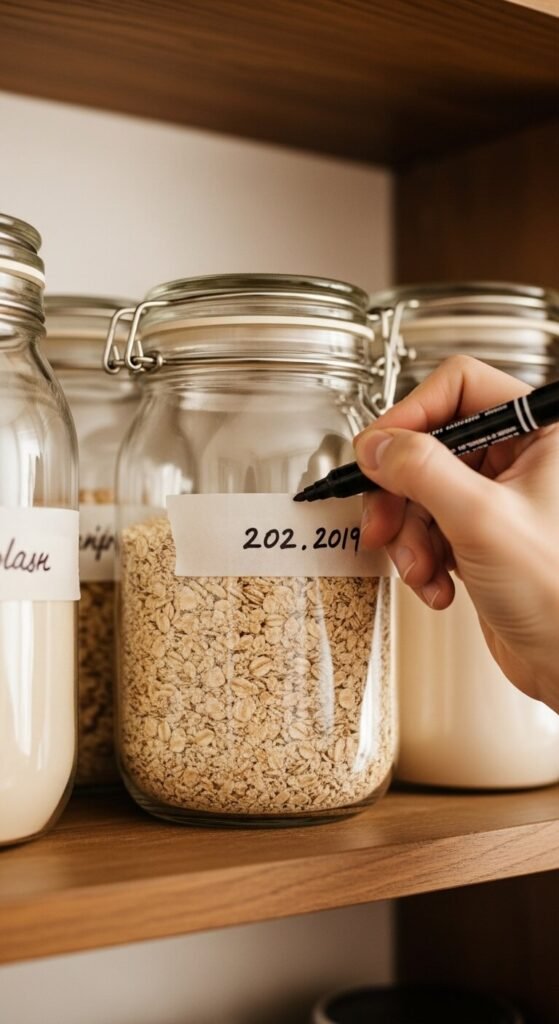
Opening a bag of flour is easy. Remembering when you opened it? Much harder.
Add a piece of masking tape to anything you open and write the date with a marker. This works for flours, cereals, snacks, and even canned goods once opened. It takes three seconds and eliminates the guesswork. You’ll know exactly when to use something up before it goes stale. This habit alone can cut your food waste noticeably in the first month.
4. Group Items by Meal Category, Not Food Type
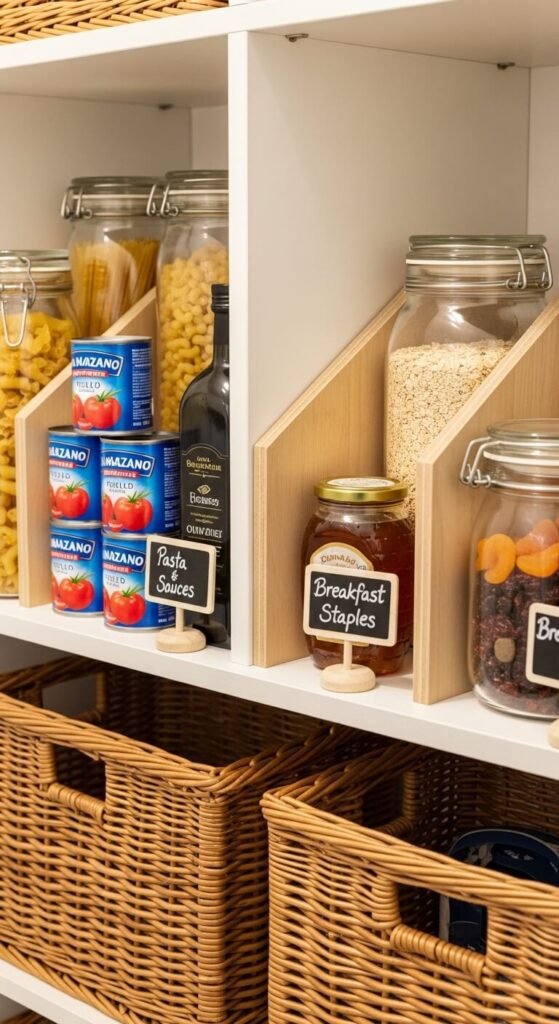
Most people group pasta with pasta and cans with cans. Try something different.
Group items by the meals they make. Put pasta, canned tomatoes, olive oil, and garlic powder together. Put oats, brown sugar, and raisins in another zone. Now when you’re meal planning, you grab a “zone” instead of hunting across five shelves. You’ll also spot quickly when a meal zone is running low and needs restocking.
5. Use Clear Bins to Create Zones on Deep Shelves
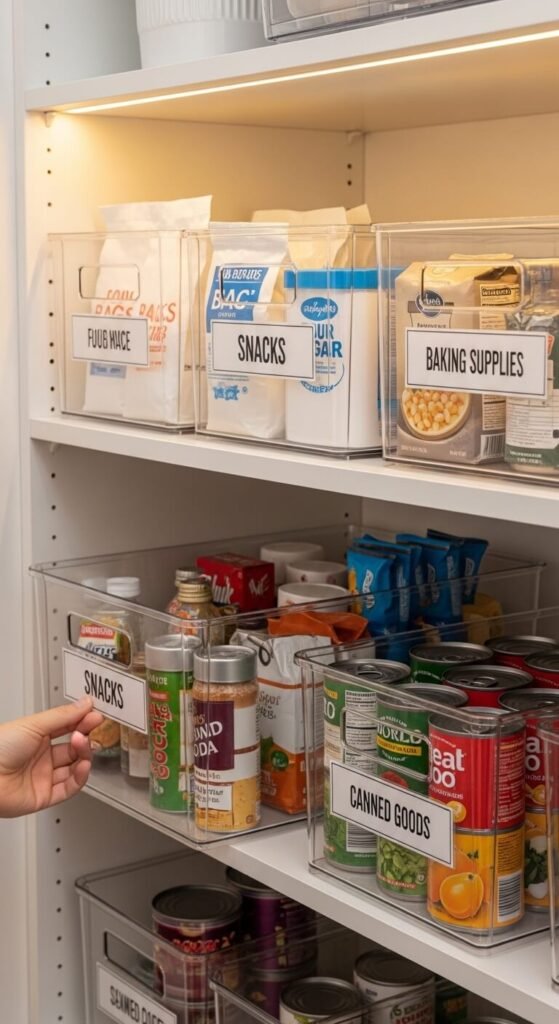
Deep shelves swallow food whole. You buy something, push it back, and never see it again.
Clear pull-out bins act like drawers inside your pantry. Slide the whole bin forward and see everything inside at once. Dollar stores and discount home stores sell these for $2–$5 each. You don’t need matching sets. Even mismatched bins are far better than loose items piling up in the back where they disappear for months.
6. Create a “Use First” Bin for Near-Expiry Items
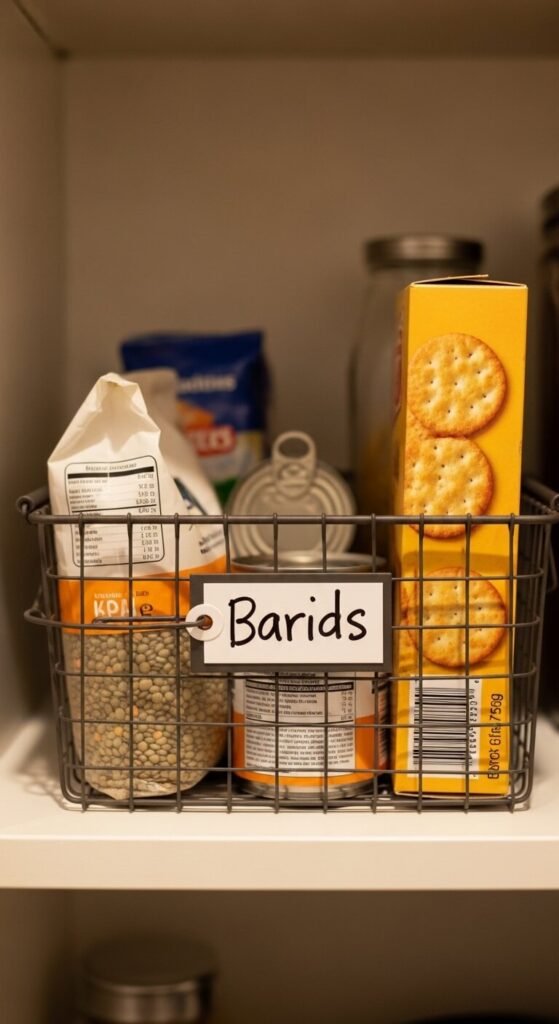
This single bin can save you $20–$30 every month.
Keep one small basket front and center in your pantry. Every time you notice something getting close to its use-by date, move it into this bin. Before you write a grocery list, check the bin first. Build that week’s meals around what’s in there. It’s the simplest habit for reducing waste and actually a fun cooking challenge. Some of the best recipes come from using up random ingredients creatively.
7. Switch to Uniform Airtight Containers for Bulk Items
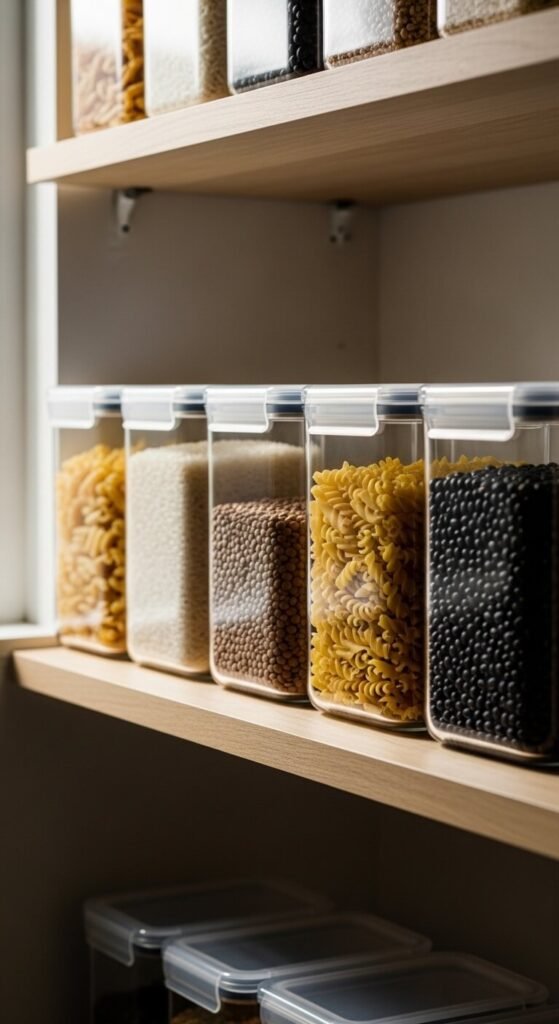
Random bags and boxes make your pantry look and feel chaotic. They also let air and pests in.
Decanting into airtight containers keeps dry goods fresh two to three times longer. You don’t have to buy expensive containers. IKEA KORKEN jars, dollar store canisters, or even recycled pasta sauce jars work perfectly. Square containers are better than round — they use shelf space more efficiently and don’t roll around.
8. Use Tension Rods to Create Can Organizers
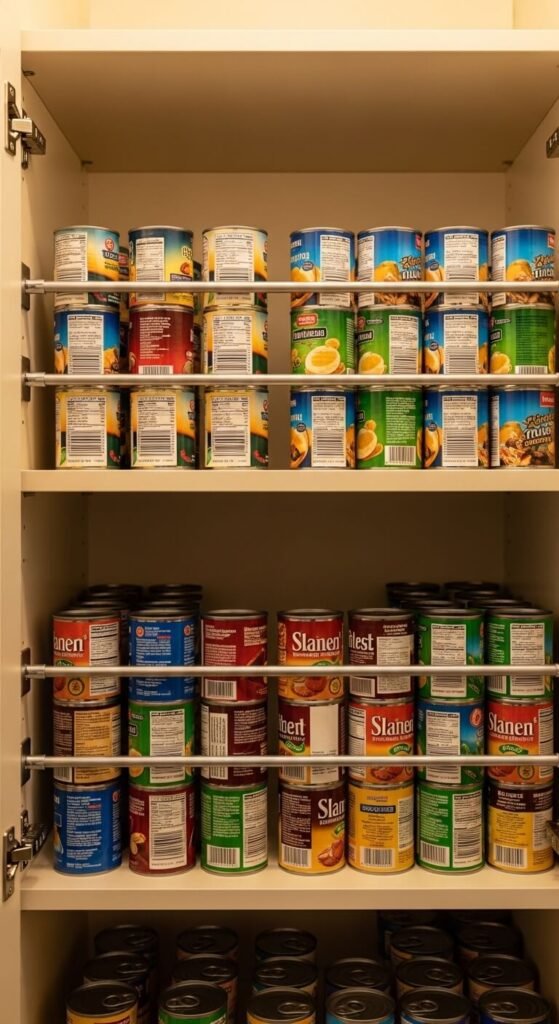
Tension rods cost $3 and they’re not just for curtains.
Mount two tension rods horizontally across a shelf to create a barrier that holds cans in organized rows. They grip the shelf walls without any tools or drilling. This prevents cans from rolling around and keeps everything visible. Works especially well on wide shelves where cans tend to tip over and get hidden behind each other.
9. Store Snacks in a Designated Grab-and-Go Basket
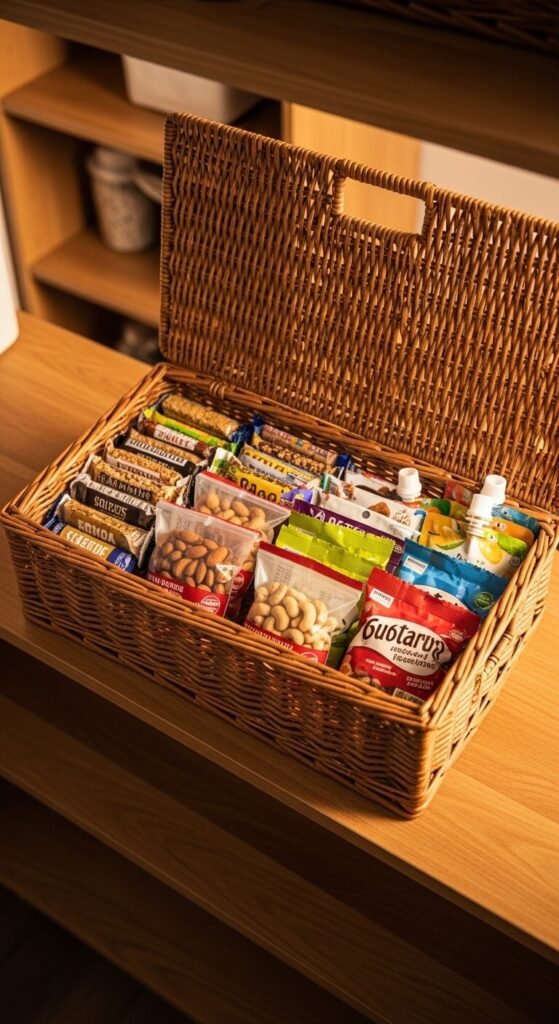
When snacks are scattered, people rummage. Rummaging leads to forgotten items and over-buying.
One dedicated snack basket stops the chaos. Keep it at eye level for adults or a lower shelf if kids need access. Refill it weekly during your pantry reset. When the basket is empty, that’s your cue to restock — not when you find three crushed granola bars behind the cereal. It also makes portion awareness much easier since you can see at a glance what’s left.
10. Hang a Magnetic Notepad on the Pantry Door
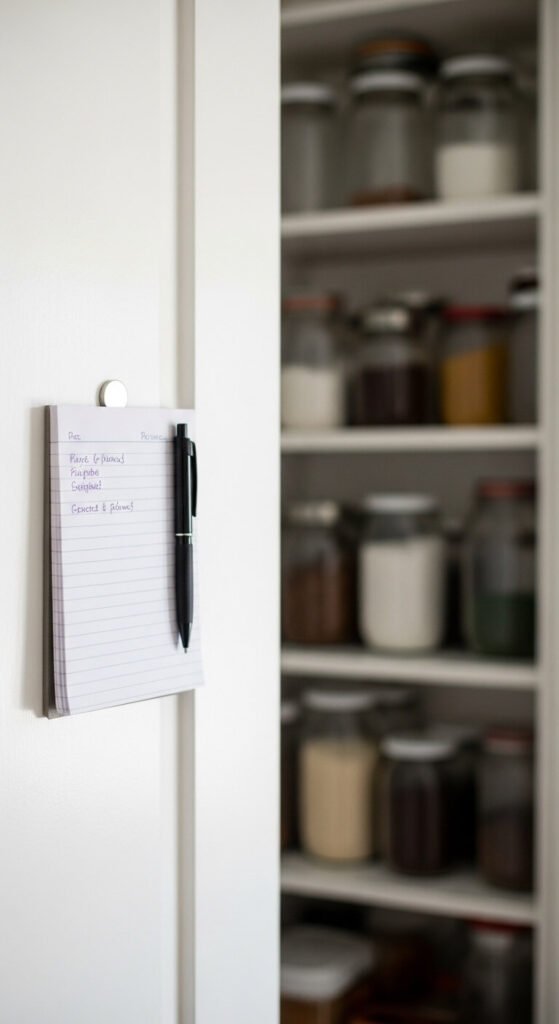
The moment you run out of something is the exact moment to write it down. Most people don’t.
A small magnetic notepad on the pantry door makes the habit effortless. You finish the last of the oats, you write “oats.” No more mental lists, no more forgetting at the store. Some families keep a running meal plan on the same door. Magnetic notepads cost $3–$5 at most office supply or dollar stores.
11. Designate One Shelf Entirely for Baking Supplies
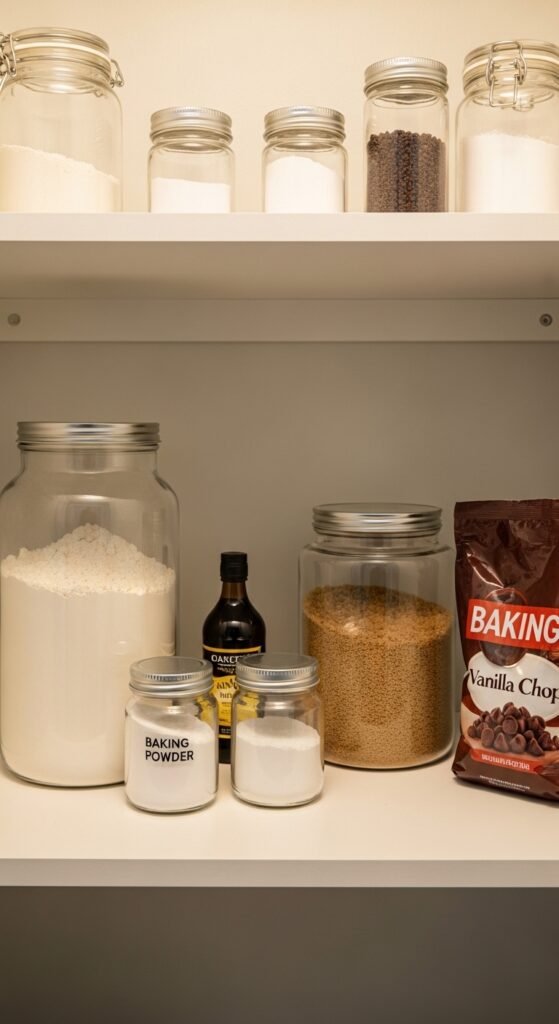
Baking supplies tend to wander. They end up mixed with snacks, hidden behind cans, or forgotten entirely.
One dedicated baking shelf means you can see your full inventory at a glance before you start a recipe. You’ll stop buying a second bag of baking powder when you already have one. This shelf doesn’t need to be large — even a half-shelf works. Just keep it consistent so everyone in the household knows where to find and return items.
12. Use Stackable Step Shelves for Canned Goods
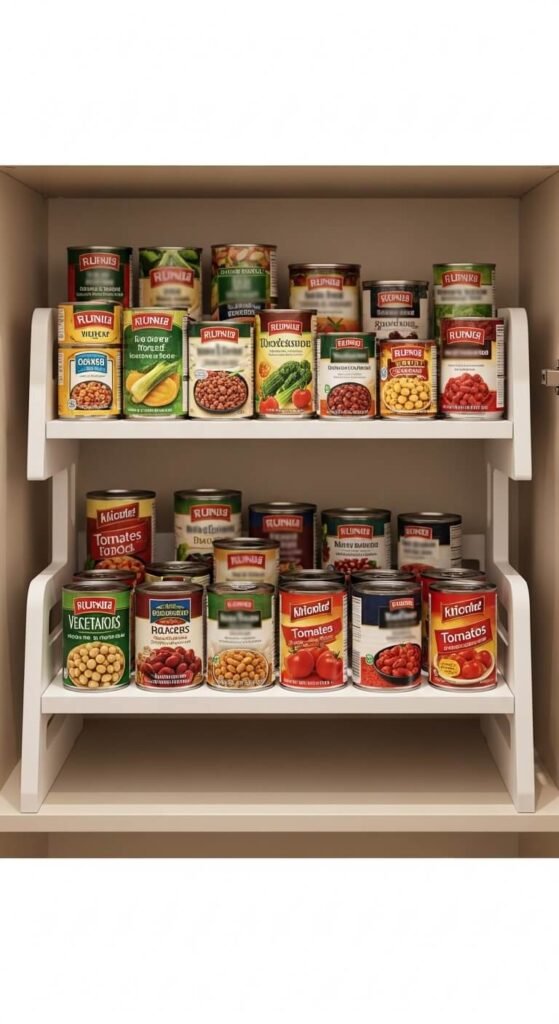
The problem with canned goods on a flat shelf is simple: you can only see the front row.
Step shelves fix that instantly. They create two levels so every can is visible. No digging. No expired cans hiding in the back. A basic bamboo or plastic step shelf costs $8–$15. Some people DIY with spare wood and a few screws. Either way, it’s one of the highest-impact changes you can make in under five minutes.
13. Dedicate a Bin for School and Work Lunches
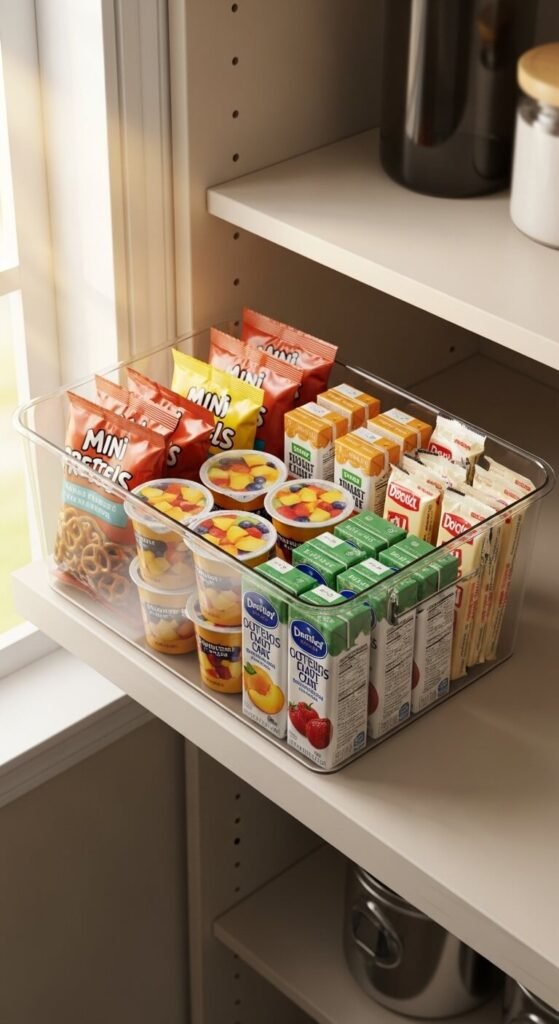
Mornings are chaotic. The last thing you need is to hunt for lunch supplies.
Keep one bin stocked with lunchbox-ready items — small bags, single-serve snacks, drink pouches. Restock it once a week during your pantry reset. When it runs low, it goes straight onto your shopping list. This also prevents kids from snacking on the lunch supplies during the week, which cuts down on the “we ran out already?” problem significantly.
14. Store Opened Bags in Clip-Sealed or Ziplock Bags
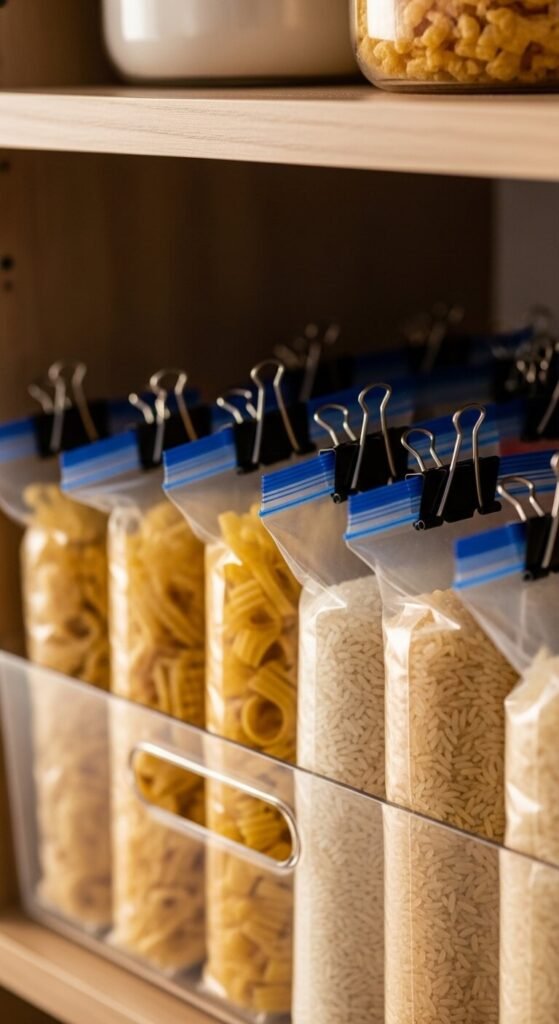
Opened bags are where food waste begins. Chips go stale. Flour picks up moisture. Pasta spills.
Seal opened bags immediately with large binder clips, chip clips, or transfer the contents to a ziplock. Binder clips cost almost nothing and last years. This one habit extends the freshness of nearly everything in your pantry. Stale crackers and soft cereal are two of the most commonly wasted pantry items — both are entirely preventable.
15. Do a Weekly 10-Minute Pantry Reset
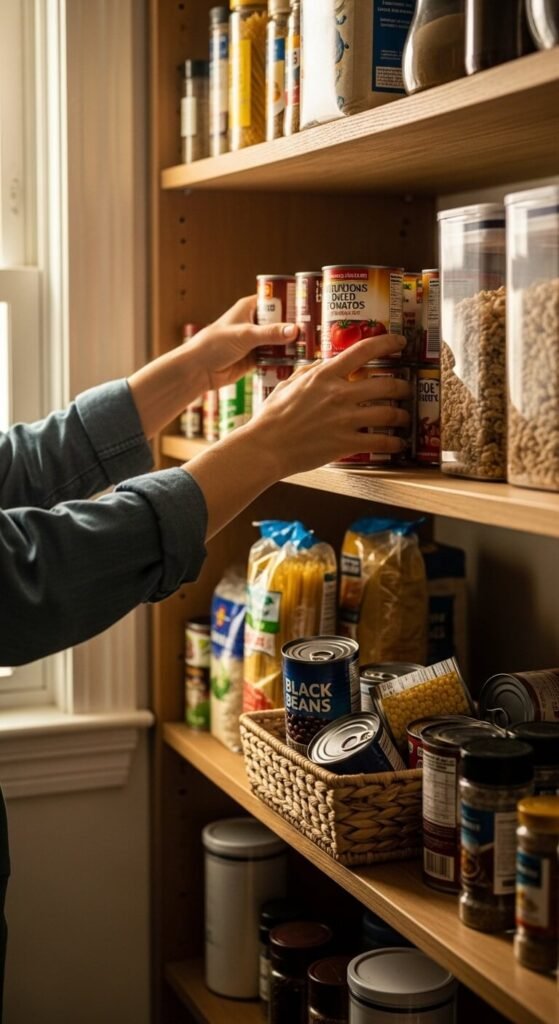
A messy pantry isn’t a one-time fix. It needs a rhythm.
Set aside 10 minutes once a week — Sunday evenings work well — to pull items forward, check for anything near its date, and refill your “use first” bin. This tiny habit prevents the big monthly overhaul you dread. It also makes grocery shopping faster because you always know what you have. Think of it as a 10-minute investment that pays back in less food waste every single week.
16. Use Lazy Susans for Corner Shelves and Condiments
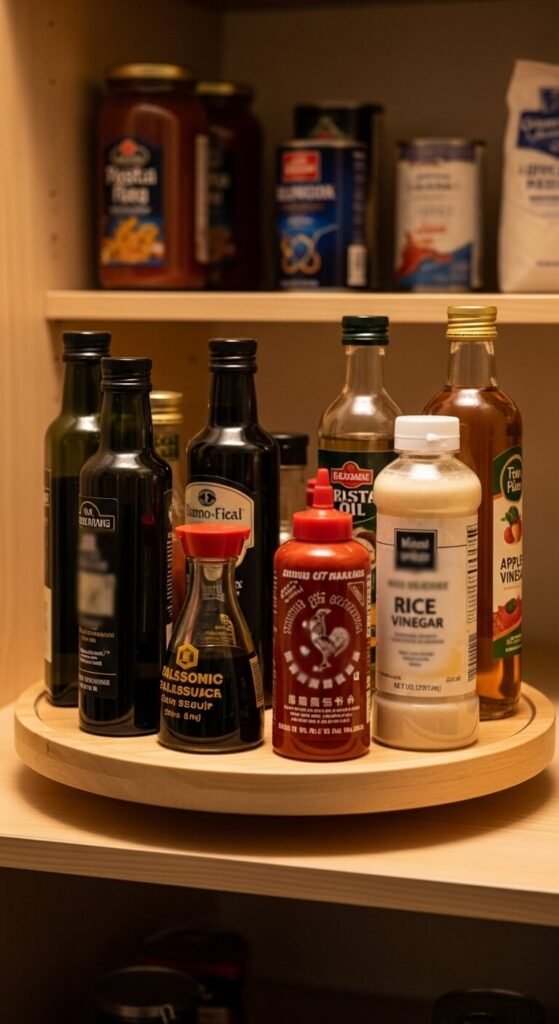
Corner shelves and condiment clusters are notorious black holes.
A lazy susan fixes both problems. Spin it to see everything in one rotation. No more bottles tipping over and hiding behind each other. A basic plastic lazy susan costs $5–$10. Use one for cooking oils and vinegars, another for sauces and condiments. They clean easily too — just wipe them down during your weekly reset.
17. Store Rarely Used Appliances Elsewhere to Free Up Shelf Space
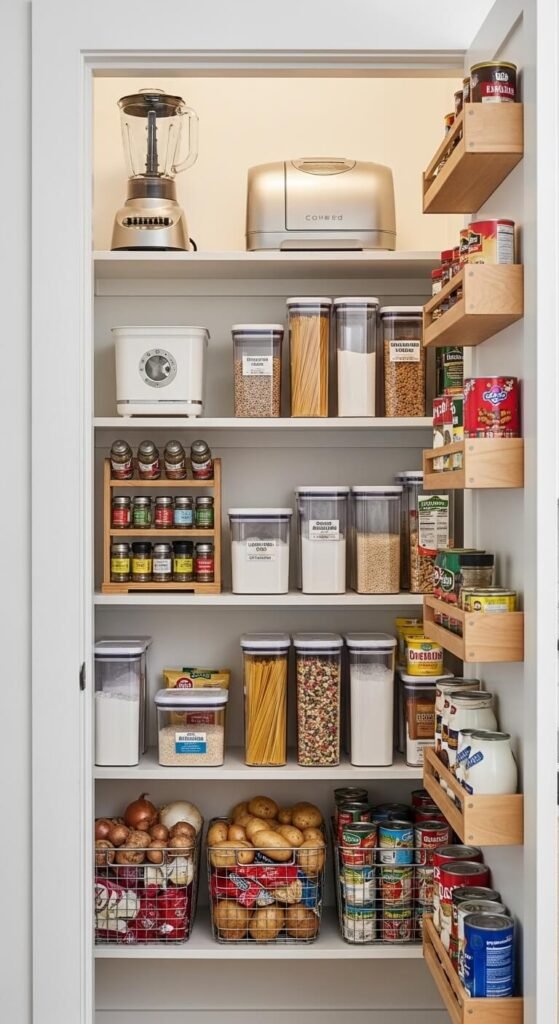
The waffle maker you use twice a year doesn’t belong in your pantry.
Move bulky, rarely used appliances to a high cabinet, a closet shelf, or under a bed in a storage bin. You’ll gain an entire shelf — sometimes two. That freed space can hold a month’s worth of dry goods, visible and accessible. It’s the most underrated pantry hack because it costs nothing and the result is immediate.
18. Keep a Running Inventory List on Your Phone
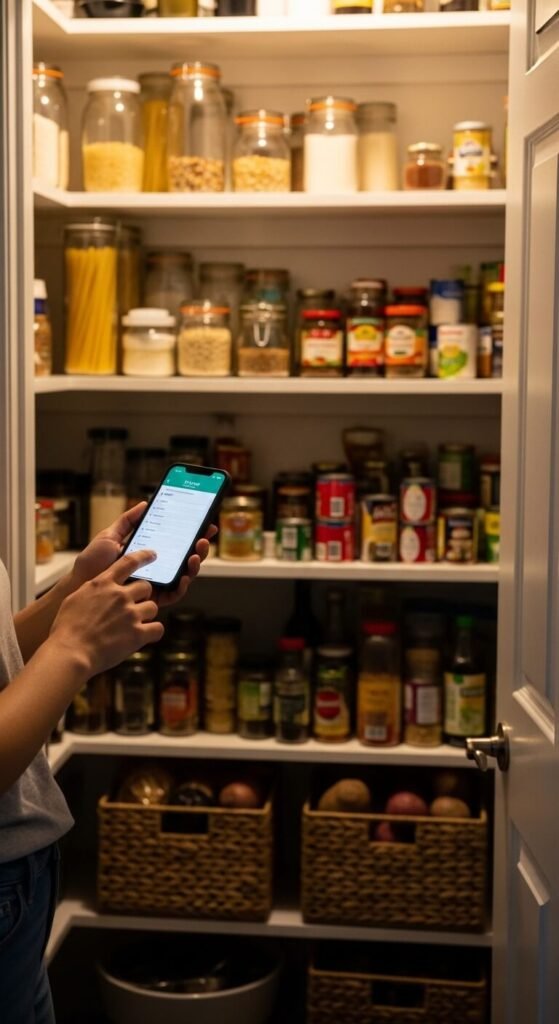
Buying duplicates you don’t need is a slow drain on your budget.
A simple notes app on your phone can hold your pantry inventory. Update it when you open or finish something. Check it before every grocery trip. You don’t need a fancy app — a plain list works fine. Some people take a quick photo of their pantry before shopping. Either way, knowing what you have before you buy more saves real money every week.
19. Use Over-Door Shoe Organizers for Small Packets and Pouches
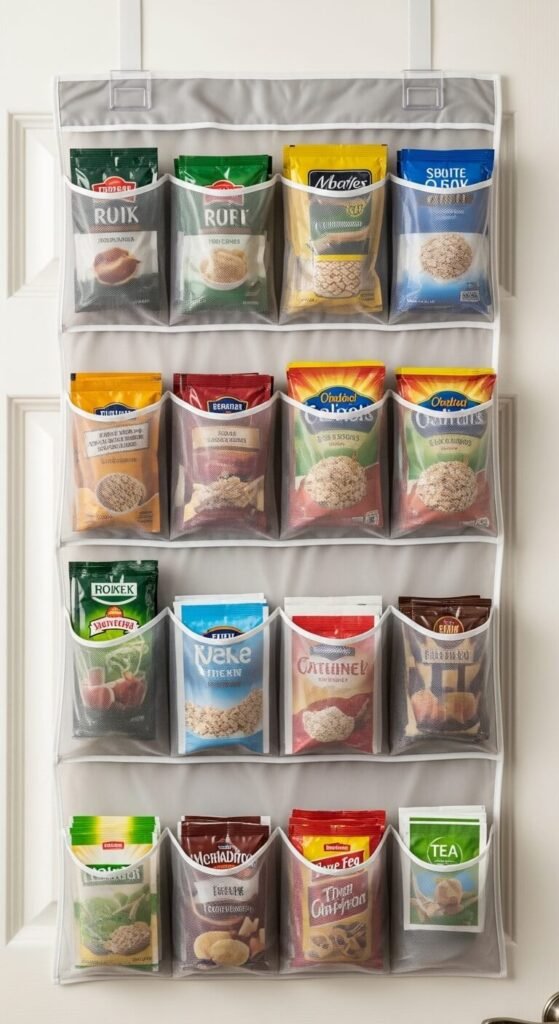
Seasoning packets, tea bags, instant oatmeal pouches — these small items are chaos on a shelf.
A clear plastic shoe organizer on the pantry door gives every small packet its own pocket. You can see everything at a glance without any digging. These organizers cost $5–$10 and hold dozens of items. It’s one of the best repurposing tricks for a pantry door because it uses vertical space that would otherwise go completely unused.
20. Batch Your Pantry Shopping to a Monthly Stock-Up
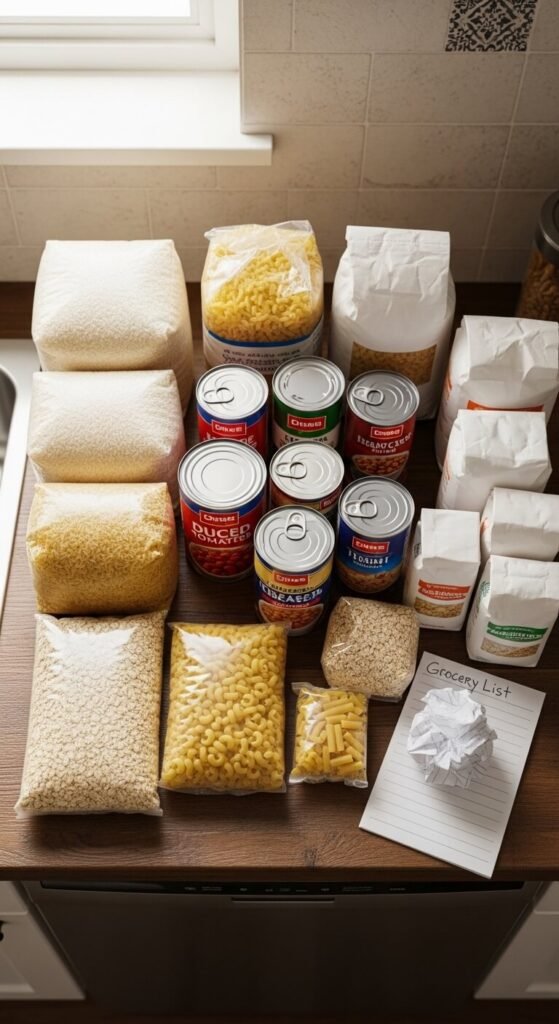
Weekly grocery runs for pantry staples cost more and waste more.
Shop for non-perishable pantry staples once a month. Buy in bulk when items are on sale — rice, pasta, beans, canned goods. This reduces impulse buys, saves on per-trip spending, and means you always have a stocked base to cook from. Pair your monthly stock-up with a pantry audit so you’re only buying what you’ve actually used up.
21. Color-Code or Section Labels for Fast Visual Scanning
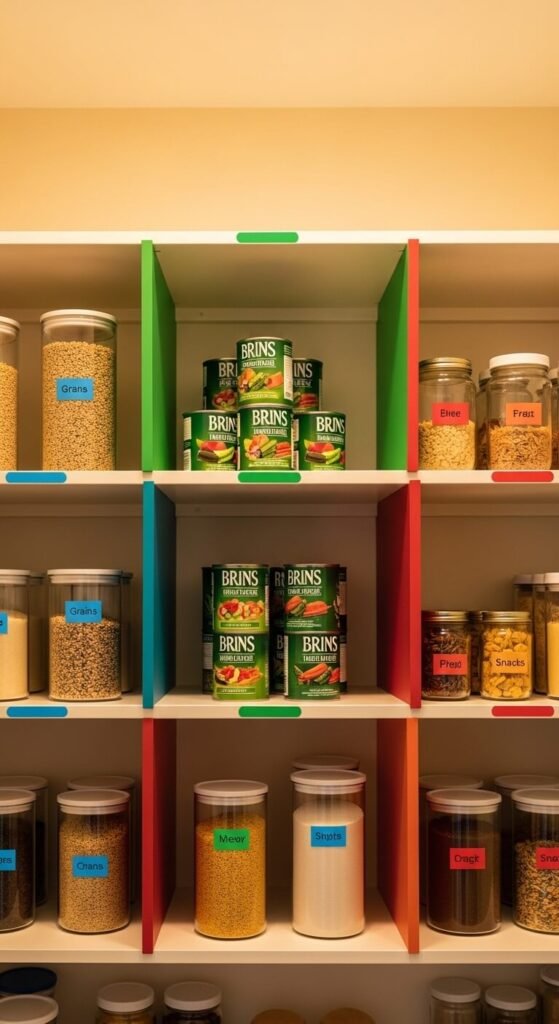
Labels aren’t just for aesthetics. They create a system everyone in the household can follow.
Use colored dot stickers or small label tabs on shelf edges to mark zones — blue for grains, red for snacks, green for canned goods. This way, anyone putting groceries away knows exactly where things go. Items stop migrating to random spots. When everything returns to its zone consistently, you spend far less time searching and far less money re-buying things you already own.
22. Build a Simple Meal Rotation Board Near the Pantry
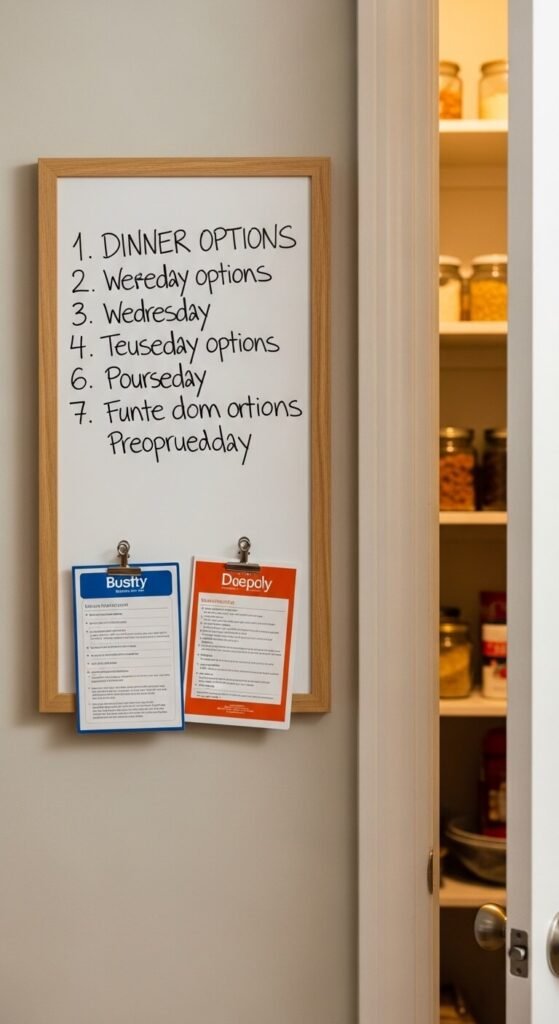
Meal planning and pantry organization work best together.
A small whiteboard or corkboard near your pantry where you write out five to seven dinner options for the week makes a huge difference. Pick meals based on what’s already in your pantry. This cuts grocery spending and uses ingredients before they expire. You don’t need a rigid plan — even a loose list of options prevents the “what’s for dinner?” panic that leads to takeout and forgotten pantry food.
23. Audit and Donate Before Every Seasonal Stock-Up
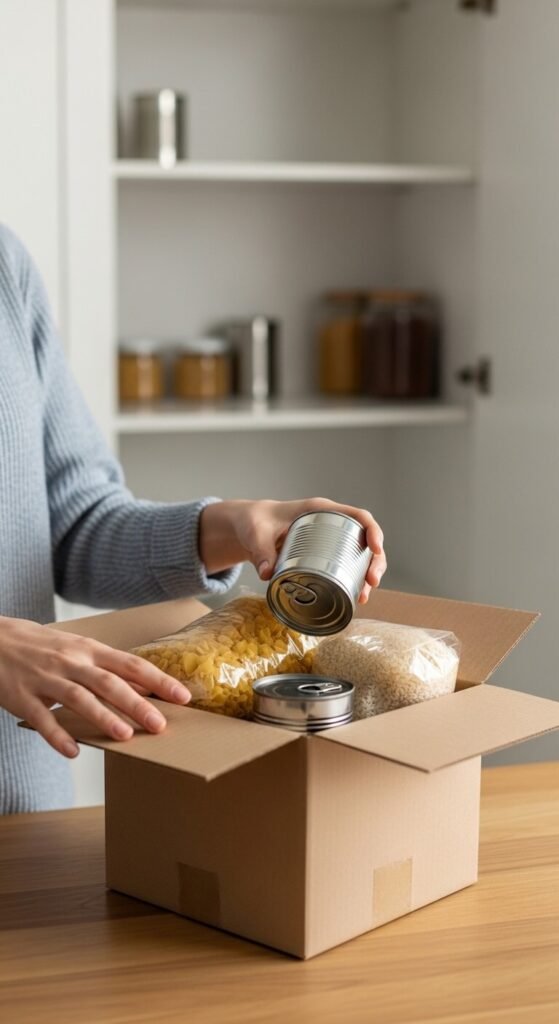
Before you restock for a new season, take stock of what you have.
Do a full pantry audit every three to four months. Pull everything out. Check dates. Anything you haven’t touched in six months but is still within date? Donate it. Food banks always accept sealed, unexpired pantry staples. This creates space, prevents future waste, and means your pantry only holds things you’ll actually use. It takes about 30 minutes and resets your system completely.
Conclusion
A well-organized pantry isn’t about having the prettiest jars or the most matching containers. It’s about building simple habits that help you see what you have, use it before it expires, and stop spending money replacing food that was already there. Start with just two or three of these methods — the “use first” bin, the weekly reset, and clear pull-out bins are the best starting points. Once those feel natural, layer in more. Small changes compound quickly. A pantry that works for you means less waste, less stress, and more money staying in your pocket where it belongs.