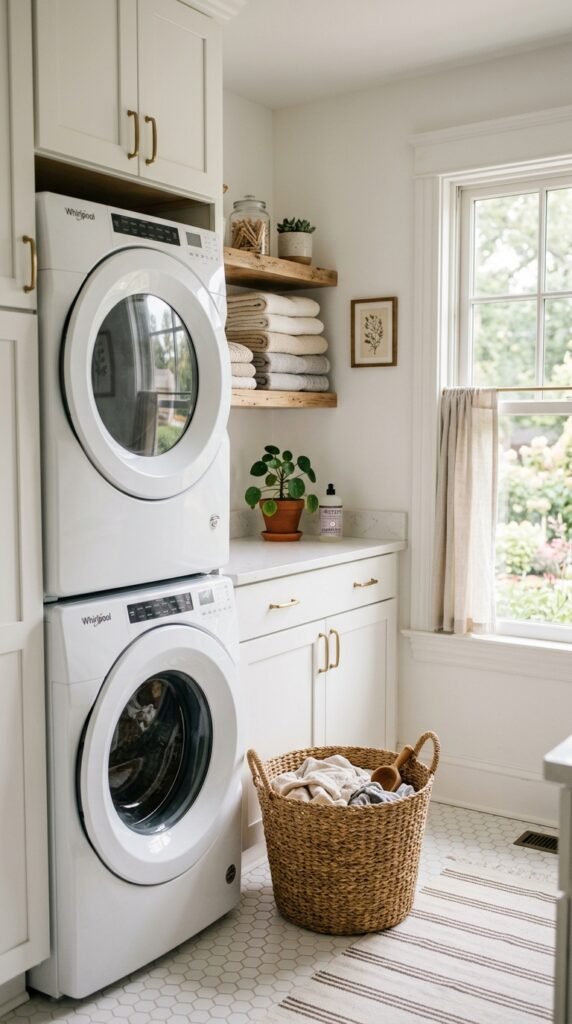
A cluttered laundry room turns a simple chore into a daily headache. Baskets pile up, detergent bottles tip over, and there’s never enough counter space to fold a single towel. The good news: you don’t need a full renovation to fix it. With a few smart layout changes, budget-friendly storage swaps, and simple DIY additions, your laundry space can work harder without costing more. Below are 24 practical laundry room setups that make washing, drying, and folding faster, tidier, and genuinely easier to manage every week.
1. Stack Your Washer and Dryer to Save Floor Space
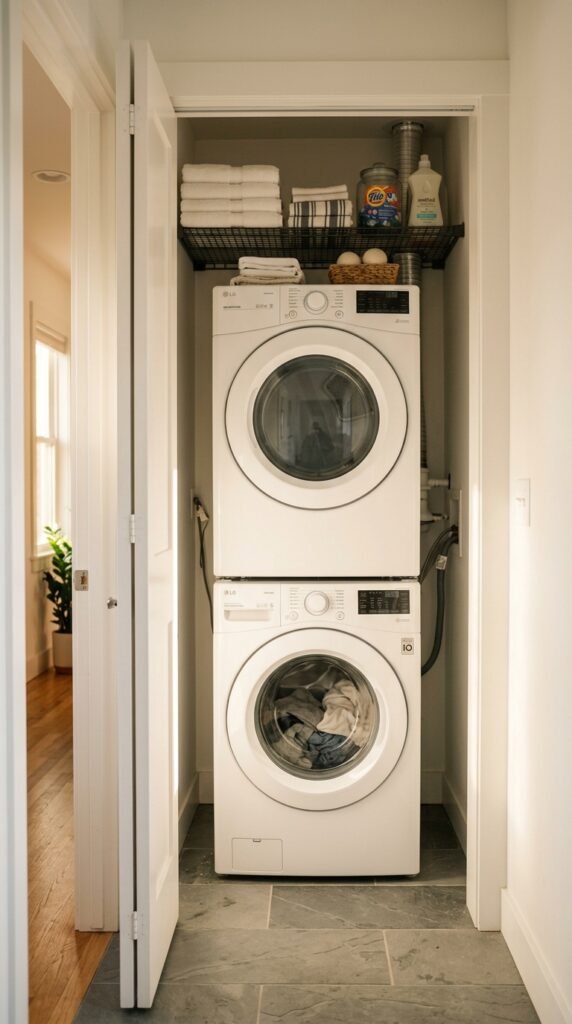
Small laundry room? Stack it. A stacked washer and dryer frees up floor space instantly. This works great in closets, hallways, or tiny utility rooms. You’ll gain room for a folding cart, a hamper, or extra shelving. Many home improvement stores sell affordable stacking kits under fifty dollars. Double-check your dryer vent length before installing. If you’re renting, ask your landlord about a stacking bracket instead of a full remodel. It’s a simple swap that turns a cramped corner into a working laundry zone.
2. Add Open Shelving Above the Machines
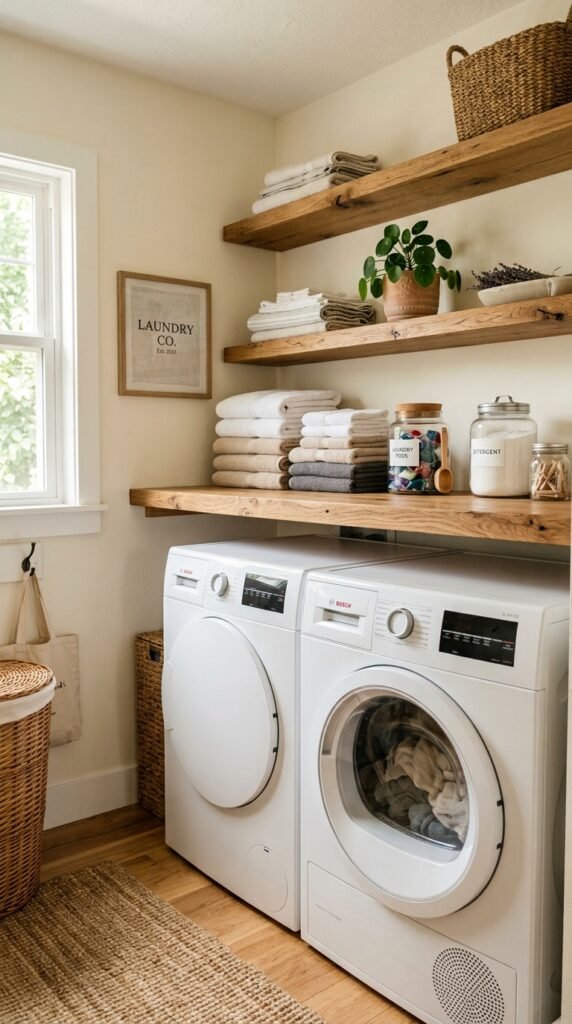
Open shelves above your machines give you visible, reachable storage. Skip the closed cabinets if budget is tight. A few wood planks and metal brackets from a hardware store cost less than premade cabinetry. Use the shelves for detergent, stain remover, and folded linens. Label baskets so everything has a spot. Keep heavier items on lower shelves for safety. This setup keeps your counters clear and your supplies within arm’s reach, which makes the whole washing routine faster.
3. Install a Fold-Down Counter Over the Dryer
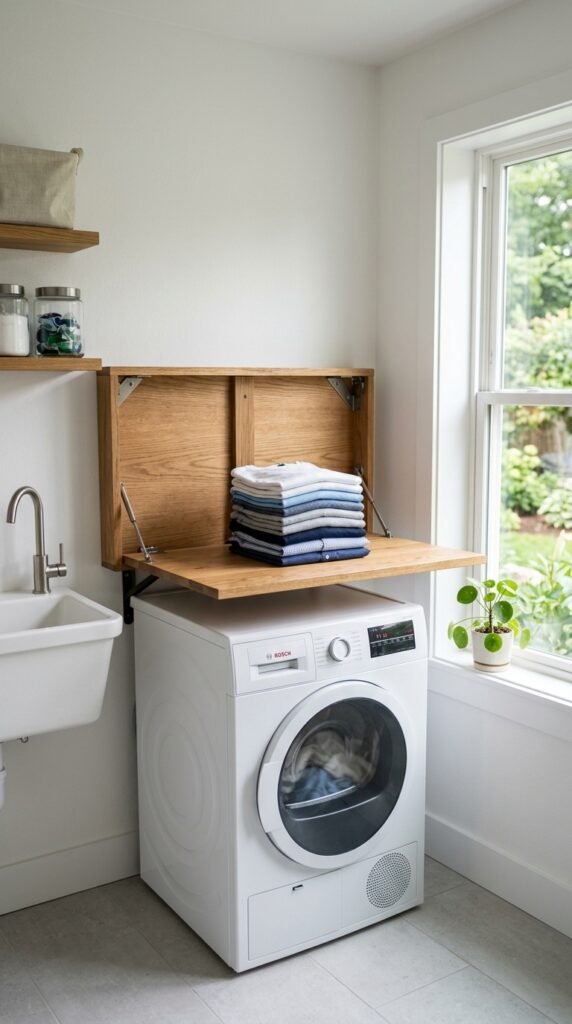
No room for a folding table? Build one that disappears when you don’t need it. A fold-down counter hinges to the wall above your dryer and lifts up when it’s time to fold clothes. Plywood, a piano hinge, and a support bracket run under forty dollars at most hardware stores. Paint it to match your cabinets for a built-in look. When you’re done folding, fold it flat again. This small addition solves the “nowhere to fold laundry” problem without taking permanent space.
4. Use Rolling Carts for Portable Storage
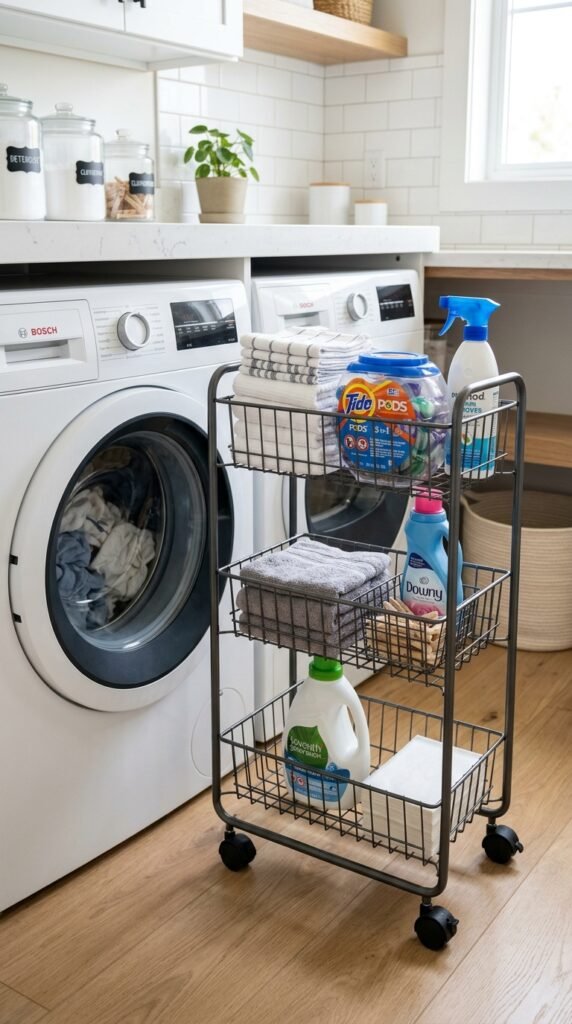
Rolling carts fit into narrow gaps beside machines. They hold detergent, dryer sheets, and stain sticks without permanent installation. Look for slim three-tier carts, often under thirty dollars. Wheels let you roll the cart out for cleaning or move it to another room entirely. This setup works well in rentals since nothing gets drilled into the wall. Add small bins on each tier to separate items by type. It’s a flexible, low-cost way to organize a tight laundry corner.
5. Mount a Pull-Out Ironing Board
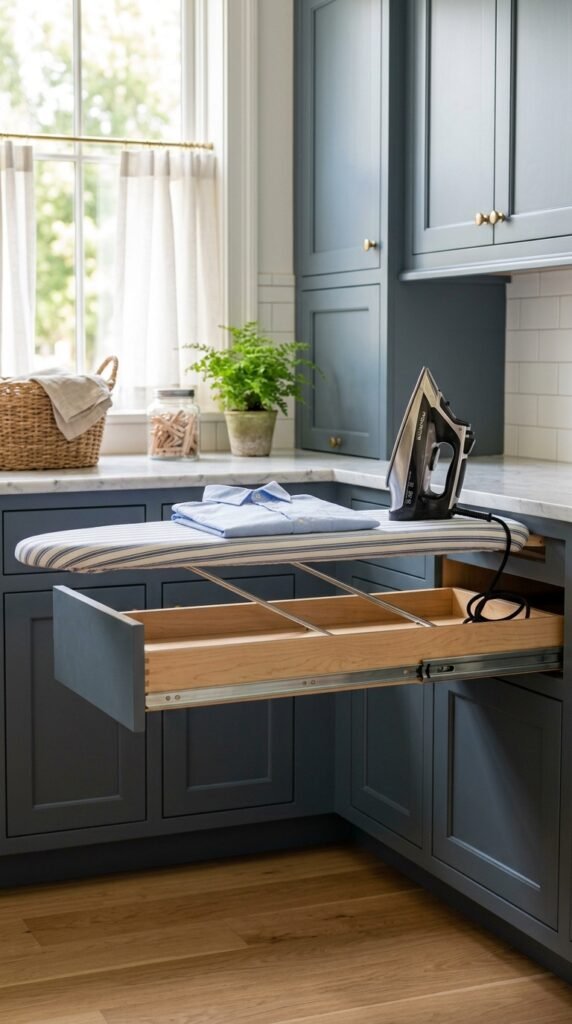
A pull-out ironing board tucks into a drawer or cabinet gap. It saves the hassle of storing a bulky standing board. Hardware kits for this project cost around twenty-five to sixty dollars and often include simple instructions for a weekend install. Mount it at counter height so you’re not bending over. When you’re finished ironing, slide it back in and it disappears completely. This setup keeps your laundry room looking clean while giving you a ready-to-use ironing station.
6. Create a Drop Zone for Dirty Clothes
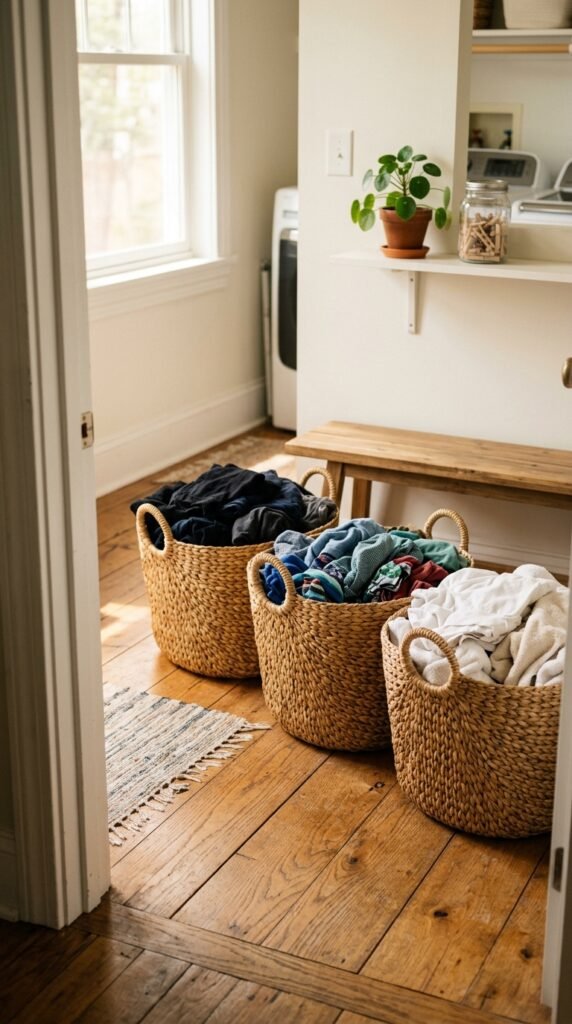
A drop zone near your laundry room entrance stops dirty clothes from piling up elsewhere. Set up three labeled baskets: whites, darks, and delicates. Sorting happens automatically as clothes go in, so wash day takes less time. Thrifted baskets or repurposed bins work fine and cost almost nothing. Place the baskets somewhere family members pass daily, like near a bedroom hallway or bathroom door. This small habit change saves real time on laundry day and keeps clutter contained.
7. Add a Hanging Rod for Air-Drying Clothes
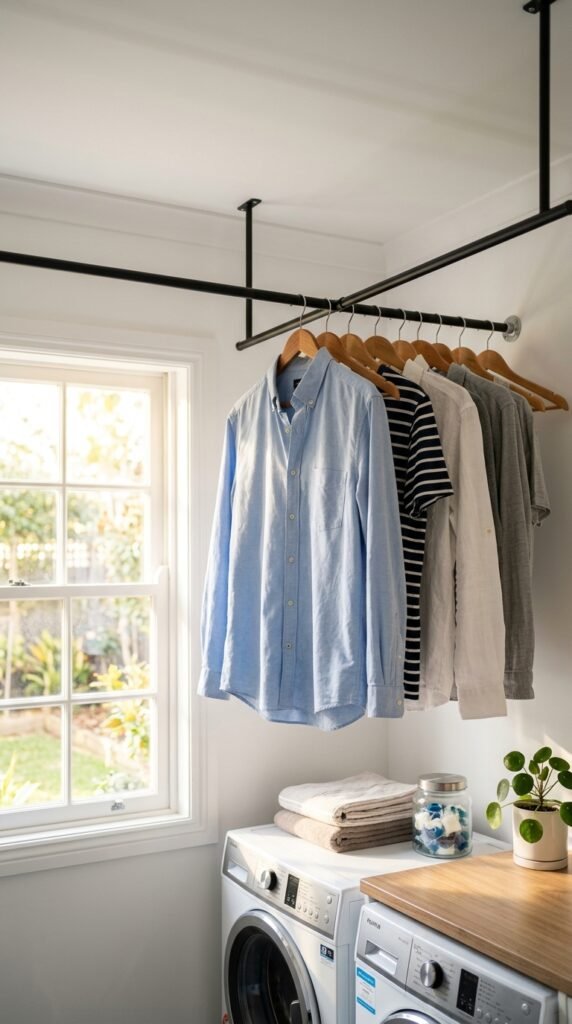
Delicate fabrics and shrink-prone items need air drying, not the dryer. A hanging rod solves the space problem. Mount a tension rod between two walls, or install a fixed rod with basic brackets. This costs under twenty dollars in most cases. Hang shirts straight from the wash so wrinkles fall out naturally. It also cuts down on ironing later. If ceiling height allows, a retractable rod folds flush against the wall when it’s not in use.
8. Use Clear Bins for Detergent and Supplies
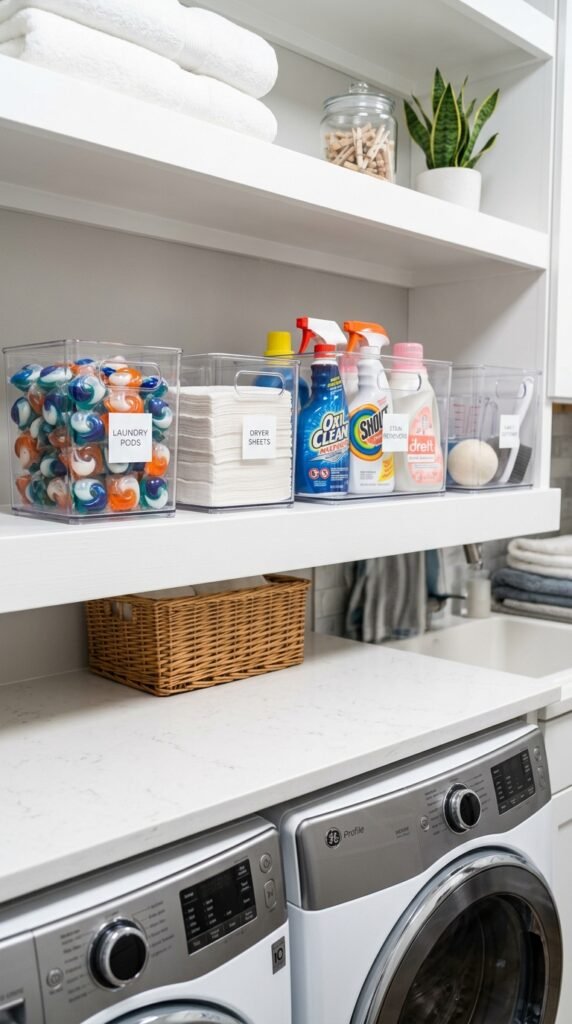
Clear bins let you see what’s running low at a glance. No more digging through cabinets for the last dryer sheet. Dollar store containers work just as well as pricier organizer sets. Group items by purpose: stain treatment, softeners, and pods each get their own bin. Add a small chalkboard label or masking tape tag for quick identification. This setup keeps your laundry area organized and cuts down on duplicate purchases when you can already see what’s left.
9. Install a Utility Sink for Pre-Treating Stains
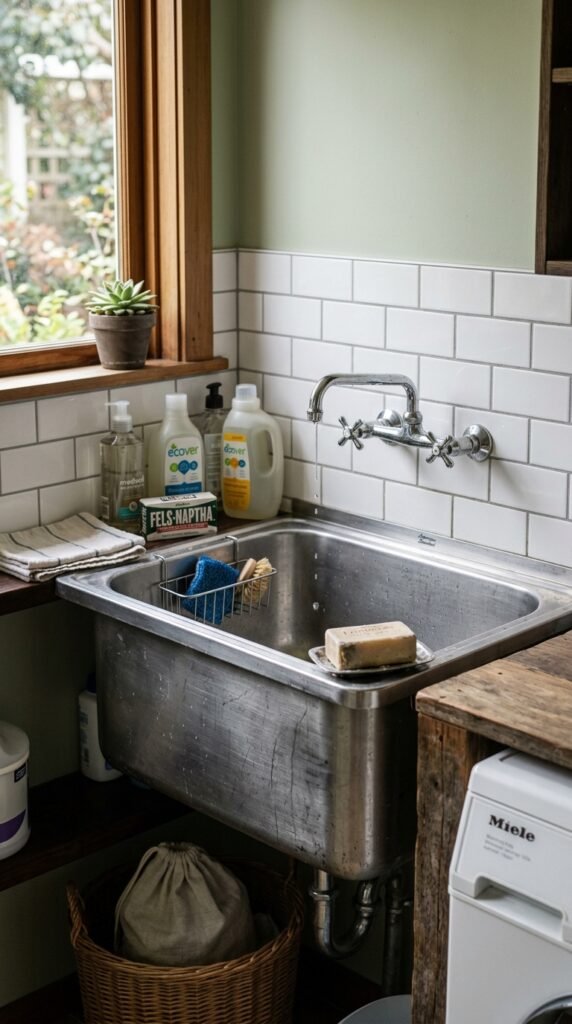
A utility sink handles stains, hand-washing, and messy mop rinses. If plumbing already runs to your laundry room, adding a basic sink is more affordable than most people expect. Home improvement stores sell freestanding utility sink kits starting around one hundred dollars. Keep a stain-fighting bar soap and soft brush nearby for quick pre-treating before items go into the wash. This one addition handles jobs your washing machine simply can’t manage on its own.
10. Build a Sock-Matching Station
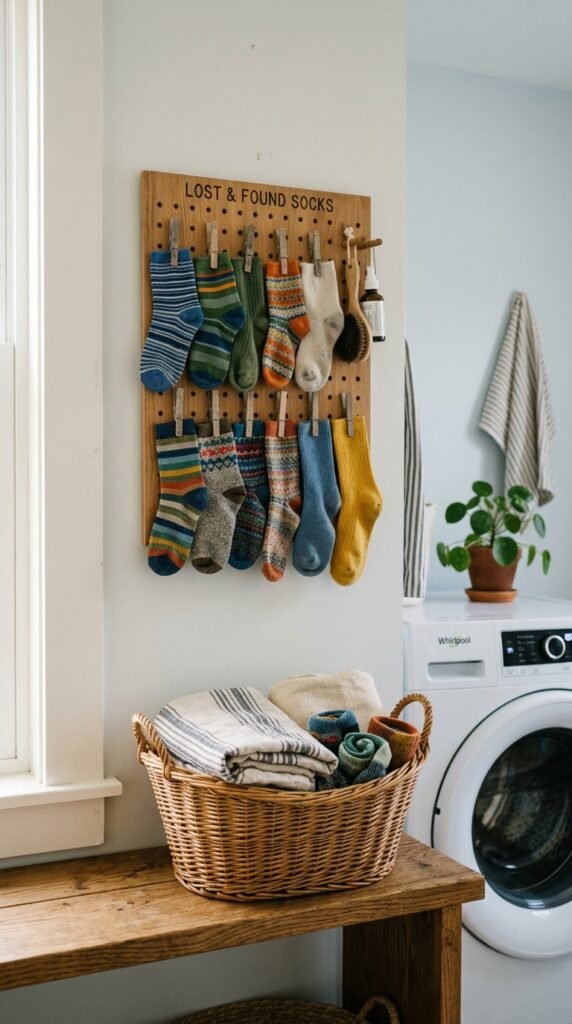
Lost socks are a laundry room classic problem. A pegboard with small clips solves it fast. Clip unmatched socks to the board as you fold. When the match turns up in a future load, pull both down together. This costs less than ten dollars using basic pegboard and clothespins. Kids can help with this station too, turning a boring chore into a quick matching game. It keeps stray socks visible instead of lost in a drawer or basket.
11. Add Under-Sink Storage Baskets
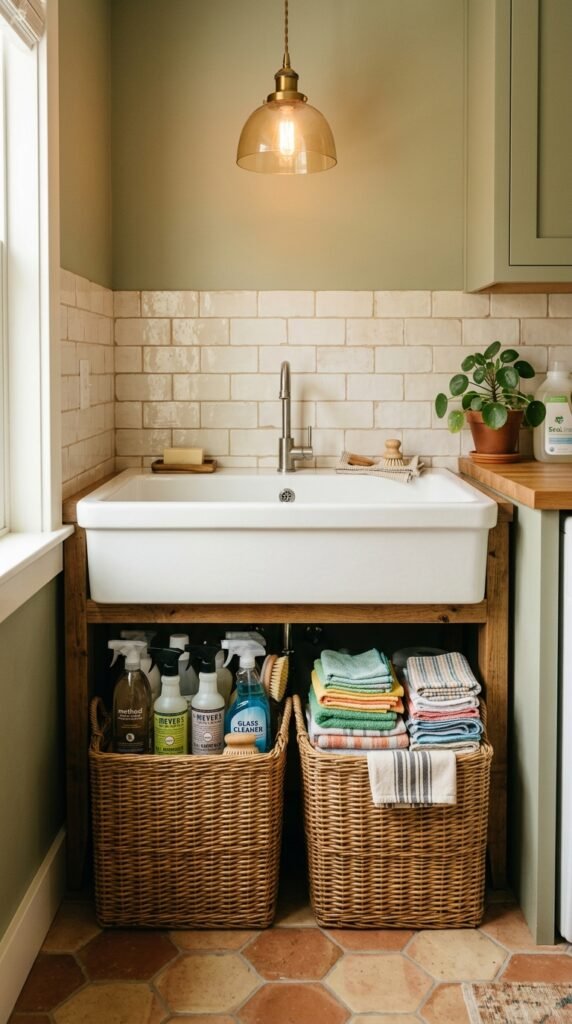
The space under a utility sink often goes unused. Slide-in baskets turn that gap into real storage. Wire or woven baskets fit most standard cabinet openings and cost under twenty dollars each. Store cleaning sprays, extra rags, or backup detergent bottles here. Keep chemicals separated from anything food-related if your laundry room connects to a kitchen or pantry. This setup uses space you’re already paying for instead of adding new shelving elsewhere.
12. Use a Tension Rod for Spray Bottles
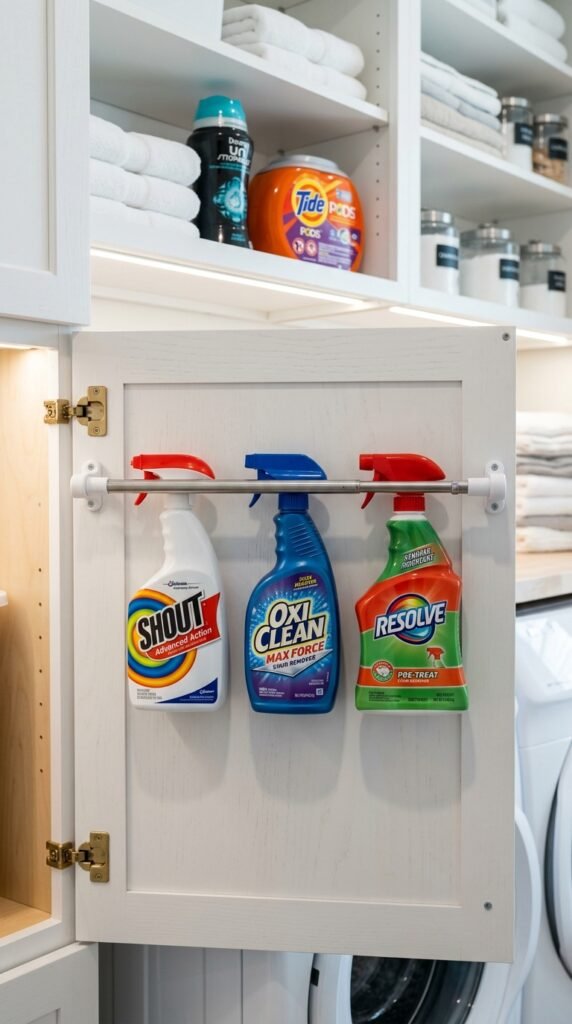
Cabinet doors offer free vertical storage most people overlook. A tension rod mounted inside the door holds spray bottles by their trigger handles. This clears cabinet shelf space for folded items or bins. The rod itself costs a few dollars and takes minutes to install with no tools needed. It works especially well for stain removers and fabric sprays you reach for often. This tiny change makes a noticeable difference in how much you can fit inside a small cabinet.
13. Set Up a Charging Station for Small Devices
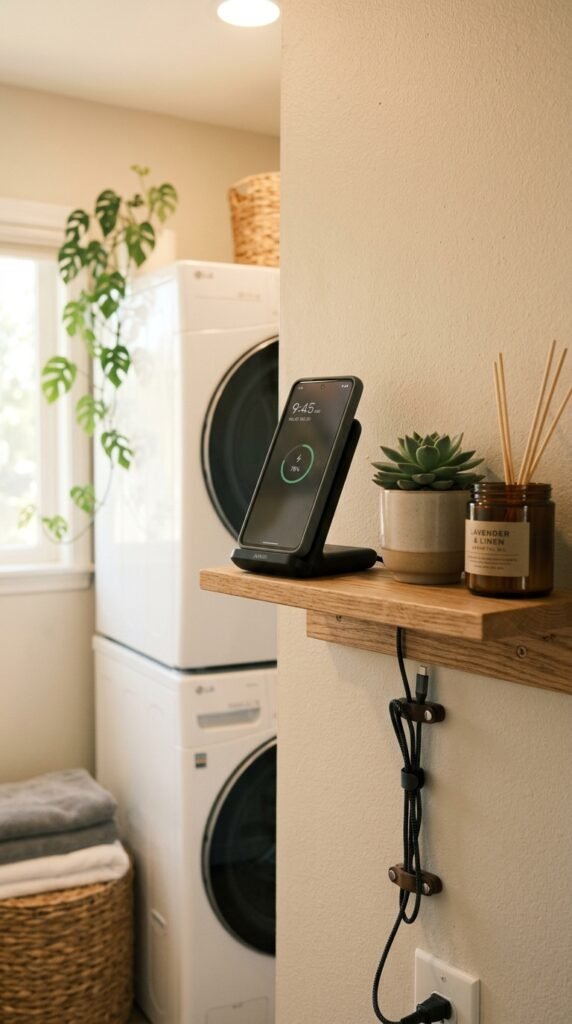
Laundry time often means waiting around. A small charging shelf turns that downtime into something useful. Mount a basic shelf near an outlet and add a cable organizer clip. You can check messages or listen to a show while folding instead of standing around bored. This setup costs very little if you already own a charging cable and shelf bracket. It’s a small comfort upgrade that makes chore time feel less like a chore.
14. Add a Chalkboard or Whiteboard for Laundry Notes
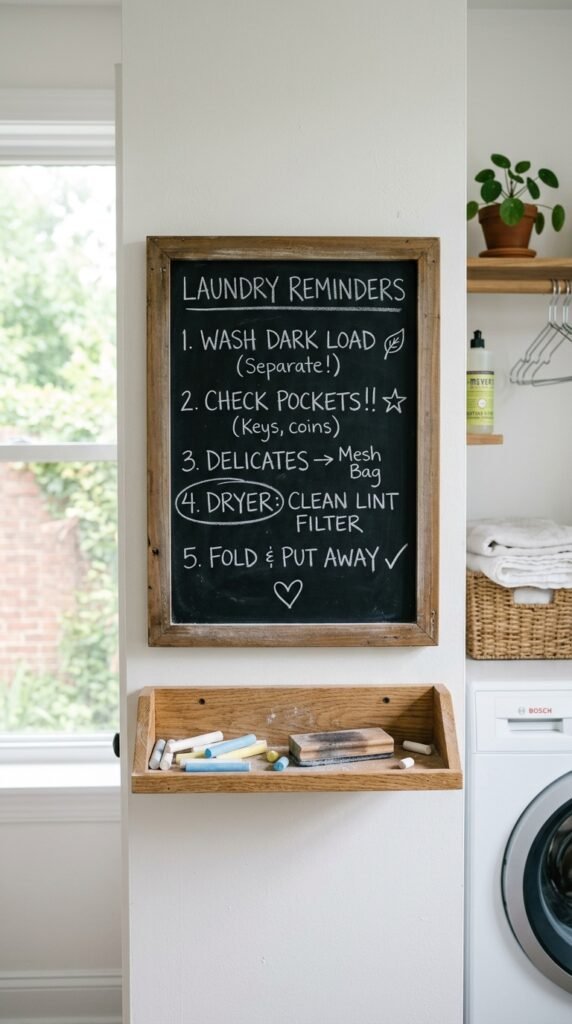
A shared laundry space needs shared communication. A small chalkboard lets family members flag delicates, note a stain that needs attention, or mark whose load is running. Basic chalkboard paint costs under fifteen dollars and covers a decent-sized wall section. This prevents shrunk sweaters and ruined colors from mixed loads. It also cuts down on the “whose clothes are these” confusion in shared households, apartments, or laundry rooms used by roommates.
15. Install Floating Shelves for Vertical Storage
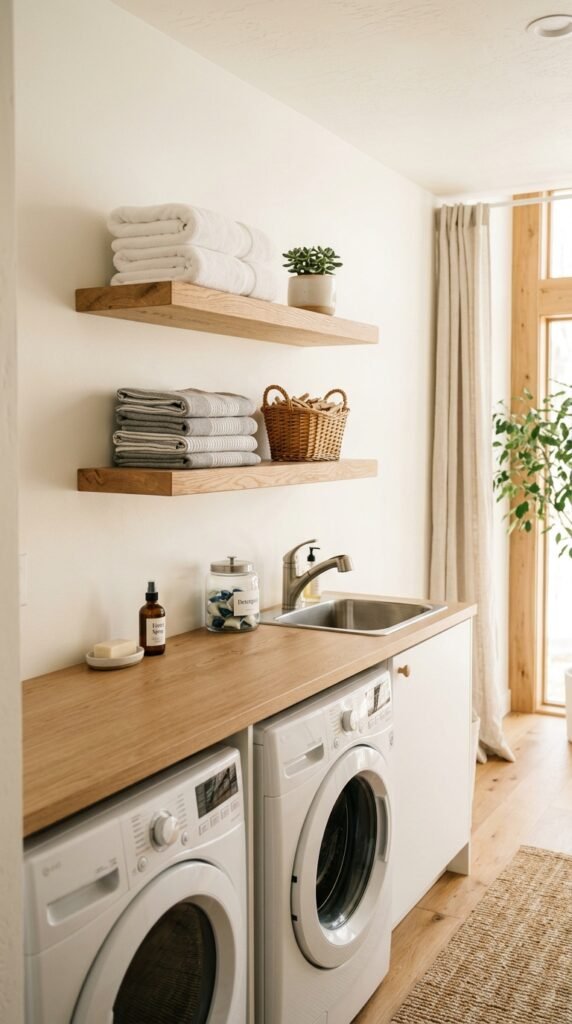
Floating shelves add storage without eating up floor space. Unlike bulky cabinets, they keep the room feeling open. Basic floating shelf kits start around fifteen dollars and install with just a drill and wall anchors. Use them for folded towels, spare hangers, or a small basket of clothespins. Keep the bottom shelf lower for kids to reach their own items. This setup works in almost any laundry room shape, including narrow closets and hallway nooks.
16. Create a Lost-and-Found Basket
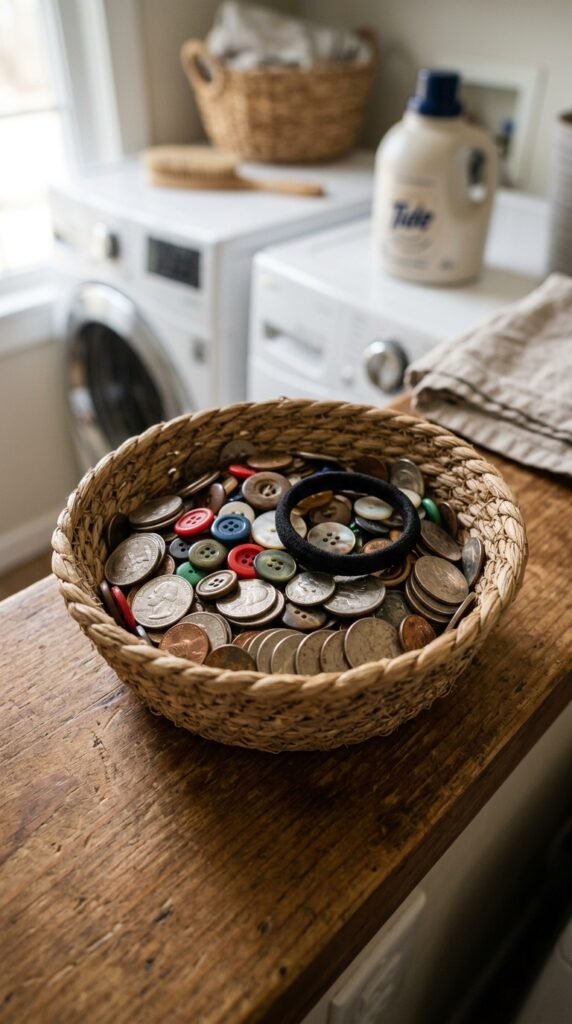
Pockets hide all kinds of small items. A lost-and-found basket catches coins, buttons, hair ties, and stray receipts before they clog your machines. Any small container works, even a repurposed jar or mug. Check pockets before washing when you can, but this basket catches what slips through. It also saves you from digging through the lint trap later looking for a missing earring. Simple, cheap, and it protects your machine from damage too.
17. Add a Drying Rack That Folds Flat
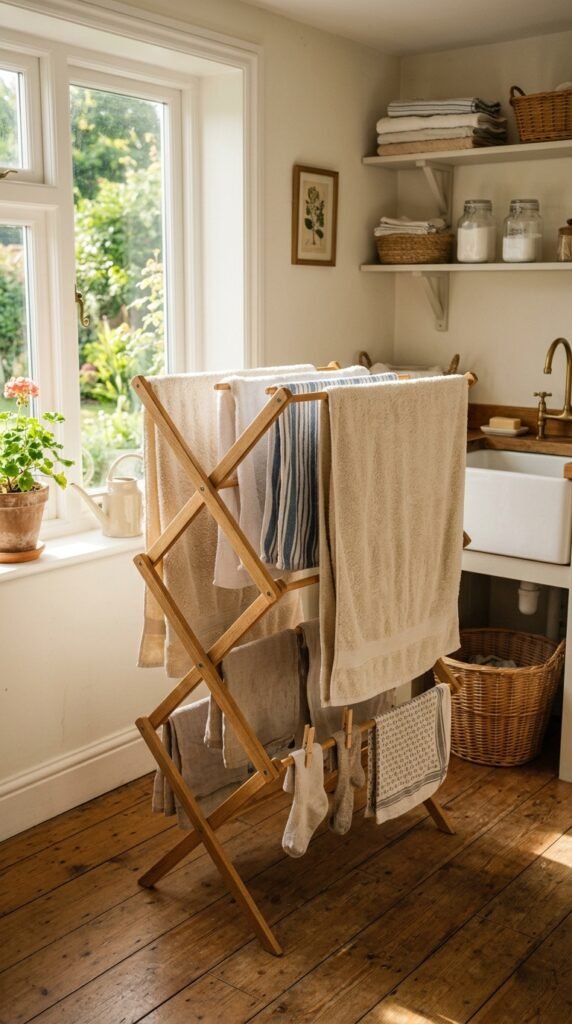
Not every laundry room has space for a permanent drying setup. A folding rack solves that. Unfold it on wash day, then collapse it flat against a wall when you’re done. Wooden and metal versions both start around twenty dollars at most stores. This works well for sweaters, activewear, or anything that shouldn’t go in the dryer. Store it behind the door or in a nearby closet so it’s out of the way but still easy to grab.
18. Use Baskets for Lint and Dryer Sheet Waste
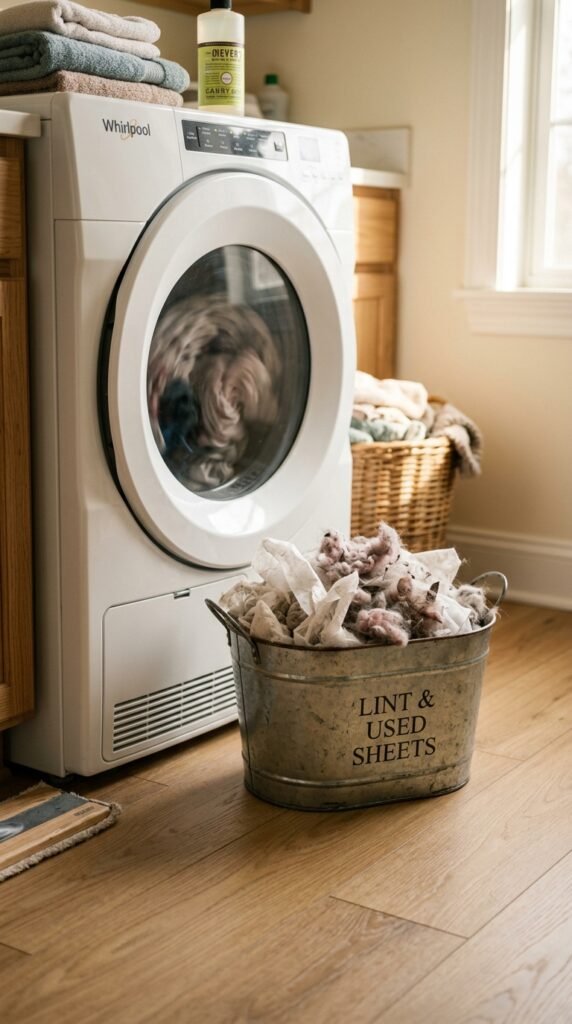
Cleaning the lint trap after every load is a good habit, but the lint has to go somewhere. Keep a small bin right beside the dryer for lint and used dryer sheets. This stops you from carrying trash across the house mid-load. A repurposed small trash can or even a paper bag works fine here. Empty it weekly. This tiny addition keeps your laundry room tidier and makes the lint-cleaning habit easier to stick with long term.
19. Add a Pet Washing Station
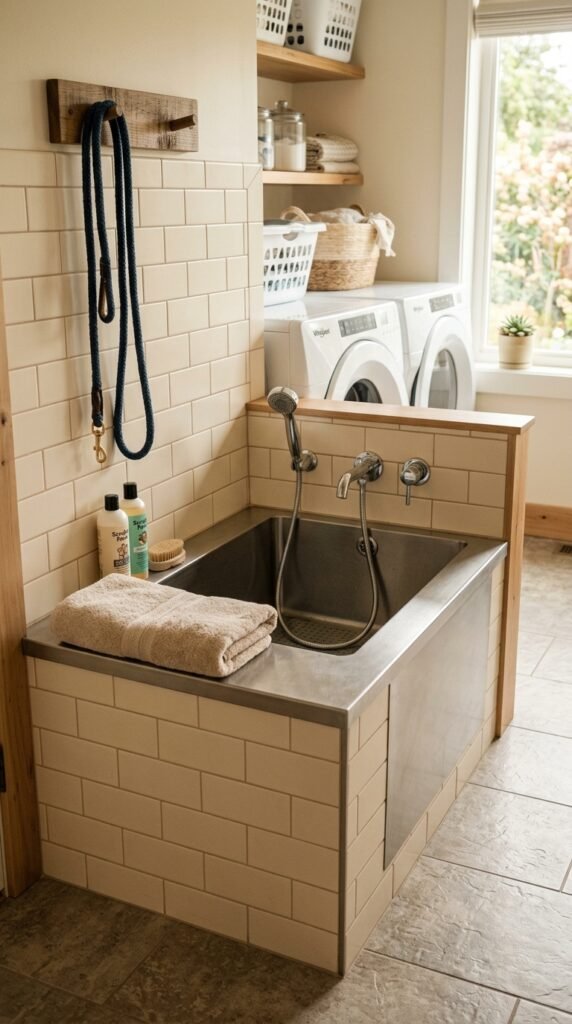
If pets are part of the household, a laundry room pet station saves your bathroom from muddy paw prints. A simple raised basin with a handheld sprayer works well, and many home stores sell kits designed for small laundry room corners. Budget versions use a repurposed basin with a hose attachment for under seventy-five dollars. Keep pet towels in a separate bin nearby so they don’t mix with regular laundry. This setup keeps bath time contained to one easy-to-clean space.
20. Install a Retractable Clothesline
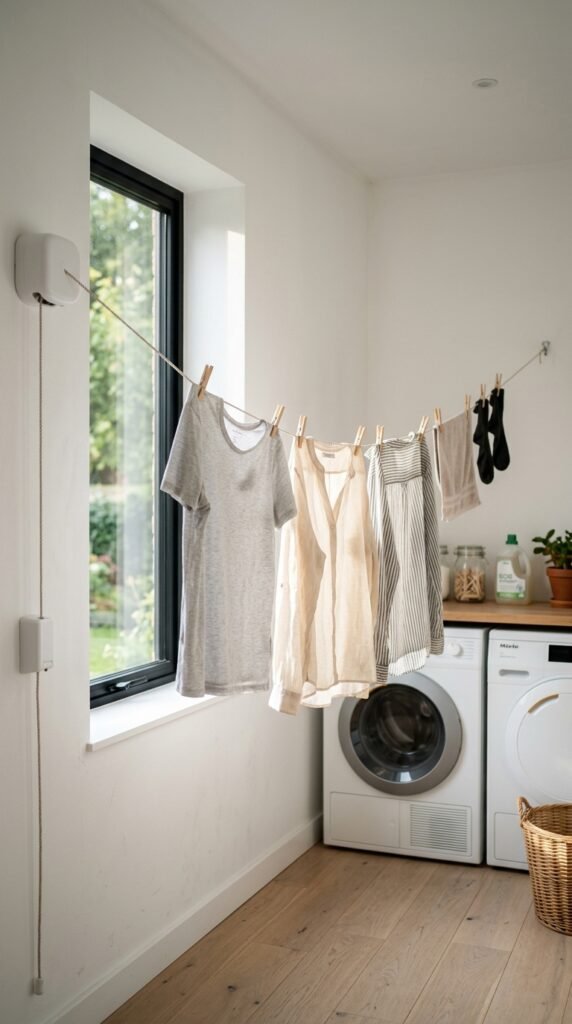
A retractable clothesline pulls out when you need it and tucks away when you don’t. This works especially well in small laundry rooms where a fixed rod would get in the way. Kits cost between fifteen and thirty dollars and mount with basic screws. Pull the line across the room, hang your damp clothes, then release it back into its housing when you’re done. It’s a practical option for apartments or laundry rooms with limited overhead space.
21. Add a Small Trash Can for Quick Cleanup
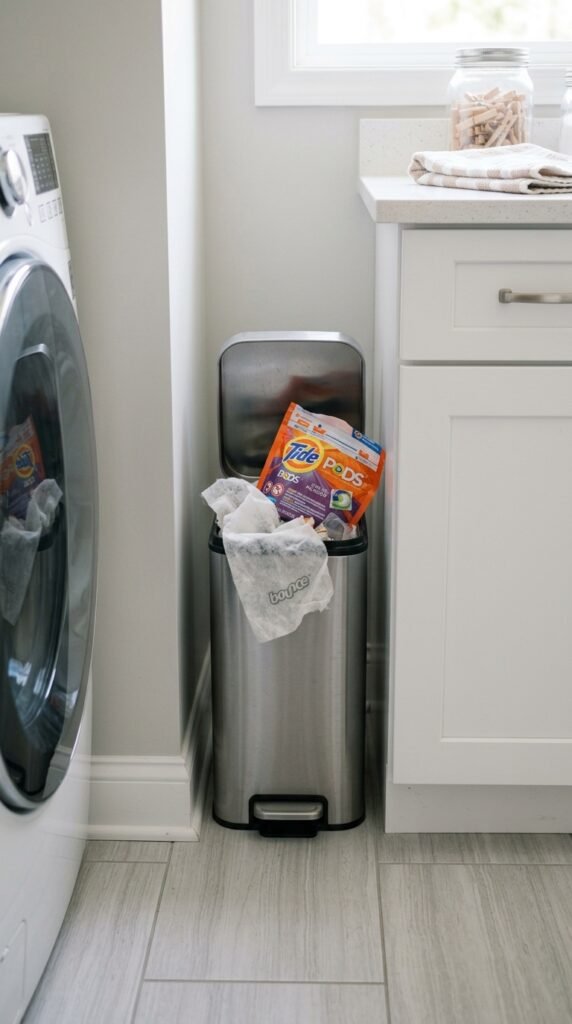
A trash can seems obvious, but many laundry rooms skip one entirely. Wrappers, empty bottles, and lint end up piling on the counter instead. A slim can that fits beside your machines keeps cleanup fast. Budget bins under fifteen dollars work fine here. Empty it during your weekly laundry routine so it never overflows. This small habit keeps your space looking finished and stops random trash from migrating to other rooms in the house.
22. Use a Wall-Mounted Drying Rack for Shoes
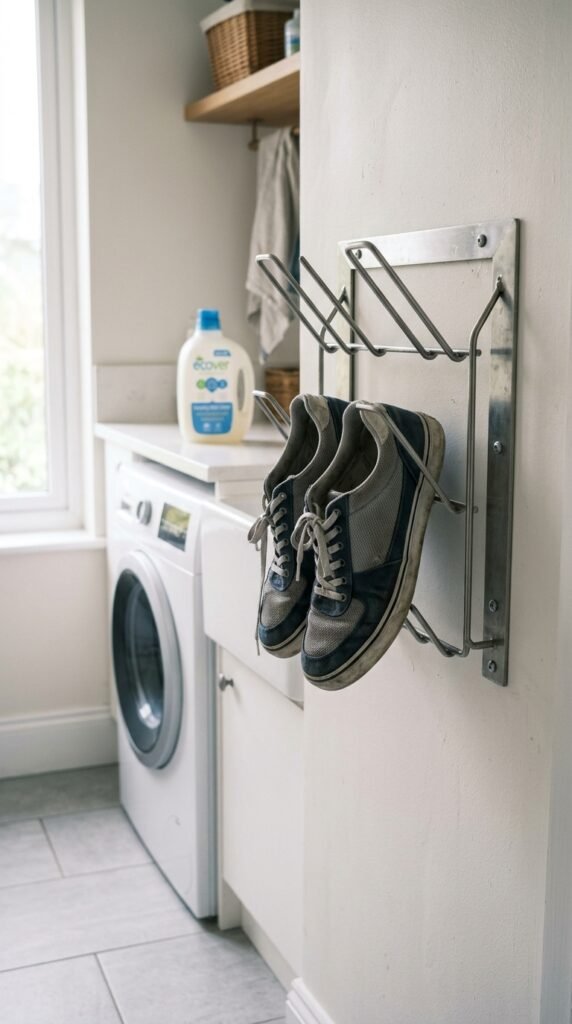
Wet sneakers and boots need a spot that isn’t your dryer. A wall-mounted shoe rack keeps them off the floor and out of the way while they dry. Simple pegged racks cost under twenty-five dollars and mount with basic hardware. This setup works well for families with kids in sports or anyone dealing with muddy weather often. Hanging shoes upside down on pegs also helps them dry faster and keeps your laundry room floor clear.
23. Add a Mirror for Quick Outfit Checks
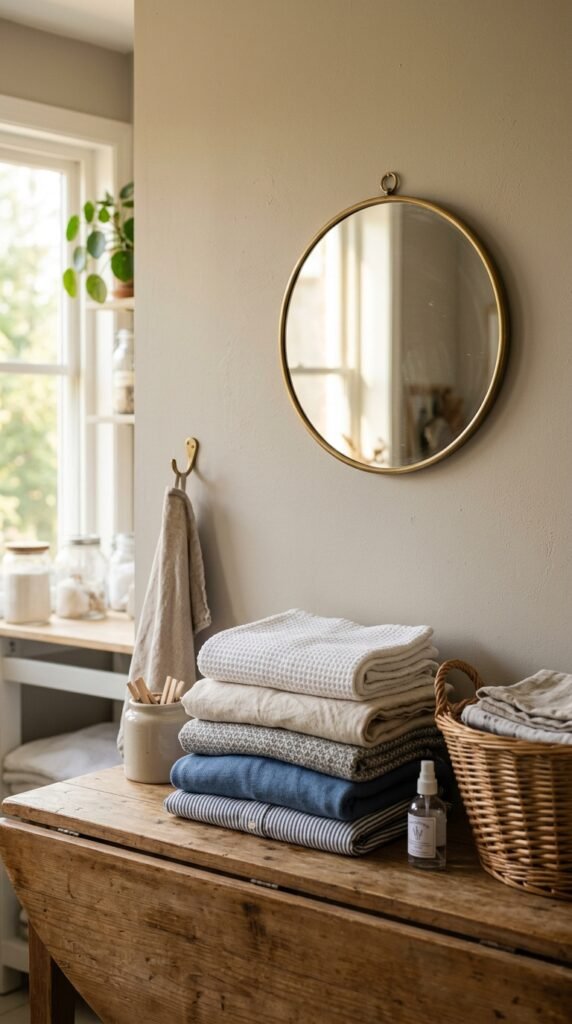
A laundry room mirror sounds unusual, but it’s genuinely handy. Check a freshly ironed shirt or a stain treatment result before putting clothes away. Thrifted mirrors work fine, and many secondhand stores sell them for a few dollars. Mount it near your folding counter or ironing station. This small addition turns your laundry room into a quick final-check spot before clothes go back into closets, saving a return trip if something still needs attention.
24. Create a Labeled Basket System for Family Members
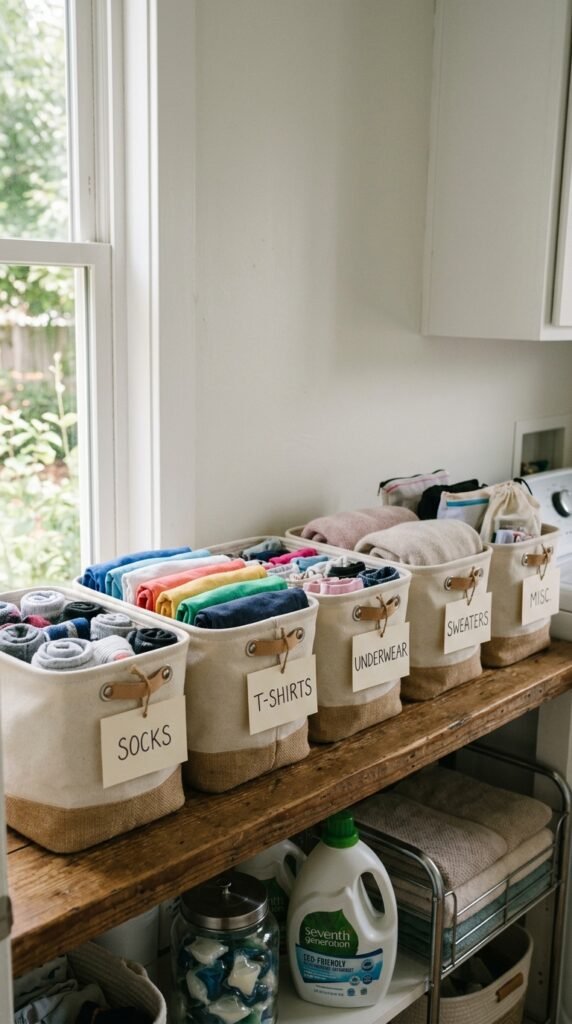
In busy households, clean laundry often ends up in one giant pile. A labeled basket for each family member fixes that fast. Fold clothes directly into the matching basket, then let each person carry their own to their room. Fabric baskets or bins from a discount store work well here, often under ten dollars each. This system cuts down on sorting time and stops the “whose shirt is this” debate that happens in shared laundry spaces.
Conclusion
A laundry room doesn’t need a big budget or a full remodel to work better. Small changes, like adding open shelving, a fold-down counter, or a labeled basket system, add up to real time saved every week. Pick two or three ideas from this list that match your space and budget, then build from there. The goal isn’t a picture-perfect room. It’s a laundry setup that makes the weekly chore faster, calmer, and a little easier for everyone in the house.