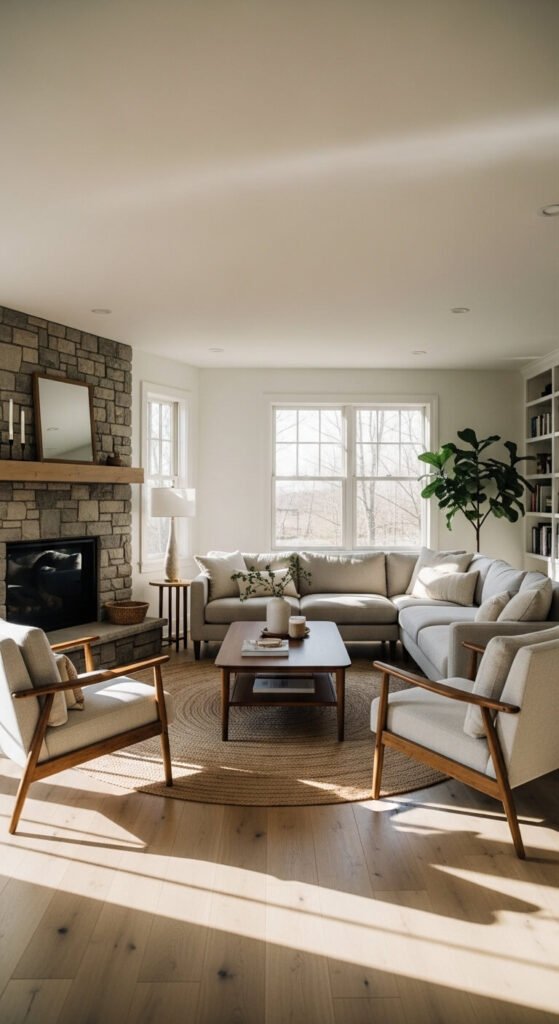
Walking into a room that just works — where everything feels right without you knowing why — is rarely an accident. It’s the result of intentional furniture arrangement. Whether you’re working with a cramped studio apartment or a sprawling open-plan home, the way you place your pieces shapes how you live, move, and feel in a space. The right layout can make a small room feel twice its size, a cold room feel warm, and a chaotic room feel calm. This guide walks you through 22 proven furniture arrangement layouts that move naturally with the way people actually use their homes — no design degree required.
1. The Conversation Circle
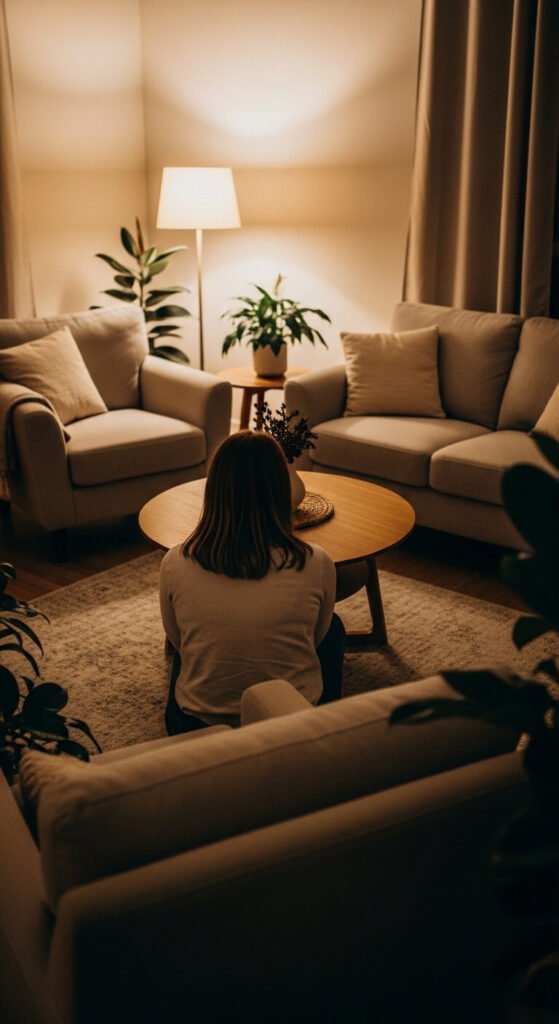
Arrange seating in a rough circle or U-shape so everyone faces each other. This is the oldest and most natural layout for social spaces. No seat should be more than 8 feet from another. Use a round coffee table at the center — it removes sharp edges and keeps traffic flowing. Pull chairs slightly away from walls. Floating furniture feels counterintuitive but actually makes rooms feel larger. A soft rug underneath ties the circle together. Great for living rooms of any size.
2. The Anchor-and-Satellite Method
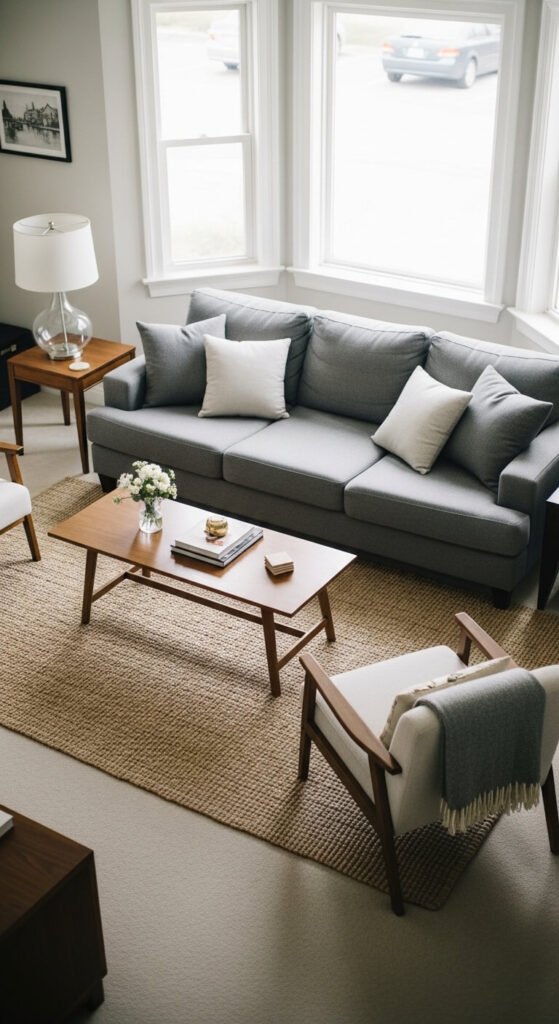
Pick one large piece as your anchor — usually the sofa — then arrange everything else around it. Think of it like planets orbiting a sun. Side tables, chairs, and ottomans become satellites. This gives your room a clear focal point without feeling rigid. Budget tip: your anchor doesn’t have to be new. Reupholster an old sofa in a neutral fabric for under $200 and it becomes your star piece. Everything else can be thrifted or DIY’d around it.
3. The Diagonal Room Opener
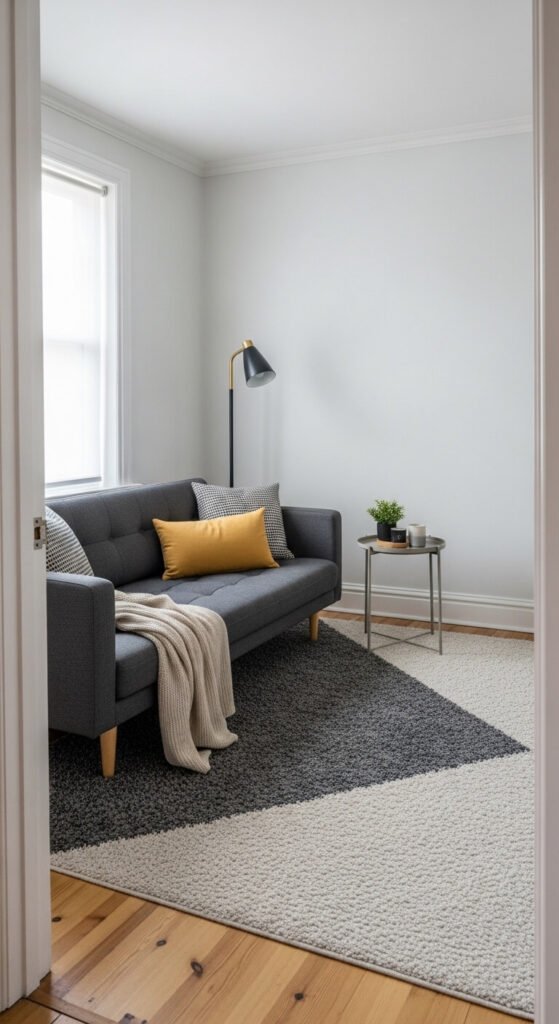
Placing your main furniture at a 45-degree angle to the walls instantly makes a boxy room feel more dynamic. It draws the eye across the longest diagonal of the space — which is always the greatest distance in any room. This works especially well in square rooms that feel flat or cramped. Use a diamond-oriented rug to reinforce the angle. It’s a simple shift that costs nothing but changes everything about how the room reads.
4. Two Zones in One Room
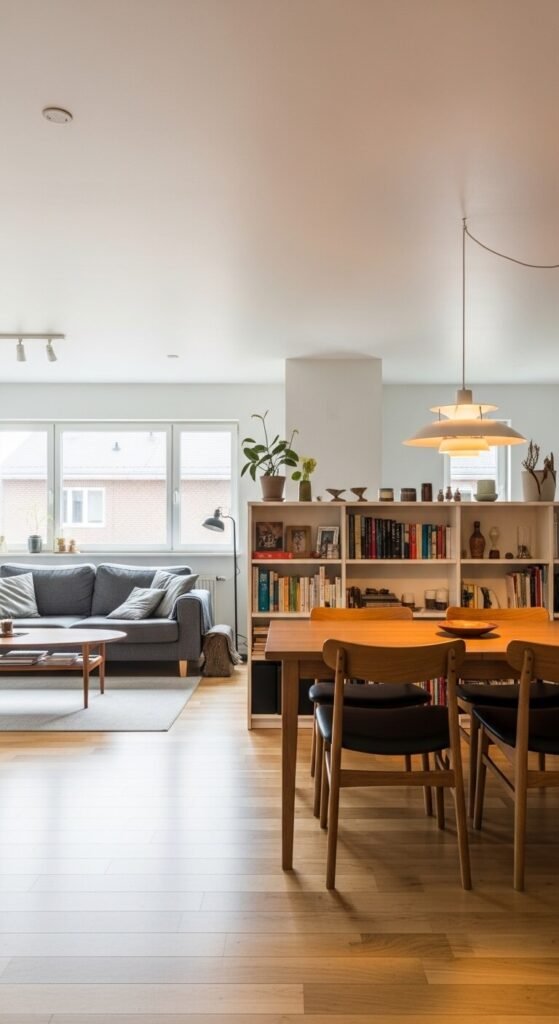
Open-plan spaces can feel like one big, undefined blob without zoning. Use rugs, lighting, and furniture groupings to create two distinct areas. A sofa with its back slightly toward the dining table signals a visual boundary. Hang a pendant light above the dining zone — overhead lighting is one of the cheapest ways to define a space. You don’t need walls. You just need intention. Budget trick: a $30 bookshelf from a thrift store can act as a soft room divider.
5. The TV-Free Focal Point
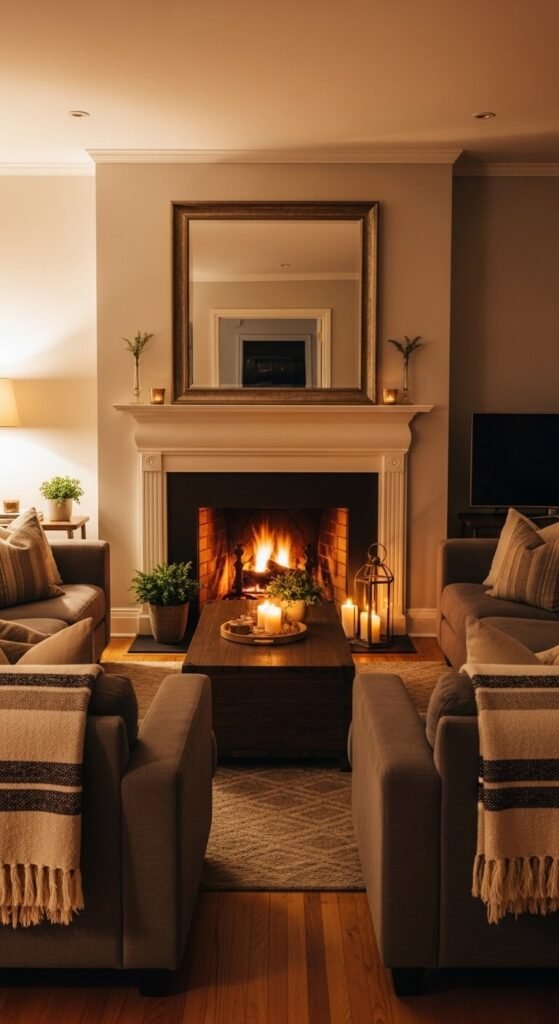
Not every room needs a TV as its center. A fireplace, a large window, a gallery wall, or even a bold piece of furniture can serve as your focal point. Arrange seating so it naturally faces that feature. This layout creates rooms that feel intentional and calm rather than screen-dependent. If you don’t have a fireplace, a large framed mirror or oversized artwork works just as well. You can find statement frames at thrift stores and DIY a gallery wall for under $50.
6. The Reading Nook Pull-Out
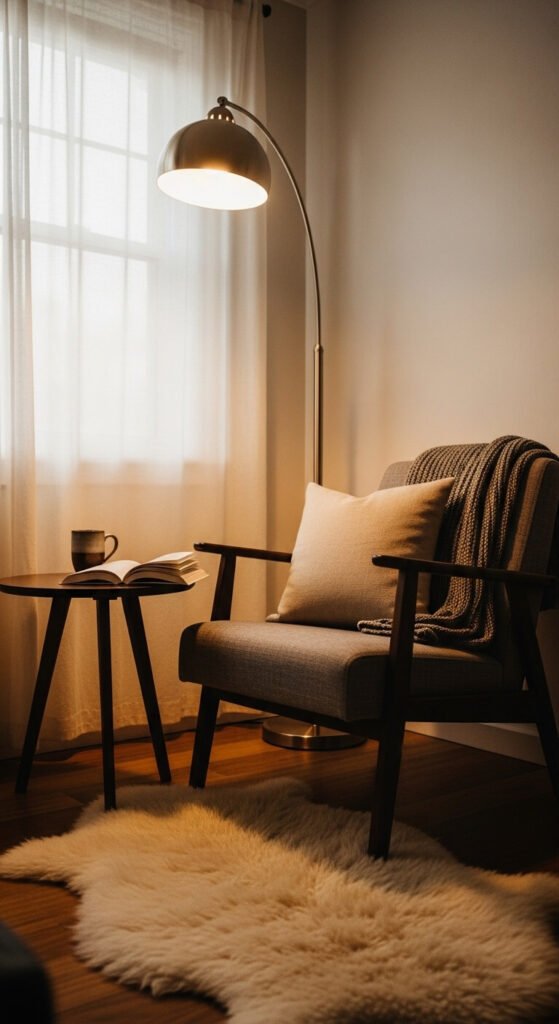
Carve out one corner of any room as a dedicated reading spot. Pull a single chair toward a window. Add a floor lamp, a small side table, and a soft rug beneath. That’s it. You don’t need a whole room. Even a 4×4 foot corner can become a retreat. This technique breaks up long walls and makes rooms feel layered. Budget version: thrift a wingback chair, reupholster the seat cushion yourself, and add a $15 clip-on reading light.
7. The Long, Narrow Room Fix
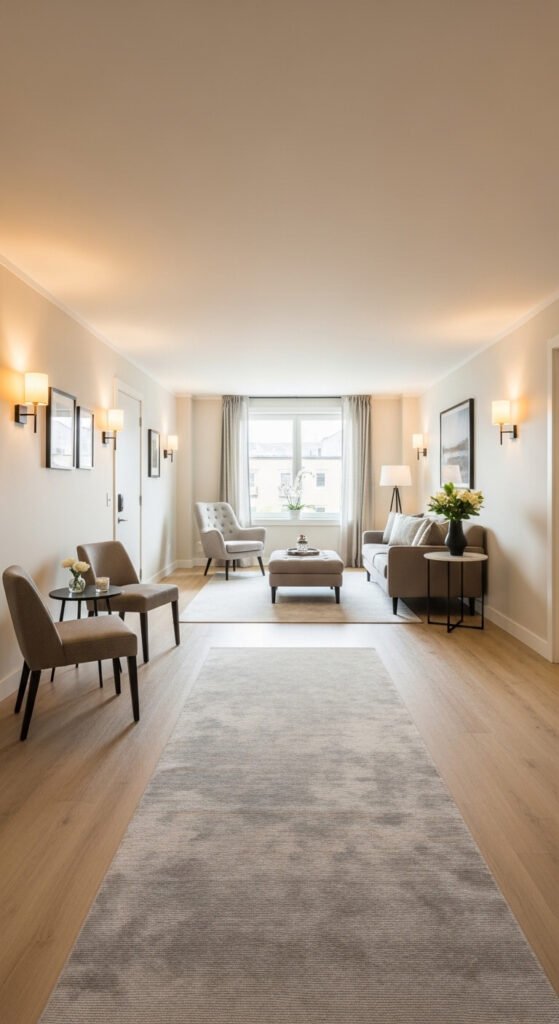
Long, narrow rooms are one of the hardest layouts to work with. The fix: break the room into two smaller groupings instead of one long arrangement. Place a loveseat and two chairs near one end. Put another seating cluster near the opposite end. Use a long runner rug to connect them visually. Avoid pushing all furniture against the walls — it emphasizes the tunnel feel. Floating furniture in the center shortens the visual length dramatically.
8. The Bedroom Traffic Flow Triangle
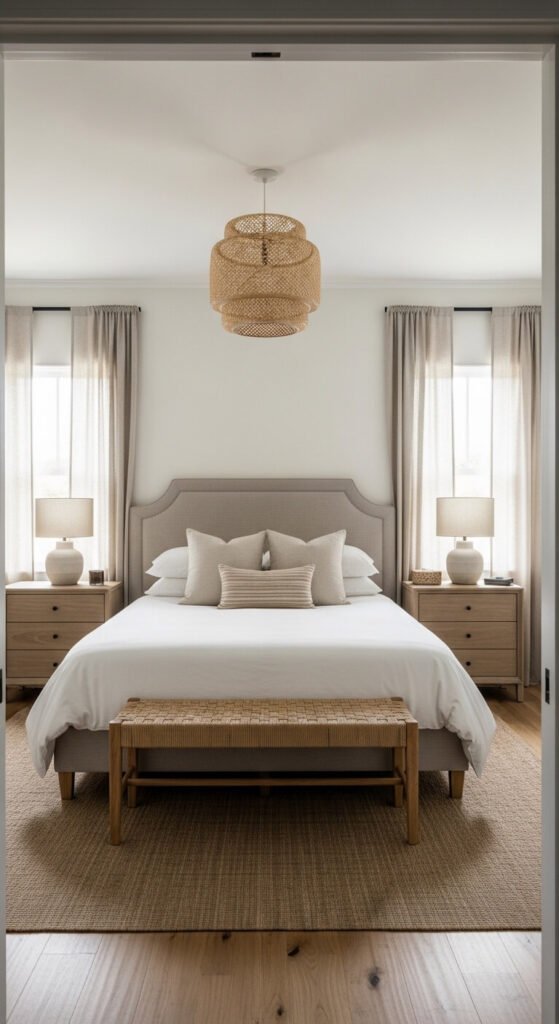
In bedrooms, map out a triangle between your bed, closet, and dresser before placing anything. These are the three points you move between every morning. Clear paths between them — at least 24 inches on each side of the bed — make a room feel open even when it’s small. Position the bed so it faces the door but isn’t directly in line with it. That small shift changes the whole energy of waking up in the morning.
9. The Sofa-Against-Nothing Rule
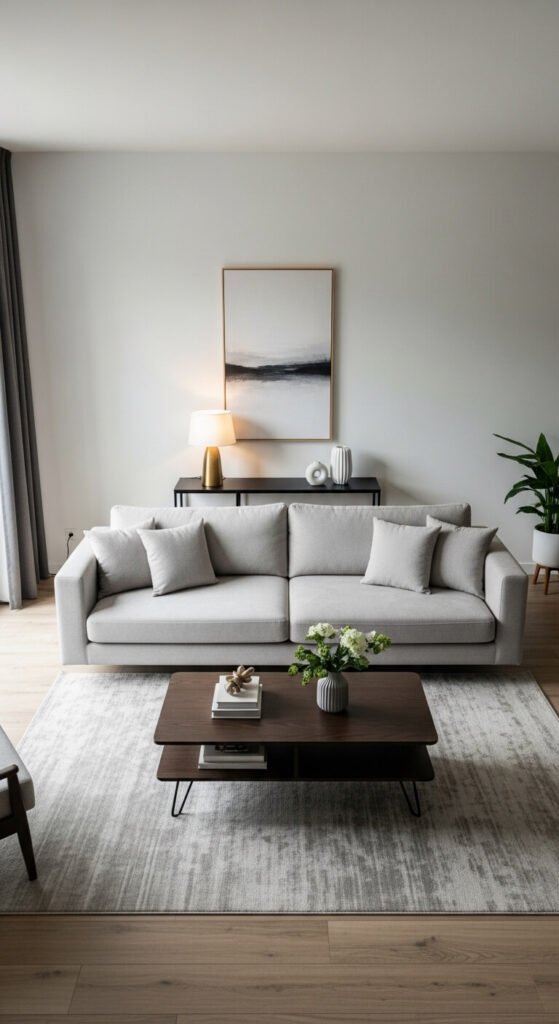
Most people push their sofa against the wall out of habit. Pull it at least 12–18 inches away and place a narrow console table behind it. This creates depth, adds a surface for lamps and decor, and makes the room feel far more curated. Console tables are easy DIY projects — a simple shelf on legs costs about $40 to build. The sofa floating in space is one of the most impactful free changes you can make in any living room.
10. The Bedroom With No Room
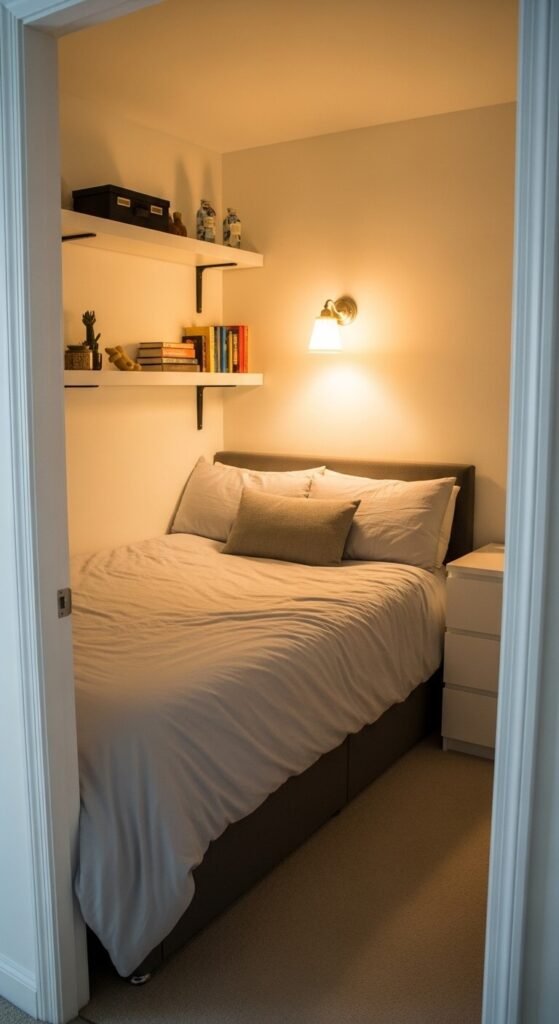
Small bedrooms feel impossible until you push the bed into a corner against two walls. Suddenly, you free up floor space on three sides. Mount floating shelves above the headboard to replace nightstands. Use a narrow dresser or a clothing rack instead of a bulky wardrobe. Light-colored bedding and one mirror on the wall do the rest. This layout works in rooms as small as 9×10 feet and still leaves breathing room. IKEA’s floating LACK shelves cost under $20 each.
11. The Kitchen Island Workaround
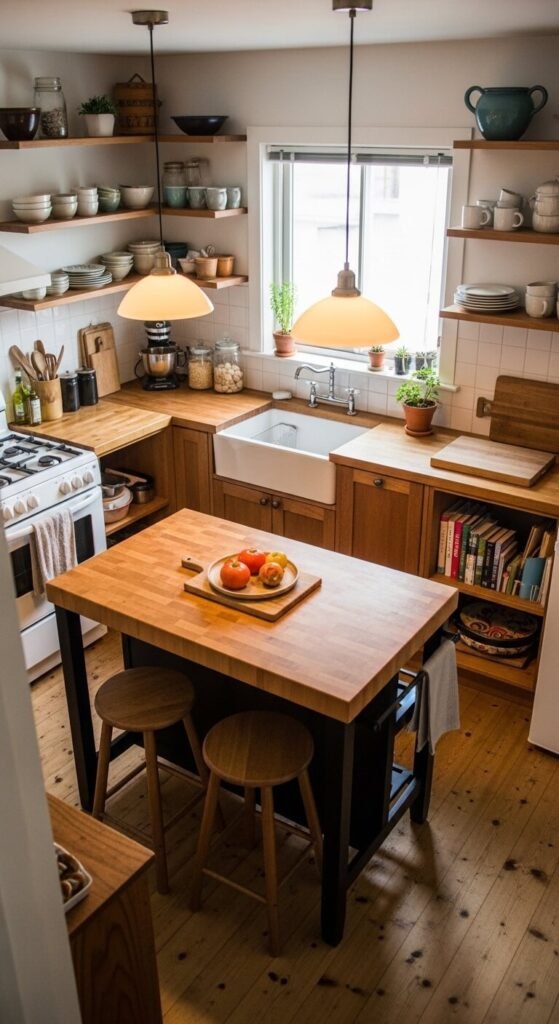
No built-in kitchen island? A freestanding butcher block cart or a secondhand farm table works just as well. Position it so you have at least 42 inches of walking space on all sides. Add bar stools on one side for casual seating. This layout creates a natural gathering spot without a single structural change. Secondhand kitchen carts on Facebook Marketplace often go for $30–$80. Sand and oil the top yourself and it looks brand new.
12. The Gallery Wall as Furniture
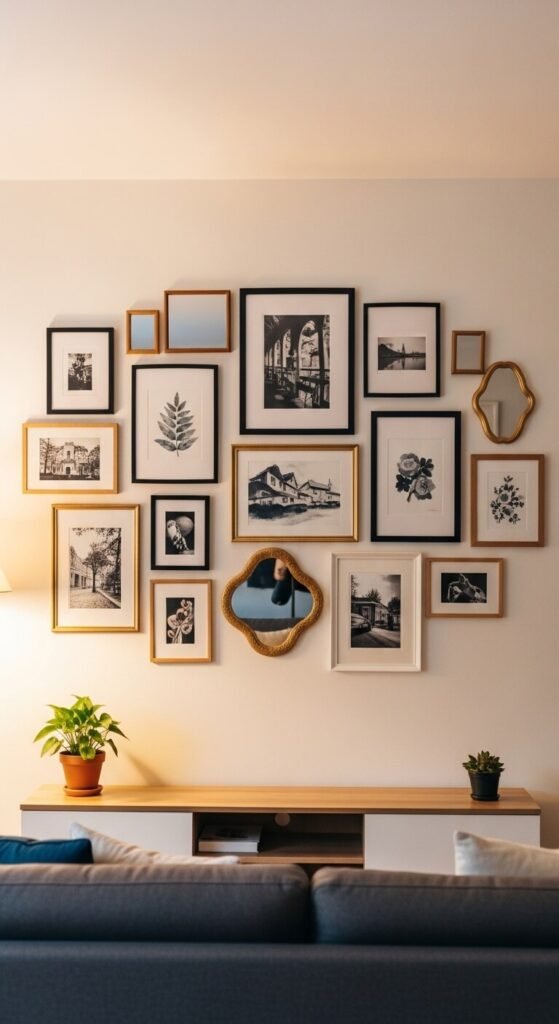
A gallery wall isn’t just decoration — it acts as a visual anchor that replaces a piece of furniture. A dense arrangement of frames above a credenza can do the same job as a large bookcase. It draws the eye up, making ceilings feel higher. Use frames in two or three sizes for variation. Print your own art from free sites like Unsplash or WikiArt. Dollar stores sell frames you can spray paint black or white. A full gallery wall can cost under $40.
13. The Open Bedroom Wardrobe Wall
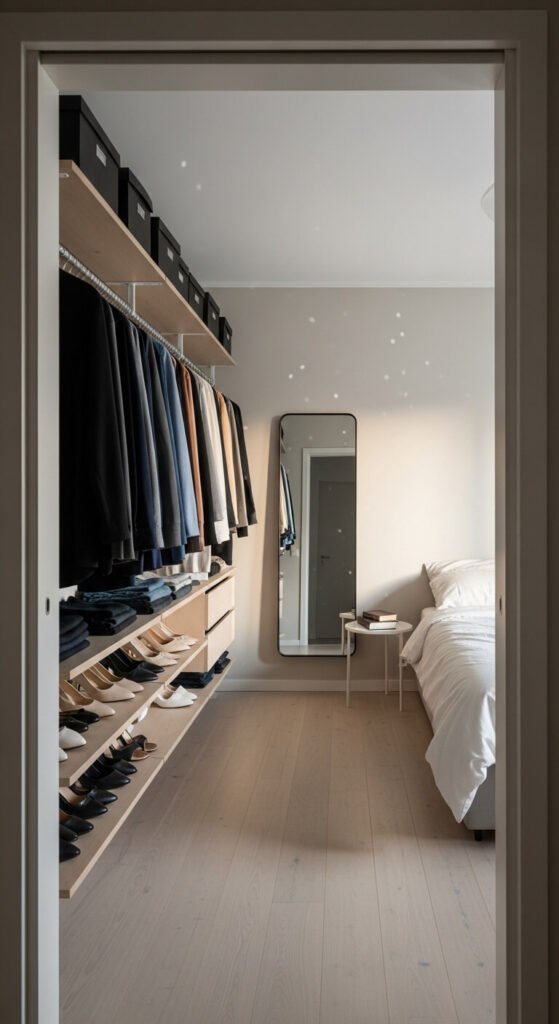
Skip the bulky wardrobe and line one wall with open clothing racks and floating shelves. This keeps the room feeling open while giving you more storage than a traditional closet. Arrange clothes by color for a look that feels intentional rather than messy. A leaning full-length mirror beside the rack completes the setup. Pipe clothing racks can be DIY’d for about $50 using pipes from a hardware store. Open storage works best when your clothes are neatly organized.
14. The Dining Room That Isn’t a Dining Room
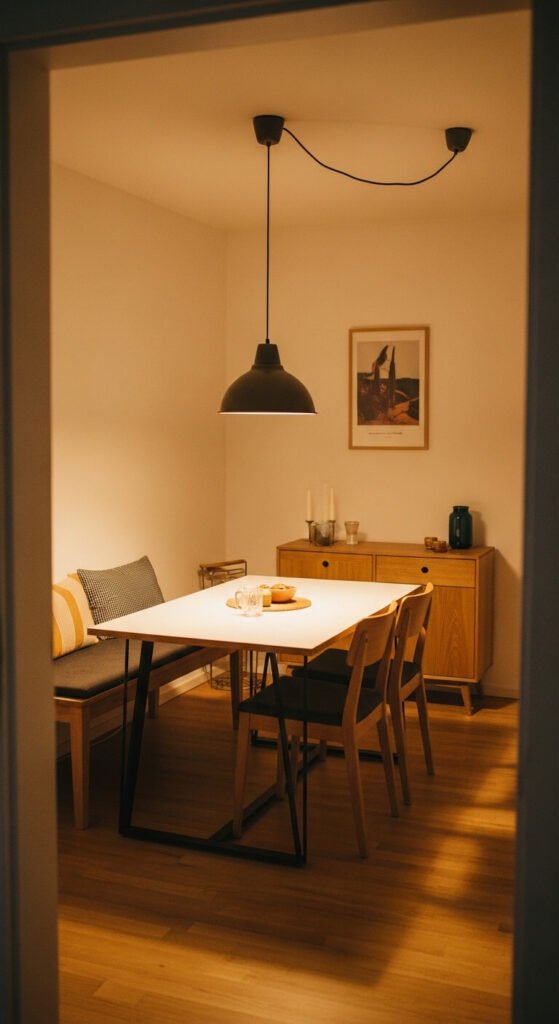
In small apartments, the dining table should work twice as hard. Push it against the wall and use it as a desk during the day. A simple fold-down wall table on a hinge takes this even further — it disappears completely when not in use. For guests, add a bench that slides under the table. This layout turns one room into two functional spaces without adding a single extra piece of furniture. Wall-mounted fold-down tables cost $40–$80 online.
15. The Rug-First Layout Method
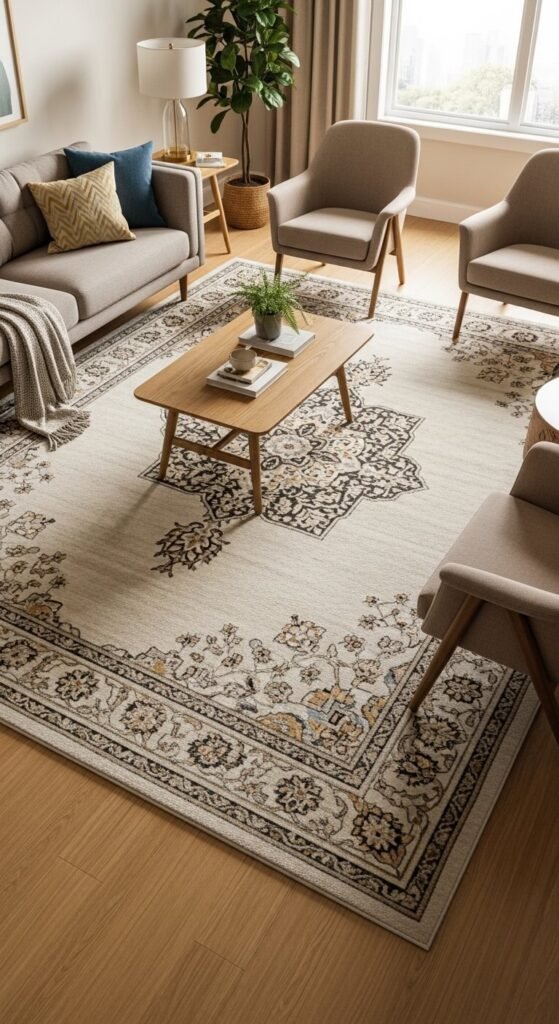
Start with the rug, not the furniture. Most people do this backwards. Lay your rug down first, then arrange furniture so at least the front legs of every piece sit on it. This grounds the whole room and makes the layout feel intentional immediately. The rug size matters: in a living room, go bigger than you think. A rug that’s too small makes the room feel disconnected. In a 12×15 room, go for at least an 8×10 rug. Budget source: Ruggable, IKEA, or Overstock often have large rugs under $150.
16. The Bedroom Window Bed
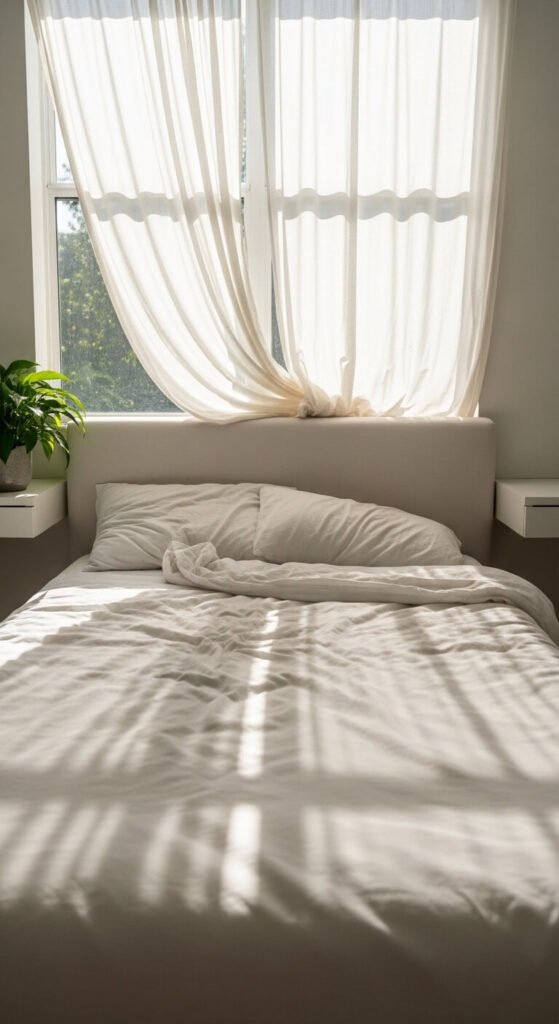
Placing the bed under a window feels wrong to most people — but when done right, it’s one of the most beautiful bedroom arrangements. Use blackout curtains behind a sheer layer so light is controllable. Mount the headboard directly to the wall beneath the window. Add wall-mounted reading lights instead of table lamps to keep the surface clear. This works especially well in rooms where the bed against the window is the only option that doesn’t block the door or closet.
17. The Hallway as a Room
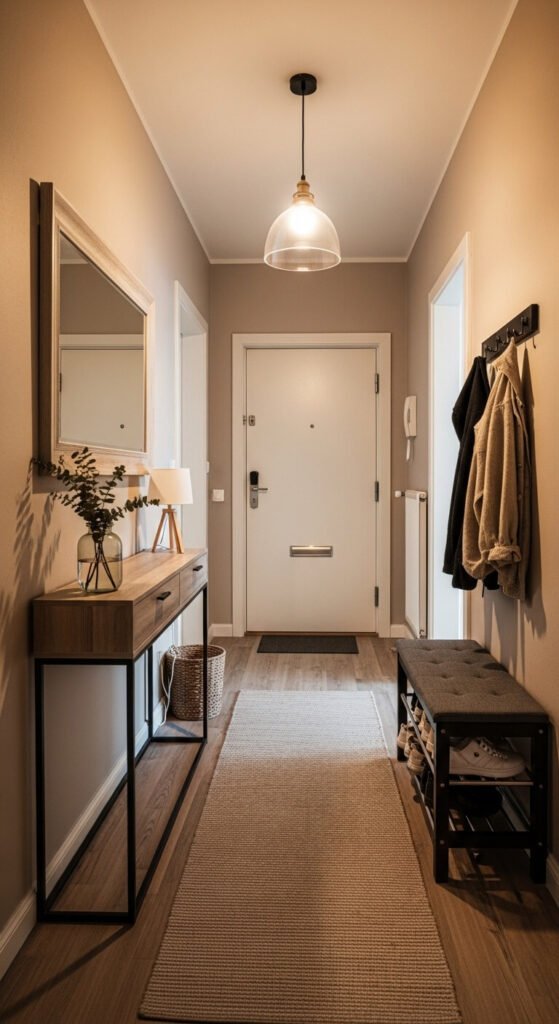
Hallways are wasted space in most homes. A narrow console table, a mirror, and a runner rug turn a hallway into a functional entry zone. Add a small bench with hidden storage beneath for shoes. Mount hooks on the wall above for bags and coats. The mirror makes the hallway feel wider. A console table can be found at a thrift store for $20–$40. This layout creates a transition from outside to inside that feels considered, not accidental.
18. The Corner Sofa Without a Corner
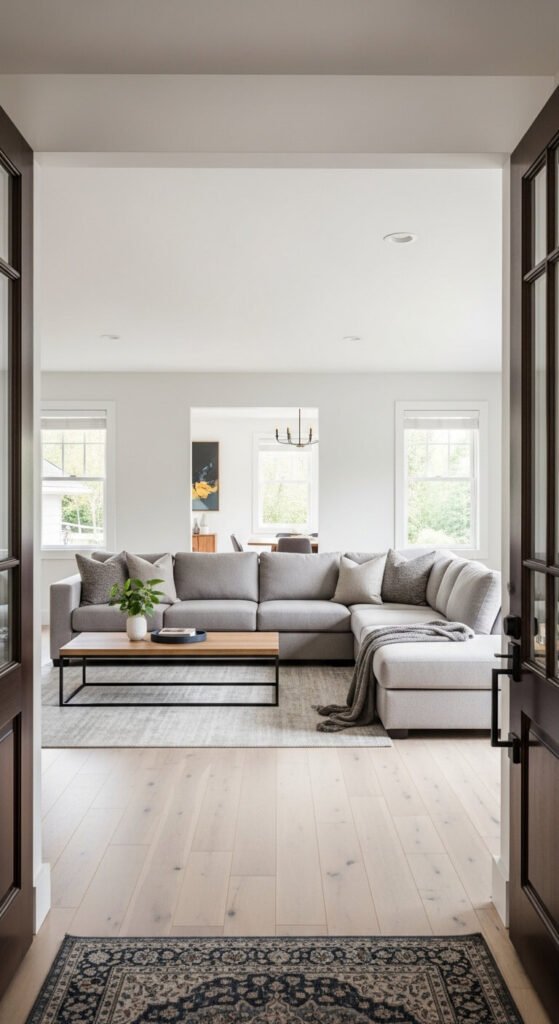
Sectionals don’t have to go into corners. Float a sectional in the middle of a large room to create its own corner. The open end of the L-shape becomes an entry point into the seating area. This works brilliantly in large open-plan spaces that feel too vast and undefined. The back of the sofa acts as a room divider. Place a low credenza or a row of plants behind it to complete the separation. No walls required.
19. The Stacked Bedroom Storage Hack
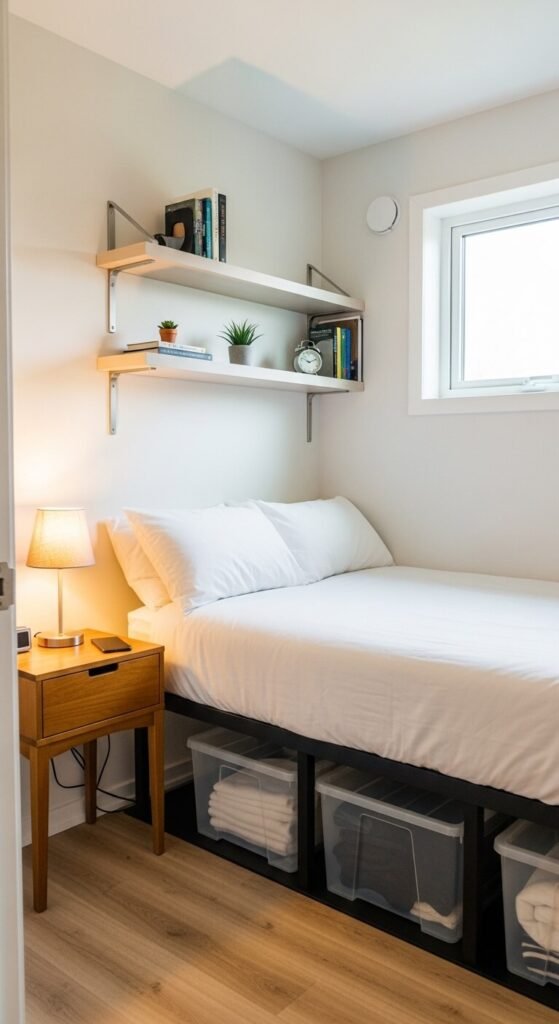
Raise your bed on risers and reclaim 6–12 inches of vertical storage underneath. Use labeled bins for seasonal clothing, extra linens, or shoes. Combine this with floating shelves above the headboard for books and small items. This stacking approach treats the wall as vertical real estate. Bed risers cost about $15 online and can add substantial storage to a room with zero floor space to spare. Paint the bins the same color as the walls to keep things looking clean.
20. The Back-to-Back Workspace
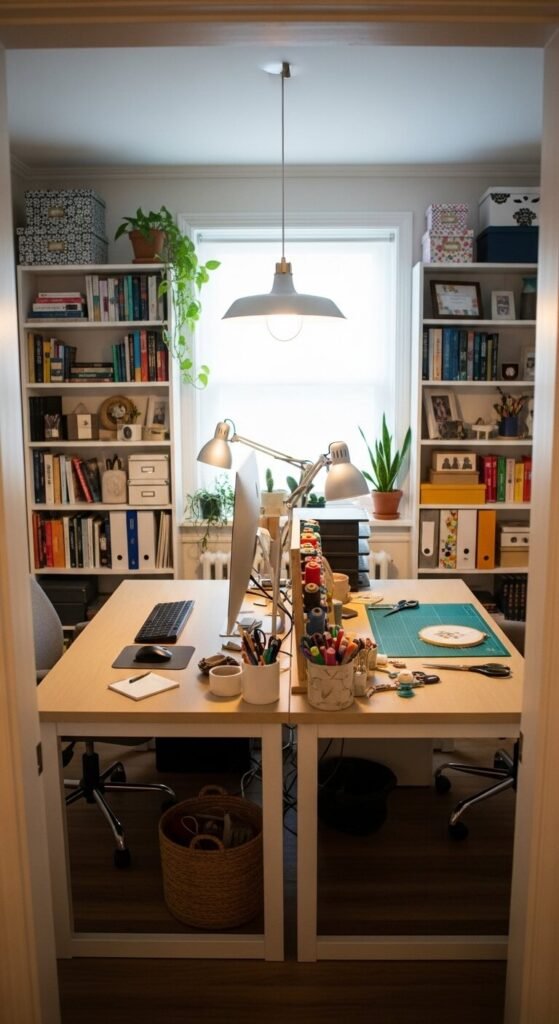
If two people work from home in one room, place two desks back-to-back in the center of the space. Each person faces away from the other — giving the feeling of separate zones without walls. Bookshelves along the perimeter keep supplies accessible. Use cable management clips to keep cords hidden. This layout uses the center of the room (usually wasted space) and leaves the walls free for shelving and breathing room. Two cheap IKEA LINNMON desks pushed together cost under $100 total.
21. The Outdoor-Indoor Flow Layout
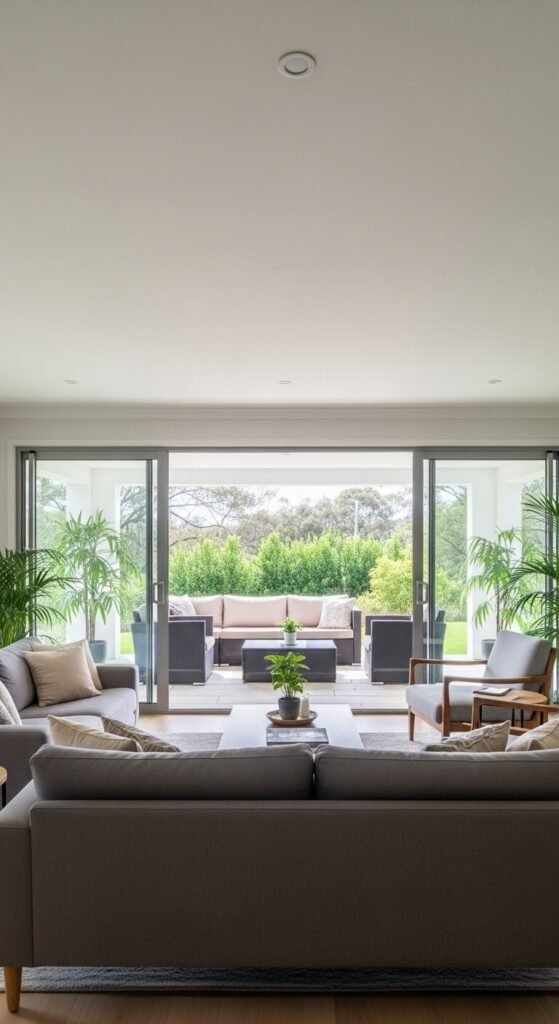
When you have glass doors or large windows to a patio, arrange indoor furniture to face them directly. Mirror your indoor setup outdoors with similar chairs and a small table. The eye moves from inside to outside seamlessly. Houseplants along the threshold blur the boundary further. This works in any climate — it’s about visual connection, not constant outdoor use. Matching or coordinating indoor and outdoor pillows costs under $30 and ties both areas together.
22. The Layered Lighting Layout
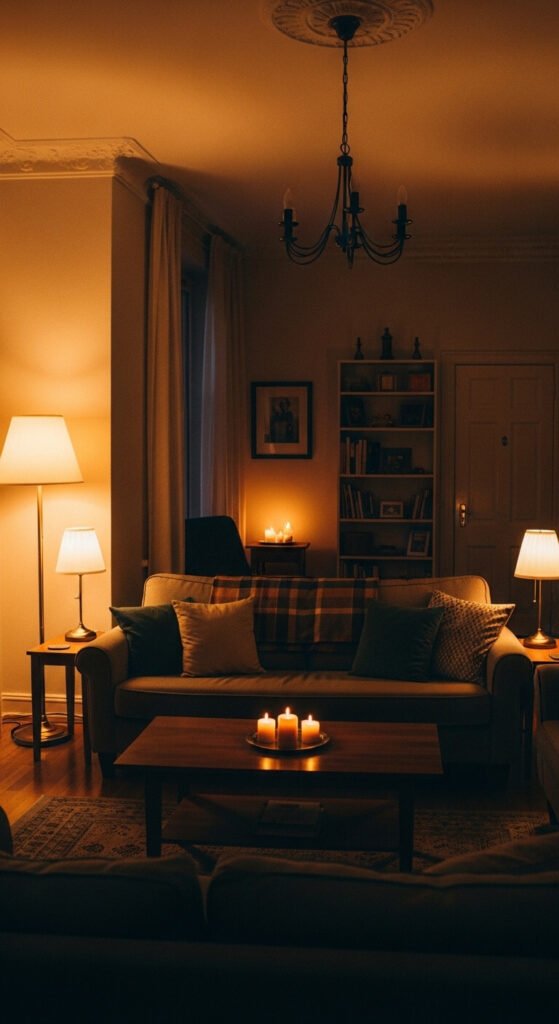
Furniture arrangement isn’t complete without layered lighting. Use three sources in every room: ambient, task, and accent. A floor lamp in the corner, table lamps at seating level, and candles or battery-operated lights on lower surfaces create depth that overhead lighting alone cannot. Turn off the ceiling light and layer these instead. The room immediately feels more alive. Thrift stores often have lamps for $5–$15. New shades from IKEA cost $10–$20 and completely transform an old base.
Conclusion
Getting your furniture arrangement right doesn’t take a big budget or a design background. It takes a willingness to move things around, step back, and ask whether the room is actually working for you. The layouts in this guide cover everything from tiny bedrooms to wide-open living rooms — and every single one can be adapted with what you already own. Start with one change: pull your sofa off the wall, define a zone with a rug, or carve out a reading corner. One shift leads to another. Before long, your home will feel like it was always meant to be exactly the way it is.