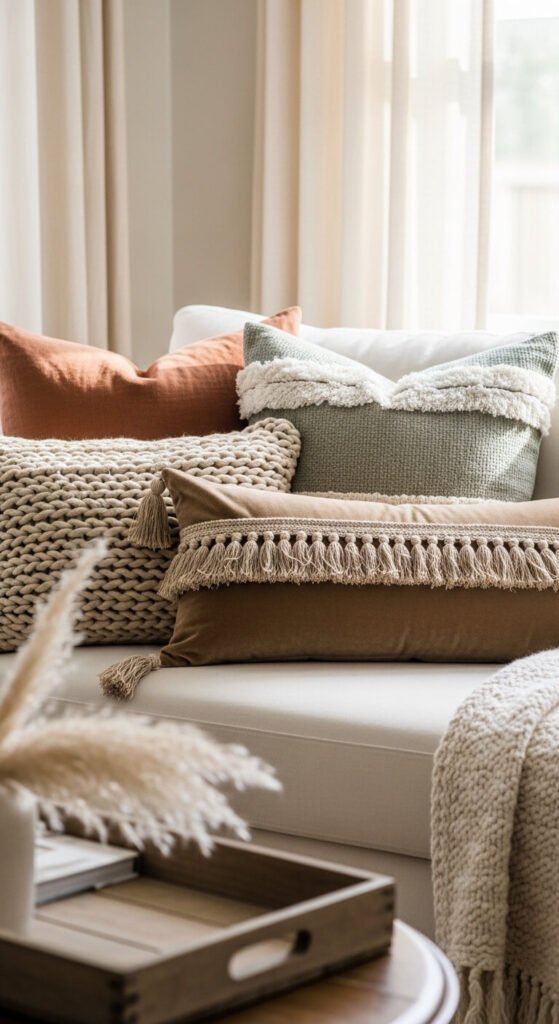
Your sofa is practically begging for a makeover — and throw pillows are the fastest way to get there. The right pillow arrangement can make a $300 couch look like it belongs in an interior design magazine. But most people either overbuy and create visual chaos, or underbuy and leave things looking flat. This guide gives you 22 tested, designer-approved styling formulas that actually work in real homes, on real budgets. No decorator required. Just a few smart choices and a willingness to rearrange until it clicks.
1. The Classic Odd-Number Rule
Designers swear by odd numbers for a reason. Three or five pillows always look more natural than two or four. It mimics how things arrange themselves in nature — slightly asymmetrical, never stiff. Start with three: one large, one medium, one lumbar. That’s your foundation. You can add from there. This formula works on sofas, beds, and accent chairs. It’s the single easiest fix if your current setup looks too “catalog-perfect” or weirdly symmetrical.
2. The 60-30-10 Color Formula
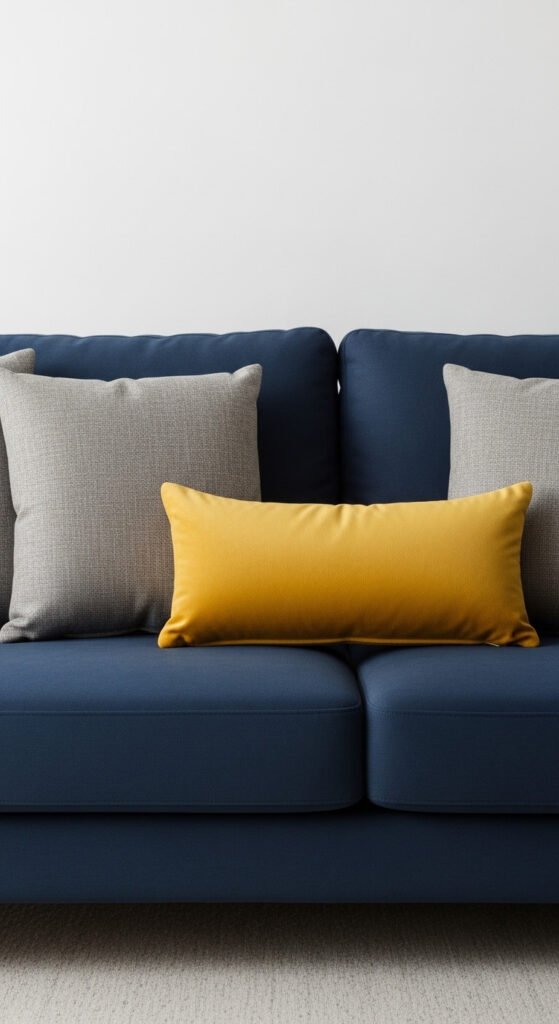
Borrow this rule from interior painters. 60% of your pillows should be your dominant neutral. 30% should be a secondary color that complements. The remaining 10% is your accent pop — something bold or unexpected. For example: cream, warm gray, and a terracotta lumbar. It’s balanced without being boring. Hit the discount bin at HomeGoods or TJ Maxx for the accent piece — you only need one, so it doesn’t have to cost much.
3. Mix Two Patterns, One Solid
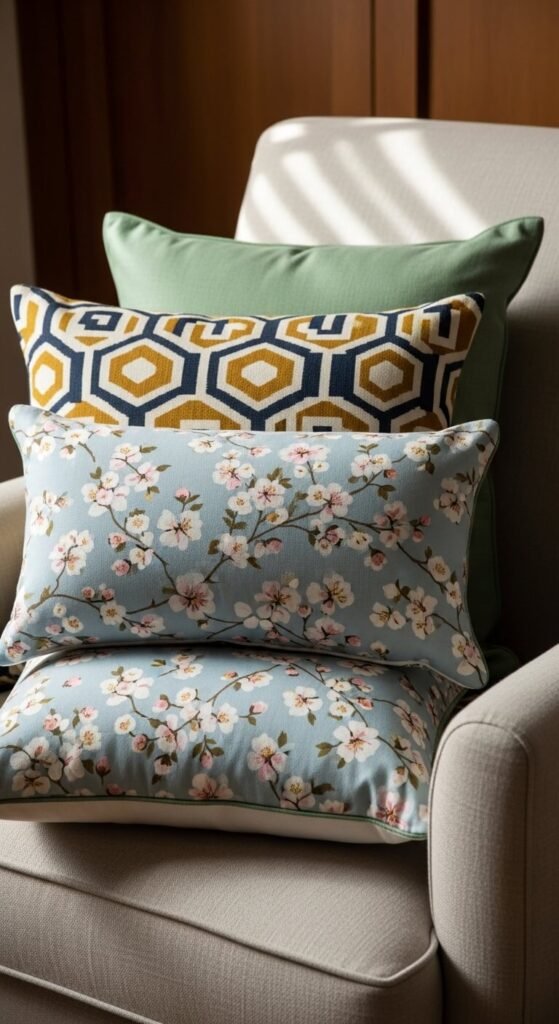
Pattern mixing intimidates most people. Here’s the cheat code: pick two patterns and one solid. The solid acts as a visual break. Make sure your two patterns vary in scale — one large, one small. A big stripe with a small floral works. Two medium-scale patterns fight each other. Keep colors within the same family and it’ll hold together. You can find patterned covers on Amazon or Etsy for under $15 each.
4. The Lumbar Pillow Anchor
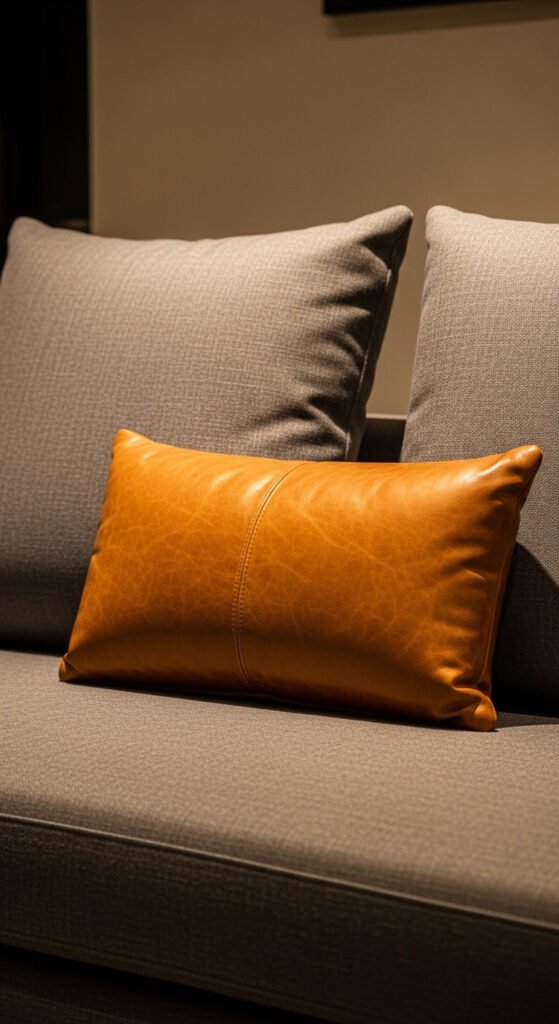
A lumbar pillow — that long, rectangular one — grounds the whole arrangement. Place it in front of your larger pillows, centered or slightly off to one side. It gives the setup a finished, layered look without adding bulk. Leather, velvet, and linen lumbar covers all photograph beautifully. IKEA and Amazon have affordable options. If you already own a cover you love, just buy a lumbar insert — they run about $8–$12 at craft stores.
5. The Texture Stack
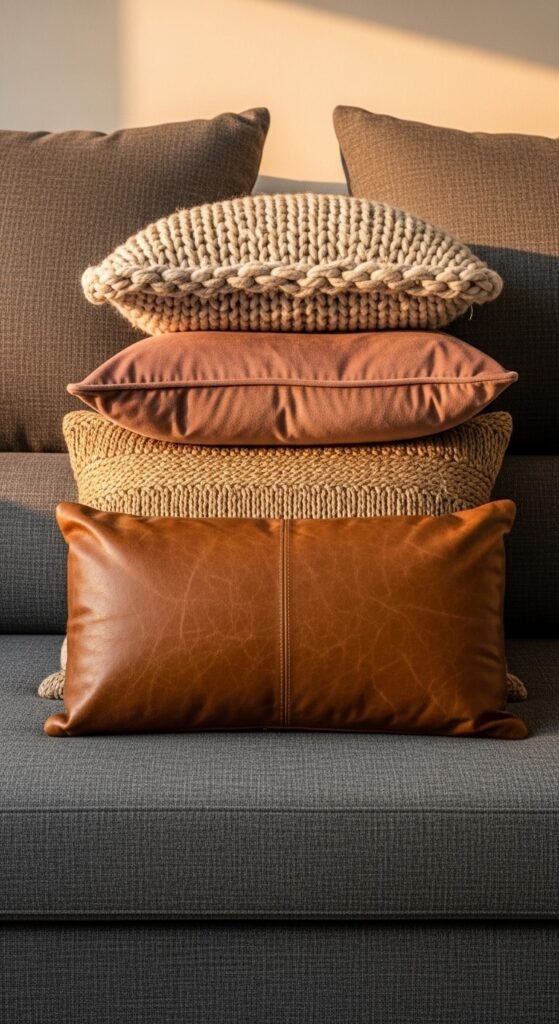
Color isn’t the only way to add depth. Texture does the heavy lifting when your palette is neutral. Combine a chunky knit with a smooth velvet and a loosely woven cotton. The contrast makes each pillow stand out even if they’re all in the same color family. This formula is great for minimalist or Scandinavian-style rooms. You can pull off the whole thing in cream and ivory tones and still make it look dynamic and intentional.
6. The One-Bold-Pillow Rule
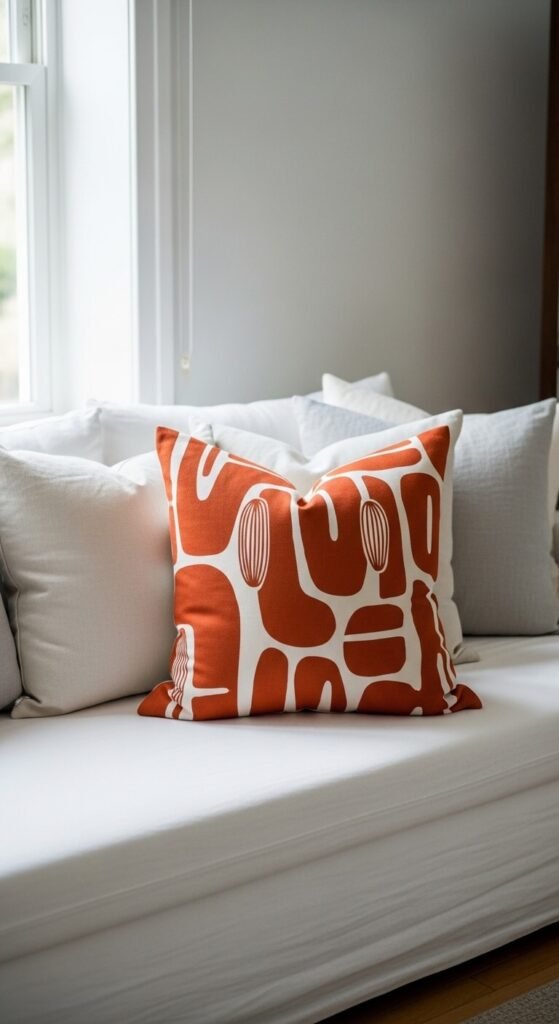
Not ready to commit to a full pattern mix? Let one pillow do the talking. Keep everything else neutral — cream, white, gray — and introduce a single statement pillow in a bold print or rich color. It draws the eye immediately and gives the sofa a personality without overwhelming the space. Swap it out seasonally for an easy refresh. A single great pillow cover from Society6 or Spoonflower can cost as little as $20.
7. The Designer Karate Chop
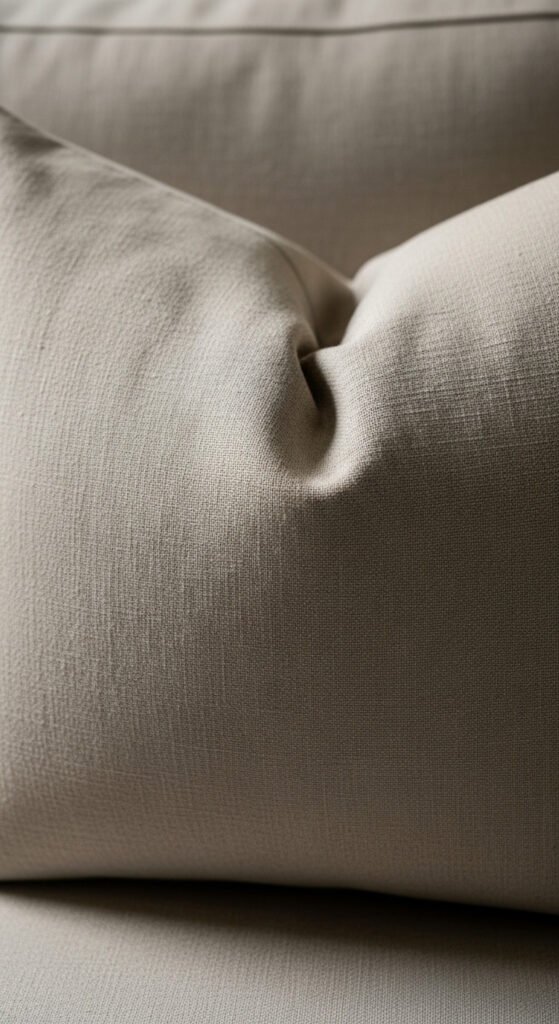
Ever notice that perfectly styled pillow with the little indent on top? That’s called a karate chop — and it’s a decorator’s signature move. Just place your pillow upright, then use the side of your hand to press a firm crease into the center top. It works best on down-filled or down-alternative inserts. It says “someone intentional lives here.” Takes two seconds. Completely free. Your guests will absolutely think you hired someone.
8. Feather-Down Inserts Over Polyester
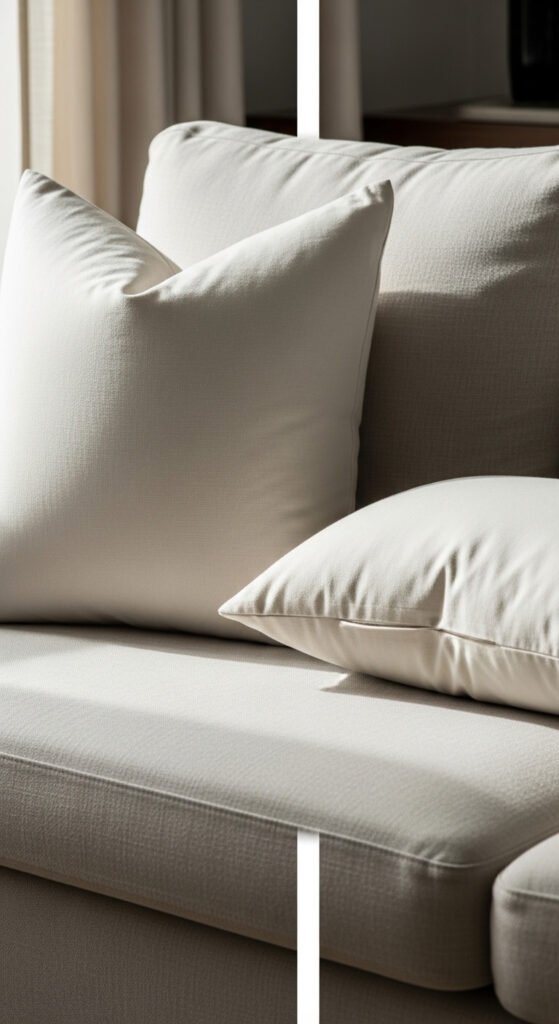
The cover gets all the attention, but the insert makes or breaks the look. Cheap polyester inserts go flat fast and get that lumpy, saggy appearance. Feather or down-alternative inserts hold their shape, look plump, and photograph beautifully. Go one size up from your cover — if the cover is 18″, use a 20″ insert. It creates that full, lush look. IKEA’s down inserts are affordable and widely available. This single swap changes everything.
9. The Size Graduation Stack
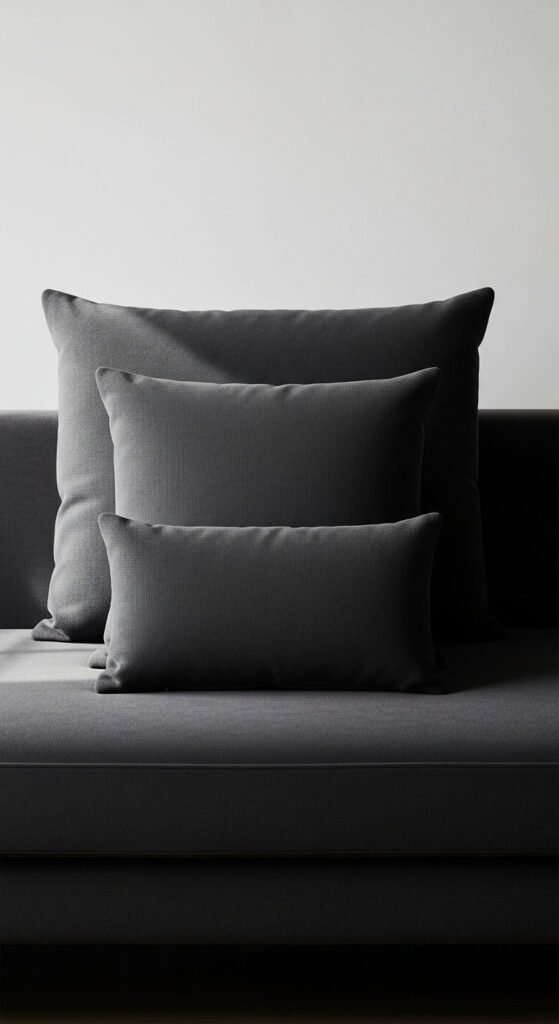
Layer pillows like a pyramid. Largest in the back, smallest in the front. This creates depth and prevents the arrangement from looking flat. Common sizes: 24″ in back, 20″ in middle, 16″ or lumbar up front. The progression feels natural and intentional. It’s the same logic as styling a bookshelf — tall things behind, shorter things forward. Once you see it, you can’t unsee it. It takes less than a minute to rearrange.
10. The Tonal Monochrome Stack
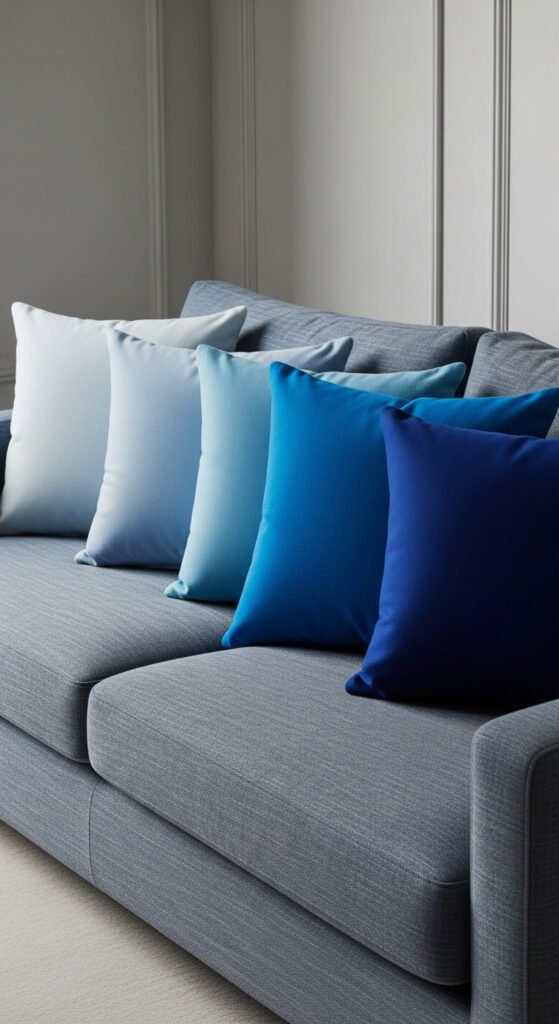
All one color family, different shades. That’s it. Monochromatic pillow stacks look incredibly sophisticated and require zero pattern-matching stress. Try five shades of blue from powder to navy, or warm whites through deep camel. The variety in tone creates the interest. This works especially well in bedrooms. Hit up a fabric store and buy half a yard each of a few tonal shades — make your own covers with iron-on hem tape if you’re feeling crafty.
11. The Fringe and Trim Upgrade
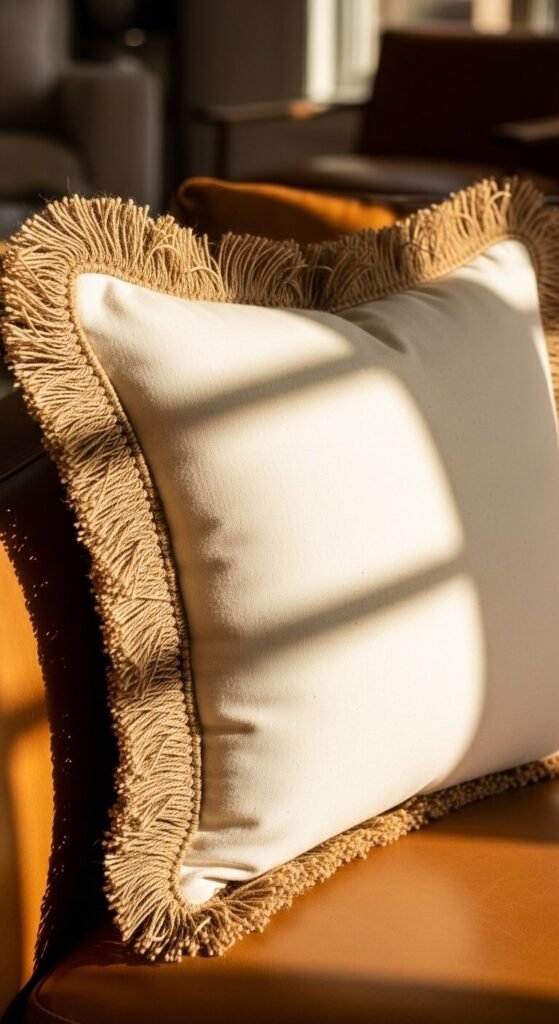
A plain pillow with great trim looks custom-made. Fringe, pom-poms, piping, and tassels transform a basic cover into something that looks boutique-priced. You can buy trim by the yard at any fabric store — typically $2–$5 per yard — and hot-glue or hand-stitch it to a pillow cover you already own. Jute fringe on a linen cover looks naturally expensive. It’s one of the most impactful and least expensive DIY upgrades in pillow styling.
12. The Sofa-to-Accent-Chair Echo
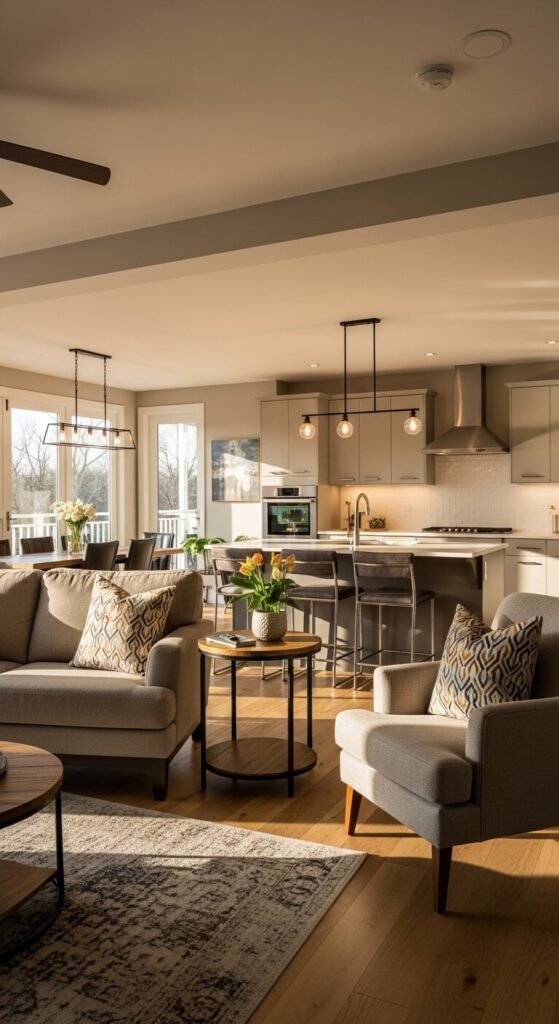
Pull one fabric from your sofa pillows and repeat it on a nearby accent chair. It creates a visual conversation between the two pieces without making the room feel matchy-matchy. You don’t need to buy a new pillow — just move one. Or buy one extra cover in that same fabric and put it on the chair. This technique makes a room feel designed rather than decorated. It’s one of the most effective tricks for making a space feel cohesive.
13. The Seasonal Swap System
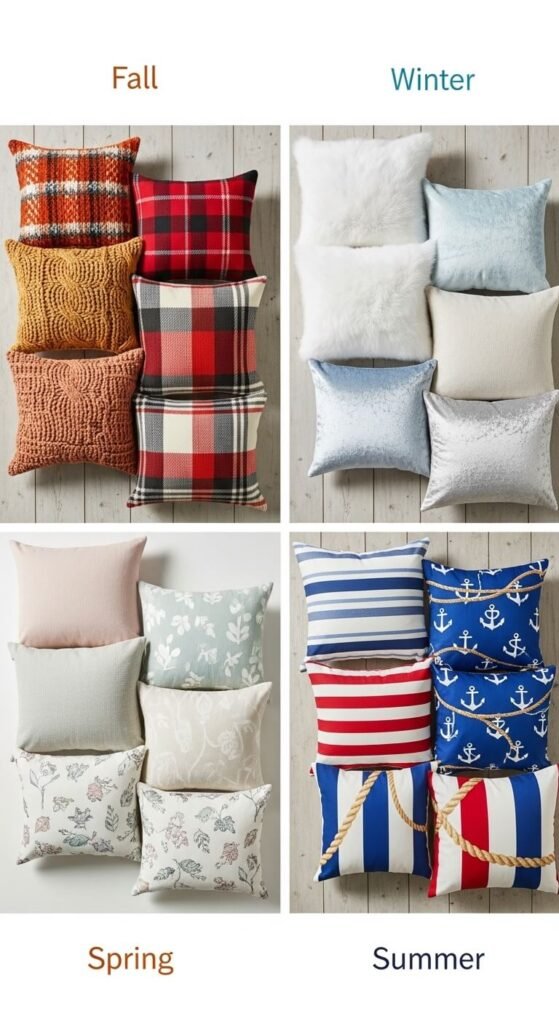
Buy four sets of covers, one insert per pillow. Swap the covers each season instead of buying whole new pillows. It keeps things from looking stale and saves significant storage space. Fall gets warm plaids and rust. Winter gets cream, white, and deep green. Spring gets blush and soft florals. Summer gets linen and nautical stripes. Store the off-season covers in a flat bin under the bed. Your sofa stays current year-round for the cost of covers alone.
14. The Velvet Statement Moment
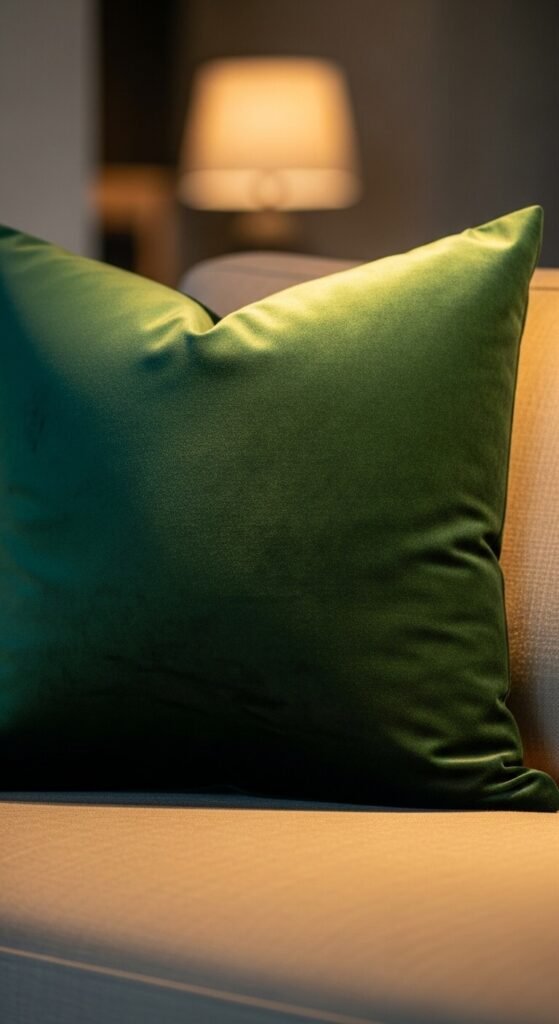
Velvet reads as expensive even when it isn’t. One or two velvet pillows in a jewel tone — emerald, sapphire, burgundy — instantly make a neutral sofa look curated. The fabric catches light differently as you move through the room, which adds life. Amazon and Target both carry good quality velvet pillow covers in the $12–$25 range. A single emerald velvet lumbar on a beige sofa is genuinely one of the easiest designer-looking moves you can make.
15. The Bookend Pair With a Center Statement
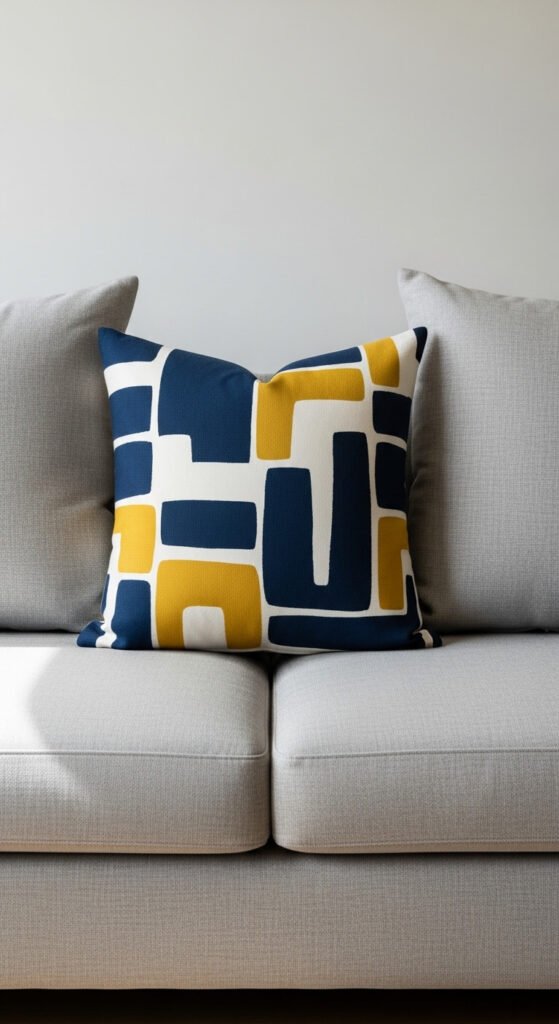
Place matching pillows on each end of the sofa as anchors, then put one statement pillow in the center. The matching pair creates symmetry. The center pillow breaks it just enough to feel curated rather than catalog-stiff. This is one of the easiest formulas for a three-cushion sofa. Keep the bookend pair neutral and let the center piece be bold or patterned. It requires buying only three pillows total — a budget-friendly approach to a put-together look.
16. The Global Textile Mix
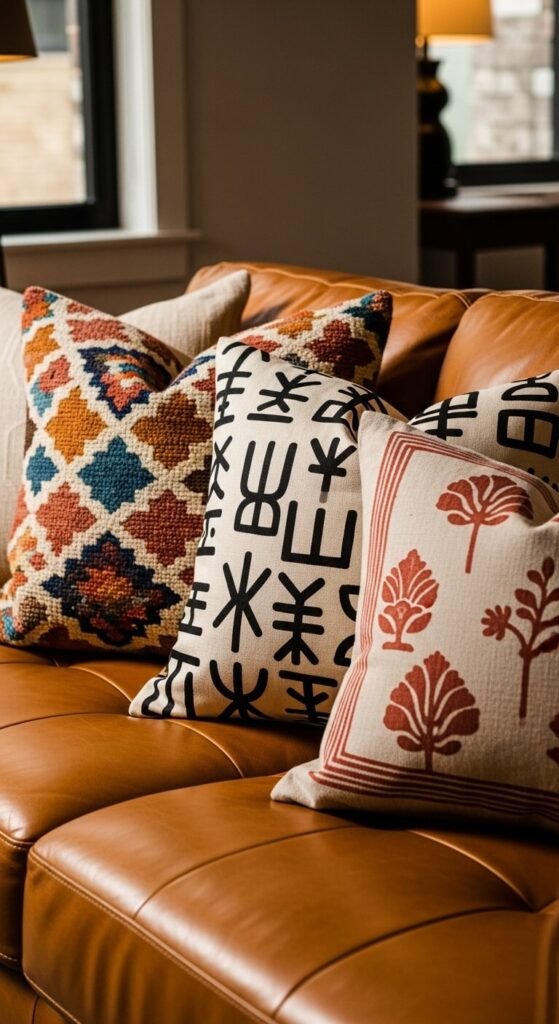
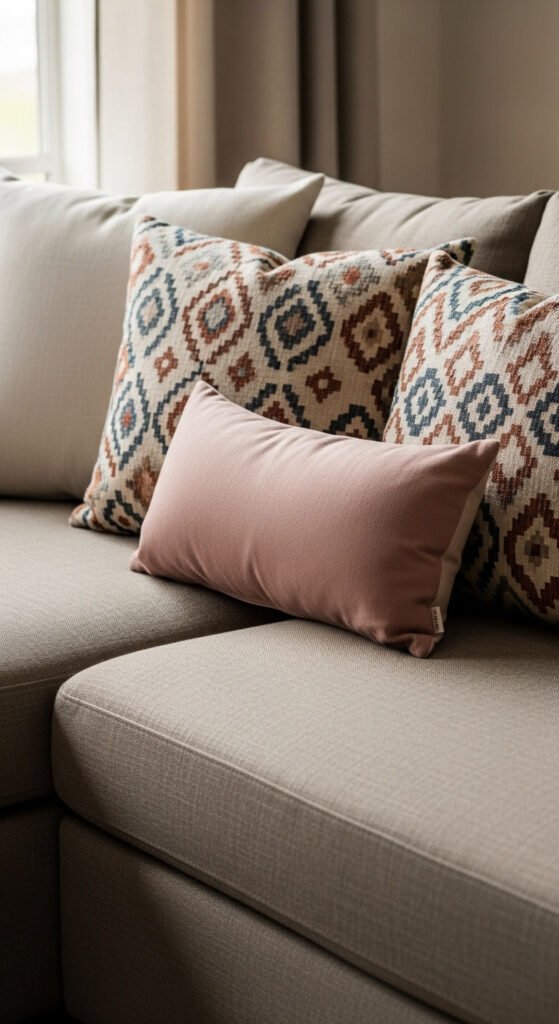
Pillows that look like they were collected from travels signal personality and warmth. You don’t have to actually travel — just shop with intention. Look for mudcloth-inspired prints, ikat patterns, block prints, or Moroccan geometric covers. Mix two or three together on a neutral sofa. They share an “artisan-made” quality that pulls them together. World Market, Etsy, and Amazon have tons of globally inspired pillow covers for $10–$30. The result looks collected, not decorated.
17. The Unexpected Fabric Combo
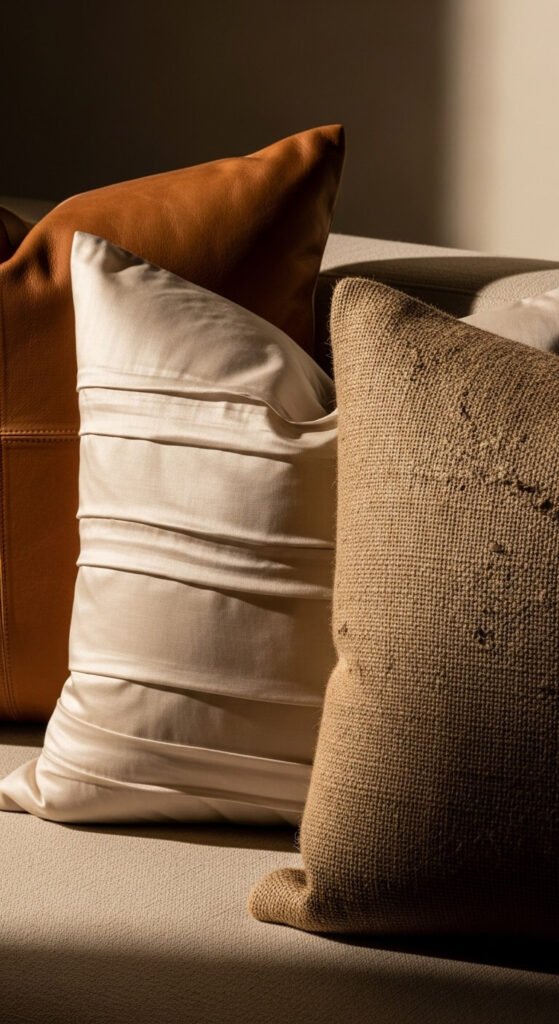
Leather next to linen next to silk — unlikely combinations that somehow work. The key is keeping the colors in the same tonal range so the textures do the contrasting. A leather-trimmed canvas pillow beside a gauzy semi-sheer cover creates visual surprise without color conflict. This is a more advanced move, but the payoff is a sofa that looks genuinely one-of-a-kind. Look for remnant fabrics at local shops — a half yard is usually enough for a simple envelope-style cover.
18. The Throw-and-Pillow Duo
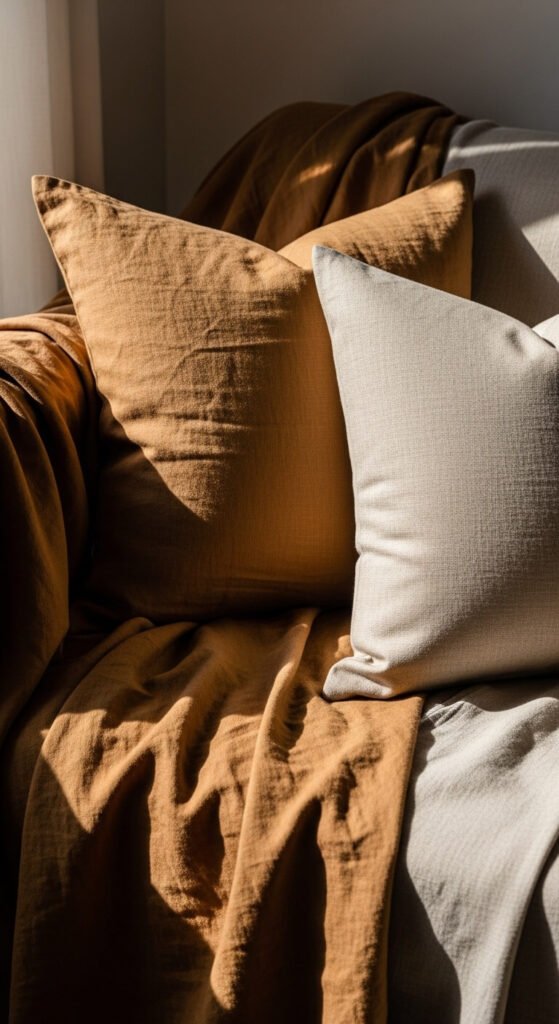
Pillows and throws work best when they’re planned as a pair. Pull one color from your pillow arrangement and repeat it in the throw draped over the sofa arm. You don’t need a full match — a tonal relationship is enough. Drape the throw loosely, not folded perfectly. The casual drape makes the whole setup feel lived-in rather than staged. This also ties together a sofa that has multiple pillow colors by giving the eye a place to land.
19. The Bed Pillow Layering Formula
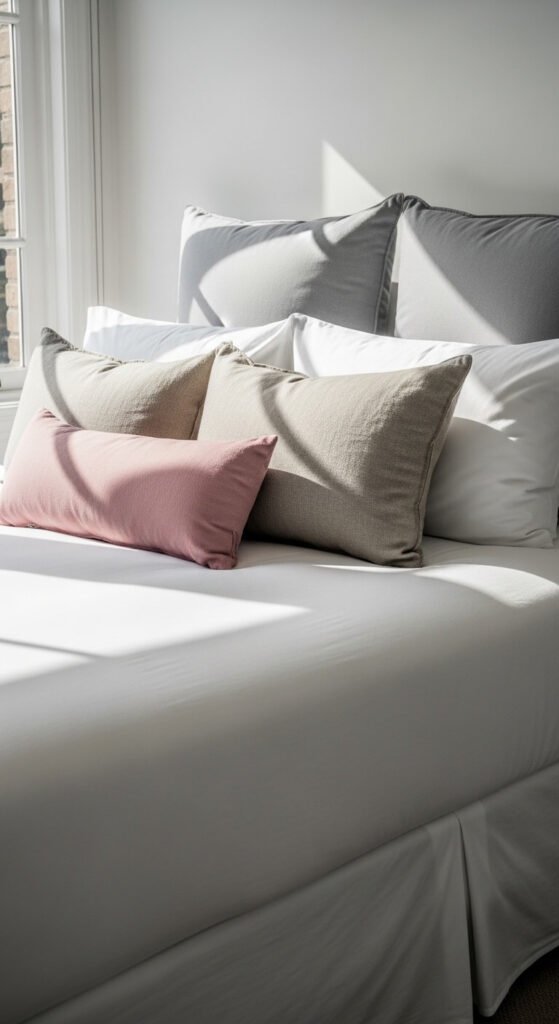
Beds look amazing with four layers of pillows: Euro shams in the back, standard sleeping pillows next, two decorative pillows, then a lumbar up front. That’s the pro formula. You don’t need to buy all new. Use your regular sleeping pillows with fresh white cases as the second layer — it counts. The Euro shams are the biggest impact item if you’re starting from scratch. Standard-sized Euro shams and inserts are typically under $30 for both.
20. The Neutral With One Warm Metal Pop
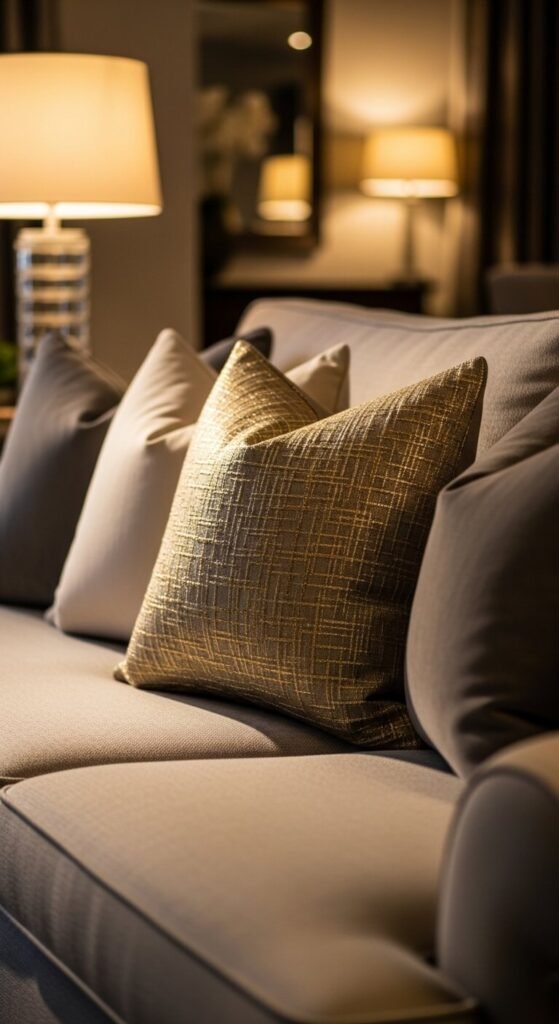
Metallic thread or gold embroidery on a single pillow adds warmth without shouting. It’s the detail that makes a neutral arrangement feel finished rather than flat. Look for pillow covers with subtle gold-thread embroidery or a woven metallic accent. These are widely available at World Market or on Etsy for under $25. Place it as one of your middle-layer pillows so it catches the light from different angles. This works especially well in the evening with warm lamp light nearby.
21. The Pillow-to-Rug Color Pull
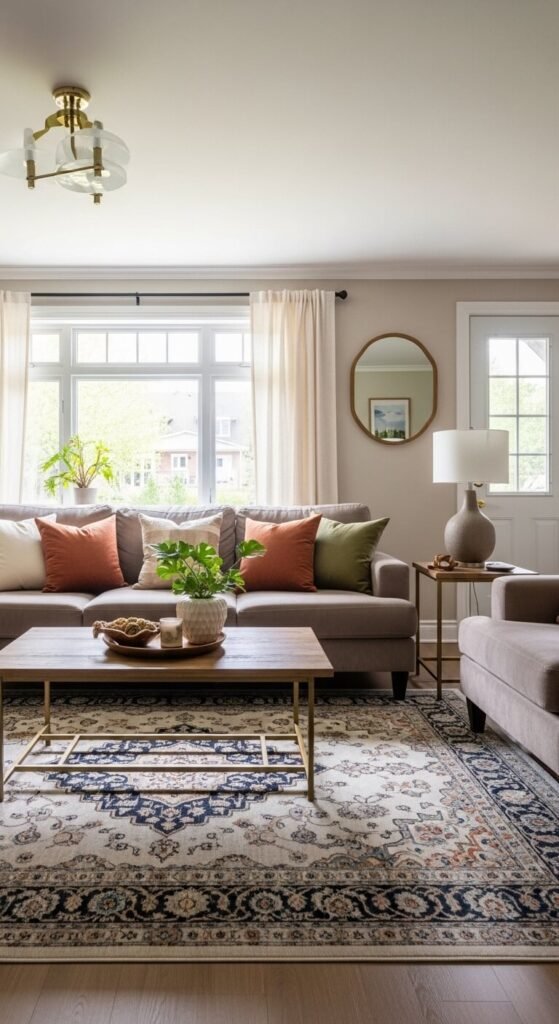
Look at your rug. Pick two colors from it and put them on your sofa as pillows. This creates a color throughline that makes the room feel designed from the ground up. It’s one of the oldest tricks in interior design and it works every single time. If your rug has rust, cream, and navy — put a rust pillow and a cream pillow on your sofa. Your room will suddenly feel intentional. You’re not decorating piece by piece. You’re composing.
22. The DIY Pillow Cover Refresh
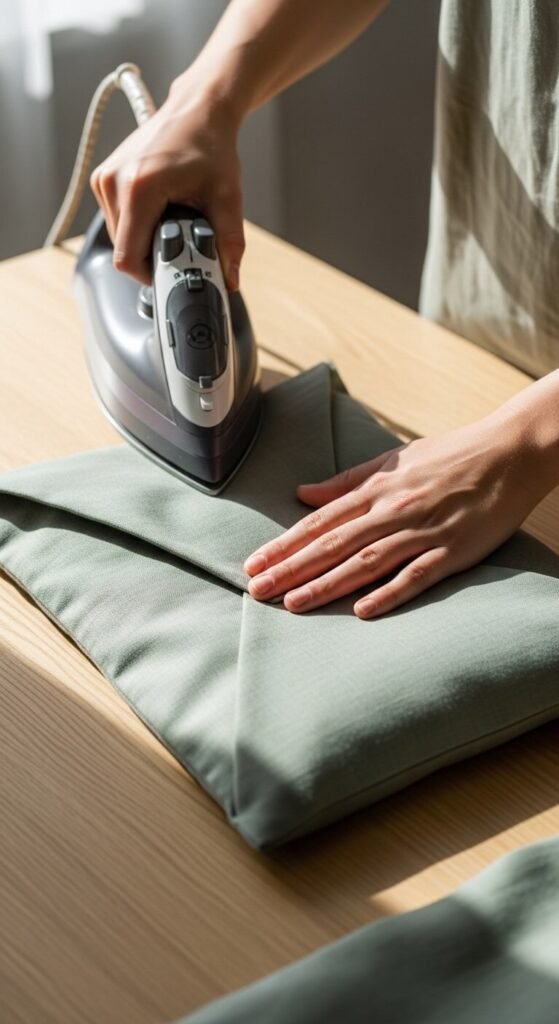
You don’t need to buy new pillows. An envelope-style cover takes 20 minutes and zero advanced sewing skills. Cut fabric to size, fold and press the open end, stitch three sides. Done. One yard of fabric makes two covers and usually costs $6–$12 at any fabric store. This is how you get a custom, one-of-a-kind pillow in exactly the color and texture you want — without paying boutique prices. It’s also the best way to use a fabric you love but can’t find in pillow form anywhere.
Conclusion
Throw pillows are one of the few things in home design where a small investment — and a few intentional decisions — makes a dramatic difference. You don’t need a designer budget or a decorator’s eye. You just need a formula to follow and the confidence to rearrange until it feels right. Start with one of these 22 approaches, apply it this weekend, and see what changes. The best pillow arrangement is the one that makes your room feel more like you — and now you have 22 ways to get there.