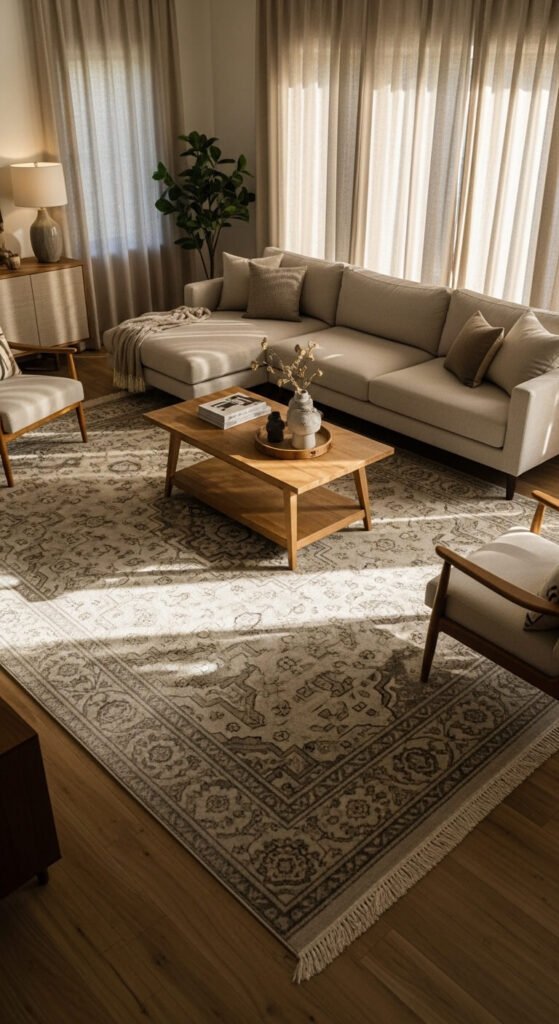
Getting rug placement wrong is one of the most common — and costly — decorating mistakes homeowners make. A rug that floats in the middle of a room, sits too small under a sofa, or gets shoved against every wall can make even a beautiful space feel off. The good news? You don’t need a designer or a big budget to fix it. These 21 smart rug placement rules will show you exactly where to put your rug, how to size it right, and how to use it to pull your entire room together — one simple step at a time.
1. Follow the “All Legs In” Rule for Living Rooms
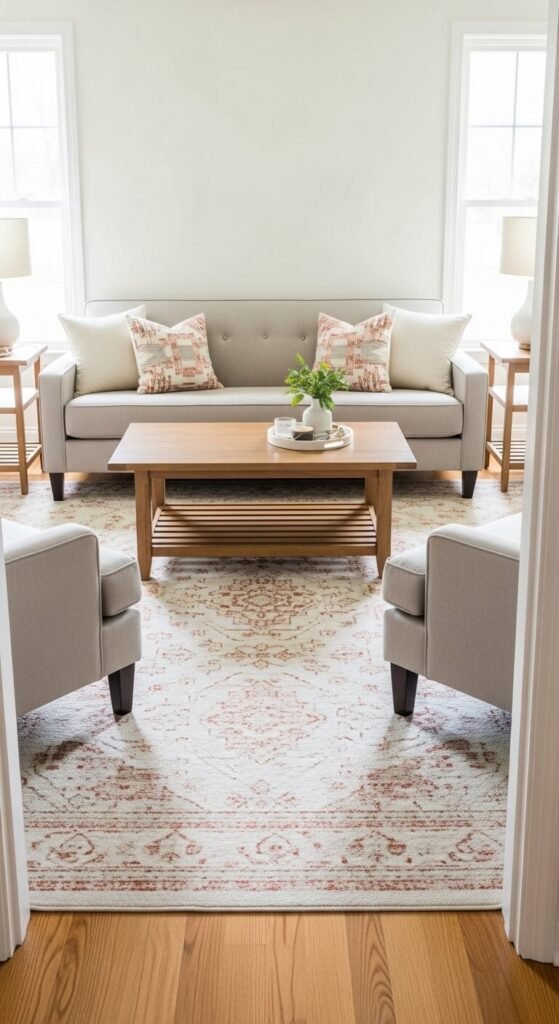
All furniture legs on the rug creates a cohesive, grounded look. It tells the eye that everything belongs together. This works best in larger living rooms with an 8×10 or 9×12 rug. It’s the most foolproof approach for open-plan spaces. If your current rug is too small for this, consider a budget-friendly option from IKEA or Ruggable. You don’t have to spend thousands. A flat-weave rug in a large size can cost under $150 and still do the job beautifully.
2. Try the “Front Legs Only” Trick in Small Spaces
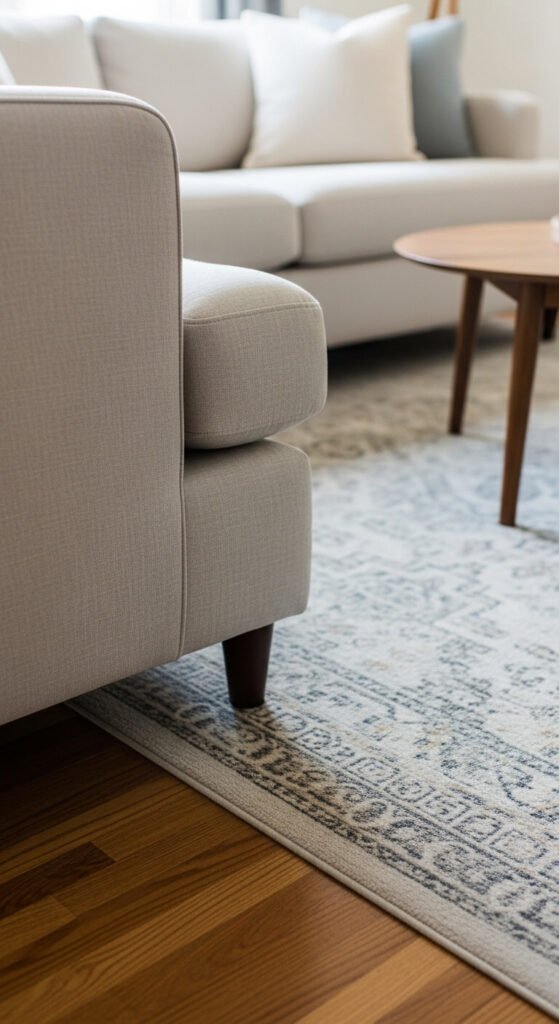
If your room is small, placing just the front legs of your sofa on the rug still creates definition without overwhelming the space. It visually extends the seating area and makes the rug look intentional. This trick works with a 5×8 rug, which is much cheaper and easier to find. Pull the rug about 6–8 inches under the sofa’s front legs. Done right, it looks styled — not accidental. Great for studio apartments and compact living rooms.
3. Size Up Before You Buy
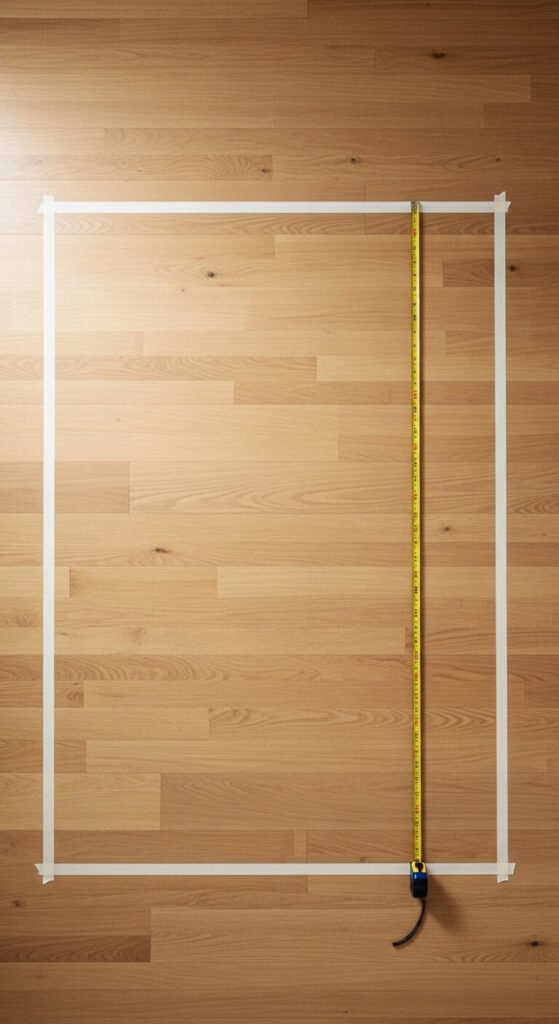
Most people buy rugs that are way too small. Before shopping, use painter’s tape to map out the size on your floor. Live with it for a day. Walk around it. Sit on your sofa and see how it feels. The tape trick is free and saves you from a costly return. In a living room, aim to leave 12–18 inches of bare floor around the rug’s edge. That border of exposed floor is part of the design — it frames the rug like a mat frames a picture.
4. Center the Rug Under Your Dining Table
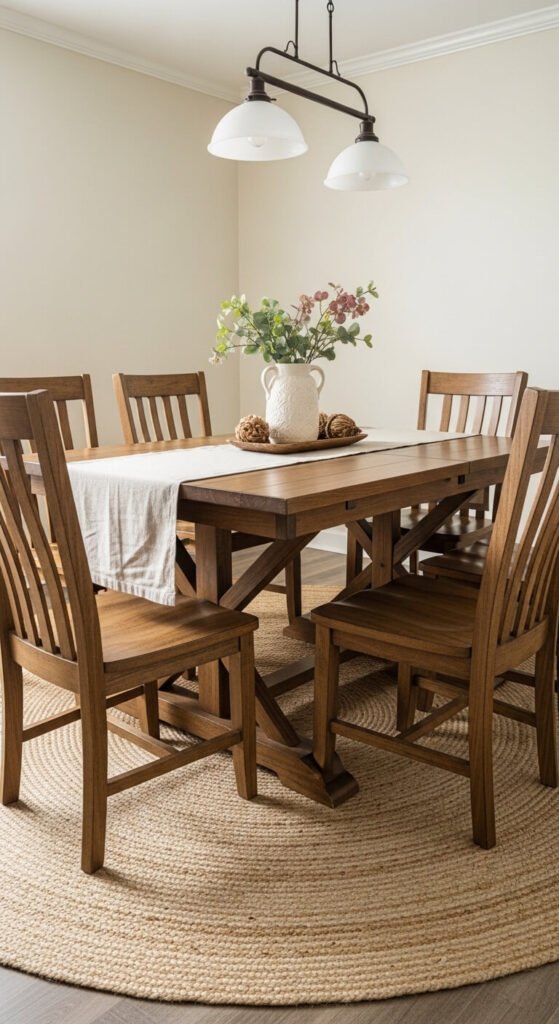
In a dining room, the rug should be large enough so chairs stay on it even when pulled out. Pull a chair out as if someone is sitting down — all legs should still land on the rug. For a standard dining table, you usually need a rug at least 2 feet larger on all sides than the table itself. A 6-seat table typically calls for an 8×10 or 9×12 rug. Round tables pair beautifully with round rugs — it softens the whole room.
5. Use a Runner the Right Way in Hallways
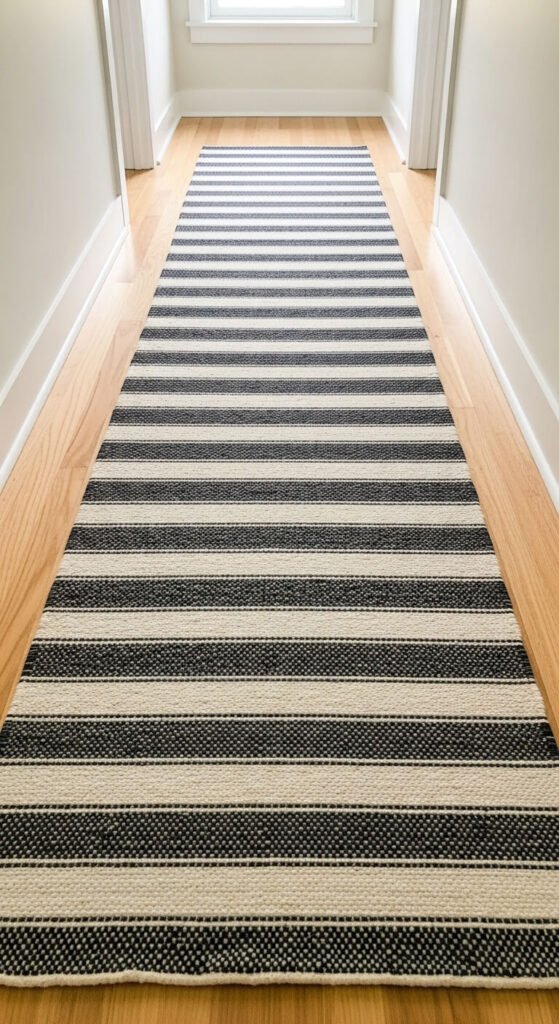
A runner should never touch the walls on either side. Leave at least 3–4 inches of bare floor showing along each edge. This prevents a wall-to-wall carpet look and keeps things feeling airy. For a standard hallway, a 2×8 or 2.5×10 runner works well. Choose a low-pile option so doors can swing freely over it. If your hallway has a corner, layer two shorter runners — it’s a practical, affordable fix that looks intentional.
6. Anchor Your Bed With the Right Rug Placement
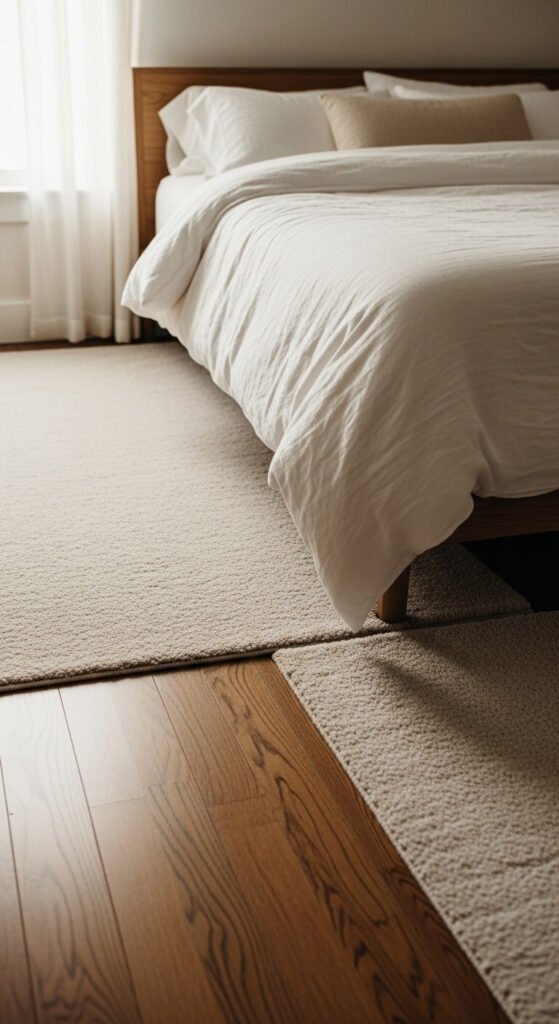
In a bedroom, place the rug so it extends at least 18–24 inches beyond each side of the bed. Your feet should hit the rug when you step out of bed — not cold hardwood. For a queen bed, a 8×10 rug placed with two-thirds under the bed works perfectly. On a tight budget? Use two matching runners on either side of the bed instead. It creates the same warm, grounded effect for a fraction of the price.
7. Don’t Push Rugs Against the Wall
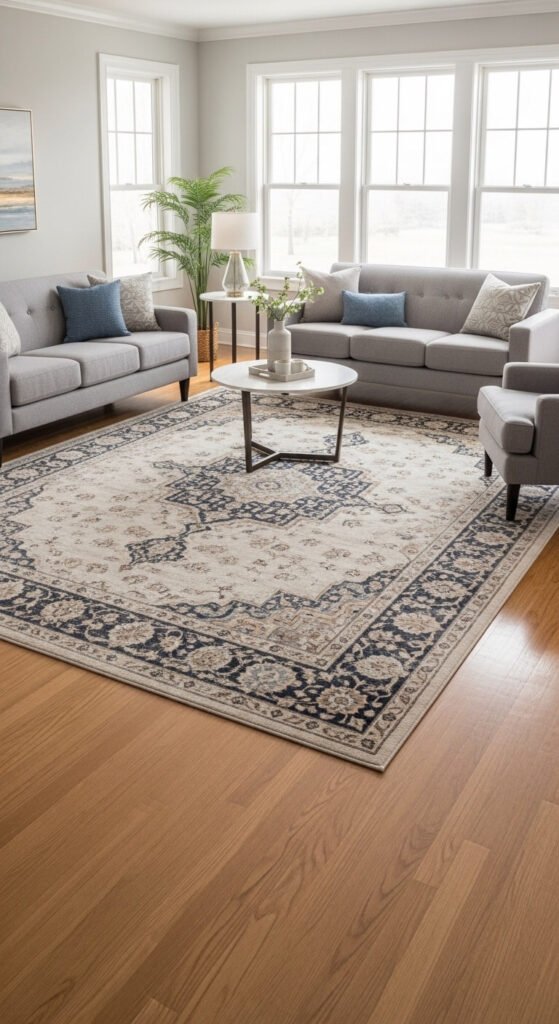
One of the most common mistakes: sliding the rug until it hits the baseboard. This makes the room feel smaller and the furniture layout look crammed. Rugs are meant to float. Leave breathing room on all sides — ideally 12–18 inches from the wall. If your rug only fits by pressing against the wall, it may be the wrong size for your room. Swap it for a smaller rug and reposition your furniture to create proper balance.
8. Layer Rugs for Texture and Warmth
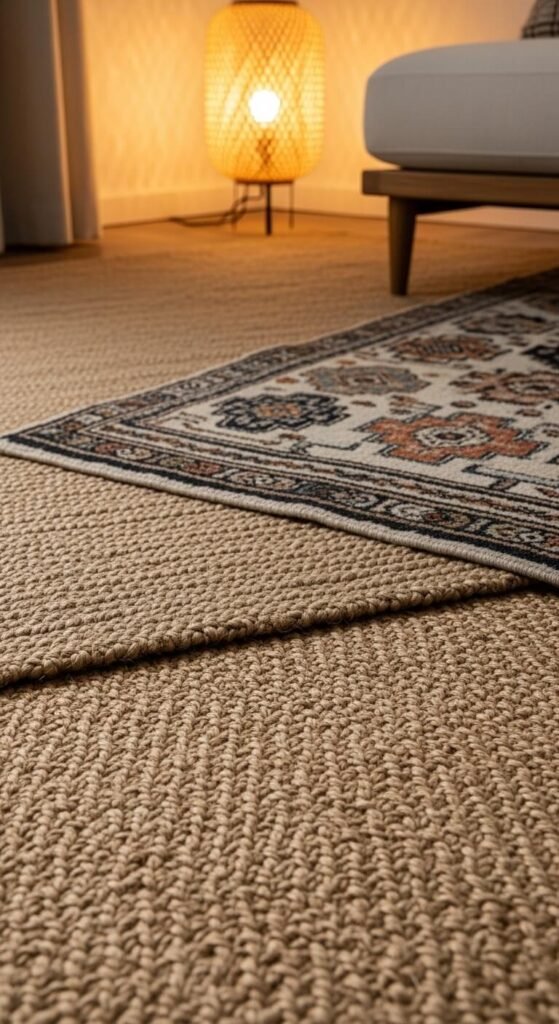
Layering rugs is one of the best budget tricks in decorating. Start with a large, inexpensive natural-fiber rug like jute or sisal as your base. Then layer a smaller, more decorative rug on top. The bottom rug grounds the space; the top one adds personality. This also lets you switch up the look seasonally without buying a whole new large rug. A layered look adds visual depth and texture that a single rug simply can’t match.
9. Match Rug Shape to Room Shape
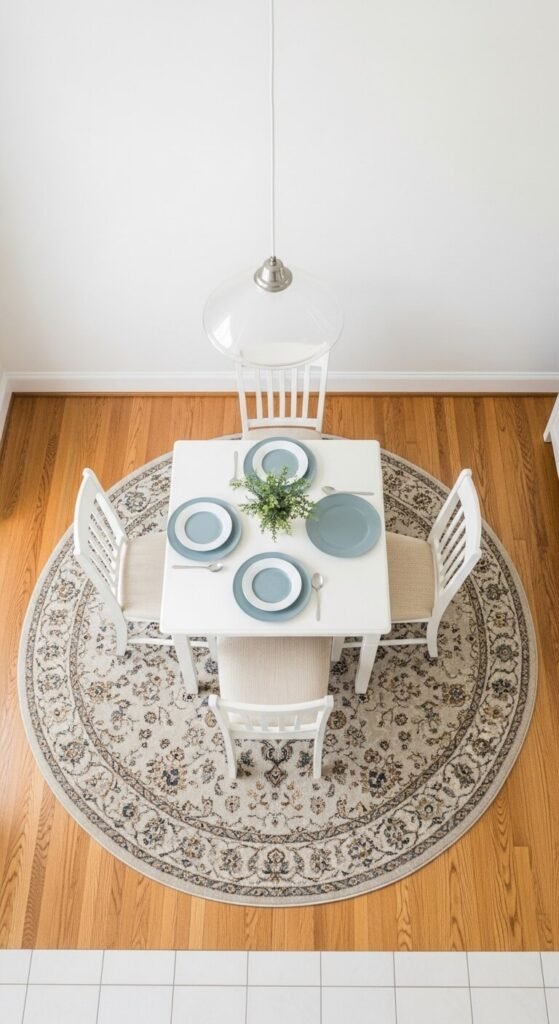
Round rooms and square furniture love circular rugs. Matching the shape of your rug to the shape of your space or furniture grouping creates visual harmony. A round rug under a square dining table softens the hard angles and feels more intimate. In a long narrow room, a rectangular rug emphasizes the length. In a square room, a square rug mirrors the architecture. Think of the rug shape as a design echo — it reinforces what’s already there.
10. Create Zones in Open-Plan Spaces
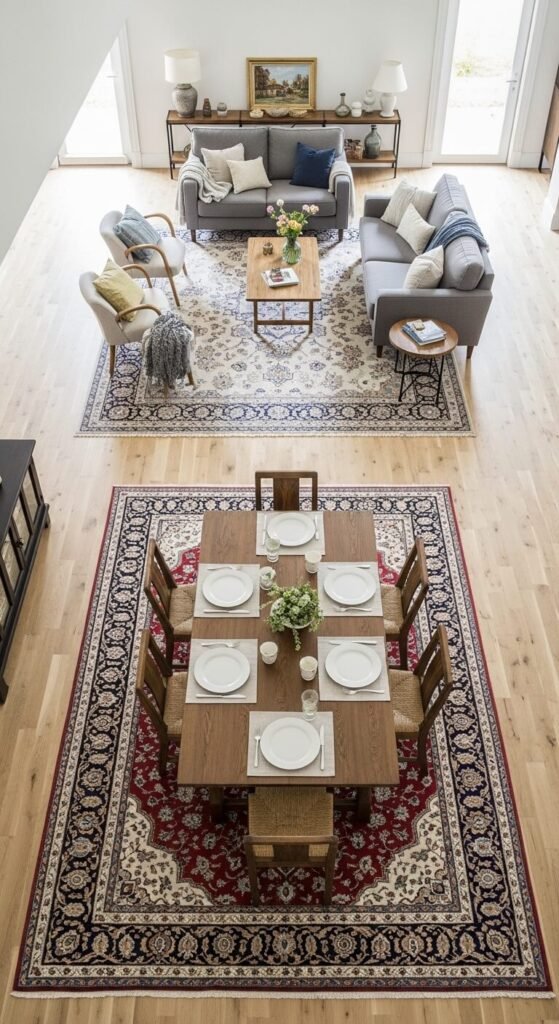
In open-plan homes, rugs do the job that walls can’t. Each rug defines a separate zone — one for living, one for dining, one for a reading nook. The key is keeping rugs from overlapping or sitting too close together. Leave at least 3–4 feet of bare floor between zone rugs. Coordinate colors so the rugs feel related but not identical. This zoning technique costs nothing extra — you’re just being intentional about placement.
11. Use a Rug Pad — Always
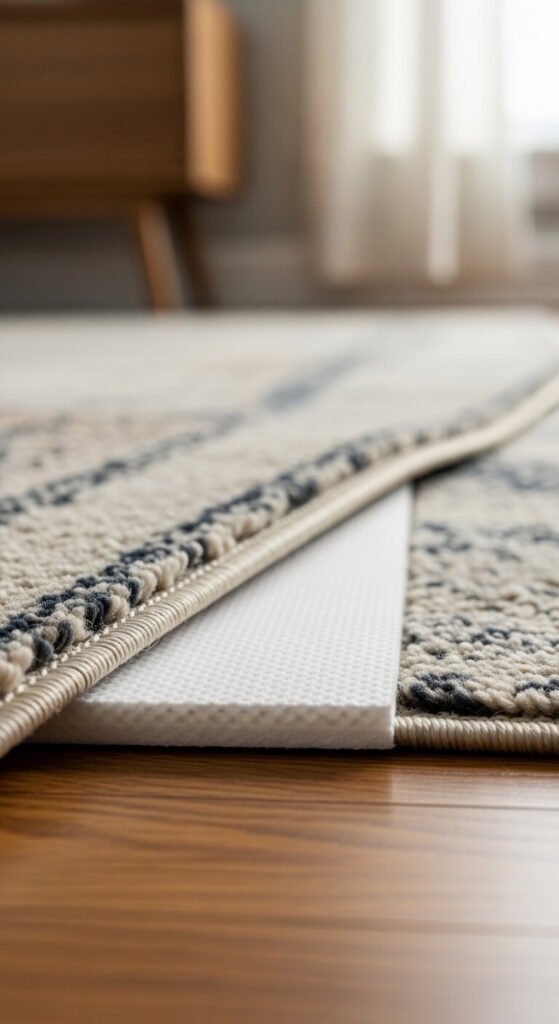
A rug pad is non-negotiable. It keeps the rug from sliding, protects your floors, adds cushioning underfoot, and extends the life of the rug. Get a pad that’s about an inch smaller on all sides than your rug so it stays hidden. Budget options from Amazon or Target cost $20–$40 and make a real difference. Without a pad, even the most beautifully placed rug will bunch up, shift, and wear unevenly. It’s the one purchase you won’t regret.
12. Don’t Ignore Traffic Patterns
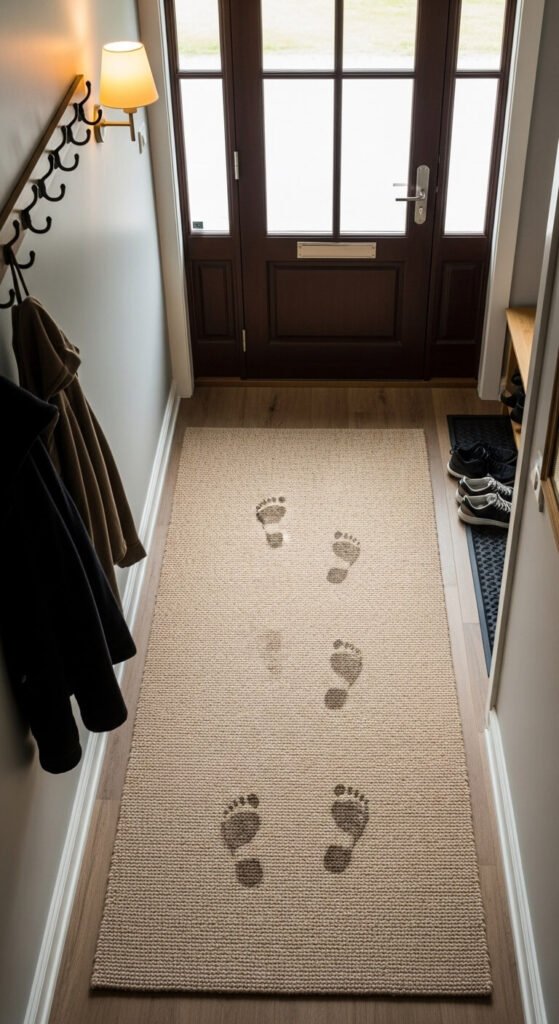
Your rug should follow where people naturally walk. In an entryway, that means right in the path from the door to the next room. In a kitchen, it might be in front of the sink or stove. Fighting the traffic pattern leads to awkward rug placement that feels off — even if you can’t explain why. Observe how you move through a room for a day. Then place the rug where feet actually land. Functional always beats purely decorative.
13. Ground a Reading Nook With a Small Round Rug
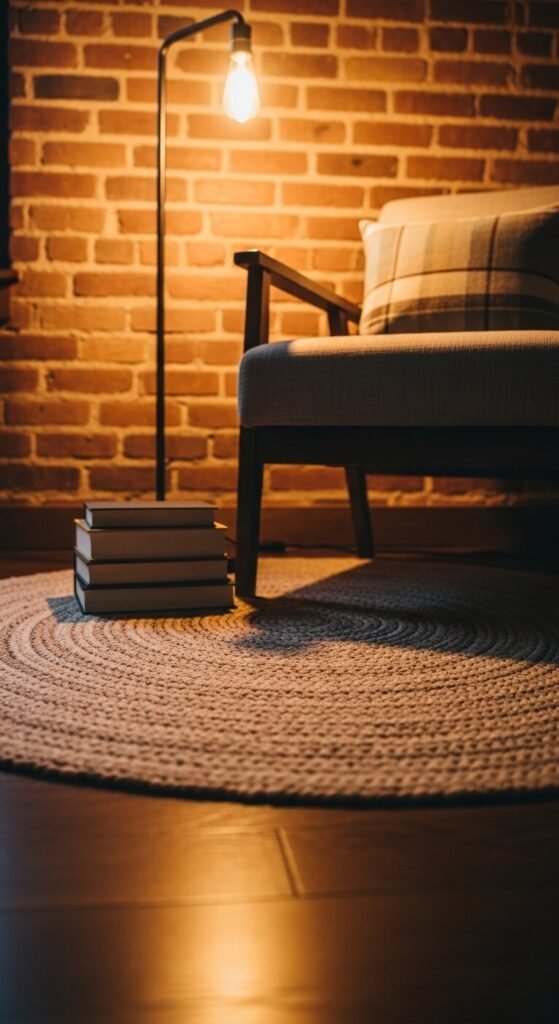
A reading nook doesn’t need a big rug. A small round rug — 3 or 4 feet wide — is enough to define the space without crowding it. Place it directly under the chair and just barely under the floor lamp. This small addition makes the corner feel intentional and pulled together. Woolrich, Amazon, and IKEA all carry small round rugs for under $60. It’s one of the highest-impact, lowest-cost placements you can make in any room.
14. Balance Pattern With the Rest of the Room
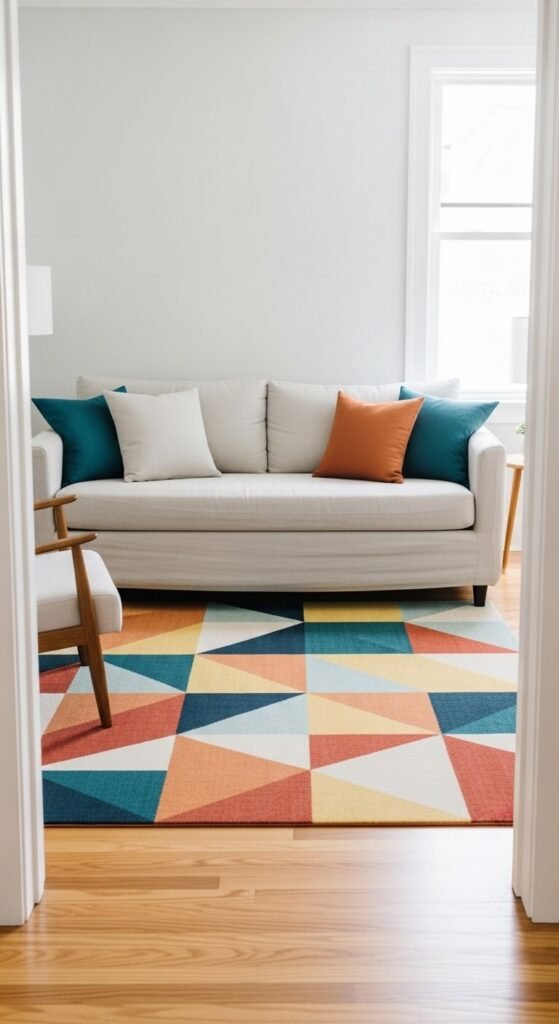
Bold rug, quiet room. Quiet rug, bold room. That’s the simple rule. If your rug has a strong pattern, keep your furniture and walls relatively simple. If your rug is a solid or subtle texture, you have more room to play with color and pattern elsewhere. Don’t put a geometric rug in a room full of competing prints — it creates visual noise. Pick your statement piece and let everything else support it. Rug patterns aren’t decoration; they’re architecture.
15. Angle a Rug to Add Energy to Boring Rooms
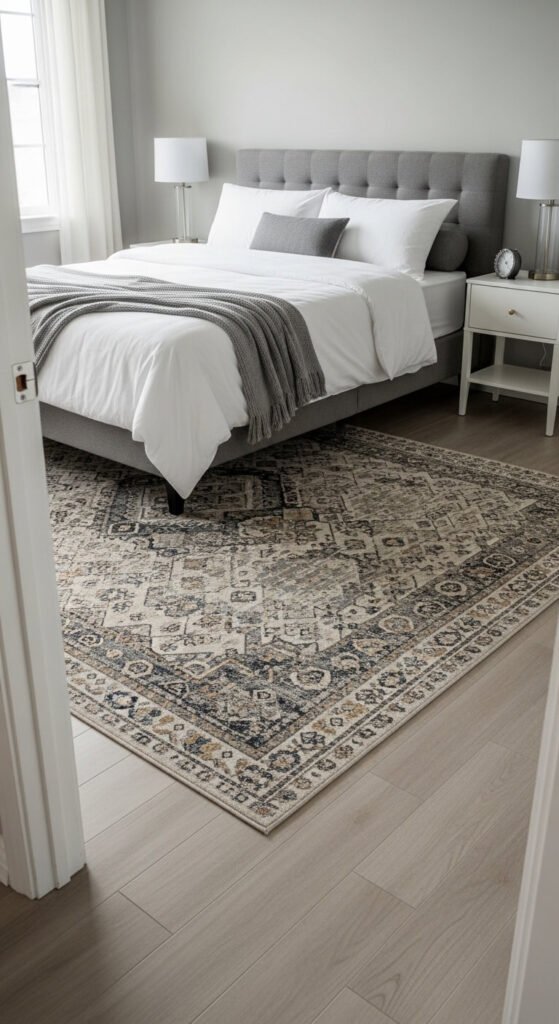
Placing a rug on a diagonal is an underused trick that instantly adds movement and personality to a static room. It works especially well in square rooms that feel boxy. The diagonal line draws the eye and breaks up the predictable grid of furniture. Try it in a bedroom or a home office. You don’t need to buy anything new — just rotate your current rug 45 degrees and see how the room transforms. Sometimes the simplest shift makes the biggest visual difference.
16. Account for Door Swing Before Placing Entry Rugs
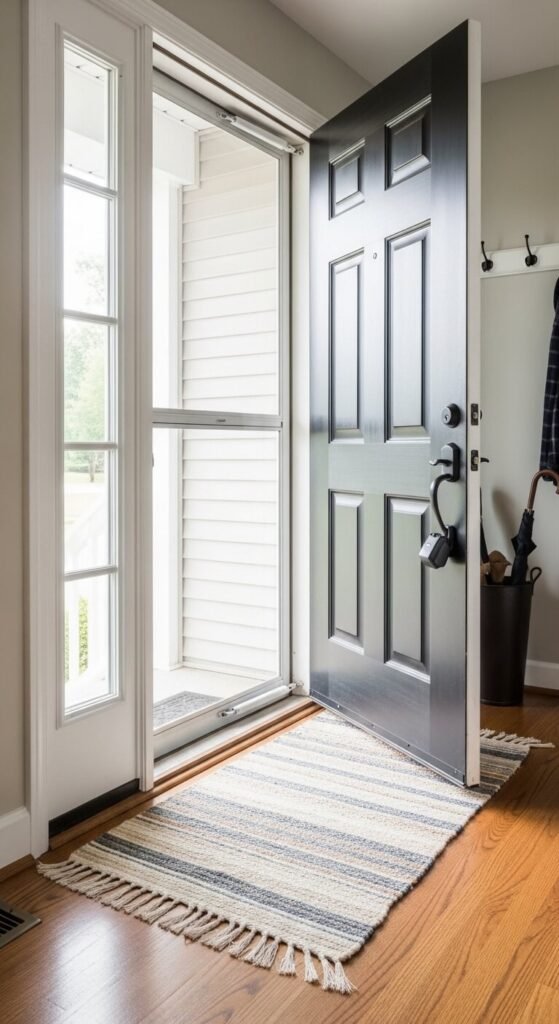
Always test your door swing before committing to an entry rug. Open the door fully and watch where it lands. A thick rug that catches the door is one of the most frustrating daily annoyances in a home — and completely avoidable. Choose a low-pile or flat-weave rug for entries. These sit close to the floor and let doors glide freely. If you love a thicker rug, place it just past where the door arc ends. A little planning saves a lot of irritation.
17. Use Tape to Test Placement Before Buying
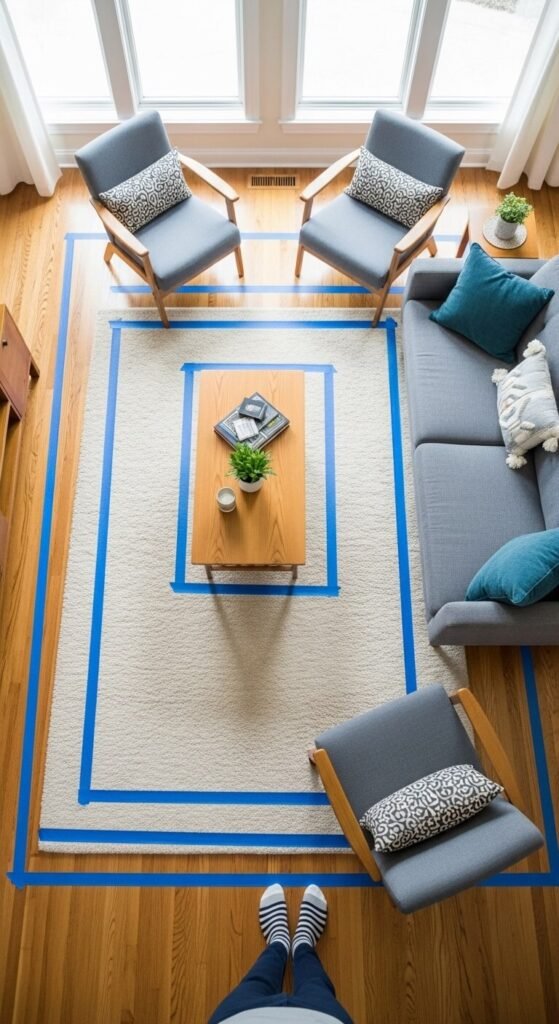
Painter’s tape costs $3 and saves you from a $300 mistake. Before buying any rug, tape out its exact dimensions on your floor and arrange your furniture around it. Sit on the sofa. Walk through the room. See how it feels. Notice if the shape works, if the size is right, if you’ve left enough floor showing. This takes 10 minutes and removes all guesswork. Rug returns are a hassle — especially for large rugs shipped in rolls. Test first, buy second.
18. Let the Rug Lead the Color Story
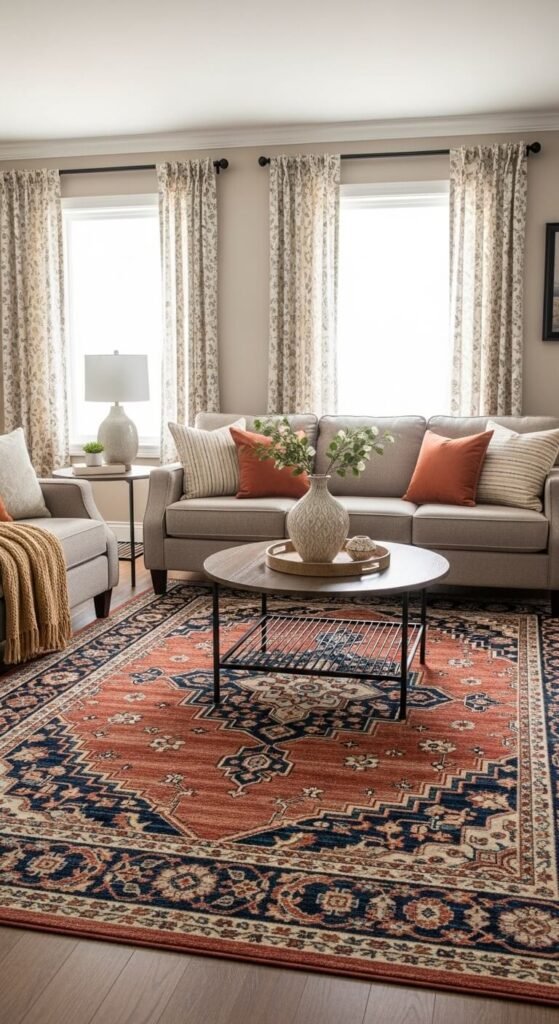
Instead of picking a rug to match existing furniture, try doing it in reverse: choose the rug first and build the room around it. Rugs often carry multiple colors in their pattern, which gives you a ready-made palette for pillows, curtains, and accent pieces. This approach makes color choices much easier and rooms feel intentional rather than assembled. Find an affordable rug you love and use it as your guide. Pull one or two of its colors into your textiles and accessories.
19. Keep Bedroom Rugs Soft and Plush Underfoot
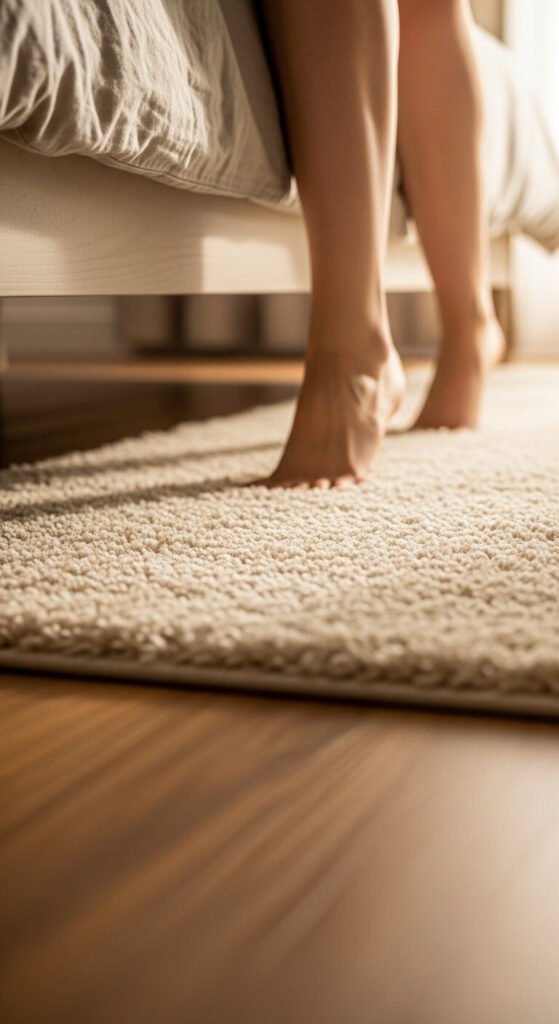
The bedroom rug has one job above everything else: feel amazing when you step out of bed. Go for a high-pile, plush, or shag rug here. Save the flat-weave and jute rugs for high-traffic areas like living rooms and entryways. A soft rug underfoot in the morning sets a tone for the whole day. Budget option: IKEA’s ADUM or Amazon’s Stone & Beam line both offer plush rugs in queen-friendly sizes for well under $150. Your feet will thank you.
20. Don’t Forget Outdoor Rugs on Patios and Porches
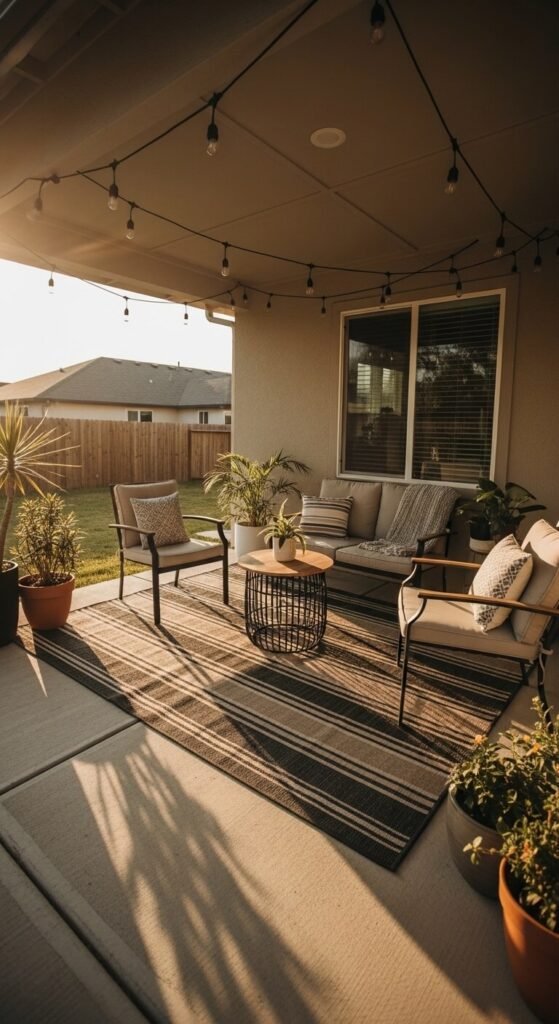
Outdoor rugs are underused and underrated. They anchor patio furniture the same way indoor rugs anchor living rooms — instantly making a seating area feel like a real room. Use an outdoor-rated polypropylene rug; they’re UV-resistant, water-resistant, and easy to hose down. Sizes and prices are similar to indoor rugs, sometimes cheaper. Leave 6–12 inches of patio surface showing around the rug’s edges. This makes the space feel bigger and frames the arrangement cleanly.
21. Reassess Placement When Seasons Change
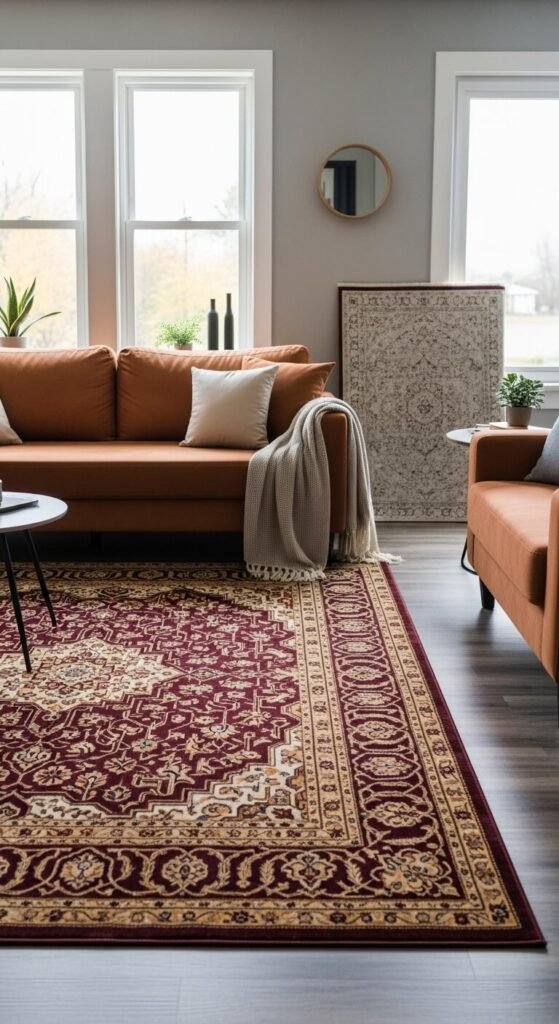
Rug placement isn’t permanent — and it shouldn’t be. Seasonally reassessing where your rugs live is a free way to refresh your home. In winter, pull rugs in closer for a cozier, more gathered feel. In summer, roll back rugs a little to expose more floor and let the space breathe. Swap a thick wool rug for a lighter cotton or jute version in warmer months. This seasonal rhythm costs nothing and keeps your home feeling alive and intentional all year long.
Conclusion
Rug placement isn’t complicated — but it makes an enormous difference in how a room looks and feels. A rug that’s the right size, in the right position, with the right furniture arrangement can make a rented apartment feel like a designer space. Start with one room. Grab your measuring tape and some painter’s tape. Figure out what size you actually need before you spend a dollar. Then use these rules as your guide, not a rigid formula. Trust your eye, stay within your budget, and know that even one small adjustment — moving a rug 12 inches, rotating it on a diagonal, adding a simple pad — can completely change how your space feels to live in.