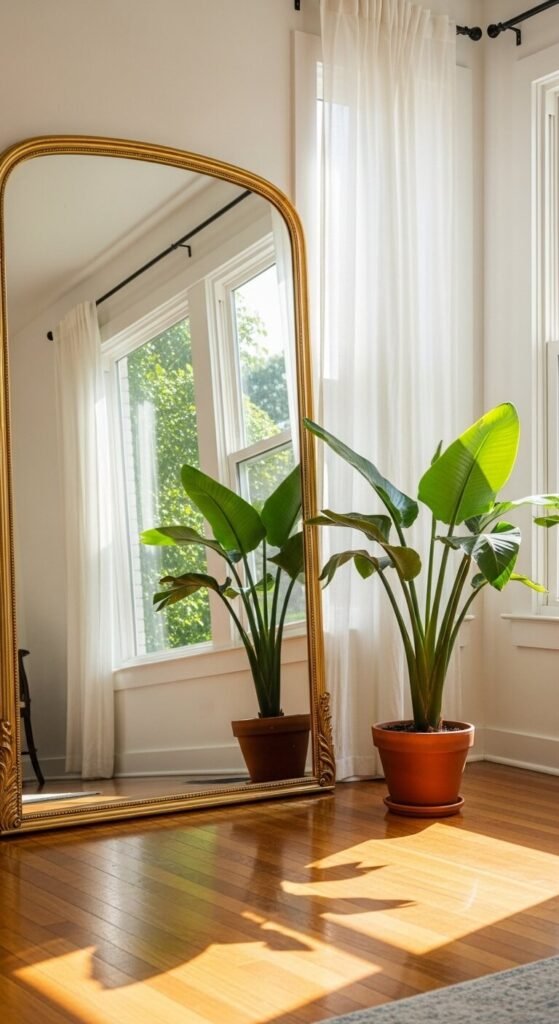
Mirrors do more than show your reflection. When placed with intention, they can make a cramped hallway feel like a corridor, a dark room feel airy, and a small apartment feel twice its size. The secret isn’t buying bigger furniture or knocking down walls — it’s understanding how light, angles, and reflection work together. Whether you rent or own, these practical mirror placement tricks will help you reshape any room without a renovation budget.
1. Face a Mirror Toward a Window
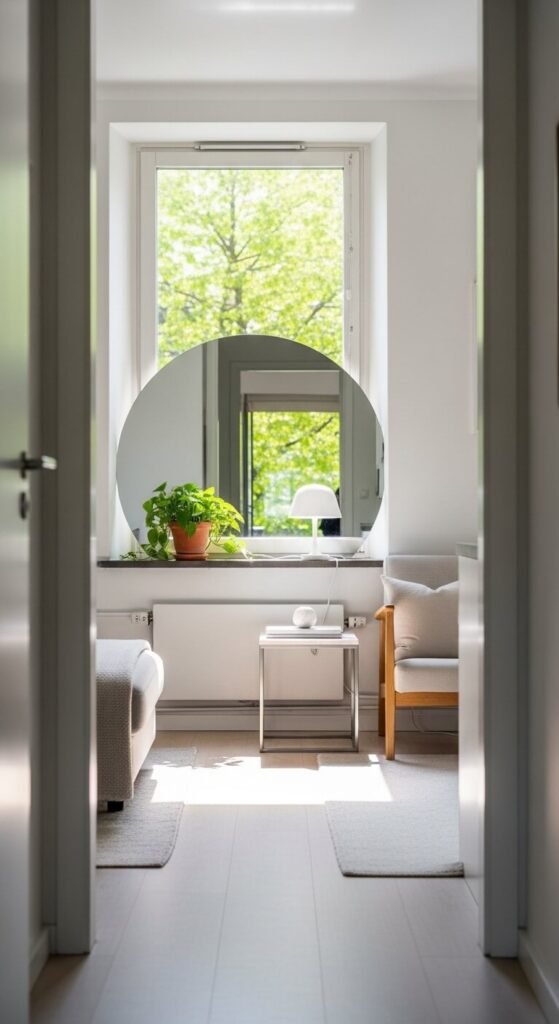
Placing a mirror opposite a window is the single most effective trick for making a room feel larger and brighter. The mirror captures natural light and bounces it across the space. Even a modest-sized mirror can double the perceived brightness of a room. Try it in dark living rooms or windowless hallways. Use a frameless or thin-framed mirror so the reflection draws the eye, not the frame. Budget tip: thrift stores often have large plain mirrors for under $20.
2. Lean an Oversized Mirror Against the Wall
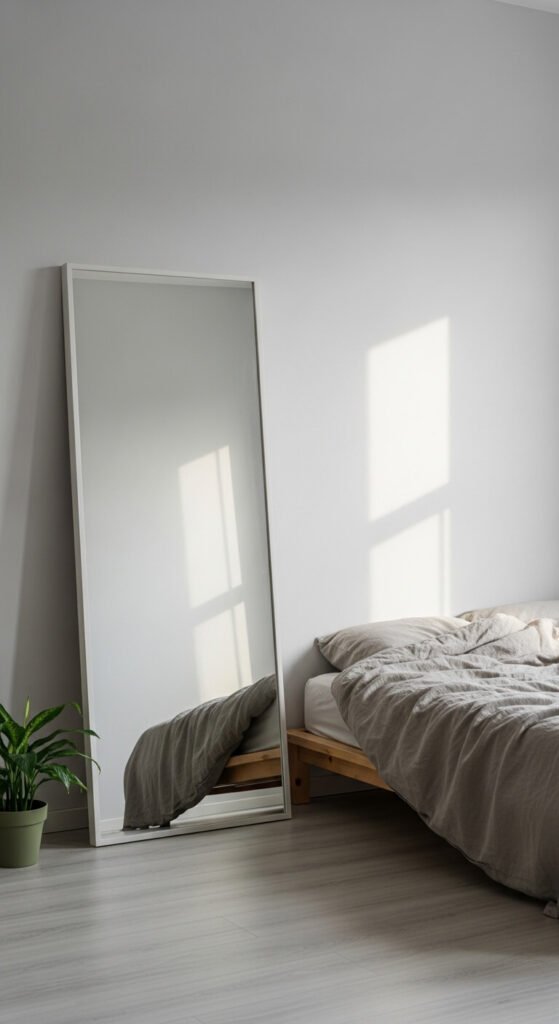
You don’t need wall anchors or a drill. Leaning a full-length mirror against a wall is a renter-friendly trick that adds visual depth instantly. The vertical height draws the eye upward, which makes ceilings feel taller. Place it at a slight angle to reflect the longest diagonal of the room. This works especially well in bedrooms and living rooms. IKEA’s Nissedal mirror costs around $40 and does the job beautifully.
3. Use a Mirror to Reflect an Accent Wall
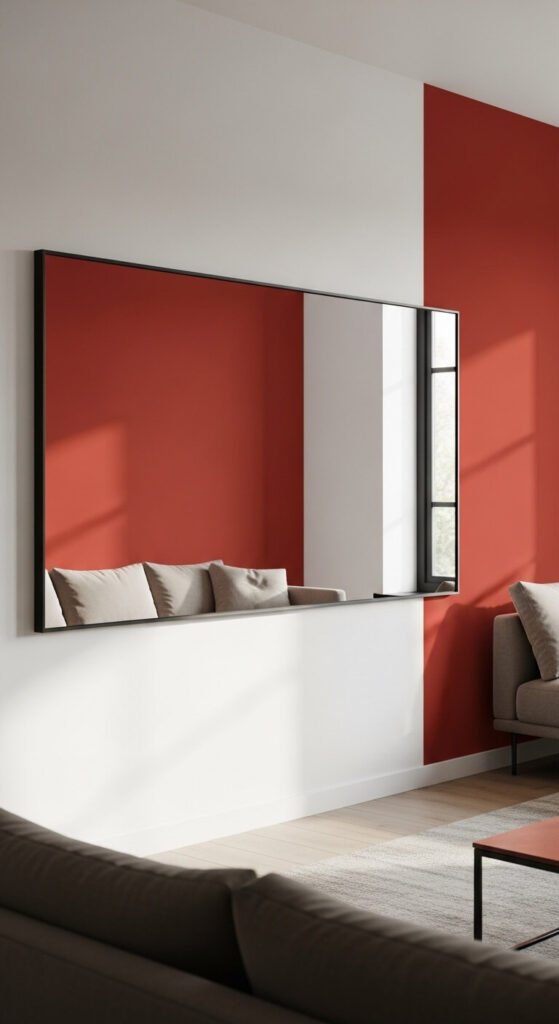
Got a feature wall with wallpaper, a bold paint color, or a gallery arrangement? Put a mirror on the adjacent wall to reflect it. This doubles the visual impact without more paint or paper. The reflected color and pattern create a sense of more surface area and depth. Keep the mirror simple so it doesn’t compete with what it’s reflecting. A flat black or natural wood frame works well here.
4. Stack Two Mirrors Vertically
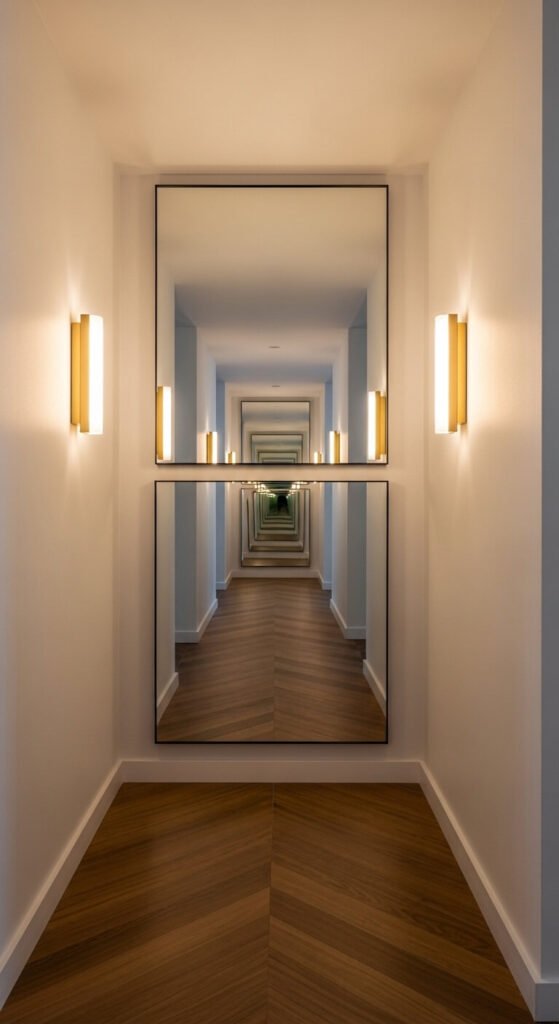
Stacking two matching mirrors vertically makes a wall feel taller without using a single oversized piece. This is perfect for narrow hallways or small dining rooms. Use matching frames for a clean, intentional look. Space them about an inch apart so they read as a set. This trick costs as little as $30 if you find matching mirrors at discount home stores or Facebook Marketplace.
5. Place a Mirror at the End of a Hallway
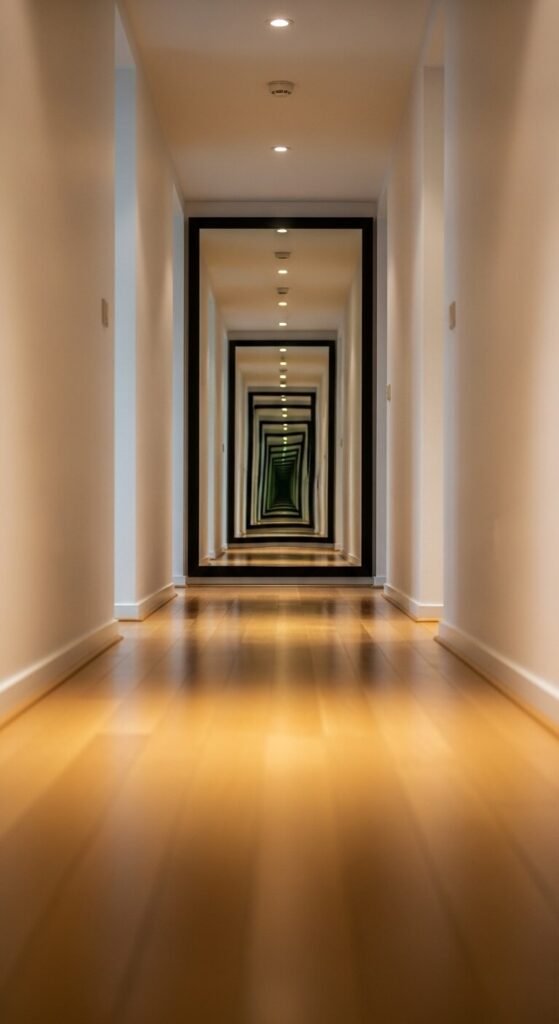
Dead-end hallways feel cramped and closed-in. Hanging a large mirror at the end of a hallway creates the illusion that it continues. The reflection adds perceived depth and makes the whole corridor feel less like a tunnel. Choose a mirror that fills most of the wall width. Hang it at eye level for the most convincing effect. This trick also bounces light from rooms on either side of the hall.
6. Create a Mirror Gallery Wall
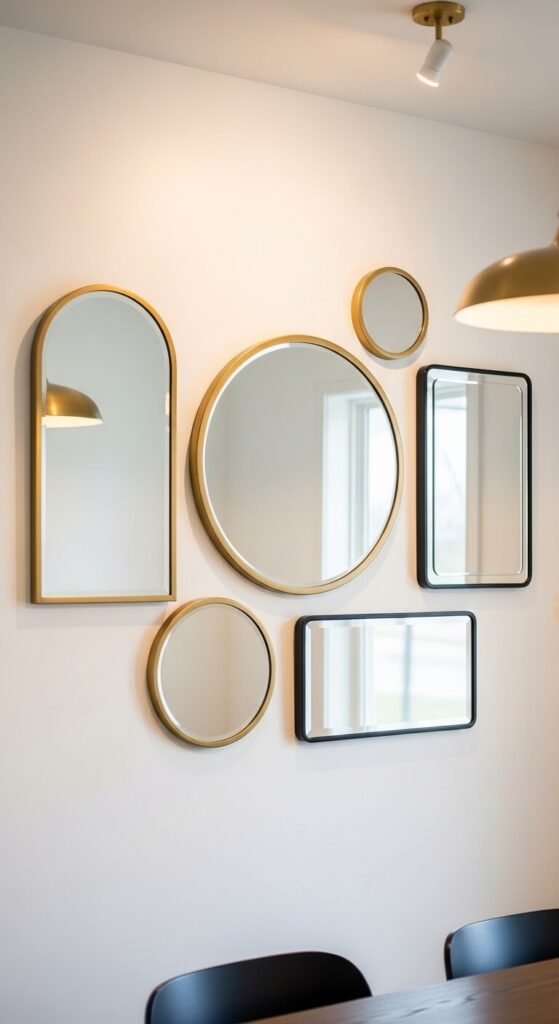
A gallery wall of mixed mirrors is one of the most affordable ways to add serious visual interest while expanding space. Combine round, arched, rectangular, and sunburst styles. Vary the frame finishes between gold, black, and natural wood. Thrift stores and dollar stores are gold mines for inexpensive mirrors. Lay them on the floor first to plan the arrangement before you put a single nail in the wall.
7. Use a Mirror Behind Furniture
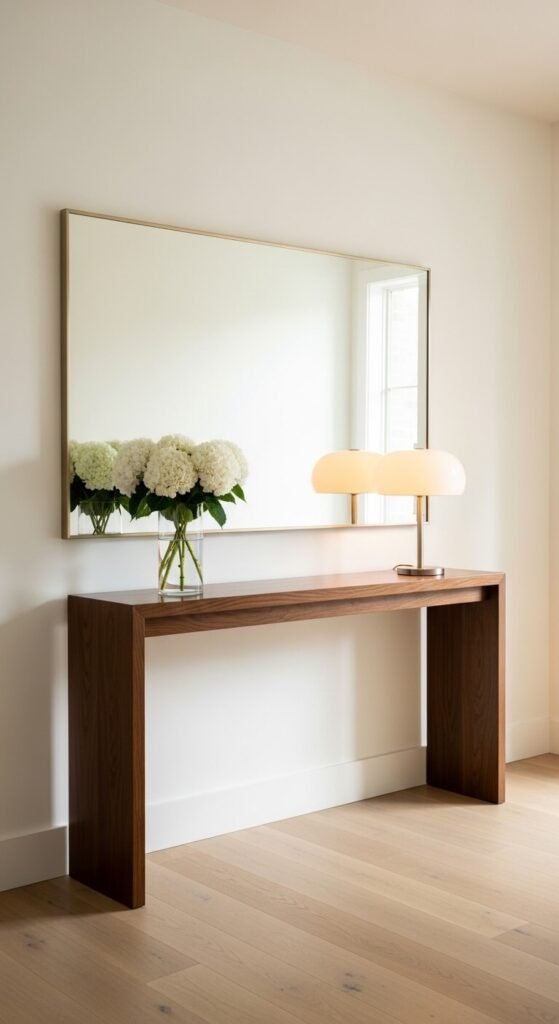
Placing a mirror directly behind a piece of furniture — like a console, sofa, or sideboard — creates depth that makes the wall recede. The furniture and its reflection together suggest more space than actually exists. This works especially well in entryways and dining rooms. Use a mirror that’s slightly wider than the furniture piece underneath for a polished, balanced look.
8. Hang a Mirror in a Dark Corner
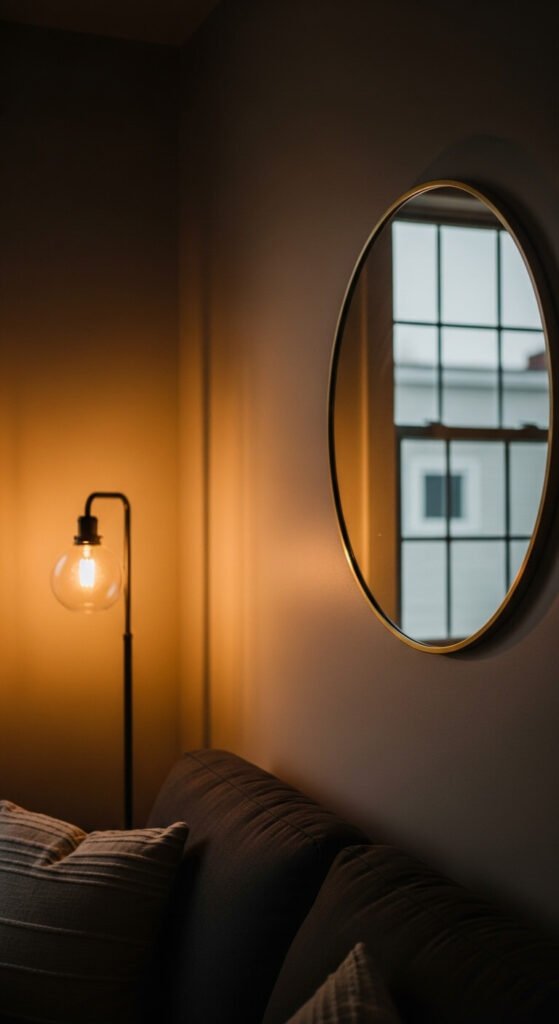
Dark corners absorb light and make a room feel smaller. A mirror placed in a gloomy corner acts like a secondary light source by catching and reflecting whatever light is available. Pair it with a nearby lamp for extra effect. Even a medium-sized round mirror makes a noticeable difference. Position it so it captures a light source — a window, a lamp, or a ceiling fixture.
9. Try a Mirrored Closet Door
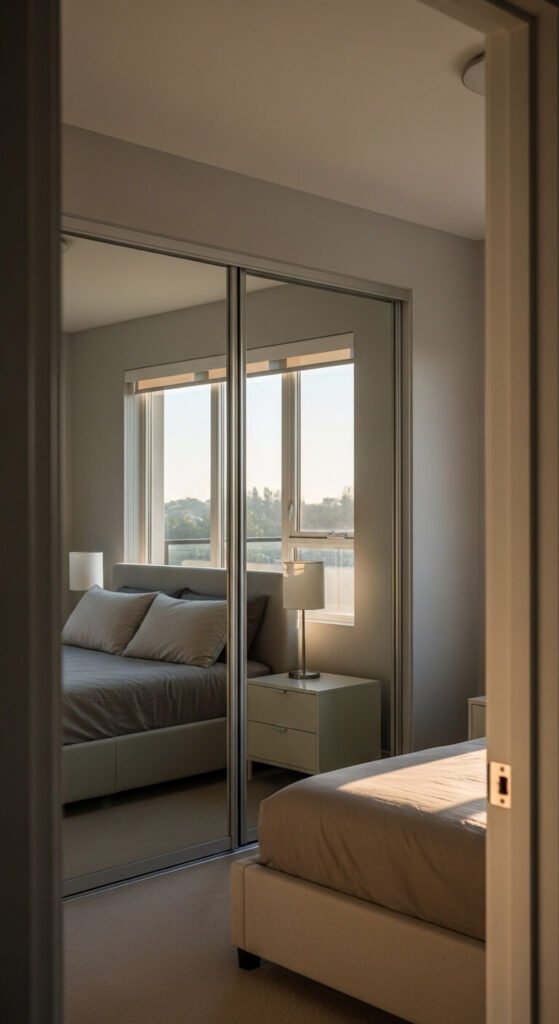
Mirrored closet doors are one of the hardest-working design moves in a small bedroom. They reflect the entire room, effectively doubling visual space. Many sliding door systems come in mirrored versions for under $150 at home improvement stores. If replacement doors aren’t in the budget, try mirror adhesive film applied over existing flat doors — it costs about $20 for a full panel.
10. Position a Mirror to Reflect Your Best Lighting
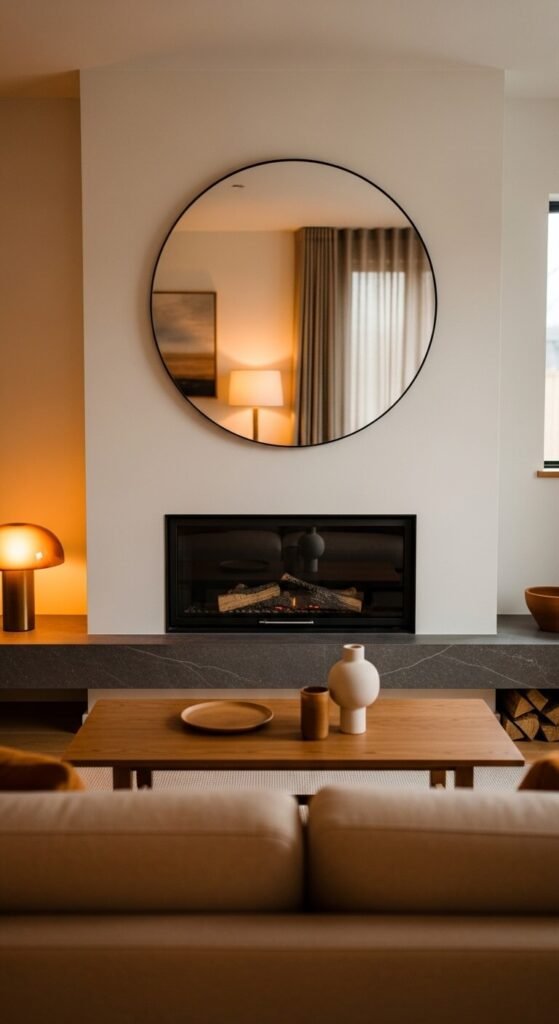
Not every mirror placement is about space — some are about making the light itself look beautiful. Position mirrors to reflect your most flattering light sources: a glowing lamp, candlelight, or a sunset-facing window. This creates atmosphere and warmth. In dining rooms, a mirror reflecting candlelight at dinner feels luxurious. Experiment with angles before committing to a nail.
11. Use a Round Mirror to Soften a Boxy Room
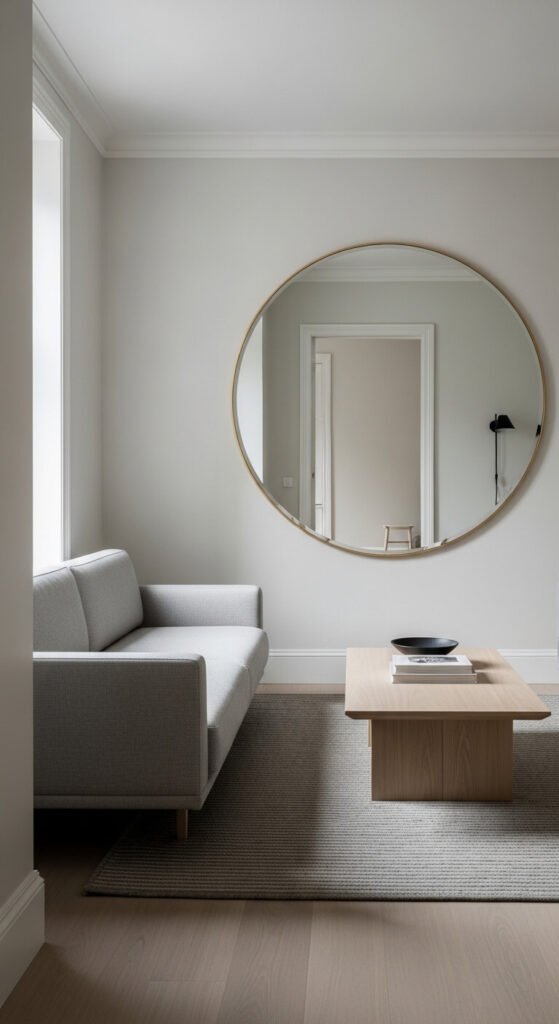
Square rooms with boxy furniture can feel rigid and confined. A round mirror interrupts that geometry and makes the room feel more open. The circular shape draws the eye and creates a focal point that softens hard lines. Round mirrors are widely available at all price points — you can find simple wood-framed options for under $25. Go as large as the wall allows.
12. Add a Mirror to a Tight Dining Space
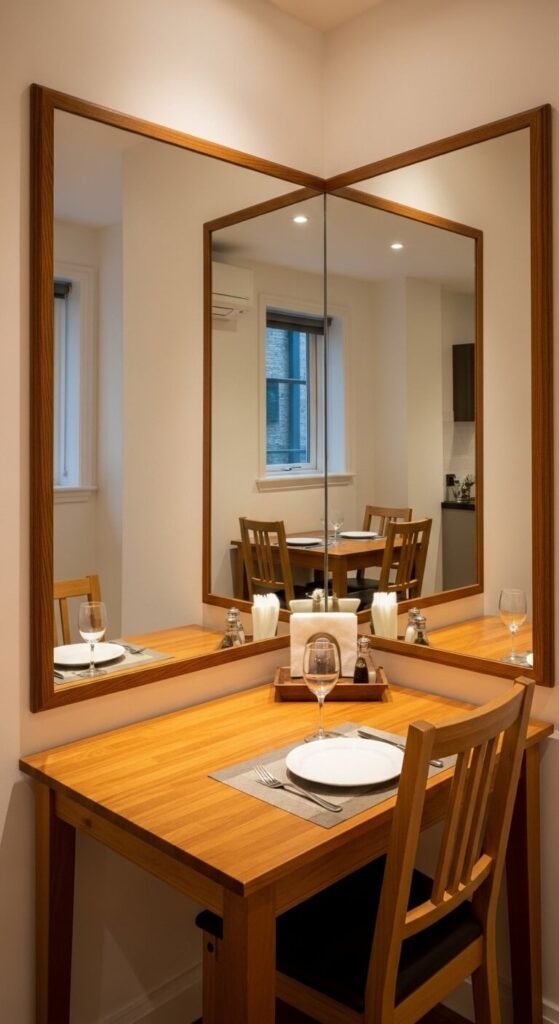
Small dining rooms feel crowded when everyone’s seated. A large mirror on one wall makes the room feel like it has a whole other half. It reflects the table, the people, and the light — turning a tight space into something that feels social and expansive. Hang it at a height where it catches the table surface and the faces of seated guests. This is one of the oldest restaurant design tricks.
13. Place Low Mirrors to Raise Perceived Ceiling Height
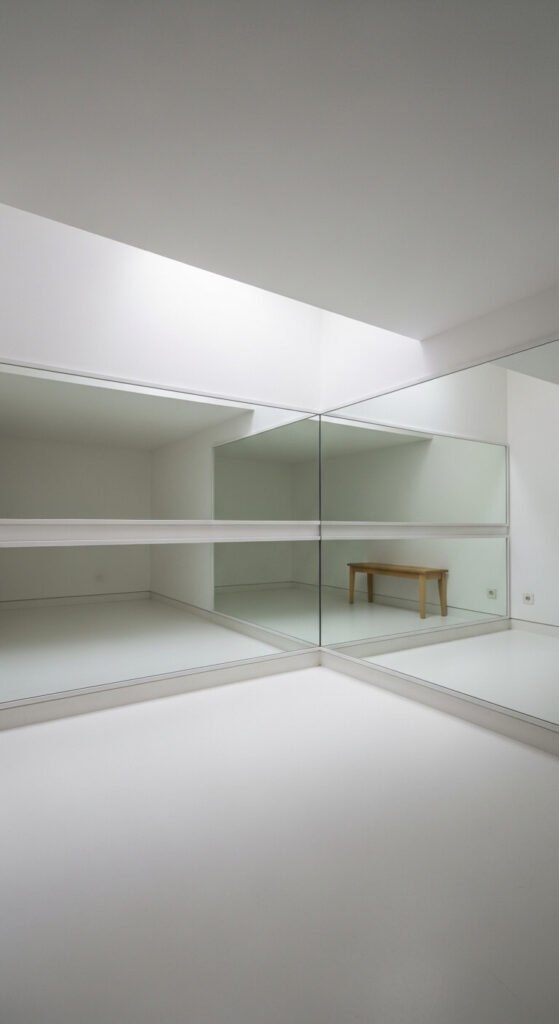
It sounds counterintuitive, but mounting mirrors low on a wall — near floor level — can make ceilings feel higher. When you look at a low mirror, your eye travels upward in the reflection, extending perceived height. Try a pair of horizontal mirrors side by side near the baseboard in a room with a low ceiling. This works well in basements, attics, or older homes with 8-foot ceilings.
14. Use a Mirrored Tray on a Coffee Table
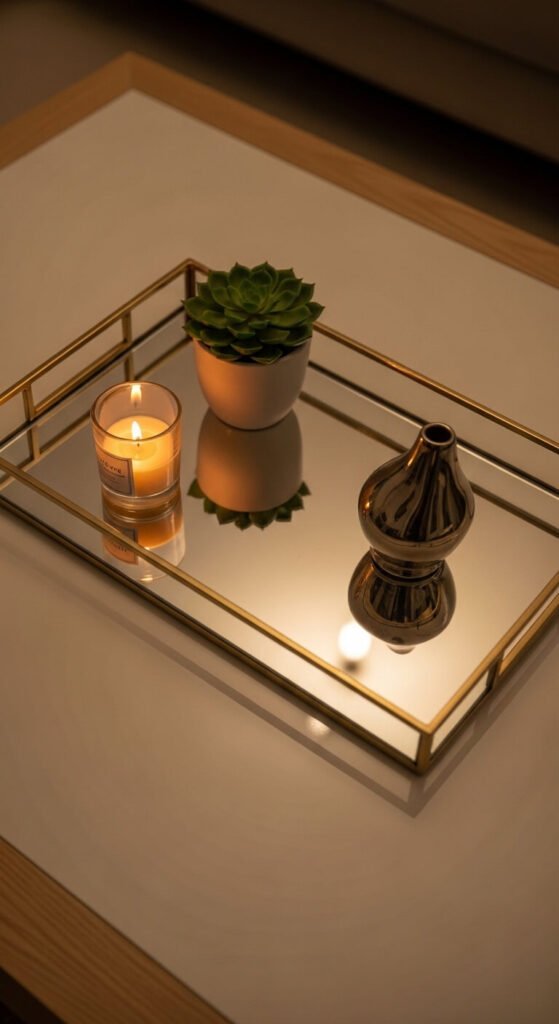
You don’t always need wall space. A mirrored tray on a coffee table or ottoman creates reflective surface at eye level when you’re seated. It catches overhead light, reflects your decor objects, and adds a layer of shine that makes the room feel more polished. Mirrored trays are sold at most home goods stores for $15–$30. Arrange a candle, a plant, and a small stack of books on top.
15. Hang Mirrors in Pairs for Balance
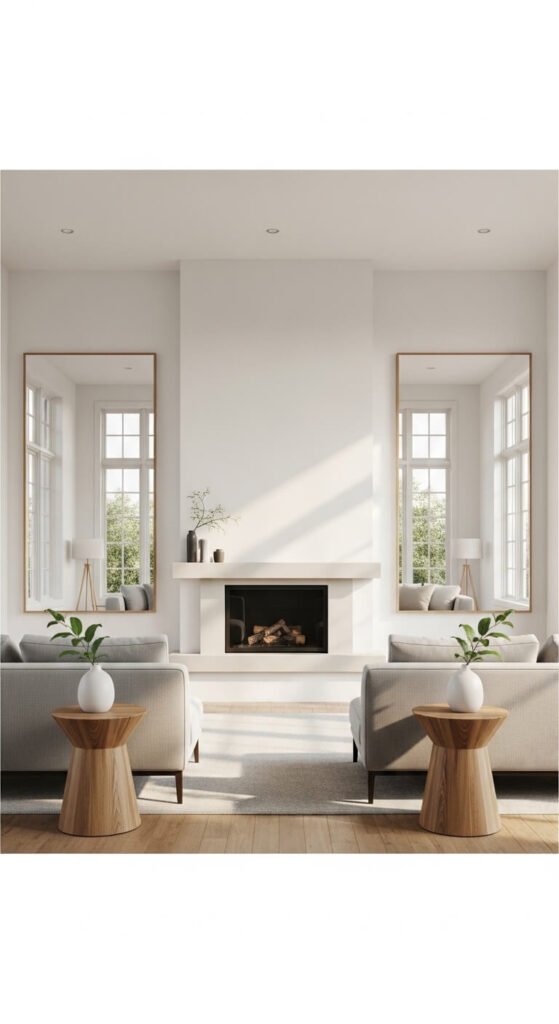
Pairs of matching mirrors create symmetry that the eye reads as calm and spacious. One on each side of a fireplace, sofa, or bed headboard anchors the room and reflects light from both sides. Use identical frames for a formal look or complementary styles for something more casual. This trick works in virtually any room and is easy to DIY with two matching mirrors from any home store.
16. Place a Mirror Near Plants
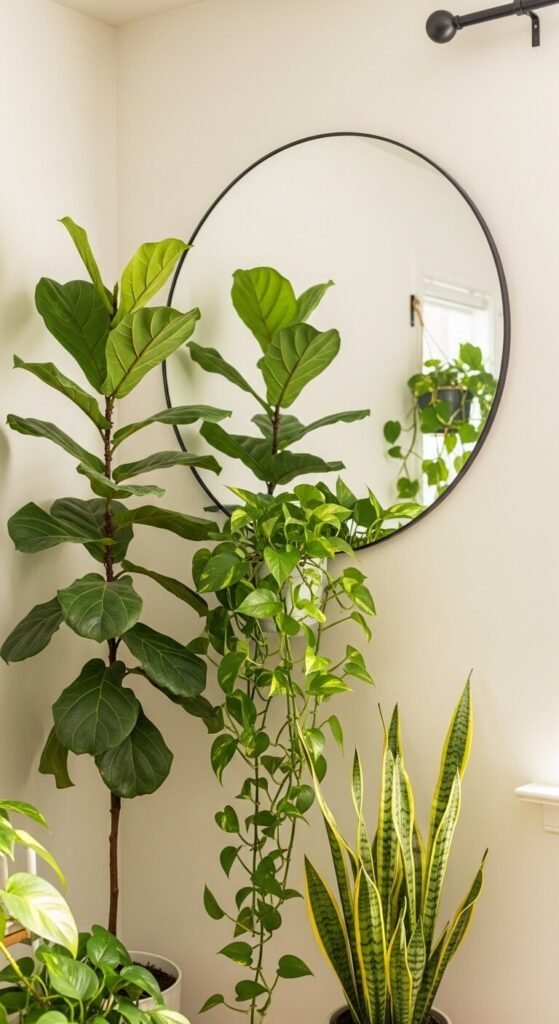
Mirrors placed near houseplants reflect the greenery and create the feeling of a lush, garden-like space. The reflection doubles your plant display without requiring you to buy more plants. Place a round or arched mirror directly behind a plant cluster or on the wall beside a plant shelf. The effect is especially vivid when natural light hits the leaves and reflects into the room.
17. Use a Beveled Mirror for Added Light Play
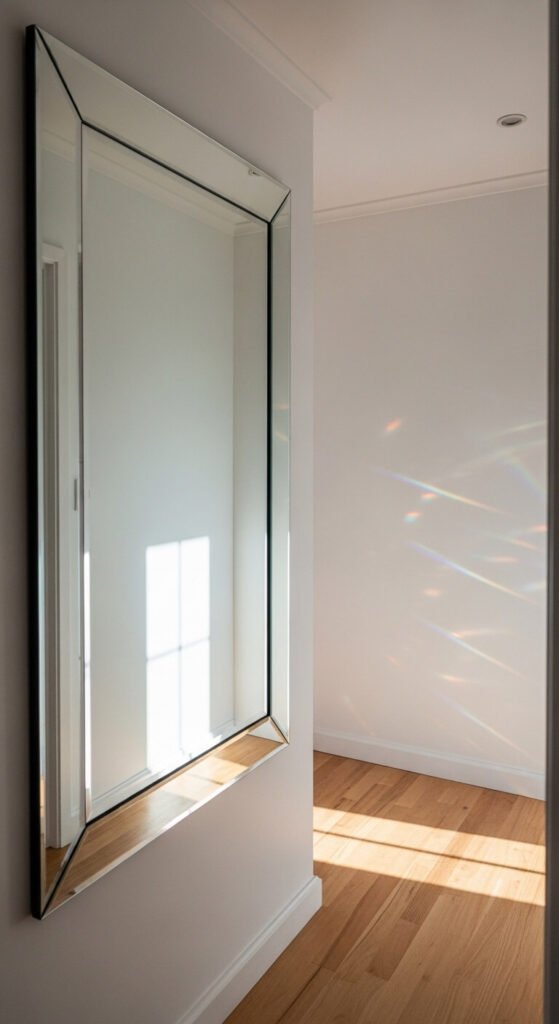
Beveled mirrors have angled edges that catch light differently than flat glass — they scatter small prismatic light patterns across walls and ceilings. This adds movement and visual interest, especially in hallways and bathrooms. Beveled mirrors are available at most home improvement stores. They’re often priced similarly to regular mirrors, so it’s an easy upgrade with more visual reward.
18. Try a Floor Mirror in the Bedroom Corner
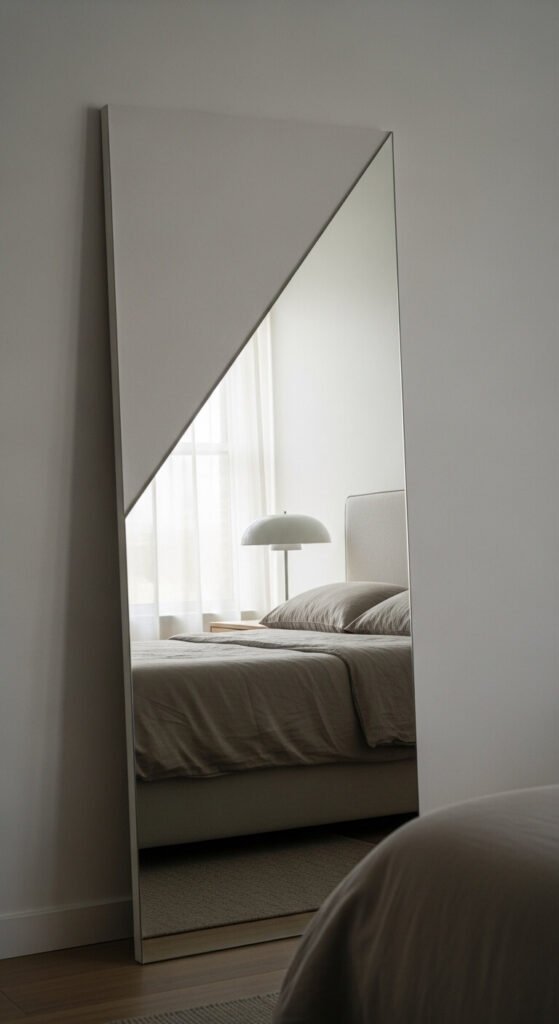
A floor mirror in the corner of a bedroom works at a diagonal angle, reflecting the widest possible slice of the room. Corner placement captures more of the space than a flat wall position. It also acts as a functional full-length mirror. Lean it at a slight angle away from the wall for the best reflection depth. This trick costs nothing if you already own a floor mirror — just move it.
19. Use Mirror Film on Cabinet Doors
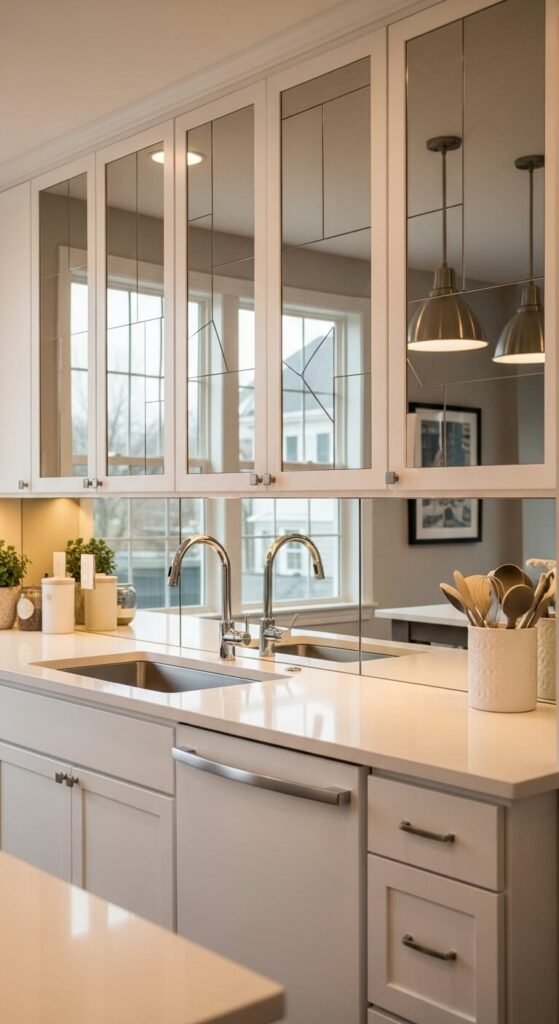
Adhesive mirror film — sometimes called mirror contact paper — can transform flat cabinet doors into reflective surfaces for under $15 a roll. It’s removable, renter-friendly, and surprisingly convincing. Apply it to upper kitchen cabinets, bathroom cabinet fronts, or built-in shelving doors. The reflections it creates make small kitchens and bathrooms feel significantly more spacious. Clean and dry the surface well before applying for a smooth finish.
20. Hang a Mirror Above Eye Level to Draw the Gaze Up
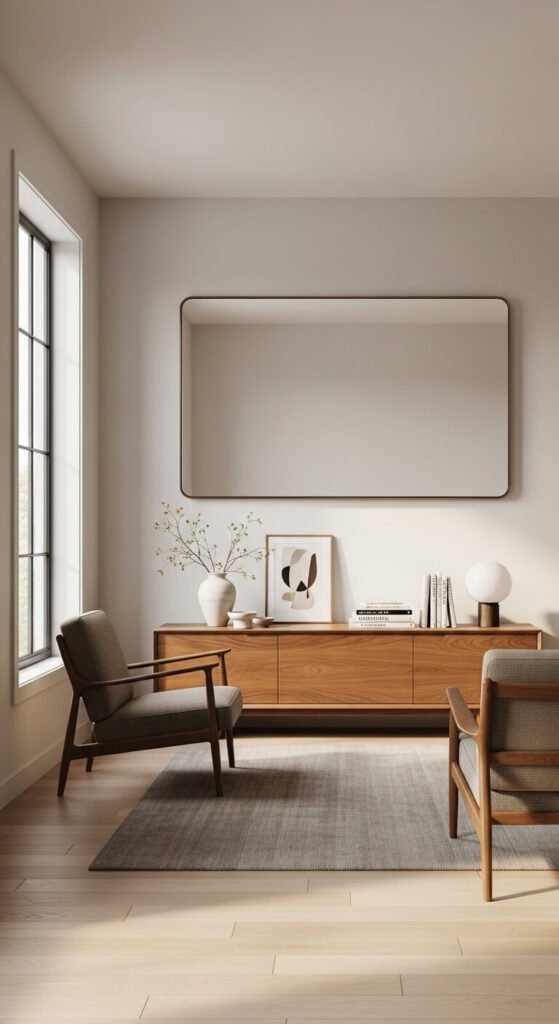
Hanging a mirror higher than usual — above the standard eye-level position — pulls the gaze upward and creates the illusion of greater ceiling height. This works best with a large, vertically oriented mirror. The reflected image shows more of the ceiling than the floor, tricking the eye into reading the room as taller. Pair this with vertical furniture or tall plants for maximum effect.
21. Create an Illusion of a Second Room
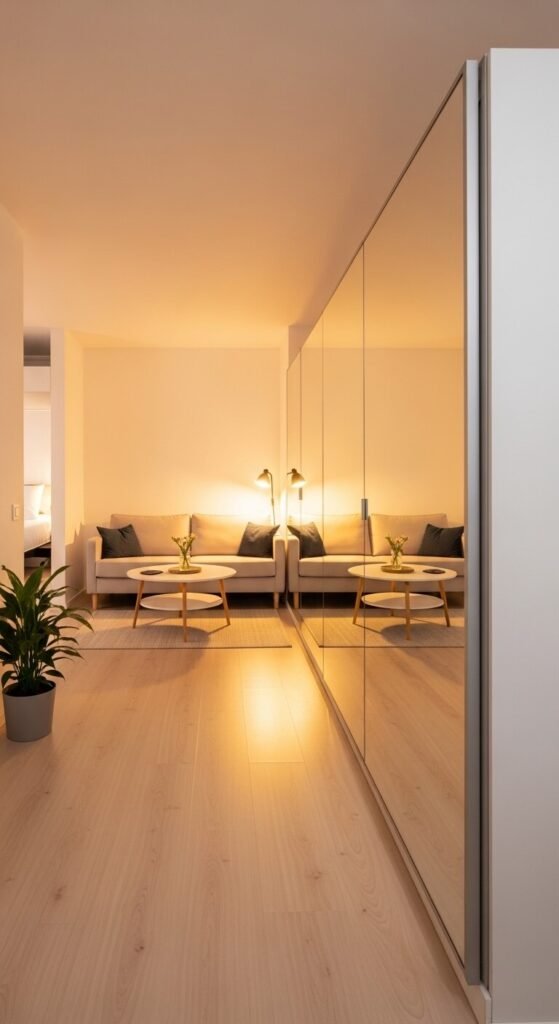
A mirror large enough to fill an entire wall creates the strongest possible illusion of additional space — it looks like a second room exists on the other side. This works best in studios, small living rooms, and bedrooms. You can achieve this effect with a single large mirror, a series of mirrors hung edge to edge, or mirror tiles. Mirror tiles from hardware stores run about $2–$5 per square foot, making this DIY-friendly.
22. Use an Arch Mirror as a Doorway Illusion
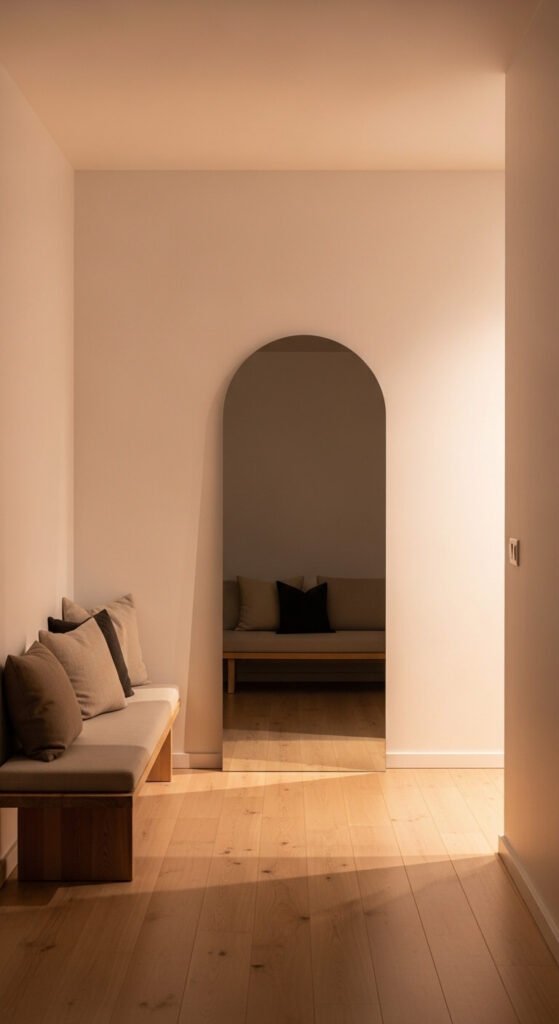
Arched mirrors mimic the shape of doorways and windows, so the eye unconsciously reads them as architectural openings. This makes a blank wall feel like it leads somewhere. Place a tall arched mirror on a dead wall in a hallway, bedroom, or living room. The taller the better — 5 to 6 feet creates a convincing passageway effect. Many arched mirrors are available for under $60 online.
23. Reflect Outdoor Views Into the Room
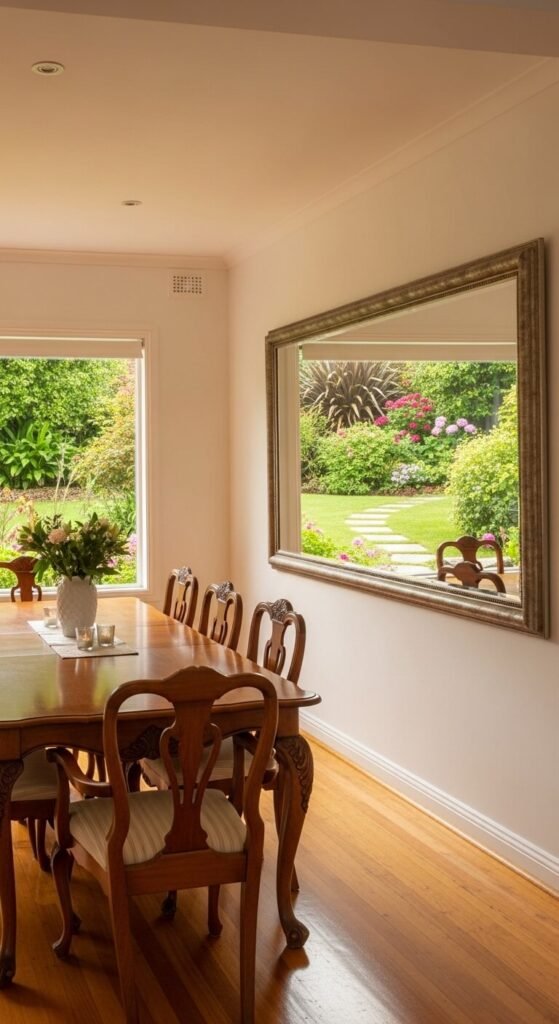
If you have a good view — a garden, trees, or even an attractive streetscape — use a mirror to bring that view deeper into the room. Position the mirror at an angle where it captures what’s outside the nearest window. This effectively gives you two views instead of one and adds natural depth. It works especially well in dining rooms where there may not be a window on every wall.
24. Place a Mirror in a Small Bathroom Strategically
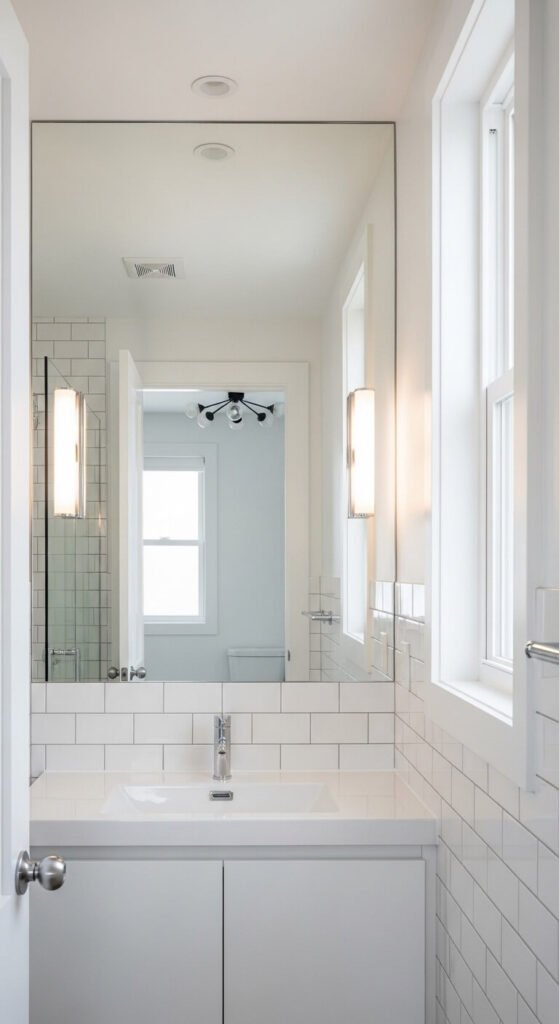
In small bathrooms, the mirror should be as large as the wall allows. Most bathrooms use undersized mirrors that waste reflective real estate. Replace the standard builder mirror with one that spans the full width of the vanity and reaches close to the ceiling. This single change can make a tiny bathroom feel dramatically bigger. Frameless mirrors maximize the effect and are often less expensive than framed versions.
25. Use a Sunburst Mirror as a Light-Catching Focal Point
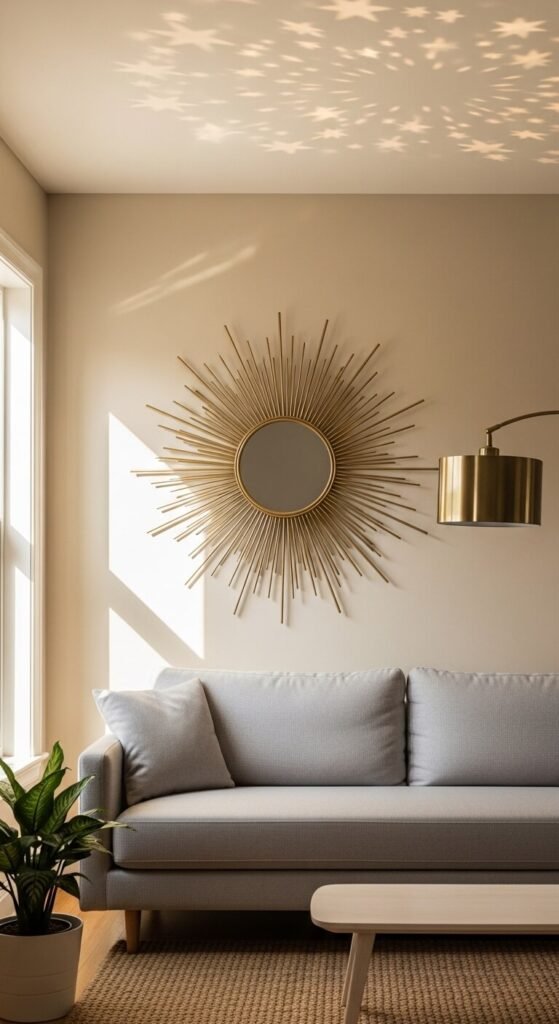
Sunburst mirrors do double duty — they’re decorative and highly reflective. The radiating design catches light from multiple angles and scatters it around the room. Hung above a sofa or fireplace, a sunburst mirror becomes a statement piece that also makes the ceiling feel higher. Look for them at home goods stores or thrift shops. Gold metal styles are easy to find second-hand and add warmth to neutral rooms.
Conclusion
Mirrors are one of the most affordable and flexible tools in interior design. A single well-placed mirror can transform how a room feels — making it feel lighter, larger, taller, or more interesting. You don’t need to spend much to get dramatic results. Start with one room, one wall, or even one corner. Observe how the reflection changes the space at different times of day. Then adjust, add, or try something new. The most beautiful rooms aren’t necessarily the biggest — they’re the ones where light moves freely and every surface works hard.